Home Blog Page 562

3 Wild Edibles And How to Eat Them

2

edible weeds photoMiriam suggests ways to cook free wind-sown vegetables.

At this time of year, you may find free vegetables growing in your own backyard (like Karin did), or in your windowbox. Springing up from wind-sown seeds and roots that slept underground through last summer, the newly green landscape is actually full of green vegetables. The first thing is to identify what’s growing out there. Take a reliable local field guide with you – or a reliable local grandma who’s foraged and eaten wild greens since childhood – and pick the plants they say are safe. Chicory is coming up around now – read this post on how to cook it with onions. Then take your bounty to the kitchen and cook it up.

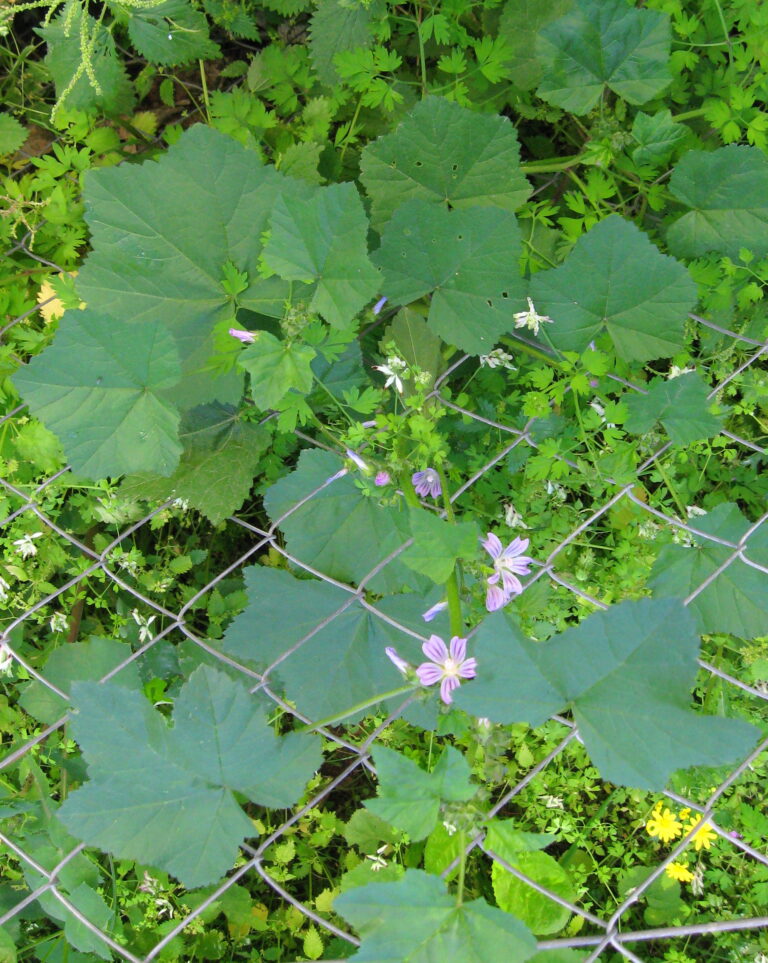
Mallows. The youngest, tenderest leaves of the mallows, make a fine addition to the salad bowl. The taste is mild and just sort of green – you’d never guess how rich in vitamin C mallows are. Stuff bigger leaves with rice and pine nuts just like grape leaves. Roll them up and cook them in a lemony, tomatoey, olive oily sauce. In early summer when mallows flower, eat the flowers in salad or dry them to add to winter teas.

Nettles (photo below). Yes, they sting. But they’re full of iron and other good minerals that protect your kidneys and adrenals. Nettles have a taste slightly like seaweed. They’re good rinsed, shaken dry, and dropped into soup 10 minutes before serving. Or try a cup of chopped nettles instead of spinach in a souffle.They’re particularly good paired with sharp cheese.

Hint: either wear gloves or use scissors to cut them in the field. Use the scissors or a pair of tongs to handle them.  Nettles lose their sting when cooked or dried. And once their light-green seeds have matured and are brown, nettles are best left alone until next year.
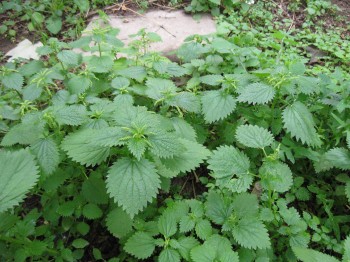
image-nettles

Cape Sorrel. Just ask the neighborhood kids what “hamzutzim” are. They’ll know how best to eat the fresh, sour-tasting leaves and flowers – raw. But don’t make an entire salad out of them, because their oxalic acid, like rhubarb’s, is only OK up to a point. Just toss a small handful into the salad bowl, along with other greens, or line a sandwich with the leaves instead of lettuce.
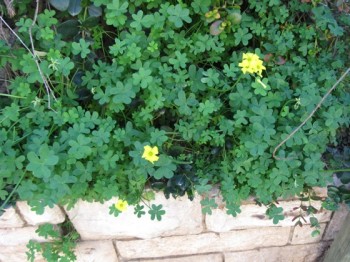
image-cape-sorrel

More on wild edibles from Green Prophet:

Go Wild With Two Winter Salads

Edible Weeds in Your Middle Eastern Garden

Photos of nettles, and Cape sorrel by Miriam Kresh.

Do Creases Make You Cross? 10 Tips for Wrinkle-Free Clothes without Ironing

8

electric irons aren't necessary to keep clothes wrinkle-free.
With planning and proper care you can cut back on your ironing for greener clothes.

My friend finds ironing relaxing. I find it a chore, especially in the hot climate of the Middle East. And according to the Consumer Energy Center, operating an electric iron uses one kilowatt hour an hour, almost twice as much as a washing machine. Irons need to be replaced frequently, and they make your home harder to cool in the summer. Fortunately, people dress casually in the Middle East and most people think wrinkles aren’t a big deal. But if creases make you cross, follow these tips to cut down on ironing:

Jordan’s Envoy in Washington Outlines Environmental Priorities

1

sahara forest project imageThe epic Sahara Forest Project in Jordan. More planned for its green future.

Jordan, one of the five most water-deprived countries on Earth, has more than just a casual interest in developing technologies such as solar energy, water desalination and nuclear power. Its very survival depends on it. So says Alia Hatoug-Bouran, Jordan’s former environment minister and recently minted ambassador to the United States. But Bouran — the first woman ever to represent the Hashemite Kingdom in Washington — said Jordan can’t do it alone. To realize its full potential, she said, her thirsty desert nation of 6.3 million people needs U.S. and European investment, as well as a comprehensive Middle East peace settlement that encourages greater cooperation with neighboring Israel.

Compost Toilets and 4 Good Reasons for the Middle East

4

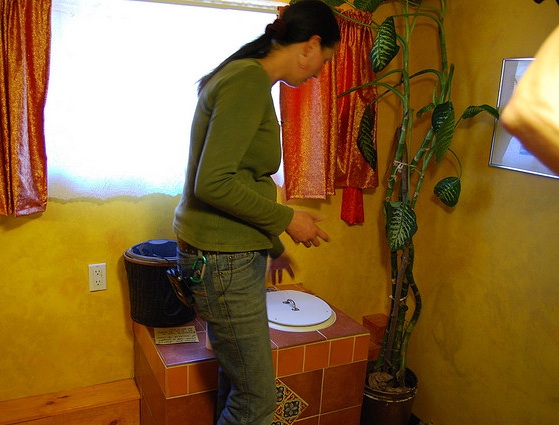
compost toiletWill it smell? Can I save money? And will it create fertilizer?
Flushing our waste down the toilet is not the ideal way of utilising our precious and very limited water sources here in the Middle East. Moreover, the pollution that we are causing to our rivers and seas is becoming an increasing concern. Like the Jordan River nearly dead from human waste. What was once seen as a hygienic method of dealing with our waste has now been proven to be a dirty problem that needs solving. One possible answer is to replace your flusher with an independent compost toilet. There are many advantages to this change you can make to your life. Here are just a few.

Working in Blocks, Spin-offs of Arizona Solar Energy Projects Could Fit Mideast

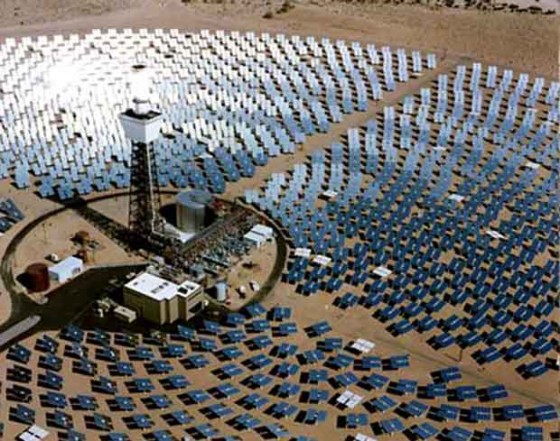
solar energy arrayArizona solar energy “modules” may work well in the Middle East

The American state of Arizona has much in common with many parts of the Middle East; especially with the same number of days of available sunlight for generating solar energy. A more practical way to make solar energy available to the general public has been created by a Tucson based company Solon Corporation that has completed a 1.6 Megawatt solar array power plant to make solar energy produced electricity available in 150 Kwh “modular blocks”. Solon is working together with the local electric power company Tucson Electric Power Company (TEP) which already has the electricity service infrastructure for distributing the electricity to local homes and businesses.

SLIDESHOW: Entries for Qatar’s 2022 World Cup Stadiums

0

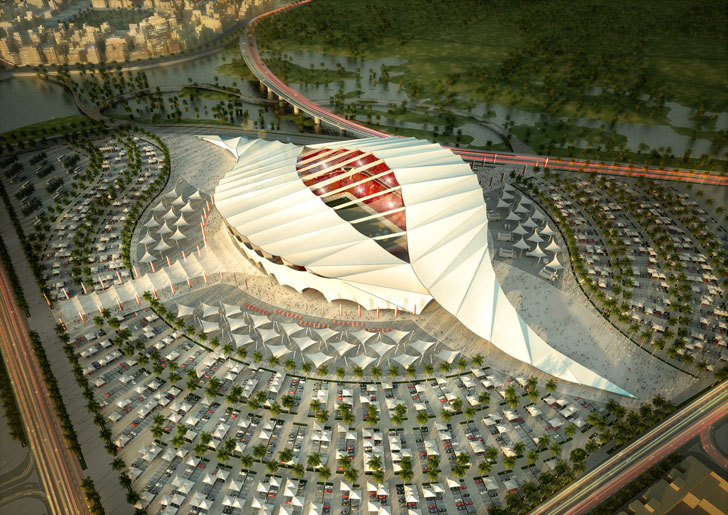
al-khor-stadiumSome of the Albert Speer & Partner designs – made in Frankfurt – depict existing stadiums that will get a facelift, while others are brand new.

Whether or not you agree with FIFA’s decision to award the 2022 World Cup bid to Qatar, one thing is certain: Albert and Speer’s stadium designs are amazing. We have already outlined many of the features that the group has promised, including solar-powered cooling complete with misters for spectators’ ankles, all in one, carbon-neutral package. For critics who worry that the tiny country doesn’t have a team that’s good enough to justify the materials necessary to build, remember that most of the stadiums can be dismantled and shipped elsewhere. For now, though, let’s bask in the glory of 21st century design, shall we?

Watch the SLIDESHOW on Qatar 2022 possible stadiums HERE and decide.

Morocco, Egypt Eye Eco-tourism Markets

1

shark in egyptCan countries with unrest commit to eco-tourism aspirations?

With countries across the Middle East – North Africa (MENA) region facing often fatal unrest like the food riots in Tunisia, it seems rather frivolous to be thinking about the travel industry. But with tourism a major earner for many Middle East & North African countries, the environmental impacts of international visitors isn’t an issue that is going to go away. Earlier in January Morocco became the latest MENA state to announce that ‘sustainable tourism’ is to become a key part of its national economic strategy. The government’s ‘Vision 2020’ plan includes a doubling of visitor numbers for Morocco, but also demands that this happens hand-in-hand with much better environmental standards. Buzzwords like ‘sustainable growth’, ‘responsible custody of the environment’ and ‘authentic social and cultural life’ characterise the plans, and they focus on well-known destinations like Marrakech and the Mediterranean coast.

72% Efficient ZenithSolar Gets Demo Down Under

0

The Israeli firm ZenithSolar, which combines highly efficient solar electricity along with solar heating, is doing a demonstration in Australia.

ZenithSolar’s first 16-unit project has been up and running successfully in Israel for a year at Kibbutz Yavne, making electricity to sell the grid, and hot water for its 230 residents, producing at peak production 250 KW Combined Heat and Power on a relatively small footprint of only 352 square meters (3,789 square feet). Now the breakthrough Israeli firm is about to bring a high profile demo to Australia, where Greenearth Energy Australia plans to show a combined heat and power solar technology that could revolutionize solar energy.

Gone Fishing, But Not In The Sea Of Galilee

1

stormy-dead-seaThe Sea of Galilee is known for its tempestuous storms and thriving fishing industry. But life there is changing with less rain and almost no fish left.

The lowest in the world and Israel’s only freshwater lake, the Sea of Galilee is fed by the Jordan River and supplies much of the region’s water. Famously the site for many of Jesus’ sermons, it also has a long fishing history. In the first century, the historian Flavius Josephus wrote that 230 fishing boats thrived on the lake. Twenty centuries later, the lake is at risk of being emptied of all its fish. This news just in from the Jerusalem Post.

Israeli-born Star of Black Swan, Natalie Portman, Sports Green Engagement Ring

4

natalie portman ring engagement
She’s got the “green” ring. Guess who is the lucky man.

It’s the sort of news to inspire eco-fashionistas: Natalie Portman, vegan shoe wearer, Golden-Globe winner and star of Black Swan, is wearing an engagement ring that embodies the essence of eco-friendly bling. According to reports, the custom-designed ring by Jamie Wolf is an antique round old-mine cut diamond, surrounded by conflict-free pave diamonds and made by recycled platinum, an altogether eco-sexy combination. If imitation is the sincerest form of flattery – and by that we mean that other newly engaged couples will want to follow suit – and eco-friendly jewelry is the best option, than just what makes a ring green?

Uganda’s Smart New Feed-in Tariff Could Ease MENA Energy Issues

Under new sophisticated new renewable energy policy in Uganda and a recent World Bank grid expansion connecting to Africa, soon it could be Uganda keeping the lights on in Egypt and the UAE

Feed-in Tariffs (FIT) are increasingly being offered by governments and utilities worldwide, because they simply are the fastest, most efficient way to get more renewable energy installed. The UK is the latest to show record growth as a result of offering to pay for clean power produced. In just the first six months since offering their FIT, UK official figures published by UK energy regulator Ofgem show that an astounding 15,468 installations have been registered. Both Israel and Turkey recently offered FITs. Today it is Uganda’s turn.

500 Solar-Powered Recycling Units Promote Abu Dhabi’s Conservation Culture

The municipality in Abu Dhabi is sponsoring 500 solar-paneled recycling containers.

A whole host of constructive ideas are being generated in the UAE’s capital, Abu Dhabi. A pair of cousins on segways educate visitors to the Corniche about waste management, and the municipality’s turn-it-off campaign encourages moderate energy and water use. The most recent plan, timely following our post yesterday about the need for recycling facilities, involves distributing 500 solar-powered recycling containers throughout the city. The goal is to encourage a world-class conservation culture everyone will want to visit.

Nubians Near Gharb Soheil Fight For Their Rights

0

khan-aswan-developmentDespite their protests, Nubians near Aswan fear that development projects will eventually dispossess them of their land.

Long before the recent string of North African riots – in Tunisia and most recently Egypt – the Nubian community south of Aswan on the River Nile have resisted projects they say threaten a way of life depicted in this Gharb Soheil art show.

Despite being able to halt one project, the community is powerless against a relationship between a Nubian businessman and the Aswan governorate, who have planned several developments, including a mall, that are bound to exacerbate  the region’s environment.

Interview: Illegal Wildlife Trafficking With Karl Ammann

0

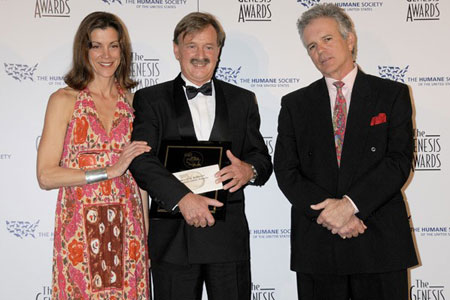
karl ammann wildlife photographer award imageKarl Ammann (center) explains why wildlife trade in the Middle East goes unregulated.
In 2007, Karl Ammann appeared on Time Magazine’s Heroes of the Environment List, and for good reason. Since discovering 2,004 smoked primates and 1,000 fresh carcasses on board  Zaire river boats in1988, he has devoted his life to exposing both the bushmeat and illegal wildlife trafficking. His photography and writings have appeared in several outlets including the New York Times MagazineNewsweek, Stern Magazine, and the National Geographic Almanac, and he has recently co-authored two books  namely Conserving Nature with Tony Rose and others, and  Eating Apes with Dale Peterson. For his work, he has received a slew of accolades.

We met him this past weekend in Nairobi, Kenya,  where we discussed private reserves throughout the Middle East that show off illegal wildlife without any retribution from the authorities. Even CITES, the international organization tasked with regulating wildlife trafficking, has been notoriously lackadaisical about bringing offenders to task.

Sahara Forest Project Jordan

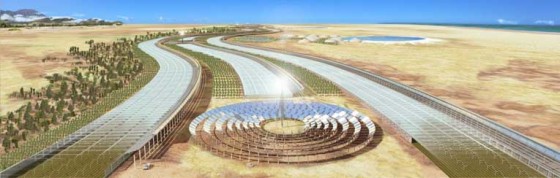
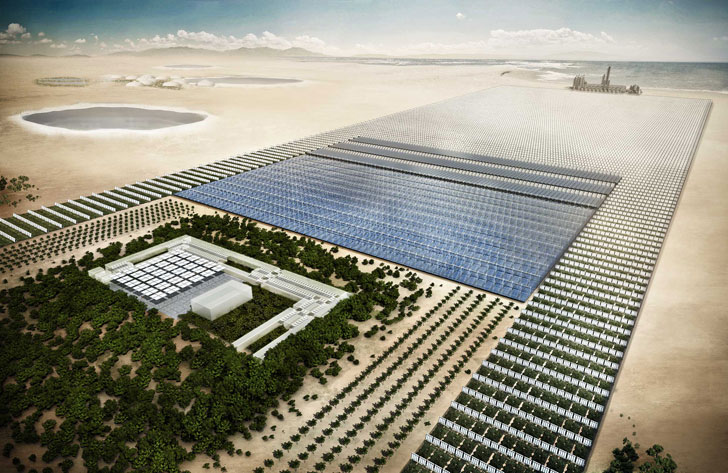
solar-sahara-forest-project-jordanJordan will be the location of the Sahara Forest Project which uses solar power to create clean water and electricity for agriculture

Whilst deserts can be the harshest and most inhabitable places in earth, they are also the perfect locations for new-fangled green technologies such as solar power. For example, Jordan has recently announced its support for the large-scale Sahara Forest Project which brings together solar power and desalination of seawater to provide sustainable energy and agricultural solutions in desert regions. The project aims to create carbon neutral energy, fresh water and food, contribute to forestation and all in the midst of desert lands.

The project’s ability to alleviate food and water shortages is no doubt an important aspect, especially if the recent food riots that hit the region are anything to go by.

Financially backed by the Norwegian authorities, Jordan has signed an agreement which gives the go ahead for the development of the Sahara Forest Project system in the coastal town of Aqaba.

sahara forest project image

The development site is a 200,000 square metre plot although a further 2 million square metres has been secured for future expansions. The location of Aqaba near the Red Sea is important as the project will be pumping seawater to the power plant to convert into fresh water for use. The project works by simultaneously converting salt water into fresh water which is used to grow fresh vegetables whilst solar power is used to heat water and create steam used to turn a turbine and create energy.

sahara forest project picture

Jordan’s uptake of the project came after the plan caught the eye of Jordan’s King Abdullah II during a meeting with the creators of the project in Oslo in 2010. The Sahara Forest Project has been masterminded by biomimicry architect Michael Pawlyn, Seawater Greenhouse designer Charlie Paton and structural engineer Bill Watts. It has also been supported by the Norwegian environmental group the Bellona Foundation.

The President of the Bellona Foundation, Frederic Hauge said of the new deal:

“We are very happy with the strong support from both Jordanian and Norwegian authorities. It is encouraging to see that we share the vision of a more holistic approach towards solving challenges in the food, water and energy sector.”

According to plans put forward by developers a feasibility study will be carried in 2011, a Test and Demonstration centre built in 2012 with a large-scale roll out of the project planned for 2015. If all goes well, this project will illustrates that the with the help of eco-technologies you really can turn the desert into an oasis.

Image via Sahara Forest Project

For more green stories from Jordan see:
Jordanian Environmentalists to Fight Ajloun Forest Construction
Jordan Joins the Food Protest as Tunisian President Steps Down
Jordan’s Bus Rapid Transit (BRT) Set For 2012 Inauguration