Home Blog Page 553

Time For A Cycling Revolution and “Critical Mass” In Cairo

7

cycling in cairocairo cycling
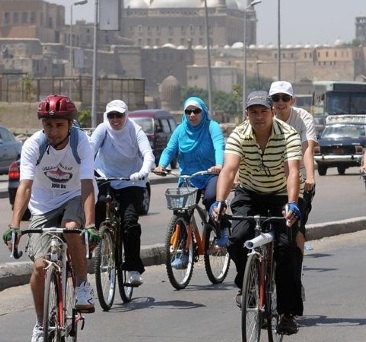
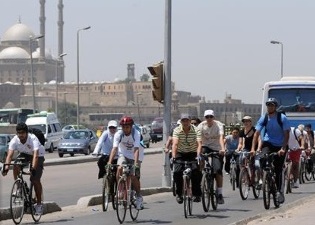
Before the 25th of January no more than 150 cyclists could pedal together without attracting police authorities’ attention. In Cairo, Inji El Abd from Cycling for Change, talks about a revolution for bikes.

Che Guevara had his motorcycle and they had their bicycles: Revolutionaries on wheels went from all corners of Cairo to Tahrir Square to demand a better future for their country. They got there faster than most, as traffic was a killer and the metro station on Tahrir square was no longer operative. Once there, they voiced their demands for freedom and dignity. The people demanded the removal of the regime and the regime obliged.

Israel Cleantech Intelligence: Renewable Energy and 6 Headlines

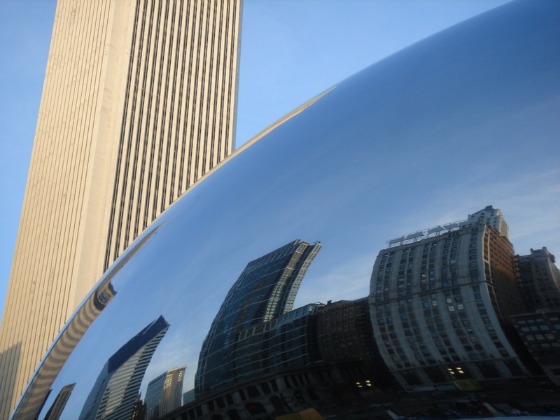
Chicago BeanCleantech funding, California’s interest in Israeli technology, IDE’s latest desal plant deal in China, and more headlines related to Israeli cleantech and the environment.

During the past week, the Eilat Eilot Renewable Energy Conference took place in Israel and several companies struck deals and agreements were signed. Chicago and Jerusalem formed an environmental partnership, while Poland and the US city of Akron signed water deals. Check below for these stories and the rest of this week’s headlines.

Celebrate the Jewish Holiday of Purim the Old-Fashioned Way

1

Traditional filled Purim cookies known as HamantashenCooking and baking are one way that Jews celebrate the Purim holiday of salvation.

Jews celebrate the holiday of Purim on the 14th day of Adar II, which falls this year on the evening of Saturday, March 19 until sunset on March 20. In Jerusalem and other ancient walled cities, the one-day celebration begins Sunday evening and is known as Shushan Purim (see Esther 9:18-19). Purim commemorates the events of the biblical book of Esther, which describes how the beautiful and noble Queen Esther and her uncle Mordechai foil the evil Haman’s plan to destroy the Jewish people of the 127 nations in the ancient Persian Empire.

Dubai Gets Frozen Air From Europe

glass chandeliers dubai
Sustainable air conditioning made locally from the heat of the sun is perfect for Dubai.

Three European sustainable energy innovators show how an innovative combination of three technologies can make a sustainable low carbon way to cool buildings in Dubai. The three technologies – solar heated water – supplying a chiller based air conditioner – running cooled water through radiant concrete flooring – add up to climate-friendly cooling.

The Swedish-led HVAC company DEW-Kylsystem based in Dubai is installing the combination of technologies on a building for a 50% reduction in energy use.

The solar hot water heater units on the roof are made by Kingspan – the pioneering Irish firm that invented the first evacuated tube system: the Thermomax.

The chiller-style air conditioning is from ClimateWell – the Spanish innovator that has won awards for its integration of thermal energy storage. This makes their solar-powered air conditioning 24/7 – needed in Dubai! It’s patented a unique proprietary Triple-State absorption technology that integrates energy storage.

Its chillers are designed to be charged with thermal energy when its created on hot sunny days, but can be tapped when needed, day or night.The capacity to store thermal energy is key to deliver a consistently comfortable indoor climate using both heating and cooling as needed, despite a fluctuating energy input, such as solar heat.

Put these two technologies together and pack it into a hollow core concrete slab construction method – the ClimateDeck, as DEW-Kylsystem has done, and you have solar air cooling that uses half the energy of regular A/C. DEW provides the expertise in integrating different products to deliver the installation and commissioning of the complete system as a well-designed whole.

Their building for ESAB, the Dubai welding construction company, in the Jebel Ali Free Zone, integrating the three technologies in a demonstration, has won one of the first LEED Platinum ratings in Dubai.

The low energy use would be of interest to Dubai building owners looking to be environmentally responsible, but also to simply those wishing to save their businesses from the now alarming rates that have skyrocketed. (Dubai Utility Doubles Business Electricity Rates in Three Years.)

But why look so far afield for solar air conditioning innovation? There’s local companies innovating in this field too!

::Kingspan
::ClimateWell
::DEW-Kylsystem

More local Middle Eastern innovators using solar for air conditioning:

EWA Goes From Solar Air Conditioning to Squeezing Water From Thin Air
Sunpowered Cooling From Linum Picked by ARPA-E
Abu Dhabi Pioneers Concentrated Solar Thermal A/C With Chromasun

How To Live A Car-Free Existence

10

Green Prophet’s Arwa on her decision not to drive a car and the social stigma that comes with it…

Maybe it has something to do with my love of trains and car-induced travel sickness as a child, but I can honestly say I’ve never aspired to driving a car.

Hitting the open road or whizzing around the city in my very own car doesn’t really fill me with anything but dread. Although I think that choosing to drive is a personal decision, it does however seem to annoy lots of people. People who seem to think that you are a complete failure unless you can drive and own a car.

I am 24 years old now and I have come to terms with the fact that I will never drive my own car but my little sister (nothing like a little public humiliation here!) thinks ‘it’s a little embarrassing’ that I don’t drive. It’s an important skill, she reasons, one which would give me a lot more independence. She’s right about the personal independence it would give me as a young Muslim women but than I tell her what I always tell anyone who asks why I don’t drive- ‘Driving is not the future’.

Eco Tourism in Lebanon

1
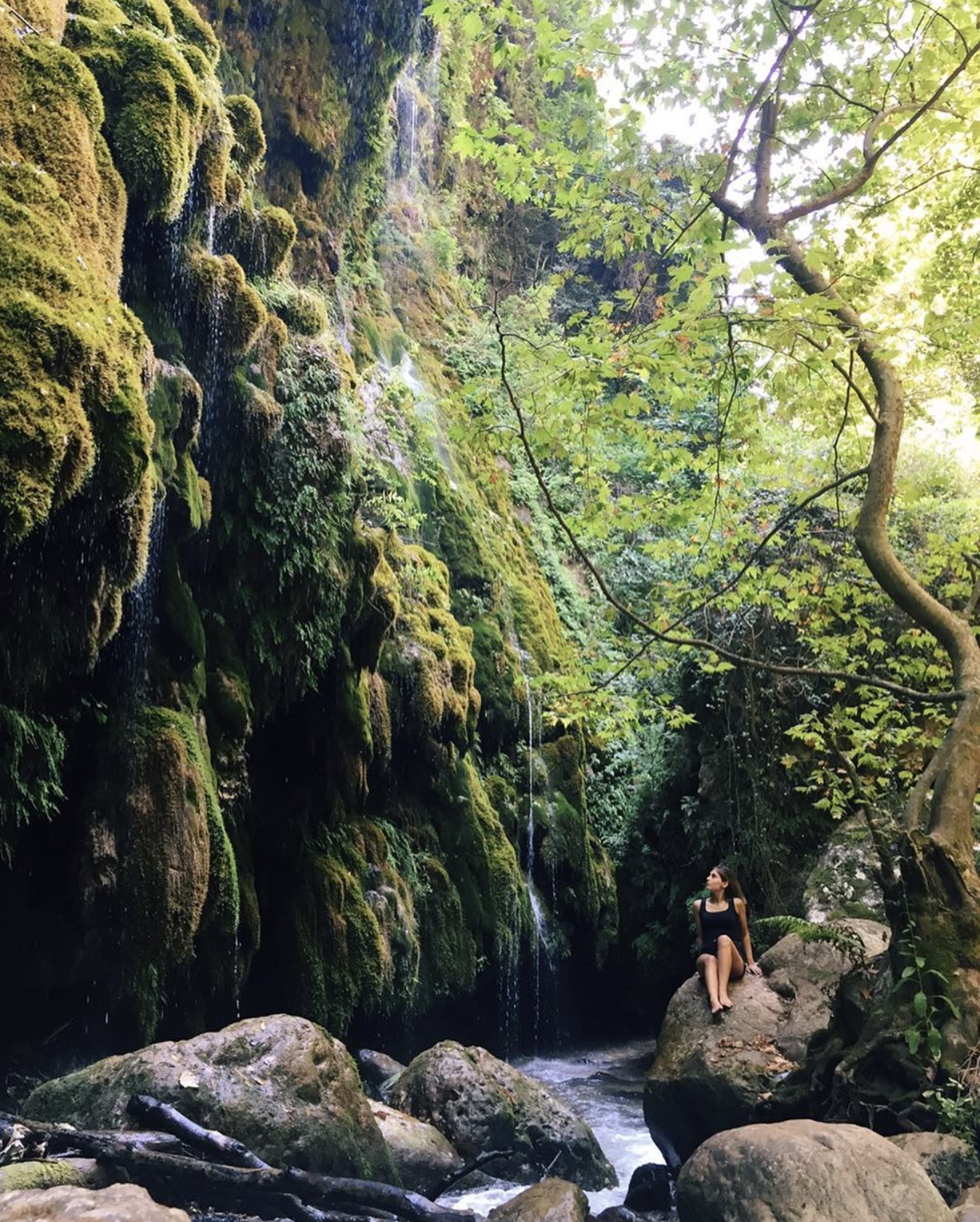
oldest olive tree with man, eco tourism Lebanon and the middle east, sustainable travel
The world’s oldest olive trees are in Lebanon. Eco-tourism in Lebanon can do a lot to bolster local communities, if it gets off the ground.

While attempting to move away from its scarred past, Lebanon has created a not-so-sustainable tourism industry with its focus on Beirut’s bars and beaches. The formerly lethargic tourism ministry is now trying to re-focus the market’s interest elsewhere in the country. With its Mediterranean apocalypse, diving is not great, but The Daily Star reports that the country could benefit enormously from growing its yet untapped eco-tourism industry.

Lebanon currently attracts more visitors to its urban centers than its beautiful countryside, leaving fallow an enormous opportunity. The country’s year-round outdoor activities include whitewater rafting, snowshoeing and snow survival, hiking, climbing, and even overnight stays with local communities.

33 North is an eco-tourism outfit that opened its doors last June. The Managing Director Gilbert Moukheiber told the paper that before established eco-tourism operators started offering their services, undirected visitors often caused a lot of harm to local communities. His firm, he says, practices “responsible” tourism, and they have trained over 70 local guides to date.

Michel Moufarege works for Liban Trek, the very first company founded in 1997 to offer alternative hiking tours in Lebanon. He claims that nature has been “attacked” from all sides, and that people would benefit from learning about what is beautiful and complex in nature. His kind of tourism also benefits local communities in Lebanon, who he says should be consulted.

Safa al-Hek, a medical practitioner, founded an organization called Oak, a cooperative that produces and sells organic food such as olives, nuts, jam, and fruit. In time, with international funding, al-Hek hopes the facility currently based in Koueikh, Hermel will grow to include an organic and traditional restaurant.

Start on the Lebanon Mountain Trail

Kadisha valley, lebabon mountain trail, eco tourism in Lebanon
Qadisha Valley, via Anatolla

In the meantime, she believes that her facility, which draws scores more tourists to the region than before, has helped to improve the economic standing and emotional well-being of the women who work there.

While the tourism industry depends richly on political stability, eco-tourism has helped to strengthen national unity, the paper reports. One significant achievement is the 440 kilometer Lebanon Mountain Trail, which passes through 70 different towns and villages from north to south Lebanon.

Moufarege says that development encompasses improved mountain trails as well as tar roads, and that doing so can help to amalgamate the local community.

More on eco-tourism in the Middle East:

The Holy City & The Windy City To Form Historic Environmental Partnership

3

holy-city-windy-cityRepresentatives from Jerusalem and Chicago will sign a “green” MOU next month in the windy city.

We need mammoth human collaboration in order to surmount our global environmental problems. And let’s face it, we have a few of those: coral reefs potentially a thing of the past by 2050, oil set to peak just as the demand for it increases, and water- the source of all life – already a luxury commodity in places like Yemen. But it isn’t over till it’s over. In recognition of their numerous challenges, but determined to overcome them, two cities are planning to create mutual solutions. Chicago and Jerusalem will soon announce their new “green” friendship.

Make a cheesy, warm artichoke dip as an alternative to hummus

0

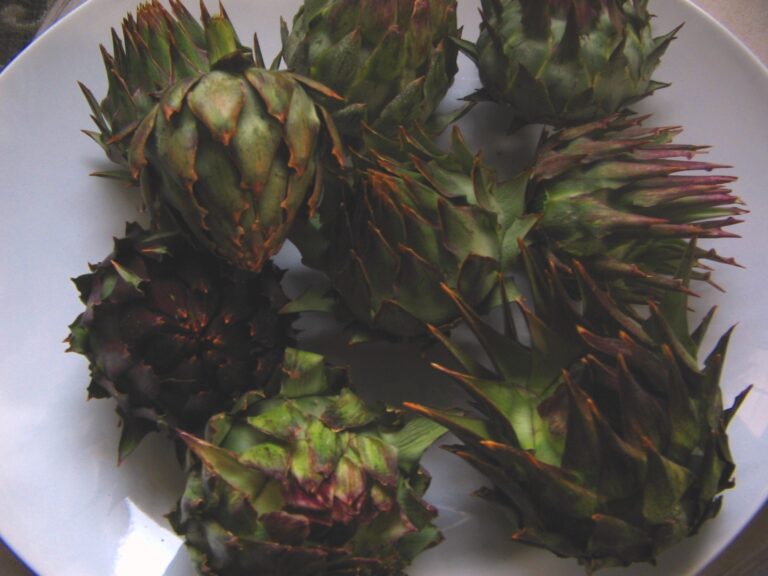
image-artichokes

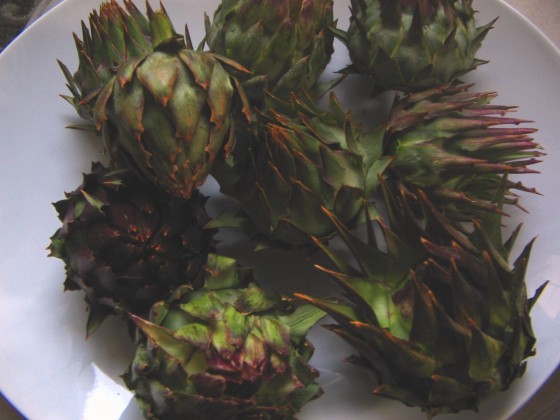
Thorns and thistles make delicious eating if you know know  Middle-Eastern ways to cook them.

Snooping around the open-air market in my town, I was glad to see thistles and thorns piled up on the wooden stands. (See our post about Israeli open-air markets.) Spiky artichokes and bristly cardoons, to be exact. If you’re looking to enrich your menus with less meat and more vegetarian food, take advantage of these thorny vegetables while they’re still in season.

Artichokes require a bit of work, but once they’re cooked, you need only drain them and dip their leaves into melted butter or garlicky olive oil, scraping  the fleshy bottom parts off with your teeth. The best part is the heart, with its smooth, buttery flavor. You can serve artichoke hearts smeared with a little za’atar pesto (fresh za’atar is also in season now). Also delicious is this unusual dip recipe using fresh, or to save work, frozen artichoke hearts.

Hot Artichoke Dip Recipe

Ingredients:

10 boiled fresh or frozen artichoke hearts, chopped fine (see note)

1 cup cream cheese

1/2 cup mayonnaise

1 clove garlic, mashed

Juice of 1/2 lemon

1/2 cup Parmesan cheese, grated

Preheat oven to 400 F, 190 C.

Blend artichoke hearts with the rest of the ingredients, except for the Parmesan cheese, in blender or food processor.

Using a spatula, scrape the artichoke mix out of the blender into a small baking dish. Scatter the Parmesan cheese over all.

Bake 30 minutes.

Serve the dish hot, with toasted pita wedges or crackers for dipping. Set out plates of capers and alfafa sprouts for garnish, if desired.

Note: For fresh artichokes, chop the stem off level with the artichoke bottom. Trim away the thorny tips with scissors, wash well between the leaves, and cook in boiling salted water for 30 minutes or until a leaf easily comes away from the body of the artichoke when pulled out. Drain, let cool, and remove all the leaves plus the feathery choke. The cuplike heart of the artichoke remains.

Bon appetit!

image-artichoke-dip

You’ll enjoy these seasonal recipes from Green Prophet:

Moroccan Stuffed Artichoke Hearts

Baba Ganoush

Kibbeh

Photo of artichokes by Miriam Kresh

Israel Cleantech Ventures Raising $100 Million for Energy Innovation

israel flagAt a time of uncertainty in world VC funding, Israeli cleantech VC stays focused on renewable energy

Israel Cleantech Ventures, the tiny but talented nation’s first cleantech-focused fund, is now more than halfway to raising a $100 million fund, according to a filing this week.
Some of Israel’s more interesting clean energy start ups that we have covered here were helped along the way by the VC funding they got from Israel Cleantech Ventures.

Worldwide Coral Reefs Are In “Dire Threat”

4

coral-reefsA new US report demonstrates that climate change and a variety of other factors could destroy all of the world’s coral reefs by 2050.

Coral reefs are more than just a pretty place for divers to pass their time. They are absolutely essential to the proper functioning of international marine ecosystems, and to the communities who rely on fishing and other marine activities for their living. Development, agricultural runoff, overfishing, and increased carbon dioxide in the atmosphere are just a few of the factors that have threatened coral reefs to such an extent that US government and non-government organizations have issued a very stern warning: if we don’t fix our behavior, we could lose all of our reefs as early as 2050.

Wikileaks, Bahrain and Saudi: Concerns over Rising Food Prices Spread

0

food-prices-bahrain-saudi-wikileaksBahrain, which saw deadly protest this month, is eager to control the price of food according to Wikileaks

Rising food prices have been at the centre of the recent riots to hit the Arab world and so it comes as no surprise that many Arab nations are working hard to avoid similar food price rises.

According to the Wikileak revelations, Bahrain increased government subsidies in an effort to off-set rising prices for lower-income families in 2008 and has promised more generous subsidies recently. Even so, this hasn’t stopped political turmoil as the tiny Gulf state has been rocked by explosive protests this month that left seven dead and hundreds injured when troops opened fire on protesters.

Italian Solar Company Finds a Friend in Israel: Enerpoint Acquires Friendly Energy

0

Friendly Energy

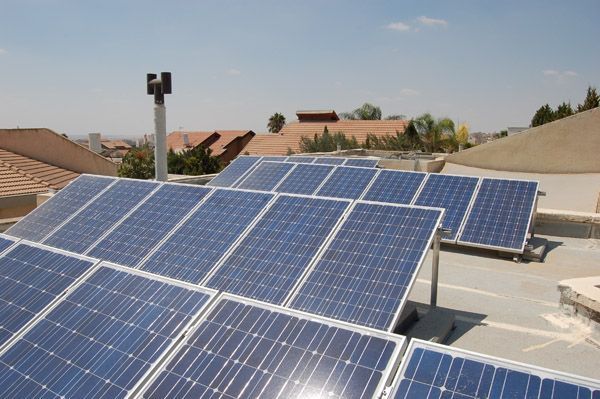
Friendly Energy has installed 70 rooftop solar systems in Israel, like this one in Beersheva. 

European companies continue to find interest in photovoltaic (PV) solar projects in Israel. For example, we recently reported about the joint venture between the Spanish multinational Soltec Renewable Energies and Shikun & Binui Solaria to build a solar power plant in Timna, not far from Kibbutz Ketura, where the German multinational Siemens (a part owner of Arava Power Company) is helping to build the first PV field in Israel. Now an Italian energy company, Enerpoint, has acquired the Israeli solar EPC (engineering, procurement and construction) firm Friendly Energy.

Libyan Revolution Will End Gaddafi’s Green Visions

1

libya green projectsDesert pivot irrigation project is one of Gaddafi’s several “eco wonders” that could be axed

In a way, it might be possible to have empathy for Libya’s embattled head of state, Muamar al Gadaffi, whose beloved green projects all over this desert kingdom may soon be coming to an abrupt end. Prior to all the present confusion that is occurring in Libya, Colonel Gadaffi involved himself in a number of unusual “green” projects, including a project to construct the largest artificial river which Gadaffi himself acclaimed as being “the 8th natural wonder of the world.”

This artificial waterway, built with pipes made in Libya and using water brought up from ancient underground aquifers, was just one of several environmental projects, including  special types of pivot irrigation for circular farms in the middle of the Sahara Desert.

Proposed California Bill Could Be Big for Israel’s Innowattech

Innowattech to help power California

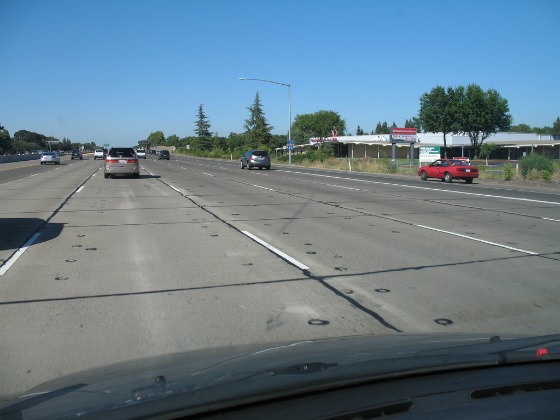
Between 11,500 and 51,000 vehicles drive on California freeways and expressways every day.

Energy Harvesting Journal posted earlier today that California Assemblyman Mike Gatto has proposed a bill that would require the state to use piezoelectric technology on its highways. The technology generates electricity from the vibrations on the road that are created by passing vehicles.

Case Study: We Measure One Family’s Hajj Carbon Footprint

4

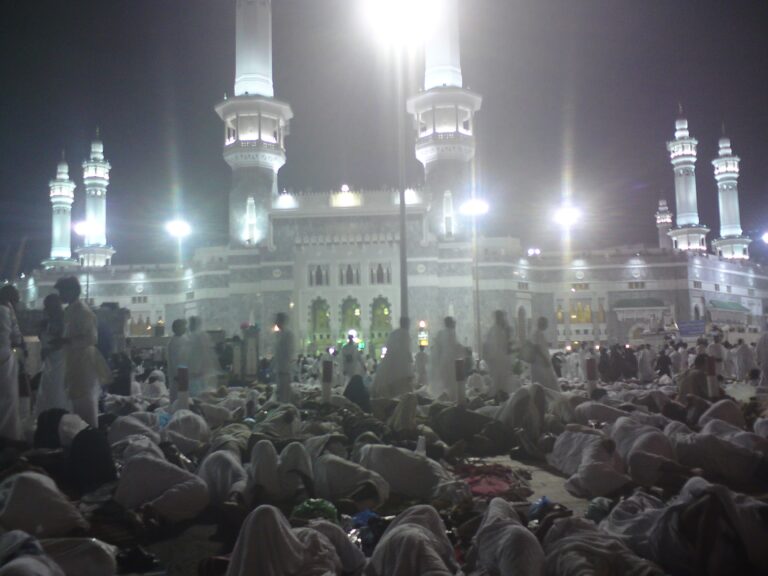
hajj mecca carbon footprintGreen Prophet’s Arwa measures her family’s carbon footprint to Hajj.

Last year, my auntie and her family- the Hussains- did one of the most important things that a Muslim can do in their lives. They fulfilled one of the five pillars of Islam and went to Hajj which is a pilgrimage to Mecca in Saudi Arabia. However, as a journey required by every Muslim who can afford it, concerns have been raised about the impact of this annual pilgrimage on climate change due to aviation, waste and litter. If every year around 3 million people make the journey, what is their carbon footprint? Also how can we ‘green’ Hajj to make its impact on the planet gentler?

In the first installation of a three-part feature, I will be totting up the carbon footprint of the Hussain family’s pilgrimage from the UK to Mecca. Now, I am not claiming to be some carbon expert who has measured their journey accurately, I just wanted to look at the major aspects of the pilgrimage and their environmental implications. Stay tuned for part two where the good and bad (environmental) aspect of Hajj are explored and suggestions are made to help ‘green’ Hajj.

Travel to Mecca and Back

A large chunk of the Hussain’s carbon footprint is from their flight as they are travelling from the UK to Saudi Arabia. All together the family consists of five members and they travelled from Manchester Airport to King Abdulaziz International. According to one carbon calculator (and remember they all differ hugely) this brings them to a grand total of 11.65 tonnes of carbon for their flights.

Now taking into consideration that they stayed in Mecca for 18 days, this brings them to a total of around 25.57 tonnes of carbon according to calculations by the Carbonica holiday calculator.

Travel in Mecca

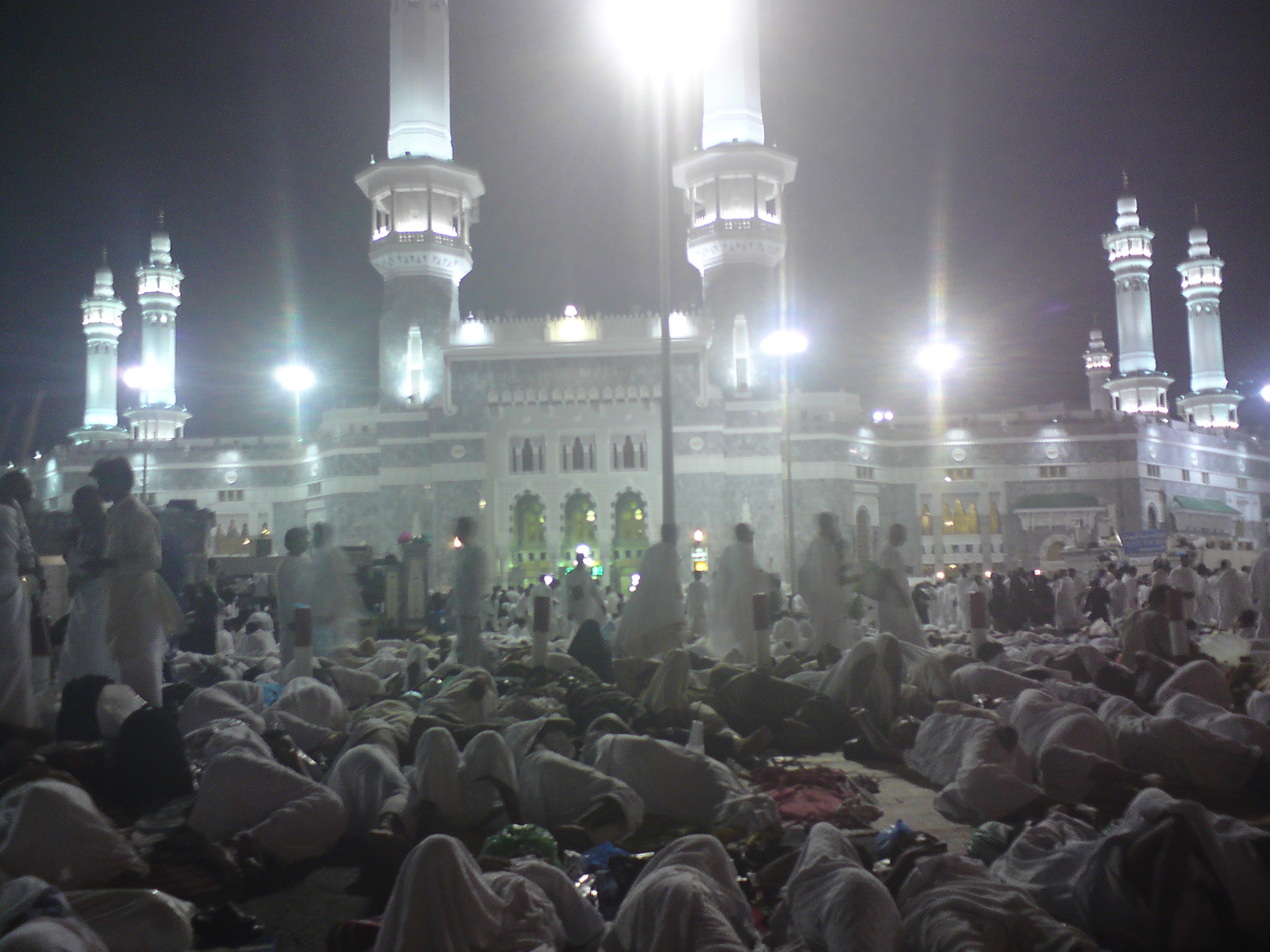
The Masjidi al-Haram (Kaaba) complex in Mecca is always busy with pilgrims during the hajj season. The staff are working round the clock! They are also efficient and have a unique way of doing things to ensure that the facility is comfortable for all. For this photo, I tried to capture the team work and the fast motion of running & mopping at the same time.

Overall, my aunty’s family relied on buses and coaches to get around. Clearly some locals do bring their own private transportation but due to high congestion most visitors will rely on public transport. Iman Hussain, my aunty’s daughter noted that due to the volume of people heading to prayers at the same time, travel is Saudi is very slow. Consequently, this brings the Hussain’s total carbon footprint to approximately 32.77 tonnes of carbon. This calculation does not include any activities they took part in, where they stayed or what they ate.

Food & Drink

I struggled to find a carbon calculator which considered the carbon footprint of food and drink during travel/holiday but I still felt it was an important category to include. Iman Hussain noted that most of the food publicly provided during Hajj is tinned food as well as lots of fruit. “Due to the heat, everything was in plastic containers as the food would just go off very quickly otherwise. Most of the tinned food was imported from different countries and there was a lot of waste.” No doubt the huge amount of imported and tinned food as well as waste and reliance on plastic containers would add to the carbon footprint.

Even so, the overall carbon footprint is already quite large and there are probably many other pilgrims with larger footprints. Look out for part two and three when I explore what can be done to cut this carbon footprint and make Hajj more environmentally friendly.

Image via Iman Hussain.

Again I just want to re-iterate that I am no expert on carbon calculation. In fact, I welcome any offers from experts to assess the carbon footprint of the average Hajj pilgrim properly as it was the lack of any data which led me to this rather slapdash effort.

For more on Green Hajj see:
‘Mekka Metro’ Marls a Green Hajj for Pilgrims
An Epic Journey to Mecca- by Bike! (Slideshow)
Saudis Listen to Call for Green Hajj