Home Blog Page 549

Fears that Gaddafi May Sabotage Oil Facilities

0

Would Gaddafi risk an environmental disaster by sabotaging oil pipelines to the Mediterranean to regain his control over Libya?

According to an article in Time Magazine, sources close to Gaddafi have warned that the situation in Libya will escalate into further chaos as the eccentric leader has ordered security services to sabotage oil facilities.

This comes after a month of protests and confrontations in Libya which have led to the estimated death of 1,000 people according to human rights activists. Although the Time’s article was quick to point out that reliable information coming out of Tripoli is scarce, this is not a completely unlikely move.

Back in 1991, Saddam Hussein ordered engineers to burn oil field and blow up wells in Kuwait during the first Gulf War. This act of wanton destruction led to an ecological catastrophe which not only burned one billion barrels of crude oil but also killed vegetation and wildlife, and polluted groundwater which led to the poisoning of the local human population.

Eat The Whole Animal: Lamb’s testicles and hog balls

0

image-lamb's-testicles

One testicle or two? Waste not, want not. It’s all good meat.

Affluent societies view an animal as so many fillets. But meat-eaters in traditional (read: less privileged) societies don’t turn their noses up at offal – kidneys, liver, head meat, tripe, sweetbreads, ears, and trotters. Testicles and penis meat too.  Those bumpy, funky bits are just as healthy and delicious as as any other part of the animal.

What’s the difference between a lamb’s ribs and, say, his testicles? No reason to throw good meat out. Think whole-animal cooking and sustainable food and read about home animal slaughter on Green Prophet.

In the Middle East, turkey testicles are commonly grilled and served in a pitta along with other grilled meats. Try a “me’urav yerushalmi” in any Israeli shwarma joint – the little dark round pieces are turkey testicles. With the Middle Eastern love of lamb and goat meat, the tasty reproductive organs naturally appear on plates as kabob.

Thousands attend annual testicle festivals in Idaho, Montana, and Illinois, starring turkey, hog, bull, and lamb testicles – usually breaded and fried.  Lamb fries are lunch in New Zealand when lambs are castrated on the farm. In fact, wherever people love meat and hate waste, testicles are on the menu.

A couple of Americans fry hog testicles in plenty of hot sauce – mountain oysters


Curious to try testicles yourself? Your local supermarket is unlikely to carry them. Look for them at Halal butchers. Make sure the glands are firm and pink. If fresh, cook them within 48 hours. Frozen ones should be cooked immediately after thawing. Plan on half to one testicle per serving.

If the tough outer membrane hasn’t been removed, you will have to slit it through and remove the meat inside. Grilling the testicles whole, it’s not necessary to remove the membrane. Many people like to soak the skinned glands in cold salty water to leech the blood out first.

Dip them in batter  and fry in deep oil, or cover them in flour seasoned with salt, pepper, and crushed garlic and fry in butter. Or soak them in your favorite marinade as you would for any other BBQ and cut them up to grill on skewers. Any way you choose to cook testicles, squeeze some fresh lemon juice over them before serving. Delicious.

Middle-Eastern Recipes from Green Prophet:

Kibbeh

Baba Ganoush

Eggplant Soup

Photo of lamb testicles for kabob by Shahrokh Dabiri via Flickr.

Massachusetts Governor Firms Up Ties With Israel’s Cleantech Superpowers

massachussets governor deval patrick

Governor Deval Patrick tour through Israel and the UK is aimed at fostering stronger “green” partnerships.

During a ten day trip that commenced in Israel on March 7th, delegates of The Massachusetts Innovation Economy Partnership Mission 2011 are meeting with Israeli and UK business leaders and government officials.

The focus of these meetings will be on expanding cleantech businesses, jobs, and collaboration. Governor Deval Patrick kicked off the tour with a forum held this past Tuesday at the Interdisciplinary Center in Herziliya, where he expressed his hopes to strengthen an already solid relationship between Israel and Massachusetts.

“If I Die” Lets Facebook Prepare A Video Clip Launched At Death

willook ifidie appIf you had one last thing to say to your Facebook friends, what would it be?

Adding to Christmas lists and New Year’s resolutions, we now we have an option to use our favorite social networking site to publish our final green wishes. Willook has developed a Facebook application that allows environmentalists to be green to the grave. For those people not obsessed with all things eco, the app is an interesting new take on the last word. The Israeli startup – Jews are neither squeamish nor flighty about death – has built their application to include certain protocols that ensure respect to the end, while allowing a fast and meaningful way to spread love with the recently deceased’s network of friends.

Ride the Electric Abu Dhabi Stretch Limo SuperBus

The midnight blue “electric” Superbus comes fully loaded. Backed by Dow Chemicals, is this another example of westerners catering to the whimsy of oil rich sheikhdoms?

Commuting time between the United Arad Emirates super cities of Dubai and Abu Dhabi could be cut in half in a newly invented electric Superbus able to ply the 124 km distance in only 30 minutes, according to The National. The new electric stretch limo, or sleek super bus,  is 15 meters long, 2.5 meters wide and 1.65 meters high,  has eight gull wing-style doors on each side, and can accommodate up to 23 passengers in “limousine style” comfort at speeds of 250 km per hour. A dream car for Batman or another example of the bad taste of ostentatious wealth?

Is Car-Free Living Possible in the Suburbs?

"suburban transportation green"How can eco-friendly transportation be improved in the suburbs?

When contemplating whether to live in a city or in the suburbs, most people weigh the pros and cons of having more space or less space, being closer to better schools for their kids or having the convenience of everything nearby in an urban environment.

But not normally at the top of everyone’s list of issues to consider is the environmental impact of living in the suburbs.  Suburbs mean more space, remoteness from the city, and therefore also necessitate more transportation (and often wastefulness).

Chances are, if you are moving out of the city and into the ‘burbs, you will have to give up your urban car-free existence (like Green Prophet’s Arwa) and get a vehicle (with so many cars going green now, hopefully an energy-efficient one).  You can try to cut your car costs a little searching around for some cheap car insurance, but at the end of the day your carbon footprint costs will still be much higher than when you lived in the city. Here’s why:

Were Tesla’s Solar Innovations “Buried” by Big Oil?

tesla nikolaFree electricity from lightning? Nikola Tesla thought so.

Even though I grew up in America, where many of this man’s inventions were brainstormed, I must admit I never heard of Nikola Tesla until now. This man, born in Serbia in 1856, and who later immigrated to the USA in 1884, may have been the world’s greatest innovator in electrical and electronic devices that the world has ever known. His experiments with electrical currents, including what became known as the AC or alternating current, are only some of this great man’s creations, and recently resulted in the American electric car company, Tesla Motors, naming their electric sports cars after him in tribute. Could it be that his inventions were buried by Big Oil?

Mother Of Five Will Be The First Emirati Woman To Visit Antarctica

2

Dana Al Hammadi Emirati woman antarctica

Along with 70 other environmental advocates, journalists, scientists, and other concerned citizens, Dana Al Hammadi is en route to Antarctica on an awareness-raising mission.

Dana Al Hammadi is an inspiration to women everywhere. Thirty-seven years old and a mother to five children, she has embarked on one of the most important trips of her lifetime – to Antarctica. But this is no joy ride.

Inspired by Tamer Hassein’s similar expedition last year, the environmental activist from Abu Dhabi intends to bear witness to Antarctica’s stark climate change.

After returning later this month, she intends to share her knowledge and passion with students and adults throught the UAE with a view towards generating greater environmental awareness.

D.C. To Get A Kosher Delivery Truck From Top Chef Spike Mendelsohn

0

Top Chef Spike Mendelsohn Rachel Ray

Top Chef Spike Mendelsohn, bemoaning the lack of decent kosher food in Washington D.C., will start a delivery truck. This is him sharing a laugh with Rachel Ray.

Famous chef Spike Mendelsohn’s Good Stuff Eatery, while not vegetarian, is one of the friendlist burger joints in the United States capital. Almost everything, from delivery boxes to oil, is recycled, ingredients are sourced locally, and the restaurant uses even uses biodegradable takeaway containers and harmless cleaning products. 

So his environmental record is solid, but Spike just couldn’t get enough of the real good stuff: mom’s tasty Jewish cuisine. So, he teamed with the historical synagogue on Sixth & I to create adelivery truck called the Sixth & Rye.

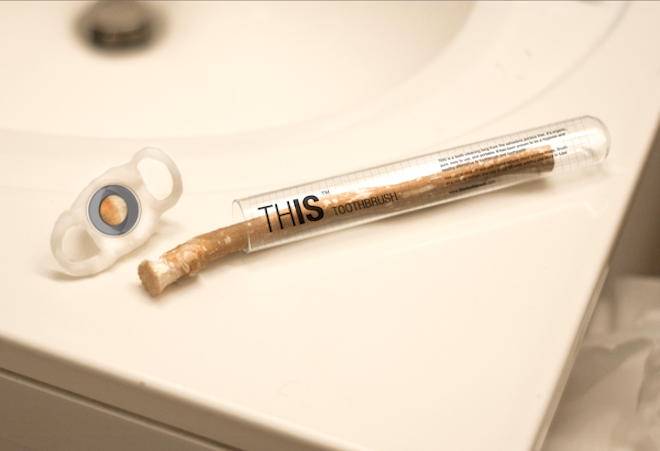
This toothbrush is a miswak

7

THIS, Miswack, toothbrush, Beirut Design Week, AIGA, design, green design, sustainable design, Middle East
‘THIS Miswak’ complete with cutting cap could soon be in supermarkets

Oral hygiene is no stranger to the Islamic lifestyle. Self-improvement and cleanliness is part of the Muslim creed and its implementation is connected to increasing spirituality. In Muslim culture, a natural toothbrush called a miswak, was in use long before any plastic toothbrush had been designed – even the Greeks and Romans had twiggy toothbrushes. Finding a miswak stick in any Middle Eastern country and particularly Muslim communities is not that difficult; it costs next-to-nothing, and is the most organic toothbrush that doesn’t require toothpaste nor harbour bacteria as a regular synthetic toothbrush would.

However, this miswak stick is not a common eco-practice amongst European and Western countries. Lebanon Graphic Designer, Leen Sadder, developed a novel ‘THIS Miswak’ stick as part of her design class, which with the right marketing, we feel could soon be on supermarket shelves.

Zaufishan got in touch with Leen to ask why she designed the miswak and whether it contributes to environment sustainability.

Thank you Leen for sharing your eco-product with Green Prophet. First up, tell us a bit about yourself.
I grew up in Beirut, Lebanon where I attended the American Community School and later pursued a four-year bachelor’s degree in Graphic Design at the American University of Beirut (AUB). After graduation, I worked at a design studio for a year before moving to New York City to attend the Designer as Author/Entrepreneur program at the School of Visual Arts, where I am currently in my second semester. While I am a trained graphic designer, I consider myself more of a design thinker and am constantly looking for new ways to affect change through design.

What lead to the creation of ‘THIS Miswak’ toothbrush? Had you heard of such a ‘clean’ product before?
THIS toothbrush began as a project for Allan Chochinov’s 3D Design class at SVA. In our first class he asked us to redesign whatever we threw out next. For me it happened to be an empty tube of toothpaste. I began with an exploration of the history of toothpaste, its relationship to the toothbrush, the different features, and the human habits related to it. At one point I was obsessed with the ritual of squeezing the toothpaste tube and many of my early sketches iterated that.


Leen’s early sketches for a more functional miswak storage

After moving on with those I was doing some more research and discovered the miswak, which I had seen and heard of before but had not thought about as a possible solution. The more research I did, the more I found out how beneficial it is and the more interested I got in trying to promote it to a wider audience.

What was funny was that I had no idea how I was going to actually get my hands on one of them- but I soon learned that in NYC, anything is possible. A few minutes after deciding to go with the direction, I left my studio and walked into a copy place nearby – I had remembered it was run by a Pakistani couple. I went in with a picture of the miswak and five minutes later was walking out with two brand new ones that the woman had happened to have with her in her purse as well as the address, name and phone number of the place down the street that sells them. I could not believe how lucky I had been and decided then that it was a sign to continue on with the project.

What inspires you to design and create?
I have always had a strong passion for design as well as community, and I think my work tends to reflect parts of my cultural background – so I would definitely say that Beirut inspires me.  I would say what inspires me most, though, is people. I am constantly fascinated by the people I meet, and one of my favorite pastimes is sitting in a crowded area and just watching as people rush by, trying to guess where they are going and what their lives are like. Over the past year I have come to realize the power of design in changing the way the world works, the way people behave, and the way we think. It is so much more than creating a logo or a poster or an animation- it is about communication and power, and that involves making sure you are directing your ideas towards the right audience, and listening to them as well. It also means finding out how and why people behave the way that they do, and coming up with solutions to problems that arise from that.


THIS Miswak incorporates a snipping device in the cap – like a cigar cutter, to expose new, clean “bristles”

Has the miswak been marketed towards or sold in Muslim communities, particularly Middle Eastern regions? Do you think it should?
From what I know, the miswak has not been particularly marketed in the Middle East. I know that there have been products that incorporate the miswak flavor into toothpaste, as well as miswak holders – but other than that I think the miswak is known as more of a tradition and is the kind of knowledge passed on from older generations to younger ones. It is almost impossible to separate the miswak from its religious connotation and I think that is probably why there has not been much of a marketing strategy related to it. Whether there should be or not is still a question – I think more conclusive studies would need to be conducted to find out how and by whom the miswak is being used in order to find out if there is a need to market it at all.

How, in your opinion, can the miswak toothbrush help the environment?
The beautiful thing about the miswak is its purity. The way it protects its bristles with the outer covering is a natural design wonder. The use of the miswak would undoubtedly cut down on the excessive use of plastic and chemicals, obviously helping to protect the environment. While I was breaking down the different components of commercial toothpaste, I could not understand the purpose of the box toothpaste is packaged in. Shampoo isn’t sold in a box, and neither are most household or beauty products- so how come toothpaste comes in a box? I thought maybe it was a storing issue, or a hygiene issue- but felt that there had to be a better way to solve both those problems. One of my early sketches was a toothpaste tube with a hole in the top so it could hang in-store without having to waste the excess material on the box. This idea returned later in the design of the miswak package, which has a hole in the cap in order to display the product without having to use additional material.


The miswak’s plastic wrapping is a familiar image for consumers – but contradicts renewability

And what about the plastic packaging? That’s not environmentally friendly.
I think it is important that I tackle the issue that arose when the project was traveling the blogosphere – and that is the ‘plastic’ packaging of the miswak. It started many debates that were quite interesting but were a result of assumptions (on behalf of readers and bloggers) and miscommunication (on my behalf). So I would like to take this opportunity to clarify a few points:

I completely, entirely agree with everyone who had a problem with the plastic packaging of a supposedly sustainable product. The fact of the matter is that I never realized that it was going to spread once I put it up on my portfolio, so it never occurred to me to address the issue in the description of the project. When my professor pointed out the problem in class, it was really the first time I had even thought of the material I had used for my prototype – mainly because I had been focusing so much on the functionality of the product and not on researching different materials within the two weeks we had to complete the project. I had also happened to have just purchased a DIY plastic molding material that I was excited to use in my prototype to indicate what the cap could look like aesthetically. I did not mean to indicate that if it were a real product, it would be made of plastic but of course, I cannot expect people to know that – so I was actually pleased to see the reactions it got. It showed that people were really thinking about the solution at hand and were critical in judging whether or not it was beneficial to the environment.

Most importantly, I would like to clarify that if THIS toothbrush were to be developed into a real product, the first thing I would do is research possible sustainable materials, reduction of the packaging, or even an entire re-packaging of the product itself if needed. I would steer clear from using any material that would harm the environment or use excess material, while still maintaining the look and feel of the packaging concept.

Do you think non-miswak users will convert their toothbrush to become hardcore miswak users?
I’m still unsure about whether non-miswak users would replace their toothbrush and toothpaste. One of the most difficult things to do is to change people’s behaviors – especially when it is one that has resided for so long. The positive reactions I received with regards to THIS certainly showed that there was an interest in giving it a try. I think it would probably be a very specific audience – one that is both environmentally and culturally aware of the features of the miswak.

On a commercial front, Is the miswak economically viable?
I have not gotten into the details of the viability of the product. However, I do think that with the right packaging and material that it could be developed into a very affordable and viable product due to the nature and availability of the Miswak itself. Again, this would have to be studied separately.


THIS Miswak billboards with variations of a print campaign

We see the great prototype advertisements for THIS Miswak. Was the miswak difficult to market to non-Muslim audiences?
Since it is still a student project and has not been tested with a real audience,  it is difficult to understand the results. However, based on the amount of blog posts, tweets and project views (almost 14,000 so far!), I think it’s safe to say that there is a general interest in it – mainly because it looks so out of place. I think non-Muslims are interested in trying it out to see if it could really replace their toothbrush and toothpaste, and with enough scientific proof and ease-of-use, it could become a mainstream product in the realm of sustainable products today.

We love hearing about similar eco projects and designs so what, if any, other projects have you been involved in and created?
You can check out more of my work at http://www.behance.net/LSadder

Great! We will. As a creative person designing for change, what 3 top tips would you give to fellow designers who are developing ethical or environmentally friendly products?

1. Know your audience.
2. Research, research, research.
3. Be accountable for your decisions and their consequences.

Lastly, what have you yourself learnt from the conception and creation of THIS Miswak?
This project has taught me so much; mainly though it has reaffirmed to me the power of design and communication. It has shown me how fast something can spiral out of control and how interested people are in the unknown. It has also taught me to be careful in communicating my work to the world – and that blogs are awesome!

Leen Sadder
SVA Graduate Student, MFA Design
New York City

Thank you for sharing your product and thought process Leen, you’re a great eco-designer and inspiration – we need more visionaries like yourself!

More on living life lean and green!
Miswak Is Nature’s Twiggy Toothbrush
Are You An Eco-Sexual
Black Cumin: Islam’s Miracle Cure Seed
Cambridge To Build Europe’s First Eco-Mosque
Are Superfoods For Real, Or Just A Marketing Device?

Home Study to Green Your Education

0

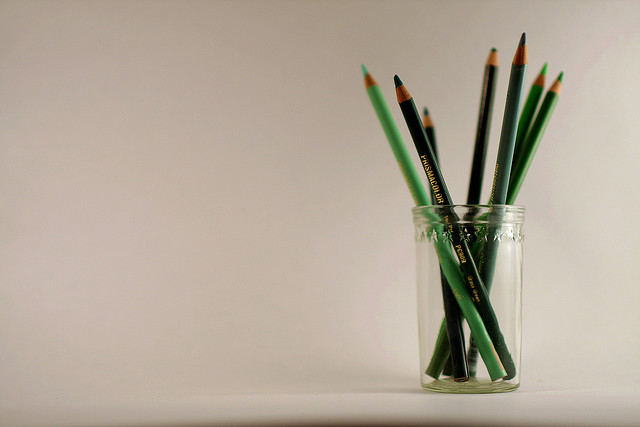
"green education online"Sharpen those green pencils and get your eco-friendlier education at home.

When offering advice about how to reduce one’s carbon footprint, several environmental advocates, organizations, and websites suggest telecommuting to work as much as possible.  Telecommuting (or working remotely from home on a computer) saves gas, releases fewer carbon emissions, and…. enables you to work in your pajamas if you are so inclined.  But one of the activities that environmentalists rarely recommended transferring to your living room is home study.  Telestudying.  How about learning from home instead of traveling to school and perhaps relocating to a different location?

Home schooling has been a familiar concept for children under the age of 18 for a while – parents who wish to teach their own children can request permission to do so and instruct their kids at home.  Yet obtaining higher education degrees from home is a fairly new concept.

Editor of Arabic Environmental Magazine Scoops Top Eco Prize

4

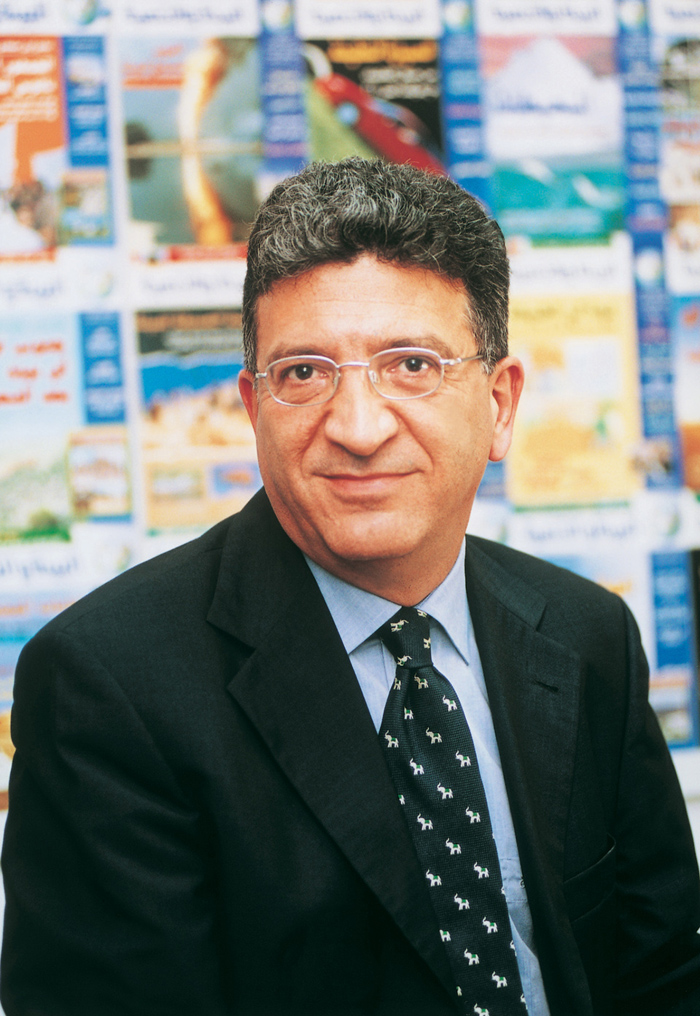
The editor of the Arabic-language magazine Al-Bia Wal-Tanmia was awarded the Zayed International Prize for environmental action leading to positive change in society

Najib Saab, the Editor-in-Chief of the magazine Al-Bia Wal-Tanmia (Environment and Development) and secretary general of AFED (Arab Forum for Environment and Development) won the Zayed International Prize for the role he has played in raising awareness about environmental concerns in the Arab world.

UAE minister of Environment and Water, Dr Rashid Ahmed bin Fahd, explained that Najib Saab had secured the award because his influential and successful magazine had “triggered unprecedented environmental awareness at all levels” and “built a new relationship between policy-makers and people of the Arab world with the issues of environment and sustainability, and placed the environment high on the national and regional agenda.” The prize will be handed out next week in a ceremony in Dubai.

Negev Oil Shale Plant To Shut Down, Switch To Natural Gas

0

shale oil

Israel Chemicals Ltd. has plans to replace its Mishor Rotem oil shale plant with more viable natural gas.

Initially installed in 1978 as a pilot project, the Mishor Rotem oil shale plant will soon be shut down. Globes reports that Israel Chemicals Ltd. – which purchases the energy generated by approximately half a million tons of oil shale each year – sites a low profit margin as a major cause behind the move.

A newer, cleaner, natural gas plant will take its place. This does not bode well for Israel Energy Initiatives. Though that company has plans to use in-situ technology to extract oil shale reserves in the Adullam district, compared to open-pit mining, ICL has sent a clear message: oil shale is neither clean nor profitable.

UAE Sustainability Conference Inspires Change

1

The Green Sheikh, who attended the event, encouraged everyone to get out of their comfort zones to help create a more sustainable UAE

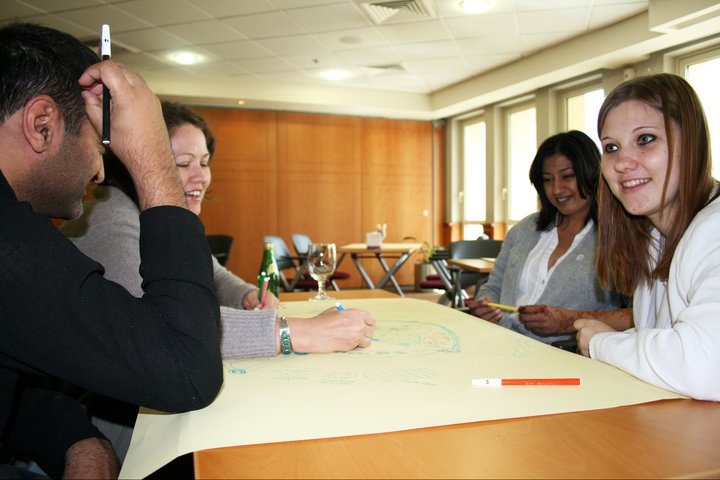
The main problem with a lot of green events and green conferences is that they end up preaching to the choir. The green-savvy will attend to learn more but it’s very hard to convince new people with no prior interest in the issue to give up their time to discuss a brand new topic. This is where the SustainabilityCamp conference in the UAE comes in.

Two weeks ago, it brought together people with interests in health, education, art and youth issues to discuss the interconnectedness of sustainability issues and what they can do to make their city and country more sustainable.

Keeping Buildings Pearly Green From Design To Operation

3

estidama pearl professional consultant
Irina Forster is one of  186 new professionals qualified to oversee building projects according to the Estidama Pearl Rating system.

Rola questions – with good reason – whether Arab governments are sincere about sustainability. While certain of them such as Qatar and Abu Dhabi are making some effort to reconcile their fossil addiction, others continue to spend on profligate projects like Dubai’s destructive World Islands. Abu Dhabi, rated one of the world’s best cities, continues its baby steps towards a healthier, smarter Emirate but it remains to be seen whether their belated enlightenment will stay the worst that climate change has in store. In the meantime, hoorah for Estidama Pearls.