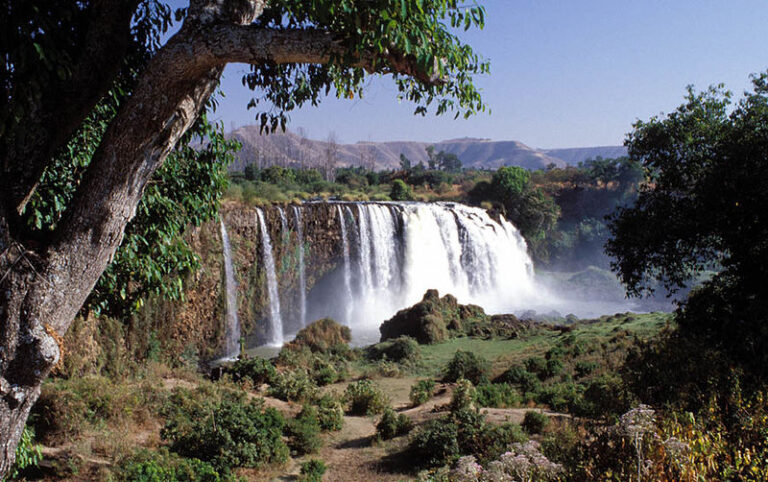
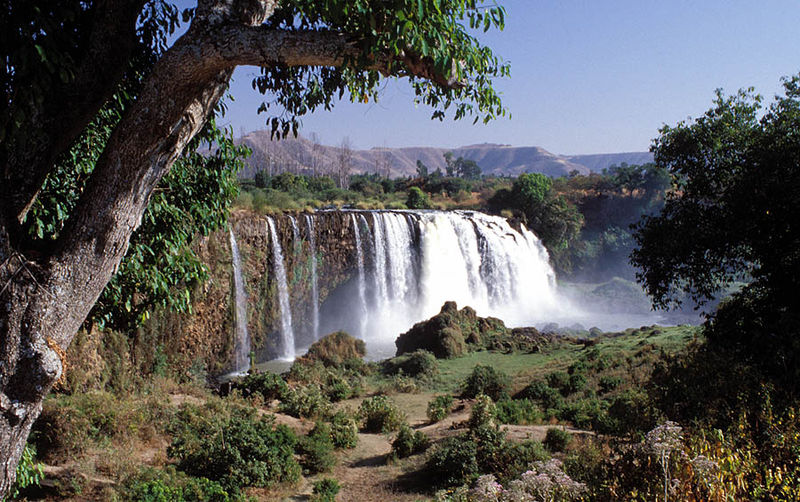
Waterfalls on the Blue Nile. Ethiopia has plans to grab hold of a bigger share of the river despite Egypt’s long held monopoly.
Defiant of Egypt’s historic monopoly over its flow, Ethiopia is pushing ahead with a controversial plan to build a massive dam on the Nile river. Egypt and Sudan have maintained control of the Nile through a series of laws originally brokered by colonial powers in 1929.
But last May, six upstream countries signed a legally binding document that dispossessed Egypt of its right to veto decisions regarding the Nile’s distribution. Buoyed by President Hosni Mubarak’s recent ouster, and undaunted by criticism, Ethiopia insists that it will proceed with its plan even without international support.
At a recent news conference, Ethiopia’s Water and Energy Minister Alemayehu Tegenu explained that construction of the dam near the Ethiopian and Sudanese border is expected to start soon, Reuters reports.
This despite widespread opposition to the project, which Minister Tegenu suspects is a direct result of Egypt’s campaign to prevent the dam’s construction.
But Mr. Tegunu is adamant that Ethiopia will proceed with the $4.78 billion dollar project even without donor support. In order to finance the project, they will sell off government bonds.

At present, Ethiopia uses 1% of its annual 86% contribution of Nile water, while Egypt has access to 55 out of the river’s 84 billion cubic meter annual flow. Last year, Ethiopia, Kenya, Uganda, Rwanda, Tanzania and Burundi signed an agreement to re-apportion the Nile, an agreement Egypt refuses to acknowledge.
The Nile Dam is expected to generate 5,250MW of hydroelectricity after its completion in approximately 44 months, contributing more than a third to the country’s $12 billion plan to generate 15,000 MW within the next 25 years.
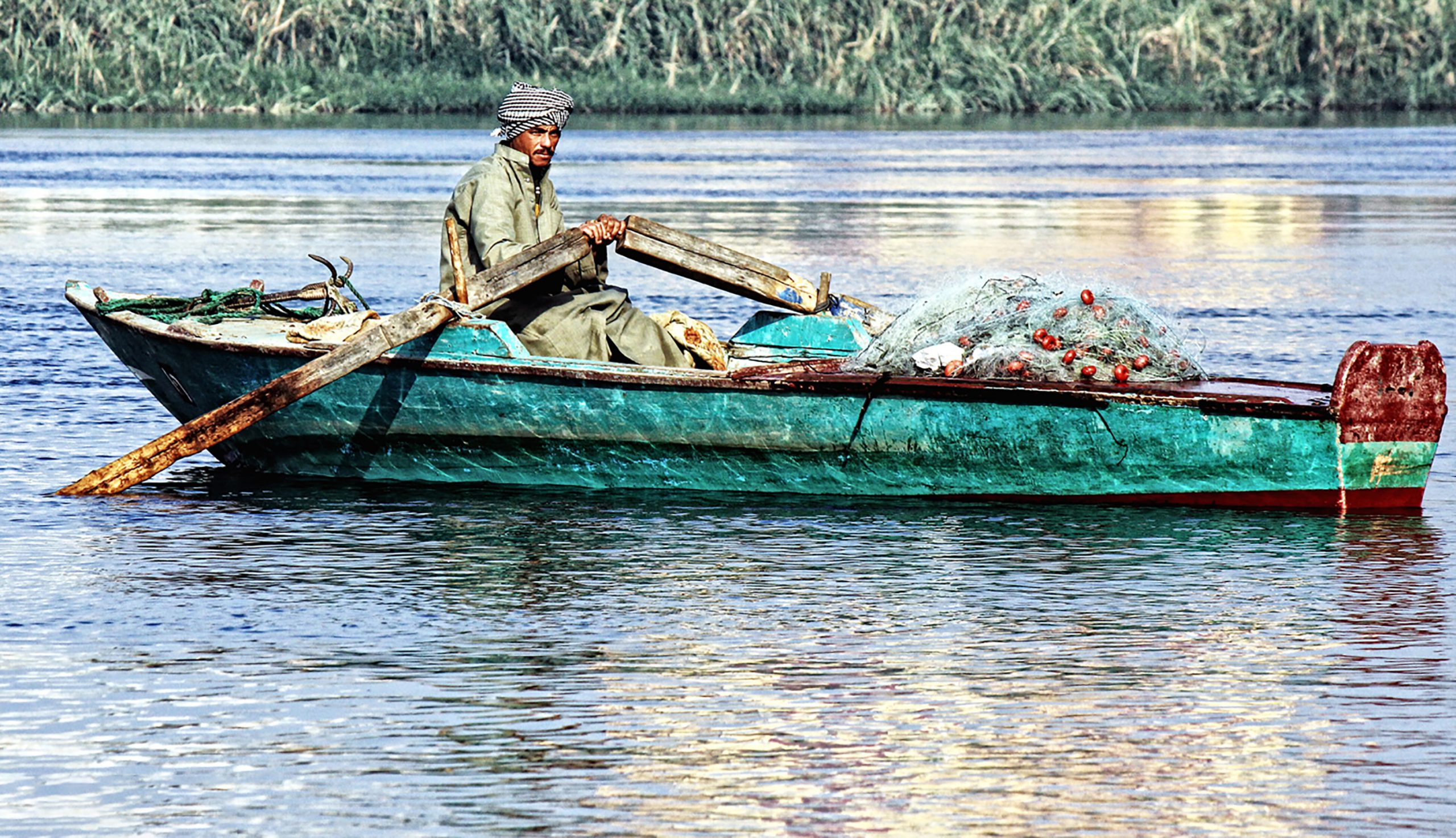
Apart from a non-renewable aquifer, Egypt relies almost exclusively on the Nile to provide for its 85 million and counting residents and is eager to maintain its control. So eager, some mutter, that this dispute could lead to war.

The Ethiopian Prime Minister Meles Zenawi told Reuters that Egypt is sending rebel groups into its country, but that any effort to declare war on the upstream riparian nations would result in failure.
It behooves Egypt to take diplomatic action, cede its unbalanced influence without sacrificing a reasonable percentage, and start working overtime to improve management of those water resources it does have.
:: Reuters
More on the Nile River:
American Elections Are Bad for the Nile Delta
In The Face of Nilelessness, Egyptians Protest Water Shortages
Nile Water Kills 17,000 Children Each Year
Top image via wikicommons



 We speak to Ibrahim Al Zu’bi from the Emirates Divers Association about why the ban on shark finning in the UAE hasn’t worked and what ordinary people can do to stop the horrific trade







 Vegan-friendly lip enhancers? CollPlant makes an animal-free collagen, using tobacco plants.
 The 100-MW photovoltaic power station would be the first to harness Turkey’s remarkable solar resource.
 In looking toward the future, social Greens throughout the Middle East should coordinate an agenda geared toward a sustainable tomorrow.


 Fashion designer Naomi Maaravi makes clothes with a story.