There’s a lot of buzz about overfishing, but navigating what is sustainable to eat is not so easy in the Middle East, where we don’t have such well-established research institutes as the Monterey Bay Institute in California.
Luckily, we do have the WWF-EWS in the United Arab Emirates, which has been doing an excellent job of tracking which Gulf fish species are overfished, like the popular Hammour, and which populations are able to rebound quickly enough to make their consumption sustainable.
In order to make good choices easy, EWS has published a handy picture guide that details the good, the not-so-bad, and the ugly. We’ve listed the good. This guide is about fish at risk and those that are not. It cannot vouch for pollutants in fish. Rule of thumb, if a fish is eating other fish, it contains more contaminants. The larger the fish, the more it bio-accumulates pollution.
And later, after you’ve read on, be sure to check out our fish recipes, which can also apply to delicious recipes for fish that are not historically popular in the Gulf region. See Moroccan fish stew. Persian fish stew recipe. These recipes work well for tasteless farmed fish like the gilt-head bream.
List of fish that are (probably) okay to eat in the Arab Gulf:
The Sordid Sweetlips, or Yanam in Arabic, comes from the Haemulida family that are found in fresh, brackish, and salt water. Their coloring changes throughout their lives, and are so-called because of their large fleshy lips.

The Pink Eared Emperor is known in Arabic as the Shaari Eshkeli. They favor reef/rocky and sandy places and typically eat crustaceans and other small fish.

The Angel Fish. If you are anything like me, this Angel fish might just be too cute to eat, but EWS-WWF does have it on their list of sustainable options for the Gulf. Called Anfooz in Arabic and also known as the Red Sea Angelfish, the largest of its species grows up to about 8 inches. They lose their bright colors when they are dead and on ice. In the photo below the fish eyes are not clear at all or are sunken indicating that this fish is not fresh.

The Black Streaked Monocle Bream or Ebzimi in the Emirates is an incredible fish. Though this small image might not be a great indicator, the male can reach up to 10 pounds in size, while the female grows even larger. The female Bream can also live up to 17 years, making it a wonderful, resilient option for fish-eaters in the Emirates and beyond.

The Two Bar Seabream is another great option. Called Faskar in Arabic, this fish also likes to huddle around the reef at depths between 2 and 20 meters. Consider that when you see it in the market or buy it frozen, the fish may have lost its bright colors.
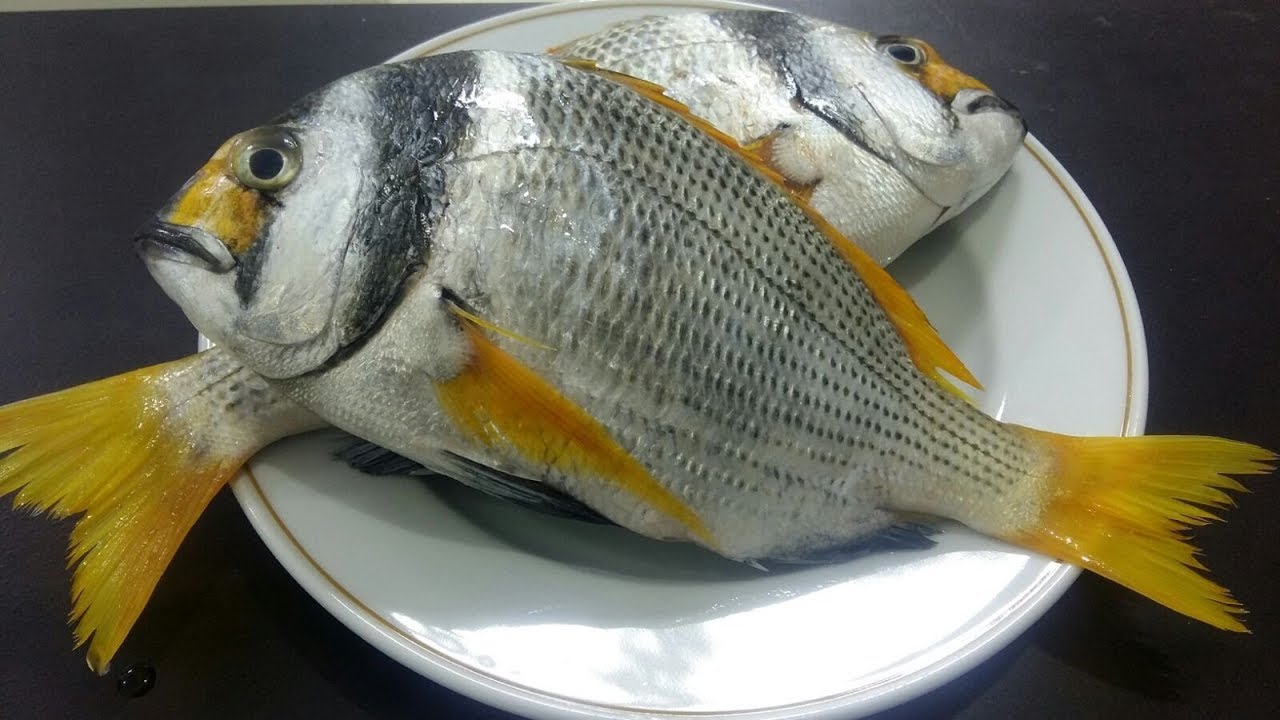
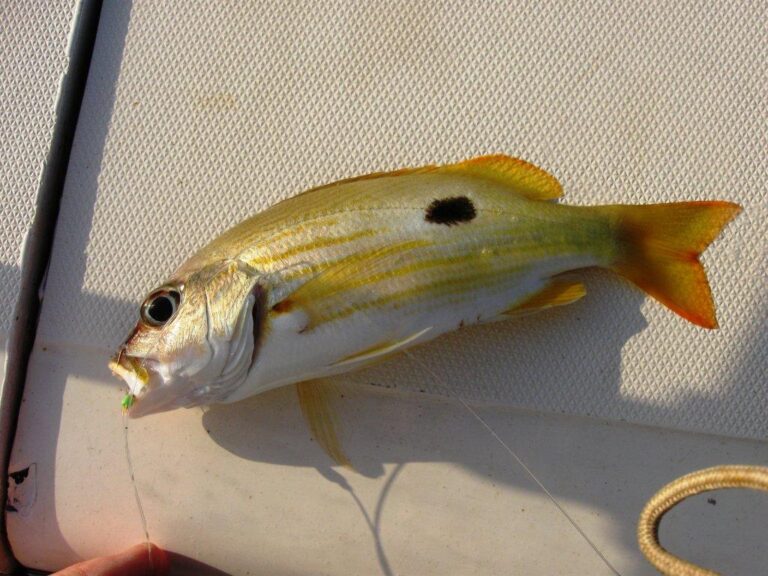
The Ehrenberg’s Snapper (Lutjanus ehrenbergii) is also known as the Blackspot Snapper and Ehrenberg’s Seaperch. They are common inhabitants of rubble areas.
 The last fish on our list of seven is The Orange Spotted Trevally or Jesh umalhala. Another English name for this fish is the Gold Spotted Trevally, which can grow to be as large as 2 feet. This fish is a powerful predator that feeds on a variety of small fish and crustaceans.
Even if you aren’t a lover of the taste of fish, it’s a healthier alternative to red meat. There are always spicy Middle East and North African recipes that will make any fish taste like heaven, even to fussy eaters.
Try Moroccan fish stew or our Persian fish stew recipe. These recipes work also well for tasteless farmed fish like the gilt-head bream, known in placs like Israel as Denise.
More on sustainable fishing in the Gulf Region:


 Denmark’s Better Place commercial launch may finally take place – in October