Home Blog Page 513

Corruption is Alive and Well at Egyptian Zoo

0

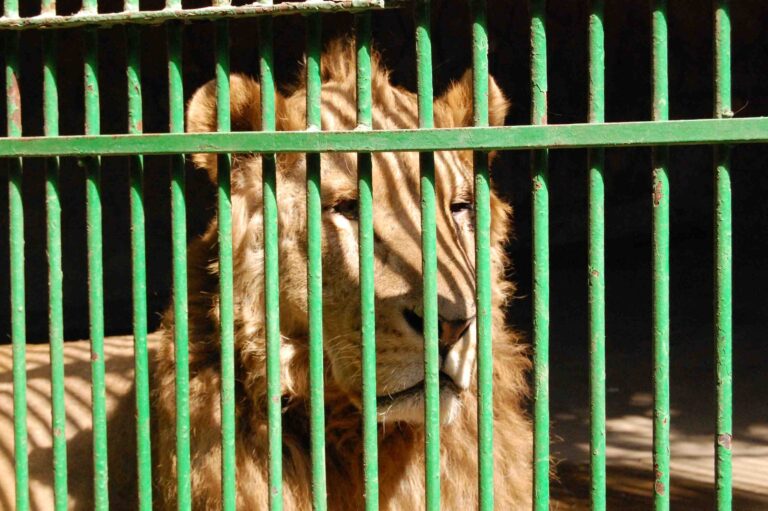
animal abuse, egyptDespite disgusting facilities and maltreatment of wild animals, Egyptian zookeeper Ahmed-Al Timsah’s permit has been renewed.

When Apartheid ended officially in South Africa, racism didn’t go away. Likewise, though we had hope that a post-revolution Egypt would usher in a period of more humane treatment of animals, Egypt remains a corrupt society with a terrible track record of abuse.  AlMasry Alyoum recently reported that one zoo owner has managed to secure renewed permitting for the Lion Village north of Cairo, despite the fact that its animals are subject to hot temperatures, lack of water, trash-filled cages, and space confinements that would make the sanest Monk stark raving mad.

Big Business Sponsors Recycling Vending Machines in Lebanon

0

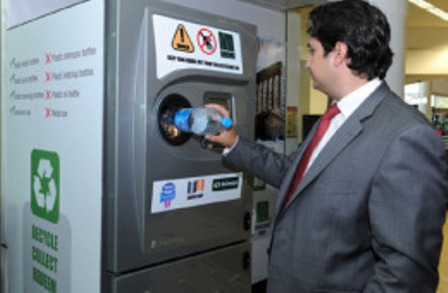
recycling, plastic waste, meditteraneanLebanon could get a lot cleaner thanks to a brilliant plan devised jointly by Nestle Pure, Spinneys, and Servicorp.

That’s right. Nestle Pure, Spinneys, and Servicorp are planning to save Lebanon from the plastic waste that kills tens of thousands of Mediterranean creatures each year by introducing reverse vending machines to certain Spinneys locations throughout the country. Their initiative called “Protect Lebanon – Recycle Today” will allow users to return their empty plastic bottles and cans to the vending machines for a small return.

With nearly 200,000 employees, Nestle in particular is frequently criticized for promoting alternatives to breastmilk. Spinneys in the United Arab Emirates is known to stock endangered fish species, and I don’t have any juicy scoop on Servicorp. Suffice it to say that it was surprising to learn that these three businesses have devised a brilliant plan to energize Lebanon’s soporific recycling movement.

Solar Power In The West Bank – Green Progress or Bad Politics?

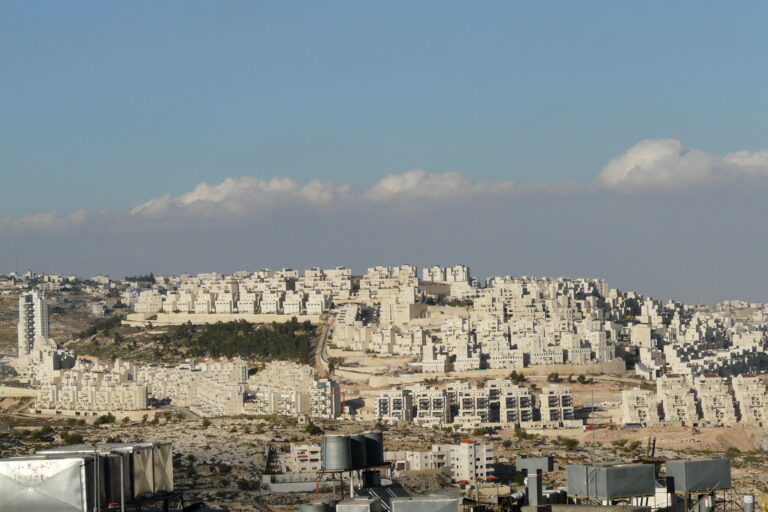
The Israeli cabinet has just announced a decision to invest millions in renewable energy projects in the controversial Israeli settlements of the West Bank

Around a week ago, the Israeli government announced that 10% of its renewable energy quota would be going to the West Bank. This means that literally millions (some have put the estimate at $660 million) will be heading to the territories to encourage solar, wind and biofuel energy development.

Whilst this move has been welcomed by green activists in principle, there have been concerns over the fact that solar fields will be built in the Israeli settlements of the West Bank. The continuing growth of the Jewish settlements across the West Bank is one of the most widely contested issues in the region and is considered to be a major barrier to Israel and Palestine reaching a peace deal. So does green progress outweigh these political downfalls?

Winflex Inflatable Turbines Prove Wind Energy Practical Anywhere

Inflatable wind turbines are lighter and cheaper than heavy conventional ones

Following a number of  Israeli clean technology companies being winners in the General Electric Company’s Green Innovation Marathon, GE has announced plans to establish a “Green Tech Shop” in Haifa in which a number of renewable energy and other green technology projects will be developed under the giant American electronics company’s sponsorship. One of these green companies, Winflex LTD, is set on proving that harnessing energy from the wind does not have to involve the use of  large cumbersome wind turbines, such as the wind turbines now churning away on the Golan Heights.

Interfaith Climate Change Forum to Take Place Today in Jerusalem

0

"jerusalem interfaith environment"Muslim, Jewish, and Christian leaders are meeting today in Jerusalem to discuss climate change and launch the new Interfaith Center for Sustainable Development.

Leaders of the Muslim, Jewish, and Christian faiths will be convening this morning in Jerusalem to speak out about climate change at an Interfaith Climate Change Forum.  Current environmental conditions in the Holy Land – including drought, the recent fires in northern Israel, dried up rivers, and environmental changes – have spurred the Council of Religious Institutions of the Holy Land (CRIHL) to recently endorse a Holy Land Declaration on Climate Change, which articulates a religious call to action against climate change.  Now religious leaders from the three Abrahamic faiths will be meeting to discuss the correlations between their religious and environmental values.

Golden bell pomegranate from King Solomon’s temple unearthed

1

image-golden-bell

Has a real remnant from Jerusalem’s Second Temple come to light?

For twenty-odd years, people stood in front of a glass cabinet in the Israel Museum, Jerusalem, and thrilled to view a small ivory pomegranate. It was supposed to be part of the High Priest’s sceptor in Solomon’s Temple (516 BCE to 70 EC).

Sadly, this was disproved.

Scholars determined that the piece originated in the 13th or 14th century BCE, its inscription in paleo-Hebrew possibly a modern fraud.

The closest physical remnant of Jewry’s holiest site – the Western Wall – has survived from the Second Temple, which was built by King Herod in 37 BCE. The wall is closest to where the Holy of Holies stood in both Temples. Today, there’s plenty of room for worshippers to actually touch the ancient stones of the  Western Wall. But the centuries hadn’t uncovered a Temple-period artifact that a person handled and possibly wore.  Until last week.

According to Ynet (Hebrew), excavations by the Israel Antiquities Authority in an ancient drainage ditch yielded a  golden bell about 1 cm. diameter. It has a loop allowing it to be sewn onto clothing. We know that the High Priest wore wear special garments mandated in the Bible, including a coat that had alternating pomegranates and bells sewn onto its edge:

“…And upon the skirts of it thou shalt make pomegranates of blue, and of purple, and of scarlet, round about the skirts thereof; and bells of gold between them round about” (Ex. 28:34,36)

image-cohen-gadolThe excavation’s lead archeologists, Eli Shukron and Professor Ronny Reich of Haifa University, said that the bell was uncovered at the bottom the drainage ditch, under millennial layers of dirt.

“An archeologist can dig his whole life and never find something like this,” Shukrun said, visibly moved. “It’s amazing how the little bell tinkles just like it did 2,000 years ago. The High Priest’s robe had these bells so that people hearing them as he passed, would make way for him. Only a very important person would wear such things, so there’s good reason to think it fell from the robe of a High Priest as he walked, and rolled away unnoticed.”

Can it be that an artifact worn by a high priest of the Second Temple has actually come to light? We certainly hope so, and are prepared to be thrilled in advance.

More Spirituality and History on Green Prophet:

:: Ynet

Photo of golden bell by Valdemir Naichin via Ynet; Image of the High Priest from Wikipedia

Meat Glue: Is Anybody Talking About It?

11

meat glue image-early-cigarette-adThe public was ignorant about the the dangers of smoking till the 1960s. The fashion for meat glue in food seems ominously similar.
Finding a scientist to talk about meat glue wasn’t easy. I spoke to neurologists, biologists, pathologists, the head physician at a local hospital, and biochemists. None had even heard of transglutaminase.  When I described it and asked if they thought it dangerous to ingest, all gave the same easy answer: “Can’t really see a problem.”

Why were these medical professionals so unconcerned? The answer seems to be, what you don’t know can’t hurt you.

There’s been almost no research on  long-term effects of meat glue on living humans. And as I mentioned in our first meat glue post, the one study available to the layman was funded by the manufacturer. How unbiased can that be?

It seems I’d been talking to the wrong people. At length an American  bio-inorganic chemist agreed to do some informal research into meat glue, although he had never heard of it either. His conclusion was,

“It’s very scary stuff.”

Modular Toaster Design Makes Toast for the Long Haul

0

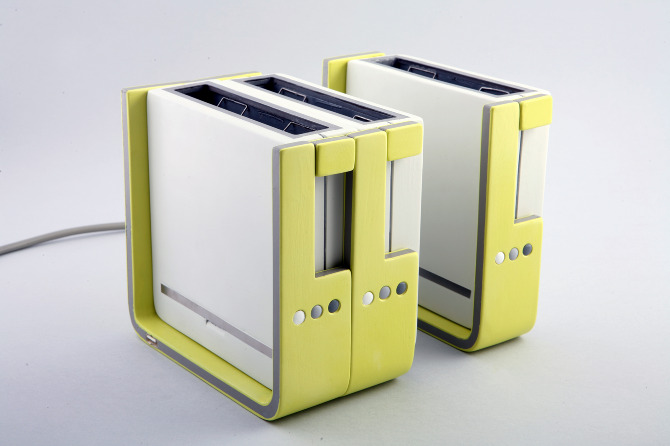
"modular toaster design"The modular toaster, designed by Hadar Gorelik, is sustainable by virtue of its intended long-term use.

Sustainable design is often thought of in terms of upcycled or organic materials, but it is also about what happens to the designed object in the long run.  Cardboard furniture, for example, is sustainable not only because it is made from recycled materials but because it is easily recycled in the future as well.  Beauty is said to increase sustainability as well, and designer Gadi Amit believes that “objects have a cultural meaning, and objects that are lovable, that are well integrated into culture, won’t be trashed after five years, and so are sustainable.”

But the ability to reinvent and come up with new uses for a product also obviously demonstrates sustainability, since users’ needs change all the time.  Israeli designer Hadar Gorelik’s modular toaster does just that, and is sustainable by virtue of the fact that it takes the user’s present and future needs into account and avoids the possibility of becoming obsolete.

Renewable-Energy Cars Heat Up in Turkey

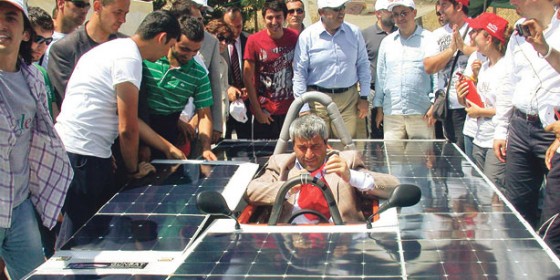
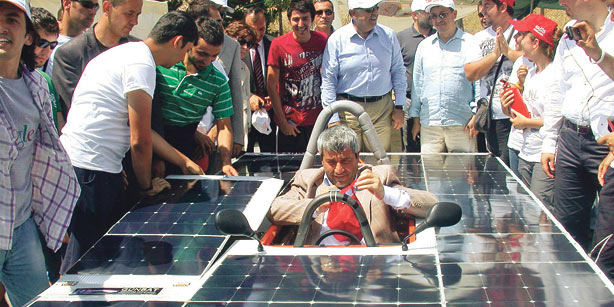
Science, Industry and Technology Minister Nihat Ergün test-drives a solar-powered car at a solar vehicle competition in the Turkish city of Izmir.

A strange array of vehicles were seen speeding around Izmir, Turkey last week, as the Scientific and Technological Research Council of Turkey (TÜBİTAK) hosted its first Alternative Energy Vehicle Races in the sunny Aegean coastal city. Thirty-eight teams entered the solar car races, while 20 teams brought vehicles to the hydrogen car competition.

The event inspired Nihat Ergün, of Turkey’s Ministry for Science, Industry and Technology, to declare that the government will up its investments in renewable vehicles in coming years.

Japan’s Pre-Fukushima Solar Aid for Egypt Proceeds

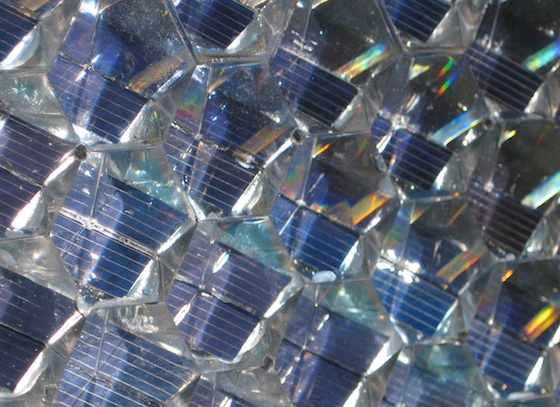
egypt, solar power, photovoltaicsDespite problems confronted on its own soil, Japan proceeds with its commitment to fund a photovoltaic project in Egypt.

Japan’s International Cooperation Agency (JICA) announced that it will proceed with plans to support a solar energy generating station south of Alexandria. Egypt applied to the aid agency for assistance with the “Project for the Introduction of Clean Energy by Solar Electricity Generation System” long before the Fukushima accident usurped all of Japan’s attention and capital. The plan, approved by JICA in February 2010, includes a 420 kilowatt photovoltaic power plant that is expected to produce 641,000 kw by 2012.

Organic Computer Design Reminds Us to Take Our Eyes Away From the Screen

0

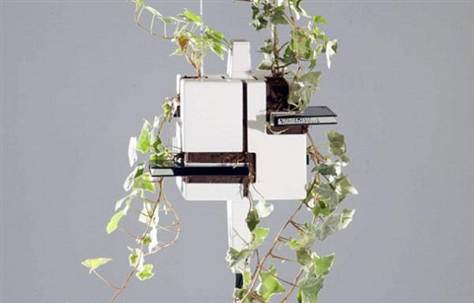
"organic computer design"Hanging from the ceiling like an ivy plant, Omer Deutsch’s “Secondary Growth” computer design softens the harsh, plastic, traditional work cubicle.

If you’re reading this right now, chances are you are a person who spends at least an hour or two a day on a computer (if not more).  This has become commonplace practice for people, and it is not unusual for people to eat in front of their computers, watch TV on their computers, and generally spend a lot of time hanging out with these electronic boxes.  The problem with this is manifold, but here are two computer issues that Israeli industrial designer Omer Deutsch was able to tackle with his “Secondary Growth” design: the need for a more aesthetic, organic design for computers and the need to provide a reason for people to occasionally look up from their computers.

Israeli Cabinet Moves Ahead With 10% Renewables by 2020

1

Despite a potentially thriving renewable sector, Israel’s government selects a relatively modest and unenforced goal

The Israeli cabinet has just approved the 10% renewable energy target by 2020 initially proposed by Finance Minister Roni Bar-On three years ago. This is lower than some had expected. In May, Israel’s Director of Industry had touted a higher level: 20% by 2020. The lower 10% target would be reached in two stages. The cabinet set an interim target of 1,550 MW of renewables to be met by 2014, by setting quotas “allowing for” their development.

HAMAD: Sheikh Graffiti Visible From Space

19

Abu DhabiIn a moment of unabashed self-aggrandizement, Sheikh Hamad bin Hamdan Al Nahyan from Abu Dhabi commissioned beach graffiti visible from space.

We have nothing against Sheikhs per se. A member of Ajman’s royal family, HRH Sheikh Abdul Aziz Bin Al Nuami, also known as the Green Sheikh (who knows how to treat a lady), has an incredibly modest lifestyle and travels the world educating people about the benefits of environmental stewardship.

He invites people into his home, teaches them about the high-minded side of Islam, and also pens a monthly column for Green Prophet. And undoubtedly there are several Sheikhs who are similarly grounded in the realities of our world. But another Sheikh from the United Arab Emirates, HRH Sheikh Hamad bin Hamdan al Nahyan from Abu Dhabi, is making a name for himself in other, less flattering ways with beach graffiti visible from space.

Helen Caldicott on the Nuclear Debate

1

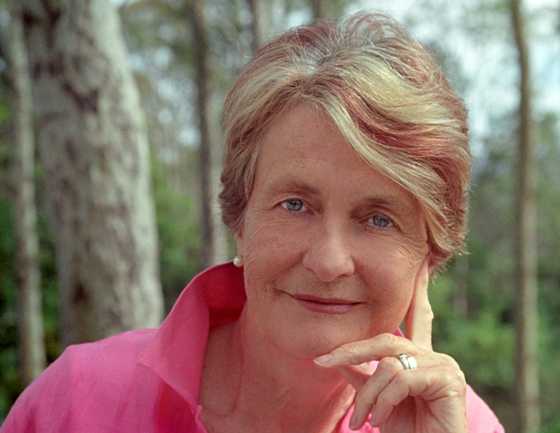
nuclear energy, radiation, Turkey, Chernobyl, FukushimaDr. Helen Caldicott has campaigned against nuclear energy for decades. Today she talked to Green Prophet about how no nuclear event is merely local.

We had a skype conversation with Dr. Helen Caldicott today, during which she stated in no uncertain terms that there is only one side to the nuclear question. Dr. Caldicott is a long time anti-nuclear activist, physician, and speaker whose name is trailed by an exhaustive list of impressive accolades. For roughly four decades, she has been tirelessly speaking out against the absolute nightmare that that is nuclear anything, and recently claimed that the Fukushima nuclear disaster is worse than Chernobyl.

Why would we want to talk about Fukushima when we are in the Middle East, far from Japan? Because nuclear disasters in our interconnected world are never merely local affairs. Following Chernobyl, Turkish tea and food, along with produce from other parts of Europe, were contaminated after the stratosphere winds carried radiation from the Ukraine to other parts of the northern hemisphere. We wanted to get a clear sense of what kind of fallout, if any, we can expect from Fukushima.

The Horn of Africa Famine: A Cautionary Tale for MENA

1

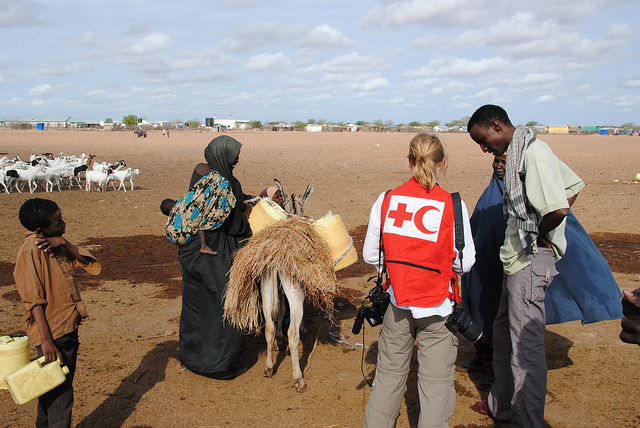
climate change, desertification, global warming, drought, famine, horn of africaAid workers are battling to reach certain drought-affected people in the Horn of Africa, where tens of thousands of people have died.

Tens of thousands of people, many of them children, have already died in Somalia – the seat of what is being called the Horn of Africa famine. While many news outlets focus on Rupert Murdoch, for whom oil shale in Israel is likely a dwindling concern by now, we really ought to have our eyes on Djibouti, Eritrea, Ethiopia, Kenya,  Somalia, Sudan and South Sudan, where global warming, climate change, higher carbon concentrations, whatever you want to call one of the most serious challenges humanity has ever faced,  is presently, right now, starving millions of people to death. And we should be looking because we in the Middle East could be next.