Adults who are 21 or older can carry up to 30 grams. This amount applies to personal use within Pittsburgh’s limits. Carrying more could lead to confiscation or legal action. Staying under the limit avoids problems during any public stop.
In the study, the scientists didn’t just test one plant compound at a time. They tested two traditional Chinese medicine compounds together — luteolin (from flowers like honeysuckle and chrysanthemum) and astragaloside IV (from astragalus root, Huang Qi). These plants have been combined in Chinese herbal formulas for centuries to help the body recover from injury and inflammation.
A new collaboration between luxury brand Coach and textile reuse pioneer Bank & Vogue attempts to stitch those two worlds together: high fashion and the global textile waste stream.
Stepping up to democratize the moon is an EU-funded company, Deep Space Energy, which has just raised more than $1 million USD as a seed fund to help it create energy generators on the moon.
Adults who are 21 or older can carry up to 30 grams. This amount applies to personal use within Pittsburgh’s limits. Carrying more could lead to confiscation or legal action. Staying under the limit avoids problems during any public stop.
In the study, the scientists didn’t just test one plant compound at a time. They tested two traditional Chinese medicine compounds together — luteolin (from flowers like honeysuckle and chrysanthemum) and astragaloside IV (from astragalus root, Huang Qi). These plants have been combined in Chinese herbal formulas for centuries to help the body recover from injury and inflammation.
A new collaboration between luxury brand Coach and textile reuse pioneer Bank & Vogue attempts to stitch those two worlds together: high fashion and the global textile waste stream.
Stepping up to democratize the moon is an EU-funded company, Deep Space Energy, which has just raised more than $1 million USD as a seed fund to help it create energy generators on the moon.
Adults who are 21 or older can carry up to 30 grams. This amount applies to personal use within Pittsburgh’s limits. Carrying more could lead to confiscation or legal action. Staying under the limit avoids problems during any public stop.
In the study, the scientists didn’t just test one plant compound at a time. They tested two traditional Chinese medicine compounds together — luteolin (from flowers like honeysuckle and chrysanthemum) and astragaloside IV (from astragalus root, Huang Qi). These plants have been combined in Chinese herbal formulas for centuries to help the body recover from injury and inflammation.
A new collaboration between luxury brand Coach and textile reuse pioneer Bank & Vogue attempts to stitch those two worlds together: high fashion and the global textile waste stream.
Stepping up to democratize the moon is an EU-funded company, Deep Space Energy, which has just raised more than $1 million USD as a seed fund to help it create energy generators on the moon.
Adults who are 21 or older can carry up to 30 grams. This amount applies to personal use within Pittsburgh’s limits. Carrying more could lead to confiscation or legal action. Staying under the limit avoids problems during any public stop.
In the study, the scientists didn’t just test one plant compound at a time. They tested two traditional Chinese medicine compounds together — luteolin (from flowers like honeysuckle and chrysanthemum) and astragaloside IV (from astragalus root, Huang Qi). These plants have been combined in Chinese herbal formulas for centuries to help the body recover from injury and inflammation.
A new collaboration between luxury brand Coach and textile reuse pioneer Bank & Vogue attempts to stitch those two worlds together: high fashion and the global textile waste stream.
Stepping up to democratize the moon is an EU-funded company, Deep Space Energy, which has just raised more than $1 million USD as a seed fund to help it create energy generators on the moon.
Adults who are 21 or older can carry up to 30 grams. This amount applies to personal use within Pittsburgh’s limits. Carrying more could lead to confiscation or legal action. Staying under the limit avoids problems during any public stop.
In the study, the scientists didn’t just test one plant compound at a time. They tested two traditional Chinese medicine compounds together — luteolin (from flowers like honeysuckle and chrysanthemum) and astragaloside IV (from astragalus root, Huang Qi). These plants have been combined in Chinese herbal formulas for centuries to help the body recover from injury and inflammation.
A new collaboration between luxury brand Coach and textile reuse pioneer Bank & Vogue attempts to stitch those two worlds together: high fashion and the global textile waste stream.
Stepping up to democratize the moon is an EU-funded company, Deep Space Energy, which has just raised more than $1 million USD as a seed fund to help it create energy generators on the moon.
Adults who are 21 or older can carry up to 30 grams. This amount applies to personal use within Pittsburgh’s limits. Carrying more could lead to confiscation or legal action. Staying under the limit avoids problems during any public stop.
In the study, the scientists didn’t just test one plant compound at a time. They tested two traditional Chinese medicine compounds together — luteolin (from flowers like honeysuckle and chrysanthemum) and astragaloside IV (from astragalus root, Huang Qi). These plants have been combined in Chinese herbal formulas for centuries to help the body recover from injury and inflammation.
A new collaboration between luxury brand Coach and textile reuse pioneer Bank & Vogue attempts to stitch those two worlds together: high fashion and the global textile waste stream.
Stepping up to democratize the moon is an EU-funded company, Deep Space Energy, which has just raised more than $1 million USD as a seed fund to help it create energy generators on the moon.
Adults who are 21 or older can carry up to 30 grams. This amount applies to personal use within Pittsburgh’s limits. Carrying more could lead to confiscation or legal action. Staying under the limit avoids problems during any public stop.
In the study, the scientists didn’t just test one plant compound at a time. They tested two traditional Chinese medicine compounds together — luteolin (from flowers like honeysuckle and chrysanthemum) and astragaloside IV (from astragalus root, Huang Qi). These plants have been combined in Chinese herbal formulas for centuries to help the body recover from injury and inflammation.
A new collaboration between luxury brand Coach and textile reuse pioneer Bank & Vogue attempts to stitch those two worlds together: high fashion and the global textile waste stream.
Stepping up to democratize the moon is an EU-funded company, Deep Space Energy, which has just raised more than $1 million USD as a seed fund to help it create energy generators on the moon.
Adults who are 21 or older can carry up to 30 grams. This amount applies to personal use within Pittsburgh’s limits. Carrying more could lead to confiscation or legal action. Staying under the limit avoids problems during any public stop.
In the study, the scientists didn’t just test one plant compound at a time. They tested two traditional Chinese medicine compounds together — luteolin (from flowers like honeysuckle and chrysanthemum) and astragaloside IV (from astragalus root, Huang Qi). These plants have been combined in Chinese herbal formulas for centuries to help the body recover from injury and inflammation.
A new collaboration between luxury brand Coach and textile reuse pioneer Bank & Vogue attempts to stitch those two worlds together: high fashion and the global textile waste stream.
Stepping up to democratize the moon is an EU-funded company, Deep Space Energy, which has just raised more than $1 million USD as a seed fund to help it create energy generators on the moon.
Nothing cures the green blues better than spending a weekend with talented, wholesome folks who love building cool art and architecture projects as much as they love nature.
SO many wonderful green-minded people such as Najib Saab – head of the Arab Forum for Environment and Development (AFED), the Green Sheikh from Ajman, my amazing peers right here on Green Prophet, Friends of the Earth Middle Earth (FoEME), and many others strive to remedy environmental issues in the Middle East. But it’s hard to ignore the trash in Egypt, Jordan’s lack of water, Dubai’s unfettered growth model, and a general lack of awareness about the importance of protecting biodiversity, conserving energy and water, and recycling.
When I lose sight of just how much our global awareness has grown in the past decade or so despite the crises we currently face, I find that getting involved in a good green project always restores my hope and perspective. Which is why I contacted Tabitha Pope of Recycled Venues and Jenny Hall of Crafted Space, organizers of the Woodland Design Lab that took place from 18 August – 21 August, 2011 in Wales, and asked if I could join the fun. Luckily for me they brought me on board (though Jenny’s mom did warn her about journalists!) and it was exactly what the green doctor ordered.
But apparently there’s another kind of clean design – the kind that’s clean because it’s upcycled from objects formerly used to keep people clean, like a bathtub.
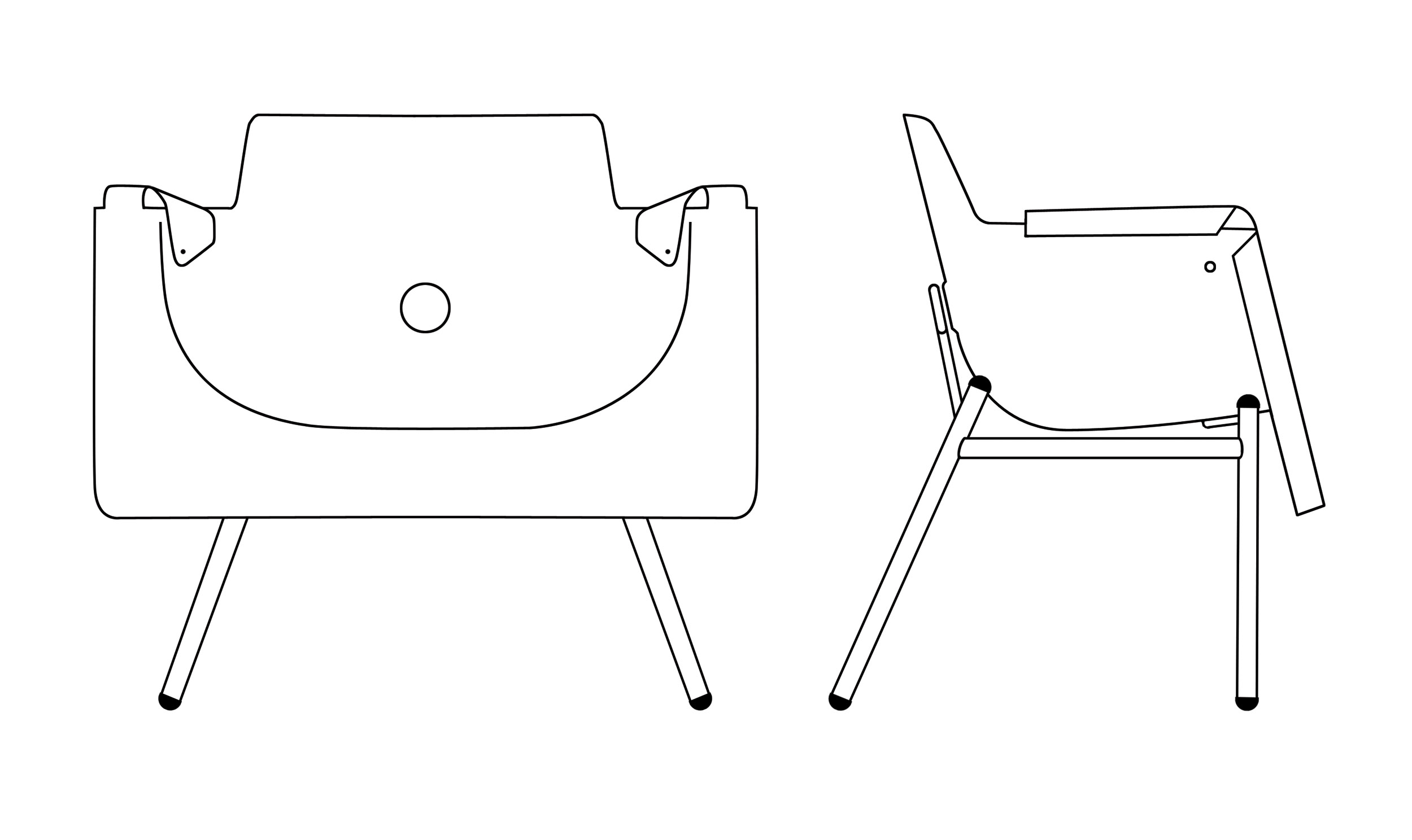
Upcycled, aesthetic, and allegedly very comfortable, the Bath & Beyond Chair is a welcome addition to our list of sustainably designed chairs.
Reddish Studio was founded in 2002 by a pair of industrial designers, Naama Steinbock and Idan Friedman, both graduates of the Holon Academic Institute of Technology. The studio designs a range of products, from household objects to jewelry and furniture, and exhibition design as well.
Reddish Studio founders
In describing the mission of the studio, the designers write that “Reddish studio focuses on keeping its designs clear and intriguing, and spends most of the time helping objects feel better about themselves.”
The bathtub used to create the Bath & Beyond Chair should certainly feel better about itself, for both aesthetic and ecological reasons.
Seferihisar, a city on Turkey’s western Aegean coast, is part of Cittaslow, an international movement founded to promote the Slow Food movement around the world.
Agriculture is the economic foundation of Seferihisar. The region is famous around Turkey for its juicy satsumas and mandarin oranges, while olives and vineyards also comprise a significant portion of the local economy. But in the last decade, the government has passed a series of legislation favoring the homogeneous agriculture practiced by large-scale corporations and discouraging the local agriculture that has traditionally sustained communities such as Seferihisar. Since becoming a “slow city” several years ago, however, farmers in Seferihisar are finding ways to keep their traditional ways of agriculture alive.
Bill McKibben isn’t the kind of guy who takes getting arrested lightly. He’s doing it to save humanity from one of the most catastrophic dangers we have ever faced.
The right wing has long maintained that America should reduce its oil dependency on the Middle East. Considered the root of the last war in Iraq and a compelling reason for Gaddafi to hold on so tightly to power over Libya’s oil fields, Republicans have pushed through a series of catastrophic measures to secure their own oil supplies in the United States. But this time, some of the country’s most respected scientists and environmental activists are risking arrest to fight the latest such folly.
Fast-tracked for presidential approval by the Energy and Power Subcommittee of the House Energy and Commerce Panel, the $7 billion Keystone XL Pipeline poses one of the greatest dangers humanity has ever experienced. The 1500 mile pipeline would transport heavy crude oil (or bitumen) evacuated from Northern Alberta’s tar sands to Texas refineries. If burned, this heavy crude oil would release up to 82% more carbon emissions into our atmosphere than conventional oil. More emissions = more erratic climate changes = worsening quality of life for everyone. One hundred and fifty protestors have already been arrested in Washington D.C., where they are putting pressure on President Obama to make good on the promises that got him elected.
Muamar Gaddafi’s compound goes up in smoke. Are his environmental projects next?
Events in the Libyan capital of Tripoli have been happening so fast that even major news media sites like CNN and Sky News have had a hard time keeping up with them. But one thing is now certain –– Muamar Gaddafi, the eccentric, often “off the wall” leader of Africa’s richest oil country, and environmental “innovator” of projects like the “Great Man Made River” project, and the unique pivot irrigation farms in the Sahara Desert, is no longer in charge.
We celebrate the Muslim environmental campaigner and green activist Ayman Ahwal (right) who passed away last week
I think it’s fair to say that Ayman Ahwal was not your average Muslim. A British Muslim convert, he worked tirelessly to support tree-planting projects in Indonesia, campaign for clean streets in his hometown of Birmingham in the UK and also joined the multi-faith convoy to Copenhagen. He was always ready to spread the word on Islam’s green principles and was a green Sufi Muslim to look up to. I am sad to say that I never got a chance to meet or speak to Ayman Ahwal, yet his legacy amongst many Muslims will live on.
This infographic by Carboun tells you everything you ever wanted to know about water and the Middle East but couldn’t be bothered to read
Building on the blossoming debate on water and its complexities and Carboun’s first infographic on the carbon emissions from the region, comes this second infographic which aims to decode the water situation in the Middle East and North Africa region. At first glance, it’s not as easy to read as Carboun’s previous infographic but this simply reflects the intricacy of the water situation in the Middle East.
Zurich-based RAFAA Architecture & Design propose the next generation of super sustainable solar power towers.
An often overlooked component of the growing number of solar power plants popping up in Egypt, the United States, Spain, and elsewhere is that someone was responsible for their design. Bright Source Energy recently solicited proposals from international firms for the Ivanpah solar plant in California that is currently undergoing construction. In particular, they are seeking the next generation of super sustainable concentrating solar power towers which we recently reported will be taller than earlier models to enable more efficient space management on new sites. RAFAA Architecture & Design from Zurich believe they have just the solution.
One and a half years after the Japanese launch of the Honda CR-Z, the world’s first manual hybrid, it has come to Turkey, where high fuel prices could create a strong market for the automobile — if the price is right.
Next time you find yourself complaining about high gas prices, consider this: Turks currently pay nearly $12 per gallon of petroleum at the pump. Despite this, hybrids haven’t found much of a market in Turkey until now, largely because they’re sold for far higher prices in Turkey than in most European countries. While the government has expressed its desire to wean itself off the foreign resources that comprise 80 percent of its primary energy supply, its efforts to do so have been half-hearted.
The release of the CR-Z, however, has the potential to actually reduce Turkish fuel consumption.
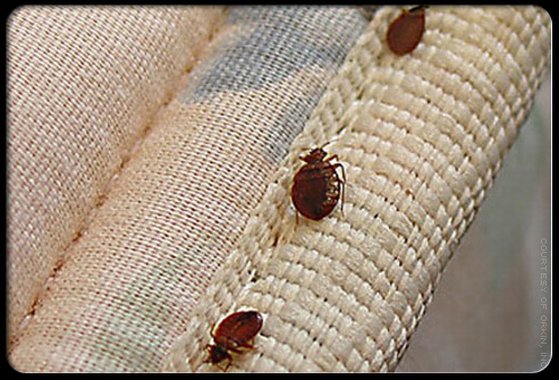
Like cockroaches, bed bugs have been around since prehistoric times.
Good night, sleep tight and don’t let the bedbugs bite. If they do, grab a shoe and beat them till they’re black and blue! When my sibs and I were kids, we’d repeat that little ditty to each other before climbing into bed at night. We thought it was funny then, but we’d never seen a bed bug.
Between the 1940s and the 1980s, the use of DDT, a powerfully toxic pesticide (now banned), was in common use in agriculture and in homes to kill cockroaches. It may be one reason that bed bugs were scarce in those years – in developed countries.
But like other pests, bed bugs seem to have become resistant to pesticides. Some blame modern international travel for the return of bedbugs and that’s especially true in the UAE where super bedbugs have appeared. They have certainly become a plague in homes, hotels, dorms, army barracks, and second-hand clothing and furniture shops.
Natural anti-bug remedies don’t hold out much hope. Bedbugs can live up to a year without a meal, according to the U.S. Environmental Protection Agency (EPA). Given that they live comfortably in any kind of tiny crack in furniture and walls or even in electrical appliances, smearing your bed frame with lavender or neem oils won’t do a bit of good for the long run.
To make 100% sure that all bedbugs in a home are dead, strong measures are called for – professional workers employing currently useful pesticides (use is linked to Parkinson’s disease), vacuuming and steam, plus bug detection in places you hadn’t thought of.
Pesticides give you the creeps? Me too. Prevention is best. Become familiar with preventative measures outlined by the EPA. Heat treatment and diatomaceous earth might work if you have a lot of patience. Unfortunately, for a serious infestation, pesticides might be the only solution.
Partially effective non-pesticide solutions to bed bugs:
Buy no second-hand clothing or furniture without inspecting every inch of it for bugs. Don’t even consider bringing an infested item home.
At the first suspicion of contact with bedbugs, or an infested individual, wash and dry all clothing and removable furniture covers at the highest temperatures the fabrics can take. High temps kill the bugs, larvae and eggs.
Encase mattresses, box springs and pillows in plastic. Make sure there isn’t even one tiny crack or slit through which a bug may escape.
Tidy up clutter in the home. It gives bed bugs more places to hide.
Vacuum floors, wall hangings, upholstery and rugs regularly. If bugs are found, seal the vacuum bag up and throw it out.
Neem oil may repel bed bugs. But it won’t kill them. (The second down side of neem is its unpleasantly acrid odor of garlic gone wrong.)
Bed bugs live in the nests of bats and birds. Clear away any such nests around your home, making sure no bugs have hopped out and infested you in the process.
In hotel rooms, don’t put your luggage down on the bed or the floor. Place it on the luggage rack. On returning home, wash the clothes you traveled with immediately. Inspect your suitcase or backpack. Don’t put it on your bed.
The only good news about bed bugs is that, as of today’s knowledge, they don’t transmit diseases. Their bites cause bodily aggravation and embarrassment, but only in cases where skin becomes infected are antibiotics called for. Allergic reactions are rare.
Miriam pointed out the perils of eating in front of the computer. Now, discover the cues that keep you munching when you’ve really had enough.
Last week I lunched with a friend at an inexpensive Indian restaurant. We ordered the platter for two. Attractively arranged on a round platter were spiced rice, spoonfuls of chutneys, a bowl of pureed lentils in the middle (and here are 10 ways to eat lentils) – and about five small portions of different cooked vegetables grouped around it. Instead of chappati bread, there was half a local Iraqi flatbread for each. With a pitcher of ice-cold water on the table , we didn’t feel the need to buy a Coke or a beer. I wondered if there would be enough to satisfy both of us since portions were small, but to my surprise, we even left a little over.
On our way out, I remarked to my friend, “Funny. We just had the sort of meal we ate when we were hard-up students, but we ‘re satisfied, no complaints. Yet we’ve both complained loudly enough about seriously fancy places with huge portions.”
“The difference,” said my friend wisely, “is lowered expectations.”
We eat with our eyes, not with our stomachs, says Dr. Brian Wanski, director of the Food and Brand Lab at Cornell University. If you want to control your food intake, become aware of expectations and suggestion, factors that influence how much you’ll eat and even convince you of what you’re tasting.
Water rich or water poor? Doomed by desalination or dealing with the problem? Get the facts on Israel’s water situation.
Following my latest post on water recycling and desalination in Israel, some commentators have raised questions about the seemingly contradictory facts on Israel and water. Whilst the Israeli water authority constantly warns of a water crisis, others state that Israel is actually dealing with the water problem very well and is the world leading waste-water recycler in the world. So, who is right and where do these contradictions leave us? In an attempt to separate the wheat from the chaff, I’ve sat down with all the facts and tried to paint a realistic picture of the water situation in Israel.
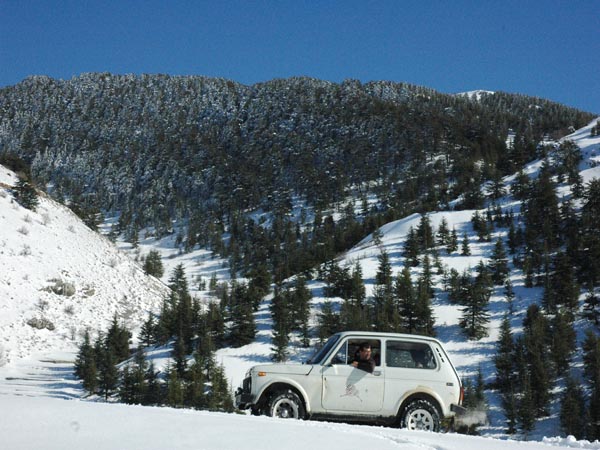
The Shouf Cedar Reserve is working tirelessly to protect Lebanon’s cedar forests from climate change.
Fifteen years ago, civil war posed the greatest threat to Lebanon’s majestic cedar forests, but today climate change is their most prominent foe. The largest of Lebanon’s natural reserves and home to one quarter of the nation’s almost mythological cedar trees, Shouf Ceder Reserve has become a magnet for both local and foreign tourists. While such an influx of traffic could easily be detrimental to the reserve’s health, its manager Nizar Hani explained to CNN that they now have what it takes to achieve what even the most ardent activism in the region has been unable to: educate visitors and decision-makers about the importance of biodiversity while simultaneously improving the lot of people who live there.
Palestinians hope rural tourism in Taybeh will lure tourists away from the beaten path
Lamb blood is splattered all over the doorway of what was once a church as if someone had just dropped a leaky garbage bag filled with guts from the heavens. “The local people continue to follow Old Testament practices. They sacrifice unto God,” explains Maria Khoury as she leads me through the ruins of the Byzantine-era St. George Church on the outskirts of her Palestinian village, Taybeh.
“This is blood here,” she says, pointing to the big red patch at the entry way. “Sometimes we might not have a sacrifice for six months and maybe in one week we might have three,” she adds. “It’s a cultural tradition. It has nothing to do anymore with religion.”

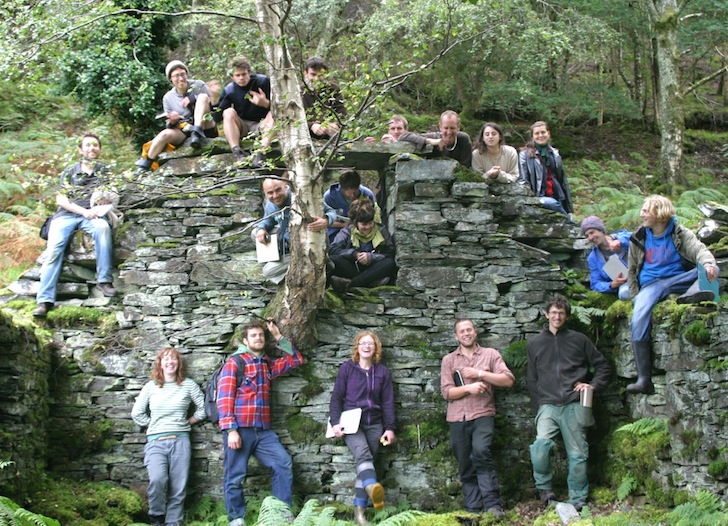
 Nothing cures the green blues better than spending a weekend with talented, wholesome folks who love building cool art and architecture projects as much as they love nature.







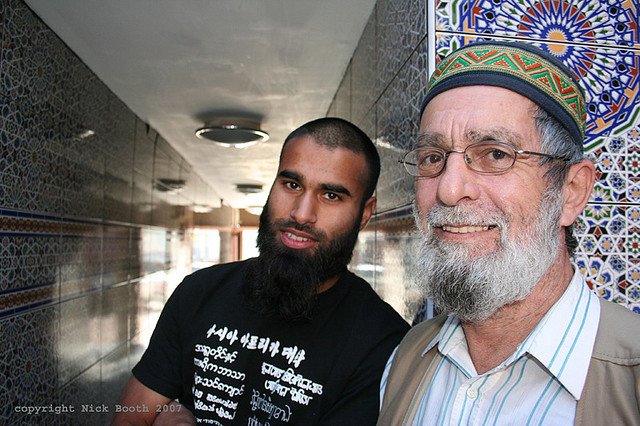
 We celebrate the Muslim environmental campaigner and green activist Ayman Ahwal (right) who passed away last week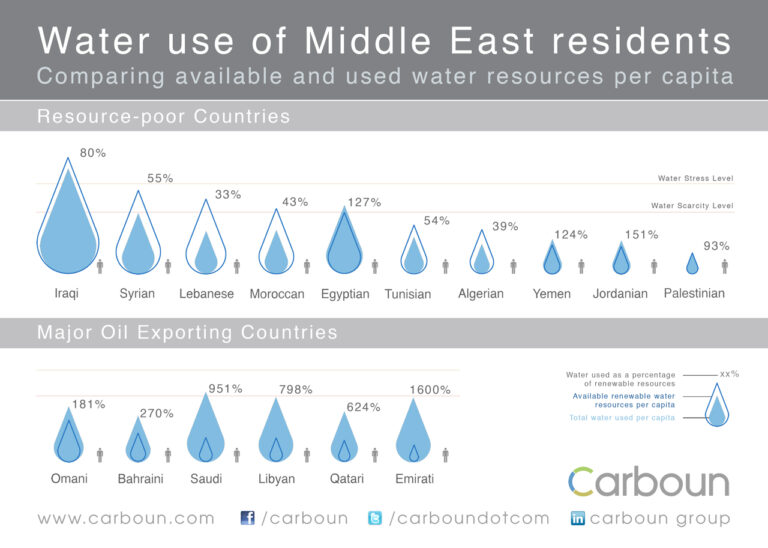




 The Shouf Cedar Reserve is working tirelessly to protect Lebanon’s cedar forests from climate change.