Home Blog Page 506

Big Brother? Masdar Monitors Student Energy & Water Consumption

0

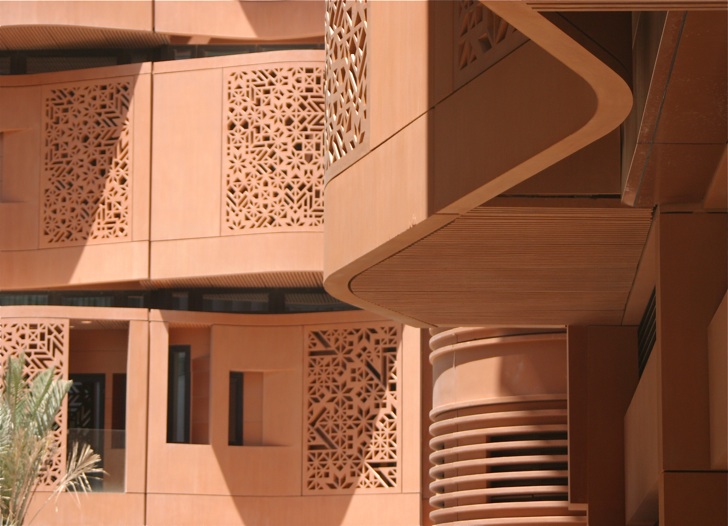
energy conservation, Masdar city, water conservation, smart-gridA one-year investigation by  researchers will hopefully reveal what incentives are most likely to encourage energy and water conservation among Masdar’s student body.

There’s nothing sinister about it really. Masdar City in Abu Dhabi is aiming for carbon neutrality in an unforgivingly hot and dry environment teeming with young students. Naturally these twenty-somethings – among the world’s brightest – will strive to achieve the maximum amount of comfort in their spaceship home away from home even as they are participating in one of the most expensive carbon-less experiments on the planet. But now they are being watched! In an effort to understand what incentives and stimuli drive students to switch their lights and taps on or off, Masdar will track their energy and water consumption over the next year. 

Car Bodies and Windows As Solar Energy Panels to Recharge Lithium Batteries?

8

lithium solar batteries for electric carsWhat would you call solar panels if attached to this Tesla S2 sports coupe: spoilers?

One of the more challenging aspects of developing electrics is finding ways to extend the cruising range of electric cars, which are anywhere from 40 to 160 kilometers on a single charge. Companies dealing with the technologies involved in producing electric cars and the lithium ion battery systems used to power them, include those like Better Place, who recently entered into a partnership with the GE electricity  appliances giant in order to further improve the infrastructure needed for the public use of electric cars. Some electric car manufacturing companies, such as Tesla Motors, even claim that their high price electric sports models are capable of achieving cruising ranges of 160 miles or 257 km.

Police Beat, Tie-Up, and Fire On Citizens Protesting Dying Ramsar Protected Lake in Iran

2

environmental activism, Lake Urmia, Iran,

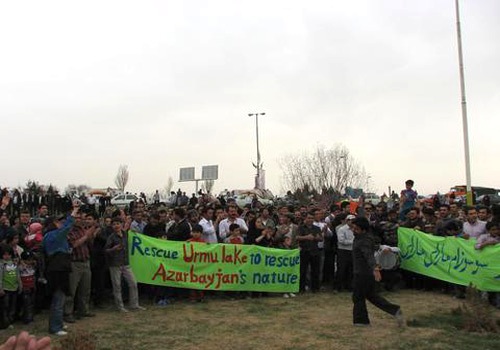
Police violently repressed activists protesting the nearly irreversible damage done to the Middle East’s largest salt lake over the weekend. This image was taken of a protest earlier this year.

Like a chain of dominos, citizen protests are erupting everywhere: following the Tunisian and Egyptian revolutions catalyzed in part by skyrocketing food prices, political protests have swept throughout the Arab world. But it hasn’t stopped there, and not all battles are political.

In Jordan, ordinary people are protesting government plans to include nuclear power in its arsenal of energy sources, while in the United States, Bill McKibben and other well-respected community members, including Jim Hansen from NASA, have been arrested for marching against the Keystone XL Pipeline –  a carbon bomb that climatologists say would officially end the battle against climate change (humanity 0 vs. climate change 7 billion). But none of these latter environmental events has garnered such an extreme response as the Lake Orumiyeh protests in Iran, where bloggers report that people are being arrested, beaten, and in some cases tied to trees for protesting the slow death of the world’s second largest salt lake.
environmental degradation, Lake Urmia, Iran, Salt Lake, protestors

Dried up Mecca

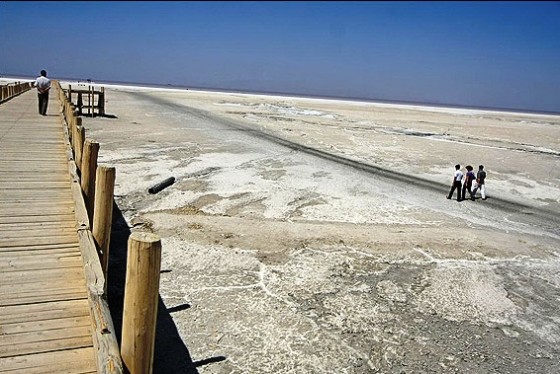
In part because of drought and in part because of poorly managed dam construction and irrigation projects, Lake Orumiyeh or Urmia in Northwestern Iran has shrunk to roughly 60% of its original size. Once a mecca for flamingos and other wildlife, the dying lake now more closely resembles a dusty moonscape.

Residents in Azerbaijan that rely on the Ramsar protected site for their sustenance claim that Revolutionary Guards are responsible for shrinking lake levels and the subsequent rise in salinity and decrease in biodiversity. Global Voices claims that if Lake Urmia dries up completely, millions of people will have to settle elsewhere.

Authorities get dirty
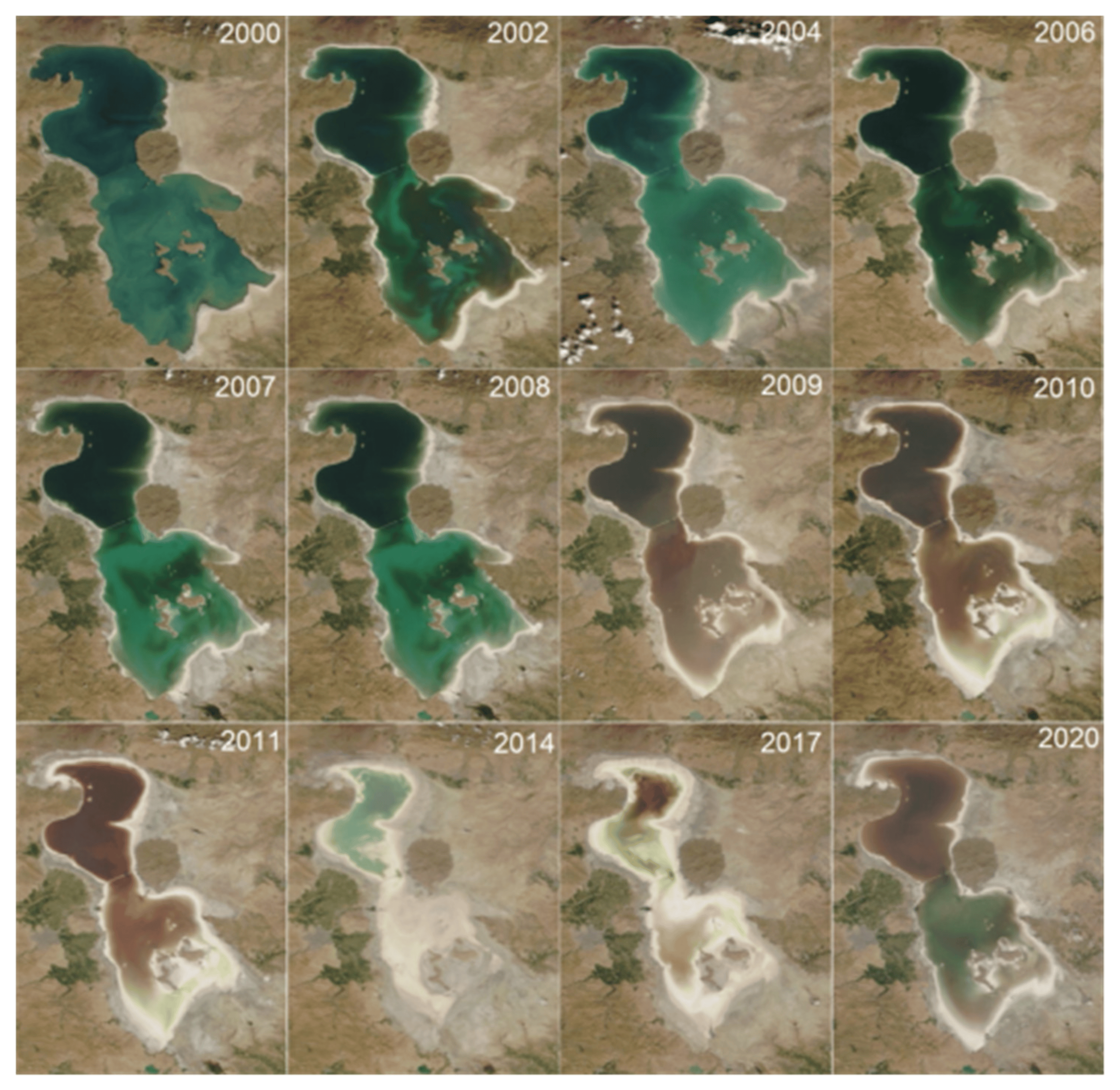
Lake Urmia according to NASA, over time

Spurred on by these concerns, thousands of protestors spilled into the streets of Tabriz and Urmia last weekend in order to put pressure on the government to step up conservation efforts. But eyewitnesses report that protests quickly took an ominous turn.

According to one blogger, Urmuiscielli, policemen beat and arrested protestors, some of whom were tied to trees.

Although the police crackdown was censored in the mainstream Iranian press, Iran’s Independent Press picked up the story, and the blogosphere was populated by video footage and calls for other citizens to support Azeri activists and re-launch anti-regime demonstrations.

Crimes against humanity

If taken seriously, the increase of environmentally-themed disputes between citizens and their governments, even in the Middle East, could spur a whole new era of accountability measures. Protestors who show little willingness to compromise until real action is taken have the power to disrupt the smooth functioning of society to such an extent that governments (a la Egypt) will have no choice but to instill effect change.

And eventually, when environmental degradation is unequivocally linked to an increase in environmental refugees, green-minded lawmakers such as Polly Higgins, who has been campaigning the United Nations to make Ecocide a crime against humanity, will be better poised for success.

Of course, none of this will happen in Iran anytime soon given that country’s oppressive regime and appalling environmental record, even though these protests show an increasingly emboldened (or desperate?) populace.

:: Global Voices

More on Iranian Environmental Issues:

Saltier than the Dead Sea, Lake Orumiyeh is in Trouble

Iran Lacks Water Planning

Iran and Qatar Align to Help the Environment

Greek Cyprus Fearful Over Offshore Gas Well Drilling

15

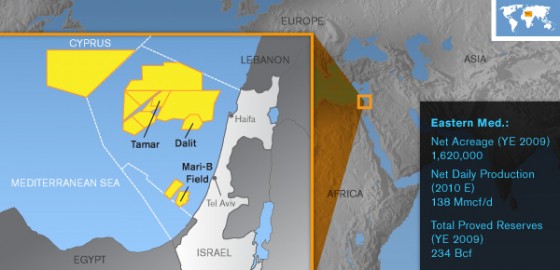
cyprus gasMap showing disputed Cyprus underwater gas fields, as well as those being contested by Israel and Lebanon

Undersea drilling for natural gas by the Greek Cypriot government now appears to be more problematic than just their fears of disturbing the undersea environment or undersea territorial claims by regional countries like Israel and Lebanon. Cypriot’s “neighbor,” the Turkish-occupied and controlled Northern Cyprus, is now giving more than just “veiled threats” according to two regional news sources, Cyprus News Report, and Turkey’s Hurriyet News Company. Will the next Middle East war be over water or natural gas?

Google Maps To Bring Virtual Eco-Tourists to Israel

6

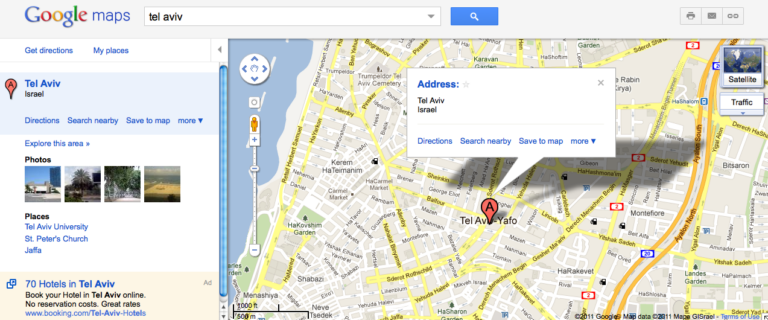
"tel aviv google map"Soon virtual tourists will be able to view images of Israel via Google street view, reducing the need to get on a carbon-emitting airplane.

Google, our modern-day cartographers, have been discovering new ways to map out the world since 2007 when they came out with Google Maps.  One of the ways in which they’ve created their online globe is through ‘Street View’, a set of photographic images that gives you an actual 360 degree view of the address you have entered.  When you search for an address on Google Maps and use the Street View feature, with a little imagination you can pretend as if you’re in that location and walk the streets, take in the sites, and look up at the sky.  Israel, together with several other countries, has objected to the potential loss of privacy that Google Street View creates, and has not allowed the company’s photography crews to document the country.

But now, Israel is allowing Google to operate its Street View feature, enabling locals to get better directions and foreigners to explore the country in new ways without getting on an environmentally polluting airplane.

Next for Enlight – a Wind Farm

Hot on the heels of the solar contract we covered last year to supply the Israeli Defense Force with the power of the sun, Enlight Renewable Energy (TASE: ENLT) has announced a new project. It will build and run a new wind farm on the windy Golan Heights, the site of Israel’s first wind farm, a now very outdated 10 wind turbines.

The company specializes in initiating, developing, constructing and operating clean electricity production projects from renewable energy sources. Until now, these have been in small solar development in Israel (16 small PV facilities) and last year one was announced in Italy, and this marks the company’s first foray into wind farm development.

Nature Reserve In Jordan Is Growing Organic

2

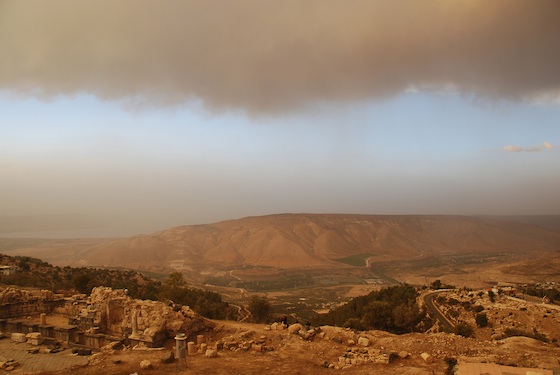
Mujib Biosphere Reserve jordanJordan is championing water-efficiency and chemical-free farming at the stunning Mujib nature reserve

Following Qatar’s plans to build 1,400 organic farms, comes the announcement that a Jordanian nature reserve will be growing organic crops and medicinal herbs. The farm at the Mujib Biosphere Reserve is spread over 10 dunums and is designed to demonstrate the advantages of growing food using less water and chemicals to the local farmers. Conservationists suggested the organic farm following a decline in the quality and quantity of water in the nature reserve, which is home to over 90 rare plant species and numerous migratory birds.

Elul, The Jewish Month of Deep Meditation

image-western-wall-jerusalem
Prayer notes folded small to fit into the Western Walls’s crevices.

In my early days as an observant Jew, I left a note in the cracks of the Western Wall. I searched my mind for the words to convey my prayers onto paper and wasn’t at all sure God would know or care. I’ve learned since then that every prayer, even the ones scratched out at the last minute and fitted into a crevice between the stones of the Wall, rise to the Creator. Even – or maybe especially – the silent ones.

The upcoming month of Elul leads up to the High Holy Days of Rosh HaShanah and Yom Kippur (our post on the green tranquility of Yom Kippur in Israel is here). It’s month of intensive heart- and soul-searching in preparation for the awesome days when we are judged and our fates for the coming year decreed. The word itself means “search” in Aramaic.  (And at the year’s other axis, Passover, we conduct another physical/spiritual search. Learn about it here.)

Foreskin Removal for Zulus Prevents AIDS

3

jerusalem AIDS circumcisionDoes circumcision offer health benefits? A medical historian I spoke with says yes, it does. She’s now working in Africa with Zulus.

It was a tradition long ago practiced. Now Zulu tribes in Africa are returning to the Jewish custom of male circumcision to reduce the spread of AIDS. In California where calls to ban circumcision are being made, I interview an epidemic historian on why this custom might save Africa. For women grappling with the decision to circumcise or not, this NY Times article gives some additional advice.

While San Francisco politicians debate the necessity of the male foreskin removal rite, citing human rights concerns, Zulu King Goodwill Zwelethini of KwaZulu-Natal nods his head, pictured above. The tribal leader of KwaZulu-Natal, a province of 10 million people in South Africa, recently rescinded a 200-year-old ban on the age-old practice of male circumcision, still conducted in many regions in Africa, after seeing the evidence on the spread of AIDS. Some estimates suggest than more than half of all HIV infections could be stopped if men are circumcised. Very conservative estimates are one in 10.

Rescued Candlesticks Unite to Form Upcycled Menorah

1

"recycled candlestick menorah"Candlesticks that have lost their partners find a home in this upcycled menorah.

Most flea markets and second-hand stores have them – candlesticks either with or without their partners.  Solitary candlesticks often tend to be left behind, since they usually come in pairs.  But thanks to this menorah design from Reddish Studio (the same people who make the wonderful Bath & Beyond bath tub chair), all those single candlesticks are put to functional use and united together with new partners.  (And kept out of landfills too, of course.)

More Sustainable Eye Glasses – Wood or Human Hair?

0

"eye glasses human hair"If you think these sunglasses are made from tortoise shell, guess again.

Accessories may be one of the most important places for an ecologically minded designer to start.  Accessories are the victims of quickly changing trends and fads, and so their unsustainable fashionable-ness makes their ecological sustainability greatly needed.  We’ve seen other green designers tackle this issue before, creating purses out of old tire inner tubes, wallets out of discarded wrappers, and clutches made from old architectural designs. There are the wonderful theme-based goodr sunglasses. However we have not yet seen designers stare sustainable accessories in the face.

Namely, take it to one of the most ubiquitous fashion accessories of all – the eye or sun glasses.  And now we’re faced with two sets of designers tackling the issue in very different ways: one making eye glasses from human hair (seen above) and the other making them from wood.

"wood eye glasses"Ezri Tarazi, an industrial designer and the Head of the Industrial Design Department at the Bezalel Academy of Art and Design in Jerusalem, is the one responsible for the wood glasses seen above together with Shoham Zak.  Made from special laminated wood layers, they are extremely strong (even though, from a practical perspective, they are not collapsible).

Tarazi notes that they are suitable for people with skin allergies to metal and plastic.  In terms of energy consumption, the wood is probably much less energy intensive to obtain than metals and plastic.  With a slight tweak in the design to make these frames from durable and quickly growing bamboo, these glasses would be much more sustainable.

"human hair glasses"Azusa Murakami and Alexander Groves, two graduates from the Royal College of Art in the UK, are behind the “Hair Glasses” line to the left – a collection of sustainable fashion eyewear exploring the potential of human hair.  Made from human hair and bioresin, the frames are completely biodegradable and no harmful substances are released during production.

In attempt to explain why they would use human hair, the two founders of Studio Swine explain that “the UK beauty industry imports 15 million pounds worth of human hair per year.  As the world’s population continues to increase, human hair has been reimagined as a viable – importantly renewable – material.”

Maybe human hair is the new bamboo?

Read more about sustainable fashion accessories:
Elanit Neutra Promises More Mileage Out of Your Purse
Beggars Can Be Choosers: Amit Brilliant’s Recycled Wallets
Ecoist Accessories Make Eco-Friendly Egoists Look Good

Five Star Eco-Tourism in Cool, But Hot Mid East Locations

1

eco hotelJordan’s Six Senses Evason Hot Springs Eco Resort. Does King Abdullah and family come here for fun?


There are numerous eco-tourism options available in the Middle East. Green-hearted tourists can climb “God’s Mountain” in Egypt or visit the desert oasis of Siwa along the Red Sea coast in Sinai. But in the United Arab Emirates, five star eco-tourism is becoming increasingly popular according to Hotelier MiddleEast.com. Dubai and Abu Dhabi destinations that ostensibly help to “save the planet” offer unique accommodations within a luxury, “eco-friendly” setting.

Novel Bus-Stop Libraries in Israel Promote Green Transportation

6

bus stop libraryWould mini-libraries at bus stops encourage residents of your city to use public transportation?

Here’s a novel idea: create a system of mini-libraries at bus stops in order to encourage reading and green transportation. Think it could never happen? Think again. Two urban artists, one of whom graduated from Israel’s Technion Faculty of Architecture, submitted their brainchild to the mayor of Kfar Saba, a small city north of Tel Aviv, who gave them his blessing. Although there were some initial reservations about how long the books would last, one resident told Ynet News that at the beginning of the first experimental week, the books disappeared. By the end of that week, not only were the books returned, but new ones were added.

Masdar’s Carbon Capture Program Could Lead to Mass Delirium and Comas

4

carbon capture and storage, carbon dioxide, Masdar cityOil and gas companies believe that CCS will allow fossil-burning to continue unabated, but health leaders expose the potential for widespread human fatalities in the event of accidental leaks.

The United States Department of Energy has pledged to match Masdar’s $700,000 carbon capture research program with $3 Million of US taxpayer money. In collaboration with RTI International, an independent, international non-profit organization that has worked closely with the DoE for 25 years, Penn State University and two other American companies, Masdar intends to revolutionize the Carbon Capture and Storage (CCS) space so that the world can continue to burn coal, gas, and oil without worrying about the impact that doing so will have on escalating climate changes.

Israeli Cleantech Benefits from Australian Climate Legislation

When Prime Minister Julia Gillard narrowly succeeded in passing Australia’s first carbon tax last month, she probably wasn’t thinking of how Israeli innovation will be a beneficiary.

Not everyone is happy that Gillard passed Australia’s first carbon “tax.” Big Coal is furious. And coal is a huge industry in Australia. But Australia’s Greenearth Energy is one diversified energy company that is enthusiastic about the prospects for clean energy development following the Gillard government’s recent climate legislation that puts a price ($23 a ton) on carbon. Like Israel’s BrightSource Energy (BrightSource Glad to See Carbon “Tax” Down Under) which also stands to benefit from the about-face on climate regulation down under, Greenearth brings Israeli-developed clean renewable energy to Australia.

Greenearth previously demonstrated Zenith Solar‘s ability to bring an astonishing 72% efficiency to solar power through a combined heat and power technology, offering both hot water heating and electricity. But the company holds a diversified clean technology portfolio, bringing not just solar, but energy efficiency, clean fuels and geothermal projects as well – all technologies that will become only more vital for energy security in a carbon constrained world.