Home Blog Page 497

Lightexture Lamps Combine Ethereal Light and Energy Efficiency

2

lightexture "ceramic eco friendly lamp"Lightexture’s lamps are beautiful and energy efficient.

Sustainable designers interested in the field of light fixtures often focus on making the lamp base out of recycled or repurposed materials, and don’t necessarily think about energy efficient light.  We’ve seen lamps made out of industrial pipes and chandeliers made out of ice cream spoons, but when thinking of mood lighting it is sometimes hard to think of compact fluorescent lightbulbs (CFLs).  Emitting a notoriously harsh white light when they first came out, CFLs have a bad reputation that is slowly being restored as their glow comes closer to the yellow warmth associated with (non energy efficient) incandescent bulbs.  Israeli design duo Yael Erel and Avner Ben Natan of Lightexture are helping the CFLs’ popularity by creating beautiful lamps in which they shine.

Could A ‘Green GDP’ Transform The Middle East?

0

green-gdp-economy-environment-middle-east-egyptEnvironmentalists have been telling us for years that we need to stop focusing on the economy and consider nature. Will a ‘Green GDP’ help us do just that in the Middle East?

GDP is probably one of the very few widely recognised abbreviated economic terms in the world. It stands for Gross Domestic Product and basically denotes the economic growth of a country. This measure is widely used to record (and compare countries on) everything from economic success, standard of living to the size of a nation’s carbon footprint. However, environmentalists have noted for years that this unhealthy focus on economic growth means that the cost to the planet is consistently overlooked.

Gaddafi’s Great Man Made River Follow

5

great man made riverThe Great Man Made River: 70 percent of Libya’s fresh water comes from it.

Muammar Gaddafi, the eccentric strongman of Libya for more than 42 years and often referred to as the Mad Dog of the Middle East, wound up dying like a dog at the hands of his own people. Now that he is history, environmentalists following Gaddafi’s grand ecological projects, including The Great Man Made River and the mid-Sahara pivot irrigation farming projects, wonder what the future holds for these projects which could be the country’s environmental salvation.

great man made river gmmr GMMR: water from the last Ice Age

During a period that goes back nearly as long as Gaddafi ruled his desert kingdom, these projects, although very costly held a lot of promise for providing not only ample drinking water to one of the most arid countries on earth, but possibly ample food production as well via the circular pivot irrigated farms which were literally growing food and other crops in the middle of one of the most inhospitable deserts in the world – the Sahara.

In a previous Green Prophet article the artificial river project was already bringing millions of gallons of fresh water from a large prehistoric underground reservoir, formed in a previous Ice Age, and located in an area where it was once green and various species of  African plains animals roamed freely – as well as the peoples who hunted them.

Began in the early 1980s, and  built at a cost of more than $33 billion USD, the GMMR project involved pumping “fossilized” water from depths of more than 500 meters, purifying it, and then sending the water to the country’s major population areas. Along the way, some of the water has been diverted to the pivot irrigation projects which have been growing a number of crops, including grains, fruits and vegetables, and animal fodder.

muammar gaddafiLibyan pivot irrigation farms as viewed from space

With Libya now being a state of transition, and a centralized government still not yet in place, the future of these green projects appear to be very much in doubt.

Libya’s main source of revenue, oil and gas production is presently at a fraction of what it was prior to the beginning of the uprising in February, 2011. With no civil administration to run such projects, as well as no funds to pay workers involved in them, the projects themselves are most likely at a virtual standstill.

The pipelines and pumping stations for the GMMR may also have been damaged by the fighting and continuous air raids during the past months.

muammar gaddafiMad man, or ecological visionary?

The dust has still not settled yet in regards to what form of government will eventually be put in place in the aftermath of Gaddafi’s long authoritarian rule. But for the sake of the people of Libya, these environmental projects have to somehow be kept going,  since the GMMR alone has been providing the Libyans with more than 70% of their fresh water for personal use and for irrigation.

Gaddafi is dead, but his environmental dreams should not die with him.

More on Gaddafi and his green visions of grandeur:
The Death of Two Men: Muamar Gadaddi and Steven Jobs
Libyan Violence Dampens Great Man Made River Project
Libya Revolution Will End Gaddafi’s Green Visions
Libya Touts Great Man Made as 8th Wonder of the World

Jenin Playground to Get Green Makeover

0

jenin-green-miftah-playground-permacultureGerman-Palestinian society NIJMAH is working on renovating a kid’s playground using natural materials and setting up a permaculture garden

Permaculture may be new to the Middle East but with Jordan hosting the recent permaculture world conference and various organic farms sprouting up, the region is slowly catching up. In Palestine, there is already a permaculture farm named ‘Bustan Qaraaqa’ in Bethlehem encouraging locals to become more food independent and now another Palestinian community wants to establish a permaculture garden for children. In Jenin, the German-Palestinian society named NIJMAH is working on renovating a playground using natural materials and establishing a small permaculture garden.

Breaking News: Devastating 7.3 Earthquake Hits Eastern Turkey

0

natural disasters, turkey, mediterranean, earthquake

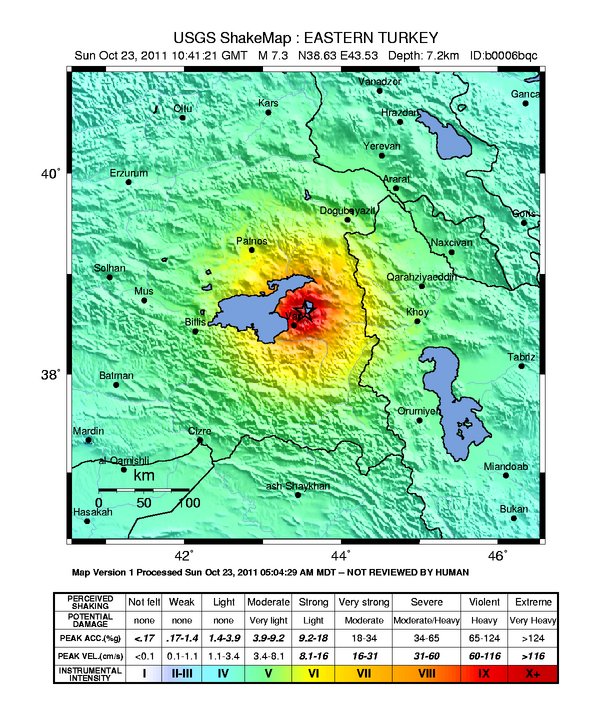
A devastating earthquake has hit Turkey near its border with Iran. A 1976 earthquake in the same vicinity killed 5,000 people.

The Kandilli Observatory has reported that a very powerful earthquake measuring up to 7.3 on the richter scale has hit near the city of Van in eastern Turkey. Described as devastating and expected to worsen as a result of aftershocks, the earthquake will cause extreme shaking for approximately 49,000 people, violent shaking for 381,000 people, and severe shaking for 131,000. Although there are few details at present, Earthquake Report notes that the shake was felt in neighboring countries, which is a very bad sign, and that thousands of lives are at risk. Many homes have been destroyed, power has been cut in places, and many cell phones lack service.

image via USGS

1 Million Migrating Songbirds are Killed for Pickled Dish in Cyprus

21

poaching, wildlife conservation, cyprusEvery year trappers in Cyprus kill millions of migrating songbirds that are boiled or pickled – a national delicacy called ambelopoulia. Wildlife conservationists want authorities there to do more to prevent this “ecological disaster.”

One songbird is illegally trapped or killed every four seconds to provide residents of Cyprus with ingredients for a dish called ambelopoulia, according to Wildlife Extra. Quoting Tim Stowe, the Royal Society for the Protection of Bird’s (RSPB) international director, the online wildlife news publication reports that this mass slaughter takes place twice every year despite European, Cypriot, and Sovereign Base Area law that prohibits either trapping or killing wild birds.

Often not far from popular tourist destinations, trappers use mist nets and lime sticks to catch mostly whitethroats and blackcaps. They then sell the birds to restaurants, where they are either boiled or pickled. Since the beginning of September, this fate has befallen more than one million songbirds on their annual migration between Europe and Africa.

Faith Leaders Prepare For Upcoming Climate Summit In South Africa

1

desmond tutuWith forty days left till the latest climate conference held in Durban, South Africa, faith leaders are preparing to fight for the environment

I think we can all agree that Copenhagen was a bit of disaster but rather than giving up on international climate conferences, faith leaders are insisting that we need to double our efforts. The latest conference on climate change will start November 28 in Durban and faith leaders plan to be out in force with an estimated 30,000 delegates attending.

Faith leader will be supported by campaigners in South Africa who will join the ‘We have Faith – Act Now for Climate Justice’ campaign which organisers hope will be a multimillion signature petition which will push worlds leaders to take serious action on climate change. The petition will be handed to the world leaders by Archbishop Desmond Tutu.

8 Israeli Companies Win Global Cleantech Award for 2011

2

brightsource
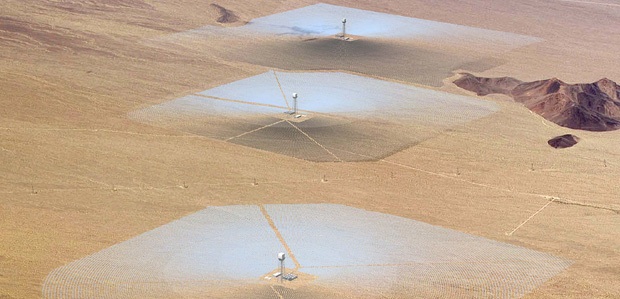
Israeli clean tech innovators comprise 8 percent of the world’s best clean tech companies according to this 2011 award.

It’s the third year running that the Cleantech Group has put together its Global Cleantech 100. Last year, 7 Israeli companies were on the list. This year we see some repeats, with 8 on the list if you include BrightSource, Greenroad Technologies and Better Place –– both founded by Israelis but with operations in the USA. I have interviewed them all in the past.

America Solar Power Assoc: We’ll be 30% Solar in 20 Years

3

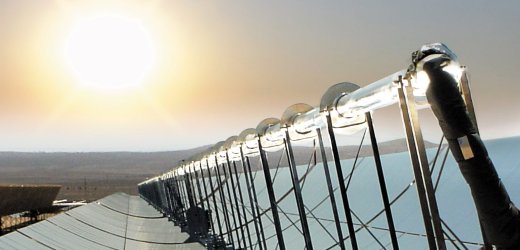
solar panels mirror arraySolar energy is predicted to be important energy source in USA by 2031

The just completed Solar Power International Conference and Exhibition in Dallas Texas painted a bright future for the use of solar energy in the USA, according to Julia Hamm, President and CEO of the Solar Electric Power Association (SEPA). Hamm, who addressed the conference a few days ago, predicted that solar energy will become an important of the US utility system during the next 20 years and result of less reliance on fossil fuels. Some of her predictions include a national clean energy policy by 2013 and the majority of cars in America running on electricity by 2022. She also predicted that solar energy will be the largest job creator by 2026 and that at least 30% of the nation’s utilities will run on solar energy by 2031. Is she dreaming or could this really happen? If it does, this means opportunities for Middle East companies and innovators.

Jordan’s Ambitious Bus Plans Get Shelved

3

jordan-amman-bus-rapid-transit-public-transportAnnounced with much fanfare, the plans to build an new bus transit in Jordan have been quietly shelved pending further review

Back in early 2011, the Jordanian government announced that it would be building a new impressive bus transit aimed at reducing congestion along Amman’s busiest routes. The Bus Rapid Transit (BRT) plans entailed operating high-capacity buses on segregated lanes that could carry more than 120 passengers and run on a three-minute frequency during peak hours. It was seen as a huge leap towards better public transport in the city but the recent suspension of these plans – without much explanation and one year before their planned inauguration – hasn’t been well received.

Tahini Fuels the Countries that Fuel the World!

1

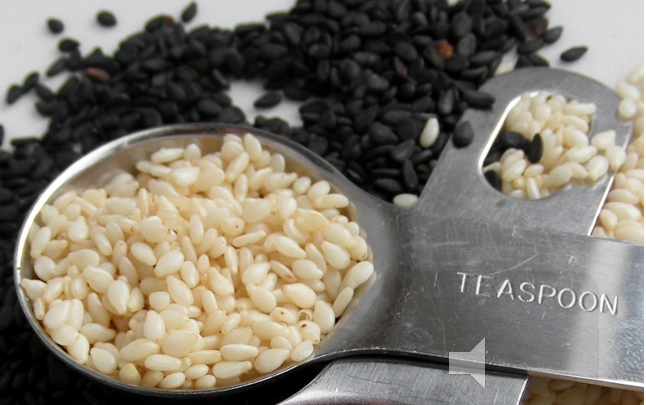
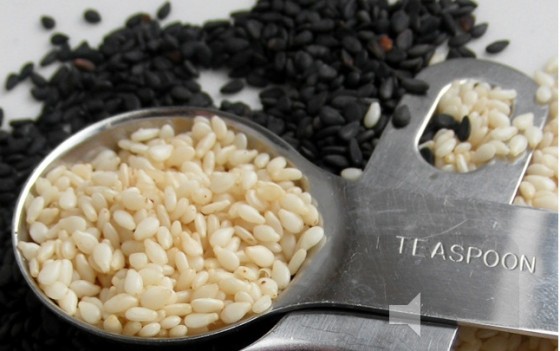
black tehina sesameMaimonides, a Jewish scholar, prescribed tahini almost 1,000 years ago. It’s a calcium food for vegans.

When my friend Elia consulted her doctor complaining of debilitating pain in some of her joints, she was surprised to hear him suggest tahini (or tahina) paste rather than prescribing a pill. He explained that this cure came to us through the writings of Maimonides (Rambam), the 12th century Torah scholar, philosopher from Spain. Happy to add a few tablespoons of the sesame seed paste to her diet, she experienced a significant reduction in pain three weeks later. But joint pain isn’t the only reason to eat tahini. It has been a delicious staple of the Middle Eastern kitchen for centuries.

The Death of Two Men – Muammar Gaddafi and Steve Jobs

0

Gaddafi, Libya, Great Manmade River, Steve Jobs, AppleWhen Steve Jobs died, the world mourned. But the Arab World is throwing a party at news of Gaddafi’s violent end. How are these two men different and how can we prevent the rise of future Gaddafis? Tafline explores these questions in the following opinion piece.

After Steve Jobs died, the world poured out their sorrow. We held vigils and wrote flowery tributes. The media analyzed everything from what motivated his iron discipline right down to the black turtleneck shirt he used to wear. He wasn’t a saint. After all, he denied the existence of a child he fathered. Yet we treated him like one.

But upon hearing the reports that Gaddafi was finally captured and killed after months of shocking violence, news that was verified by Al Jazeera’s disturbing footage of Libya’s former leader lying dead and wide-eyed in blood and dirt, we find ourselves fighting callous impulses to celebrate his death. Gaddafi, we all know, was a bad, bad man.

There is reason to compare these two charismatic figures. Although Gaddafi had much better fashion sense than Jobs, both of them came from broken homes, both possessed inordinate intelligence, and both relentlessly pursued their ambitions, amassing great wealth in the process. So, what went wrong? How is it that genius can take two such vastly different trajectories? 

Etsy “Local” Stores in Egypt, Israel, Jordan and Dubai

1

"handmade fabric doll"Regional Etsy shops unite to form old-fashioned collaborative studios, online.

Etsy, the online handmade and vintage shopping platform, has done amazing things to help people buy handmade, eco-friendly and local products.  Artisans who are marketing their own products can easily set up online shops on the site, and on the buying end, Etsy has made it very easy to shop local by looking for products made and sold near you.  Crafting and selling products alone from one’s home or (for the lucky ones) from a studio can be isolating, though, to some artisans.  Which is why it’s great that Etsy Teams have started to develop, creating virtual collaborative studios for craftspeople of particular regions.  Including, of course, the Middle East.

Etsy Teams allow artisans to communicate with each other, learn about other people’s work, promote each other, and even sell together and plan local bazaars.  Local teams of Etsyians have emerged so far in Egypt, Israel, Jordan and the UAE – and hopefully more groups will emerge in the future.

Preserving olives the natural, fermented way

2

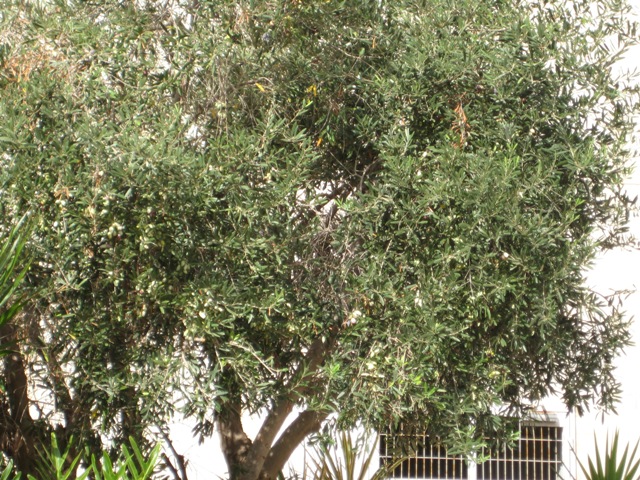
syrian olive treeThis Syrian olive tree is loaded with fruit, most of which will fall to the ground, unpicked.

The autumn olive harvest is still in full swing, and those of you who are now enjoying picking and preserving this ancient Middle Eastern fruit are surely aware that this year’s crop is much better than the poorer crop years of the past years when olive crops in both Israel and the Palestinian areas were much less. I have been engaged for several years now in an “urban harvest” where people grow and harvest their own fruit and veggies in the middle of populated urban areas. Here’s how I do it.
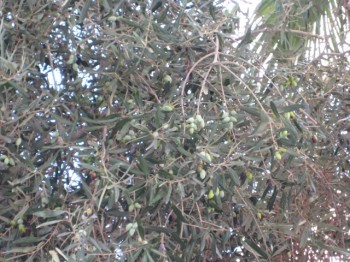
olives israelSyrian olives “on the tree”

Many people living in Israel and Palestine  are lucky enough to have olive trees growing in their own neighborhoods or even their own backyards.

My apartment project has a number of olive trees planted in our building garden, as well as in nearby parks. Most of the fruit from these trees are either the narrow and pointed Syrian olives or the round Mission and Manzanillo olives which are both  good for either pickling or oil.

I pick them both and afterwards pickle them, using a recipe that I fondly refer to as ” Olivias de Mauricio”.

Picking one’s own fruit is a very important part of this endeavor, and I recommend doing this as otherwise, most of the fruit on these “park trees” wind up falling to the ground or sidewalk as the case may be.

My pickling method for green olives is very simple. After picking, sorting, and washing the fruit (try not to mix varieties, if possible) soak the olives in clean water for 10 – 12 days, changing the water daily. I recommend using either water from an under the sink filtration unit or a Brita water filter, to rid the water of chlorine and minerals which can affect the taste of the olives. These nasty chemicals can also affect our health.

The fruit is ready to be put in jars for picking when it changes color and begins to have an “olive” color and odor to them. The water soaking process takes a lot of the bitterness out of the fruit.
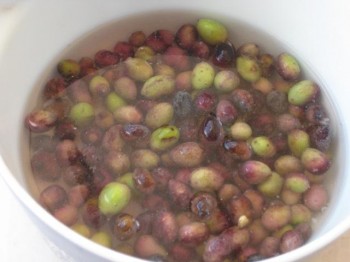
olives israelSoaking olives: change water daily

For the pickling process use clean jars in good condition and with lids that are not rusty. Cleaning the jars with hot soapy water and then rinsing in hot water is recommended as well.

When pickling, I make a brine consisting of water, rock salt, vinegar, and taste conducive ingredients like lemon slices, clean olive leaves, and pieces of fresh garlic.

There’s no set formula for the “spices” as it depends on whether one wants “garlicky” olives or those with more of a lemon taste. You can also add some cut chili peppers for a bit of a “kick”, if desired.

The brine has to contain at least 10 percent salt and an equivalent amount of 5% acidic vinegar (the citrus type is best) for the pickling to be successful.
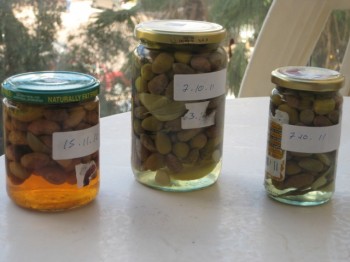
olive picking israelProcessed olives: jar on left has been curing almost a year.

The actual pickling process simply involves putting layers of fruit, lemon slices, olive leaves and garlic chunks or slices until they fill the jar almost to the top.

Then pour in the brine mixture until it reaches just under the top of the jar (about 1/4 inch or 5 cm). Before closing the jar lid, pour enough good quality olive oil in to cover the entire top of the brine mixture.

This keeps mold from forming during the pickling process. After tightly closing the jar and checking for leakage (turn jar upside down to do this) wipe the outside of jar to clean off any picking residue and then label the jar with the date that the picking process was done – this makes it easier to know how long the ingredients have been “working”.

Store the jars in a place away from sunlight (like in a kitchen cupboard) for a minimum of 2-3 months before using.

Ripe olives will cure faster, so bear this in mind if picking ripe or nearly ripe olives.

After opening a cured fruit jar, store it in your refrigerator. Remember that the longer the curing or picking process is allowed to work, the better the olives will taste. And best of all, you have the enjoyment eating olives you picked and pickled yourself.

Enjoy!

Read more on olives and other Mid East seasonal fruit:
Picking Olives for Pickling
Aphrodisiacs of the Middle East: Pomegranate
Olives, Dates and October Seasonal Produce in the Middle East


Middle East’s Wildlife Smuggling Putting Species At Risk

0

UAE-wildlife-smuggling-middleeast-IFAW-gorillas-cheetahThe demand for exotic animals in the Middle East – and particularly in the Gulf and Egypt- is putting animal’s lives at risk

From pet cheetahs on the streets of Dubai to python and falcon egg smuggling, the Middle East clearly has a wildlife trafficking problem. Even more troubling is that the market for these exotic animals is so lucrative that smugglers are putting the animal’s life at serious risk just to make a quick buck. According to the Middle East branch of the International Fund for Animal Welfare, smugglers commonly sedate young animals and carry them on board planes in hand luggage. But many never survive the journey.