Home Blog Page 492

Egypt Losing its Mighty Nile Drop by Drop

12

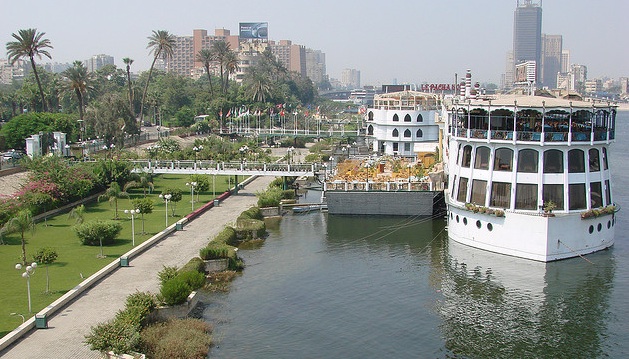
nile cruise egyptEthiopia and other African countries upstream have plans to divert Nile River water. What does this mean for Egypt?

Leaking water pipes, evaporation and a rapidly growing population may be significant concerns for those trying to manage and plan water supplies in Egypt, but compounding such problems – and forcing Egyptians to rethink how they use water – is the threat posed by downstream countries which also want to take more water from the Nile, say observers. “Egyptians have to adapt to less water every day,” said Rida Al Damak, a water expert from Cairo University.

Egypt has a population of about 85 million, and receives an annual Nile water share of 55.5 billion cubic metres, according to experts. Around 85 percent of that water is used in agriculture, but a lot simply leaks away.

According to a 2007 research paper by Fathi Farag, an independent water expert, Egypt loses two billion cubic metres of water to evaporation, and three billion cubic metres to grass growing on the banks of the Nile and on river islands.

Around 40 percent of the remaining water – used domestically and in industry (2.3 billion cubic metres) – is lost to leaking pipes and drains, while 2.5 billion cubic metres are used to generate electricity, the paper says.

“If you calculate all this amount of lost water, you will discover that Egyptians are left with a fraction of what their country receives every year from the Nile,” Farag told IRIN. “This can also show why we should start to worry.”

For farmers like Hamdy Abuleinin, who was able to irrigate his 2.1 hectares of rice only after an argument over water with neighbours in Sharqia near Cairo, this year has proved difficult. “Finding water for irrigation is becoming a daily worry for farmers here,” he told IRIN.

International threat

A 1959 water-sharing agreement between Egypt and Sudan gives Egypt 55.5 billion cubic metres of Nile water, but according to Maghawri Shehata, an adviser to the irrigation and water resources minister, population pressure means the country is already facing a shortfall of 10-15 billion cubic metres annually, and “plans by upstream countries to redistribute the water will be very harmful to Egypt”.

According to the Nile Basin Initiative countries that share the Nile River basin have demanded the revision of colonial-era agreements that allot the bulk of the river’s water to Egypt and Sudan and allow Cairo to veto upstream projects.
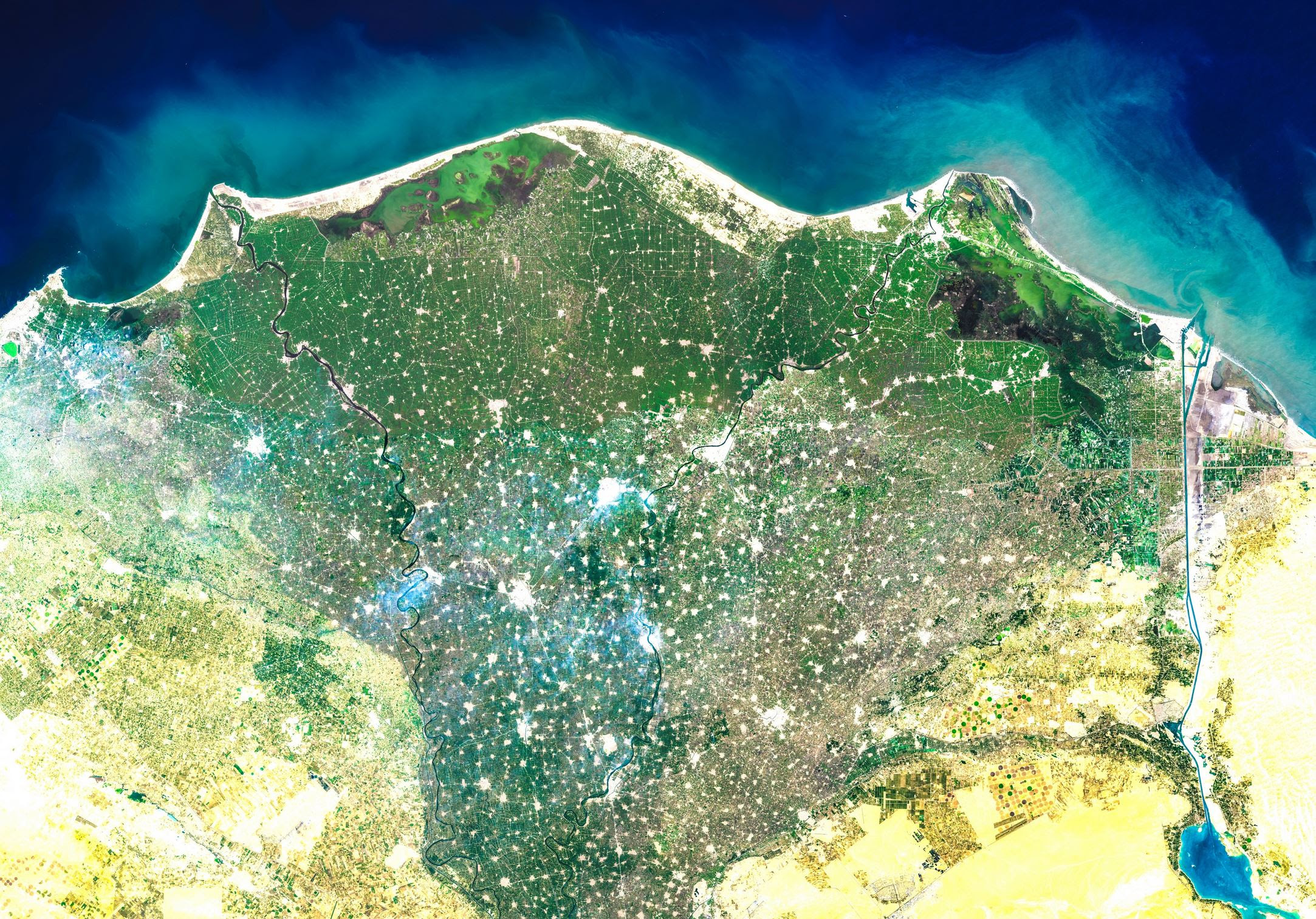
nile delta
The Nile Delta, home to 18 million people

Egypt does not recognize a recent agreement signed by Burundi, Ethiopia, Kenya, Rwanda, Tanzania and Uganda, that seeks to allow irrigation and hydroelectric projects to go ahead without Cairo’s consent. Ethiopia, for instance, is planning a series of dams along the Nile to generate electricity.

In March, Ethiopia announced the construction of the Renaissance Dam, which aims to be the largest hydroelectric plant in Africa. Experts like Mehari Beyene, writing for the International Rivers network, however, say the dam, which is being constructed near the Sudanese border, has raised concerns about its environmental and human impacts.

Haytham Awad, an irrigation engineering professor from Alexandria University, said Ethiopia’s plan to construct dams along the Nile would reduce Egypt’s current share by five billion cubic metres annually, but he thought this might be manageable if Egypt could cooperate with Ethiopia and buy some of the electricity generated.

Protests over water shortages in Egypt are nothing new especially in July and August, the hottest summer months. On 11 October a 16-year-old farmer was killed in a dispute over water in the southern governorate of Aswan.

Farmers like Abuleinin worry about the future for his seven children. “Fights over water sometimes become physical as water becomes scarcer and these fights might entail loss of life. But the alternative for us is to starve.”
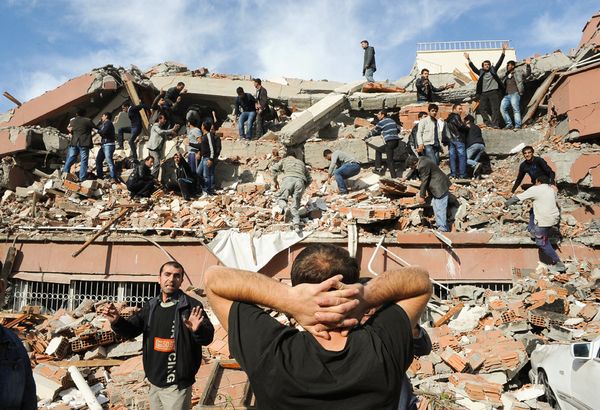
Turkey Expected To Cancel Nuclear Plans After Massive Earthquake

0

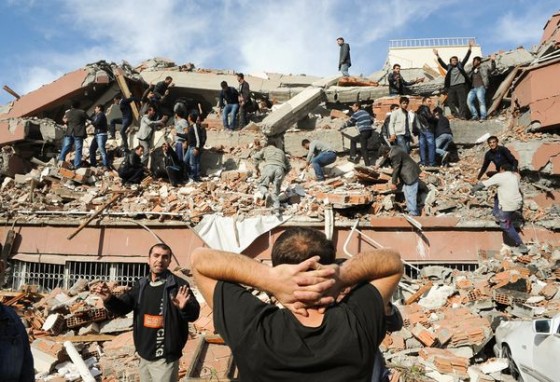
The earthquake struck approximately 20 kilometers north of the city of Van, pictured above. Turkey’s seismology institute estimated the final death toll would reach 1,000.

A 7.2-magnitude earthquake slammed Turkey‘s eastern province of Van on Sunday. Two days afterward, 366 deaths have been reported, 1,301 injured persons are being treated, and more than 2,000 buildings have collapsed.

Although the temblor didn’t shake the Black Sea region of Sinop, which was some 800 kilometers northwest of the epicenter, it may have stalled plans to build a nuclear power plant (NPP) there. The Korean nuclear industry now expects the Sinop NPP to be canceled, news agency dongA reports.

Energy Experts Tell Arab World ‘Solar is the Future’

1

sun-solar-middle-east-renewablesIt’s official: energy experts predict that solar power will be the most important source of energy in the Middle East within the next decade

There’s no getting away from the fact that the Middle East is sunny – as such, it doesn’t take a genius to work out that solar power is the way to go. Countries such as Egypt and Lebanon as well more oil-rich nations like Saudi Arabia and the United Arab Emirates are already building up their solar power resources. Even so, overall progress is patchy and with some nations such as Jordan embracing nuclear and Israel still considering oil shale it seems the message hasn’t quite reached all ears.

This week’s announcement by energy experts during a World Economic Forum event that regional governments need to shift to clean, renewable energy resources should, however, go some way to rectifying the situation.

Earth Summit Initiators Prepping in Israel Today

earth summit UN

Israeli leaders have started hosting a preparatory meeting for the 2012 Earth Summit (Rio + 20), the UN Conference for Sustainable Development, to be held in Rio de Janeiro, Brazil. The preparatory meeting is now taking place today through to October 27 in the Maccabia Village in Ramat Gan.

Iran Forgets India and Keeps Pitching Peace Pipeline to Pakistan

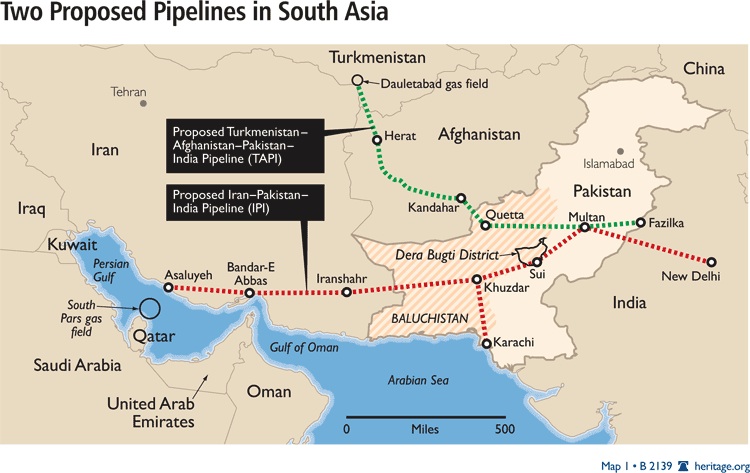
iran pakistan pipeline peaceIran, becoming more isolated appeals to Pakistan to move ahead with natural gas “peace pipeline.” Saboteurs have already had their say in the idea. Image via BSO-NA

As Iran becomes more marginalized with US-backed sanctions, Iran seeks to conduct business with more hospitable partners, like Pakistan. Every year floods devastate Pakistan, this year with a momentous 6 million displaced. Lack of regular power, according to Natasha Paracha (Miss Pakistan 2008), is a top 3 problem in Pakistan, along with food insecurity, and the diseases and troubles that flood waters carry with it. But as past US President Clinton seeks to repair US-Pakistan relations Pakistan could be doing itself a disservice by looking to Iran to furnish its energy needs via an Iran-Pak gas pipeline.

Iran’s Islamic Regime Aims to Be Solar Supreme by 2015

solar energy iran
5000 MW by 2015? Iran wants to launch the largest solar power plant in the Middle East. A solar plant is in the works is in Shiraz, Fars. Image via SUNA

About 27 people die every day in Tehran, from its shocking levels of air pollution according to our Iranian blogger Mehrdad. Some anti-regime environmentalists, by the way, have joked that they hope this will eventually be the end of their jogging president. This week, however, Iran’s Renewable Energy Organization says it will launch the largest solar power plant in the Middle East by 2015.

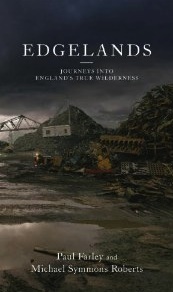
Book Review of Edgelands: Journeys into England’s True Wilderness

edgelands book reviewEdgelands are the spaces outside of towns and cities that play host to a rough element. Largely considered no-man’s-land, they too deserve attention, Marion Shoard argues. Two poets respond to the call.

The term edgelands was coined in 2003 by Marion Shoard.  She wrote, “The expanses of no-man’s-land which have sprung up on the margins of our towns and cities play host to a mix of uses characteristic of our age. Rough and ready in the naked functionalism of their edifices and in the lawlessness and vigour of their natural vegetation, these places are unappreciated by the arbiters of landscape taste, but they too have their story and their needs. The time has come to give these ‘edgelands’ their due and recognise them as landscapes in their own right.”

Car Use in Lebanon Increased by 538% in 24 Years

2

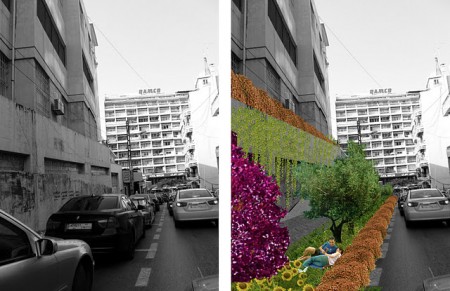
roads lebanonAn architect in Beirut illustrates how a small splash of color can completely transform a concrete environment. But trust us, that is just the beginning of this city’s problems.

I judge a country by its public transportation, and Sandra Rashini, an architect who held a magnifying glass over Lebanon’s colossal urban problem for Mashallah, will tell you that it’s not looking so good in Lebanon. The consequences are enormous: everything – from agriculture to human health – is affected in the absence of good planning. Absolutely everything.

Alongside maybe Cairo (someone ought to do a comparison), Beirut in particular offers the best example of what can go wrong when cars and roads are allowed to overtake every inch of nature – both wild and fertile. The Gulf countries are working on a major overhaul of their public transportation systems. Jordan just shelved their good plans. What will Lebanon do?

Argan Oil Now Produced in Israel

11

image-goat-argan-tree
Much of Morocco’s argan oil still comes from nuts excreted by goats. The fabulously expensive oil is now produced in Israel – without goat droppings.

Ever get the feeling that you’re barking up the wrong tree? Well, this goat up a tree is bleating with joy at his favorite nosh: argan nuts. As Karin revealed to us in this post about argan oil production, in Morocco, Berber women process argan nuts the laborious traditional way till this day. Recently in 2022, the UN has updated argan as one of 12 at-risk plant products.

First, goats are set free in the argan groves and allowed to eat the yellow mature fruit.  They excrete the indigestible nuts, which are gathered, cleaned and broken open, revealing an oil-rich kernel. Lightly roasted, the kernels yield oil with the deep, nutty taste so highly prized in the foodie world. Extracted raw, it is used as a cosmetic. If we’re to believe what we’re told about how miraculously argan oil reverses damage to skin and hair, it’s worth the expense. Current prices go as high as US$50 for 100 ml. (Makes you want to run to the kitchen and simmer some butter to make smen.)

Lightexture Lamps Combine Ethereal Light and Energy Efficiency

2

lightexture "ceramic eco friendly lamp"Lightexture’s lamps are beautiful and energy efficient.

Sustainable designers interested in the field of light fixtures often focus on making the lamp base out of recycled or repurposed materials, and don’t necessarily think about energy efficient light.  We’ve seen lamps made out of industrial pipes and chandeliers made out of ice cream spoons, but when thinking of mood lighting it is sometimes hard to think of compact fluorescent lightbulbs (CFLs).  Emitting a notoriously harsh white light when they first came out, CFLs have a bad reputation that is slowly being restored as their glow comes closer to the yellow warmth associated with (non energy efficient) incandescent bulbs.  Israeli design duo Yael Erel and Avner Ben Natan of Lightexture are helping the CFLs’ popularity by creating beautiful lamps in which they shine.

Could A ‘Green GDP’ Transform The Middle East?

0

green-gdp-economy-environment-middle-east-egyptEnvironmentalists have been telling us for years that we need to stop focusing on the economy and consider nature. Will a ‘Green GDP’ help us do just that in the Middle East?

GDP is probably one of the very few widely recognised abbreviated economic terms in the world. It stands for Gross Domestic Product and basically denotes the economic growth of a country. This measure is widely used to record (and compare countries on) everything from economic success, standard of living to the size of a nation’s carbon footprint. However, environmentalists have noted for years that this unhealthy focus on economic growth means that the cost to the planet is consistently overlooked.

Gaddafi’s Great Man Made River Follow

great man made riverThe Great Man Made River: 70 percent of Libya’s fresh water comes from it.

Muammar Gaddafi, the eccentric strongman of Libya for more than 42 years and often referred to as the Mad Dog of the Middle East, wound up dying like a dog at the hands of his own people. Now that he is history, environmentalists following Gaddafi’s grand ecological projects, including The Great Man Made River and the mid-Sahara pivot irrigation farming projects, wonder what the future holds for these projects which could be the country’s environmental salvation.

great man made river gmmr GMMR: water from the last Ice Age

During a period that goes back nearly as long as Gaddafi ruled his desert kingdom, these projects, although very costly held a lot of promise for providing not only ample drinking water to one of the most arid countries on earth, but possibly ample food production as well via the circular pivot irrigated farms which were literally growing food and other crops in the middle of one of the most inhospitable deserts in the world – the Sahara.

In a previous Green Prophet article the artificial river project was already bringing millions of gallons of fresh water from a large prehistoric underground reservoir, formed in a previous Ice Age, and located in an area where it was once green and various species of  African plains animals roamed freely – as well as the peoples who hunted them.

Began in the early 1980s, and  built at a cost of more than $33 billion USD, the GMMR project involved pumping “fossilized” water from depths of more than 500 meters, purifying it, and then sending the water to the country’s major population areas. Along the way, some of the water has been diverted to the pivot irrigation projects which have been growing a number of crops, including grains, fruits and vegetables, and animal fodder.

muammar gaddafiLibyan pivot irrigation farms as viewed from space

With Libya now being a state of transition, and a centralized government still not yet in place, the future of these green projects appear to be very much in doubt.

Libya’s main source of revenue, oil and gas production is presently at a fraction of what it was prior to the beginning of the uprising in February, 2011. With no civil administration to run such projects, as well as no funds to pay workers involved in them, the projects themselves are most likely at a virtual standstill.

The pipelines and pumping stations for the GMMR may also have been damaged by the fighting and continuous air raids during the past months.

muammar gaddafiMad man, or ecological visionary?

The dust has still not settled yet in regards to what form of government will eventually be put in place in the aftermath of Gaddafi’s long authoritarian rule. But for the sake of the people of Libya, these environmental projects have to somehow be kept going,  since the GMMR alone has been providing the Libyans with more than 70% of their fresh water for personal use and for irrigation.

Gaddafi is dead, but his environmental dreams should not die with him.

More on Gaddafi and his green visions of grandeur:
The Death of Two Men: Muamar Gadaddi and Steven Jobs
Libyan Violence Dampens Great Man Made River Project
Libya Revolution Will End Gaddafi’s Green Visions
Libya Touts Great Man Made as 8th Wonder of the World

Jenin Playground to Get Green Makeover

0

jenin-green-miftah-playground-permacultureGerman-Palestinian society NIJMAH is working on renovating a kid’s playground using natural materials and setting up a permaculture garden
Permaculture may be new to the Middle East but with Jordan hosting the recent permaculture world conference and various organic farms sprouting up, the region is slowly catching up. In Palestine, there is already a permaculture farm named ‘Bustan Qaraaqa’ in Bethlehem encouraging locals to become more food independent and now another Palestinian community wants to establish a permaculture garden for children. In Jenin, the German-Palestinian society named NIJMAH is working on renovating a playground using natural materials and establishing a small permaculture garden.

Breaking News: Devastating 7.3 Earthquake Hits Eastern Turkey

0

natural disasters, turkey, mediterranean, earthquake

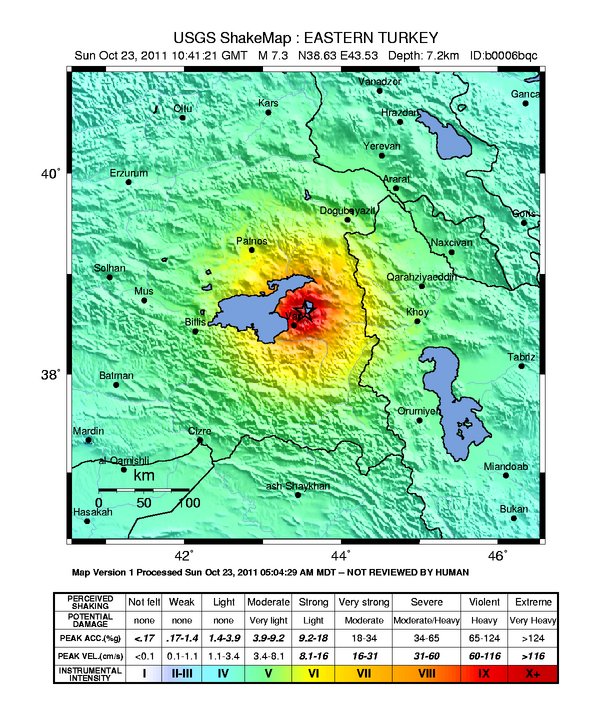
A devastating earthquake has hit Turkey near its border with Iran. A 1976 earthquake in the same vicinity killed 5,000 people.

The Kandilli Observatory has reported that a very powerful earthquake measuring up to 7.3 on the richter scale has hit near the city of Van in eastern Turkey. Described as devastating and expected to worsen as a result of aftershocks, the earthquake will cause extreme shaking for approximately 49,000 people, violent shaking for 381,000 people, and severe shaking for 131,000. Although there are few details at present, Earthquake Report notes that the shake was felt in neighboring countries, which is a very bad sign, and that thousands of lives are at risk. Many homes have been destroyed, power has been cut in places, and many cell phones lack service.

image via USGS

1 Million Migrating Songbirds are Killed for Pickled Dish in Cyprus

21

poaching, wildlife conservation, cyprusEvery year trappers in Cyprus kill millions of migrating songbirds that are boiled or pickled – a national delicacy called ambelopoulia. Wildlife conservationists want authorities there to do more to prevent this “ecological disaster.”

One songbird is illegally trapped or killed every four seconds to provide residents of Cyprus with ingredients for a dish called ambelopoulia, according to Wildlife Extra. Quoting Tim Stowe, the Royal Society for the Protection of Bird’s (RSPB) international director, the online wildlife news publication reports that this mass slaughter takes place twice every year despite European, Cypriot, and Sovereign Base Area law that prohibits either trapping or killing wild birds.

Often not far from popular tourist destinations, trappers use mist nets and lime sticks to catch mostly whitethroats and blackcaps. They then sell the birds to restaurants, where they are either boiled or pickled. Since the beginning of September, this fate has befallen more than one million songbirds on their annual migration between Europe and Africa.