“In the midst of uncertain time, renewable energy remains consistent and steadfast in its expansion,” said Francesco La Camera, IRENA’s Director-General. “A more decentralised energy system, with a growing share of renewables and more market players, is structurally more resilient.”
Health insurance is a regulated financial product. Insurers operate under binding contracts, overseen by state insurance commissioners, that legally obligate them to pay claims meeting policy terms. Policyholders who believe a covered claim was wrongfully denied have legal recourse through state regulatory channels.
The New Zealand Merino Company, now rebranded as Zentera, has quietly removed the phrase “world’s leading ethical wool brand” from its website, a notable change that comes after a disturbing investigation by PETA Asia-Pacific into the company’s ZQ-certified wool supply chain, PETA reports to Green Prophet.
Somehow vegetables with short seasons excite the imagination and appetite more sharply than produce that’s available all year around. Good Middle Eastern cooks have many recipes for delicate fava beans, and this turmeric-fragrant soup is one.
“In the midst of uncertain time, renewable energy remains consistent and steadfast in its expansion,” said Francesco La Camera, IRENA’s Director-General. “A more decentralised energy system, with a growing share of renewables and more market players, is structurally more resilient.”
Health insurance is a regulated financial product. Insurers operate under binding contracts, overseen by state insurance commissioners, that legally obligate them to pay claims meeting policy terms. Policyholders who believe a covered claim was wrongfully denied have legal recourse through state regulatory channels.
The New Zealand Merino Company, now rebranded as Zentera, has quietly removed the phrase “world’s leading ethical wool brand” from its website, a notable change that comes after a disturbing investigation by PETA Asia-Pacific into the company’s ZQ-certified wool supply chain, PETA reports to Green Prophet.
Somehow vegetables with short seasons excite the imagination and appetite more sharply than produce that’s available all year around. Good Middle Eastern cooks have many recipes for delicate fava beans, and this turmeric-fragrant soup is one.
“In the midst of uncertain time, renewable energy remains consistent and steadfast in its expansion,” said Francesco La Camera, IRENA’s Director-General. “A more decentralised energy system, with a growing share of renewables and more market players, is structurally more resilient.”
Health insurance is a regulated financial product. Insurers operate under binding contracts, overseen by state insurance commissioners, that legally obligate them to pay claims meeting policy terms. Policyholders who believe a covered claim was wrongfully denied have legal recourse through state regulatory channels.
The New Zealand Merino Company, now rebranded as Zentera, has quietly removed the phrase “world’s leading ethical wool brand” from its website, a notable change that comes after a disturbing investigation by PETA Asia-Pacific into the company’s ZQ-certified wool supply chain, PETA reports to Green Prophet.
Somehow vegetables with short seasons excite the imagination and appetite more sharply than produce that’s available all year around. Good Middle Eastern cooks have many recipes for delicate fava beans, and this turmeric-fragrant soup is one.
“In the midst of uncertain time, renewable energy remains consistent and steadfast in its expansion,” said Francesco La Camera, IRENA’s Director-General. “A more decentralised energy system, with a growing share of renewables and more market players, is structurally more resilient.”
Health insurance is a regulated financial product. Insurers operate under binding contracts, overseen by state insurance commissioners, that legally obligate them to pay claims meeting policy terms. Policyholders who believe a covered claim was wrongfully denied have legal recourse through state regulatory channels.
The New Zealand Merino Company, now rebranded as Zentera, has quietly removed the phrase “world’s leading ethical wool brand” from its website, a notable change that comes after a disturbing investigation by PETA Asia-Pacific into the company’s ZQ-certified wool supply chain, PETA reports to Green Prophet.
Somehow vegetables with short seasons excite the imagination and appetite more sharply than produce that’s available all year around. Good Middle Eastern cooks have many recipes for delicate fava beans, and this turmeric-fragrant soup is one.
“In the midst of uncertain time, renewable energy remains consistent and steadfast in its expansion,” said Francesco La Camera, IRENA’s Director-General. “A more decentralised energy system, with a growing share of renewables and more market players, is structurally more resilient.”
Health insurance is a regulated financial product. Insurers operate under binding contracts, overseen by state insurance commissioners, that legally obligate them to pay claims meeting policy terms. Policyholders who believe a covered claim was wrongfully denied have legal recourse through state regulatory channels.
The New Zealand Merino Company, now rebranded as Zentera, has quietly removed the phrase “world’s leading ethical wool brand” from its website, a notable change that comes after a disturbing investigation by PETA Asia-Pacific into the company’s ZQ-certified wool supply chain, PETA reports to Green Prophet.
Somehow vegetables with short seasons excite the imagination and appetite more sharply than produce that’s available all year around. Good Middle Eastern cooks have many recipes for delicate fava beans, and this turmeric-fragrant soup is one.
“In the midst of uncertain time, renewable energy remains consistent and steadfast in its expansion,” said Francesco La Camera, IRENA’s Director-General. “A more decentralised energy system, with a growing share of renewables and more market players, is structurally more resilient.”
Health insurance is a regulated financial product. Insurers operate under binding contracts, overseen by state insurance commissioners, that legally obligate them to pay claims meeting policy terms. Policyholders who believe a covered claim was wrongfully denied have legal recourse through state regulatory channels.
The New Zealand Merino Company, now rebranded as Zentera, has quietly removed the phrase “world’s leading ethical wool brand” from its website, a notable change that comes after a disturbing investigation by PETA Asia-Pacific into the company’s ZQ-certified wool supply chain, PETA reports to Green Prophet.
Somehow vegetables with short seasons excite the imagination and appetite more sharply than produce that’s available all year around. Good Middle Eastern cooks have many recipes for delicate fava beans, and this turmeric-fragrant soup is one.
“In the midst of uncertain time, renewable energy remains consistent and steadfast in its expansion,” said Francesco La Camera, IRENA’s Director-General. “A more decentralised energy system, with a growing share of renewables and more market players, is structurally more resilient.”
Health insurance is a regulated financial product. Insurers operate under binding contracts, overseen by state insurance commissioners, that legally obligate them to pay claims meeting policy terms. Policyholders who believe a covered claim was wrongfully denied have legal recourse through state regulatory channels.
The New Zealand Merino Company, now rebranded as Zentera, has quietly removed the phrase “world’s leading ethical wool brand” from its website, a notable change that comes after a disturbing investigation by PETA Asia-Pacific into the company’s ZQ-certified wool supply chain, PETA reports to Green Prophet.
Somehow vegetables with short seasons excite the imagination and appetite more sharply than produce that’s available all year around. Good Middle Eastern cooks have many recipes for delicate fava beans, and this turmeric-fragrant soup is one.
“In the midst of uncertain time, renewable energy remains consistent and steadfast in its expansion,” said Francesco La Camera, IRENA’s Director-General. “A more decentralised energy system, with a growing share of renewables and more market players, is structurally more resilient.”
Health insurance is a regulated financial product. Insurers operate under binding contracts, overseen by state insurance commissioners, that legally obligate them to pay claims meeting policy terms. Policyholders who believe a covered claim was wrongfully denied have legal recourse through state regulatory channels.
The New Zealand Merino Company, now rebranded as Zentera, has quietly removed the phrase “world’s leading ethical wool brand” from its website, a notable change that comes after a disturbing investigation by PETA Asia-Pacific into the company’s ZQ-certified wool supply chain, PETA reports to Green Prophet.
Somehow vegetables with short seasons excite the imagination and appetite more sharply than produce that’s available all year around. Good Middle Eastern cooks have many recipes for delicate fava beans, and this turmeric-fragrant soup is one.
Ziad Tassabehji is one of the most influential men in the new green Middle East. Until now he’s kept pretty quiet about his involvement in Masdar.
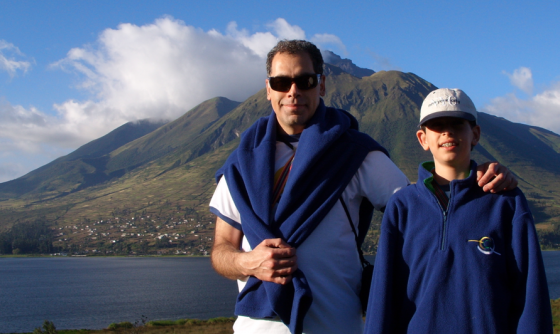
He came from the dot-com market with a boom and a bust, but in the Arab world. Ziad Tassabehji (pictured above with his son) has always been an entrepreneur at heart. Born in Lebanon and now living in the UK after more than two decades in the United Arab Emirates, Ziad started his first Internet company before there was even Internet in Dubai in 1995. By 2002 after a major downsizing to keep his tech company afloat, he changed course and moved into renewable energy and sustainable development.
Ever hear of Masdar, the zero-energy city in Abu Dhabi? The city that has moonscape mashrabiya surfaces, people podcar movers and a student body whose coffee is brewed by solar power?
Masdar was Ziad’s idea presented to officials in the Arab world. Ziad was sure that Middle East governments and decision-makers needed to diversify their economies from oil and gas into renewables. The idea struck a cord and flew.
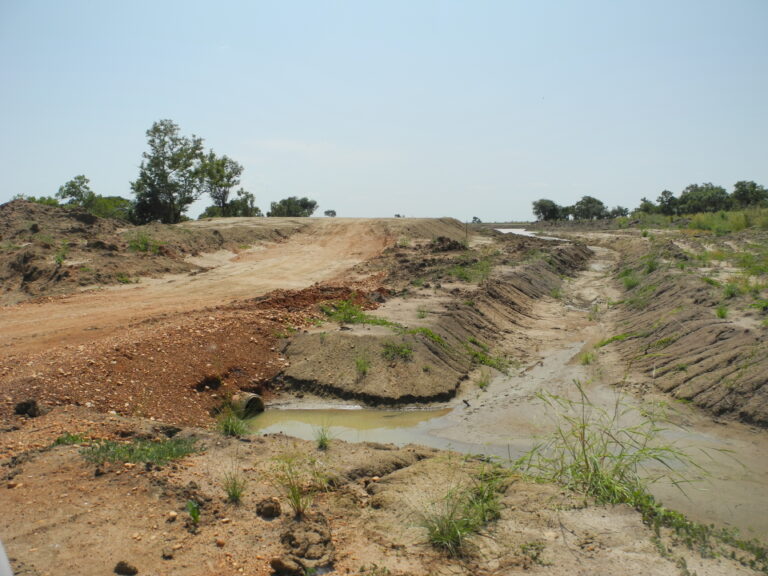
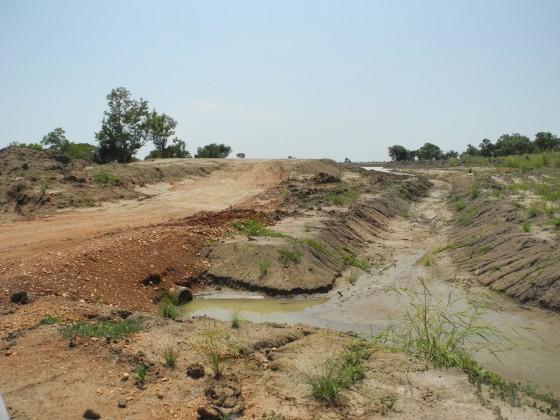
This image taken in the western Gambella region of Ethiopia shows irrigation canals being dug by the agricultural firm owned by Saudi-Ethiopian billionaire Mohammed Al Amoudi.
Last week BBC News reported that 70,000 indigenous people have been forced to relocate in the western Gambella region of Ethiopia to new villages that lack adequate resources for their survival. The land has been signed over to foreign investors, including Saudi Star Agriculture Development Plc, a company owned by Saudi-Ethiopian billionaire Mohammed Al Amoudi.
Felix Horne of the Oakland Institute recently authored Understanding Land Investment Deals in Africa – a succinct analysis of the perils of land grabs in Ethiopia. He told Green Prophet that Saudi Star has begun rice cultivation on 10,000ha of land in Gambella and a 10,000ha irrigation project along the already-compromised Alwero River. Only grain that does not meet export requirements will be sold locally.
Greensoil, an investment firm from Canada will fund Israeli agritech companies with a reported $12 million.
Cash from Canada will be funding clean technology companies in Israel. A new Canadian fund called Greensoil looks to build Israeli agritech companies with the launch of a $12 million CAN fund. Greensoil investors say they will invest in Israeli companies whose technology innovations help the world feed its population with less water and less arable land. It will uniquely focus on food and agricultural innovation from Israel. The company will invest in agro and food technologies with existing or near-term revenues and plans for international expansion. There are no specific announcements on who the fund will be investing in, but a PR rep told me announcements will come soon.
Abu Dhabi’s 75% government-owned National Energy Company TAQA has just created its first-ever division to specialize in investing in renewable energy.
The new unit, Energy Solutions, will invest in wind, solar, thermal and hydro power, according to a report at The National. TAQA first evidenced an interest in clean energy in 2008, and it has committed to a $1.1 billion carbon capture and storage project in the Netherlands, the Bergermeer gas storage project, to become operational in 2015.
Egypt is now close to awarding a contract to build a 1,000 megawatt wind farm, to be up and running in 2016, that it first announced last year.
A wind farm this size has few equals worldwide. Egypt has some of the best wind power potential in the world, and its government is beginning to tap into this source of free fuel in earnest, since passing its plan to get 20% of its electricity from renewables by 2020, in order to stave off climate change.
For Mohammad Sabir Khedri, compiling the pages of this enormous and intricately detaied holy book was a 5 year labor of love.
A master calligrapher has lovingly unveiled the world’s largest Quran in Kabul, Afghanistan, according to a Reuters report released last week. The giant holy book measures 7.5 by 5.10 feet, weighs over 1,000 pounds, and cost half a million US dollars to put together. Its 218 pages are made of cloth and paper and feature complex gold script designs created with the input of nine students. And it is bound in the skin of 21 goats.
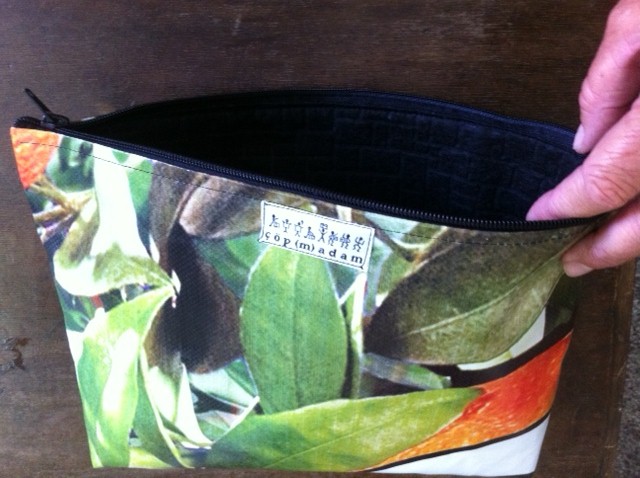
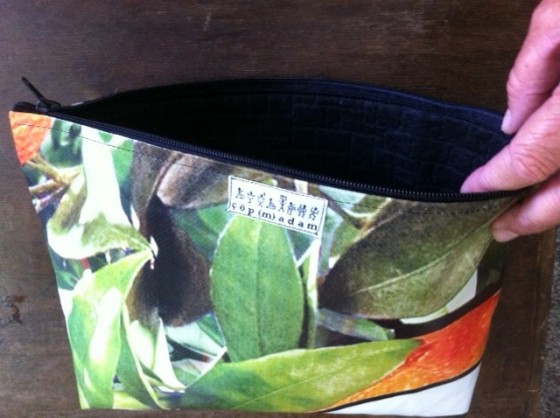
Turning trash into art and employing women who have never worked for pay before — two difficult tasks that Turkish company Çöp(m)adam accomplishes at once.
Turkey’s recycling culture is largely unseen. Recycling is usually carried out by poorly compensated workers who salvage reusable materials from trash collected by the municipality and take them to recycling centers. But one Turkish company is raising the profile of recycling in Turkey, making trash into beautiful objects and paying Turkish women a decent wage to do so.
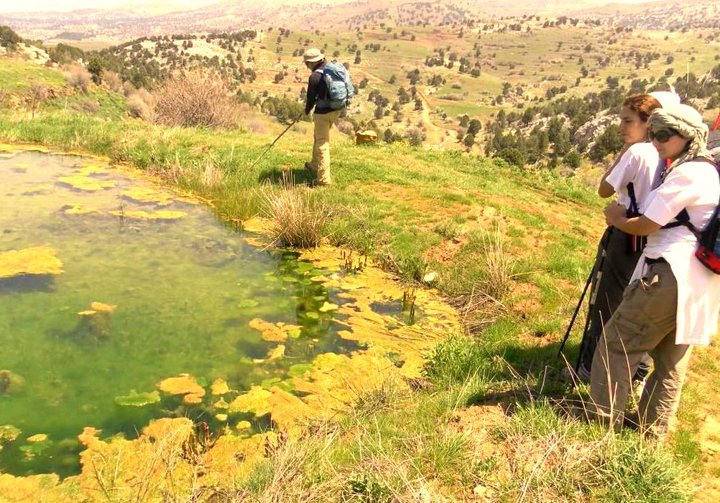
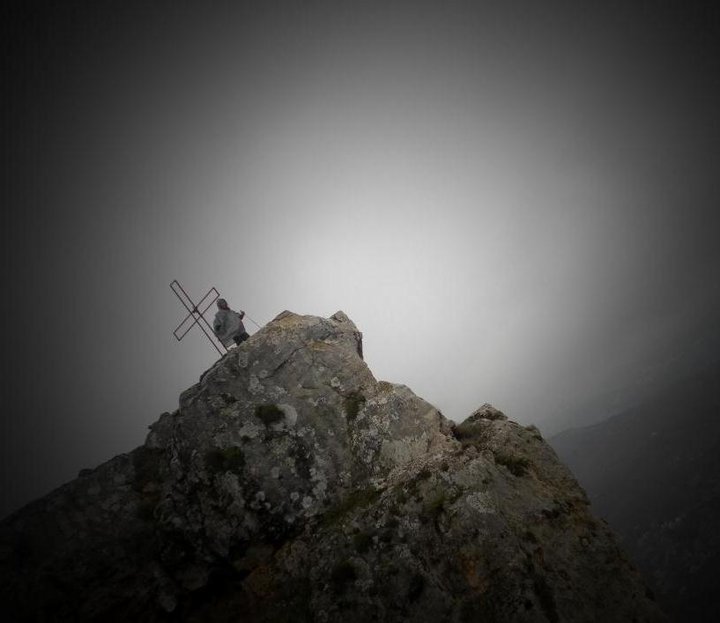
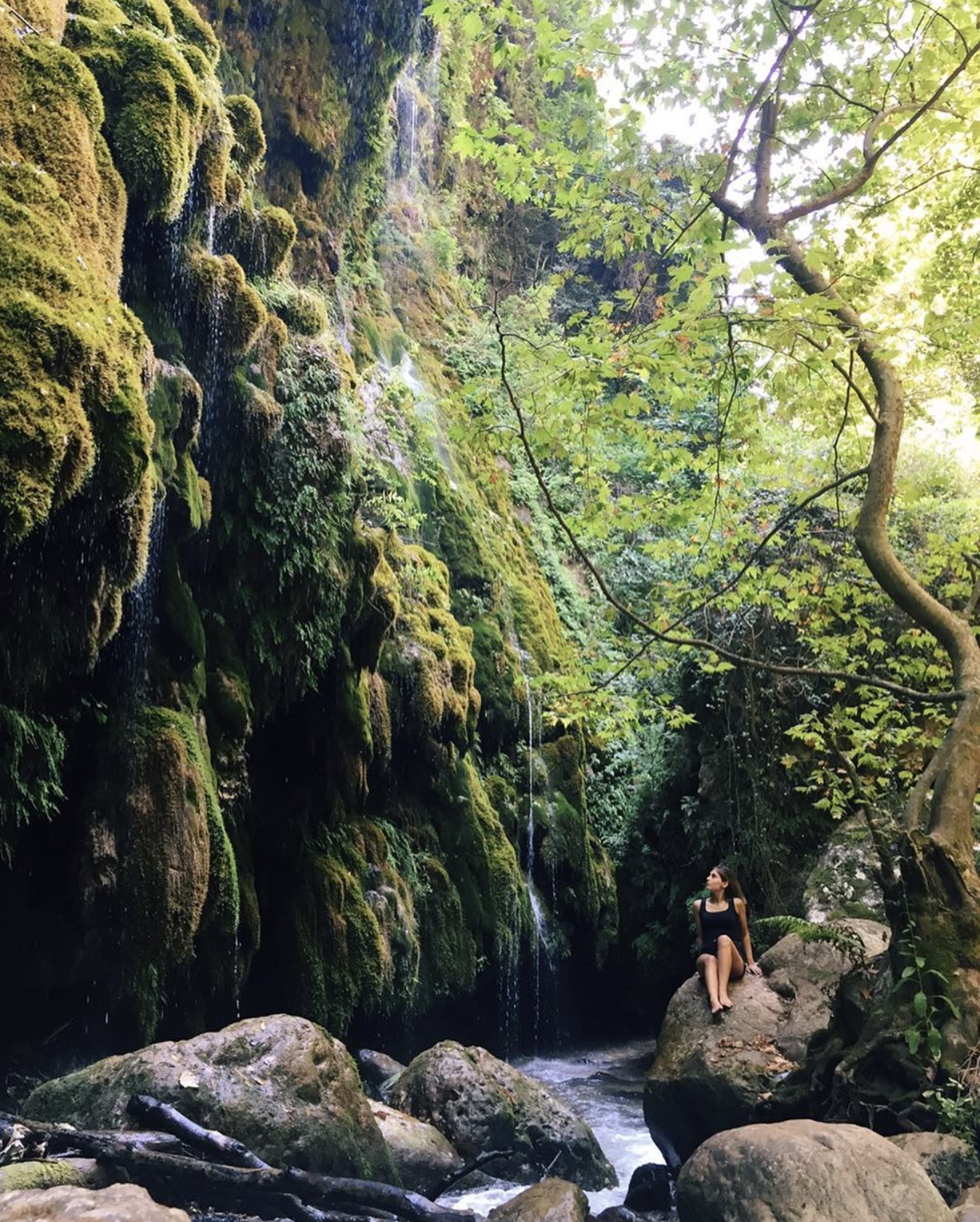
Lebanon boasts one of the world’s most sophisticated hiking trail networks, which traverses 75 towns and villages.
A few years ago, John Keyrouz fled the fast lane in Los Angeles and returned to Lebanon. When he ventured into the mountains to relive fond childhood hiking memories, he was astounded to discover a world class trail system that transects 75 towns and villages and 275 miles of breathtaking mountain scenery.
Besieged with a desire to uplift the country’s rural poor through eco-tourism projects, in 2005 Joseph Karam from ECODIT and his colleague Karim El-Jisr applied for a $3.3 million USAID grant to establish a trail that would rival the organization and professionalism of America’s famed 2,175 mile Appalachian Trail. They got the grant, but the hard work was yet to come.
Building Lebanon’s Mountain Trail
In just two years – between 2006 and 2008 – Karam and El-Jisr developed a feasible concept and proposal for the Lebanon Mountain Trail or LMT trail, obtained substantial funding to implement their ideas, and then worked with a variety of local stakeholders and government representatives to get it “off” the ground.
Not only did they seek council from Lebanon’s own Environmental and Tourism ministries, but they also received guidance from the Appalachian Trail Conservancy, the United States Forest Service, and the International Ecotourism Society.
Dozens of local guides were trained to administer first aid, navigate with a map and compass, recognize trees, and in general conduct professional tours through 3 Nationally Protected Areas, 1 World Heritage Site, and 75 quaint towns and villages, while local guesthouses were empowered to offer affordable accommodation and other facilities for intrepid adventurers.
Each of the LMT’s 26 sections are comprised of trails that both start and end in a village. Some are as short as 9km and the longest distance between two villages is just 24 km. Altitudes range from 3,000 to 5,000 feet above sea level.
A trail with guest lodging along the way
There are numerous guest lodges on the trail along with a few campgrounds for those on a tight budget, and hikers can use ablution facilities at almost all of the networked villages.
Experienced hikers have been known to get from the north to the south in just 26 days (otherwise known as a walk-through), although less experienced hikers are urged to afford themselves an additional week.
More than just another sustainable development project, Keyrouz says of the Lebanon Mountain Trail:
It is a trail of Promise. A promise that, through dedication and love, great strides can be accomplished in the development and protection of the physical, ecological, geographical, historical and cultural treasures of Lebanon. It is also a promise that with proper education and empowerment, we can encourage ownership of the trail by the rural villages and communities along it.
The LMT’s success offers an extraordinary glimpse of what is possible “when a few group of caring individuals set their sites on a common, worthwhile goal.
More on Hiking in the Middle East and North Africa:
New study shows connection between fluoride consumption and hardening of the arteries.
Our previous post on fluoride brought up some startling facts on the dangers lurking in our water. Water laced with fluoride, that is. The list of ills associated with fluoridated water is long and scary: Alzheimer’s, asthma, cancer, arthritis, thyroid dysfunction are among them. On top of that, we know that fluoride doesn’t prevent cavities and may actually cause bones to become brittle. Now we have to worry about what the water we use for drinking, cooking, and hygiene is doing to our hearts and arteries.
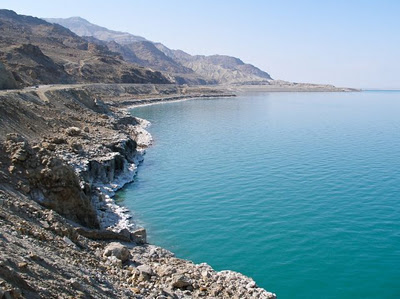
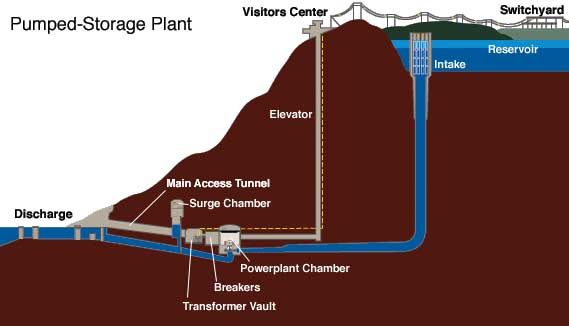
One alternative to the Red-Dead Canal is the Med-Dead Canal hydro pump. The massive hydro pump idea has been around since the 70s and has questionable environmental outcomes.
The Israel Chamber of Commerce recently requested that the government reinvestigate a project to connect the Dead Sea and Mediterranean Sea. In a joint letter to Environmental Protection Minister Gilad Erdan and Energy and Water Minister Uzi Landau, Chamber president Uriel Lynn argued that the project would have multiple benefits. Apart from augmenting water flows to the ever-dwindling Dead Sea, Lynn noted the project would improve the environment, tourism and agriculture and produce energy.
The idea is not new. Known as the “Med-Dead” project, it has been kicked around by engineers and environmental experts for decades. In response to Lynn’s letter, Minister Landau wrote that his office had been conducting a feasibility study for a similar project, the “Red-Dead” canal, which would connect the Dead Sea with the Red Sea.
The World Health Organization gets LEED Gold certification, a first for the Hashemite Kingdom.
It’s like the Olympics, but in green building codes: The new Amman headquarters of the World Health Organization (WHO) just grabbed top kudos for green building: Certified Gold under Leadership in Energy and Environmental Design (LEED), a world standard for green building certification.
Investment in renewables grew 104 percent in 2010 in the Middle East and North Africa region- is this a step towards a renewables revolution?
According to data from the United Nations Environment Programme, new investment in renewables in the Middle East and Africa region grew 104 percent in 2010 to $5billion. From inspiring solar projects in Israel, Egypt and Algeria to impressive wind farms in Morocco, it seems that the region is beginning to recognise its abundant renewables energy potential. But can renewables really break into the Gulf market and challenge the dominance of hydrocarbon-based energy?
We have listed 6 big and small solar-powered projects in the MENA region that have inspired us in the hopes that it will do the same for you.
Big or small, solar-powered projects in the Middle East and North Africa are transforming our region. Not only do they hold promise of slowly improving air quality by reducing our dependence on fossil fuels, but they also send the people who live here both an overt and subliminal message: renewable energy is possible and it is cool. Here are 6 solar-powered projects in the Middle East and North Africa (MENA) that make us especially proud – from Desertec’s first 500 MW solar power plant in Morocco to a planned photovoltaic plant in Israel’s sunny south that Arava Power is pushing on the Bedouins’ behalf. If you need hope for our future, this list could help.
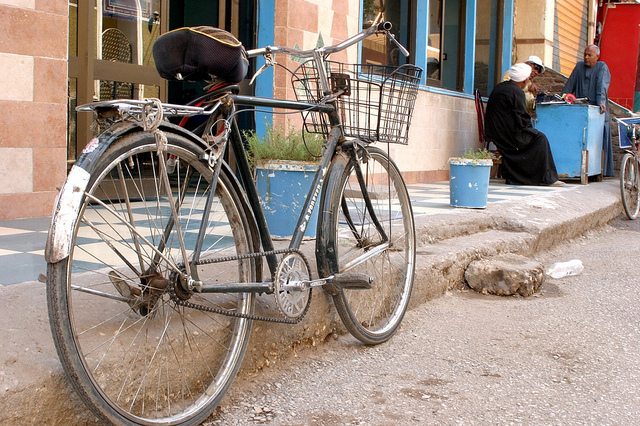
Are you lyrical about your two-wheeler? If so, contribute to a literature project on the humble bike
It seems that the majority of people serenading the magic and innocence of cycling are American and European males. In a bid to change this, professors Elamar Schenkel, Alon Raab and Jinhua Li are asking writers from the Arab world to contribute to a special section on cycling in World Literature Today. “Previous anthologies have devoted 90% of their pages to writings by American and European males,” they state. “We will include writings from lands rich in cycling traditions such as China, Turkey, India and Cameroon, by men and women. We are seeking additional poems, stories, sections from novels, essays as well as references to the bicycle in plays, music, and plays.”





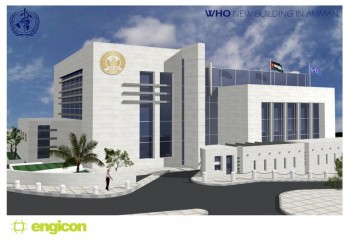 The World Health Organization gets LEED Gold certification, a first for the Hashemite Kingdom.