Oman is returning to the Venice Biennale with Zīnah, an immersive installation by artist and curator Haitham Al Busafi that transforms a traditional form of horse adornment into a large-scale sensory experience.
Professor Ji-Soo Jang, in collaboration with Professor Taekwang Yoon of Ajou University and Professor Hansel Kim of Chungbuk National University, has developed a novel energy device that generates electricity during the process of capturing greenhouse gases.
The impact is already being felt. California has broken its wind generation record multiple times in recent weeks as SunZia begins feeding electricity into the grid. It’s a glimpse of what a renewable-powered future could look like when large-scale infrastructure finally comes online. Can we start saying goodbye to Saudi Aramco and Arabian Gulf oil?
The Convention on the Conservation of Migratory Species of Wild Animals (CMS), governments agreed to extend protection to 40 more migratory species, from cheetahs and striped hyenas to snowy owls, giant otters, and great hammerhead sharks. Too many of them are slipping toward extinction .
Oman is returning to the Venice Biennale with Zīnah, an immersive installation by artist and curator Haitham Al Busafi that transforms a traditional form of horse adornment into a large-scale sensory experience.
Professor Ji-Soo Jang, in collaboration with Professor Taekwang Yoon of Ajou University and Professor Hansel Kim of Chungbuk National University, has developed a novel energy device that generates electricity during the process of capturing greenhouse gases.
The impact is already being felt. California has broken its wind generation record multiple times in recent weeks as SunZia begins feeding electricity into the grid. It’s a glimpse of what a renewable-powered future could look like when large-scale infrastructure finally comes online. Can we start saying goodbye to Saudi Aramco and Arabian Gulf oil?
The Convention on the Conservation of Migratory Species of Wild Animals (CMS), governments agreed to extend protection to 40 more migratory species, from cheetahs and striped hyenas to snowy owls, giant otters, and great hammerhead sharks. Too many of them are slipping toward extinction .
Oman is returning to the Venice Biennale with Zīnah, an immersive installation by artist and curator Haitham Al Busafi that transforms a traditional form of horse adornment into a large-scale sensory experience.
Professor Ji-Soo Jang, in collaboration with Professor Taekwang Yoon of Ajou University and Professor Hansel Kim of Chungbuk National University, has developed a novel energy device that generates electricity during the process of capturing greenhouse gases.
The impact is already being felt. California has broken its wind generation record multiple times in recent weeks as SunZia begins feeding electricity into the grid. It’s a glimpse of what a renewable-powered future could look like when large-scale infrastructure finally comes online. Can we start saying goodbye to Saudi Aramco and Arabian Gulf oil?
The Convention on the Conservation of Migratory Species of Wild Animals (CMS), governments agreed to extend protection to 40 more migratory species, from cheetahs and striped hyenas to snowy owls, giant otters, and great hammerhead sharks. Too many of them are slipping toward extinction .
Oman is returning to the Venice Biennale with Zīnah, an immersive installation by artist and curator Haitham Al Busafi that transforms a traditional form of horse adornment into a large-scale sensory experience.
Professor Ji-Soo Jang, in collaboration with Professor Taekwang Yoon of Ajou University and Professor Hansel Kim of Chungbuk National University, has developed a novel energy device that generates electricity during the process of capturing greenhouse gases.
The impact is already being felt. California has broken its wind generation record multiple times in recent weeks as SunZia begins feeding electricity into the grid. It’s a glimpse of what a renewable-powered future could look like when large-scale infrastructure finally comes online. Can we start saying goodbye to Saudi Aramco and Arabian Gulf oil?
The Convention on the Conservation of Migratory Species of Wild Animals (CMS), governments agreed to extend protection to 40 more migratory species, from cheetahs and striped hyenas to snowy owls, giant otters, and great hammerhead sharks. Too many of them are slipping toward extinction .
Oman is returning to the Venice Biennale with Zīnah, an immersive installation by artist and curator Haitham Al Busafi that transforms a traditional form of horse adornment into a large-scale sensory experience.
Professor Ji-Soo Jang, in collaboration with Professor Taekwang Yoon of Ajou University and Professor Hansel Kim of Chungbuk National University, has developed a novel energy device that generates electricity during the process of capturing greenhouse gases.
The impact is already being felt. California has broken its wind generation record multiple times in recent weeks as SunZia begins feeding electricity into the grid. It’s a glimpse of what a renewable-powered future could look like when large-scale infrastructure finally comes online. Can we start saying goodbye to Saudi Aramco and Arabian Gulf oil?
The Convention on the Conservation of Migratory Species of Wild Animals (CMS), governments agreed to extend protection to 40 more migratory species, from cheetahs and striped hyenas to snowy owls, giant otters, and great hammerhead sharks. Too many of them are slipping toward extinction .
Oman is returning to the Venice Biennale with Zīnah, an immersive installation by artist and curator Haitham Al Busafi that transforms a traditional form of horse adornment into a large-scale sensory experience.
Professor Ji-Soo Jang, in collaboration with Professor Taekwang Yoon of Ajou University and Professor Hansel Kim of Chungbuk National University, has developed a novel energy device that generates electricity during the process of capturing greenhouse gases.
The impact is already being felt. California has broken its wind generation record multiple times in recent weeks as SunZia begins feeding electricity into the grid. It’s a glimpse of what a renewable-powered future could look like when large-scale infrastructure finally comes online. Can we start saying goodbye to Saudi Aramco and Arabian Gulf oil?
The Convention on the Conservation of Migratory Species of Wild Animals (CMS), governments agreed to extend protection to 40 more migratory species, from cheetahs and striped hyenas to snowy owls, giant otters, and great hammerhead sharks. Too many of them are slipping toward extinction .
Oman is returning to the Venice Biennale with Zīnah, an immersive installation by artist and curator Haitham Al Busafi that transforms a traditional form of horse adornment into a large-scale sensory experience.
Professor Ji-Soo Jang, in collaboration with Professor Taekwang Yoon of Ajou University and Professor Hansel Kim of Chungbuk National University, has developed a novel energy device that generates electricity during the process of capturing greenhouse gases.
The impact is already being felt. California has broken its wind generation record multiple times in recent weeks as SunZia begins feeding electricity into the grid. It’s a glimpse of what a renewable-powered future could look like when large-scale infrastructure finally comes online. Can we start saying goodbye to Saudi Aramco and Arabian Gulf oil?
The Convention on the Conservation of Migratory Species of Wild Animals (CMS), governments agreed to extend protection to 40 more migratory species, from cheetahs and striped hyenas to snowy owls, giant otters, and great hammerhead sharks. Too many of them are slipping toward extinction .
Oman is returning to the Venice Biennale with Zīnah, an immersive installation by artist and curator Haitham Al Busafi that transforms a traditional form of horse adornment into a large-scale sensory experience.
Professor Ji-Soo Jang, in collaboration with Professor Taekwang Yoon of Ajou University and Professor Hansel Kim of Chungbuk National University, has developed a novel energy device that generates electricity during the process of capturing greenhouse gases.
The impact is already being felt. California has broken its wind generation record multiple times in recent weeks as SunZia begins feeding electricity into the grid. It’s a glimpse of what a renewable-powered future could look like when large-scale infrastructure finally comes online. Can we start saying goodbye to Saudi Aramco and Arabian Gulf oil?
The Convention on the Conservation of Migratory Species of Wild Animals (CMS), governments agreed to extend protection to 40 more migratory species, from cheetahs and striped hyenas to snowy owls, giant otters, and great hammerhead sharks. Too many of them are slipping toward extinction .
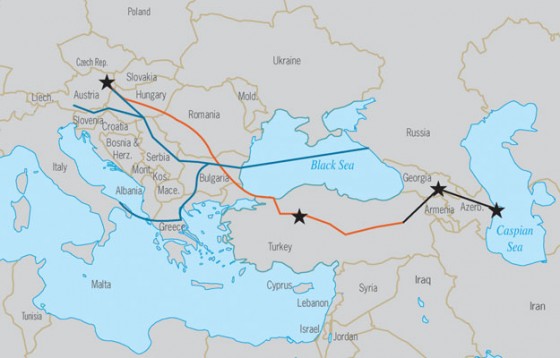
The Nabucco natural gas pipeline (in orange) was designed to lessen eastern Europe’s dependence on Russia’s sometimes unreliable gas supply. But Russia’s South Stream pipeline project (in blue) now seems more likely to be built.
A 2,400-mile pipeline transporting 30 million cubic meters from central Asia to Austria each year. That was the plan when the European Union designed the Nabucco gas pipeline in 2009 as part of its Southern Gas Corridor initiative for enhanced energy security throughout Europe.
Turkey’s cooperation in the project was vital, given its central location between the gas-producing central-Asian ‘stans and the gas-hungry nations of eastern Europe. But now it appears that Turkey is favoring alternate routes instead, including a gas pipeline by Russia — the very nation whose gas supply Nabucco was designed to bypass.
According to Jewish tradition, it’s the day on which each tree is judged as to the amount of water it will receive over the year. It’s also the cut-off date when determining the age of the tree. As man is compared to “the tree of the field,” Tu B’Shvat is a good day to inaugurate ecology studies.
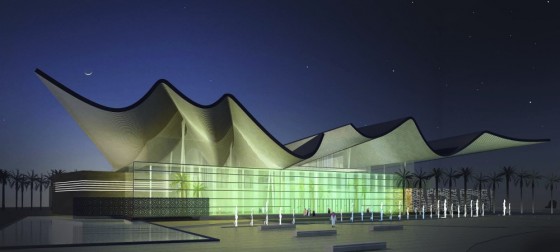
Studio Schiattarella and Tecturae’s winning proposal for the Celebration Hall of Riyadh distorts true Bedouin values.
It is common in Middle Eastern design to evoke images of a more sustainable past in order to justify a less sustainable present, and nowhere is this more true than in Saudi Arabia. The winning proposal for the Celebration Hall of Riyadh submitted by Studio Schiattarella and Tecturae has used the symbolism of a Bedouin Tent “as a starting point the “signs” of the Saudi cultural identity, or rather the formal elements that represent it symbolically.” But given its huge wealth and consistently obese architecture projects, we have to ask: what true Bedouin values do the Saudis continue to display today?
It’s bizarre enough that Dubai has an indoor ski slope despite outdoor summer temperatures averaging at over 40 degrees Celsius, but now a colony of penguins has taken up residence at this popular tourist attraction. Ten King Penguins listed as “least threatened” on the IUCN’s Red List of Threatened Species, and ten Gentoo Penguins which are “near threatened” were relocated from Seaworld in Texas, where a penguin breeding program has been underway for several years. Ski Dubai insists the animals are treated like royalty and are there to raise awareness, but animals rights activists are already criticizing at the move.
My feet are big, at US women’s size 10, but my footprint is enormous. See how yours compares to other nations in the world
Drop a teabag in a mug, add boiled water, and in the time it takes to brew, you can calculate your carbon weight. Trust me – you’ll need a comforting drink when you see your results. A free and simple to use carbon calculator is available on the Carbon Footprint website that tabulates your carbon imprint in a matter of minutes, and benchmarks it against performances of your country, of industrial nations, and of the entire world.
I tried it and got a footprint of 9.88 tons of carbon dioxide (CO2) emissions. Low for an American, but astronomical for a resident of Jordan.
The arid Middle Eastern desert climate offers little in the way of natural resources. But it does boast of brilliant and fierce sunlight.
In a continuing effort to reach the goal of 10% renewable power by 2020, Israel has recently been issuing a slew of new solar licences, including a 120 MW thermal solar plant that will be built outside Kibbutz Zeelim and a 60 MW thermal solar plant to be constructed outside Kibbutz Mashabei Sadeh, both located in the Negev Desert and estimated to be operational by 2014.
It’s official: Zaha Hadid is going to design the new Central Bank of Iraq’s Headquarters; Tafline argues that it should be green.
Zaha Hadid is widely celebrated for her incredible, untethered design, but less so for her environmental sensibilities. So when we learned that the deal to design a major project for her home country, the Central Bank of Iraq’s Headquarters, is now official, we went looking for the slightest sign that this project might be at least a little bit green. Very few details have been revealed except a huge team of mostly mainstream engineers and consultants, but at least one firm involved in the project seems to recognize the importance of smart and sustainable design – Arup.
This edible leaf is shooting up all over the Middle East right now. Ask for marmia in Arab markets.
To celebrate the emergence of winter’s wild greens, here is a vegan recipe featuring a Middle Eastern specialty: Jerusalem Sage.
Jerusalem sage
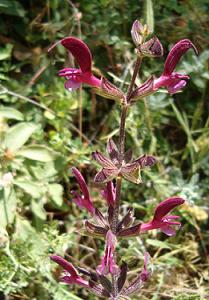
Wild, edible Salvia hierosolymitana has dark-pink or reddish flowers and is not the same as the decorative garden plant, Phlomis fruticosa. Both are called Jerusalem Sage in English, but the yellow-flowering Phlomis fruticosa isn’t eaten. To see the edible Middle Eastern Jerusalem Sage in flower, the one which can be eater, see the photo below.
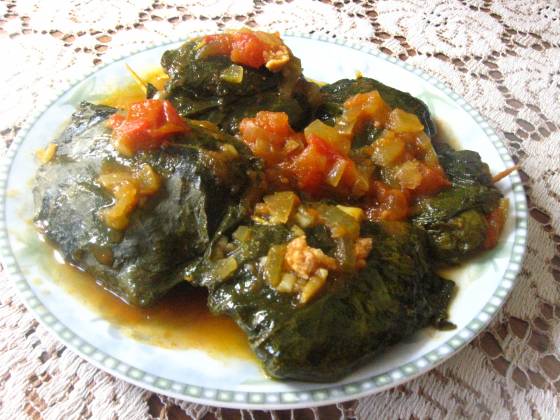
The leaf may be chopped and added to soups or stews as a pot herb, but the most delicious way to eat it is stuffed with rice and vegetables, enriched with a tomato sauce. If Jerusalem Sage isn’t available, you may substitute mallows, found in fields with ethical foraging – or Swiss chard, if convenient.
Find Jerusalem sage in Cyprus, Israel, Jordan, Lebanon, Syria, and the West Bank. It typically grows in open fields, rocky soils, and among low-growing native shrubs. It was first described in 1853 by botanist Pierre Edmond Boissier, with the epithet “hierosolymitana” referring to “royal, sacred Jerusalem”.
Male digger bee (Anthophora dufourii) pollinating Salvia hierosolymitana, Mount Carmel, Israel
Stuffed Jerusalem Sage Recipe
Ingredients:
500 grams – 1 Ib. fresh Jerusalem Sage leaves
1 1/2 cup rice
1/2 cup pine nuts
1/4 cup olive oil
1/2 green bell pepper, finely chopped
1/2 cup onions, finely chopped
1 cup seeded, chopped tomatoes
1/2 cup chopped parsley
1 1/2 teaspoon salt
1/2 teaspoon black pepper
Another 1/4 cup olive oil
1/2 cup lemon juice
1/2 cup water and more if needed
1 large tomato, thickly sliced
Cloves from 1 head of garlic, separated and peeled
Rinse the rice and set it to drain. Blanch the leaves by placing each in boiling water for 30 seconds, then putting into a bowl with cold water.
Mix the rice and pine nuts in a medium bowl. Heat 1/4 cup olive oil in a frying pan and cook the bell pepper, onions, parsley and chopped tomatoes in it over medium heat for 5 minutes, stirring a few times. Season with salt and pepper to taste. When the vegetables are softened, reserve 3 tablespoons and set aside. Pour the rest into the rice/pine nuts mixture. Mix well.
Spoon one tablespoon of filling onto the center of each leaf and make a square bundle, securing it with a toothpick. Alternately, place the filling on the broad end of the leaf and roll it into a fat cigar. Secure with a toothpick.
Pour 1/4 cup olive oil into a large pot. Cover the bottom of the pot with sliced tomato and peeled garlic cloves. Place the stuffed leaves on top, making layers if needed. Sprinkle salt and lemon juice over all; add water to barely cover the leaves. Scatter the reserved cooked vegetables over the top. Bring to a simmer then cook, covered, over low heat 1/2 hour or until sauce thickens. Check once or twice to make sure the bottom layer isn’t drying out or scorching.
MIT researchers say that soon all we’ll need to harvest our vast solar resource is grass and stabilizing powder.
While Masdar and Suntech and other solar energy projects are laboring under expensive, high-tech materials in order to improve their energy-absorbing capability, MIT researchers in the United States are taking a different approach: using grass. (No, not that grass. Our articles on cannabis can be found here.)
They realized that nothing in nature absorbs energy as well as plants, so they have developed a solar technology that combines a small amount of grass (or other agricultural waste), a stabilizing powder made of zinc oxide and titanium oxide, and a glass or metal substrate which mimics the photosynthesis process. Eventually their technology will be so simple that anybody will be able to make their own solar panels for next to nothing. See our DIY solar panels pros and cons to know if setting up solar on your own is for you.
Photosynthesis packed for DIY home solar kits
According to the folks at Fastco Design, the MIT researchers have discovered how to “chemically stabilize plant-derived photosystem-I (PS-I), the structures inside plant cells that perform photosynthesis, on a substrate that creates electric current when exposed to light–all using readily-available materials.”
This solar cell then isolates PS-1 molecules and eventually carries an electrical current with the stabilizing powder.
So, instead of massive solar-panel producing factories that require a lot of natural materials, MIT’s technology could literally be packed in a small plastic bag and shipped off to anyone who wants to make their own solar panels at home.
DIY panels for anyone
If DIY enthusiasts can get their hands on a few grass clippings or other greenery and the substrate, then MIT only needs to ship out the zinc and titanium oxide and instructions for creating energy from this unlikely mix and a solar panel has been made.
Eventually, according to Andreas Mershin, people will be able to mix everything together and create a paint that can be applied to their roof. But there is a catch. At the moment, this technology doesn’t even have a 2% efficiency rate yet. But it will, and even that is plenty efficient given the small amount of resources necessary to create it.
This is what we call putting the sun’s power into the hands of the people. One day we won’t have to rely on the big money folks in order to have a little light in our homes.
Next Wednesday activists will hold a public forum to democratically demand access to the Horsh Beirut urban park.
In 1696, the Horsh Beirut Pine forest used to be as large as 1,250,000 square meters but the Crusaders, Mamluks, Ottomans, and World War II allies each took their turn plundering its timber in order to build ships and weapons. Further damage has been done since then to such an extent that today one of the only urban parks in this concrete jungle has shrunk to a mere 255,000 square meters. Although significantly smaller than it once was, Horsh Beirut could still offer residents of Beirut a retreat from the city smog – if the city hadn’t denied access to it for the last two decades. Activists are now speaking out against what they say is a denial of their inalienable rights.
A powerful short film by Iranian-Canadian filmmaker Raha Shirazi, Acqua will make you look at water with new eyes.
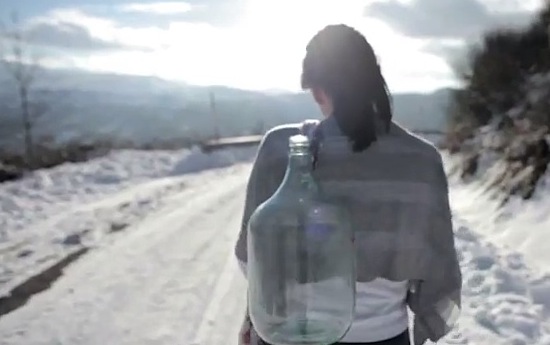
Raha Shirazi’s film Acqua is almost guaranteed to make you never take water for granted again. In it, a woman walks through snow in search of water with a jar on her back. Everywhere there is water, but after reaching a specific destination, she experiences some kind of trauma that especially resonates with us given our region’s tremendous water scarcity.
“In both Iran, and where I was in Italy, a long time ago women would travel from their village to bring back water,” Shirazi told Twitch Film. “Fetching water was always a woman’s job. Even now for purpose of vigil in these areas, women travel to a specific place and bring back water,” she added. Take a look at this beautiful film clip and let us know if it makes you re-evaluate your relationship to water.
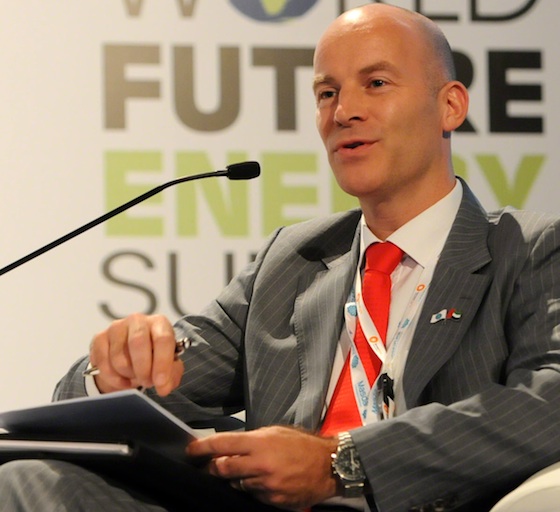
Frank Wouters of Masdar Power at Abu Dhabi’s World Future Energy Summit.
With its first large scale solar farm expected to be operational by August, Masdar is now about to construct its second utility-scale solar project in the UAE, the 100 MW Nour 1. The first, Shams 1, used concentrated solar-thermal power (CSP) technology, that drives a steam turbine with a solar-heated liquid. The second, Nour 1, is to use solar PV panels, that convert sunlight into electricity directly with photo-voltaics (PV).
But the companies that have bid to help build its second large-scale solar power plant must source half of their panels from Masdar, Abu Dhabi’s own clean-energy company.China’s Suntech, the leading solar PV manufacturer globally, is among the half a dozen bidders for Nour 1. Fourteen companies had been pre-qualified in July.
Ultrasounds are routinely used in prenatal care in women. New research suggests his testes could be next on the agenda. The lizard look is optional.
Researchers have been exploring a male birth control pill, but with the exception of condoms, vasectomies or coitus interuptus – each with varying success rates and not necessarily halal depending on religious leanings – birth control for men is still limited. A new study may be changing that. Goodbye unplanned pregnancies, hello ultrasound testes ‘zapper.’
It may not be painful and offers potentially better results with greater flexibility than current contraception options for men. Warning: Do not try this at home, with your laptop or other source of radiation exposure.
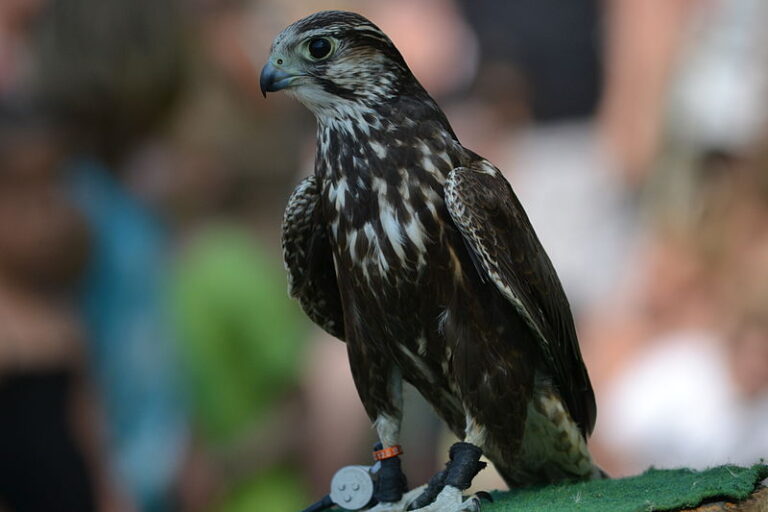
Join the debate: is the world’s first all-women falconry association in Qatar a bad idea?
Falconry is a time-honored tradition in the Gulf, but like more recent sports such as race-car driving and rugby, it is a male-dominated sport. So when the Katara cultural village in Qatar recently announced the launch of the world’s first female falconry association, both men and women issued ridiculed the move.
Women and hunting don’t go together
HE Sheikh Joan bin Hamad bin Khalifa Al Thani is hosting the 3rd Qatar International Falconry and Hunting celebrations at the Sabkha Marmi Sealine in Doha, Qatar. Festivities conclude tomorrow, but not without a controversial bang.
Today Katara formally announced the inauguration of the new all-women venture, which will include conferences and competitions designed at preserving the country’s falconry heritage.
But many people argue that women and hunting don’t go together and never have, Gulf News reports.
Women and falcons against tradition
“This is against our traditions, and engaging in this exclusively male sport will make people scoff at us,” a Facebook user wrote, quoted by Al Rayah – an Arabic daily in Qatar. “It is a waste of public funds and our women are going to behave like men,” said another.
These protests came in response to the idea that in order to engage in falconry, women would have to spend days in the desert (instead of the kitchen?)
Hessa Al Meftah, the head of public relations at the Qatar Foundation for the Protection of Women and Children, told the paper that creating a female falconry association is “laughable.” “It has always been known since time immemorial that falconry is for men only,” she told Al Rayah.
“Our grandmothers have been involved with men in almost everything, but history does not record a single case of a woman engaged in falconry,” she added.
Women have better things to do than falconry
Social activist Leena Al Dafie told the daily that women have better interests than falconry and that more time should be spent protecting Qatar’s society and traditions.
Our own Green Sheikh recently honored the United Arab Emirates’ former president Sheikh Zayed Bin Sultan Al-Nahyan who loved falconry for the role it played in his country’s rich cultural history. Can this legacy – traced to ancient Bedouins who relied on the birds of prey to help them hunt – withstand the introduction of women?


 The Nabucco natural gas pipeline (in orange) was designed to lessen eastern Europe’s dependence on Russia’s sometimes unreliable gas supply. But Russia’s South Stream pipeline project (in blue) now seems more likely to be built.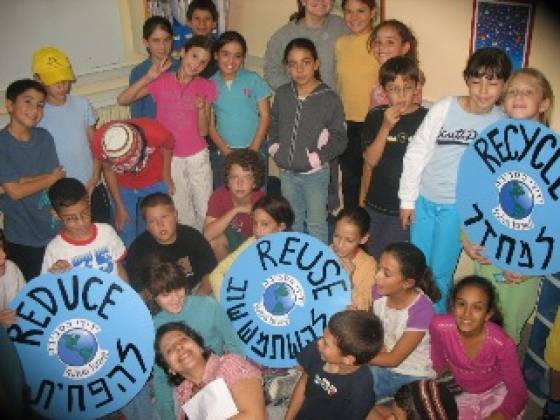
 The 15th day of the Jewish month of Shavat signals the launching of new Jewish eco-education programs.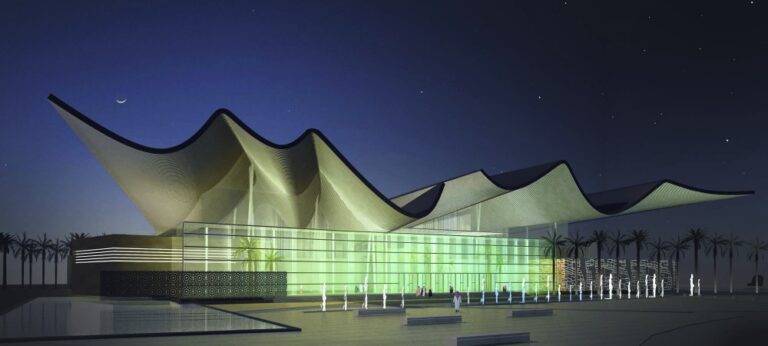


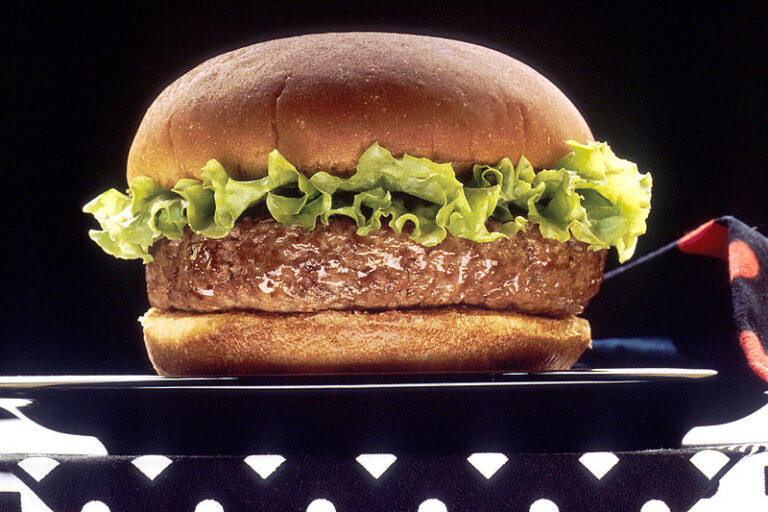
 Looks good – tastes good for meat eaters. But how much of that meat patty is pink slime?
 My feet are big, at US women’s size 10, but my footprint is enormous. See how yours compares to other nations in the world