Home Blog Page 446

Syria’s Seeds Are Locked Away in Norway, But Are Seed Vaults Safe?

seed vault syria
The Svalbard Global Seed Vault locked safe away in Norway has once again opened its steel doors welcoming 25,000 new seed samples including varieties of chickpeas, fava beans and other seeds from Syria. Around 110,000 Syrian duplicate seed samples out of 750,000 samples stored in Syria have been safely consigned, should the conflict in Syria destroy national seed banks (as happened in Afghanistan and Iraq), at least we are sure that some of the local and ancient agricultural biodiversity has been salvaged.

Opened in 2008, and ranked as the 6th “Time’s Best invention”, the Svalbard vault is the world’s main back up of duplicate seeds collected. More than half a million samples are safely deposited on behalf of 1,750 genebanks from around the world; this “seed deposit service” is provided free of charge thanks to the Norwegian government and the Global Crop Diversity Trust which cover all operational costs. The facility, which cost 9 million USD , has been funded entirely by the Norwegian government and it has a very neat apocalyptic feel to it.

Sunk 125 meters into the Norwegian permafrost, outside the village of Longyearbyen one of the world’s most northerly habitation, the vault is maintained at a constant temperature of -18 degrees Celsius, the concave tunnel head is designed to deflect missile strikes, and the vault has been built deep enough into the mountain to withstand nuclear explosion and rising sea level. Oh, and in case electricity happened to cut off, it would take two centuries for the vault to warm to freezing point. It is not surprising that such precautions have led the Svalbard vault to be nicknamed as the Doomsday Vault, pictured below.

UN Sponsors Global Wet T-Shirt Contest!

0

wet tshirt manIt’s World Water Day today, relevant and necessary for the Middle East. 

Well, not quite, but I got your attention. Raise an icy glass filled with clean water: it’s World Water Day. In 1992, the United Nations General Assembly declared each March 22 to be World Day for Water, raising awareness of water issues at local and global levels. The first World Water Day made a splash in 1993.  Waves of educational events and symposia on water management and security cause participation to swell.

School kids and environmental groups keep the day vibrant.  The internet makes event-promotion a snap. Particularly powerful is the UN’s website, which offers free campaign materials to help stage your own event,  links to what others are doing, and methods to reduce your water footprint. Drink in their facts:

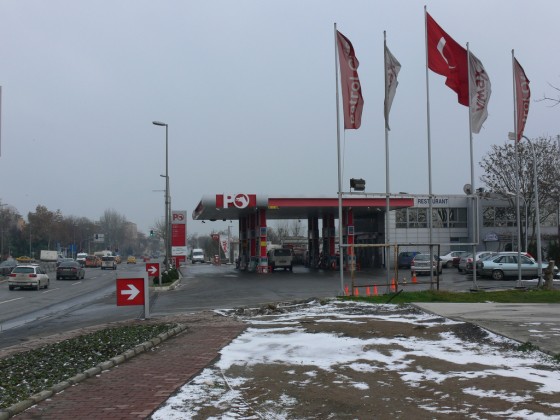
Where Can You Find the World’s Most Expensive Gasoline? Probably Turkey.

After a rise in the cost of gasoline on Tuesday, Turks are now paying what may be the world’s highest price for the precious liquid.

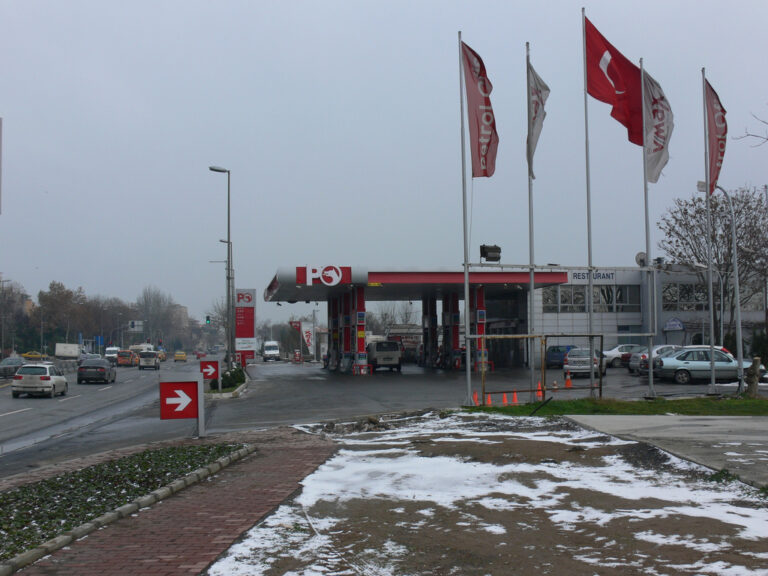
95-octane unleaded gasoline jumped to 4.62 Turkish Lira ($2.60, or € 1.93 ) per liter on Tuesday. By comparison, the European countries with the highest current gas prices — Italy, Denmark, and the Netherlands — pay € 1.85, € 1.83 and € 1.83, respectively, according to Energy.eu.

These prices make U.S. complaints about the high price of gas seem laughable in comparison: Turkey’s current price at the pump works out to approximately $10 per gallon.

An Independent Tunisia at Night (PHOTOS)

1

A handful of Tunisian men walk down Avenue Habib Bourguiba after a full day of protesting on Independence Day

We landed in the capital as thousands of Tunisians wearing and carrying their red and white flags swarmed on Avenue Habib Bourguiba to celebrate their independence from France on March 20, 1956. At one point a man shouted at policemen sitting in a bus as others carried him off. After I took a photo of this unfolding, two men in uniform followed me down the street and insisted that I delete the image.

Although I wanted to be the cool and fierce journalist who refused, there was no one around to back me up and I don’t speak French. So, delete. Besides, I’m not on a political mission, even though sometimes it is hard to separate environmental and political issues. Take a peak of a few images we snapped of downtown Tunis last night and stay tuned for more news.

Environmentalists Mourn the Passing of Egypt’s Patriarch of Environment

8

Eulogy, Dr. Mohamed Kassas, desertification, patriarch, Egypt, environmentalist, leadershipDr. Mohamed Kassas was a leading pioneer of Egypt’s environmental movement and a beloved mentor. 

Dr. Mohamed Kassas was active until the end, says Mindy Baha El Din, Manager of Nature Conservation Egypt. Just yesterday Christians packed the St. Mark’s Cathedral in Cairo to bid farewell to their patriarch Pope Shenouda III, and today environmentalists throughout the country are mourning the loss of their own hero – the father of desertification and a “truly unique man.”

After spending more than a week in Manal hospital in Cairo after suffering from health complications, the 91 year old Professor Emeritus of Botany at the University of Cairo and former President of the International Union for Conservation of Nature (IUCN) died today.

Egyptians Panic as Foot and Mouth Disease Sweeps Through the Country

0

FMD, epidemic, Foot and Mouth Disease, Egypt, Livestock, food, health, Many Egyptians have stopped buying meat after thousands of livestock have died from foot and mouth disease in the last three weeks.

Even though it is extremely rare for humans to contract foot and mouth disease, many panicky Egyptians have stopped purchasing meat since the virus began to spread through the country, leaving thousands of dead cattle in its wake. After last year’s revolution and subsequent mismanagement of natural resources and political matters, Egyptians are unable to trust government exhortations that they are monitoring the epidemic that has affected cattle and livestock in Alexandria, Cairo, and various other governorates.

The General Authority for Veterinary Services reported that 40,222 cattle have been infected and 4,658 cattle have died since the disease broke out three weeks ago.

Israeli Cleantech VC Nears $100 Million Goal

0

digital green clean tech
The finish line is in sight for Israel Cleantech Ventures (ICV), which has been racing towards a $100 million goal.

ICV is an Israeli venture capital fund that was founded in 2006 to focus exclusively on raising capital for investment in renewable energy companies. In its February financial filing the company showed it had raised nearly half the $100 million it has set to raise this year. As international funds like Blackstone begin noticing the Israeli cleantech sector, the homegrown ICV fund will become incrasingly significant on the global map.

Interfaith Eco-Conference Reveals Need To Educate Religious Leaders

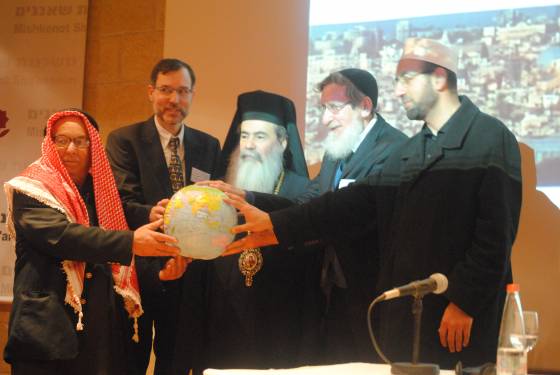
image-religious-leaders-jerusalemMiriam found much good will but only dawning eco-awareness in Israel’s religious leadership.

“I came today, not to say anything new – but to learn.” So the Greek Orthodox Archbishop, Dr. Elias Chacour, began the Interfaith Climate and Energy Conference that took place yesterday, March 19, in Jerusalem. The conference was organized by the Interfaith Center for Sustainable Development together with the Konrad Adenauer Foundation.

The Archbishop’s frank declaration summed up the prevalent state of eco-consciousness among the clergy: great willingness to learn, but little to go on.

The atmosphere among the 200-odd participants was optimistic. We gladly heard speeches on man’s God-sent responsibility towards creation. The Greek Orthodox Patriarch of Jerusalem, Patriarch Theophilos III, spoke movingly about the intimate relationship between creation and the Creator. Amid quotations from the Old and New Testaments and the Koran, most of what emerged from the panel of distinguished clergymen was a vision of interfaith tolerance, even brotherhood.

S-x Shop Hoax May Point to New Wave of Social Activism

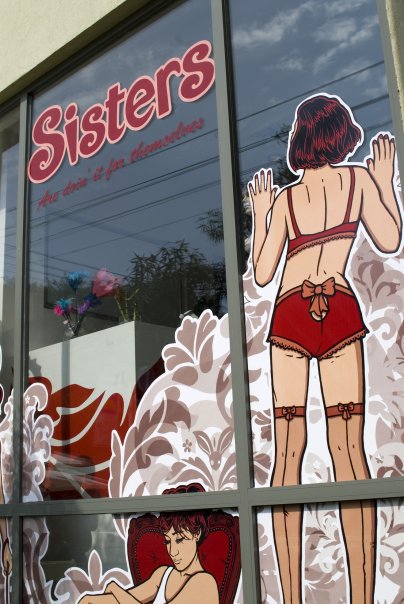
sex shop storefront windowA story about a Morocco sex shop turns out to be a hoax, but is the idea of expanding sexual freedom finding fertile ground in the region?
Sex is natural. We wouldn’t be here were it not for the ability to procreate, and for most people in the world, physical intimacy and pleasure are desired bedfellows, ideally going hand in hand, consensually so. Unfortunately, healthy sexuality is often a difficult topic to approach in the middle east, a region conservative about such matters.

Social morays and religious laws commandeer the tenor of the discussions if not the actual acts. Which is probably why the announcement of an adult store in a residential neighborhood in Morocco turned out to be more hype than hope.

Handmade Fabric Designs “To Go” From Deda Designs

1

"kitchen towel design"

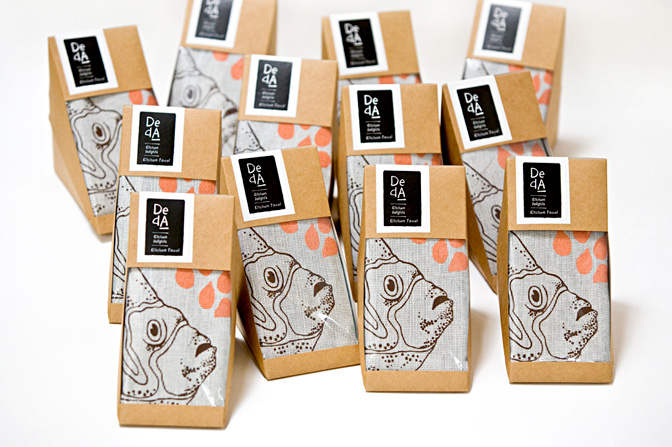
Handmade and packaged in recycled boxes generally used for fast food or take-away, Deda Design’s kitchen products look delicious.

Fast food usually gets a bad rep: it’s fatty, bad for you, and wastes a lot of packaging and resources.  But what if fast food style packaging was put to more sustainable use?

Packaging has been used in eco-friendly ways by designers before, either by upcycling plastic packaging or making a product’s outer packaging multi-functional

Now Deda Designs, a boutique design label based in Israel, is finding ways to use recycled fast food packaging to house its limited edition, handmade fabric products.  Thereby making it easier for the fish-themed kitchen towel (pictured above) to masquerade as a tuna fish sandwich.

Oil Shale Marchers Walk 40 k from the Valley to Jerusalem

0

oil shale israel “We are not rabbits,” was among the slogans against the “oil shale experiment” march today in Israel.  A story of Davids versus the Goliaths?

Valley of Elah residents, Greenpeace members and local NGOS in Israel organized a march today against the development of oil shale in Israel. Oil shale and its extraction remains a very controversial subject.

Israel has so much oil shale, located in regions like the Elah Valley where the story of David and Goliath took place, enough some say to make it energy independent. Israel’s oil, locked up in shale much like the Alberta tar sands, could shift the energy curve. Developers of oil shale in Israel (Rupert Murdoch is an investor along with Lord Jacob Rothschild) say that their methods to extract the shale – oil mixed in with sediments and rocks deep below the ground – will not harm the environment. Elah Valley residents do not believe such “experimental” techniques are in the interest of the community or long-term environmental survival of the region.

Tafline has written a lot about oil shale in Israel, and after an open letter to environmentalist David de Rothschild, convinced him to bring the topic up with his cousin, Lord Jacob Rothschild, an investor of oil shale exploration in Israel. Stakeholders are convinced that their new methods to drill into, then heat the oil shale up underground to siphon off the oil will not harm the outwards environment or the water table. The public, clearly, is not buying. 

Promise of Blackstone’s Millions May Keep Israel Focused On Cleantech

0

money growing palm trees israel
Israeli entrepreneurs are world renowned for their high tech talents and ingenuity. Funding has always been the problem. But now Israeli cleantech start-ups may finally be getting the financing they need.

$7.7 billion market cap investment fund, Blackstone, also the world’s largest private equity fund, began holding advanced talks with Israeli fund Markstone in February on entering the Israeli market. The two have since created a joint venture that will invest hundreds of millions in the Israeli market, much of it in the cleantech sector.

How To Hitchhike from Europe to the Middle East

3

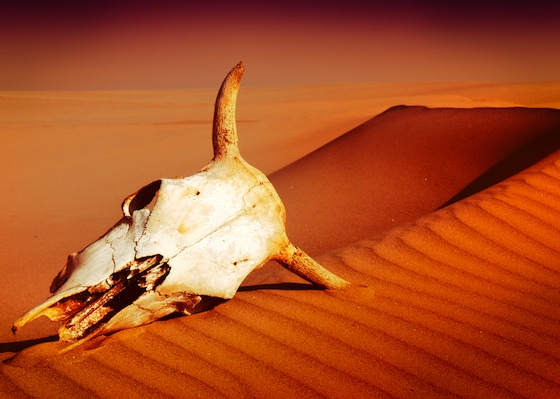
desert hitch hiker middle eastFull of adventures, and matching the rhythm of the place, Does recounts his long hitchhiking journey from Belgium all the way to Egypt.

First, stay with your feet to the ground: Moving from Europe to the Middle East isn’t something you do overnight. Especially if you’re not willing to take an aeroplane, whether because entering an airport or aeroplane makes you feel like being in kindergarten again (you can’t take your own beer), or because you care about climate change.

Last summer I wanted to go from Brussels to Cairo, Egypt. Somehow I was convinced that plenty of boats are criss-crossing the Mediterranean, and booking a boat could get me where I wanted. But the internet proved me wrong. Apparently that damn cheap air travel made all lines disappear. Luckily there’s an alternative, that is overland travel.

Cairo’s Zabaleen Scavenge for Renewables to make Solar Cities

zabeleen cairo roofs goats

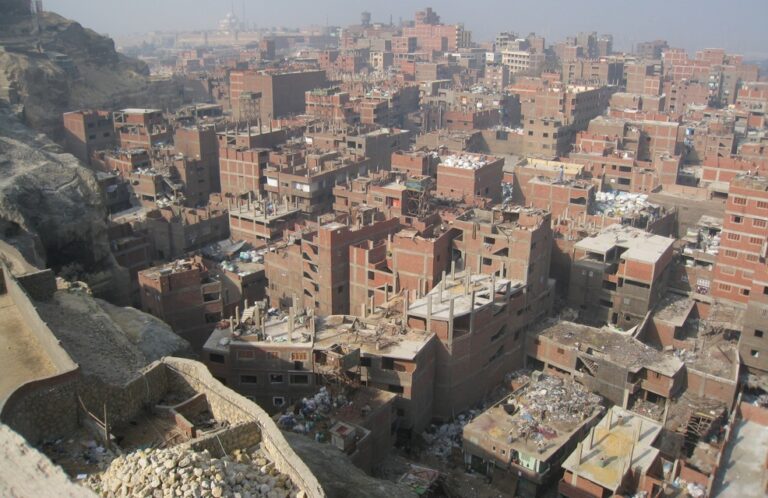
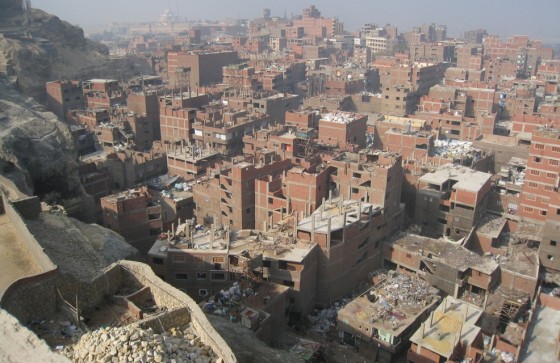
No better place to do a reality check on our environmental vision than Cairo’s Manshiet Nasr neighborhood. Its local inhabitants, the Zabaleen (Arabic for garbage pickers and recyclers) started closing our material cycles thirty years ago, something we even now barely find necessary. They know that what is without value for most, isn’t useless per sé. In their neighbourhood you can see things you see nowhere else in Cairo, recycling, urban gardening, composting and renewable energy.

For them it is not about lifestyle, greenwashing or being eco-bourgeois , but about exploring the possibilities every day innovation has. They are social entrepreneurs and are constantly testing the profitability of what’s possible.

In the West Bank, Springs of Contention

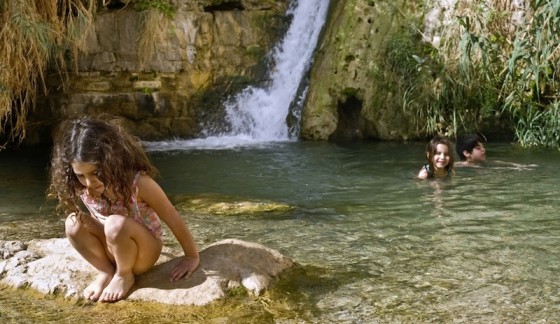
ein gedi spring dead sea, children swimming
As West Bank settlers develop water sources, Palestinians say they are excluded. Which narrative is right?

Ein Ariq, WEST BANK — A convoy of white United Nations jeeps pulls into the olive-tree laden valley below the Jewish community of Eli. They are greeted by Jamal Deragmeh, the mayor of the nearby Palestinian town of Lubban Al-Sharkiya, who points out the cement pool around the spring and complains.

“If you weren’t here,” he says to the representative of the UN Office for the Coordination of Humanitarian Affairs (OCHA), “The [Jewish] settlers would come and put a bullet in my head.”

Scores of springs like Ein Ariq pepper the valleys and slopes of the Samarian and Judean hills of the West Bank. Palestinians use them to water their flocks and irrigate fields. But some have been neglected and forgotten, and in recent years residents of Jewish settlements in their vicinity have come to clear out stones and mud, build small pools, put in a few picnic tables and turn them into parks.

And this has raised the ire of the local Palestinians, who say the Israelis have taken over the springs and keep them away.