Home Blog Page 447

Lone Spanish Researcher Aims to Humanize Dubai With Solar Art

0

Urban, architecture, design, green art, solar energy, solar art, Land Art Generator Initiative,Nacho Zamora is touring Dubai, speaking with various leaders about incorporating solar-powered public art projects – like The Verdant Walk by North Design Office.

Any pedestrian who has braved the backstreets of Dubai knows two things: there are a lot of open spaces vying for attention and the sun is relentless. An independent researcher from Spain and a specialist in indexing and researching solar artwork, Nacho Zamora has recently traveled to Dubai in order to convince the municipality and Green Building Council to fill up these spaces with public art projects that also produce energy. Following the recent announcement that Dubai will consider purchasing energy from rooftop solar panels, which reveals a potential shift in the city’s eco-ethos, Zamora’s timing might just be spot on.

Israeli Defense Forces Polluting Groundwater with Impunity

1

army illustration, oil refinery, Israel army pollution
Eighteen months ago, Itzhak Ben-David, the Israeli Environment Ministry’s deputy director for enforcement, visited several Israeli army bases in the West Bank.  What he saw was shocking.  Fuel and oil were leaking unabated into the ground on several sites.  In response, Ben-David asked the Israeli Defense Forces (IDF) to conduct water quality sampling and monitoring.  Part of the Environment Ministry’s purview is ensuring soil and groundwater are protected from contaminants.

Months after Ben-David’s request, the IDF has done little to assuage the Environment Ministry’s concerns.  Although water samples were collected, military officials have not made the results available.  Recognizing the IDF’s apparent bureaucratic foot-dragging and indifference, Ben-David recently wrote to the Military Advocate General, Brig. Gen. Danny Efroni.  He did not mince words:  “A civilian polluter would have already been investigated by the ministry’s enforcement officials and long since been indicted, probably found guilty and made to pay a heavy fine.”

A Forest of Umbrellas Keeps Medina Pilgrims Cool

3

medina hajj sunshades sefar

Today’s pilgrims to Medina are way cooler than their predecessors thanks to sun shelters surrounding Islam’s second-holiest mosque.

Al-Masjid al-Nabawī,  the second mosque built by the Prophet Mohammed, is one of the world’s largest. But continual expansion over the centuries hasn’t kept pace with the increasing swell of Hajj pilgrims who congregate each year in its courtyards.

With summer temperatures exceeding 120 degrees F, these marble-floored spaces can be punishing.  A dual challenge emerged: how to improve the mosque’s natural micro-climate without destroying its architectural character. The solution was to plant a forest of umbrellas.

Battle To Save Solar In Remote Palestinian Villages

0

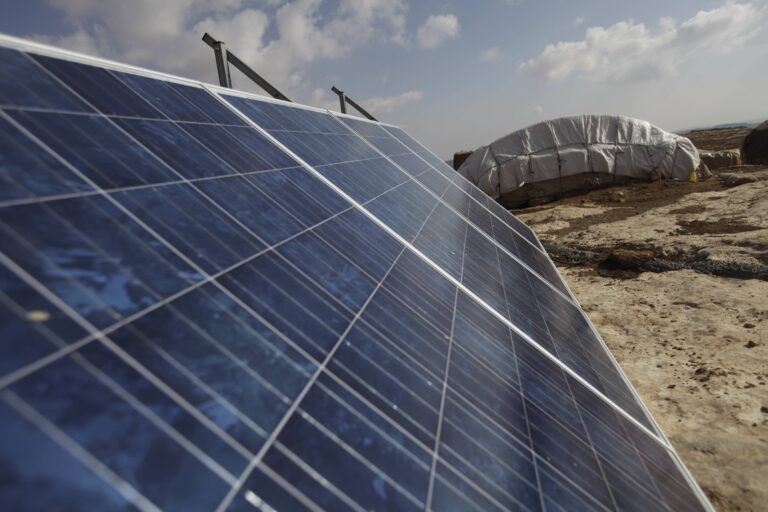
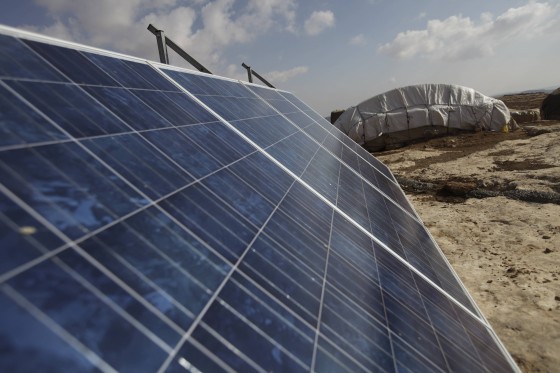
comet-me-solar-palestine-israel-hebronI speak to Elad Orian of Comet-ME, who is campaigning to prevent the demolition of solar panels providing electricity to remote Palestinian communities

Elad Orian is clearly a man on mission. It’s just gone 8pm and he is busy telling me about his work with Comet-ME, which provides renewable energy to Palestinian villagers living in the south Hebron Hills. His mission, however, is to save 6 of these projects from demolition. “The Palestinians were hoping it wouldn’t come to this as the solar panels had been there for a while,” tells me Orian over the phone. “But in the same way, this isn’t exactly a big surprise. In Area C there are around 10,000 outstanding demolition orders…”

No Permits for Palestinians in Area C

The argument goes that that these solar projects were installed without permits in Area C of the West Bank which is under Israeli control. As such the Israeli authorities have every right to demolish these solar panels and wind turbines, even if they are the sole source of electricity for some villagers. So why didn’t Comet-ME and the German aid group Medico which helped fund these projects apply for permits?

“The reason that we didn’t apply for permits is that we know we wouldn’t have got them,” replies Orian. “We would be applying for places in Area C and Israel never grants permits there for Palestinians…” In fact, according to figures from the pressure group Peace Now, in total, just 91 permits were granted for Palestinian construction in Area C between 2001 and 2007. In the same period, more than 10,000 Israeli settlement units were built. And more than 1,500 Palestinian structures were demolished.

International Pressure to Stop Demolition

“Why they have decided to get demolition orders now I really don’t know,” continues Orian. “One of the solar panels was built quite near to an Israeli checkpoint with soldiers working there and so it’s not like they didn’t know that it was there. They did.” Orian also explains that as an occupying power, Israel has a duty under the Geneva Convention to provide basic facilities such as energy to Palestinians living in Area C and yet many of them don’t have access to electricity.

Comet-ME and the German government are currently working hard to put pressure on Israel to leave the solar panels in tact. “I do think there is still a chance that the solar panels won’t be demolished as there is lots of international pressure to stop this,” says Orian. “The German foreign office has been involved and also many others see the importance of protecting the Palestinian communities in Area C.”

Whilst the demolitions may deemed justifiable to some, Orian insists Israel has nothing to gain from demolishing these renewable energy projects which are providing a lifeline to isolated Palestinians.

:: You can help support the campaign to protect the solar projects here.

:: Image via Tomer Appelbaum.

For more on

Interview with Elad Orian: Building Wind and Solar Energy for Palestinians with Comet-ME

Palestinians Attempt to Build Secret Renewable Energy Plants

Comet-ME Continues to Bring Power To Villages In South Hebron Hills

Students Design a Solar-Powered Water Treatment Plant for Home Use

water treatment, solar power, clean tech, pollution, water issues, ultraviolet, renewable energy, technologyIsraeli students won a prestigious award for designing a portable, solar-powered water treatment system that anyone can use. 

Confronted with dire shortages that are shared by Jordan, the Palestinian territories, and just about every other nation in the MENA region, Israeli scientists are considered to be among the top producers of water treatment and saving technology. An Israeli delegation led a recent World Water forum in France, sharing their hydrological expertise, and every year clean tech awards are bestowed upon alumnus of various local universities.

Now a younger generation of Israeli science wizards are catching the clean tech bug. Avishai Katko and Maya Braun of Sharett High School have developed a portable water treatment system that anyone can use at home and it is powered by solar-energy!

Solar-powered water treatment

The Netanya students won the Intel-Israel 15th Annual Young Scientist’s competition with this groundbreaking design, which uses solar-power to expose polluted water to ultraviolet light.

It is a modular system that could be used by anyone in countries that have water shortages and loads of sunshine, and the Jerusalem Post reported that it is produced at low cost.

Currently a great majority of Israel’s water is produced by desalination plants. It’s a double-edge sword: people need water, but eventually the process used to separate the salt out of sea water will cause irreparable harm to water sources.

But if commercialized, the system developed by Katko and Braun could allow home owners to collect and treat their own water. Scientific safety guidelines would have to accompany the product, but decentralizing water treatment will give residents greater autonomy and no doubt slash steep water tariffs.

Scale up and join forces

Scaled up and combined with another Israeli technology that separates solids from water destined for municipal waste plants in order to make paper from the cellulose byproduct, along with a host of other water-saving techniques used in agricultural and industrial contexts, the modular water treatment system could radically transform how water is used in Israel.

And with any luck, these clean tech developments will be shared with other nations in the region that face even greater water shortages. In the meantime, Arab researchers like Reem Al Junaibi and Maitha Al Kaabi, who have been touring Antarctica as representatives of the Masdar Institute of Science and Technology, are also seeking solutions that are applicable to their cultural and ecological exigencies.

Katko and Braun from Netanya will represent Israel at Intel’s worldwide Young Scientist Competition in Pittsburgh, Pennsylvania later this year. They will also both receive a $3,000 university scholarship.

More on water treatment systems in Israel and beyond:

IUCN Makes Nature’s Solutions Central to the World Water Forum in France

Gaza Seawater Desalination Plant Backed by Europe

Paper Made From Sewage Rolls off Israeli Shelves

5 Million Goldfish Die for Nowruz – the Iranian New Year

0

Nowruz, goldfish, animal conservation, Zoroastrianism, Iran, Persian, New Year, Holidays, Festivals, Ritual, TraditionGoldfish have made up a small part of the Iranian New Year festivities for thousands of years, but some activists want this practice to end.

A longstanding Zoroastrian tradition, the Iranian New Year known as Nowruz is a time for spring cleaning, visiting friends, banishing the old, and preparing for the new. Beginning at the exact moment that the sun lies over the equator on the spring equinox, when light is spread evenly across the southern and northern hemispheres, this rich 12 day celebration is thought to have been invented by Zoroaster himself and is shared by nationals whose territories were at one time under control of the Persian empire. Like Israelis who celebrate Purim, which historians believe may have been adapted from Nowruz, Iranians observe numerous food and activity rituals, one of which has come under constant fire from local activists: the placement of goldfish on the Haft Sīn.

Christians Take on Carbon Fast for Lent

image-archbishop-of-yorkAmong other eco-conscious Church leaders, the Archbishop of York has gone vegan and  fair-trade for the duration of Lent.

Lent, the pre-Easter season of reflection and self-examination, began this year on February 22nd and finishes on Saturday, April 3rd.

Believing Christians set aside time for prayer and religious acts. One  Lenten tradition is strengthening self-discipline by giving up  luxuries like meat, alcohol, or chocolate.  Considering chocolate’s dark origins, going fair-trade like the Archbishop of York is a truly spiritual thing to do.

And recently, churches are encouraging their congregations to take on an innovative Lenten sacrifice. It’s called the Carbon Fast.

Congregants are encouraged to take simple, carbon-reducing steps like eating less meat. (Our vegewarian recipes, like this risotto, give some good ideas for meatless meals.) Or packing groceries in reuseable bags instead of using that eco-menace, plastic bags. Walking, bicycling, or riding a bus rather than driving. You get the idea. These churches provide weekly calendars with suggestions and tips for carbon reduction, each paired to a spiritual goal.

Caught Wearing An Aborted Lamb Fetus Karacul Hat!

35

karacul hat lamb fetusGreen Prophet’s founder (that’s me) caught on camera wearing a controversial karacul hat.

My husband’s people come from the Silk Road region of Tajikistan, where the elders pride themselves on wearing grey or black karacul hats. Football shaped, with soft fur, they give a man a look of distinction. On a recent outing to a flea market my husband stopped by a Bukharian clothes shop, where the owner had just brought back a pile of supplies form Tashkent. Upon finding a hat that reminded him of his grandfather, my husband immediately shelled out the $50 for the hat, and came home excited to show me. I put it on and he said I looked like a supermodel. Admittedly, I kind of felt like one, and started wondering where I could wear this hat. Until I read how it was made.

Gaza Seawater Desalination Plant Backed By Europe

0

gaza-desalination-europe-water-securityFunding and technical support has been offered by Europe to help build a desalination plant in Gaza – but is desalination a wise choice?

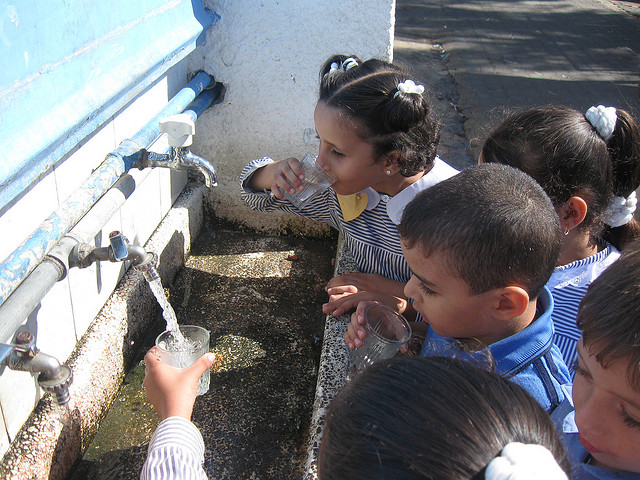
In the Gaza Strip it is estimated that just 5% of the available water is suitable for consumption. As such any efforts to help improve water security are not only welcome but necessary. France recently announced that they would be contributing €10 million towards the construction of a desalination plant in Gaza. The European Investment Bank is also offering its technical expertise as well funding and operational management. But can the energy-poor and economically-challenged Gaza Strip really operate a water technology normally associated with rich Gulf nations?

Greener TV With Comcast Cable?

vintage TVs and bike, Israel
Want to support a cable company that cares about the planet?

True, a lot of environmentalists promote reading over television. A nice intimate dinner and good chats with friends over a night at the movies. And of course we know it’s the better way to let our kids play outside before we let them switch on the computer games and consoles.

But we can’t be superheros all the time. Sometimes we need that downtime, some time to be couch potatoes in front of the television. Kids too.

If you live in the United States you’ll find the best cable deals, with dozens of channels, or more, that will interest you –– even if you consider yourself a serious environmentalist.

Building one of the most environmentally-savvy green buildings in the United States, Comcast – the largest cable, phone and Internet provider in the United States, is setting the pace on how overlooked services like media, communications and entertainment can be greened.

It is setting an agenda for global companies to follow.

Whether you are into animal, nature or ecological shows at all, there are plenty of environment-related shows served by Comcast from PBS, Discovery, Nat Geo, Nat Geographic Wild, and channels like Animal Planet.

Animal Planet is one of our favorite shows as it captivates audiences with adventures from the wild kingdom, all the way to adventure with domestic animals like Kitty in the backyard. Meow.

Discovery is the best way to take a comfy seat into exploring your world; with programming that includes series on undisturbed habitats, to man’s place in the city and environment, to pure environmental programming. (Take note that Discovery bought the blog TreeHugger a few years ago, adding to its commitment to serve the environmental ethos.)

And National Geographic? No home is complete without access to this world-changing programming, showing the culture of people and our fascination with our natural and built environment from the arctic, to the tropics to the heartlands of Africa.


Jerusalem Mayor to Join “Bike to Work Day” Next Week

"jerusalem bicycle festival"Jerusalem’s light rail may have been up and running for months already, but some residents believe that cycling is still the best way to get around.

In the fall of 2011, Jerusalem finally got its much anticipated light rail (after years of construction).  The light rail was intended to offer a comfortable and eco-friendly means of transportation to Jerusalem’s residents, but some of them – especially those who ride bikes – think cycling is better (and protest the fact that bikes are banned aboard the light rail).  In order to remind Jerusalem that cycling is still a great way to get around, Cycle Jerusalem has organized a Bike to Work Day to take place next week.

Dubai Might Buy Solar off Roofs

2

dubai-might-buy-solar-roofs

Dubai’s electric utilities are considering buying back power generated from solar panels on the roofs of houses and office buildings.

Last year, the city carried out its first ever study to see how much solar power is being produced outside the grid and it found that local businesses and other private owners were producing around 5 MW of electricity for their own use.

If that much is being done with no incentives, they thought, how much power could citizens deploy if there were an incentive?

(Or – could all this onsite solar generation be due to Dubai’s own Net Zero Building Codes it passed a few years ago? To incentivize architects to add solar!)

Related: Green Gas Station Meets Stringent New Dubai Building Code)

Food Security Overwhelming More Than 1 Million Syrians

syria food plate shared
The United Nations Food and Agriculture Organization (FAO) issued a special alert on the food security situation in Syria this past week, voicing serious concern over the state of food security, especially for vulnerable groups, because of continued civil unrest since March 2011. According to the Syrian Central Bureau of Statistics, inflation increased between June and December 2011 by about 15 percent, mainly driven by sharp increases in food prices and fuel shortages that are impacting on transportation costs.

The United Nations World Food Programme estimated in 2010 that about 1.4 million food insecure were living in areas which have now become conflict hotspots such as Homs, Hama, rural Damascus, Daraa and Idleb and the concern is that they now have become even more vulnerable.

Jerusalem’s Western Wall for the Birds

western wall jerusalem swifts
Swifts return to nest at Judaism most sacred site

When the swifts came back to Jerusalem’s Western Wall last week there was rejoicing as bird watchers and the religious welcomed them home to Judaism’s most sacred site. The common swift, which spends is entire life flying or sitting its nest, returns from wintering in South Africa to nest between the cracks in the ancient wall. For over 2,000 years, the crevices between the wall’s massive limestone blocks have served as the perfect nesting location for the swift (Apus apus).

America can’t green Jordan’s future

0

green money plant watering can
America joins Jordan in a celebration of green, but we are not sold on the deal. 

The USA and Jordan recently entered into environmental partnership, cosigning a plan to promote four distinct Jordanian initiatives: ecosystem conservation; increased education; improved private sector performance; and stronger environmental law.

This agreement wrapped up a one-day forum on Environmental Technical Cooperation involving experts from each country’s environmental agencies and commits both nations to increased cooperation in efforts to preserve Jordan’s natural environment.

This new work program aims to incite sustainable development and green job creation in the Kingdom, stating that, “…cooperation tangibly demonstrates that economic growth and environmental protection are mutually supportive.”

The US Embassy in Amman’s website states that the program “was established in 2000…in association with the U.S.-Jordan Free Trade Agreement…as a means to enhance Jordan’s economic development and the quality of the trade relationship between the two countries.”
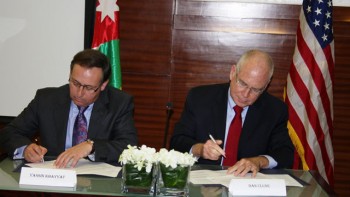
Minister of Environment Yaseen Khayyat and U.S. Principle Deputy Assistant Secretary of State Danial Clune signed an agreement on a new work program that lays out a road map for environmental cooperation between the United States and Jordan into 2013.

Since signing the US Free Trade Agreement in 2001, Jordan hit green targets ranging from establishing a Ministry of Environment to banning use of leaded fuels. They were the first Middle Eastern nation to join the Global Methane Initiative (GMI), a public-private initiative to develop methane recovery projects. Good press in all that.

But after a decade, do these accomplishments really warrant bragging rights? Where are the benchmarks to track specific progress against original goals?  And what were those original environmental goals?

Emphasizing free trade, job creation and economic growth.

Jobs are good. I’m happy to have one.  My job has an enviro edge to it, but it’ not an environmental job.  There’s a similar distinction to be made between this compact’s twin goals. Is it an environmental initiative, or an economic one with a green angle?  Sure, there are instances where both masters can be served, but which here holds sway?

Leaded fuels have been banned for decades in most industrialized countries because of pollution concerns, but also because of disastrous effects on vehicles’ catalytic converters (enviro-benefit motivated by commercial need).   Establishing a ministry and joining green programs like GMI are positive steps but, lacking key performance indicators, it’s difficult to gauge impact (enviro-ambition with ill-defined output).

Shouldn’t liaison between top-tier environmental agencies drive larger green feats?

USAID does important work in Jordan bringing clean water to remote villages, installing water saving systems, and teaching conservation.  The Royal Society for the Conservation of Nature (RSCN) works to conserve Jordan’s biodiversity, linking conservation with socioeconomic development, and engaging public action for protecting the natural environment.

RSCN is also home to Wild Jordan, a popular outpost in old Amman that hosts ecotours (the real deal, hikes and bikes and camping in tents without minibars) and educational programs that benefit both tour-takers and local communities. These are just two examples of green partnerships between the nations with bona fide environmental achievement.

So what’s this new compact bring to the table?

Years ago, I worked in the USA in an environmental role. I could see the EPA’s political teeth were already loosening.  With diminishing powers back home, what can they effect across the globe?

The US Department of the Interior has a lengthy record of questionable environmental positions, supporting development of federal lands for commercial use, and inadequately preserving endangered species.

In September 2008, The New York Times reported, “A culture of ethical failure pervades the agency.  The reports portray a dysfunctional organization that has been riddled with conflicts of interest, unprofessional behavior and a free-for-all atmosphere.”

That same year, the Department of the Interior was sued by the Center for Biological Diversity for introducing “regulations…that would eviscerate our nation’s most successful wildlife law by exempting thousands of federal activities, including those that generate greenhouse gases, from review under the Endangered Species Act.”

Not exactly the A-team for catapulting Jordan’s environmental protection ambition into reality.

A Joint Communiqué issued at the end of the USA-Jordan forum stated, “We are happy to report that we are making significant progress toward achieving the goal we identified almost 12 years ago in our Joint Statement to ‘advance environmental protection in Jordan.'”

Twelve years to ban leaded fuel and set up a new ministry.

What will they accomplish in the next twelve months?

Signatory image via the US Embassy