I just spit out my coffee. About to move house for the fifth time in as many years, I take a day to escape the cardboard box Himalayas towering in the living room. Plus there’s heavy construction going on next door, and it sounds like all of Amman’s stray cats are in heat. I grab a laptop and head to the nearby Taj Mall Lifestyle Destination, to experience a 90s cliché: sit in a coffee shop and quietly write. I fire up the Internet. See a news alert from The Jordan Times: Jordan featured as regional pioneer in enforcing smoke-free business environments? (There goes that coffee.)
Archaeologists Discover Lost Language In Southeastern Turkey
A list of women’s names written in cuneiform is the only remnant of this unidentified language, which was spoken 2,500 years ago.
Found in the remains of an enormous palace that was destroyed by a fire around 700 BCE, the clay tablet pictured above holds the only remnants of a language previously unknown to modern scholars.
The language could contribute to our understanding of the ethnic groups who lived in the area thousands of years ago, and help map their interactions with the Assyrian Empire, according to Science Daily.
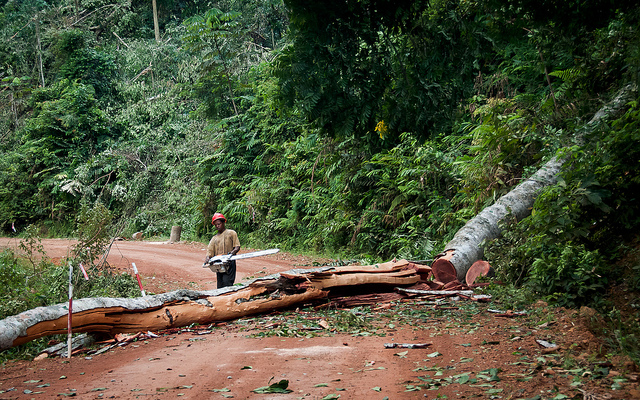
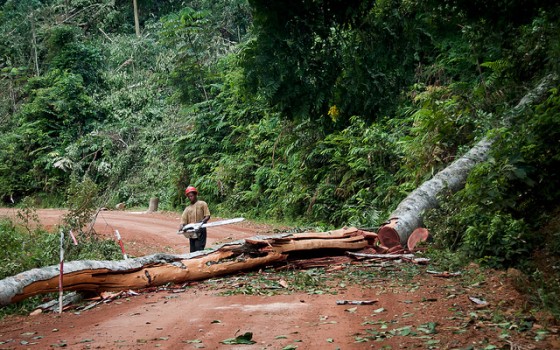
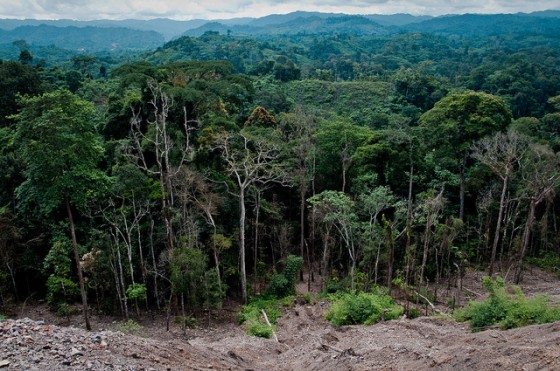
Jordanian Bank Sanabel Buys One Quarter of a Congo Forest
An Islamic bank in Jordan, Sanabel, has bought up over a quarter of a Congo forest for ‘sustainable projects’
When I first read about the acquisition of 500,000 hectares of high value forest in the Democratic Republic of Congo by an Islamic investment bank in Jordan, I thought one thing: land grab.
Over the last couple of years, countries across the MENA region have been buying tracts of land all over Africa. Worried about the rising cost of food as well as declining natural resources locally, they have been trying to make sure that their eggs (so to speak) aren’t all in one basket. Egypt has bought up land in Sudan, Saudi Arabia has staked a claim on land in Ethiopia and the United Arab Emirates has farms in Sudan, Morocco and Algeria.
However, this latest land acquisition by Sanabel is a little more interesting as it claims to come with some green credentials. According to news reports, Sanabel which is Jordan’s first Islamic investment bank is considering a number of “Sharia’ compliant forestry activities” for the land it has purchased. These range from afforestation and reforestation projects, and protecting the land from deforestation and sustainable agro-forestry projects.
I have written about the ethical aspects of Islamic banking in the past and also the important role they could be playing in protecting the planet, so it’s great to see some action being taken. Indeed Al-Sanabel Chairman and CEO Khaldoun Malkawi explained that these activities are entirely compatible with Islamic banking principles since they simultaneously help to fight climate change by protecting biodiversity, reducing poverty and promoting corporate social responsibility.
Sanabel did however also add that this purchase is part of their plans to capitalise on the rapidly growing carbon trading market. This means that the company “will develop forest carbon credits projects that will protect the role of forests in mitigating climate change.”
As such Sanabel will be hoping to get companies to pay them to preserve the forestland in Congo and protect it from deforestation in return for carbon credits which help them meet their carbon reduction targets.
This is, however, where it gets a little messy.
Firstly, the carbon credit market has been widely criticised for allowing business to continue spewing lots of emissions. It turns out that buying carbon credits from schemes such as the one that Sanabel will be running is a lot cheaper and easier for businesses than actually cutting their own emissions.
So instead of protecting the environment and helping tackle global warming, these scheme just help companies continue their destructive practices.
The second issue that needs to be considered is the displacement of poor people living in these forests. For example, 70,000 indigenous people living in the western region of Gambella in Ethiopia were forced to relocate as the land had been living on was bought up by foreign investors. Saudi Star Agriculture Development was one of the companies implicated in this forced displacement.
Land ownership is a hugely contested issue and passing on ownership to a foreign government can only make the situation more complicated.
So while I’m happy to see Islamic banks consider green projects, I think they need to do better next time. They need to show that they aren’t out just to make a quick buck and also that they take their environmental responsibilities seriously.
Update March 2020: the website/Facebook page for Sanabel is down.
Images of Congo forest via bobulix/flickr.
For more on African land grab see:
Egypt to Grab Sudanese Land To Meet Its Wheat Needs
Africa Up For Sale, Is The Middle East Buying?
Arab States Buy Up Vast Tracts Of African Farmland
Israel’s Petroleum Council Adds Environment Reps
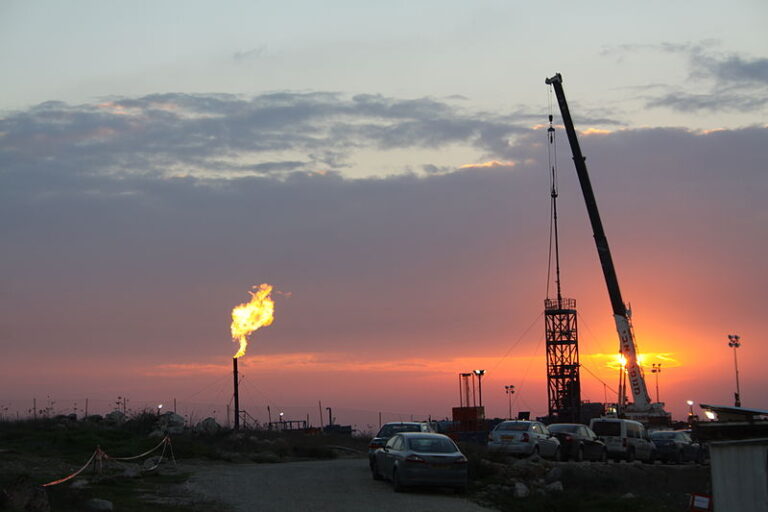
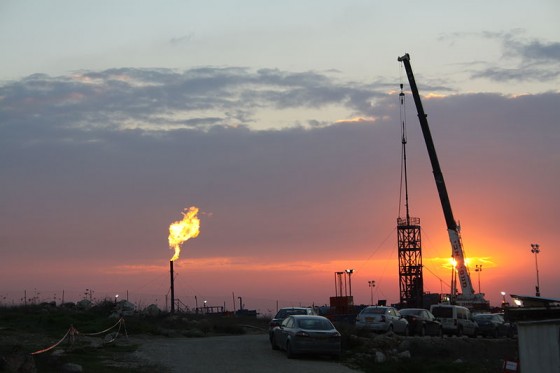
Meged oil field, in Israel.
Last week two environmental representatives were added to Israel’s Petroleum Council, according to the Jerusalem Post. The council has been restructured to include a total of 13 members, including seven members of the public. As Israel’s ongoing court dispute between government officials and national gas distributors proves, the industry has a local history of disregarding public interest for financial gain – look to our past story on polluting gas stations.
Is Urbanizing the Solution to Israel’s Housing Crisis?
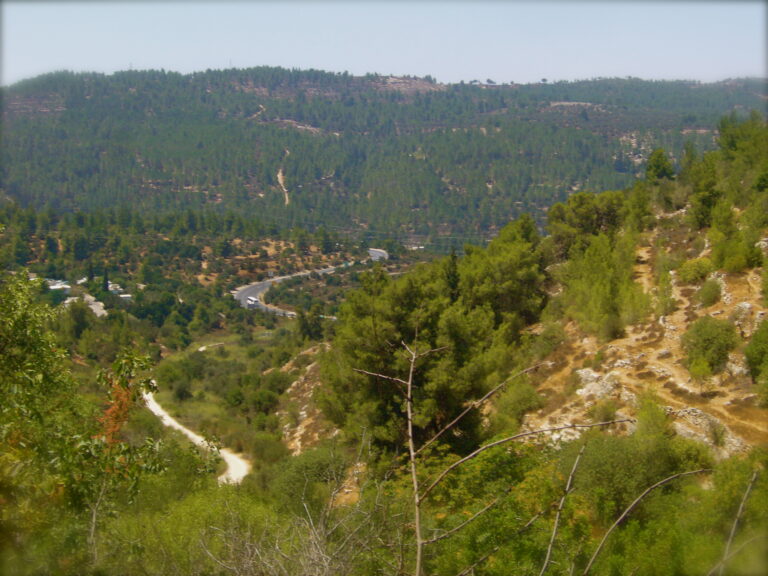
Forest in central Israel, as seen from Ein Karem
Some architects and economists are proposing Israel solve its affordable housing crisis by turning central Israel into a “megacity,” similar to Hong Kong, and moving the nation’s lush nature reserves and agricultural lands to the Negev and the Galilee. Supporters of this solution insist it would not harm the environment if public transportation was improved and public parks increased.
According to the Israeli Ministry of Foreign Affairs, the country produces around 93% of their domestic food requirements. As of 2002 central Israel held 39% of the country’s agricultural land. As we’ve seen in numerous nearby Arab nations, food security continues to be a divisive issue among Middle Eastern populations. It’s hard to imagine that paving so much of Israel’s fertile land would be beneficial in the long run.
Lebanon Carpet Fire Causing More Atmospheric Pollution
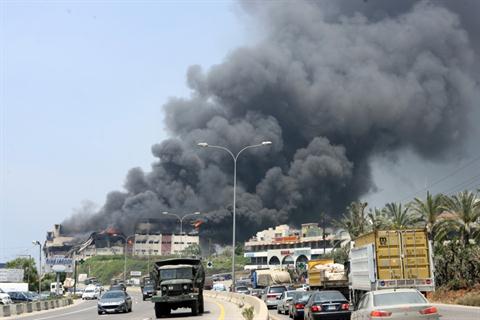
Black plumes go airborne from burning Byblos Carpet Factory fire in Lebanon.
Lebanon has had more than its share of various air and surface pollution issues in recent years. Some of these issues have included dumping loads of garbage straight into the Mediterranean; as well as a giant garbage mound in Sidon that is so serious that boats at sea smell it before seeing it. Recent fires at tire dumping landfill sites have also been reported, including a recent tire dump fire outside Beirut that was suspected as being intentionally set by people wanting to retrieve the steel reinforcing material from inside the tires themselves in order to resell it. Another prime contributor to air pollution near the country’s capital, occurred on Friday when a carpet factory fire broke out at a large carpet factory in the town of Safra, just north of Beirut.
Jordan: Two Men Boast About Killing Owl

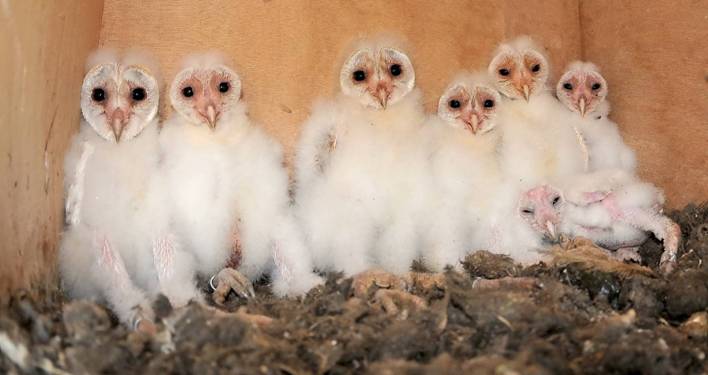
Conservationists in Jordan have criticized a news website for reporting positively on a video which shows two men posing with a dead owl they claim to have killed
Images have emerged of more animal rights abuse in the Middle East – this time in Jordan. A video was posted on a Jordanian news site showing two men boasting about the killing of an owl. Conservationists in the country were rightly quite upset about this, particularly as there have been concerns about the falling numbers of owls.
Sadly this is in a long list of animals rights abuses that Green Prophet has reported on from across the region. Over the years we have reported on a Kuwaiti posing with dead wolves, the massacre of 12 flamingoes as well as thousands of endangered fruit bats which were gunned down in Lebanon. Whats more, despite laws to ban the ownership of exotic animals in the Gulf, we wouldn’t be surprised to see more pet cheetahs being paraded around.
It’s honestly just astounding. Every week it seems as if some idiot has either posed in a picture or posted a video of themselves next to a tortured poor animal. I just don’t understand the logic of it all. Okay, you killed an owl. What does that even mean? Is that supposed to be an achievement? I mean, really it’s a harmless and defenceless bird which happens to have a dwindling population.
How can killing it be momentous enough to warrant a photo? Surely that can’t be a highlight in someone life. Will they be flicking through photos with their grandchildren saying “And this is when I got married. This is when you’re father was born and oh yes, this is when I killed a poor owl and contributed to its extinction”?
I know that in Jordan the owl represents bad luck but does that make its killing justified? Should we also be killing black cats? Reports did emerge that Gray wolves in Jordan were being hunted, poisoned and ran over as they are considered a huge threat but surely, it’s different for such a clearly harmless creature? Well, apparently not.
Head of the Royal Society for the Conservation of Nature’s field research, Ehab Eid, told the Jordan Times that hunting is a real threat to the owl population in Jordan. “People hunt owls because in our culture, owls are thought to bring bad luck and jinx those who see them,” Eid explained. However, owls have many benefits that people are not aware of, Eid said, such as limiting the spread of rodents that carry diseases.
For more on animal rights abuses in the Middle East see:
Kuwaiti Man Kills Wolf and Then Shows Off
Gulf Country Completely Bans Ownership of Wild Animals
Biodegradable plastic alternative to replace juice boxes

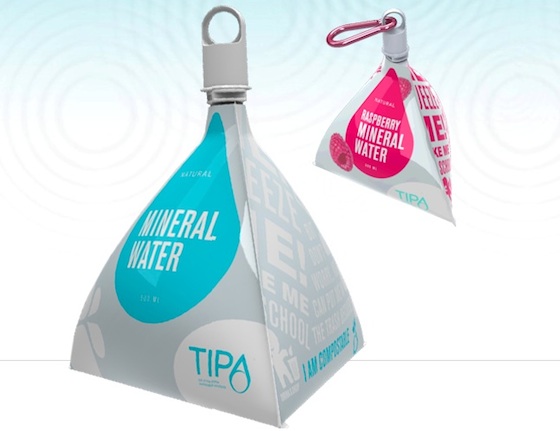
Two Israeli women founded TIPA – the first company in Israel to offer 100% biodegradable and recyclable beverage packaging, as an alternative to plastics. This is a particularly difficult feat to achieve.
Daphna Nissenbaum and Tal Neuman founded the company in 2010 in order to address the dire need for packaging that is genuinely ecologically-sensitive. And so far, they have they come up with three fresh designs, namely the Tip, Tipack and Tipup that appear to fit the bill. The packaging works to replace juice boxes and plastics that hold liquids. Other similar plastic alternative companies have come on board since, from Israel, and include Melodea and W-Cycle.
They claim that their films biodegrade within 180 days if subjected to standard industrial composting environments. What this means, and we have discussed this in various previous posts, in order for compostable plastics to biodegrade, it is crucial that they receive adequate amounts of oxygen.
On their website, the founders emphasize that for TIPA, sustainability is not just another 14 letter word but the very essence of their existence. Along with their talented posse of researchers and other employees, they strive to make packaging as environmentally benign as an orange peel.
That way, all residents of the Middle East and elsewhere who don’t quite get how destructive our material and waste stream has become to the planet can discard their waste without wondering how many years it will languish in a landfill, generating gas and leaching chemicals into the environment.
Of course, these products are only as good as the locations in which they are sold.
Let’s take Yemen for example. Unless the Environmental Ministry is adequately briefed and establishes a chain of appropriate industrial composting heaps where biodegradable products can slowly disintegrate in optimum conditions, these products will be useless to them. Same goes for other countries.
Luckily there are many countries around the world that are already equipped with the appropriate facilities to manage cutting edge packaging and they should get first dibs. Now the onus lies upon them to prioritize the decrease the amount of waste that escapes into our oceans to land in the bellies of unfortunate marine creatures.
For loads more information, please visit Tipa’s refreshingly accessible and transparent website. Oh, and by the way, did we mention that we wish women could rule the world (well, I do anyway)? Because only a woman would come up with a product this gentle and altruistic.
Coating and plastics alternatives
In 2022, TIPA offered 312MET home- and industrially-compostable barrier film to package nuts and crisps, designed to provide a high barrier that does not require an additional sealing layer for full effectiveness.
The company claims that its film, will combat the 290,000 tonnes of plastic packaging waste generated in the UK every year, as approximated by WRAP. Only six percent of that figure is said to be recycled, the rest being sent to landfill.
With Britain supposedly consuming six billion packets of crisps and other salty snacks per year, it is thought that putting compostable packaging into circulation will lower waste levels without jeopardising demand for the products.
TIPA also suggests that its new design can withstand the corrosive properties of salt and oil from the crisps and nuts it is set to package – a factor said to have been missing from similar designs in the past. Combined with the high barrier, this property is thought to result in thinner packaging, cutting down on waste.
“TIPA endeavours to always remain on the forefront of developing innovative, planet-friendly technology,” said Eli Lancry, chief technology officer at TIPA. “We are proud to launch a film that performs just like traditional plastic with an extremely high barrier, offering customers convenience and reassurance that the quality of their product will be protected.
“This is only one of many novelty products we have and will produce in our R&D center.”
In a similar project, TIPA recently partnered with Aquapak, utilising its water-soluble polymer technology to work towards high-barrier and PVDC-free compostable films.
::TIPA

$109 Billion Solar Plan to Power a Third of Saudi Arabia

Saudi Arabia has finally noticed it has twenty centuries of solar reserves and has made plans to tap them. For its own use.The Kingdom has just announced a $109 billion plan to create a solar industry that generates a third of the nation’s electricity by 2032, according to Bloomberg Businessweek. Maher al- Odan, a consultant at the King Abdullah City for Atomic and Renewable Energy (KACARE) announced a plan to have 41 GW of solar capacity within two decades.
To put 41 GW in perspective, China is the world’s leader in wind power now, overtaking Germany and the U.S. with about 48 GW of wind. This is a very serious move by a country well able to afford this kind of investment, that till recently has lagged the rest of the MENA region in renewables trailing Egypt, Morocco, Tunisia, Algeria and the United Arab Emirates.
Dirty Rubber Recycled into Unbelievably Beautiful Decor in Morocco
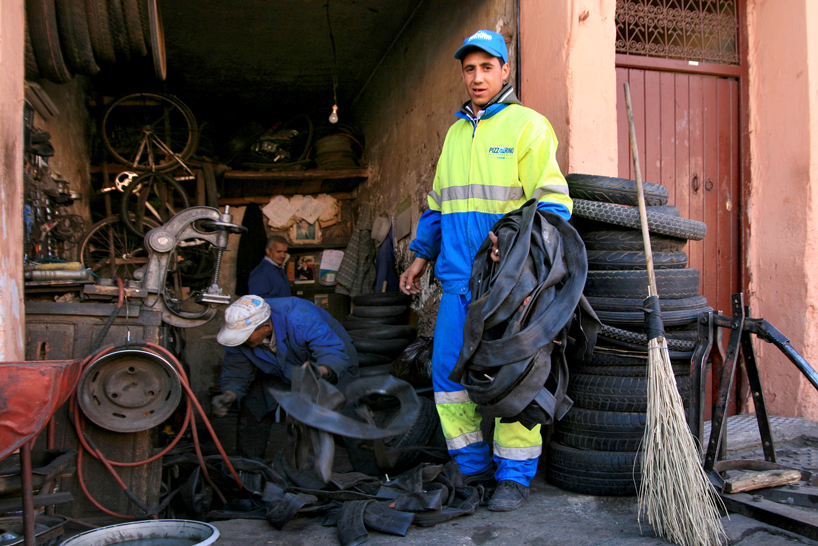
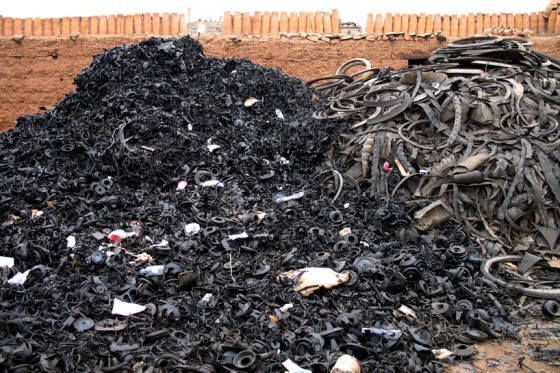
Renowned French designer Sandrine Dole wanted to find a way to recycle piles of rubber lying around Marrakech while simultaneously elevating the local community and its numerous cottage industries. Some of the main design challenges included separating the piles of dirty rubber from other waste and then turning them into something not only beautiful but also replicable, useful and of superior quality.

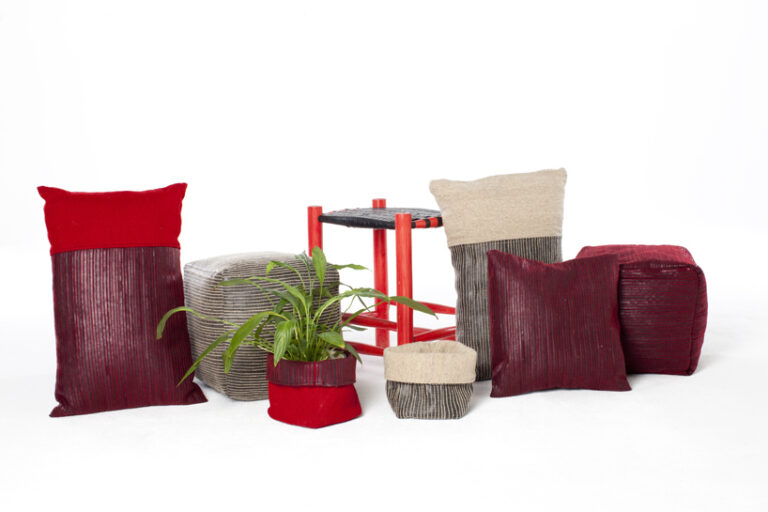
The results of this endeavor financially supported by Smiley World Organization and distributed by the French Fair Trade Company Altermundi couldn’t be more surprising. Now based in Morocco, Dole incorporated local and natural materials into the design process to soften the rubber, adding color and a grace that belies the origin of these once wasted materials.
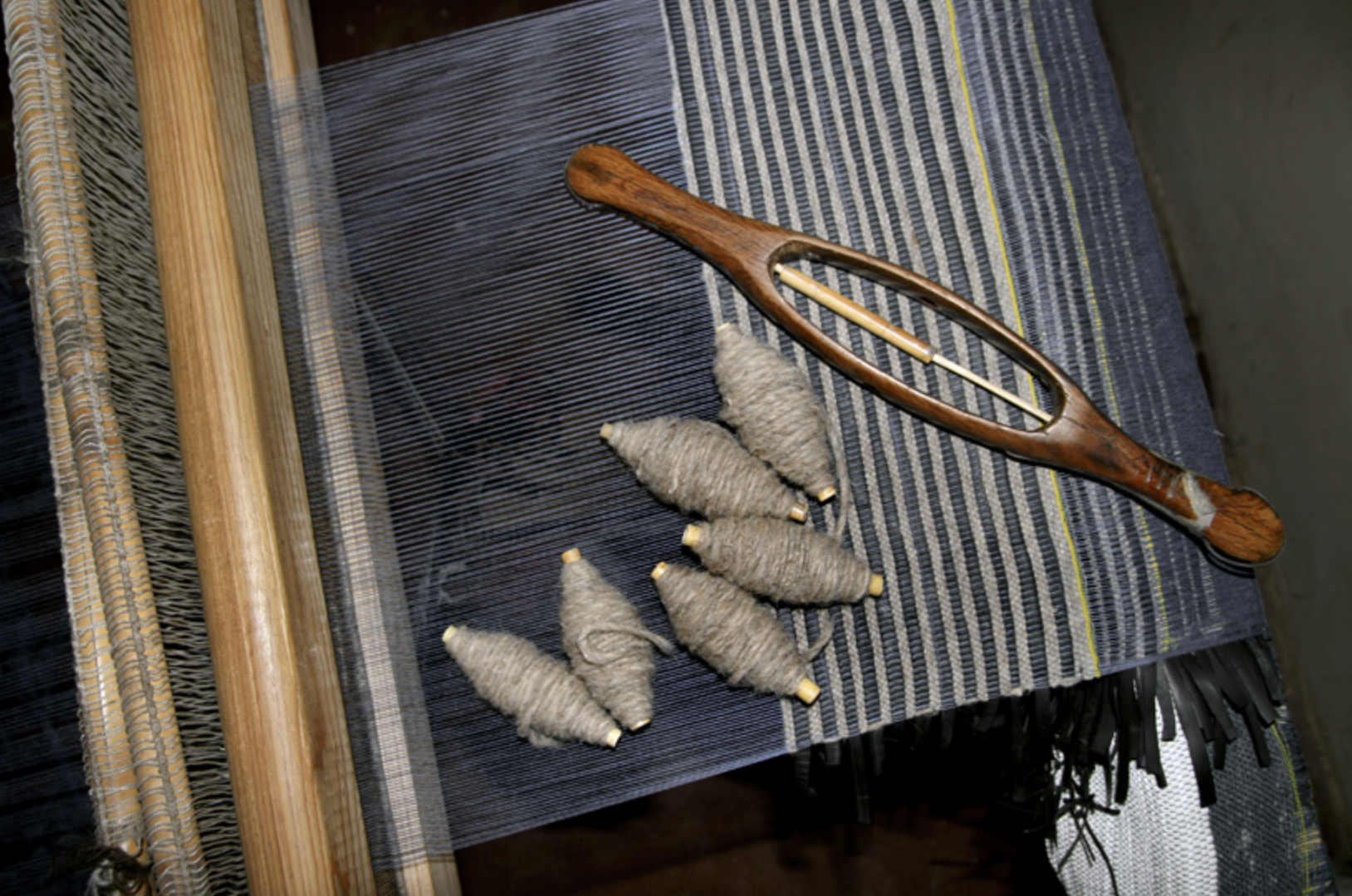
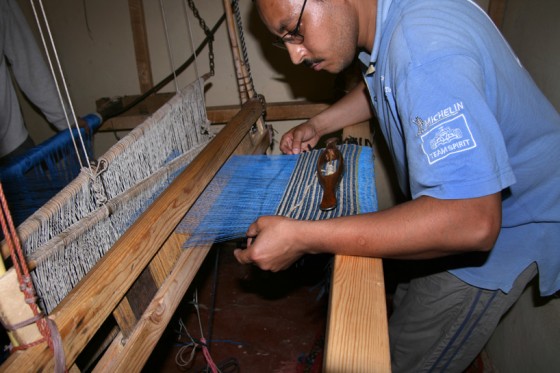
Weaving, woodworking and basketry are all popular local crafts that Dole sought to incorporate into the recycling project with dual benefit. Not only do these crafts (and the materials they use – wool, wood and straw) lend a far more gentle aspect to pure rubber products, but they also allow the local community to do work with which they are familiar.

Although there is something of a rubber recycling inclination in Marrakech, it remains informal and underdeveloped, although the environmental non-government organization Groupe Pizzorno does contribute to a municipally-sanctioned collection program that greatly reduces pollution in one of the country’s most enigmatic cities.
Add some color and Dole’s existing product lines are both quite extraordinary, not least because of the manner in which the materials were sourced. Red, white and black interiors and household furniture are being distributed via Altermundi and more repurposed goodness is definitely in the pipeline.

Raising the profile of Morocco’s talented artisans and putting money in their pocket, this fantastic project also has unsung environmental benefits as hundreds of pounds of rubber has been diverted from the city’s already overburdened landfills.
More Design From Morocco:
Guilhem Eustache’s Magical Home in Morocco is Made From Local Materials
Israel Turns to Arab Neighbors to Avert Tomato Crisis
Tomatoes are staple to the Israeli diet; Israel looks to Jordan to augment its tomato supply.
Last year a spike in cottage cheese prices helped spark the tent protests in Tel Aviv and inspired the worldwide Occupy movement. Cottage is a staple of the Israeli diet, so much so that it became a national symbol utilized in discourse about inequality and corporate exploitation. There is probably only one other food item that unites Israelis so vigorously: Tomatoes.
Almost one year after the protests in Tel Aviv, Israeli farmers are reporting a poor crop will raise tomatoes prices across the nation. Market prices doubled during the last weeks of April – up to NIS 18 a kg (about $4). Some industry professionals speculate that the price of tomatoes is likely to increase 400 percent in the coming months.
Date Palms, Palmaculture and Greening the Middle East (INTERVIEW)

Palmaculture is a new name for an old concept – one which helped green the Middle East with traditional palm gardens called bustans
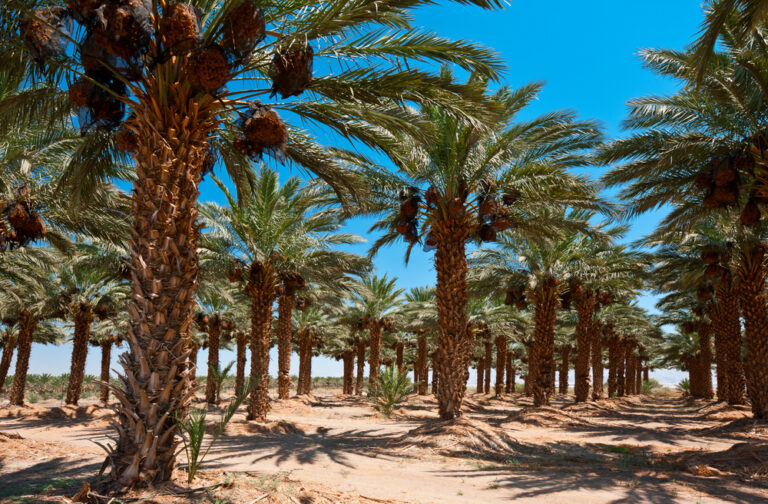
For centuries now date palm groves have been present in the hot deserts of MENA stretching from Morocco in the west to Yemen in the south. Indeed these man-made ecosystems have been vital centres of agricultural productivity in otherwise hostile and arid environments.
It is believed that the first date palms were cultivated in southern Mesopotamia in the 5th millennium BC and oasis agriculture developed on a wider scale during the Bronze Age. Now, Islamic researcher Mark Bryant wants to re-introduce date palm gardens to the region – this time not just for agricultural purposes but in a bid to increase green and sustainable spaces.
“These gardens could provide a cool peaceful shaded space where visitors can enjoy the natural environment whose development is low impact and sustainable – a place to grow food, shade, peace of mind and perhaps even get a little closer to God,” explains Mark Bryant. His work around the concept of Palmaculture highlights the advantages of embracing palm gardens.
Date palms, which have fruit rich in sugar and vitamins, also provide material for construction, fuel, basket making, ropes and packaging. The shade that palms provide reduces evaporation and creates a cooler, damper ‘microclimate’ where more delicate crops can grow.
Bryant adds that the palm groves can serve as test sites for sustainable agriculture whilst promoting bio-diversity and conservation of the natural world. Palm gardens could also be utilised as sites for the recycling of “greywater” as part of a water management scheme. Therefore these palm gardens are not just for growing food but they become places of recreation, education and scientific research.
Bryant tells me that the Palmaculture concept was inspired by the work of Geoff Lawton, a Permaculturist (who works with his wife Nadia Lawton who I interviewed here), who has noted the important role played by palm groves. “I was able to talk to Nadia and Geoff briefly in Jordan, their reaction was positive and they felt the concept has potential,” says Bryant. “I feel my next step is to develop the proposal into something more presentable and then Inshallah get it translated into Arabic and produce a bi-lingual illustrated booklet.”
Watch this space, I guess.
: Background information via Tengberg, M., Beginnings and early history of date palm garden cultivation in the Middle East, Journal of Arid Environments (2012).
For more on sustainable agriculture in MENA see:
Islamic Gardens – They Could Build A Green Movement
Heliofocus Solar Technology Dish Unveiled in Israel
Israel and China seem to be agreeing on more and more these days. On Tuesday, investors from the two countries announced they would be jointly funding a new solar thermal venture in Israel’s Negev Desert, the HelioBooster, Jerusalem Post reported. Still in its demonstration phase, the technology was created by Israeli solar company, HelioFocus, which–since its founding in 2007–has been succesfully pursuing both the Chinese and Israeli markets.
What an Egyptian Environmentalist Looks Like
Does goes on a mission to find out what typifies an Egyptian environmentalist.
A few months ago Egypt was named the greenest country in the Middle-East by a Yale group, even topping neighbouring Israel. It even turned out to be one of the best improving countries in the world. If you ever visited it, this might sound odd, and I in fact haven’t met an Egyptian that took the news seriously. But yet, the ranking seems credible. Maybe Egypt’s people care more about the environment than we think?
Me, I am particularly interested in non-Western ways of looking at the environment. In the West much people reached a level of prosperity, and now they start to care about the environment. But not everybody who cares about the environment fits in this stereotype. And maybe luckily.
A few months ago I decided that I wanted to search out how a specific Egyptian or Arab environmentalist might look like. I read too much books, but also interviewed some interesting people, and I thought it might be interesting to share my discoveries with you. I say share, because I want you to interact with me, by letting me know if you (dis)agree.