Home Blog Page 429

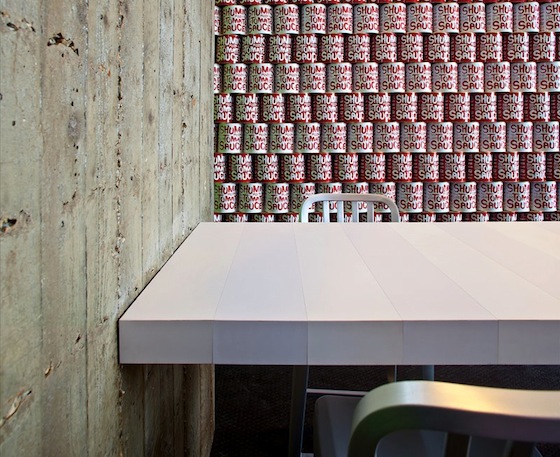
Israel’s Shumis Pizza Joint Features Row Upon Row of Recycled Tomato Cans

2

recycled materials, Israel, Studio OPA, green design, sustainable design, eco-design, Shumis Pizzeria

As urban trash threatens to bury city dwellers in environmental and financial ruin, recycling materials is becoming not only a progressive design technique but also a necessary one. That doesn’t mean that an economy of materials has to be boring, mind you. Often, quite the contrary is true. By using either recycled or inexpensive materials, Studio OPA has created a bold, dramatic design that makes the occasional pizza binge at a small, funky cafe in Israel’s industrial Rishon-Lezion both an exciting gastronomical and visual treat.

Israel’s Spencer Tunick Bill Attempts to Outlaw Public Nudity

10

Spencer Tunick, Dead Sea, eco-art, photography, nudity, Israel, politicsAn Israeli Minister has submitted a bill for approval that would outlaw public nudity anywhere in the country except at established nude beaches. An outspoken opponent of Spencer Tunick’s September, 2011 nude photo shoot at a secret location along the Dead Sea, which attracted 1,000 Israelis keen to draw attention to the dire ecological state of the world’s deepest hypersaline lake, MK Nissim Zeev was unable to prevent its eventual occurrence.

Although certain of Tunick’s images snapped that day are worth $2,000 and the event was hailed as a powerful event that demonstrates Israel’s commitment to democracy, Zeev has not let go of his failure to protect religious interests in the country and now proposes a mandatory sentence of one year in prison for anyone who strips naked for either artistic or commercial purposes in public spaces.

Dubai to Abu Dhabi Electric Superbus Now Road Legal

dubai super busWith 23 seats and 16 doors, the all electric Superbus is no ordinary car

It’s 15 meters long, super luxurious and totally electric powered. It’s called the Superbus, and it was originally proposed as a super fast and luxurious commuter vehicle between the UEA Emirate states of Abu Dhabi and Dubai.  This totally electric and futuristic looking vehicle, was originally designed in the Netherlands, and put through its paces in road tests in Abu Dhabi’s Masdar City, has now been certified as “road Legal” by transportation authorities in the Netherlands, according to The National.

A Dustier Planet, Your Dustier Lungs

2

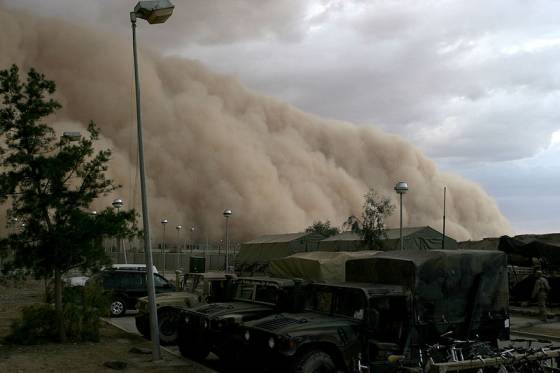
dust storm in Iraq sand

Earth’s dust storms and sand storms are becoming more frequent. How does that affect your health?

Here in the Middle East, powerful hot winds sometimes drop fine yellowish sand  down from the sky, coating the skin and lips irritatingly and making it hard to see across the street. It’s the lashing tail of giant storms in the Sahara.

Invading sand has already caused airport shutdowns in Israel. Radio announcements warn pregnant women, the elderly and people with heart disease or respiratory conditions to stay inside. Babies and young children must remain indoors too. It’s difficult enough to contend with air pollution, but sand storms aggravate everyone.

Even in ordinary weather, plain household dust settles in a visible layer on anything lying around, within a day. Studies conclude that there really is more dust in the atmosphere. But any careful housewife can tell you that.

Breast Milk Worth More Than Oil

breasts worth more than oil bok reviewOne of the surprising facts in Florence William’s new book: breast milk is more expensive than oil.

Jet fuel in breast milk? Breasts getting bigger than generations ago? These are just two discoveries that investigative journalist, Florence William’s, shares in her latest book about the environmental impact on breasts.

Breasts: A Natural and Unnatural History (2012) is more than an ode to those beguiling curves; it is part of the growing body of research and awareness about eco-conscious intimacy, a movement some are calling ‘ecosexuality.’ A term originally coined by Greenpeace about 10 years ago, among other things ecosexuality invites us to examine the impact of toxins on our reproductive selves.

“For such an enormously popular feature of the human race — even today, when they are frequently bikinied, bared, flaunted, measured, inflated, sexted, YouTubed, suckled, pierced, tattooed, tassled and in every way fetishized — it’s remarkable how little we know about their basic biology,” Williams says.

Being made primarily of fat and glandular tissue, “breasts, it turns out, are a particularly fine mirror of our industrial lives,” Williams explains. “In the course of a lifetime, [they] meet many friends and foes: lovers, babies, ill-fitting undergarments, persistent pollutants, maybe a nipple ring, a baggie of silicone or a dose of therapeutic radiation. It’s a lot to ask of breasts.”

Measurable consequences include bigger breasts developed earlier with toxins finding hiding places in unsuspecting bosoms. Toxins come from industrial sources including air pollution. William’s had her breast milk tested and found that it was laced with miniscule amounts of jet fuel. However, consumers are also inadvertently exposed to daily household use items.

Many of those are in our beauty, cleaning and pleasure aid products. For example, lead in lipsticks reduces fertility in men and women. Toluene in nail polish and hair dye stops menstruation and decreases sperm count. Phthalates are reproductive toxins found in fragrances, cosmetics, and personal care products (even many vibrators and dildos). Bisphenol-A in plastics has been shown to cause spontaneous abortions and alter a man’s sperm.

Breast cancer rates vary around the globe, with women in Israel having rates similar to the west. It kills fewer women than heart disease, but because its scars reach deeper than our skin, it’s the rallying call that resonates with women’s private erotic selves. This touches on another aspect of the ecosex movement; our attitudes towards pleasure, our bodies and what is considered ‘natural.’ For better or for worse, Williams message about breast health underscores the complicated relationship society often has with the female body.

From the author’s website:

“Feted and fetishized, the breast is an evolutionary masterpiece. But in the modern world, the breast is changing… and attracting newfangled chemicals. Increasingly, the odds are stacked against us in the struggle with breast cancer – even among men. What makes breasts so mercurial – and so vulnerable?”

Her investigation follows the life cycle of the breast from puberty to pregnancy to menopause, bringing her from a plastic surgeon’s office where she learns about the importance of cup size in Texas to a lab where she discovers the presence of environmental toxins in her own breast milk.

Endowed with a witty and inquisitive voice, Williams explores where breasts came from, where they have ended up, and what we can do to save them.

Florence Williams work often focuses on the environment, health and science. She is a contributing editor at Outside Magazine and a freelance writer for New York TimesNew York Times Magazine and numerous other publications.

Read more breast health news:
Ecosex and Why Environmentalists Are Avoiding the e-Spot
Are Hormones in the Environment Making Women’s Breasts Bigger?
Natural Breast Enhancement

Visionary Masdar CEO Named “Champion of the Earth” by UN

4

Dr Sultan Ahmed Al Jaber, the Masdar CEO, is the recipient of this year’s United Nations’ Champions of the Earth award.

The award honours individuals whose actions and leadership have had a far-reaching positive impact on the environment, in advancing clean energy technologies to mitigate the threats of climate change.

Abu Dhabi’s multi-faceted renewable energy company, Masdar, has created the first-ever clean-energy-powered eco-city in the kind of  oil-rich environment much more conducive to discounting climate change.

But Masdar’s night solar tower project in Spain – Gemasolar, is a true “tipping point” investment in a clean energy future. The company spearheads the changes we must make for civilization to survive.

Breeding Bunnies for Food and Fur in Egypt

2

FAO, agriculture, TeleFood, microfarming, sustainable agriculture

Waeel Abdessalam breeds rabbits on the third floor of his family home in El-Hamidiyah el-Gadida, a small village in the Fayoum area roughly 100 km southwest of Cairo. A beneficiary of the Food and Agriculture Organization of the United Nations’ TeleFood program, the young man tends to the rabbits early in the morning before leaving to study at a nearby technical school and in the evenings when he returns. Each rabbit sells for approximately $3.50 at the market and the meat and fur are respectively used to supplement the six-member family’s diet and income.

Desert Locusts Swarm West Africa Following Gaddafi’s Fall

0

travel, nature, pest control, Libya, Gaddafi, Sahara desert,

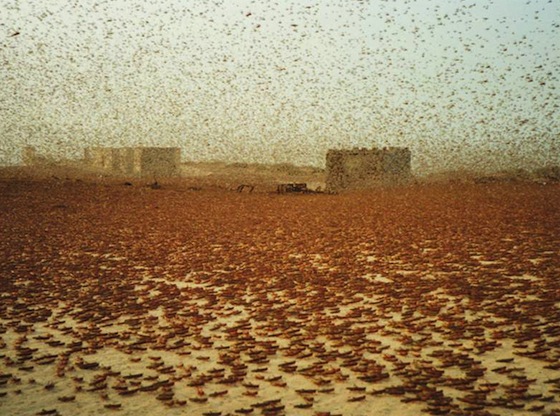
Desert locusts traveling southwest from Algeria and Libya threaten to decimate crops in Niger and Mali, the Food and Agriculture Organization of the United Nations warned on Wednesday. Since rebel forces killed Gaddafi in October last year, insecurity along both sides of the Algerian-Libyan border has hampered pest control efforts, allowing locusts to swarm across the desert like a giant red blanket that obscures everything in sight. FAO officials predicted in March that if more was not done to control the migrating locusts, they would reach Niger in June. It seems they have arrived right on time.

Heaping Urban Trash May be More Serious than Climate Change

3

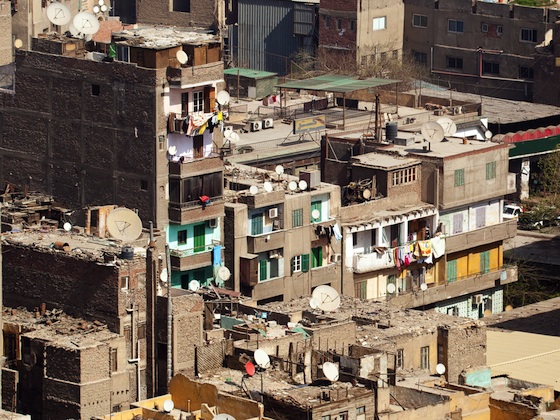
Cairo, Egypt, waste management, World Bank, garbage, Zabaleen, Middle East,

Heaping urban trash may be an even more daunting global phenomenon than climate change, the World Bank warned in a recent report. What a Waste: A Global Review of Solid Waste Management reveals that by 2025, city dwellers could produce as much as 2.2 billion tonnes of solid waste a year, up 70% than the 1.3 billion tonnes currently generated.

More waste is generated in cities than rural areas because more packaging is used and less is recycled, and because people living in rural areas are less likely to have a consumption-driven lifestyle. But getting a handle on the problem, particularly in developing countries, requires a strong social contract between the municipality and community, according to the report – a serious challenge in parts of the Middle East and North Africa.

June 8 is World Oceans Day – Be a Changemaker!

1

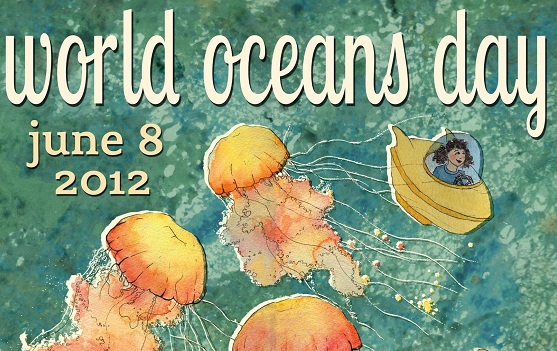
world oceans day, marine activism, sustainable fishing, plastic, oceanIn occasion of World Oceans Day, Green Prophet provides you with some tools for some (much needed) marine activism.

What does sea water mean for you? What memories do you have of swimming in the sea? If you were in the Red Sea, the Gulf of Aden, Arabian Sea or the Persian Gulf 15 to 20 years ago, I can guarantee that you will not experience that exact same sight in these places today. Countless testimonies worry about the complete disappearance of some fish species, coral bleaching and desolate coasts. Life has been sucked away, mangroves destroyed and the invisible ecosystem processes which sustain a life system are rapidly, not slowly, disappearing. If you are feeling alarmed, that is not enough, it is time to critically change our ways for good. The ocean is at a tipping point where human actions over the next 10 years will determine the state of the ocean for the next 10,000 years.

June 8th is World Oceans Day, the UN-designated day for the global community to celebrate and take action for our shared ocean. The theme this year is “Youth: the Next Wave for Change,” and many events will focus on inspiring the younger generations by addressing three critical factors that have been identified as the main threats that are changing our ocean: Overfishing, Climate Change and Rubbish.

In occasion of World Ocean Day, Green prophet will provide our readers with some tools so that you can make a difference.

Jacob Karni’s Solar Tech Turns Brown Coal Into Clean Fuel

2

greenearth energy israel, brown coal, Israel, Jacob KarniGreenearth energy looks to Israeli solar tech to make use of Oz’s vast brown coal resources.

With the climate change tipping point precipitously close, an Israeli-Australian venture will use solar technology to mitigate the greenhouse gases from coal in Australia. Developed at the Weizmann Institute of Science in Israel the new venture will reduce carbon dioxide emissions from the burning of brown coal. The venture has been recently launched in Israel by NewCO2Fuels, a subsidiary of the Australian company Greenearth Energy Ltd. Greenearth has has acquired an exclusive worldwide license for the new solar technology developed by Prof. Jacob Karni from the Weizmann. Karni is considered one of the world’s foremost innovators of solar tech. He was involved in the technology behind Aora, a distributed solar thermal company with plants in Israel and Spain.

Morocco’s Guelmim Technology School is Red Like the Sahara but Cooler

3

design, architecture, Guelmim, Morocco, vernacular architecture, sustainable building, eco-building

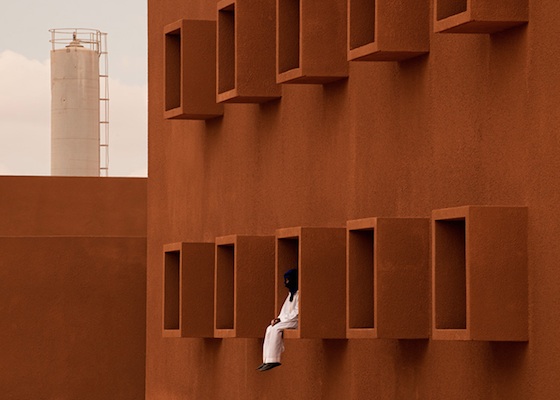
It’s never difficult to pick a Moroccan building out of the crowd and this beautiful new Guelmim Technology School is no exception. Bold and red like the nearby desert, the 6,833 square meter campus design by architects Saad El Kabbaj, Driss Kettani, and Mohamed Amine Siana comprises a contemporary twist on vernacular architecture. Hit the jump for a closer look at the building that acclaimed photographer Fernando Guerra captured in a series of breathtaking images.

Saudi Arabian Solar Chosen by South Africa

0

South Africa 50MW ACWA CSP

A Saudi solar project with gigantic storage could deliver solar at night in South Africa.

Saudi Arabia might not spring to mind as a nation creating the top CSP companies globally, but South Africa just selected as a “preferred bidder” to develop solar, a consortium led by the Kingdom’s own power and water group ACWA Power International.

South Africa’s new renewable energy policy is one of the most professionally discriminating in the world, according to SolarReserve SVP Tom Georgis. The nation’s first request for bids to meet its new renewable target was limited to just the top global solar PV and CSP companies able to muster the technical and financial resources to meet the contracts professionally.

This avoids the site “squatting” that wasted resources in California, where fly by night developers bought or rented key tracts of land with solar potential in the southwestern desert, despite having no possible way to produce energy – yet each proposal still had to get fully vetted to determine that anyway.

Eco-Friendly Bridal Gowns the Israeli Way By Liraz Rubbin

1

liraz rubbin, green bridal dress Tel Aviv, Israel

April 2012 saw Tel Aviv’s first Bridal Fashion Week, featuring fifty up and coming Israeli designers. Israel’s lucrative bridal fashion business is on the rise. And now it appears that Natalie Portman’s eco-friendly engagement ring or vegan shoes are not the only green, Israeli trendsetter snagging headlines.

Israeli designer Liraz Rubbin uses natural materials and prides herself on not letting any material go to waste. “We invested over 170 hours working only on making the train, because we used fabric leftovers,” Rubbin described one of her creations. “Maybe it does not pay off in terms of cost, but it certainly does in terms of the final product—for the environment, for me, and also for the client.”

World’s First Solar-Powered Transcontinental Flight in Pictures

green transportation, solar, clean tech, alternative energy, transcontinental flight, Solar Impulse, Morocco, Switzerland, SpainThe world watched with bated breath as André Borschberg and Bertrand Piccard respectively made their way from Switzerland to Spain and finally to Morocco in the sun-powered Solar Impulse. The first solar-powered transcontinental flight has come to a close but the journey towards a more sustainable method of global travel is only just beginning.

As Piccard, who founded the Solar Impulse project, reached the highest point of his flight over Morocco, the United Nations Environment Programme (UNEP) announced that he is this year’s recipient of the Champions of the Earth Laureate Award. Hit the jump to view a few images that chronicle the journey that began on May 24th, 2012 in Payerne Switzerland and ended last night at 23h30 in Rabat, Morocco, and watch a video of the plane’s first African landing.