Before promoting sustainability progress, companies must ensure their initiatives are genuine and measurable. Today’s audiences are increasingly skeptical of vague environmental claims, particularly as awareness of “greenwashing” has grown.
Sydney is best known for the Opera House and the Harbour Bridge. If you’re looking to enjoy dinner with views of these landmarks, here are some great options.
It's sea turtles which may in the end save islands in the Seychelles. They may also better help us understand climate change. Like rings on a tree, scientists have found a way to read sea turtle shells and how they are impacted by climate change tells a story.
For centuries, the Sámi shaman drum was one of the most powerful sacred objects in northern Europe, and one of the most feared by church and state. If ISIS looks bad to us today for its religious fundamentalism, Christians were just as fervent.
Before promoting sustainability progress, companies must ensure their initiatives are genuine and measurable. Today’s audiences are increasingly skeptical of vague environmental claims, particularly as awareness of “greenwashing” has grown.
Sydney is best known for the Opera House and the Harbour Bridge. If you’re looking to enjoy dinner with views of these landmarks, here are some great options.
It's sea turtles which may in the end save islands in the Seychelles. They may also better help us understand climate change. Like rings on a tree, scientists have found a way to read sea turtle shells and how they are impacted by climate change tells a story.
For centuries, the Sámi shaman drum was one of the most powerful sacred objects in northern Europe, and one of the most feared by church and state. If ISIS looks bad to us today for its religious fundamentalism, Christians were just as fervent.
Before promoting sustainability progress, companies must ensure their initiatives are genuine and measurable. Today’s audiences are increasingly skeptical of vague environmental claims, particularly as awareness of “greenwashing” has grown.
Sydney is best known for the Opera House and the Harbour Bridge. If you’re looking to enjoy dinner with views of these landmarks, here are some great options.
It's sea turtles which may in the end save islands in the Seychelles. They may also better help us understand climate change. Like rings on a tree, scientists have found a way to read sea turtle shells and how they are impacted by climate change tells a story.
For centuries, the Sámi shaman drum was one of the most powerful sacred objects in northern Europe, and one of the most feared by church and state. If ISIS looks bad to us today for its religious fundamentalism, Christians were just as fervent.
Before promoting sustainability progress, companies must ensure their initiatives are genuine and measurable. Today’s audiences are increasingly skeptical of vague environmental claims, particularly as awareness of “greenwashing” has grown.
Sydney is best known for the Opera House and the Harbour Bridge. If you’re looking to enjoy dinner with views of these landmarks, here are some great options.
It's sea turtles which may in the end save islands in the Seychelles. They may also better help us understand climate change. Like rings on a tree, scientists have found a way to read sea turtle shells and how they are impacted by climate change tells a story.
For centuries, the Sámi shaman drum was one of the most powerful sacred objects in northern Europe, and one of the most feared by church and state. If ISIS looks bad to us today for its religious fundamentalism, Christians were just as fervent.
Before promoting sustainability progress, companies must ensure their initiatives are genuine and measurable. Today’s audiences are increasingly skeptical of vague environmental claims, particularly as awareness of “greenwashing” has grown.
Sydney is best known for the Opera House and the Harbour Bridge. If you’re looking to enjoy dinner with views of these landmarks, here are some great options.
It's sea turtles which may in the end save islands in the Seychelles. They may also better help us understand climate change. Like rings on a tree, scientists have found a way to read sea turtle shells and how they are impacted by climate change tells a story.
For centuries, the Sámi shaman drum was one of the most powerful sacred objects in northern Europe, and one of the most feared by church and state. If ISIS looks bad to us today for its religious fundamentalism, Christians were just as fervent.
Before promoting sustainability progress, companies must ensure their initiatives are genuine and measurable. Today’s audiences are increasingly skeptical of vague environmental claims, particularly as awareness of “greenwashing” has grown.
Sydney is best known for the Opera House and the Harbour Bridge. If you’re looking to enjoy dinner with views of these landmarks, here are some great options.
It's sea turtles which may in the end save islands in the Seychelles. They may also better help us understand climate change. Like rings on a tree, scientists have found a way to read sea turtle shells and how they are impacted by climate change tells a story.
For centuries, the Sámi shaman drum was one of the most powerful sacred objects in northern Europe, and one of the most feared by church and state. If ISIS looks bad to us today for its religious fundamentalism, Christians were just as fervent.
Before promoting sustainability progress, companies must ensure their initiatives are genuine and measurable. Today’s audiences are increasingly skeptical of vague environmental claims, particularly as awareness of “greenwashing” has grown.
Sydney is best known for the Opera House and the Harbour Bridge. If you’re looking to enjoy dinner with views of these landmarks, here are some great options.
It's sea turtles which may in the end save islands in the Seychelles. They may also better help us understand climate change. Like rings on a tree, scientists have found a way to read sea turtle shells and how they are impacted by climate change tells a story.
For centuries, the Sámi shaman drum was one of the most powerful sacred objects in northern Europe, and one of the most feared by church and state. If ISIS looks bad to us today for its religious fundamentalism, Christians were just as fervent.
Before promoting sustainability progress, companies must ensure their initiatives are genuine and measurable. Today’s audiences are increasingly skeptical of vague environmental claims, particularly as awareness of “greenwashing” has grown.
Sydney is best known for the Opera House and the Harbour Bridge. If you’re looking to enjoy dinner with views of these landmarks, here are some great options.
It's sea turtles which may in the end save islands in the Seychelles. They may also better help us understand climate change. Like rings on a tree, scientists have found a way to read sea turtle shells and how they are impacted by climate change tells a story.
For centuries, the Sámi shaman drum was one of the most powerful sacred objects in northern Europe, and one of the most feared by church and state. If ISIS looks bad to us today for its religious fundamentalism, Christians were just as fervent.
Let down by world leaders (again) at Rio+20, green Arab researcher Mohamed Abdel Raouf says it’s time for a less top-down approach to solutions
It’s been over a fortnight since the Rio+20 summit which was supposed to look at sustainable development (and in later years ‘sustained growth’ – something which is very different) whimpered to an end. The was so little progress at the climate summit that I feel sorry for those journalists who attended and were asked to write up some ‘news’. Nobody thought it was going to be as ground-breaking as the initial summit twenty years ago which saw world leaders sign up to protect biodiversity and champion sustainability but the outcome was more depressing than many hoped.
It seems climate change has fallen spectacularly off the world agenda and, with it, our chances of an international agreement with the grit to steer the planet back onto the right track. I caught up with Mohamed Abdel Raouf, a green researcher based in the Middle East after a busy and frustrating time at the Rio+20 conference to get his take on events.
There’s just one week left to win a beautiful organic cotton dress from MuMu Organic and help Green Prophet get to 6,000 likes on Facebook. We have a ways to go, so we definitely need your help. Here are three easy steps you need to take to stand a chance to win the dress of your choice from Greece’s first organic clothing line.
i. First, tell us in the comment section at the end of this post why you think that buying organic clothing made in accordance with fair-trade principles is so important.
ii. “Like” us here on Facebook and help us get to 6,000 likes by July 15th. (If you already like us, be sure to comment and share this post with friends.)
We will announce the winner of the dress on July 20th. And the first five people who commented on our first post will be notified at the same time how to claim their 50% discount on MuMu Organic’s e-store. Don’t delay, the competition ends on July 15th.
Rich spices and heavy wintertime comfort food: this is what often springs to mind when people think of recipes from the Middle East and North Africa. But with temperatures in parts of the region rising to 50 degrees Celsius in the shade, who wants to eat rich dishes that end in a food coma? Not to worry, regardless of what the mercury dials in, people here like to eat, so there are numerous healthy and heartwarming summer dishes to try as well. If you want to expand your culinary horizons beyond such staples as baba ghanoush, hummus, and tehina, check out these five less well-known recipes made with signature Middle Eastern flavors.
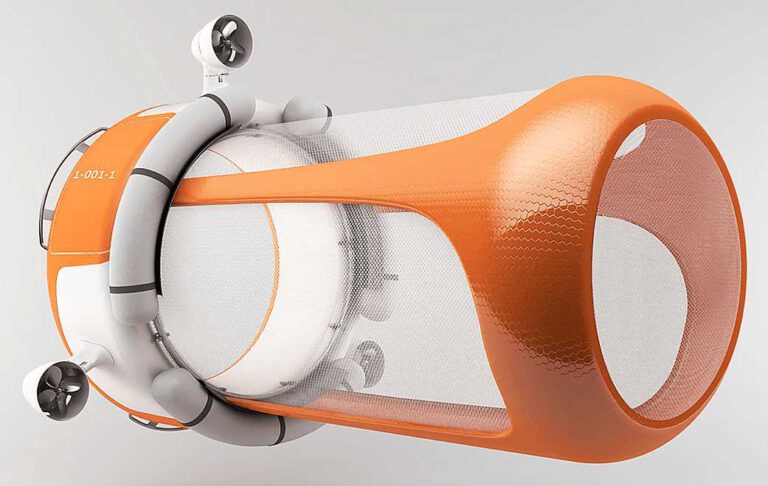
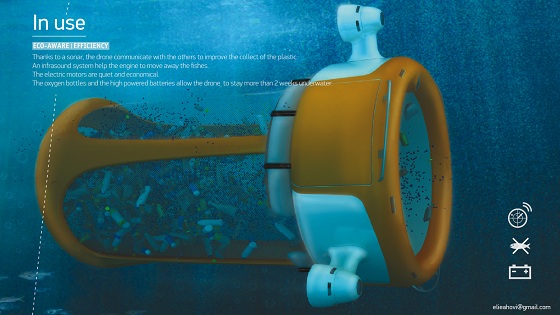
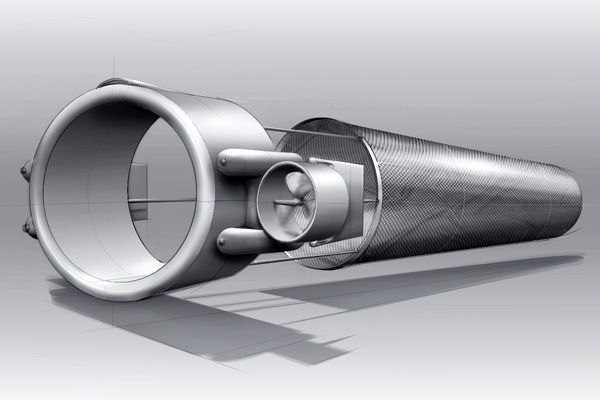
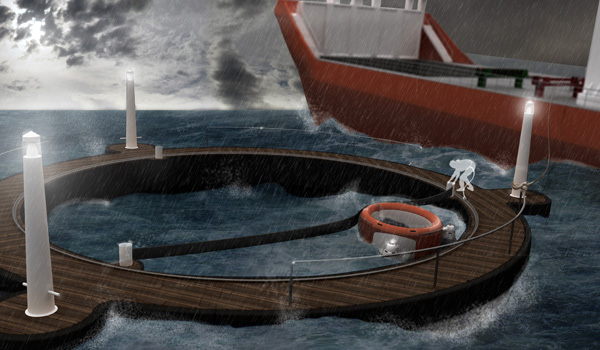
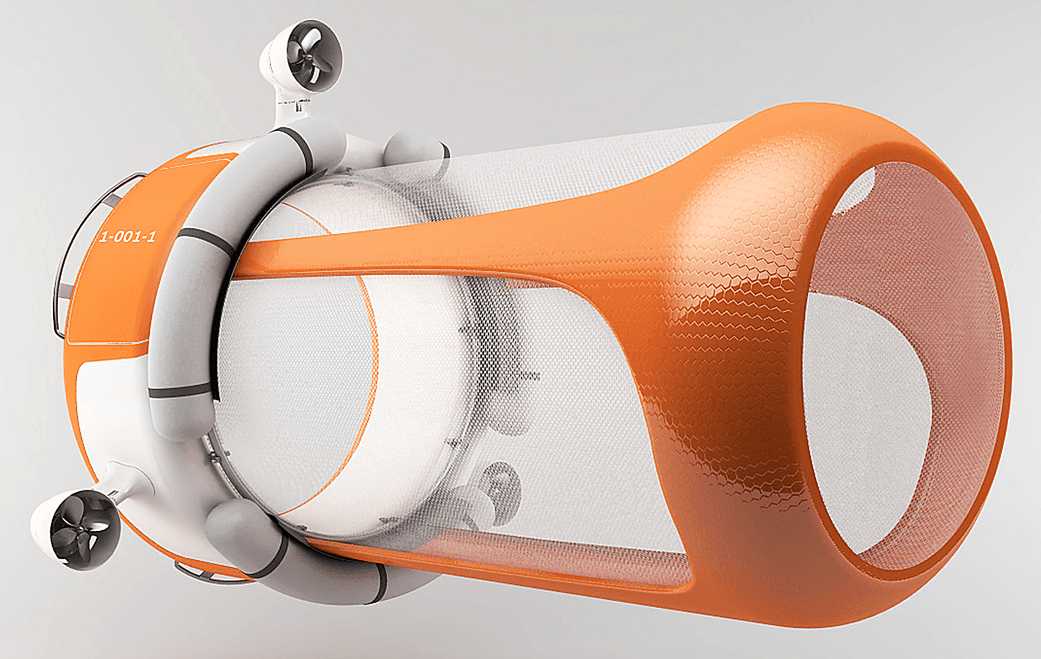
Marine drone, by Elie Ahovi Industrial design, cleans the sea of plastic
This Marine Drone could clean up our dirty work. Can a wealthy Saudi fund this prototype to clean our seas? Fourteen billion pounds of garbage, 90 percent of which is plastic, is dumped into the ocean every year and there is no sign of plastic waste reducing – in fact plastic waste has been increasing about 10% each year for the past 20 years.
In the Red Sea, Arabian Sea, Gulf of Oman, Persian Gulf and the Gulf of Aden, dumping untreated sewage and Industrial waste directly into the sea is unfortunately an extensive practice, but an additional recent threat is the increasing number of landfill sites located near the coast which are resulting in considerable plastic pollution near coasts and coral reefs. One solution, the Marine Drone Elie Ahovi Industrial Design, could clean up our waste.
The drone is basically a propelled oversized pool net with special sensors that keep aquatic animals away and high-powered batteries that allows it to stay in the water for more than 2 weeks. Not much has been discussed regarding how much plastic each drone would be able to collect, the costs involved and whether the drone is capable of capturing the insidious nurdles which are the greatest problem.
Ten percent of all plastic ends up in the ocean, and has resulted in the largest landfill in the world: the Great Pacific Garbage Patch which is estimated to be twice the size of France. The Mediterranean is not spared from floating plastic garbage islands. Seventy percent of this ever-accumulating plastic sinks to the sea floor. In 2006, The United Nations Environment Program estimated that every square mile of ocean hosts 46,000 pieces of floating plastic and in some areas, the amount of plastic outweighs the amount of plankton by a ratio of six to one.
Americans buy over 29 million bottles of water every year, this uses 17 million barrels of crude oil annually, which would be enough fuel to keep 1 million cars on the road for one year. Only 13% of those bottles are recycled. The United Arab Emirates has the world’s largest per-capita ecological footprint; it currently consumes 25% of global plastic bags.
Aside from being a quantitative disaster in our sea, plastic has terrible properties. Once in the ocean there is no way plastic can completely biodegrade. Instead, plastic photodegrades breaking into smaller and smaller pieces of plastic called mermaid tears or nurdles. These tiny plastic particles can get sucked up by filter feeders and are ingested by marine animals which can poison them and lead to death. Nurdles also tend to soak up toxic chemicals which result in biomagnification a process whereby persistent organic pollutants and concentration of toxins increase as we move up trophic levels.
The issue of plastic waste in our sea cannot be stressed enough, the figures are shocking.
But if this prospective Marine Drone project is eventually engineered who would pay to clean up the sea? The sea is a public good and water pollution is the result of several countries dumping so my question is: Are there the right incentives for countries in the Middle East to decide to invest in such ideas and maintain the common sea clean?
It’s mission accomplished. The Solar Impulse, the world’s longest solar powered flight has landed back home in Madrid, Spain. The flight took 17 hours from Rabat, Morocco. The plane’s maiden voyage was from Spain to Morocco, proving that a solar-powered plane could fly both day and night. Next, say its owners Swiss pilots Bertrand Piccard and André Borschberg, is a flight around the world.
In order to address this issue, the wineries of the Golan region in Israel recently teamed up with the Industrial Design Department at the Holon Institute of Technology (HIT) to challenge young designers to find ways to upcycle used oak wine barrels. Assisted by Ori Ben Zvi of Tel Aviv’s upcycling Studio Ubico, the designers came up with a bunch of creative ways to use the wooden barrels, prototypes of which will be exhibited this week in Tel Aviv.
Toni Polo, founder of Radio Groovalizacion explains how music and migration are shaping contemporary culture in the Middle East and North Arfica.
As an avid “world music” listener – although I don’t like this term but I still haven’t found a better one- it is always an immense pleasure to discover hidden musical gems. One organization that feeds you with just these jewels is radio Groovalizacion. Greenprophet interviews founder Toni Polo to find out why and how radio Groovalization and its music is a successful medium through which people from the Middle East and North Africa can express, communicate and continue traditions.
Convinced that art and culture can raise social awareness, Ton Polo has been coordinating various intercultural schemes since 2006, either as a film director, radio journalist, DJ or cultural manager of his project “Migratory Music ”. He has been involved in various activities in relation with music, immigration, identities and integration collaborating with several NGOs and associations in Argentina, Spain, Senegal, Morocco, Turkey, Portugal and Mali.
Emigration from the Middle East and North Africa (MENA) to Europe has been an important political and economic topic in the past ten to fifteen years- in 2010 the stock of documented migrants was 18.1 million or 5.3% of the MENA region population. However little is discussed on the cultural, traditional and artistic impact migration is having on the country of origin and departure.
Japan is seeking Israeli clean tech experts to help rebuild Fukushima, which was devastated by both an earthquake and a tsunami last year.
The Japanese company in charge of rehabilitation recently sent a delegation to Israel looking for experts and entrepreneurs, especially in the fields of water management and recycling. According to the company’s liaison in Israel, Lior Daeri, Israeli groups that participate will receive tax breaks worth NIS 50 million (roughly $12.8 million dollars).
Vivian Salameh, a Christian, was assistant manager of corporate operations at the Jordan Dubai Islamic Bank since 2010. She told The National: “We are not in Iran, we are in Jordan, and we must continue to enjoy personal and religious freedoms as stipulated by our constitution. I respect the hijab (headscarf), but it represents Muslim women and I’m Christian.”
Christians make up nearly 4% of Jordan’s 6 million people.
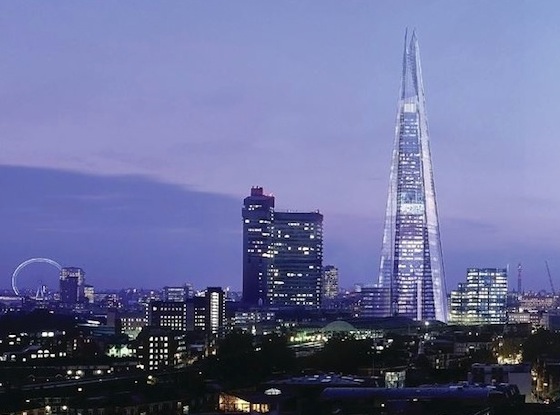
When Britain’s own financing institutions staggered under the weight of the 2008 economic crisis, a Qatari consortium stepped in to finance The Shard in London- it’s a sleek pyramidal skyscraper designed by Italian starchitect Renzo Piano.
Officially inaugurated amid great pomp and circumstance, the building is small when compared to Dubai’s 2,717 foot Burj Al-Khalifa, but at 1,016 feet, it dwarfs the London Bridge Quarter in which it was built. But far from being a monument to Britain, the latest tallest building in western Europe is 95% owned by the government of Qatar.
Khat addiction in Yemen has reached epic proportions and not only among adults. A recent report released by the World Health Organization shows that up to 20% of the nation’s children under twelve are also addicted to chewing the bitter stems of the Catha edulis plant, which produces a mild high akin to the effects of caffeine.
Whereas drinking khat juice is the new hip thing to do in Tel Aviv, in Yemen the epidemic has more serious consequences among the youth. Not only do children suffer from pale complexions and weak bones, but they also skip school in order to stay home with their khat-chewing families. This, warn commentators, could produce several generations of illiterate children.
A building in the Lower Galilee which showcases traditional architectural Arab styles with ecological benefits demonstrates that modern concerns can be resolved with ancient techniques
One of the most important things we need to do to tackle climate change is reduce the amount of energy we use. One way to do this is ensure buildings are better regulated so we don’t have to spend lots of money and energy either heating or cooling our homes and offices. However, this doesn’t mean we have to jump on the latest energy-efficiency technologies.
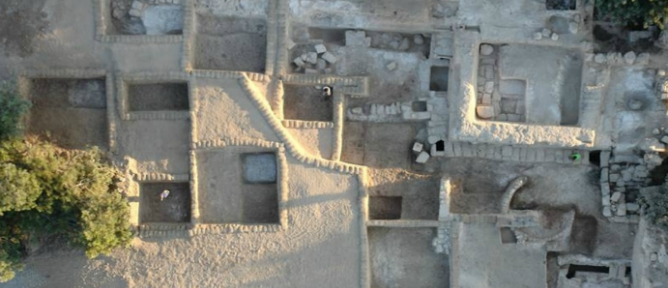
Ramat Rachel is an ongoing archeological dig on the southern outskirts of Jerusalem. A 2,500-year-old garden at the site, probably built by local Judeans, holds many secrets about the past waiting to be uncovered. An elaborate network of irrigation channels made it clear that this was a garden, but what was planted in it has been a big mystery.
New research by Tel Aviv University into ancient pollen found embedded in plaster suggests something very exciting for Jewish and natural historians of the region. Among the imported species of trees and plants determined by pollen analysis to have grown in the garden is the citron tree, known also as the etrog. According to the researchers, this pollen is evidence for the first cultivation of the citron tree, which is not native to Israel.

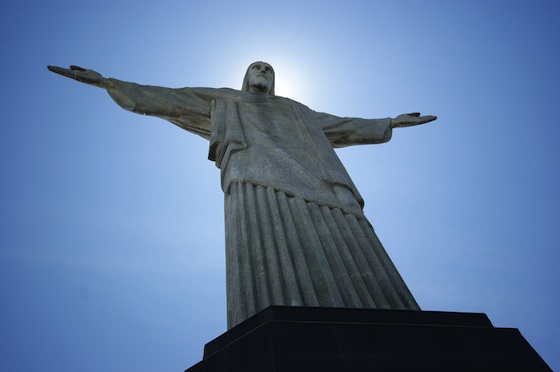 Let down by world leaders (again) at Rio+20, green Arab researcher Mohamed Abdel Raouf says it’s time for a less top-down approach to solutions