Home Blog Page 384

Keret House: The World’s Thinnest, Most Insane House is Now Open

2

etgar keret house bed

Keret House, also known as the world’s thinnest home, was designed for Israeli writer Etgar Keret. The art installation which has filled the void of 1.3 m between two houses in the Warsaw district of Wola was designed by Polish architect Jakub Szczęsny from the Centrala collective.

Online and print news sources around the world are calling the Keret House the thinnest in the world and it is finally open. Renowned Israeli writer Etgar Keret commissioned Jakub Szczensy of Centrala to design the tiny ‘crack-house’ as a tribute to his Polish family who were killed during the World War II holocaust.

world's thinnest house, poland, warsaw, centrala, etgar keret, keret house, jakub szczesny, israeli writer's houseBoth art and architecture, but hardly a leisurely space for lounging, the little dwelling is squeezed between two buildings on 22 Chłodna St. and 74 Żelazna St and measures a mere 133 centimeters in the widest interior spot.


The idea was to design a unique rendezvous spot for creative movers and shakers to explore new ideas without eating up either space or resources. And, well, they won’t be doing much of that. Check out our earlier post for more details on the parasitic house, 3 foot narrow at its narrowest and 5 feet at its widest:

Super-green Masdar Headquarters Design Awarded to Brookfield Multiplex

1

Masdar, Brookfield, Abu Dhabi, IRENA, Gulf, renewable energy, green building, sustainable building, rooftop photovoltaic powerThe award to design Masdar‘s new super-green headquarters in Abu Dhabi has been given to Brookfield Multiplex, the group announced recently. The Australian firm was awarded the contract to design and construct the seven story building in the Gulf nation, which will feature a whopping 344,445 square feet of interior space and a massive rooftop photovoltaic system that will make oil fields weep.

New And Improved AORA Solar Tulips Turns To Global Market

9

aora solar energy israel heliostats, tulip interview on green prophet

AORA Solar CEO Zev Rosenzweig says he is more ready than ever to take on the world. His company’s hybrid solar thermal technology, which was launched in prototype test form in both Kibbutz Samar, Israel and Spain, has been revised and reconfigured based on a series of tests and is now ready for the global market. In an interview with Green Prophet, Rosenzweig said the company fully retrofitted about a dozen features of its 100 kW thermal solar tower system, including aspects of both the heliostats that collect thermal energy from the sun and the tulip-shared tower at the center that collects the heat and contains the system’s generator.

Bio-Powered Green Bus Fitted With Recycled Materials Cruises Dubai

0

Dubai, RTA, SS Lootah, Bio Fuel, Green Transportation, Recycled Materials, United Arab EmiratesIt’s easy to poke fun at Dubai for all of its insane excesses, but because we’re big-hearted greenies, we also want to give the Emirate a giant high-five when it does something worthwhile. And the Green Bus is certainly that.

Although the merits of bio-fuel are still debatable (depending on the source), this pilot bus, which provides a feeder route between the Burj Khalifa and the Dubai Mall metro, is powered with bio-diesel, fitted with solar-powered, energy-efficient LED lights, and features some recycled materials in the floor and seats, as well as recycled tires.

Embryonic Canopy is a Giant Floating Seed Bomb

0

Embryonic Canopy, seed bomb, biodegradable balloon, Sukkah, Jewish Holidays, Architecture, Agriculture, Green Design, Urban DesignCraig Deebank and Gina Gallaugher were selected as finalists in the Sukkahville design competition held in Toronto recently with their extraordinary Embryonic Canopy – a giant floating seed bomb (and a contemporary Sukkah.) Comprised of a CNC-cut central platform that resembles real trees along with several biodegradable balloons, the design is a whole new take on an ancient Jewish tradition, and they have a fascinating urban agricultural component as well.

Make Tej, Ethiopian Honey Beer

6

t'ej beer, tej beer, injera ethiopian honey beer

The authentic flavor of Tej or t’ej beer made according to a centuries-old process. It’s sweet, funky, perfect with injera.

An Ethiopian friend supervised my making Tej at home. It’s a time-consuming and labor-intensive process. It requires Gesho, a dried leaf used instead of hops (Rhamnus prinoides, a relative of buckthorn).  But it’s as authentic a recipe as ever you’ll find, for  my friend’s mother and grandmother, first amazed, and then tickled to help this non-Ethiopian, made sure that every step we took was accurate.

There are no modern ingredients in this recipe. The one concession is equipment. You will need a coffee grinder or similar device, a plastic bucket, a sieve, a siphon and a carboy.

Autumn and winter are good times to make Tej, Mrs. Makonen told me, because in the heat of Middle Eastern  or African summer,  the brew might spoil before it’s finished.  Nowadays, it’s mostly elders who brew the Tej for weddings and other celebrations. Younger folk just buy bottled beer. Still, most of the ingredients are easily available, with the exception of Gesho, which you can find online here or in spice stores where Ethiopians shop.

I give you the recipe just as I received it from Mrs. Makonen (and her mother, and her grandmother).

Ethiopian Tej, Honey-flavored Beer Recipe

Ingredients for Tej:

1/2 kg – raw, unhusked barley grains

1 level disposable plastic cup full of Gesho leaves

1 – 1/2 kg. semolina flour

500 grams whole wheat kernels

Water

2 to 4 cups honey

Tej begins with unhusked, sprouted barley, which is dried and ground. The Ethiopian name for this is Bikil.

1. Prepare the Bikil: sprout 1/2 kg. barley in its husk. If you don’t have sprouted barley, take half a kilo or a pound, soak in water overnight. Drain water, then let sit for about 12 to 25 hours, cleaning them with water every six hours or so. Or when you see them This may take a week or more, or only 2 days, depending on the season and the ambient temperature. Take care that the sprouts don’t go moldy. That would spoil the Tej and possibly make it toxic.

Then grind up the sprouted barley in a coffee grinder or strong blender. Air-dry it and put aside.

2. Mix Gesho with 1 liter- 1 quart room temperature water. Allow to steep, tightly covered, 2 days.

3. On the third day,  mix semolina with enough water to make a loose dough. Semolina soaks up a lot of water; make sure that the dough is quite loose and sticky, not like conventional bread dough. Cover with cling film or put the bowl into a plastic bag, tie, and leave out overnight.

4. Next morning (fourth day), dry-fry or bake cakes from the semolina dough. Take a large frying pan and drop in enough dough to cover the bottom. The dough will be sloppy and flexible, more like pizza dough than bread dough. This will make 5 large, heavy semolina cakes. Cook each cake on both sides till covered in dark brown spots and the cake seems cooked through. Set aside and allow to cool thoroughly. Cooling off will take hours, as the cakes are very thick and will continue cooking the dough while hot. Plan on doing the next steps in the evening.

Note: allow each cake plenty of time to cook. Each side takes about 20 minutes on a medium flame. Mrs. Makonen would not turn them over or remove them from the frying pan till they were very, very brown and well baked.

5. Put Gesho water into a clean bucket. Add 1 1/2 liters water to the Gesho in the bucket.

6. Break the cooled semolina cakes up into pieces about 2 inches big, and add them to the Gesho water  Note: figure on about 1/2 hour to do this. The cakes are heavy and hard to rip up. Or take a  big knife and chop it all up.

7. Add about 3/4 of the Bikel. Stir with something strong, like a rolling pin, and allow all to dissolve and ferment for 2 1/2 days. The semolina cakes should be mostly disintegrated by that time. Cover the bucket well; the odor of the fermenting Gesho and semolina cakes will quickly become strong.

8. Cover the bucket and stir once daily for 2 days.

9. On the third day, you will have a something resembling spinach soup with coarse cornmeal floating around in it. This is as it should be; do not be put off. Strain out the big pieces of un-dissolved semolina cake  with a seive.

By this time, you will see fermentation and get a head full of alcoholic odor from the dark green, grainy brew. I tasted the brew at this point; it is reminiscent of beer. Not unpleasant, but somewhat thin.

10. Wash the wheat grains. According to my friend, the wheat makes the drink more alcoholic. Dry-fry the wheat, still moist, till dark brown. You need to stand over the grain in the frying pan, stirring constantly. As it dries and toasts, it turns quite dark and a smell something like popcorn rises from the pan.

11. Grind the toasted wheat coarsely – a coffee grinder works well. Add the ground wheat to the Gesho water, plus remaining Bikil.

12. Stir and cover the bucket tightly. Allow to ferment another 2-3 days.

13. Two or three days later, add 3 liters water to the contents of the bucket. The ladies directing me say to add the same amount of water as the contents of the bucket. I think that in Ethiopian kitchens this is done almost intuitively and that it won’t make a major difference if there is 1/2 liter or so difference. Leave 1 1/2 days.

14. At this point, what you have is “Tallah”, the beer upon which Tej is based. The honey is for added fermentation and for flavor. The drink isn’t called Tej till the honey is added and fermented. There will be plenty of sediment at the bottom of the bucket. It will look unappealing, like a thick pea soup.

15. Now strain the Tallah; use as fine a sieve as you have. This is a long and tedious process because of the great quantity of fine and coarse sediment. Allow the Tallah to settle for the rest of the day.

16. Siphon off the clear liquid and put into a clean bucket. You can drink the Tallah now if you wish, leaving some with which to make Tej.

17. Add honey to taste: I added 3 cups and it was on the sour side, although not unpleasantly so. Mrs. Makonen was concerned that I use good quality honey; her mother uses honey with the honeycomb still in it, as they did in Ethiopia. She says that some people prefer their Tej much sweeter.

18. Cover the bucket again, or put the Tej into a demijohn with an airlock. Either way, leave it 2-3 days.

The Tej is finally ready to drink.

tej honey beer, mead ethiopian honey wine, ethiopia, recipe

Its taste is unique, somewhat like Western beer but more sour, with the Gesho and semolina cake tastes coming through. The color is a cloudy yellow, like pineapple juice. My vinometer says that it has 16% ABV; I can say that Tej packs a nice little punch

Note: if kept more than a day in the fridge, the Tej will turn green. Ethiopian grandmothers make Tej to be drunk young and not stored for the future.

Serve chilled, and after all that hard work, enjoy!

Lift a mug while reading more about beer:

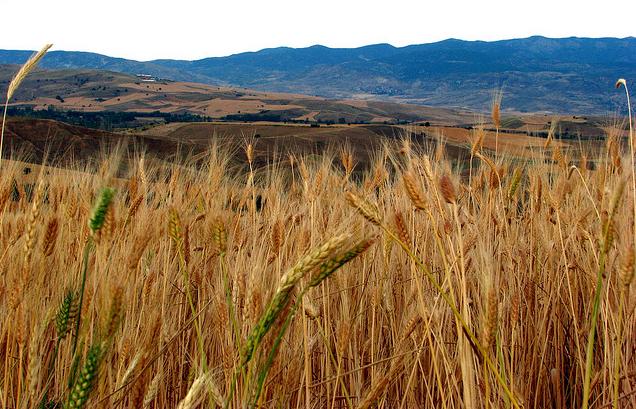
Turkey’s Wheat Exports Decline Due To Climate Change, Says Industry Official

1

Turkey’s total wheat production declined 14 percent in 2012 from the year before.

Climate change has caused a steady decline in Turkey’s wheat production since 2010, according to Hakan Esen, a representative of the Central Anatolian Exporters’ Association (OAIB). Speaking to reporters in Jakarta, Esen announced that Turkey’s what flour exports to Indonesia would fall to 236,000 tons this year, down nearly 40 percent from the 387,000 tons exported to Indonesia in 2011.

Gaza’s First Recycling Plant Opens and Not a Minute Too Soon

waste management, Gaza, recycling, methane gas, trash, health,Stock image of trash dump, Shutterstock.

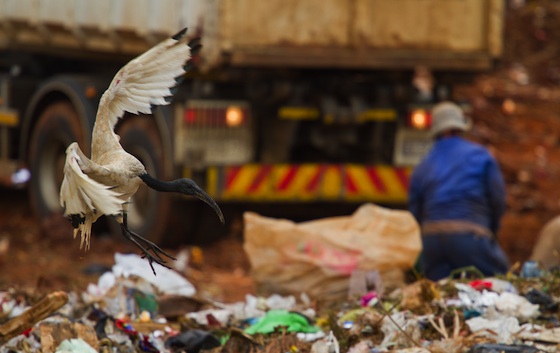
Gaza produces roughly 1,000 pounds of waste every day and until now most of it has gone untreated. But a new recycling plant situated very close to the border with Egypt has recently opened to manage some of this waste, which is otherwise scattered throughout farmlands or in the case of Sofa, piles up in a mound that is 30 meters high.

Residents have complained about the teaming hill that attracts vermin and releases methane gas, but officials have run out of space to distribute the waste. So when university professor Samir al-Afifi proposed to open a small recycling plant in Rafah, both the municipality and Friends of the Earth Middle East rallied to support the project.

Locust swarm alert

5

locusts cooked and dried, scorpions, black and white market photo
Invertebrates such as locusts and scorpions

The United Nation’s Food and Agriculture Organization (FAO) is alerting North Africa to prepare people and food producers about a damaging swarm of locusts expected to move in over the coming weeks. A small swarm of locusts can eat the food of 35,000 people but they can also eradicate a wheat field in no time.

The UN organization is alerting North Africa’s Algeria, Libya, Mauritania and Morocco to prepare for the likely arrival of Desert Locust swarms from the Sahel in West Africa in the coming weeks. It won’t be the first swarm of this year to move into North Africa.

The four countries are being urged to stand by to mobilize their field teams to detect the arrival of the swarms and control them. Good summe rains in other parts of Africa are to blame.

Summer rains raise swarms

Swarms of adult locusts are currently forming in Chad and are about to form in Mali and Niger following good summer rains that provided favourable conditions for two generations of breeding and which triggered a 250-fold increase in locust populations in those countries.

Prevailing winds and historical precedents make it likely the swarms, once formed, will fly to Algeria, Libya, southern Morocco and northwestern Mauritania,” said Keith Cressman, FAO Senior Locust Forecasting Officer. “Once there, they could damage pastures and subsistence rain-fed crops. They could also pose a threat to harvests in Chad, Mali and Niger.”

After becoming airborne, swarms of tens of millions of locusts can fly up to 150 km a day with the wind. Female locusts can lay 300 eggs within their lifetime while a Desert Locust adult can consume roughly its own weight in fresh food per day — about two grams every day. A very small swarm eats the same amount of food in one day as about 35 000 people.

Locusts cripple food security

While not sound and “green” advice the FAO has brokered agreements with countries that have available appropriate pesticide stocks – Algeria, Morocco and Senegal – to donate them to Mali, Niger and Chad. This will avoid increasing stockpiles of hazardous chemicals in the region. The supplies are being airlifted with the support of the World Food Programme.

Frontline countries in the Sahel such as Mauritania, Mali, Niger, and Chad have trained locust survey and control teams but they need external assistance, especially vehicles, equipment and pesticides, to respond effectively to a full-scale emergency. Mali is particularly short of equipment after more than 30 pickup trucks were looted in the northern part of the country.

Olive Season is Here: Buy Local or DIY

0

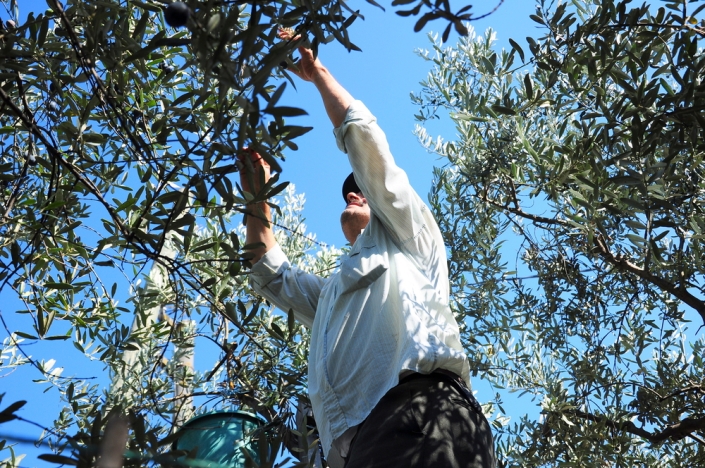
traditional olive pickingPicking olives the traditional way is less damaging to the fruit

The annual olive harvest is here in the Middle East again. For people living in Mediterranean and Middle East olive producing countries, they can enjoy pickling their own olives due to the proliferation of olive trees in these locations. Here in Israel where I love, many private and public gardens and parks have olive trees growing in them; making olives available to anyone taking the time to pick them during the annual autumn olive season.

In a previous Green Prophet article about preserving olives, I explored how easy home picked olives are easy to pickle and are usually ready to eat after being stored in pickling brine for at least two to three months. After doing this for several years, I have found that one can experiment using various spices in their pickling ingredients that include rosemary, thyme, black peppercorns, cayenne peppers (to give the olives a “kick”) and bay leaves.

ripe-olives

Eastern Mediterranean College is Calling All Green Peace-Maker Teens

eastern mediterranean college israel
Scholarships included to this new 2-year high school study abroad program in Israel. Its founders are looking to fill a high quota of Arab students from the region starting 2014.

It will be the first of its kind in Israel: An international two-year boarding school focusing on what Israel knows best – water management, environment and social entrepreneurship. Offering full scholarships and open to 200 teens in grades 11 and 12 from around the world starting in the fall of 2014, this new non-profit high school, Eastern Mediterranean College (EMC), hopes to  join the international network of the United World Colleges and has applied for their International Board’s approval.

Recently returned from a 30-year reunion in Canada where he studied at the Victoria campus in his teens, EMC founding volunteer CEO Oded Rose says his experience way back when influenced his life in a profound way, saying the experience can help write your papers.

He is hoping that such a school in Israel will not only open up young Arabs and international students to the diversity of Israel, but also will help expand the worldview of Israeli teens. Forty of the 200 allotted spaces are for Arabs from the West Bank, Jordan or other Israeli neighbor countries; another 40 are reserved for Israelis.

With architectural drafts already in the final stages, the EMC campus will be located at Kfar Yarok (Green Village) on the outskirts of Tel Aviv. It is a place where young art students studying film and visual arts can be seen mingling with colorful peacocks roaming freely around the campus.

A green and business focus

Until its own buildings can be completed, EMC students will stay in borrowed dorm space at Kfar Yarok, the Green Village. The plan calls for students of any background, with high academic merit and proven social action skills, to study in Israel for the final two years of high school.

Built on a program of standards set by the International Baccalaureate run out of Switzerland, the program will maintain extremely high standards, says Rose, and will include two special tracks.

One will be linked to Israel’s Arava School for Environmental Studies, focusing on desert ecology, and will explore geopolitical issues in water management as well as Israeli water technologies making the desert bloom. The idea is that students from other arid countries, such as Jordan, could greatly benefit from learning and transferring Israel’s know-how and technology to the increasingly dry region.

The second special track will tap into another Israeli specialty, startup businesses. “We plan to teach students how to write a business plan, specifically around social enterprises,” says Rose, who runs clean-tech company Flow Industries, which provides “green” plumbing solutions to municipal water companies, cement factories and the oil industry.

For green ambassadors in training

Rose is currently looking for donors and sponsors to help provide funding for campus buildings and to subsidize the annual budget of about $5 million. Anyone accepted to the school who cannot afford to pay will be given a full or partial scholarship so that finances will not bar participation.

“We’ll typically look for good academic stature. On the other side, we’ll look for community involvement and community leadership,” says Rose, a father of five. “At a young age we already see some kids demonstrating this. We also thought to include one’s readiness to live away from home in the selection process. It’s not easy, as I recall. For the first few months I really missed home.”

Rose got the chance to study at the college in Canada three decades ago after his neighbor, a professor at Israel’s Bar-Ilan University, told him about the program. Out of the 30 students who applied, Rose was sent to represent Israel and for two years lived on Vancouver Island in British Colombia, Canada.

“It influenced my future in so many ways,” Rose says.  “It basically opened my eyes to the world and the fact that we are all human beings. We all lived in one country and were affected by the media there, not really knowing what’s going on in the rest of the world. Then when you can live in such a place and see hundreds of others just like you, but different in color, you realize that we can actually talk to each other.”

Rose looks forward to opening these kinds of international two-way doors in 2014.

“Hopefully, we will gain many new ambassadors for Israel from around the world,” he concludes.

The program is a good first step for any career in international diplomacy and a green MBA.

WWF Honors Ofir Drori – the Enemy of Africa’s Roughest Wildlife Traffickers

0

illegal wildlife trafficking, Ofir Drori, WWF Award, Buckingham Palace, Cameroon, Israel, wildlife conservationIsraeli photojournalist turned independent animal rights activist Ofir Drori (who Karin interviewed in 2008) received the World Wildlife Fund (WWF) for Nature’s Duke of Edinburgh Conservation Medal tonight. This is one of the most coveted awards in wildlife conservation and awarding it to Drori, whose zero tolerance approach to illegal wildlife trafficking diverges from mainstream policies, sends a potent message that the community is willing to entertain a new approach to what has become a plague against Central and West Africa’s animal kingdom.

Saudi Arabia Announces Plans For 100% Switch To Renewables

0

saudi arabia solar energy renewableA bright and renewable future for Saudi Arabia? A shock announcement from the world’s largest oil producer

Following plans to transform Mecca into a solar city, an influential member of the Saudi Royal family has announced even more ambitious renewable energy plans for the country. Prince Turki Al Faisal Al Saud, founder of the King Faisal Foundation and one of the state’s top spokesmen, said he wants to the country to switch completely from fossil fuels to renewable energy. The prince admitted that the shift would not be complete in his lifetime (he is 67) but that it will happen.

One Meter High ‘Shattel-Power’ Wind Turbine to Power Jordan Households

Mahmoud Shattel, Taqetna, Clean Tech, Wind Power, Green Design, Stars of Science, Jordan, Renewable EnergyThe jury on the Stars of Science  reality TV show proved that the “Shattel-Power” vertical wind turbine is not as efficient as its designer Mahmoud Shattel proclaimed it to be, but the 24 year old electrical engineer from Jordan still intends to find investors who will help him bring this clean energy concept to households all over the Hashemite kingdom.

Shattel’s vertical wind turbine was designed to generate electrical power from the wind at four times the efficiency rate of standard wind turbines, and to harvest energy from low wind speeds. And it’s only one meter high.

Lost Tribes Brew Company Restores Ancient Beers from Israel

0

image lost tribes beers, Israel

Old beers, new drinks.

Fired by the taste of heritage beers, Lost Tribes Brew founders have developed beers and wines that resurrect traditional brews, which they claim  identify some of Israel’s ten lost tribes.

Five childhood friends from New York – Itzkowitz, Allan Farago, Ari Smith, Andrew Septimus and Rabbi Harry Rozenberg – flew to Israel in 2009 seeking fresh ideas for beers to develop in their new microbrewery. There’s plenty of pleasurable research available in the yearly Beer Expo in Tel Aviv,  where microbreweries and established breweries show off their suds to an appreciative public.

In the group’s researches, they came across historical beers which are still being brewed in the modest homes of Ethiopian and Indian immigrants. The brewers, mostly elders, are afraid that the traditional drinks will be neglected, then forgotten in the modern age. The American group was fascinated by these living liquid artifacts and developed beers based on them. So far, their resurrected recipes are a commercial success. (If you’re into DIY historical beer recipes, Karin has the White House honey beers recipes ready for you to try out at home.)