Home Blog Page 377

Omani Man Turns Palm Leaf Waste into Paper

Oman, innovation, palm leaf, waste to paper, green design, clean tech, sustainable materialsLacking the necessary raw materials has been a major barrier to any kind of paper industry in Oman, but that could change if a young inventor commercializes his patented palm leaf waste to paper technology. A recent graduate of Sultan Qaboos University, Mustafa Salim Abdullah Barami first learned how to use the palm leaf waste as pulp for paper while he was working on his Chemistry and Petrochemicals degree.

Barami has since gone on to win a host of accolades for the patented – and carefully-guarded – process. Now he is working on developing his entrepreneurial skills so that he will be well-poised to take the next step towards scaled production.

Zalul’s App “Tests” the Swimming Water in Israel

maya jacobs zalul, pollution water israel, waze app
Thanks to a network of Israeli divers, and the Health Ministry, Israeli non-profit environmental association Zalul is now keeping the public up to date on the condition of the country’s waterways. By commissioning road-navigation app developer Waze to add a water-pollution application to its popular smart phone service, the founders of Zalul (which means clear in Hebrew) hope to promote safer swimming in addition to pressure on polluters.

While Israel is primarily an arid country, it boasts an arterial network of rivers, lakes and streams. Major rivers such as the Alexander, Yarkon, Yarmuk and Kishon are unfit for swimming, says Maya Jacobs, executive director of Zalul.

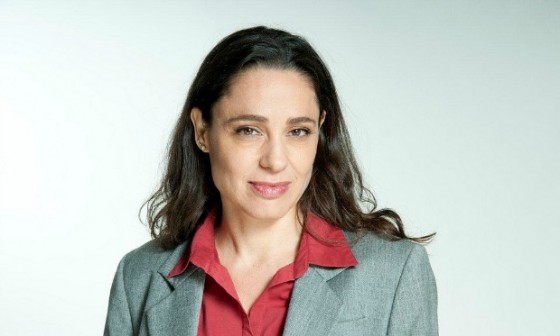
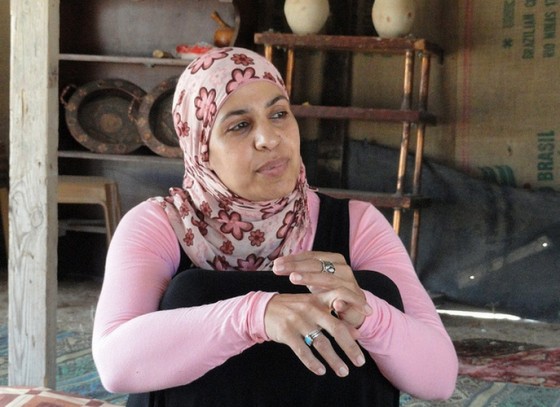
She partnered with Waze to bring attention to the gravity of the problem during Sukkot, an autumn Jewish holiday that originally was a harvest and pilgrimage festival. Today the Israeli public celebrates much of the weeklong holiday by hiking, swimming and camping. Jacobs (pictured above) saw it as a perfect time to launch Zalul’s pollution-alert feature.

“I was driving with a friend of mine using Waze when all these pop-ups starting coming up. And I thought: Why don’t we use them to show people where the rivers are polluted?” she tells me in the story I wrote for ISRAEL21c.

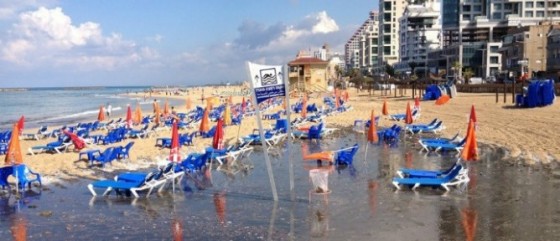
When a logged-in user comes within about 12 miles of a waterway, the application will identify it, inform the user of its health status and identify polluters by way of a pop-up alert. During Sukkot, the organization sent users 120,000 alerts – including one warning of a sewage overflow in Tel Aviv that flooded a popular beach following the season’s first rain. See image of the sewage on the popular beach below.

tel aviv, israel beach 2012 sewage zalul, water app from waze

Until now, the Israeli public has relied on news reports or signs posted on public beaches. A real-time alert system would not only be good for public health and safety, Jacobs reasoned; it would also force polluters to face the consequences of growing public awareness.

Certainly other regions, like Florida’s popular Gulf Coast, could use such an application as well, especially after the 2010 oil spill.

As far as she knows, there is no other public service like Zalul anywhere in the world, and Jacobs very much hopes to continue updating it along with Waze or as a standalone application, if interested parties can help support the cause. For now, Zalul must pay to remain part of Waze.

At the same time, Jacobs has a development team working on a social application for surfers, sailors, swimmers, port authorities, fishermen — everyone who cares about the Mediterranean Sea and Israel’s water resources.

Zalul will use this interested public to be the “eyes and ears outside,” taking the collected information to the local authorities in the hope of influencing regional water policy. “We call it a Forum for Defenders of the Sea. In the first stage it will be in Hebrew and then in English,” says Jacobs.

Zalul’s three main targets are mitigating harm from oil and gas drilling off the Mediterranean Coast; preventing Tel Aviv’s raw sewage from going straight to the sea; and putting pressure on polluters.

Jacobs wants the government to step up to the plate to avert a future catastrophe. Unlike other parts of the Med, Israel’s strip of sea is not fed by an active body of flowing water. If there were an oil spill, Israel would have to live with the consequences for a very long time, she tells ISRAEL21c.

But not all the water news from Israel is bad. Parts of the major rivers, including the Alexander and the Kishon, are being rehabilitated. And while Israel’s Lower Jordan River is reduced to a trickle and is not safe for swimmers, the Upper Jordan is fine for swimming, says Jacobs. Happily, the majority of Israel’s streams in the north remain clean, fed by fresh mountain-water runoff.

Who’s Got the Wind Power in the Middle East?

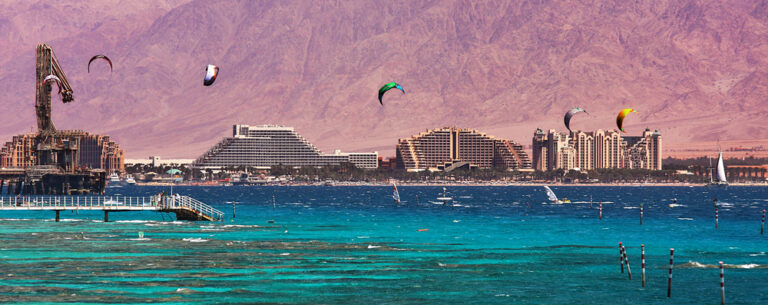
kite surfing red sea, Eilat, IsraelWho’s got the wind in the Middle East? Morocco and Egypt have the biggest wind power plants, but don’t discount Iraq, Qatar, Saudi Arabia and the United Arab Emirates.

Wind power has taken a backseat to solar power across the Middle East and North Africa, but there are still some ambitious projects in wind power being undertaken across the region. Leading that charge is Egypt and Morocco, who have continued to push forward on alternative energy despite facing political turmoil in their respective countries. But don’t count out Iraq, Qatar, Saudi Arabia and the United Arab Emirates, who are all currently looking to develop wind energy.

Adapting a sophisticated climate model, researchers show that there is plenty of wind available to supply half to several times the world’s total energy needs within the next two decades. If the world is to shift to clean energy, electricity generated by the wind will play a major role, and there is more than enough wind for that, according to research from Stanford and the University of Delaware.

The Middle East North Africa region has been instrumental in the push for solar power, but wind projects are finally beginning to take form, or in development across what we call the MENA region. Two of the largest wind farms in the world are in the region, in Morocco and Egypt.

Storing Solar Energy in Rust, From Israel

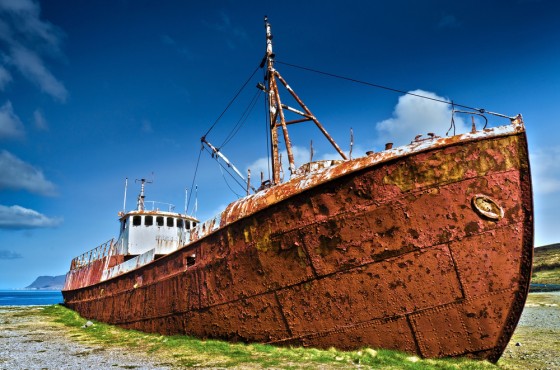
rusty hull of a ship for solar power

Scientists at Technion, Israel’s institute of technology recently found a new way to store solar energy. Their method utilizes a substance that some of us are all too familiar with, iron oxide– otherwise known as rust. This research entitled Resonant light trapping in ultrathin films for water was published in the November 11, 2012 issue of Nature Materials and may help solve the problem of solar energy storage by enabling a more efficient and direct conversion between solar energy and hydrogen.

I grew up in a region that was once known as the rust belt. Iron foundries, heavy industry and heavy cars were plentiful in the upper Midwestern US. Winters were icy so governments used salt to help make the roads safer. Unfortunately this also made automobiles rustier.

Comedian Dave Barry once joked that American cars were made out of compressed rust. Salt-encrusted lumps of grey slush clung to the bottoms of cars and performed the alchemy of converting iron and gleaming steel into crumbling heaps of orange-red rust.

Actually it wasn’t alchemy, it was ordinary chemistry which is a little too complicated to explain here, but parts of the reaction can be simplified to something like this:

2Fe(s) + 2H2O(l) + O2(g) → 2Fe2+(aq) + 4OH-(aq)  {a bit more magic} → Fe2O3 .nH2O

Iron, water and oxygen combine to make a solution which dries to become rust.

All about rust

Rust crumbles in your hand and stains your skin, your clothes and concrete structures.

Grocery stores once sold a chemical which was supposed to remove rust stains but it was also powerful enough to eat through metal, skin and glass. Since then using a rust remover has become much less dangerous while still removing rust.

A form of rust was used in audio cassette tapes, 8-tracks, floppy disks and the hard drive which is storing this article. In 1976 NASA’s Viking lander arrived on Mars and found– rust.

The 1976 Buick I drove to prom had lost the bottom half of its passenger doors to rust. I once connected a voltmeter to some bolts straddling the rusted-out floor of my father’s car and found that the electrochemical process which gradually turned his 1969 AMC Rambler into a heap of rust also generated about 1/2 volt of electricity. I never patented this corrosion-powered “battery car” as a form of planned-obsolescence Detroit would have loved but I’m beginning to wish I’d saved some of that rust. Will it soon become as valuable as platinum was during the cold fusion fiasco? Might the rust belt prosper from this abundant resource just as Saudi Arabia did from oil and the Canadian Yukon did from gold?

Maybe not. Photovoltaic cells are made out of silicon which is found in desert sand but the price of sand hasn’t gone up very much even as the photovoltaic market grows. It turns out that just as it is for photovoltaic silicon, carbon nanotubes, diamonds and coal; the secret is not in the ingredients it is in the preparation. The Technion researchers discovered how to turn something ordinary into something useful by applying materials science.

The paper’s abstract offers a clue:

Semiconductor photoelectrodes for solar hydrogen production by water photoelectrolysis must employ stable, non-toxic, abundant and inexpensive visible-light absorbers. Iron oxide (α-Fe2O3) is one of few materials meeting these requirements, but its poor transport properties present challenges for efficient charge-carrier generation, separation, collection and injection. Here we show that these challenges can be addressed by means of resonant light trapping in ultrathin films designed as optical cavities.

Interference between forward- and backward-propagating waves enhances the light absorption in quarter-wave or, in some cases, deeper subwavelength films, amplifying the intensity close to the surface wherein photogenerated minority charge carriers (holes) can reach the surface and oxidize water before recombination takes place.

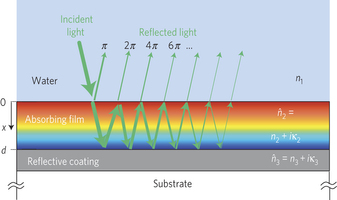
The researchers are making use of rust’s light absorbing properties which make those stains so visible on a T-shirt. They’re making use of its stability. Water and oxygen can turn a car into rust, but even a large dose of rust remover won’t turn that rust back into a car. They’re also making use of thin-film optical interference. rust reaction refractionLook at a pair of anti-reflection eyeglasses, the lens of a camera or binoculars, a soap bubble or a thin oil slick floating on a puddle and you’ll see one of the effects these scientists were taking advantage of.

When light comes across a thin semi-transparent film, some of the light is reflected off the bottom of the film, some is reflected off the top. If the film is just the right thickness, light of a certain wavelength can be made to constructively interfere with its reflection, making that color brighter or destructively interfere making that color dimmer.

In this case the scientists have found a way to enhance the light intensity exactly where it is needed to help separate the water’s hydrogen from its oxygen. The hydrogen can then be stored and used to generate energy when the sun isn’t shining. It’s a pretty neat trick for a lump of rust. Kudos to Hen Dotan, Ofer Kfir, Elad Sharlin, Oshri Blank, Moran Gross, Irina Dumchin, Guy Ankonina and Avner Rothschild for their research.

Photo of rusty shipwreck via Shutterstock
Image of thin film light absorption from  Resonant light trapping in ultrathin films for water in the November 11, 2012 issue of Nature Materials


Hydroelectric Dam Threatens “Ecological Massacre” in Turkey

0

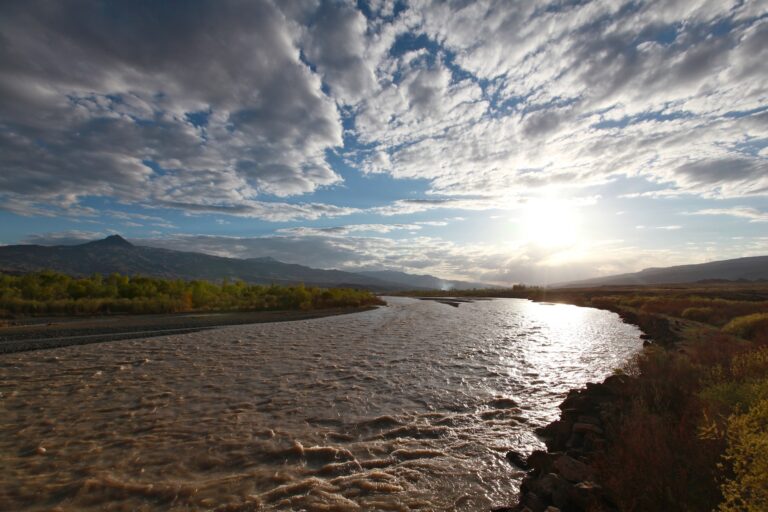
aras river, Turkey in AnatoliaThe Aras River basin is home to more than half of Turkey’s bird species, but a planned hydroelectric dam would alter the river’s marshy ecosystem, driving away the birds.

That’s the fear of Çağan Şekercioğlu, president and founder of Turkey’s KuzeyDoğa wildlife preservation NGO. Green Prophet has written about Şekercioğlu’s groundbreaking research, teaching, and conservation work before. Now, he is trying to prevent a dam from destroying one of the richest habitats in Eastern Anatolia, according to the Turkish environmental website Yeşil Gazete (in Turkish).

Smart Bra May Replace Mammograms

0

image breast cancer illustration smart braA better device for early breast cancer detection is expected to be available in 2013-2014.

Any woman who’s endured the pain and embarrassment of a mammogram would welcome a painless alternative. Even better would be one that doesn’t subject her to radiation. Best would be a device that doesn’t crush her breasts, is radiation-free, and gives highly accurate results.

The good news is that the desired better system is on its way. First Warning Systems, a company founded in Reno, Nev., in 2008, is now testing a smart bra that comprises all the things a woman wants in a testing device .

The White Noise of Smell Made by Israeli Chemists

0

white smell nose breaking through paper

You can see the color white; you can hear white noise. Now, Weizmann Institute researchers from Israel show that you can also smell a “white” odor. Their research findings appear today in the Proceedings of the National Academy of Sciences (PNAS). The white we see is actually a mixture of light waves of different wavelengths. In a similar manner, the hum we call white noise is made of a combination of assorted sound frequencies.

In either case, to be perceived as white, a stimulus must meet two conditions: The mix that produces them must span the range of our perception; and each component must be present at the exact same intensity. Could both of these conditions be met with odors, so as to produce a white smell? That question has remained unanswered, until now, in part due to such technical difficulties as getting the intensities of all the scents to be identical.

A research team in the Neurobiology Department, led by research student Tali Weiss and Dr. Kobi Snitz, both in the group of Prof. Noam Sobel, decided to take up the challenge. They began with 86 different pure scents (each made of a single type of odor molecule) spanning the entire “smell map,” diluted them to obtain similar intensities and then created blends.

Each blend contained a different mixture of odors from various parts of the smell map. These blends were then presented in pairs to volunteers, who were asked to compare the two scent-blends. The team discovered that the more odors that were blended together in the paired mixtures, the more the subjects tended to rate them as similar – even though the two shared no common components.

Blends that each contained 30 different odors or more were thought to be almost identical. The researchers then created a number of such odor blends, giving them a nonsense name: Laurax. Once the subjects were exposed to one of the Laurax mixes and became accustomed to the smell, they were exposed to new blends – mixtures they had not previously smelled.

They also called some of these new blends “Laurax,” but only if those contained 30 or more odors and these encompassed the range of possible smells. In contrast, mixtures made of 20 scents or fewer were not referred to as Laurax. In other words, Laurax was a white smell.

In a follow-up experiment, volunteers described it as being neutral – not pleasant, but not unpleasant. “On the one hand,” says Sobel, “The findings expand the concept of ‘white’ beyond the familiar sight and sound. On the other, they touch on the most basic principles underlying our sense of smell, and these raise some issues with the conventional wisdom on the subject.” The most widely accepted view, for instance, describes the sense of smell as a sort of machine that detects odor molecules. But the Weizmann study implies that our smell systems perceive whole scents, rather than the individual odors they comprise.

COP18 Updates – Women, Students & A President Courting Oil

0

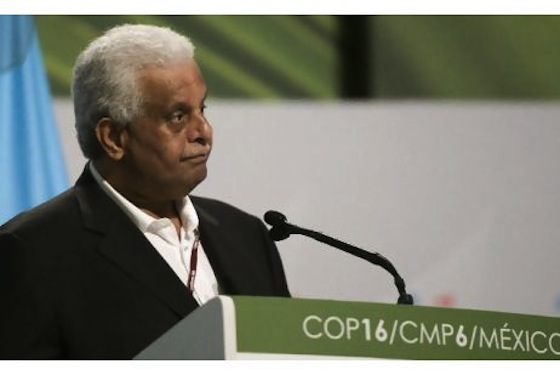
cop18 climate talks qatar al-attiyahAbdullah bin Hamad al-Attiyah, who is the president of the COP18 got a thorough telling off for courting big oil executives in the lead up to the climate talks

The annual UN climate talks are coming the Middle East for the first time ever. As such, climate change and environmental issues are hitting the local headlines much more than usual and a tangible sense of excitement and anticipation is building in the region. To guide you through this tangled two-week conference and help you cut through the spin, we will be providing weekly COP18 updates. We’ve already published an article exploring the major issue which will be discussed at the talks – the Kyoto Protocol – and Does Vandousselaere has published a great guide to Egypt’s COP18 position. More after the jump!

Cheetahs in Iran on the Brink of Extinction

2

female cheetah and babies in iranThere are still a few Iranian Asiatic cheetahs in the wild, but they too are on the brink of disappearing.

Global cheetah populations have plummeted over the past century, from an estimated 100,000 cheetahs in 1900 to fewer than 10,000 today. And once upon a time, cheetahs roamed the deserts of Iran. But international scientific surveys recently confirmed what Iranian biologists already suspected– today there are fewer than 100 Asiatic cheetahs left on earth.

The Iranian Cheetah Society, founded in 2001, has started using social media, including their youtube channel, to promote awareness about endangered Asiatic cheetahs in Iran. The organization posts short video clips from their research in northeastern Iran, both in the Miandasht Wildlife Refuge and the Behkadeh Reserve, featuring rare Iranian cheetahs in the wild.

Eating sunflower seeds for peace

0

image noam edry seeds of bliss, sunflower seeds israel, palestine

Friendship through sunflower seeds is still going to happen between Israelis and Palestinians, says artist Noam Edry who has organized a big sunflower seed chew off, called Seeds of Bliss.

Edry refuses to let politics get in the way of her monumental sunflower seed peace effort. Even when politics translate into siren alerts.

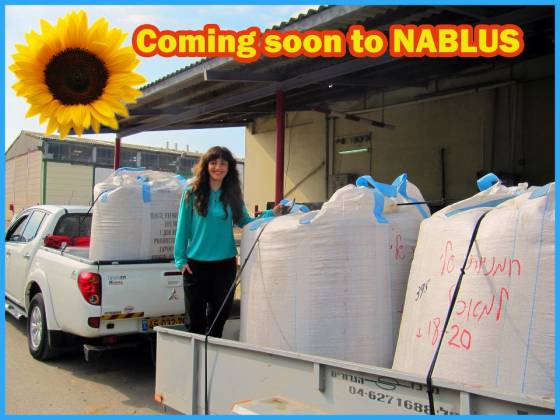
She says: ” Here I am at Hazera Genetics with their huge donation of seeds for our MEGA CHEW in Nablus. Just after I left the factory there was a siren. I feel like someone is watching over me to make sure we get the work done.

“Must keep going even in days of madness. Now the seeds are safe in Afula and hopefully the universe is getting the right message: Get on with it mates! End the war so we can get cracking already!”

Jewish and Arab chewers from Afula and Jenin were invited to contribute to the pile of chewed-up sunflower seed husks in Nablus this month, although the current situation doesn’t exactly nurture gestures of mutual goodwill. All the same, we think grassroots projects can eventually influence people, and wish Edry’s project success.

Related: The code is cracked – why sunflowers dance

In fact, we can’t wait to see photos of the final installation in a London art gallery – a mountain of chewed husks and the sidewalk garbage swept up with them, representing Arabs and Jews sitting down together of an evening, drinking coffee and spitting seeds. Were that it were so simple.

::Seeds of Bliss

More on food, water, and peace from Green Prophet:

Morocco’s Berber Women Empowered by Rare “Miracle Oil”

0

argan oil, Morocco, "miracle oil", food, health, lifestyle, beauty productsWhen western women catch wind of a new “miracle oil,” the next super lotion that promises eternal youth and exquisite beauty, be sure that demand for the thing will soar. This is what has happened with argan oil, that illustrious “liquid gold” derived from a nut in Morocco, which is used in both culinary and cosmetic applications.

Rumored to be full of fatty acids, antioxidants and vitamin E, argan oil cosmetics produced in the Maghreb are now available throughout the world, and that is a good thing for the women who make them.

Bedouin folk medicine by Miriam Aborkeek

0

desert daughter bedouin, bedoin miriam aborkeek israel

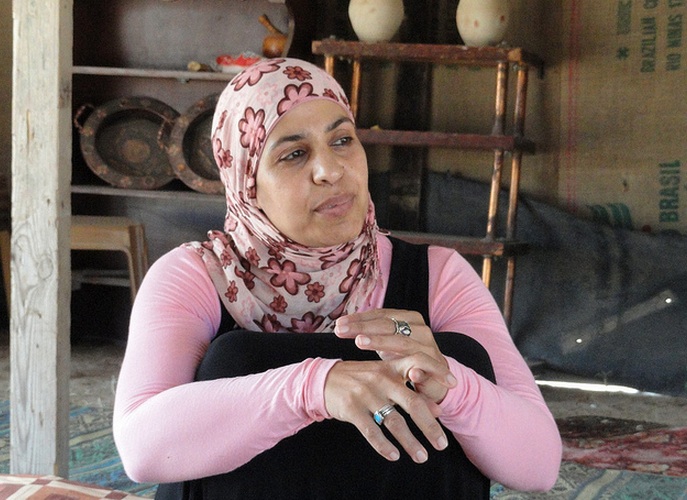
I had the pleasure of meeting this enterprising Bedouin woman, Miriam Aborkeek while on a Bedouin home stay and personal tour with Yeela Raanan of Bedouin Experience in Israel. Here’s Aborkeek’s story about her natural cosmetics company Desert Daughter:

Once, Bedouin women roamed with the seasons, foraging for plants and helping graze animals where the rains were kind enough to leave water for the desert to lay down roots and turn green. Like in any traditional society, the Israeli Bedouin had their healing secrets from the tribe: tinctures and cures, and herbal remedies based on nearby plants. These secrets were handed down from woman to woman.

But in Israel, as in other westernized cultures, that traditional Bedouin wisdom is being lost and forgotten. Now an Israeli Bedouin woman has reversed her role in life, going from traditional to modern, back to traditional, with a twist.

This is the story of Mariam Aborkeek, a Bedouin woman from Israel’s Negev Desert who has refused to marry, instead giving her full attention to turning Bedouin natural healing remedies into an international business called Desert Daughter.

Aborkeek was different than most Bedouin women from the outset. She was born in a multigenerational tent in the planned Bedouin town of Tel Sheva beside Beersheva. That part of her story is typical. But while most Bedouin women from her time were married young, and didn’t learn to read or write, she was off to London to study for a bachelor’s degree in marketing. This was more than 15 years ago, says the 40-something Aborkeek.

She traveled far to realize that what she needed in life was close to home, in the Israeli desert.

In the early years in London she didn’t look back to the days of communal tent living, but was happy to have access to modern fashion and fancy cosmetics, soaps and creams. She would bring some of these products back to her family in Israel.

desert daughter bedouin, bedoin miriam aborkeek israel

But with this desert daughter out of her native environment, she started noticing her skin was itching and breaking out in spots. Maybe it was the preservatives or chemicals in the Western products she was buying? She thought of her grandmother and the natural products and creams the elder would brew as the tribe’s medicine woman.
desert daughter bedouin, bedoin miriam aborkeek israel

Aborkeek grew up seeing her grandmother collect wild desert shrubs, turning them into tinctures and cures. So she went back to using products made by her grandmother to fix her skin.

Meanwhile, with encouragement from her organic-minded roommate in London, Aborkeek started bringing her grandmother’s preservative-free natural products back to the UK as gifts, where everyone was crazy about them.

“The soaps your grandmother is making are better,” her roommate told her.

“I realized my grandmother had so much knowledge inside of her,” Aborkeek tells us.

By the late 1990s, Aborkeek was making her own soaps and creams for the family, and today has a successful local business, with international buyers coming to her workshop in the desert to purchase her specialties.

In the beginning, her grandmother didn’t like the idea at all of “selling” traditional medicine — camel milk soap, black cumin oil soap, a joint relief oil that works well for arthritis, and a product that clears up skin.

Aborkeek convinced her that the products were also making women more beautiful. With her grandmother’s approval, she established the business in 2005. Her grandmother died later that year.

[youtube]http://www.youtube.com/watch?v=uFnEoQgdz0U[/youtube]

At first people in Aborkeek’s community made jokes about her. She took out loans and established her lab in her mother’s kitchen. Then when her family saw she was serious, her dad gave her a patch of dusty land on the outskirts of town on which to base the business.

A little white donkey also lives there under a tree, and today four other Bedouin women are employed by the company, which also conducts seminars on traditional Bedouin herbs and using them in products.

Some of the product trademark secrets include the use of nigella sativa, or black cumin oil, a cure-all remedy used in traditional Arab healing. There is also citrullus colocynthis, a desert shrub known for its analgesic and anti-inflammatory properties, which can help relieve joint pain. Mentioned in the Bible, it is also known as the colocynth, bitter apple, bitter cucumber, desert gourd, desert melon, egusi or the vine of Sodom.

This is one of the plants Aborkeek seeks when she goes out with the women in the spring to collect what they need and makes batches of products two or three times a year.
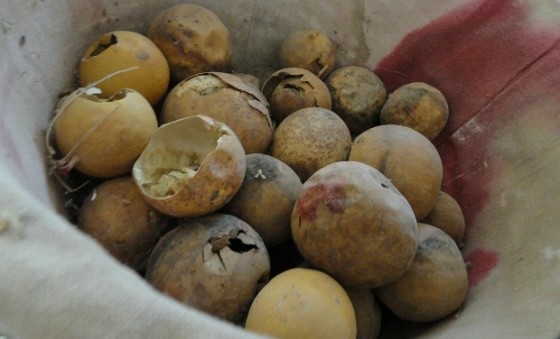
desert daughter bedouin, bedoin miriam aborkeek israel desert melonsDesert melon (pictured above) is one of the “secret” ingredients.

Picking desert herbs by hand for local use is a sustainable practice, says Aborkeek.

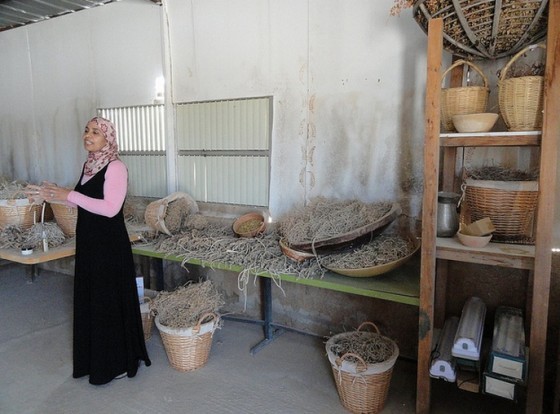
“Some herbs are actually becoming lost because people are not picking them,” she says. The act of picking herbs helps rejuvenate the plant, in some cases enough for its survival in the harsh desert territory, she points out. “We know how to pick them in a way so that next year there will be even more,” she says, gesturing over the baskets of drying herbs and twigs.

Some of her products are sent to stores for purchase, but mainly Aborkeek works with direct sales to customers where she can have a hands-on approach, explaining the benefits of her products.

She is also working on an online sales site so that she can sell her products to customers abroad, and is open to custom-making products to suit a particular problem.

Update Nov. 2020: the website is no longer in service. 

Read more on the pursuits of Levantine region Bedouin:
Egyptian Bedouin Maimed by Landmines
A Peek Inside the Bedouin Tent
Israel’s Bedouin Go for Solar Energy Power
Barefoot College for Solar Energy in Jordan
See How the Ladies of Lakia Weave Together Tales and Tradition

Egypt’s Inspiring Environmental Push

0

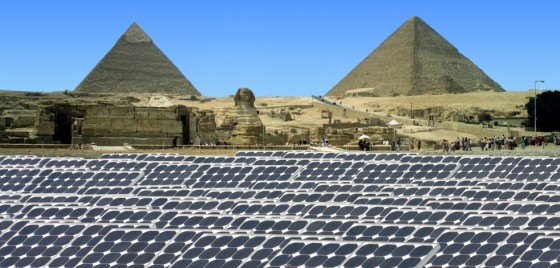
solar panels at the pyramidsSolar panels at the pyramids.

In the past two years since a popular uprising ousted former Egyptian President Hosni Mubarak, the question of sustainability, energy and overall environmental awareness has been as evident as a clean street in Cairo. Basically, it has been nonexistent. Actually, it had been nonexistent until recently. Over the past few months, Egyptians have been inching, ever slowly, toward recapturing the environmental spirit that had catapulted to the forefront of social issues in 2010.

Green Israeli Design for Russia’s Nikola-Lenivets Artist Community

0

Talmon Biran, Russia, Nikola-Lenivets, clean tech, green design, sustainable design, IsraelIsraeli eco-innovation is spreading to all reaches of the planet, often sowing great green seeds where it touches down. The Tel Aviv-based architecture studio Talmon Biran sent us images of their entry into a recent design competition for the Nikola-Lenivets artist community in Russia’s Kaluga region.

Conceived in tandem with Anna Leshchinsky, the proposal calls for a condensed campus-style layout comprised of “floating” wooden structures that sit lightly above ground. Residential and communal spaces are separated and the whole facility is powered by rooftop solar panels.

Better Place EV Company May Turn Into EV Gas Station

0

shai agassi, natural resource manager bette place electric car company, Israel

Israel’s electric car company Better Place is going to experience an overhaul, and will manage its existing resources in a new way, according to Evan Thornley, the company’s new CEO who just moved to Israel from Australia. Instead of focusing on selling Renault-made cars and charge plans to keep them juiced, the company is going to seek new agreements with other EV car manufacturers worldwide so that Better Place charge stations and battery replacement points will be the center of a new business model. Over the past month and a half, Better Place’s global CEO Shai Agassi was ousted, and last week its Israeli CEO Moshe Kaplinsky decided to quit amidst speculation that the troubled company had become even more unstable.

A Better Place spokesperson wrote Green Prophet in response to Kaplinsky’s leaving: