Home Blog Page 363

This Green Prophet Hospitalized from Cairo’s Air Pollution

1

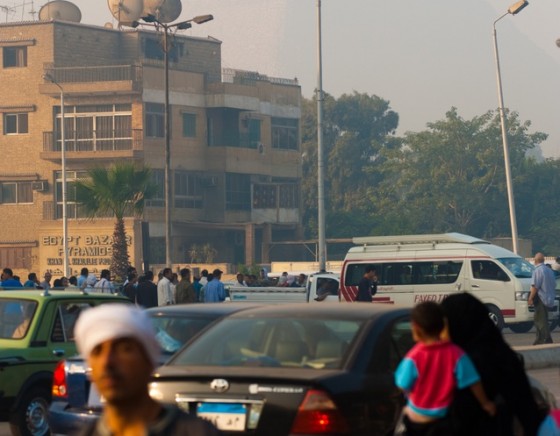
air pollution cairo causes asthmaJoseph’s lungs didn’t like the return to polluted Cairo. It caused a dangerous bout of asthma.

Returning to the city I have lived for more than a decade this January, Cairo, I was definitely not expecting to end up at the doctor’s office with days of near constant asthma problems. After 10 years, one would think we’d be accustomed to the air and its nasty pollutants. But that was not to be. For days after arriving, tops of buildings could not be seen as smog covered Egypt‘s capital city in amounts rare to even this polluted metropolis.

The doctor I went to and nursed me back to good health, was clear about what was causing my near constant asthma attacks: air pollution. Unable to leave my flat during the day, I suffered and waited for my lungs to open and become used to the pollutants in the air. Finally, after nearly a week of treatment, I was in the clear and back able to walk the streets of Cairo. But it left me wondering the affects of pollution and asthma on Egyptians in the city.

What I found was staggering.

Egypt is Close to Bridging the Distance to Saudi

1

land-sea bridge, saudi arabia, egypt, gulf of aqaba, sinai peninsula, tourism, development, business, politics, The Egyptian government announced earlier this week that a plan to bridge the distance between Egypt and Saudi Arabia across the Gulf of Aqaba is going to become reality in the very near future. A longstanding proposal previously rejected by former President Hosni Mubarak, a bridge linking the Sinai Peninsula and Saudi Arabia is expected to cement ties between those two countries while alienating just about everyone else. And don’t even get us started on the environmental damage that will be caused.

Earth Architecture No Longer Fit for a King

0

travel, nature, united arab emirates, al hayl fort, fujairah, earth architecture, green design

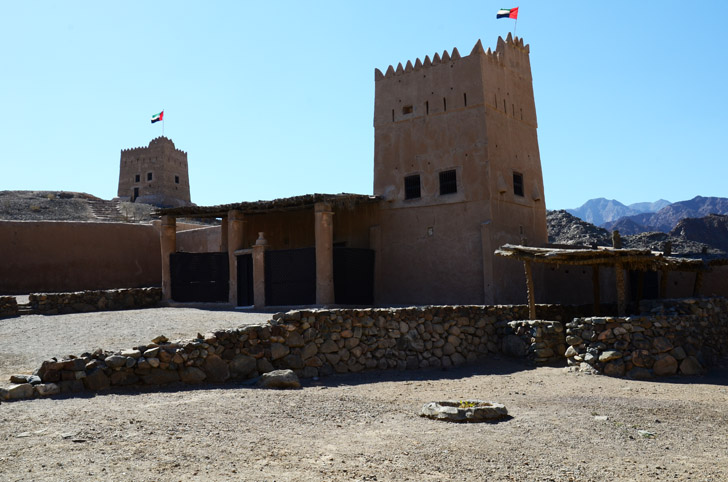
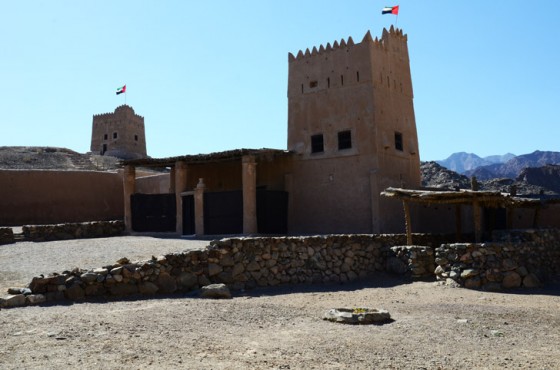
Just two hour’s drive east of Dubai, the Al Hayl Fort or Palace paints a succinct picture of Emirati life before artificial islands and enormous skyscrapers became “normal.” Located in a wadi among the Hajar mountains, the remarkable earthen compound was built in 1932 by then ruler of Fujairah Sheikh Abdullah Bin Hamdan. It’s a slice of history we discovered by accident.

After spending a week in a fancy hotel for Abu Dhabi Sustainability Week, we needed some nature time. So, at the end of the conference last week Friday we set off in a tiny hired car with our tent and sleeping bag packed among suits and fancy shoes. And this is what we found.

10 Weird and Wonderful Uses for Olive Oil

13

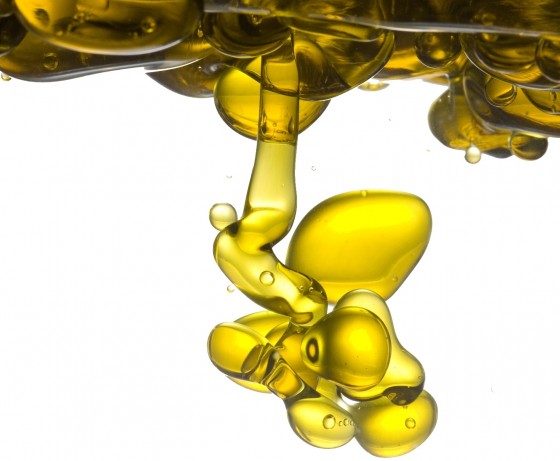
uses for olive oil

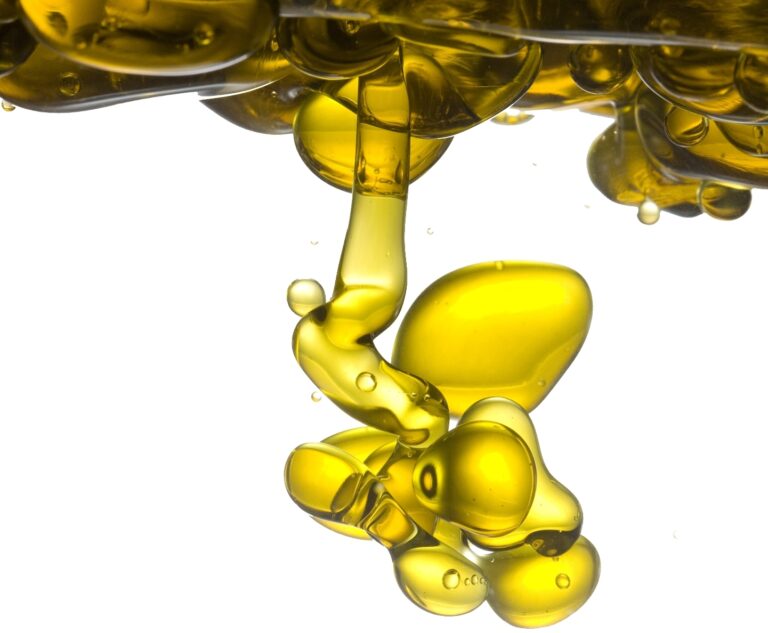
Humans have been plucking the fruit off olive trees for over 10,000 years, so it’s no surprise we’ve found creative ways to use olives and their oils.  They’re native to the Mediterranean-basin, and probably first domesticated in Crete, but who first hatched the recipe for extracting olives’ oils remains an mystery.

We know the stuff is tasty, and its nutritional benefits go far beyond  keeping cholesterol levels in check.  But if you’re aiming to simplify your lifestyle, tapping in the versatility of this kitchen staple is a reasonable way to begin. From hand cleaners to skin moisturizers (without parabens, additives or perfumes) to gum remover… check out ten tasks for this Levantine wonder that you won’t see on the Food Network.

  • Hand Cleaner – make a paste of olive oil and sugar (or salt) and scrub your paint-splattered hands (strips almost any sticky goo).  The mess slides right off, and your skin will glow.
  • Hair Conditioner – warm a bit of oil (set it in a cup inside a bowlful of boiled water) and apply a few tablespoons onto dampened hair.  Massage into the ends (avoid scalp), pop on a shower cap and let it sit for 20 minutes. Wash hair as usual, thoroughly removing the residue. You’ll be sleek as a seal.
  • Skin Moisturizer – pour a few drops in the palm of your hand, dip in a few fingers and pat the oil on your skin.  Gently massage in. Used in small amounts, it’s quickly absorbed. Best to scent with a few drops of your favorite essential oil, or risk smelling like a Caesar salad.
  • Leather Conditioner – same technique as above (minus the nice-smelling additives).  Live in arid Jordan for a few years and you learn there’s not much difference between moisturizing your leather and your skin.
  • Stainless Steel Polish – give the item a general wash, then drop a bit of oil onto a soft, clean cloth.  Using a circular motion, buff stainless, copper and brass surfaces to a brilliant shine.
  • Label Remover – saturate the sticker with oil, and let it sit awhile. Using a flat edged knife or spatula, peel the label right off.
  • Chewing Gum Remover – I’ve cleaned gum out of my kids’ hair and our dog’s tail with this technique: soak the affected hair in a generous amount of oil.  Leave it on for as long as the patient’s patience will allow (20 minutes is ideal) , then gently pull hair loose from the sticky wad.
  • Lamp Fuel – replace the noxious stuff in your Tiki lamp with pure olive oil.  We did this in a pinch during a summer barbecue and were stunned to see it really works. Many Jews use olive oil for their weekly candle lighting ceremony.
  • Furniture Polish – mix well 2 ounces of lemon juice with a teaspoon of olive oil for a combo wood cleaner – and – polisher.  Apply the same technique as for shining metals: soft cloth and circular buffing.
  • Shoe Polish – following on the heels of the first nine tips, this one’s sort of intuitive. If olive oil can clean skin, shine appliances, and moisturize skin, of course it can keep your shoes tidy.  (Not recommended for cleaning Uggs.)

Tu B’Shvat is Jewish New Year For The Trees

0

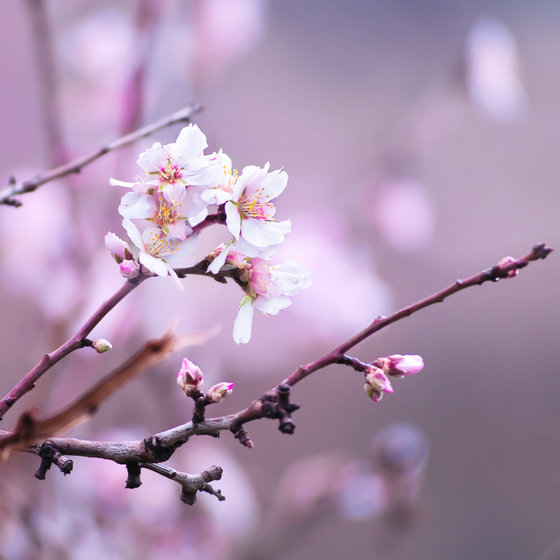
almond blossomThe Jewish holiday of Tu B’Shvat, a day especially loved by children, is a special eco-day in Israel. Celebrate it with a fruity feast.

It’s true, a few days before the Jewish holiday of Tu B’Shvat occurs, the almond trees in Israel begin to shake blossoms out along their branches. Travelers along the Tel-Aviv-Jerusalem highway can spot the occasional cloud of pink or white flowers among the olive groves and green fields along the way. Enjoy the beauty of mid-winter in Israel, because soon enough summer’s hot winds will change the landscape to something much drier and sere.

Suntech Launches New Research Centre In Arava – INTERVIEW

0

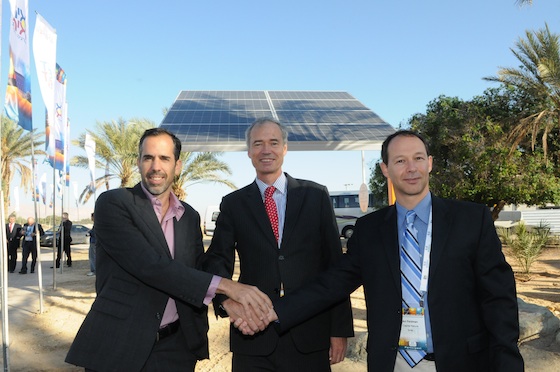
suntech arava solar isrealFollowing the inauguration of Suntech’s new research centre in Arava, we speak to their Chief Technology Officer (pictured centre) about the future of renewables in the Middle East

As one of the largest producers of solar panels, Suntech is undoubtedly a world player. In Israel alone, out of a total of 220 solar megawatts produced, 100 megawatts are harvested by Suntech’s panels. Suntech panels were also used on the Ketura Sun field, the first commercial solar field in Israel. As such, the company’s decision to open a new research centre in the Arava region didn’t come as a huge surprise. Green Prophet caught up with Suntech’s Chief Technology Officer, Dr. Stuart Wenham to talk about their solar plans for the Middle East region.

An Estidama Compliant Eco Dwelling for Next Generation Arabs (PHOTOS)

0

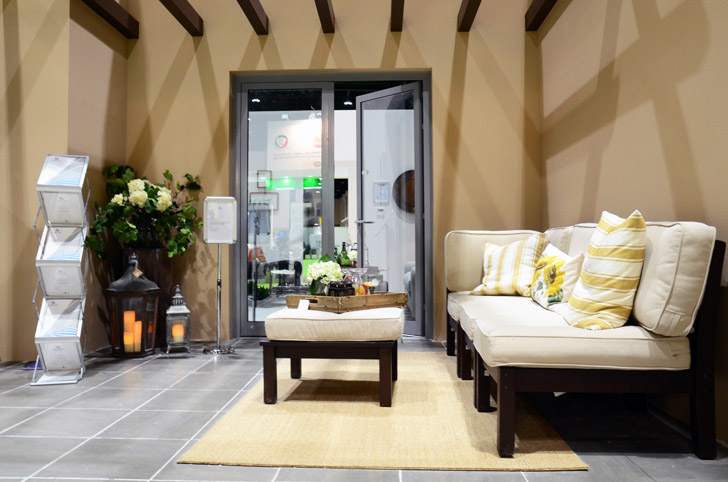
daylighting, estidama, eco home, arab, abu dhabi, world future energy summit, international water summitMost residents of the Middle East, North Africa and the Arabian Gulf believe that in order to live an eco-friendly life, it is necessary to move to some shack out in the desert with no running water or electricity. But what actually passes for a sustainable dwelling in the region has changed in the last few years. And much of that is thanks to a new green rating system called Estidama (read more here) – one that makes sense in the Middle East where LEED standards can’t always work.

For a perfect example, check out our photos of the Estidama-compliant eco-home that was displayed during Abu Dhabi Sustainability Week where Green Prophet was part of the VIP media tour. Roughly equivalent to the government “eco villas” being installed in Al Ain and Al Silaa, this prototype home has all the trappings of a modern Arab home (including a falcon, of course) but consumes 20-30 percent less energy and water.

Twizy Mini Electric Pilot Planned for Israeli Town

twizy renault electric car israel

The Israeli electric car company Better Place is seeing rough times (it just hired its third CEO in as many months after firing two others), but it has reduced its leasing plan to about $400 a month including charge and battery swaps to attract more customers. Thanks to the millions in marketing done by Better Place, the Israeli public is more than ever interested in going electric. With its fair share of oil embargoes from the Middle East, Israelis are too aware of the cost of foreign oil. Locals do want to see greener modes of transport, and ones that use less foreign oil. A second car commuter car, or a first car choice for those living in congested cities may just be the Renault Twizy, at a comfortable price of about Euros 7000 or NIS 50,000 depending on the taxes. Twizy, a mini electric two-seater, will be piloted in the Israeli city Kfar Saba, located about 1/2 an hour north east of Tel Aviv, according to Globes.

Plasan Greens Chevrolet’s 2014 Corvette Body

6

corvette stingray 2014 plasanThe 2014 Chevrolet Corvette 2014will be lighter and stronger, thanks to the Israeli company Plasan

High performance sports cars, including the  gold Mercedes sports coupes burning blends of biofuel are not exactly on most people’s minds as being environmentally friendly. But these are the kind of cars loved by the wealthy and extravagant men of the Middle East who like to show off their assets. Even electric sports cars, such as those made by Tesla Motors  and which have had a slow start in regions like the Middle East still have to rely on fossil fuel fired power stations to supply the electricity needed to recharge their lithium battery packs. A new Israeli-made body composite material will be making hot rods all the more rideable (in the green sense).

Dubai’s Bikram Yoga Turns Up the Heat, One Posture at a Time

0

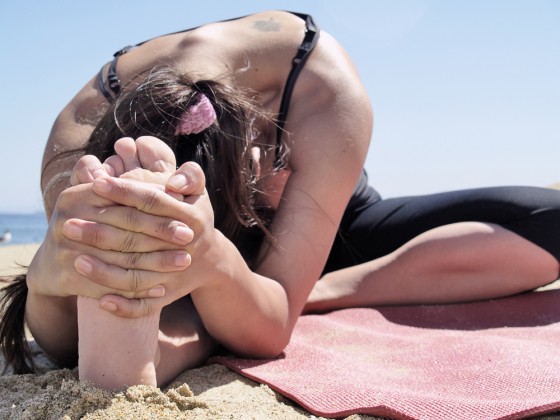
Photo of woman in head-to-knee pose, or janushirasana

A 90-minute yoga class in the great outdoors?  Piece of cake, some yogis will say.  But with Bikram yoga, a form created by Calcutta-born Bikram Choudhury, there’s a catch: class is conducted in a studio that’s heated to 105°F or approximately 40.6°C. When you are doing yoga like this in the Arabian Desert there is no need to heat the room!

Cadillac’s ELR and Eco Luxury Cars Fit for the Middle East

0

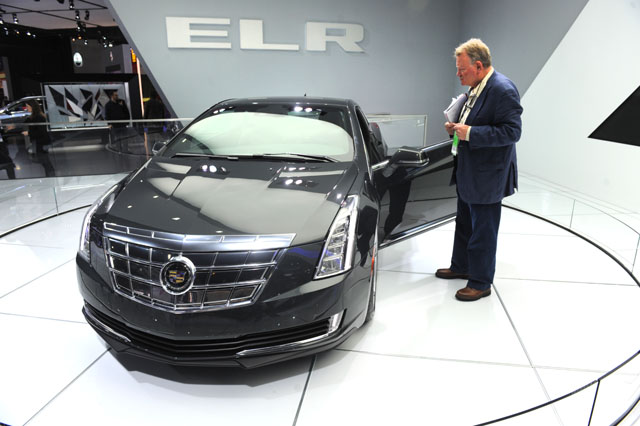
cadillac elr 2014Cadillac’s 2014 ELR; a luxury plug in hybrid for only $55,000

Luxury cars, including biofuel driven gold Mercedes sports coups and sports cars like  gold plated Porsche 997 GT2’s  are often found in the garages of wealthy Middle East residents where price is no limit to luxury. These kinds of buyers who might want to go green will not likely buy into the wimpy Renault Twizy. But don’t despair wealthy sheikhs:  Even green luxury models like the plug-in hybrid Fisker Karma can now be found in the United Arab Emirates.  While some of these car makers claim their rides to be more environmentally friendly, especially the hybrid models, their high prices may make one wonder why so many of these cars are often seen in countries where many inhabitants live on bare subsistence incomes.

Green Prophet Upcycles Jordan’s Politicians Into Hip Handbags

2

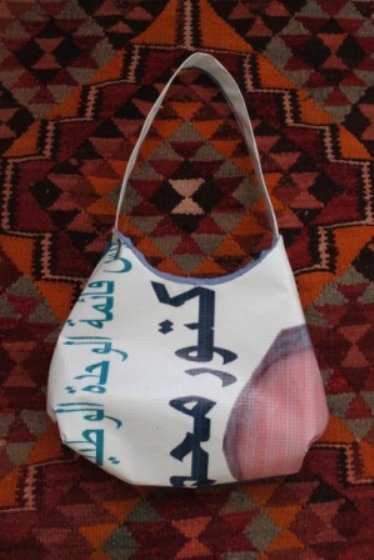
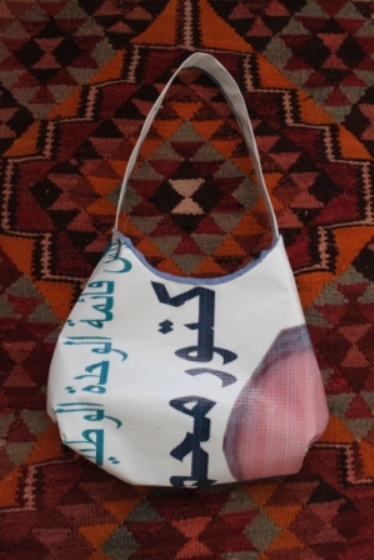
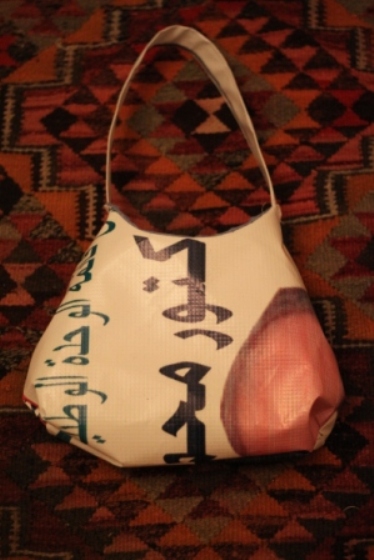
recycled plastic sign handbag jordanLaurie recycles a Jordanian political poster into a handbag. Here’s how she does it.

Voting is underway for Jordan’s Parliament. I’m not running, but I have this one in the bag!

Hundreds of posters are hanging along Amman roadways; a somber assemblage of Middle Eastern manhood, mostly mustachioed. No wonder there’s tension in the lead-up to election: everywhere I look there are faces scowling down.

The signs are made from fiberglass-reinforced plastic stretched across a simple wood frame, the plastic fabric roughly stapled in place.

Amman’s recent spate of hard rain, wind and snow knocked many signs off their telephone pole mounts. Aerodynamic, as if crafted by Pakistani kite-makers, they flew across roads, into cars and front yards. One landed near me.

I took it home (torn fabric, broken frame), salvaged some of the plastic and tossed the wood into the fireplace.

Then I took my politician into the shower.

Hydropolis Aims to Restore the Nile Valley’s Natural Agricultural Rhythm

Hydropolis, Nile River, Agriculture, Architecture, Design, EgyptJust about everyone learned in their early geography classes that the Nile Valley was once a fertile haven. Crops proliferated on the green banks due to natural flooding that deposited rich nutrients, although occasionally these floods inundated and destroyed crops as well, and the land of the Pharaohs was a mecca for agriculture.

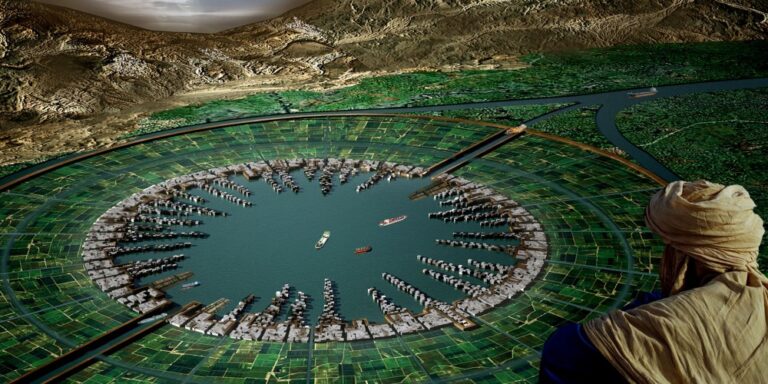
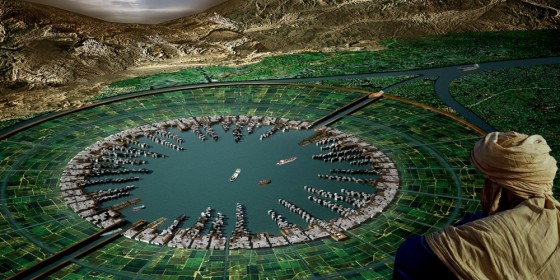
But when construction on the Aswan Dam began in 1902, the ecosystem was forever altered. The natural flooding cycle was disrupted, silt began to accumulate in places and crucial nutrients were no longer deposited. Margaux Leycuras, Marion Ottmann and Anne-Hina Mallette hope to restore it with Hydropolis – a series of floating modular structures that reorganize the local agricultural system.

Hydropolis, Nile River, Agriculture, Architecture, Design, EgyptStudents from the Architecture school of Nantes, the team who designed Hydropolis recently won a prize in a competition organized by the Foundation Jacques Rougerie. Their idea was to develop a well-integrated modular system that would solve the dual problem of hunger and environmental destruction.

The design proposes in part to restore something of the Nile River’s natural flooding system by opening the dam gates during the wettest months of the year ( July to September.) This would allow the fields to receive their nutrients, as well as a certain level of hydro saturation, so that rice crops can grow once again.

Hydropolis, Nile River, Agriculture, Architecture, Design, Egypt

The floating cities would be organized on different sections of Lake Nasser, creating “eco-modules” on a 200 meter deep reservoir. While the floodgates are open, these reservoirs will likewise receive water to see the communities through the dry months.

Ideally suited for rice cultivation, this system would be connected by a series of canals and other links that enhance cohesiveness among the various communities.

Hydropolis, Nile River, Agriculture, Architecture, Design, EgyptA sea wall envelope would shelter the city and the Nile River can return to its initial work.

While Hydropolis seems rather far-fetched for Egypt given its current economic and political environment, not to mention the dispute between Egypt and its neighbors to the south over water rights, it is a thoughtful idea and we’ll be keeping a close eye on its development.

:: Arch Daily

Zerotracer: A Globetrotting Electric Motorbike With its Own Helmet

1

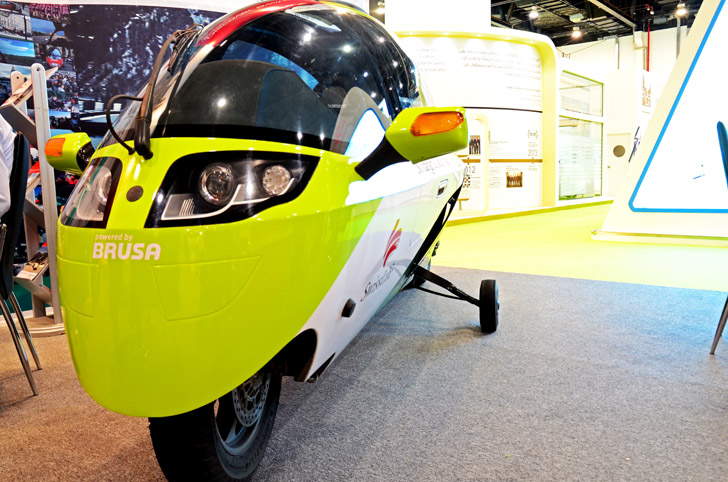
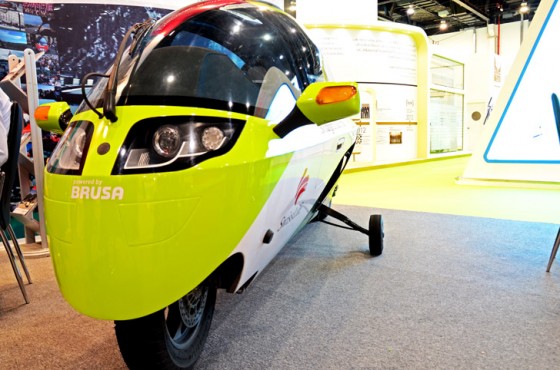
Zerotracer, green transportation, Masdar City, Abu Dhabi, electric motorbike, world's most efficient luxury vehicle, the bike that wears its own helmet, Swiss design, electric vehicleThe Swiss-made Zerotracer motorbike strutted its super efficient stuff at Masdar City and the World Future Energy Summit in Abu Dhabi last week. Designed by Tobias Wülser as part of his thesis project at the Academy of Art and Design in Aarau, the globe-trotting electric vehicle that “wears its own helmet” traveled around the globe in just 80 days with a fuel bill that topped out at a measly $400! We caught up with Wülser at the Swiss Pavilion for a firsthand look at his svelte design and to find out what he has planned for the bike now that his international tour is complete.

Recycle Jordan’s Politicians into Purses

0

Voting is underway for Jordan’s Parliament.  I’m not running, but I have this one in the bag.

Hundreds of posters are hanging along Amman roadways; a somber assemblage of Middle Eastern manhood, mostly mustachioed. No wonder there’s tension in the lead-up to election: everywhere I look there are faces scowling down.

The signs are made from fiberglass-reinforced plastic stretched across a simple wood frame, the plastic fabric roughly stapled in place.

Amman’s recent spate of hard rain, wind and snow knocked many signs off their telephone pole mounts.  Aerodynamic, as if crafted by Pakistani kite-makers, they flew across roads, into cars and front yards.

One landed near me. I took it home (torn fabric, broken frame), salvaged some of the plastic and tossed the wood into the fireplace.

Then I took my politician into the shower.  Scrubbed off diesel exhaust, mud and sand, and after a brisk towel-dry, was pleased to see how nicely he cleaned up.

Next I downloaded a simple free pattern from the internet and created a handbag. The bag had the simplest design: a mix of odd facial features and Arabic text added visual style.  (I’m a sucker for Arabic text, to my eyes it’s a graphical equal to how spoken French sounds. Graceful and swooping and deliciously foreign, it had me at the first alif.)

I wondered what would happen to all those posters after elections. 

Straight to landfills? More roadside trash?

Why not organize to collect the posters après election and salvage material to make reusable shopping bags? Interesting totes? Smaller purses? Cosmetic bags, baby bibs or cook aprons? Raincoats for dogs? Place mats? Mouse pads? You get the idea.

The simplest of skills are needed to cut and sew this pliant material.  The end products might appeal to modern shoppers (think “up-cycling” and a hip Jordan connection).  While we’re at it, pull the staples out the wood and give it to the needy for fuel. (With Jordan’s rising fuel prices, they’ll probably be more wood-takers than voters.)

Surely there are organizations with the influence and ability to arrange collection of the old signs. Those same entities might also have established links to local craftspeople, villages where the transformation of trash to marketable treasure could occur.  (Jordan River Foundation and The Royal Society of Nature Conservation come to mind).

Liaise with Greater Amman Municipality to gather signs as part of regular waste collection.  Engage with the companies who put up the posters in the first place to truck them to a central storage site or to the workshops.
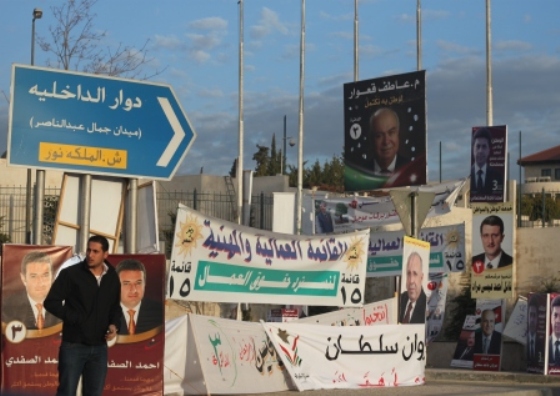
Looking around, I see that most Amman signage is made from this printed plastic. After elections, we could work with the printing and advertising companies to continue supply of discarded and out-of-date signage.  The crafters would have an unending supply of free material.

And if the market’s too micro for such a wacky line of goods: maybe stitch up reusable shopping bags and sell them to supermarkets to pass along to customers.

How marvelous if one of these candidates would back banning of disposable plastic bags.

Can’t we get organized to do something more than just observe and complain?  Come on Jordan, let’s Occupy Plastic Outdoor Signage!