The impact is already being felt. California has broken its wind generation record multiple times in recent weeks as SunZia begins feeding electricity into the grid. It’s a glimpse of what a renewable-powered future could look like when large-scale infrastructure finally comes online. Can we start saying goodbye to Saudi Aramco and Arabian Gulf oil?
The Convention on the Conservation of Migratory Species of Wild Animals (CMS), governments agreed to extend protection to 40 more migratory species, from cheetahs and striped hyenas to snowy owls, giant otters, and great hammerhead sharks. Too many of them are slipping toward extinction .
When the region settles after the American war with Iran, and it will, American and European travelers will come back. Not just for spectacle or headline projects, but for places that feel real. Places that haven’t been engineered to impress and which get into your soul.
We predict that visitors to Saudi Arabia will want to see places like Rijal Alma.When the region settles after the American war with Iran, and it will, American and European travelers will come back. Not just for spectacle or headline projects, but for places that feel real. Places that haven’t been engineered to impress and which get into your soul.
We predict that visitors to Saudi Arabia will want to see places like Rijal Alma.
“Forever chemicals” like the ones ejected by Lulelemon yoga pants into strategic areas don’t go away. They don’t break down in nature, and once they’re in water, soil, or our bodies, they tend to stick around. But scientists at Florida International University think they’ve found a smarter way to deal with them, and it uses something as simple as pH.
The impact is already being felt. California has broken its wind generation record multiple times in recent weeks as SunZia begins feeding electricity into the grid. It’s a glimpse of what a renewable-powered future could look like when large-scale infrastructure finally comes online. Can we start saying goodbye to Saudi Aramco and Arabian Gulf oil?
The Convention on the Conservation of Migratory Species of Wild Animals (CMS), governments agreed to extend protection to 40 more migratory species, from cheetahs and striped hyenas to snowy owls, giant otters, and great hammerhead sharks. Too many of them are slipping toward extinction .
When the region settles after the American war with Iran, and it will, American and European travelers will come back. Not just for spectacle or headline projects, but for places that feel real. Places that haven’t been engineered to impress and which get into your soul.
We predict that visitors to Saudi Arabia will want to see places like Rijal Alma.When the region settles after the American war with Iran, and it will, American and European travelers will come back. Not just for spectacle or headline projects, but for places that feel real. Places that haven’t been engineered to impress and which get into your soul.
We predict that visitors to Saudi Arabia will want to see places like Rijal Alma.
“Forever chemicals” like the ones ejected by Lulelemon yoga pants into strategic areas don’t go away. They don’t break down in nature, and once they’re in water, soil, or our bodies, they tend to stick around. But scientists at Florida International University think they’ve found a smarter way to deal with them, and it uses something as simple as pH.
The impact is already being felt. California has broken its wind generation record multiple times in recent weeks as SunZia begins feeding electricity into the grid. It’s a glimpse of what a renewable-powered future could look like when large-scale infrastructure finally comes online. Can we start saying goodbye to Saudi Aramco and Arabian Gulf oil?
The Convention on the Conservation of Migratory Species of Wild Animals (CMS), governments agreed to extend protection to 40 more migratory species, from cheetahs and striped hyenas to snowy owls, giant otters, and great hammerhead sharks. Too many of them are slipping toward extinction .
When the region settles after the American war with Iran, and it will, American and European travelers will come back. Not just for spectacle or headline projects, but for places that feel real. Places that haven’t been engineered to impress and which get into your soul.
We predict that visitors to Saudi Arabia will want to see places like Rijal Alma.When the region settles after the American war with Iran, and it will, American and European travelers will come back. Not just for spectacle or headline projects, but for places that feel real. Places that haven’t been engineered to impress and which get into your soul.
We predict that visitors to Saudi Arabia will want to see places like Rijal Alma.
“Forever chemicals” like the ones ejected by Lulelemon yoga pants into strategic areas don’t go away. They don’t break down in nature, and once they’re in water, soil, or our bodies, they tend to stick around. But scientists at Florida International University think they’ve found a smarter way to deal with them, and it uses something as simple as pH.
The impact is already being felt. California has broken its wind generation record multiple times in recent weeks as SunZia begins feeding electricity into the grid. It’s a glimpse of what a renewable-powered future could look like when large-scale infrastructure finally comes online. Can we start saying goodbye to Saudi Aramco and Arabian Gulf oil?
The Convention on the Conservation of Migratory Species of Wild Animals (CMS), governments agreed to extend protection to 40 more migratory species, from cheetahs and striped hyenas to snowy owls, giant otters, and great hammerhead sharks. Too many of them are slipping toward extinction .
When the region settles after the American war with Iran, and it will, American and European travelers will come back. Not just for spectacle or headline projects, but for places that feel real. Places that haven’t been engineered to impress and which get into your soul.
We predict that visitors to Saudi Arabia will want to see places like Rijal Alma.When the region settles after the American war with Iran, and it will, American and European travelers will come back. Not just for spectacle or headline projects, but for places that feel real. Places that haven’t been engineered to impress and which get into your soul.
We predict that visitors to Saudi Arabia will want to see places like Rijal Alma.
“Forever chemicals” like the ones ejected by Lulelemon yoga pants into strategic areas don’t go away. They don’t break down in nature, and once they’re in water, soil, or our bodies, they tend to stick around. But scientists at Florida International University think they’ve found a smarter way to deal with them, and it uses something as simple as pH.
The impact is already being felt. California has broken its wind generation record multiple times in recent weeks as SunZia begins feeding electricity into the grid. It’s a glimpse of what a renewable-powered future could look like when large-scale infrastructure finally comes online. Can we start saying goodbye to Saudi Aramco and Arabian Gulf oil?
The Convention on the Conservation of Migratory Species of Wild Animals (CMS), governments agreed to extend protection to 40 more migratory species, from cheetahs and striped hyenas to snowy owls, giant otters, and great hammerhead sharks. Too many of them are slipping toward extinction .
When the region settles after the American war with Iran, and it will, American and European travelers will come back. Not just for spectacle or headline projects, but for places that feel real. Places that haven’t been engineered to impress and which get into your soul.
We predict that visitors to Saudi Arabia will want to see places like Rijal Alma.When the region settles after the American war with Iran, and it will, American and European travelers will come back. Not just for spectacle or headline projects, but for places that feel real. Places that haven’t been engineered to impress and which get into your soul.
We predict that visitors to Saudi Arabia will want to see places like Rijal Alma.
“Forever chemicals” like the ones ejected by Lulelemon yoga pants into strategic areas don’t go away. They don’t break down in nature, and once they’re in water, soil, or our bodies, they tend to stick around. But scientists at Florida International University think they’ve found a smarter way to deal with them, and it uses something as simple as pH.
The impact is already being felt. California has broken its wind generation record multiple times in recent weeks as SunZia begins feeding electricity into the grid. It’s a glimpse of what a renewable-powered future could look like when large-scale infrastructure finally comes online. Can we start saying goodbye to Saudi Aramco and Arabian Gulf oil?
The Convention on the Conservation of Migratory Species of Wild Animals (CMS), governments agreed to extend protection to 40 more migratory species, from cheetahs and striped hyenas to snowy owls, giant otters, and great hammerhead sharks. Too many of them are slipping toward extinction .
When the region settles after the American war with Iran, and it will, American and European travelers will come back. Not just for spectacle or headline projects, but for places that feel real. Places that haven’t been engineered to impress and which get into your soul.
We predict that visitors to Saudi Arabia will want to see places like Rijal Alma.When the region settles after the American war with Iran, and it will, American and European travelers will come back. Not just for spectacle or headline projects, but for places that feel real. Places that haven’t been engineered to impress and which get into your soul.
We predict that visitors to Saudi Arabia will want to see places like Rijal Alma.
“Forever chemicals” like the ones ejected by Lulelemon yoga pants into strategic areas don’t go away. They don’t break down in nature, and once they’re in water, soil, or our bodies, they tend to stick around. But scientists at Florida International University think they’ve found a smarter way to deal with them, and it uses something as simple as pH.
The impact is already being felt. California has broken its wind generation record multiple times in recent weeks as SunZia begins feeding electricity into the grid. It’s a glimpse of what a renewable-powered future could look like when large-scale infrastructure finally comes online. Can we start saying goodbye to Saudi Aramco and Arabian Gulf oil?
The Convention on the Conservation of Migratory Species of Wild Animals (CMS), governments agreed to extend protection to 40 more migratory species, from cheetahs and striped hyenas to snowy owls, giant otters, and great hammerhead sharks. Too many of them are slipping toward extinction .
When the region settles after the American war with Iran, and it will, American and European travelers will come back. Not just for spectacle or headline projects, but for places that feel real. Places that haven’t been engineered to impress and which get into your soul.
We predict that visitors to Saudi Arabia will want to see places like Rijal Alma.When the region settles after the American war with Iran, and it will, American and European travelers will come back. Not just for spectacle or headline projects, but for places that feel real. Places that haven’t been engineered to impress and which get into your soul.
We predict that visitors to Saudi Arabia will want to see places like Rijal Alma.
“Forever chemicals” like the ones ejected by Lulelemon yoga pants into strategic areas don’t go away. They don’t break down in nature, and once they’re in water, soil, or our bodies, they tend to stick around. But scientists at Florida International University think they’ve found a smarter way to deal with them, and it uses something as simple as pH.
The impact is already being felt. California has broken its wind generation record multiple times in recent weeks as SunZia begins feeding electricity into the grid. It’s a glimpse of what a renewable-powered future could look like when large-scale infrastructure finally comes online. Can we start saying goodbye to Saudi Aramco and Arabian Gulf oil?
The Convention on the Conservation of Migratory Species of Wild Animals (CMS), governments agreed to extend protection to 40 more migratory species, from cheetahs and striped hyenas to snowy owls, giant otters, and great hammerhead sharks. Too many of them are slipping toward extinction .
When the region settles after the American war with Iran, and it will, American and European travelers will come back. Not just for spectacle or headline projects, but for places that feel real. Places that haven’t been engineered to impress and which get into your soul.
We predict that visitors to Saudi Arabia will want to see places like Rijal Alma.When the region settles after the American war with Iran, and it will, American and European travelers will come back. Not just for spectacle or headline projects, but for places that feel real. Places that haven’t been engineered to impress and which get into your soul.
We predict that visitors to Saudi Arabia will want to see places like Rijal Alma.
“Forever chemicals” like the ones ejected by Lulelemon yoga pants into strategic areas don’t go away. They don’t break down in nature, and once they’re in water, soil, or our bodies, they tend to stick around. But scientists at Florida International University think they’ve found a smarter way to deal with them, and it uses something as simple as pH.
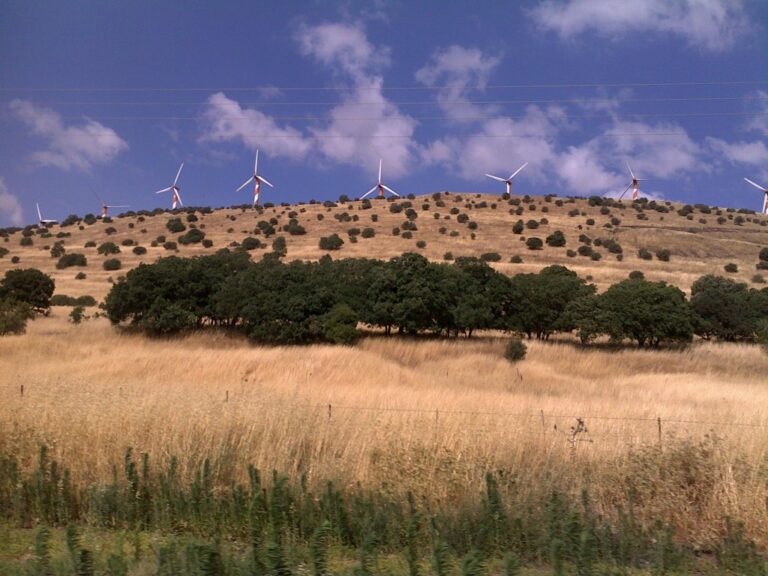
It ain’t Chicago, but Israel does have a little bit of wind potential on the Golan Heights. A local company called Enlight, which has been active in solar energy, has just received a conditional license to build 34 more wind turbines in the Golan Heights totalling some 58 MW of renewable energy.
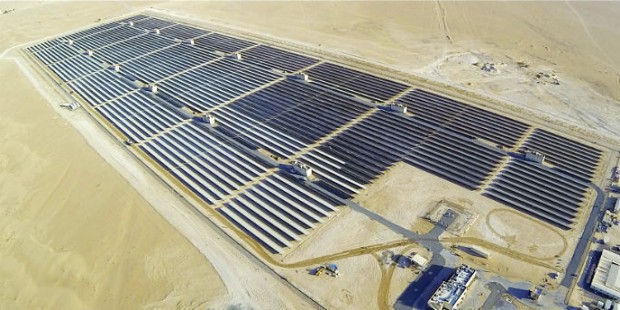
In an attempt to diversify its energy balance, Dubai has just turned on a 13 MW solar energy plant. The oil wealthy nation is an OPEC member, and one of the first to make a bold statement away from oil. This makes it the largest solar photovoltaic (PV) plant in the Middle East North Africa.
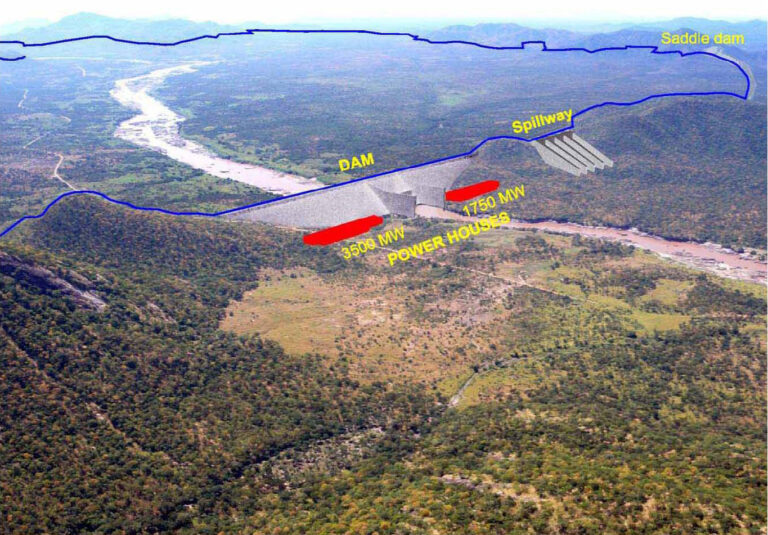
In a strange and surprising twist, Egypt says it will consider participating with its neighbour Ethiopia in the construction of the Renaissance Dam, a project which it had staunchly opposed (and even suggested sabotaging).
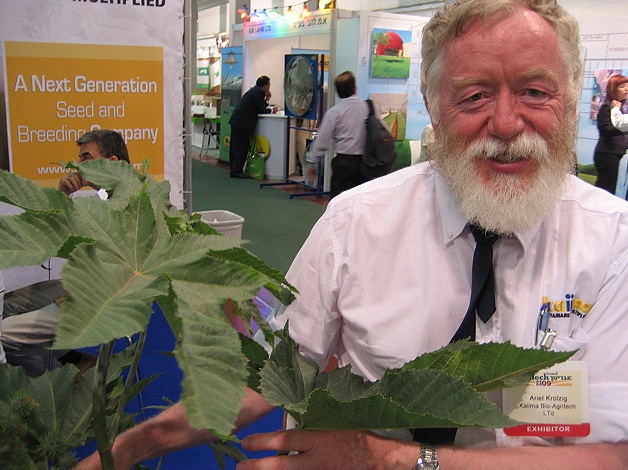
Since the Sixties “green revolution,” when Norman Borlaug introduced the concept of cross-breeding and hybridization of plants to boost output, not much has changed, according to Doron Gal, CEO of the Israeli seed technology company Kaiima Agro-Biotech. Kaiima, which means “sustainability” in Hebrew, hopes to be that change.
It will be the fifth largest solar plant in the world when done. The earth revolves around the sun, and so does the green-tech industry. Some of the earliest pioneers of solar energy started in Israel 30 years ago with the company Luz.
Luz went on to become Luz II, then BrightSource, which is now a US-based solar power company about to flip the switch on a massive 377-megawatt solar thermal farm in the California desert.
And at the start of 2014, the sun and stars will align and a dream will be coming true for Israeli solar pioneers and visionaries like BrightSource Israel CEO Israel Kroizer.
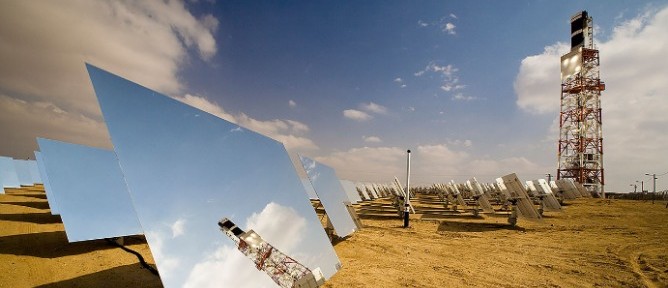
BrightSource will break ground on one of the world’s largest solar thermal energy plants, in Israel. The Ashalim plant is expected to produce 121 megawatts of solar energy in the Negev Desert by 2016, providing enough “green” energy to fuel 40,000 Israeli homes.
After many bureaucratic hurdles, BrightSource –– which uses mirrors called heliostats to focus the sun’s rays on a tower to create steam to drive turbines –– is finally returning “home” and is fulfilling a dream to help make Israel energy secure, says Kroizer.
He was with BrightSource from its genesis and says that the new solar plant, developed by the Megalim consortium of BrightSource and France’s Alstom SA, is more than a business deal — it’s personal. BrightSource, he notes, employs about 400 people, 300 of whom are engineers and development staff working mainly in Jerusalem, where its international R&D happens.
Sunning the engineers close to home
Ashalim in the desert, 2022
“The staff is very happy to be working in the country, in Israel. It’s a real help to have a big project next door to us,” he tells Green Prophet. “We will learn a lot from it, instead of flying 10,000 miles to California every time we want to learn something.”
The $1.1 billion solar thermal energy plant being developed in Israel is the country’s first large-scale solar energy field, and one of the biggest of its kind in the world. It will heighten Israel’s prominence on the map of clean-tech entrepreneurship and green energy production.
Kroizer says: “The government gave us a very good structure and we appreciate it very much. The way we will run this project is as though it will be the crown jewel of all our projects. Yes, even over our project in California.
“The Israel project is close to us and everyone involved in it wants to make it the best,” he told me, not disclosing any financial developments still in sensitive boardroom talks.
Putting the BrightSource deal into proportion, Israel’s Ketura Sun was the first to launch a mid-size solar energy field in 2011.
Ketura was developed by Arava Power Company and Yosef “Kaptain Sunshine” Abramowitz. It produces five megawatts of energy, a fraction of what the BrightSource plant will provide. Arava, however, is expected to produce an additional 58.5 megawatts in the future, based on contracts it won in 2012.
Unlike the Suntech photovoltaic (PV) panels used by Arava, which convert the sun’s power into electricity directly, BrightSource focuses the sun’s rays from hundreds of ground-based mirrors to a collection tower. There the solar heat boils water to create steam to drive power turbines.
The solar thermal route is somewhat more complicated, and therefore expensive, than PV panels.
Kroizer says the two types of technology serve two different markets. “Almost every country installing solar energy is installing both kinds of solar solutions, in a certain proportion, to compensate for the grid’s limits,” he says.
Stabilizing the grid
He also argues that thermal storage is more suitable to the grid.
“With PV, you get energy when the sun is ‘on.’ When the sun is ‘off,’ you don’t have energy. The difference in the cost is basically compensating for this value of more stability in the grid, which is what the grid needs.”
Another advantage to the BrightSource technology is that the heliostats can be positioned on uneven ground, unlike PV panels.
Despite its developments in America, BrightSource still faces hurdles there: It pulled out of a recent American IPO, it has lost valuable energy buy-back contracts this past year; and CEO John Woolard recently stepped down, reportedly to spend more time with his family.
Meanwhile, the company is working on the paperwork to win a tender for a second solar thermal plant in Israel to produce about 60 megawatts, at the same time it secures financing for the bigger Ashalim project.
For business travelers and the curious who are coming to Israel, BrightSource has a pilot six-megawatt project in operation in the Rotem Industrial Park built in 2008, open to the public. A new visitor center may be built at the Ashalim plant if there is enough interest, says Kroizer.
Itchin’ to best Betty Crocker by baking up new awareness to the plight of our home planet? Take a page from an Aussie zoologist who’s created an astounding series of planetary cakes with scientific accuracy that goes deeper than sugary frosting.
With Masdar City, Foster & Partners was the first international architecture firm to design buildings in Abu Dhabi that borrow from the region’s desert-savvy vernacular. Now they are continuing that tradition with the Zayed National Museum on Al Saadiyat Island, which will sport five wing-shaped solar thermal towers when completed.
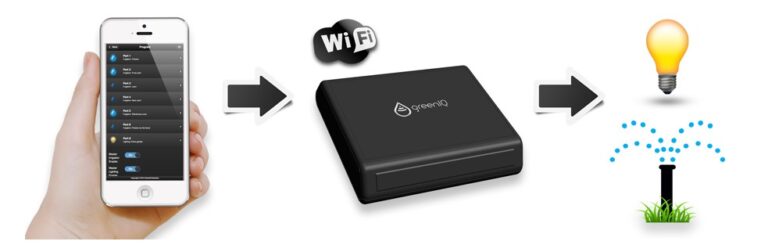
Smart phone developers aren’t just devising novel ways to deliver information about composting and how to save energy (like 5 green apps that can save the planet). They are helping us run our homes.
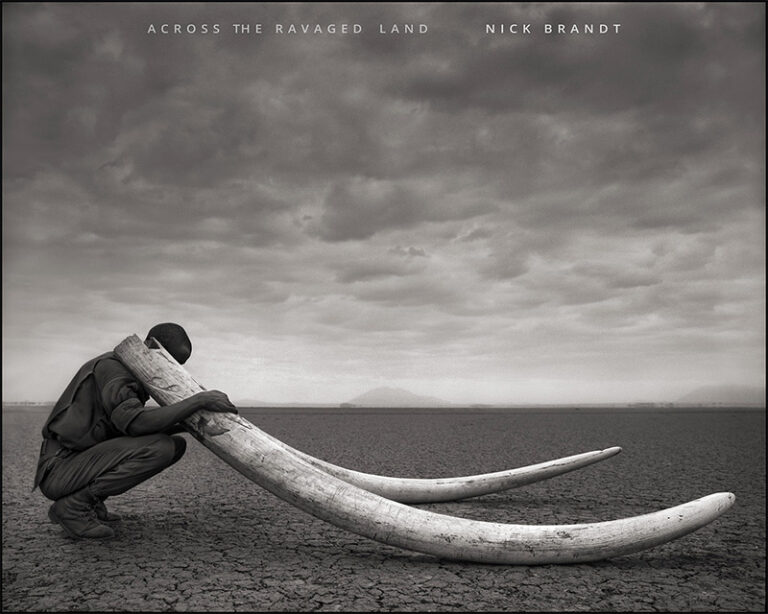
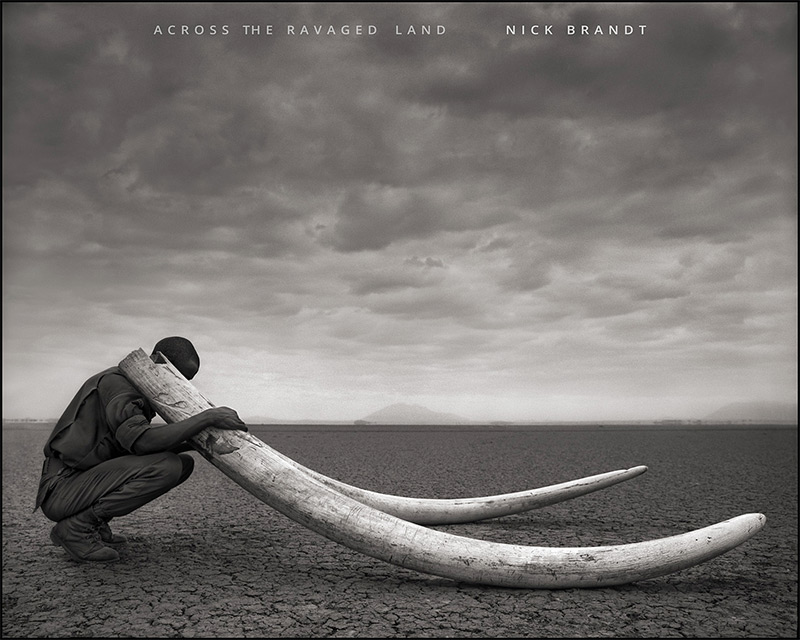
The Middle East boasts some of the world’s saltiest waterbodies, but none approach the horror of Lake Natron in Tanzania, one of the harshest environments on the planet. It’s hot, chalky waters can turn birds and land animals into calcified statues, spookily captured by photographer Nick Brandt in his new book, Across the Ravaged Land.
A disused government-owned slaughterhouse in Casablanca that ceased to operate in 2000 now hosts art exhibitions, music shows, film screenings and other cultural activities run by La Fabrique Culturelle.
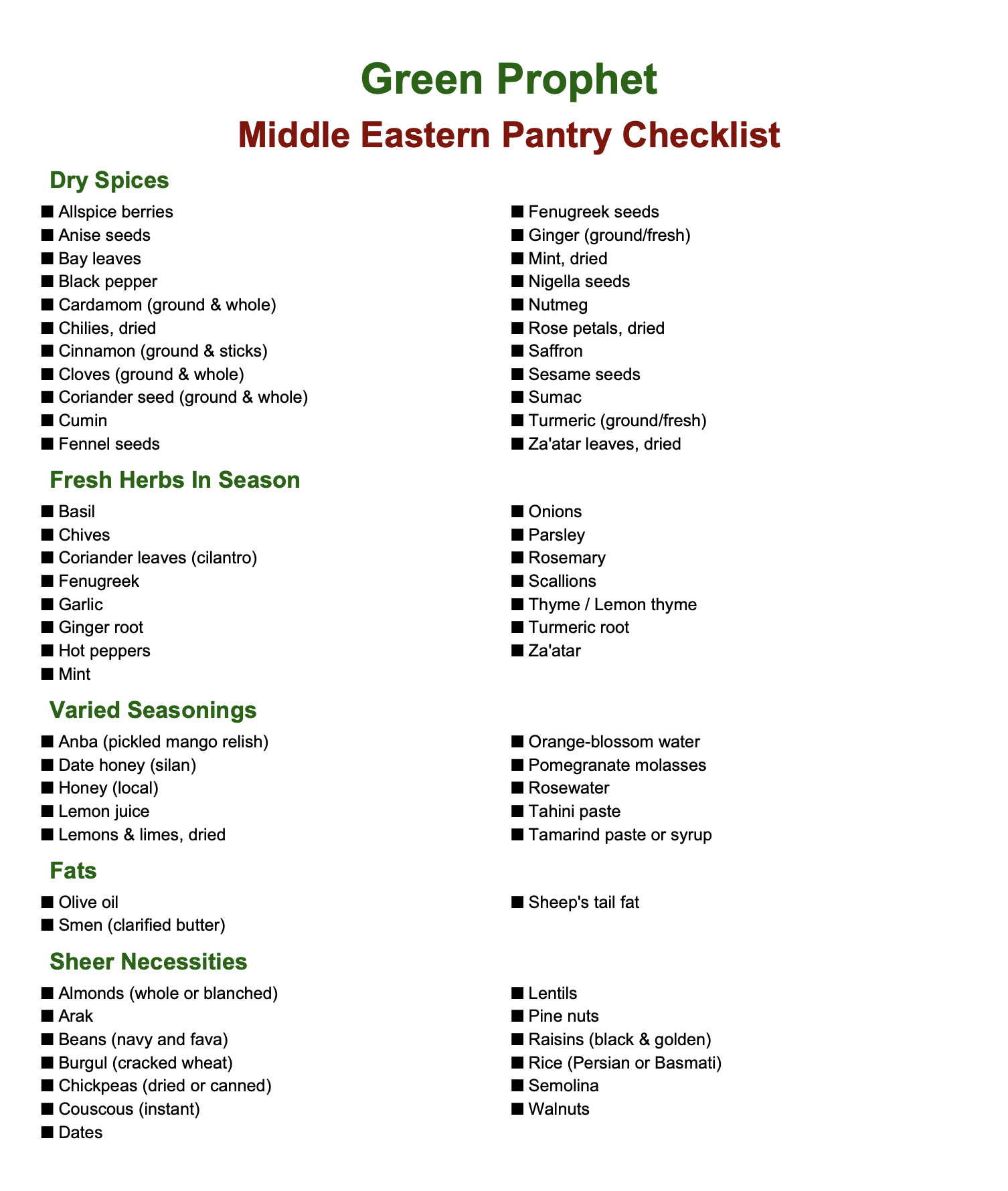
“Middle Eastern food” is a catch-phrase that embraces the cuisines of so many countries, and ethnic streams inside those countries, that a list of 60 essential ingredients can’t cover everything. But if you love the flavors of the Middle East…be it cumin-scented, crunchy falafel or the fragrance of rose-water in pastries like ma’amoul, it’s worth organizing space in your kitchen for the ingredients listed below.
You probably already have many of the suggested items in this post. We have also posted recipes for some exotic things, like pomegranate molasses, that you can make yourself. Some items, like sheep’s tail fat, are available only in Middle Eastern butcher shops and supermarkets. Olive oil or smen (clarified butter) are fine substitutes for sheep’s tail fat.
In most cases, you can omit or substitute ingredients. Some are unique, though, like the unmistakable taste of saffron (the world’s most expensive aphrodisiac). Much as we appreciate turmeric and indeed often cook with it, it will never smell or taste the same as saffron. For the cook experienced with Middle Eastern fare, this post may look like a shopping list, useful for reminding which items to replace. For those eager to learn more about cooking Middle Easter delicacies at home, it’s a good start.
Dry Spices
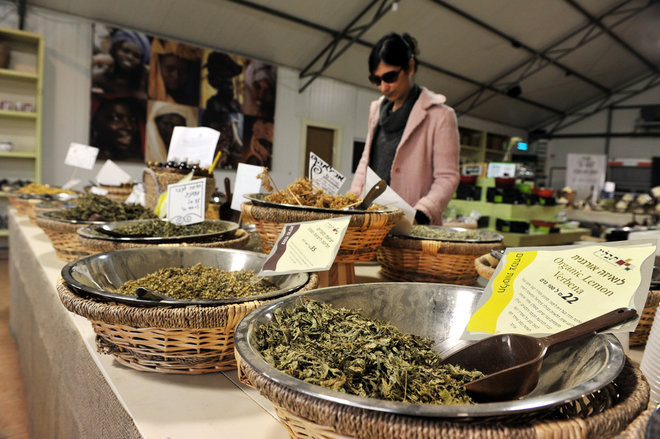
To bring out spices’ best flavors, buy them whole, in small quantities, and grind them yourself. A traditional mortar and pestle takes little space in the kitchen and does the job quickly.
Allspice berries
Anise seeds
Bay leaves
Black pepper
Cardamom, both ground and whole seeds
Chilies, dried
Cinnamon, both ground and in sticks
Cloves, both ground and whole
Coriander seed, both ground and whole (for grinding fresh)
Cumin
Fennel seeds
Fenugreek seeds
Ginger, ground, or fresh root in season (can be frozen)
Mint, dried
Nigella seeds (black cumin)
Nutmeg
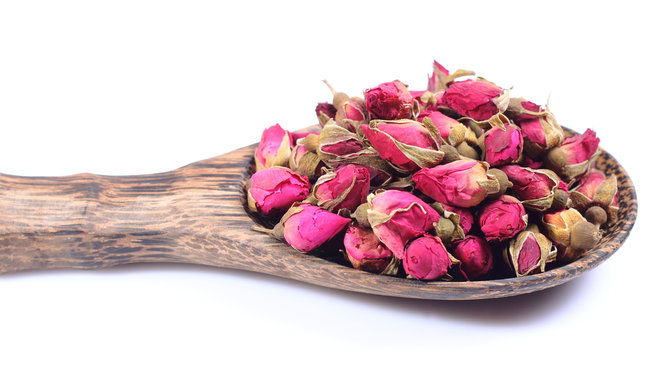
Rose petals, dried
Saffron
Sesame seeds
Sumac, whole berries or powdered (Rhus syriaca)
Turmeric, ground or fresh root in season (can be frozen)
Za’atar leaves, dried
Fresh Herbs In Season
Place your leafy green herbs in a jar of water where they can get some indirect light, and they will keep for at least a week. Some, like mint and basil, might actually grow roots. Those, you can transplant to dirt and put outside to snip bits off whenever you need some.
Basil
Chives
Coriander leaves (cilantro)
Fenugreek
Garlic
Ginger root (may be frozen, whole)
Hot peppers of all sizes and varieties and degrees of heat
Mint
Onions
Parsley
Rosemary
Scallions
Thyme and lemon thyme
Turmeric root (may be frozen, whole)
Za’atar
Varied Seasonings
If you’re not familiar with an ingredient – say, dried limes – buy only a little at first, then find a recipe using it. Once you’re comfortable with the ingredient, decide if you want to invest in a little more.
Anba, pickled mango relish (to dribble on falafel, shwarma and grilled anything)
Some items listed below, like walnuts and raisins, are not exclusively Middle Eastern, but are there because every Middle Eastern cook has some on hand, all the time.
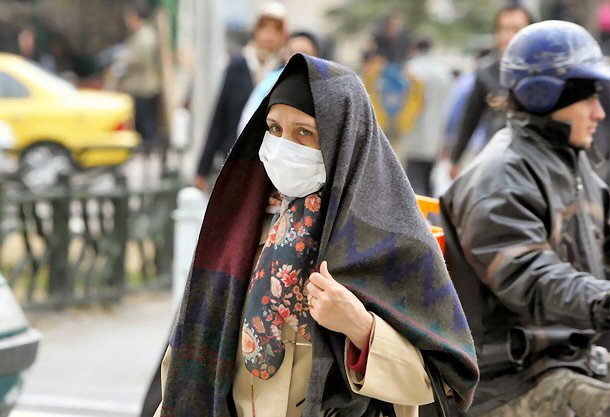
It doesn’t take a genius or a position paper to figure out that air pollution in cities and near industrial zones is toxic to human health. But now that it’s got an officially bad status with the United Nations, up there with asbestos and 100 other killer chemicals, maybe governments and cities will listen.
King Tutankhamen’s tomb continues to give up its secrets. This time it reveals something about a past far more ancient than the life and death of this boy-king some 3300 years ago.