
A disused government-owned slaughterhouse in Casablanca that ceased to operate in 2000 now hosts art exhibitions, music shows, film screenings and other cultural activities run by La Fabrique Culturelle.
A disused government-owned slaughterhouse in Casablanca that ceased to operate in 2000 now hosts art exhibitions, music shows, film screenings and other cultural activities run by La Fabrique Culturelle.
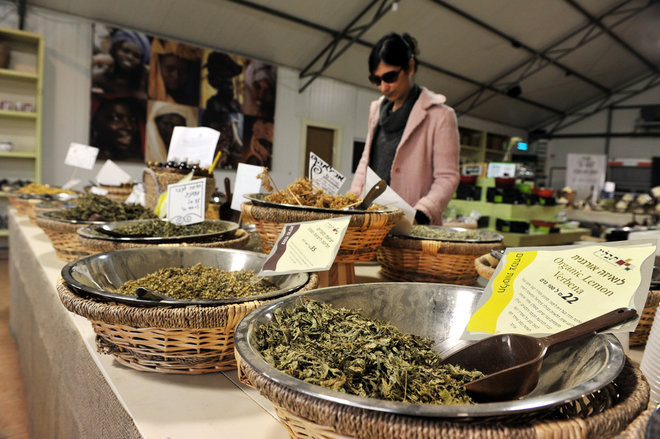
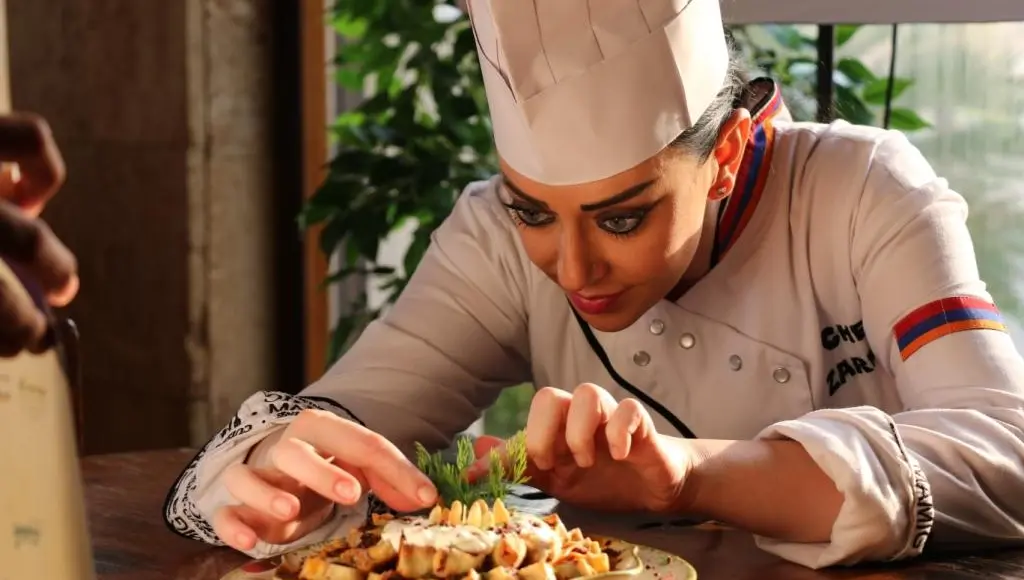
“Middle Eastern food” is a catch-phrase that embraces the cuisines of so many countries, and ethnic streams inside those countries, that a list of 60 essential ingredients can’t cover everything. But if you love the flavors of the Middle East…be it cumin-scented, crunchy falafel or the fragrance of rose-water in pastries like ma’amoul, it’s worth organizing space in your kitchen for the ingredients listed below.
You probably already have many of the suggested items in this post. We have also posted recipes for some exotic things, like pomegranate molasses, that you can make yourself. Some items, like sheep’s tail fat, are available only in Middle Eastern butcher shops and supermarkets. Olive oil or smen (clarified butter) are fine substitutes for sheep’s tail fat.
In most cases, you can omit or substitute ingredients. Some are unique, though, like the unmistakable taste of saffron (the world’s most expensive aphrodisiac). Much as we appreciate turmeric and indeed often cook with it, it will never smell or taste the same as saffron. For the cook experienced with Middle Eastern fare, this post may look like a shopping list, useful for reminding which items to replace. For those eager to learn more about cooking Middle Easter delicacies at home, it’s a good start.
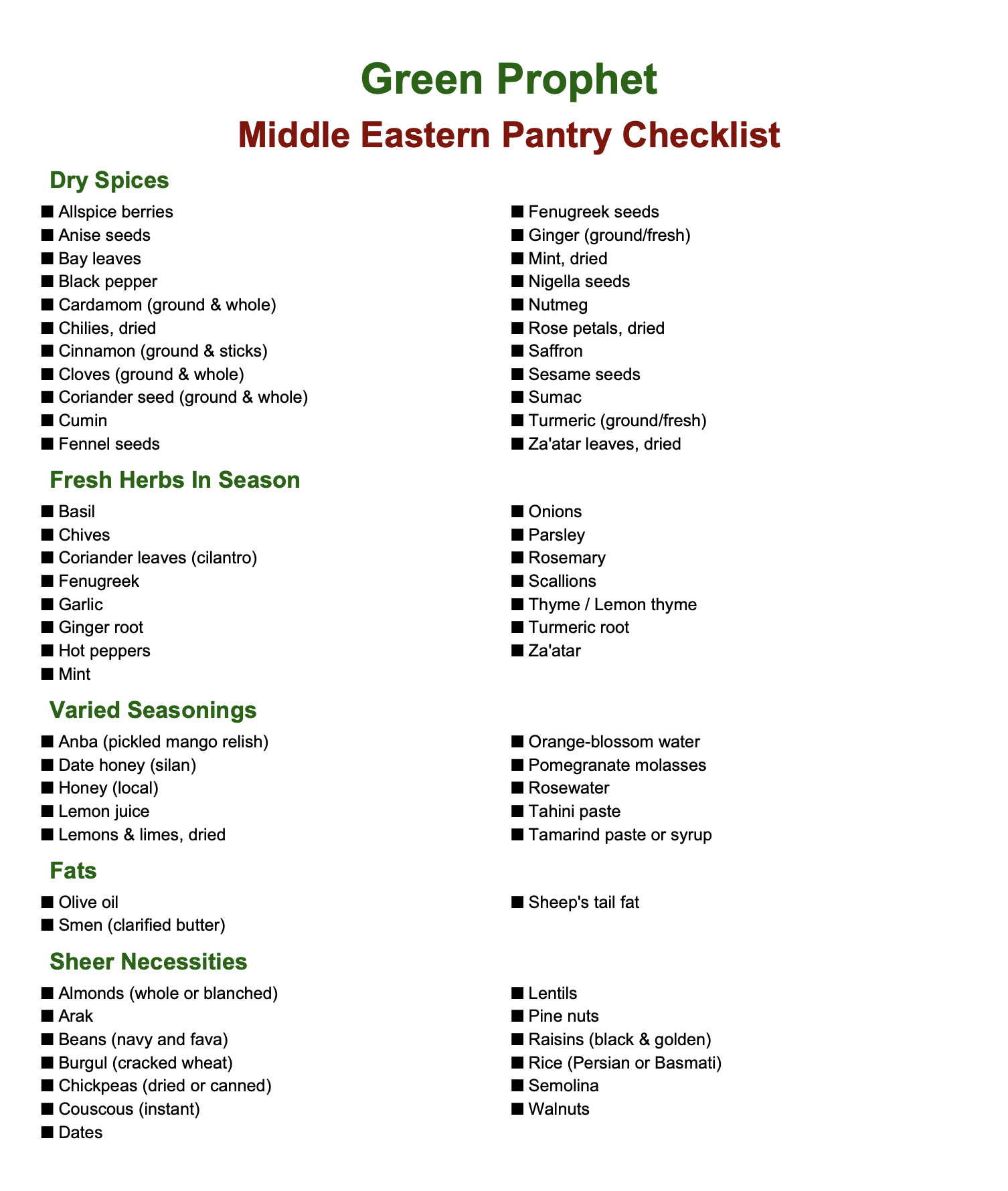
 Dry Spices
To bring out spices’ best flavors, buy them whole, in small quantities, and grind them yourself. A traditional mortar and pestle takes little space in the kitchen and does the job quickly.
 Fresh Herbs In Season
Place your leafy green herbs in a jar of water where they can get some indirect light, and they will keep for at least a week. Some, like mint and basil, might actually grow roots. Those, you can transplant to dirt and put outside to snip bits off whenever you need some.
 Varied Seasonings
If you’re not familiar with an ingredient – say, dried limes – buy only a little at first, then find a recipe using it. Once you’re comfortable with the ingredient, decide if you want to invest in a little more.
 Sheer Necessities
Some items listed below, like walnuts and raisins, are not exclusively Middle Eastern, but are there because every Middle Eastern cook has some on hand, all the time.

Dry Spices
Allspice berries
Anise seeds
Bay leaves
Black pepper
Cardamom (ground and whole seeds)
Chilies, dried
Cinnamon (ground and sticks)
Cloves (ground and whole)
Coriander seed (ground and whole)
Cumin
Fennel seeds
Fenugreek seeds
Ginger (ground or fresh root)
Mint, dried
Nigella seeds
Nutmeg
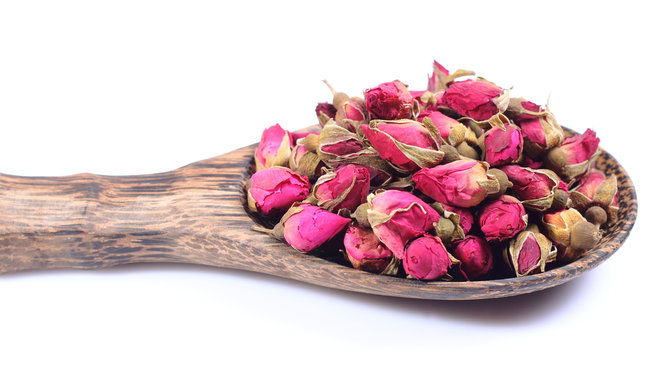
Rose petals, dried
Saffron
Sesame seeds
Sumac
Turmeric (ground or fresh root)
Za’atar leaves, dried
Basil
Chives
Coriander leaves (cilantro)
Fenugreek
Garlic
Ginger root
Hot peppers (varieties)
Mint
Onions
Parsley
Rosemary
Scallions
Thyme / Lemon thyme
Turmeric root
Za’atar
Anba (pickled mango relish)
Date honey (silan)
Honey (local)
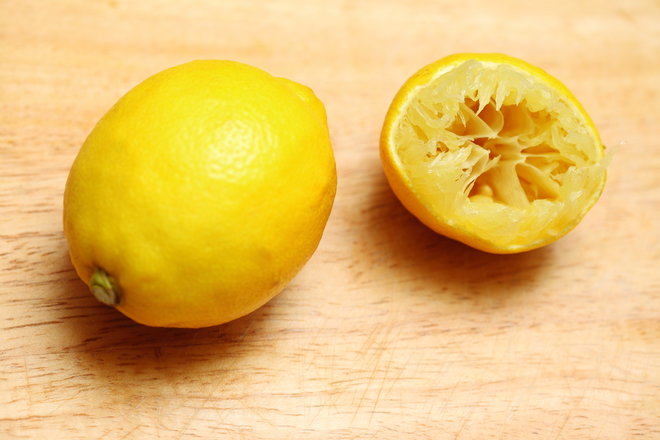
Lemon juice
Lemons and limes, dried
Orange-blossom water
Pomegranate molasses
Rosewater
Tahini paste
Tamarind paste or syrup
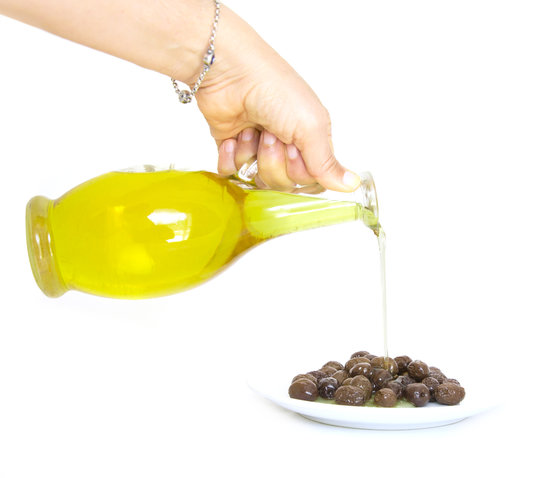
Olive oil
Smen (clarified butter)
Sheep’s tail fat
Almonds (whole or blanched)
Arak
Beans (navy and fava)
Burgul (cracked wheat)
Chickpeas (dried or canned)
Couscous (instant)
Dates
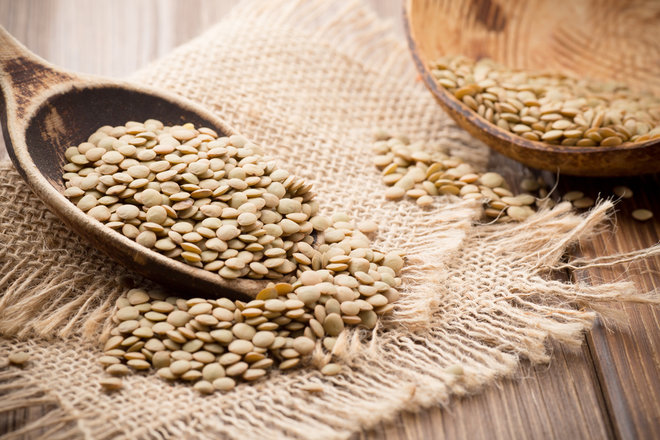
Lentils
Pine nuts
Raisins (black and golden)
Rice (Persian or Basmati)
Semolina
Walnuts
It doesn’t take a genius or a position paper to figure out that air pollution in cities and near industrial zones is toxic to human health. But now that it’s got an officially bad status with the United Nations, up there with asbestos and 100 other killer chemicals, maybe governments and cities will listen.

King Tutankhamen’s tomb continues to give up its secrets. This time it reveals something about a past far more ancient than the life and death of this boy-king some 3300 years ago.
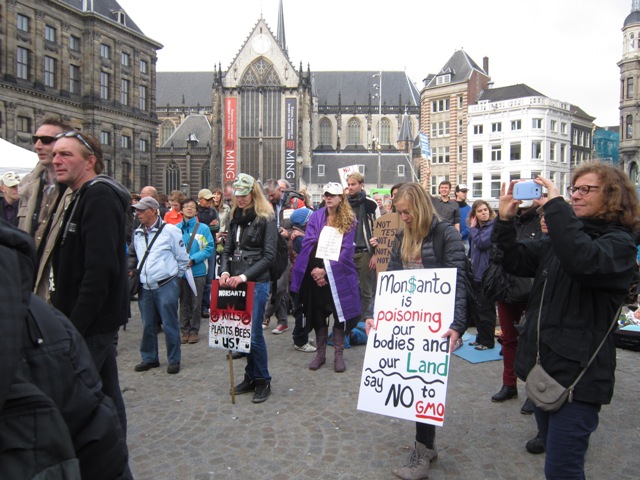
World Food Day, commemorated on October 16 is an annual event whose purpose is to find ways to alleviate hunger and malnutrition in various parts of the world. Green Prophet was there.

Dubai is getting another enormous development, except this time, Emaar Properties and Dubai Holding are pitching The Lagoons as an entrepreneurial and cultural hub for tomorrow’s youth.
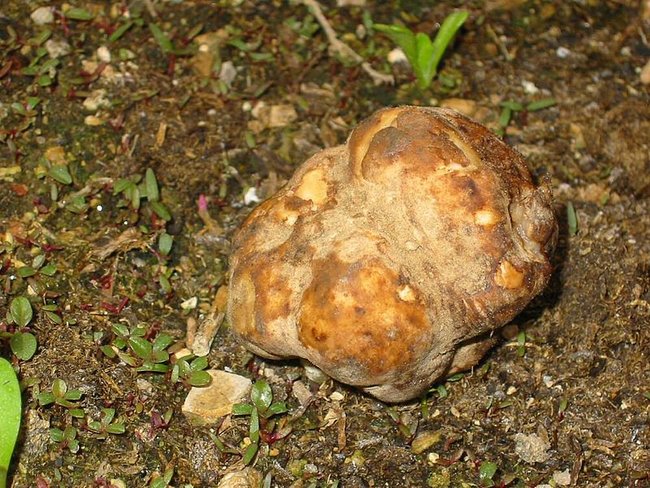
Truffles -the delicious tubers- have been a topic in food literature throughout the ages, from neo-Sumerian inscriptions in the 20th century BCE, to the writings of 19th-century chef Brilliant Savarin, to the joyful greediness of contemporary author Peter Mayle. But if you think that good truffles come exclusively from Italy and France…

An emergent studio from Kazakhstan has designed a curious glass tube home that wraps around a large Fir tree in the tectonically active mountainous region of the country.
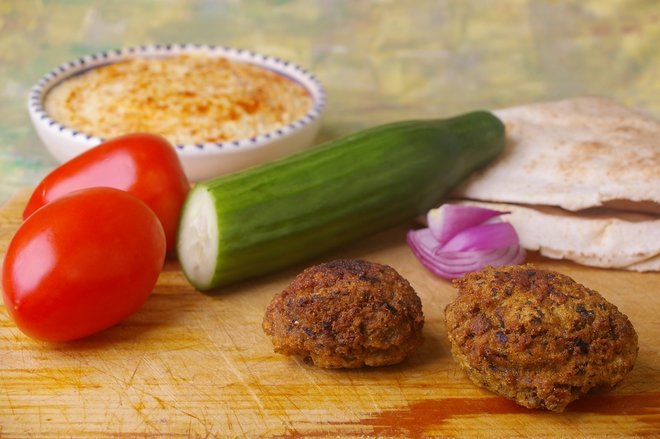
There’s nothing like homemade falafel when you’re in the mood for those savory, crunchy chickpea balls packed into a fluffy pita. We teach you how to make whole-wheat pita here. Making your own falafel, you decide exactly which fixings go into your package of chickpea goodness.
Do you like lots of chopped cucumber and tomato, or do you prefer strips of breaded, fried eggplant? Some people adore a good smear of humus (recipe for humus here) on the inside of their pita, while others go with a generous dose of tahini on top of the ensemble. And here are some suggestions on how tahini can enhance every meal. Some like both. How about tucking some thinly-sliced onion into the corners, or pickles – or a dribble of hot sauce?
Those additions, and others, decorate and add relish to your falafel. But the heart of the matter lies in the freshly fried chickpea balls and their seasonings. Add or omit salt, cumin, garlic and green herbs according to your personal taste. It’s easy to do. Make up the basic recipe, fry one ball, and taste. Then you can decide how you want to change the rest of the falafel batter – or if you like it just the way it is.
There are three things to keep in mind when you make falafel at home. One, the chickpeas must soak 8 hours, so you need do that first step the night before – or early in the morning, if you’re planning to serve falafel at dinnertime. Two, the oil has to be very hot – it should shimmer. And three, you should have your pitas ready at hand and your vegetables or relishes pre-chopped and set out in bowls, so you can fill up and serve as soon as the falafel balls come out of the oil.
Commercial falafel stands put the ingredients through a meat grinder, but home cooks produce good falafel out of food processors, and that’s what I recommend.

Falafel
Yield: about 20 falafel balls
Ingredients:
250 grams – 1- 1/4 cups dried chickpeas
1/2 cup chopped onion
2 cloves garlic, peeled
3 tablespoons fresh parsley or cilantro leaves
1/2 teaspoon freshly-ground black pepper
1 teaspoon salt
1/4 teaspoon chili flakes
1 teaspoon powdered cumin
1/2 teaspoon powdered coriander
1/2 teaspoon baking powder
4 tablespoons water
1- 1/2 cups flour
1 bottle cooking oil – 750 grams – 3 cups
Soak the chickpeas in plenty of cold water overnight. Check them after several hours to make sure that they remain covered with water as they swell.
Drain the chickpeas and put them in the food processor. Add the onion, garlic, and herbs. Pulse until you obtain a mass that sticks to itself. Scrape the sides down a few times.
Add the spices, flour, baking powder, and salt. Add 3 tablespoons of water. Run the food processor again to blend. Add the final tablespoon of water if it seems necessary to hold the mass together.
Turn the chickpea mass out into a bowl. Heal the oil in a heavy pan until it shimmers.
Wet your hands and form a round ball about the size of a walnut in its shell. Compact it between your palms. Fry this first falafel ball. Taste it and adjust seasoning in the raw mass if needed.
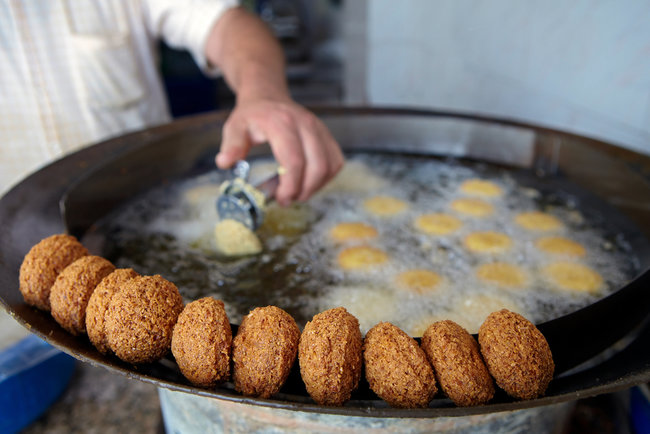
Fry until the outside of the falafel balls are brown and crisp, and the inside is cooked through. The first ball will tell you how long to keep them in the oil, although as you proceed, they will fry more quickly. Don’t crowd the balls while frying. Drain on crumpled paper and serve right away. Yum!
 More mouth-watering Middle Eastern recipes on Green Prophet:
Photos of traditional Egptian falafel and frying falafel in Lebanon via Shutterstock.
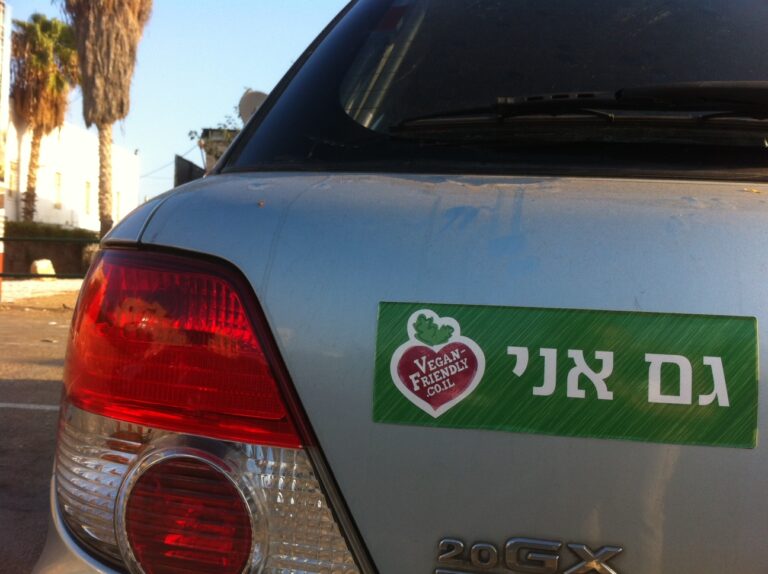
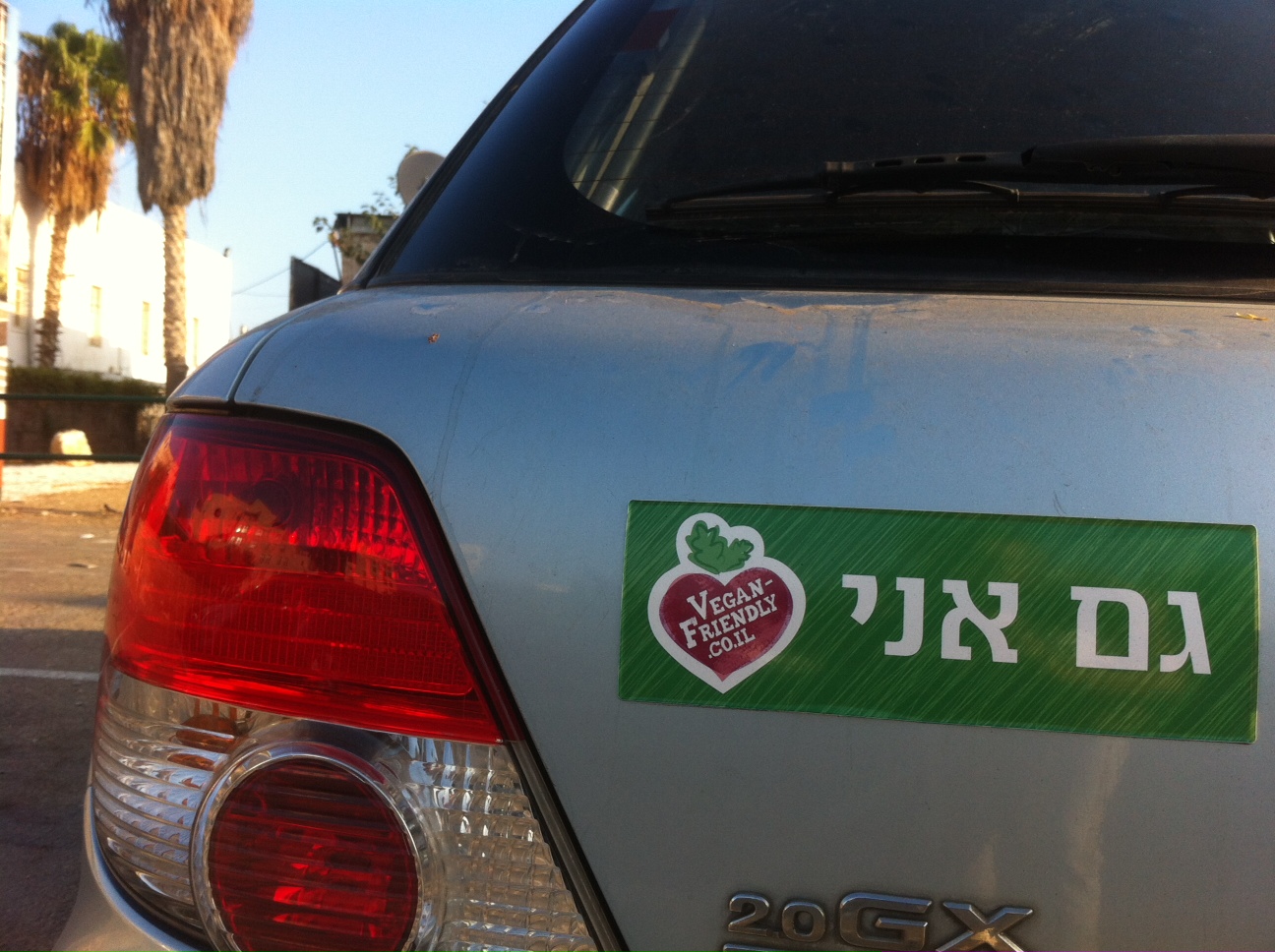
Eating vegan only has become so popular in Tel Aviv that a new NGO called Vegan Friendly are handing out certificates to restaurants who offer a vegan main course. Look for the sticker on the door.

Historically, graffiti has been used to subvert authority or spread anti-social messages, but in Morocco, one municipality has turned the art form on its head by getting kids to “tag” pro-society slogans instead.
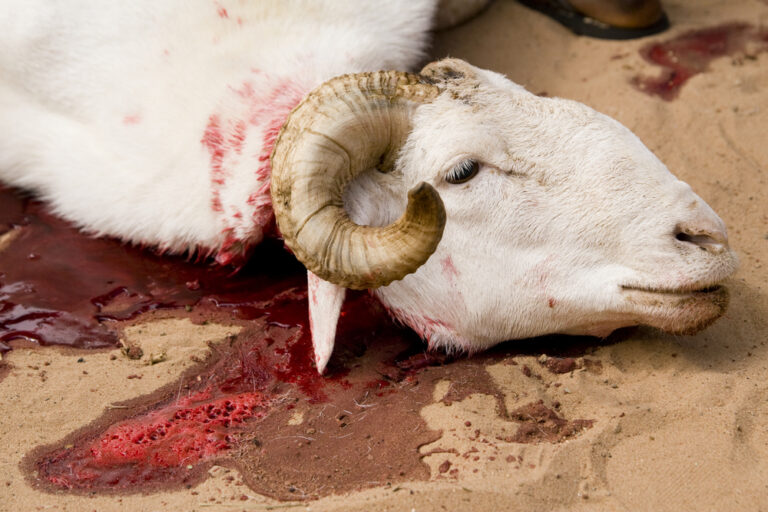
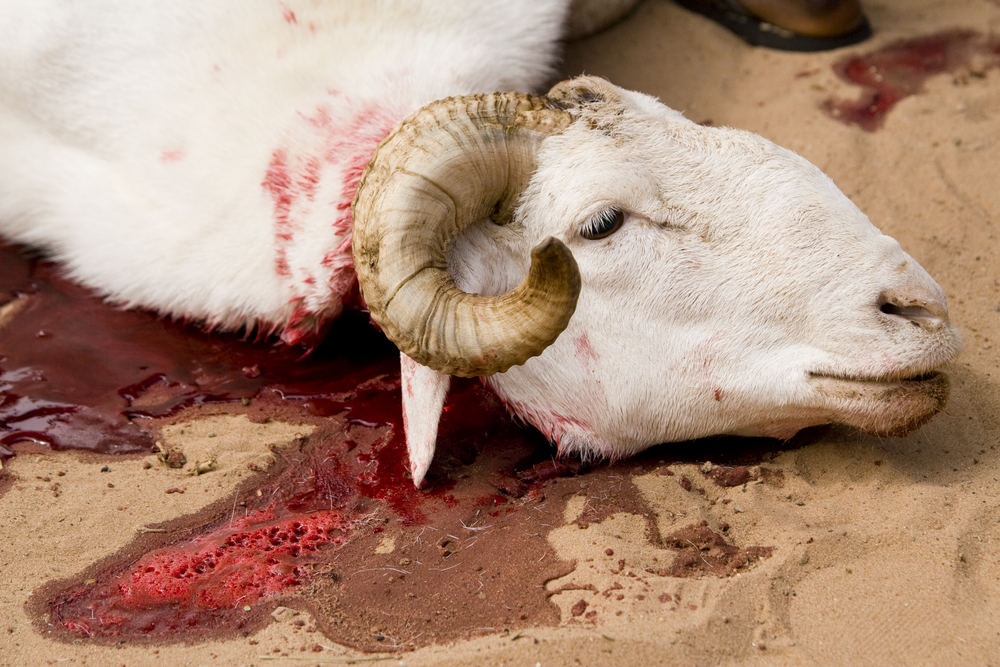 It’s the final run-up to Eid al-Adha, when Muslims around the planet commemorate God’s test of the Prophet Ibrahim by slaughtering a hapless quadruped: also called Qurbani, it’s an essential religious ritual wherein an estimated 100 million creatures will be killed.

Stella, a solar-powered family car designed by students from the Eindhoven University of Technology (TU/e) in has won the World Solar Challenge 2013, ushering in a new era of efficient, practical cruisers that get all of their juice from the sun. It should inspire sun-lovers in the Middle East.
Solar Team Eindhoven from the Netherlands spent over a year developing their family car, which features photovoltaic solar panels on both the roof and rear, according to Dezeen. The latter are flipped up to optimize solar absorption and generate energy while the car is not in use.

Stella produces double the amount of energy that it needs to run, which allows the vehicle to contribute power to the national grid.
A biennial race across roughly 1,877 miles of Australian outback, the WCS has historically attracted solar-powered vehicles that aim for speed above all.
This year, however, in an effort to encourage a greater emphasis on practical vehicles that can be scaled up for commercial distribution, the competition organizers added the cruiser category.

While still held to the same standard as other categories, including energy efficiency, features, styling, and aesthetics, vehicles in this category had to demonstrate superior comfort and practicality as well.
And Stella performed better than the other 39 teams with an average speed of 42mph, a top speed of 75mph, and an average of three people on board throughout the journey from Darwin to Adelaide.

“I congratulate Team Eindhoven on their innovation, practical design and foresight, to think outside the square and add the extra seats,” said World Solar Challenge director Chris Selwood.
“‘Stella’ is a wonderful solar car in a field of exceptional cars and teams. I look forward to 2015 and the prospect of more cruisers as we work toward the world’s most efficient electric car.”
While this competition has formerly neglected every day pragmatism for exceedingly high-tech vehicles that the average family could never use, this year’s win signals a hopeful shift toward innovations that actually benefit humanity. That was the point, after all, when Denmark’s Hans Tholstrup first conceived the competition in the 1980s.

“The design of the car of the future has to meet the needs of modern consumers,” the team said when the car was unveiled earlier this year. “The car must be capable of transporting a family from the Netherlands to France in one day, it needs to be suitable for the daily commute to work, and it needs to achieve all this in comfort.”
Solar Team Eindhoven narrowly beat Japan’s Tokai University, which won the WSC in both 2009 and 2011, and it is also the only car that competed in this year’s challenge that actually has a license plate.
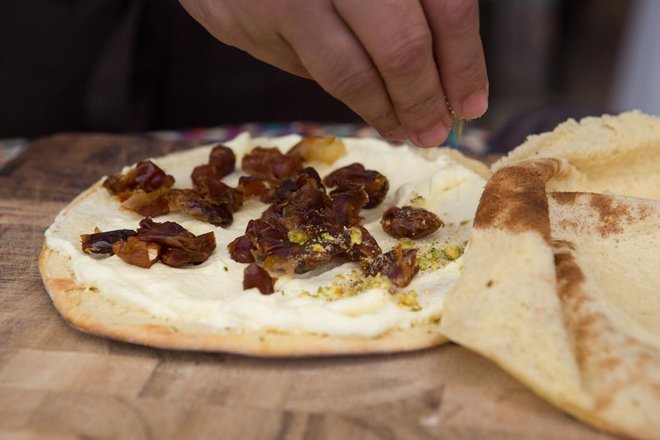
Khameer, a round flatbread of humble Beduin origins, once fell out of favor with the upscale eaters of the United Arab Emirates. But the tender round bread with its golden top is enjoying a comeback. We show you how to make it.
Gently slit open, the puffy top separates from the flexible bottom layer to make room for whatever stuffing takes your fancy. In the Mama Tani Cafe, Dubai, you can buy khameer filled with an exotic saffron-flavored cream, chopped dates and crushed pistachios – or go with something savory, like labneh (get the recipe for labneh here), basil, walnuts and black olives.
Unlike the current craze for camel meat dressed up in truffles and chocolate sauce, stuffed khameer is sold at reasonable prices. To the Emiratis enjoying the old-fashioned bread, it’s the taste of childhood snacks and times gone by. Maitha Al Shamsi, owner of the Mama Tani Cafe, claims that nostalgia is the biggest draw to her business. Al Shamsi keeps her recipe a secret, but we found this recipe and see that it’s not hard to make.
Serves : 6-8
Ingredients :
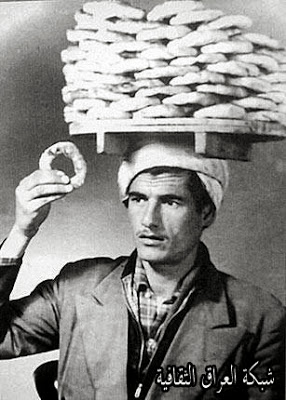
Photo of khameer bread by Amelia Johnsoon
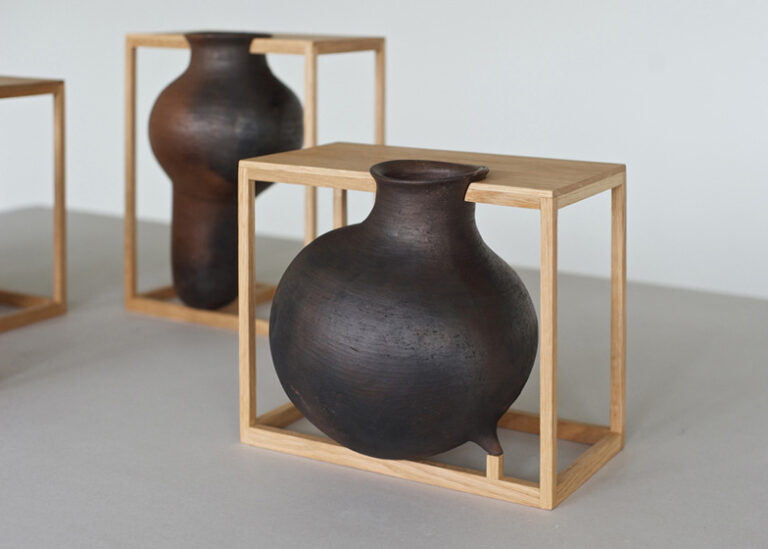
 Mexican designer Liliana Ovalle has created a series of clay vessels based on the geological phenomena of sinkholes as part of a recent exhibition at London Design Festival 2013. The bulbous, irregular shapes replicate the geometry of ground surfaces that have been erased, pulling attention not to mass, but to void.

Have news to share? Renewable energy news, architectural, artificial intelligence, biotech, sustainable design ideas, eco-architecture, green travel?
Email us: [email protected]
Get important news delivered directly to your inbox and stay connected!
© 2007 to 2026 Green Prophet, All Rights Reserved