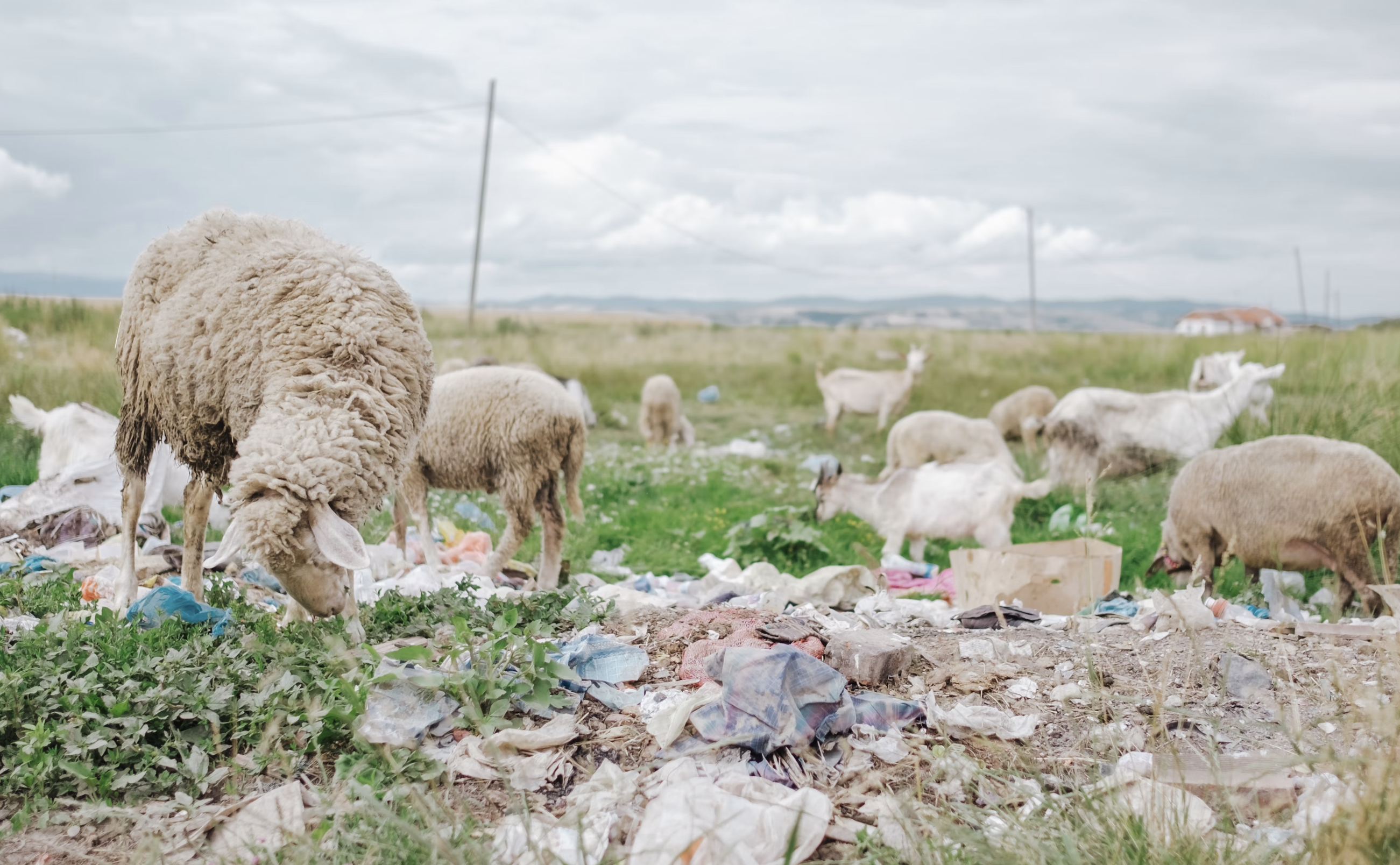
Microplastics are bits of plastic smaller than 5mm, and while we follow people like Boylan Slat and the Great Ocean Cleanup, the amount of plastics rolling around on farmland isn’t that well studied. These particles can disrupt soil structure, alter microbial communities that help transport soil nutrients to the plants, and even protect them. The plastic can be eaten by wheat and corn and beans, entering the food chain.
Sheep eat plastic, and you eat the sheep
Conventional detection methods, such as sample taken and looking under a microscope to count the bits is time-consuming, labor-intensive, and often ineffective at identifying small particles, making them impractical for large-scale monitoring.
But science to the rescue. Researchers at Clemson University and the USDA Agricultural Research Service have developed a new kind of space age glasses for seeing plastics in farms from above. The glasses “see” using what they call a hyperspectral imaging technique.
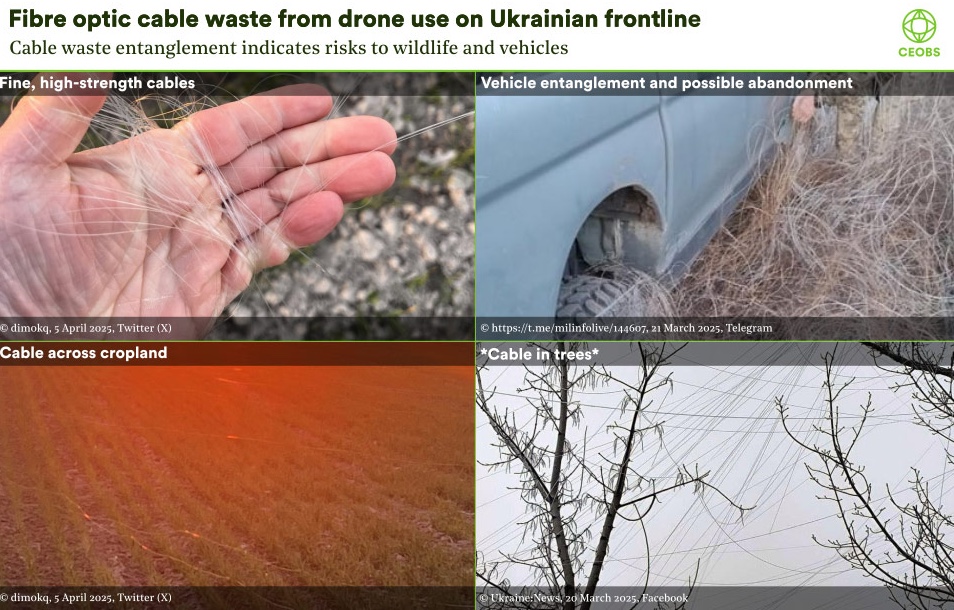
Plastic threads from warfare drones contaminate a farmer field in the Ukraine
The scientists study tested two types of short-wave infrared sensors on soil samples spiked with microplastics and evaluated their performance using advanced machine learning models. This system stood out for its ability to detect both polyethylene and polyamide particles – even at extremely low levels of 0.01-0.1% – offering a fast, accurate, and field-adaptable method for identifying soil microplastic contamination.
Why is this important? Many farmlands rely on mulch that is full of plastic. Think about the organic recycling programs that accept adult and baby diapers in the compost. This goes back to farming fields. Think about irrigation pipes and plastic sheets put on strawberry fields. Knowing what’s in the ground can help science and policy makers figure out how to stop negative effects.
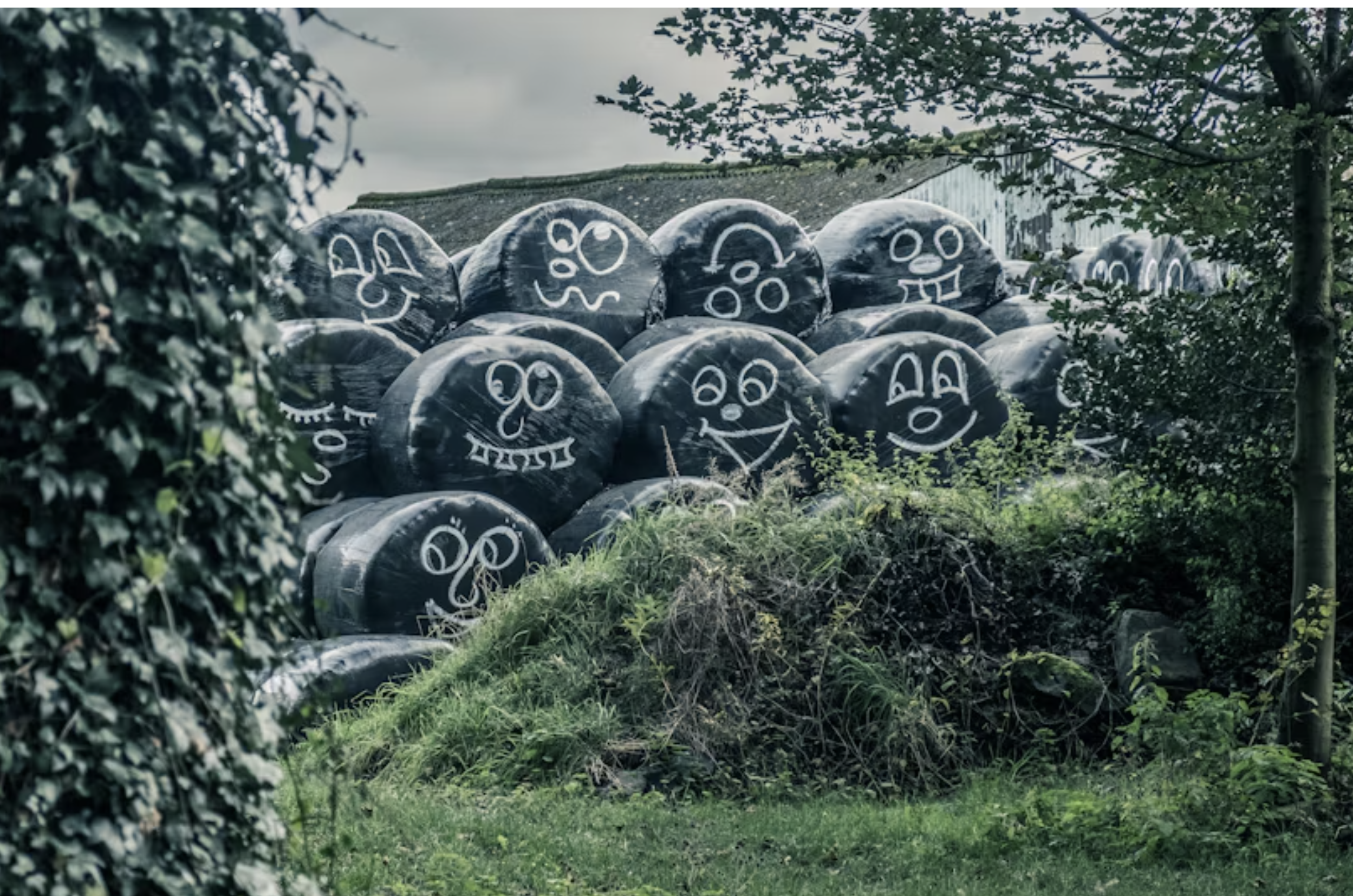
Plastic on every farm, even on bales of hay
“This study marks a significant advance in our ability to track microplastic contamination in terrestrial ecosystems,” said Dr. Bosoon Park, “The ability to screen soils quickly and non-destructively holds great promise for agricultural sustainability and environmental protection.”
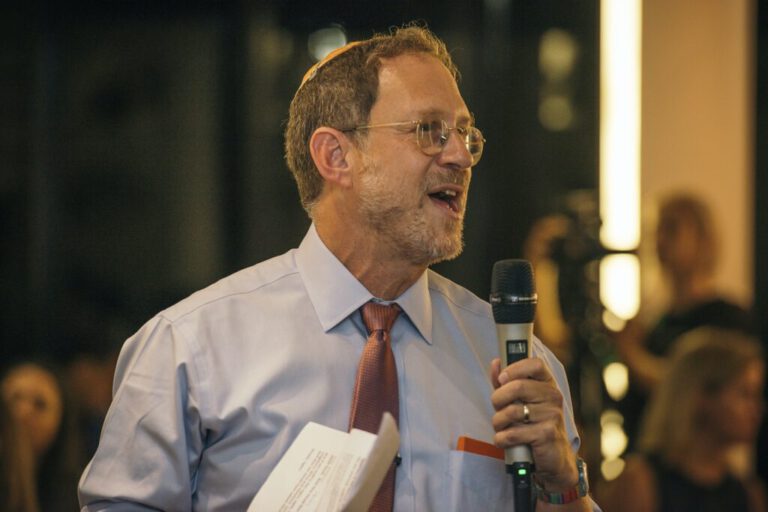
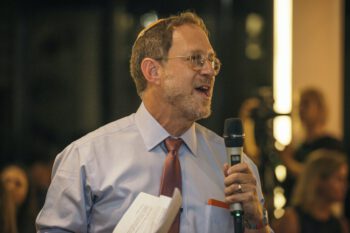
Yosef Abramowitz, CEO of Gigawat Global Credit: Nicole Kaplan
Meet Yosef Abramowitz, CEO of Gigawatt Global, bringing clean solar energy to millions around the world
Yosef Abramowitz, known also as Kaptain Sunshine, is an American-Israeli solar activist and developer. As a child, Abramowitz lived in Israel. However, during a brief couple of years back in America during the Yom Kippur War, Abramovitz faced confusion. Outside his Massachusetts window sat a gas station with a line wrapping around the block. The long line was a result of the conflict in the Middle East and the 1973 Arab Oil Embargo. Abramowitz’s confusion stemmed from this: how could America and the rest of the world rely on an unrenewable energy source as volatile as this? After this moment, Yosef sought change. While Jimmy Carter was installing solar panels in the White House, Abramowitz was working on early science fair solar projects. Eventually, his work and passion for Israel led him back to the country where he would do his most impactful work yet.
In 2006, after arriving at Kibbutz Ketura to attend the Arava Institute for Environmental Studies, Yosef Abramowitz stepped out of his van with the last rays of the golden sun shining down on the scorching Arava Desert. In the dying sunset, he found his light. Abramowitz and his associates founded the Arava solar fields. During its 2010 inception, students, researchers, and other individuals from over 58 countries came to learn. Out of this work came Gigawatt Global and the company’s mission of being a “…multinational renewable energy company focused on the development and management of utility-scale solar fields in emerging markets.”
The goal was clear. Bring climate justice to the communities that need it most.
Gigawatt Global and its CEO, Abramowitz, have brought power to some of the most impoverished and energy-deficient countries in the world, with Rwanda, Nigeria, and South Sudan being just a few examples of the hard-to-reach places where they work.
Through his work, Abramowitz has had a significant impact. In Burundi, one of the world’s poorest countries, Abramowitz and his team successfully brought solar energy to half a million people. Another example of the extent of his beneficial humanitarian work comes from Rwanda, where he brought power to the Agahozo-Shalom Youth Village. The village is home to orphans of the Rwandan genocide. “It’s both a mitzvah and a business,” Abramowitz says.
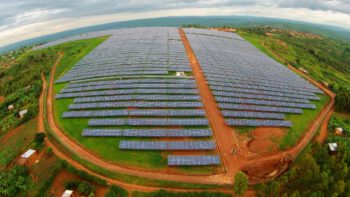
Rwanda Gigawatt Global Project
So, how does he do it? Abramowitz used to get support from the American Government. However, a majority of his funding comes from Blended Finance. This means that his monetary support comes from both public and private donors and investors. Abramowitz is always seeking international support, as well as funding from financial institutions such as the World Bank.
Abramowitz employs what he calls the Quadruple Bottom Line Impact Platform when bringing solar energy to countries with limited resources and infrastructure. While not the primary driver, each project must provide returns for investors. While these returns may not turn a massive profit, projects must ensure financial viability. Second, every project contributes to climate mitigation. Using solar energy not only provides energy to those in need but also reduces carbon emissions and air pollution associated with previously used, dirty, combustible fuels. Third is the humanitarian and social impact that a project will provide for its community. Finally, solar development can strengthen relationships between countries. It can build trust in fragile states and open doors for diplomacy.
Why does he do it? It may be hard to understand why someone would want to take on the challenges that Abramowitz does. He is not taking the easy projects. He is not developing solar fields in Europe, the Americas, or other developed nations. Abramowitz is going places that nobody else is going to. Not because of money, even though it is there, but because of his values. Abramowitz values Tikkun Olam, the act of repairing the world. Through his solar projects, he is helping the most vulnerable people on Earth, doing his part to make a difference. He emphasized the privilege that Western countries have. He also realizes that there are already help and resources available for these places and that there are numerous opportunities to do good outside of the established market.
It is not all sunshine for Kaptain Sunshine. Many of the places he is going are politically and infrastructurally fragile. This means that Abramowitz and his associates need to remain steadfast in their morals. It is essential to Abramowitz that he bring power to those in need. However, he will walk away if the corruption and values of those he is helping cannot align with his values.
However, Abramowitz strongly emphasized that the people he meets in Africa and around the world —the ordinary people —are the reason he does what he does. When the going gets tough, he remembers who he is working for. Not for a nation, government, or political party. For the people.
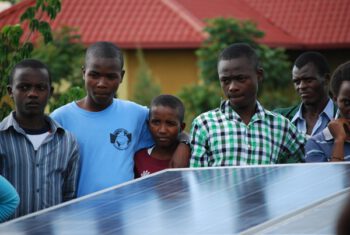
Rwandan children admiring a Gigawatt Global solar panel
There is a significant intersectionality at play in Abramowitz’s work. He described how bringing power to a country uplifts it in many other ways. Food storage, communication, and information are just a few benefits that come with energy. With these benefits, many are given a chance to succeed. In places where terror runs rampant, energy projects are run through communities to prevent them from becoming corrupted.
Yosef Abramowitz is a visionary, humanitarian, and innovator. Not only did Abramowitz help facilitate Israel’s transition to become more environmentally friendly. He helped make the world not only a cleaner place by introducing solar energy, but also a better place by bringing it to those who need it most. Following Theodor Herzl’s idea that “If you will it, it is no dream,” Abramowitz continues his dream of bringing energy to all.
Solar energy projects installed in public places need insurance.
When starting a business, one of the first things you need to put in place is a continuity plan. For those unaware, this is a strategic plan that outlines exactly how your business will continue operating should an unplanned disruption occur. It ensures that the critical functions of your company can continue during and after a crisis, whether that crisis is a natural disaster, a cyberattack, a power outage, or a legal case against you.
In terms of the creation of a continuity plan, you’ll have to investigate and try out a lot of things. It’s your job, for instance, to conduct a thorough risk assessment, a BIA – business impact analysis – go through recovery strategies, test and train some drills and simulations, and regularly update your plan based on any new risks or organisational changes. But while all of these things will help you to create a continuity plan that works, all that work will go to nothing if you don’t have a crucial safeguard in place: insurance.
Getting Insurance in 2025
View from above, Shebaya in Saudi Arabia. Travel companies and hotels need insurance
The key reason why insurance is so important to the success of your plan is because, while your continuity plan sets out how you’re going to respond to a crisis, insurance ensures you have the financial resources to actually follow through.
Without adequate coverage, even the most detailed and well-practiced plans can fall apart under the weight of unexpected costs, so you need to know you have the right insurance in place to bridge the gap between intention and action, and make sure the funds are there to respond immediately. In terms of getting the right insurance, there are many platforms out there that offer comprehensive, reliable insurance to see you through any kind of crisis.
What you’re looking for, however, is something that can be tailored specifically to your business. A strong platform, in this case, is Next Insurance, which has been recognised as one of the best platforms in the US for small businesses, especially for those who need easy, affordable insurance that can grow alongside the business itself.
Through this platform, you can tailor your insurance to cover anything from a loss of assets to more complex disruptions like data breaches, professional errors, or a sudden halt in operations due to supply chain issues. The key point, however, is that you utilise that flexibility to prepare for your vulnerabilities and have that support in place to take effect when needed.
Why Business Insurance is Fundamental to Your Continuity Plan
Let’s say, for instance, a fire has destroyed your primary office space. Your continuity plan might dictate a shift to remote work, the use of cloud backups, or a temporary relocation site – but how are you going to pay for all this? It might be true that you’ve portioned out a section of your budget to cover your business in this eventuality, but with the landscape of business changing all the time, you can’t say for sure whether those finances will be there when a crisis strikes.
You might have spent that money, for instance, on equipment upgrades, a developed marketing plan to stay competitive, or it may have gone towards unexpected staffing costs. Building and developing a business in a straight, uninterrupted line is the dream, but it’s not necessarily the reality.
With something like property insurance, however, the cost of replacing your equipment, furniture, and, more importantly, your infrastructure, will be taken care of. This will then allow you to focus on executing your continuity plan swiftly and effectively, without being paralysed by financial stress.
The same can be true if you’ve experienced a cyberattack or you’ve lost data through equipment failure. There are so many unforeseen events that can cripple your business, even with a continuity plan in place, but if you have the insurance there – and have taken the time to ensure it’s tailored and suited to your company – you’ll know that you have the means to navigate these events and come out on the other side. This will then give you the peace of mind to grow and develop confidently, without any stress that the work you’re putting in will come to nothing.
The IDF spokesperson desk told Green Prophet: “The IDF enforces the security naval blockade on the Gaza Strip and is prepared for a wide range of scenarios, which it will act upon in accordance with the directives of the political echelon.”
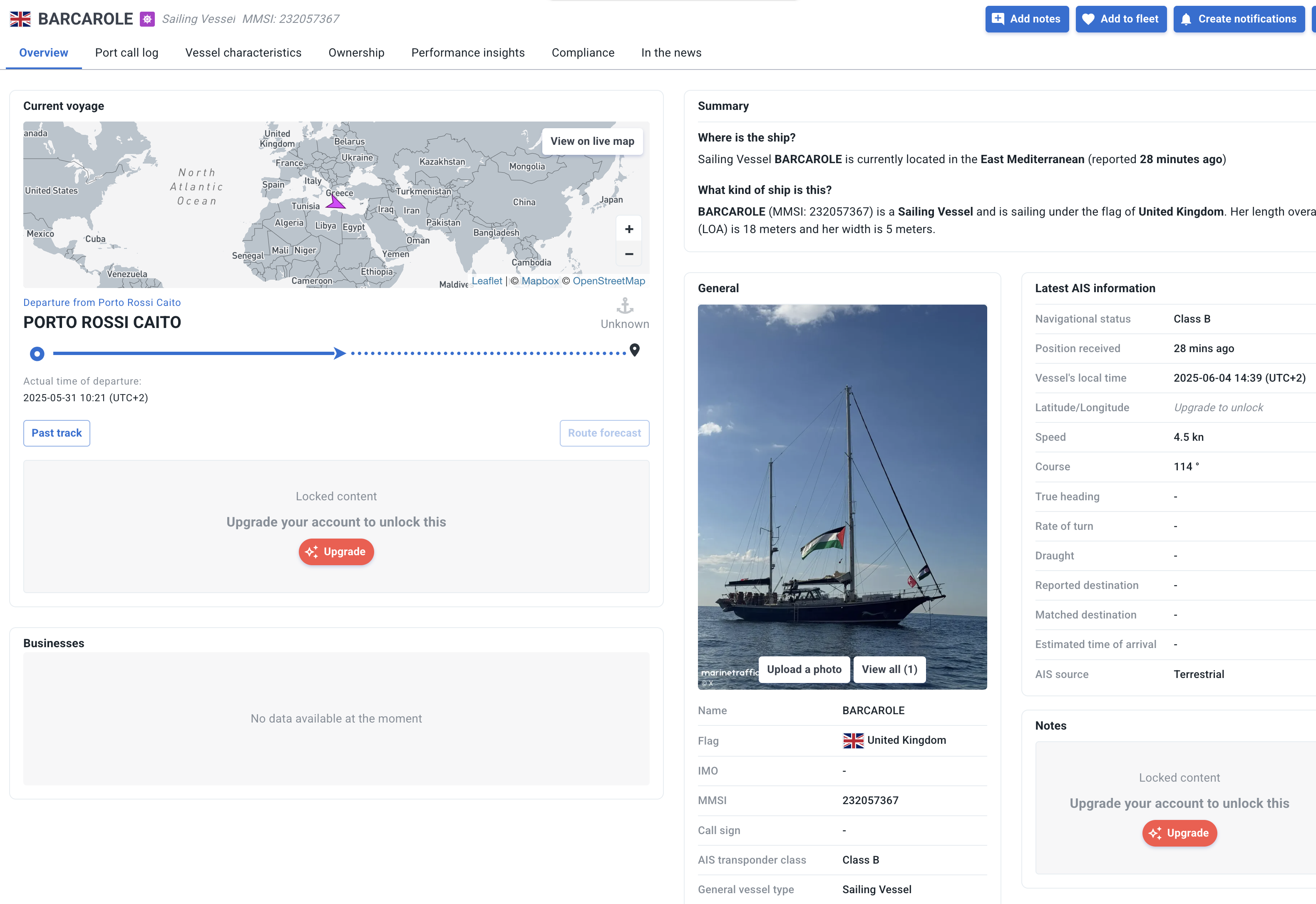
Green Prophet tracked down the phone number listed as the “owner” of the boat, the Barcarole, not the Madleen as it’s painted on the boat. Our intern reporter Max Izaks called the number and a man picked up who didn’t seem to understand English. He said he was not on the boat.
“He sounded confused and I tried asking him a bunch of quick questions and he didn’t really know what I meant. He sounded Middle Eastern maybe,” says Izaks.
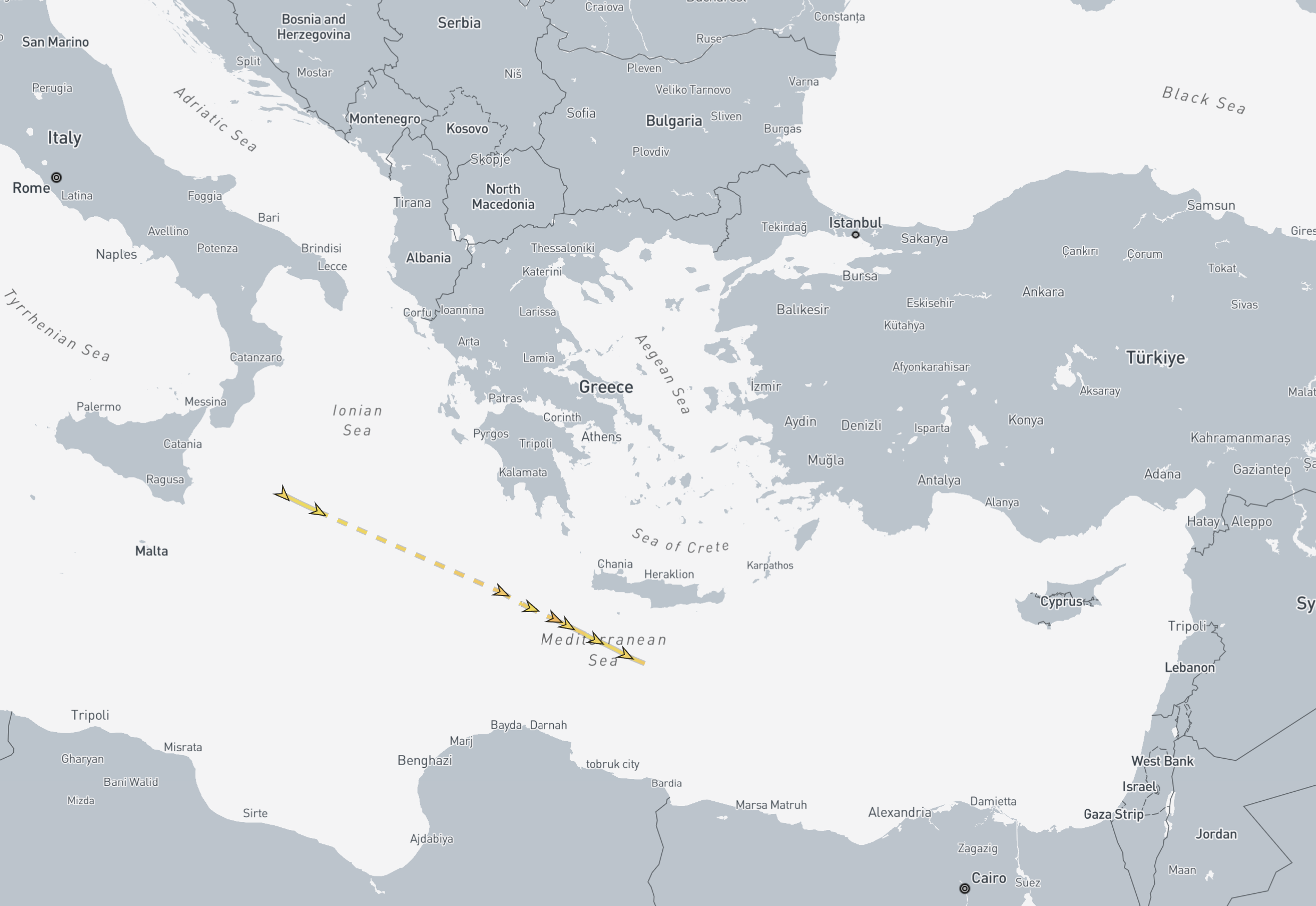
The single boat carrying 12 crew members departed from Catania, Sicily, on June 2, aiming to break the blockade of Gaza and deliver much-needed medical aid. Despite its lone status, the mission is being referred to as a “Freedom Flotilla” by supporters. Listed in maritime records as Barcarole, the British-flagged, Dutch-built schooner is typically docked in Lac du Bois de la Cambre, Belgium. The schooner was built in 1974.
A photo taken en route today by an Artur Skipper, shows the sails down, suggested the sail boat is cruising by diesel engine.
Gaza freedom flotilla of one boat. When there is no wind the 18x5m boat runs on a 170hp diesel fueled engine.
The 18-meter-long schooner, built by VAN DAM NORDIA in the Netherlands, is powered by a 170 hp Ecotec diesel engine and cruises at about 5.6 knots (approximately 10.4 km/h). While it can sail, the vessel reportedly relies on engine power when wind is absent. It is equipped with modern amenities including air conditioning and a television.
Israeli military officials expect the boat to arrive within a week. At least one of the activists on board has previously been denied entry into Israel. According to a statement published in Hebrew media, the IDF plans to intercept the vessel and escort it to the Port of Ashdod, where the activists will likely be apprehended and deported. Defense Minister Israel Katz is expected to make final decisions later this week.
Freedom Flotilla tracker on route to Gaza, June 5, 2025 expected to arrive in Gaza in less than a week
“The IDF is prepared to operate on all fronts, including the maritime arena,” said Brig.-Gen. Effie Defrin. “We will act accordingly.”
The UK, whose flag the Barcarole flies, maintains a diplomatic mission in Israel and supports cultural exchange programs between the two nations. If the boat is found to be violating maritime law or bilateral agreements, this could potentially spark a diplomatic dispute.
Green Prophet tried calling the number listed as the cell phone link to the boat, but the person who picked up said he was not on the flotilla.
Carbon Footprint of the Voyage
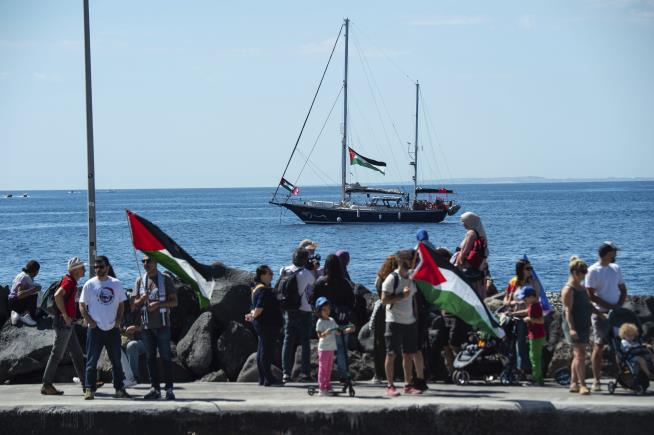
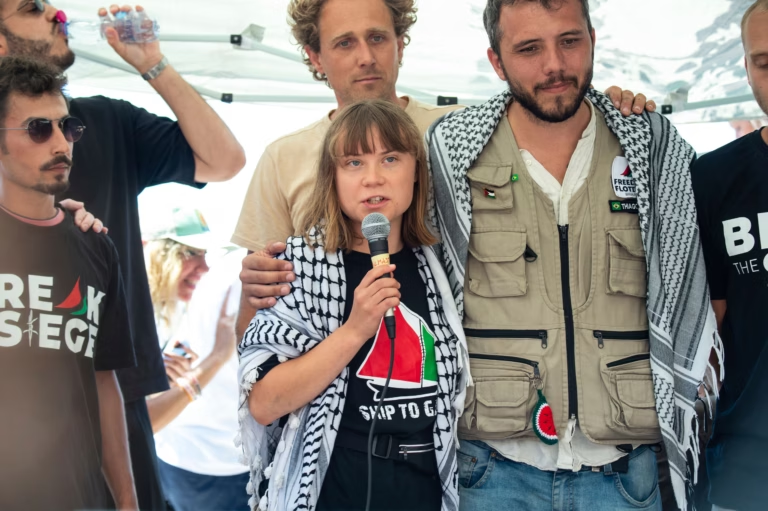
Supporters wave Palestinian flags as the Freedom Flotilla, carrying activists including Greta Thunberg, sets sail toward Gaza
Assuming the boat runs under continuous engine power with no use of sails, the estimated carbon emissions for the voyage from Catania to Gaza—approximately 1,050 nautical miles—would total 17.1 metric tons of CO₂. This assumes 6,375 liters of diesel consumed over 7.8 days of travel at 5.6 knots.
Factoring in a 15% deviation for weather routing and a 10% increase for hotel load (e.g., air conditioning and electronics), total emissions rise to approximately 20.7 metric tons of CO₂—equivalent to the annual carbon footprint of two average Europeans.
It is assumed the bilge of the boat is emptied into the sea.
Who is onboard the Freedom Flotilla and what are their nationalities?
There are 12 activists on board the Barcarole/Madleen:
Greta Thunberg – Swedish climate activist
Rima Hassan – French-Palestinian Member of European Parliament (recently denied entry to Israel at Ben Gurion Airport)
Belgian reader notes that the location of the schooner cannot possibly be docked at Lac du Bois de la Cambre, Belgium. As it is too small too hold such a boat. He suggests the brunch on the island, however: Chalet Robinson.
France, a country of smokers, will ban smoking in all outdoor places that can be frequented by children, like beaches, parks and bus stops, the health and family minister said in an interview published on Thursday.
“Tobacco must disappear where there are children,” Catherine Vautrin said in an interview published by the regional Ouest-France daily on its website.
The freedom to smoke “stops where children’s right to breathe clean air starts,” she said.
The restrictions will enter into force on July 1 and will include all places where children could be, such as “beaches, parks, public gardens, outside of schools, bus stops and sports venues,” she said.
Violators could be fined up to 135 euros ($154), she said.
Chris Dorsett, Ocean Conservancy’s Vice President of Conservation, said the news is goof for people and the planet: “Not only does banning smoking in public places protect public health, but it will also make a huge impact in keeping our ocean and beaches clean.
According to Ocean Conservancy’s International Coastal Cleanup data, cigarette butts are the number one most commonly found item polluting beaches and waterways in Europe and worldwide. In addition to shedding dangerous microplastic fibers, cigarette butts also leach chemicals into the environment, harming sensitive marine ecosystems. We applaud France for taking this important step to protect people and the environment from the threat of cigarette pollution.”
Israel and Sweden’s Andreas Weil, for instance, has led massive cigarette butt pickups and educations about smoking on the beaches of Tel Aviv and around the country.
Since 1986, volunteers with Ocean Conservancy’s International Coastal Cleanup have collected 63 million cigarette butts worldwide. In 2023 – the most recent year for which we have data, 323,431 cigarette butts were collected from beaches and waterways in Europe alone.
As for the ban, Parisian cafe terraces will be excluded from the ban, which will also not extend to electronic cigarettes.
Some 75,000 people are estimated to die from tobacco-related complications each year in France.
The shisha pipe is also known as a hookah pipe. It’s also known as a bong when used for smoking cannabis, for medical reasons of course.
According to a recent opinion survey, six out of 10 French people (62%) favour banning smoking in public places. Given the large number of Arab and North African population in France, we hope the ban extends to shisha pipes, which are thought to be safe because the tobacco smells like fruit, when in fact toxin levels can be found to be much higher than regular nicotine cigarattes.
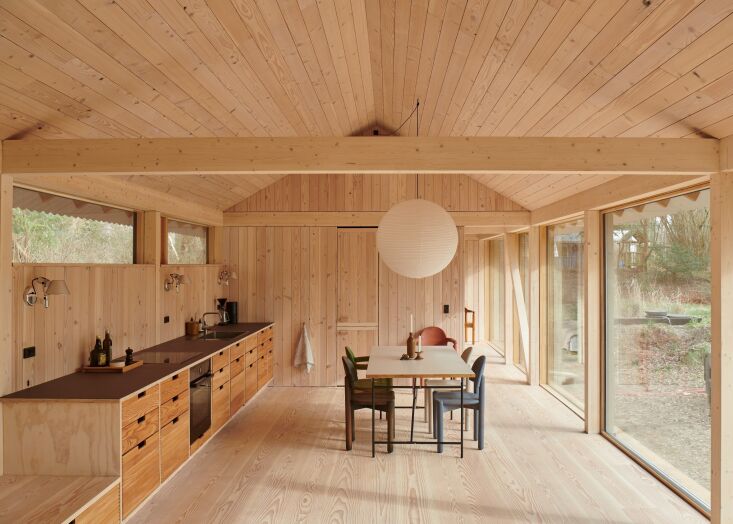
In Harmoni, an eco-house in Denmark that uses sustainable lighting
Ready to give up access to electricity? Given the rising costs of conventional utilities, it’s a lifestyle more people are willing to try. Embracing an off-the-grid lifestyle is also driven by a desire to reduce carbon footprints while reducing dependence on utility companies.
But like most aspirations, you need practical tools and implementation to make an off-the-grid lifestyle possible. Knowing what your options are to achieve your goal of greener living helps determine which path you need to take. Rechargeable lighting plays a key role in environmentally sustainable lifestyles. And here are some of the options you can take advantage of.
Battery Power
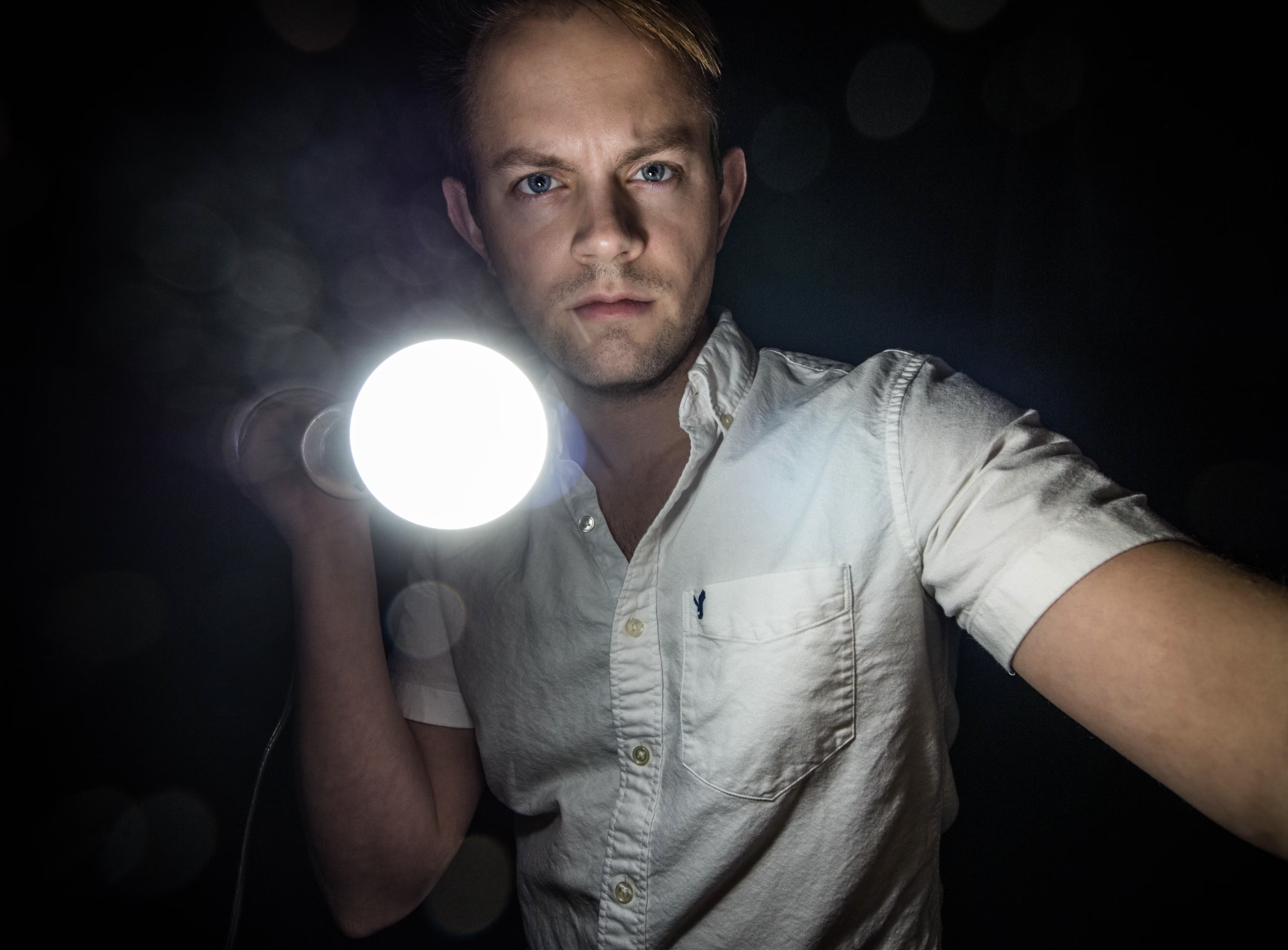
Sustainable, re-charchable, LED flashlightbatteries
Yep, batteries don’t need to be connected to an outlet to provide reliable power. While some rechargeable batteries “refuel” by storing electricity, others recharge using renewable energy sources. Solar-powered rechargeable batteries are a good example.
Lighting sources that use rechargeable batteries include anLED flashlight, a generator, and an outdoor solar light fixture. Flashlights are some of the more versatile lighting choices, since these devices offer various sizes and brightness. Brightness capability is also known as lumens. If you need strong lighting, choose a device with a higher lumen output.
But if you want something for everyday use, you might go with the lower end of the lumens range. Plus, flashlights come in smaller sizes, with some even fitting on a keychain or lanyard. Choosing a rechargeable device means you’re reducing the waste and cost associated with frequent battery replacements.
Solar Power
A Tesla Powerwall can stabilize the grid and keep your home running during a blackout
With solar panels, you can generate enough electricity to run the lights and then some in your home. The adoption of solar as a renewable energy source is growing, with installationsexpected to triple by 2034. Furthermore, solar is projected to be the largest source of energy fueling the U.S. grid by 2050.
But you don’t have to use lights connected to the grid to harness the power of the sun. Cabins can run off solar-powered generators. Lights, from outdoor fixtures to portable lanterns, can also use solar as a fuel source.
You can take lanterns with you, whether you’re hiking or sitting outside on your porch. Outdoor solar-powered fixtures can illuminate the exterior of your property, supporting your safety and security. Solar-powered lights usually don’t require much work, either. These devices are long-lasting without the need for a ton of troubleshooting or maintenance.
Wind-Ups
If you’re not afraid of a little elbow grease, wind-up lights can be a way to embrace a greener lifestyle. These lights are usually portable and run off an internal capacitor or battery. The difference is that these devices have a crank you turn to generate energy.
By winding up the light, your actions create the energy the device needs to emit light. Although wind-up lights reduce dependence on traditional power sources, they won’t necessarily light up a whole room. These devices work best in situations where you need a reading lamp and want to illuminate a smaller space.
Wind-up lights are also sustainable solutions for campsites, RV travel, and other outdoor adventures. They’re typically small enough to pack and take with you on the trails. As long as you’re prepared to be the energy source behind these lights, they can be a viable choice.
Gas Lanterns
This resort on Phucket, Thailand uses sustainable lights
Before the grid existed, people used gas lanterns to light the way. Some communities still use traditional gas-powered lanterns, which rely on fuel like kerosene. These lanterns contain a smaller amount of fuel in a base. You switch on the lamp when you need light, burning a bit of the fuel at a time.
Gas lanterns are convenient because they’re also portable. While they do require some maintenance and safety considerations, you can use them at home and off the beaten path. Gas lanterns tend to emit a bright, white flame as long as there’s enough fuel to burn.
Besides kerosene, propane, butane, and natural gas are other fuel options. You can usually find gas lanterns at home improvement stores, sporting goods retailers, and online. Options include the more well-known portable lamps and decorative outdoor fixtures for homes.
Candles
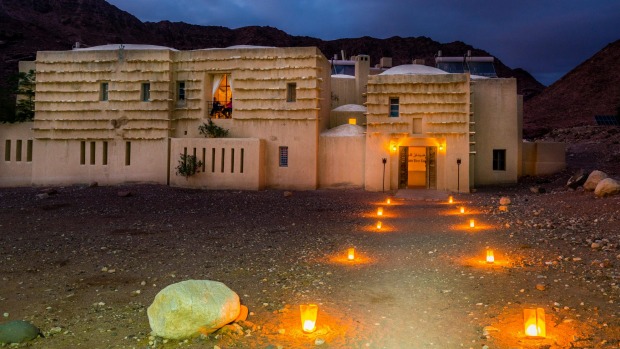
Sustainable hotel in the Dana Bioreserve, Jordan
Another traditional source of light that doesn’t require electricity is the candle. You can light them with a match or a lighter if matches aren’t your thing. Like gas lanterns, candles require a few safety considerations.
You may need a base to hold the candle steady. You’ll also want to be mindful of wind, which could cause the flame to spread to nearby objects. It’s also important to extinguish candles before turning in for the night or lying down for a nap.
If kids are in your household, teaching them about fire safety and proper candle use is an additional must. However, there are flameless candle options for those who don’t want to deal with the caveats. These are battery-powered devices that emit a soft glow. You simply turn them on and off as you need to use them.
Living Off the Grid
Supporting a greener lifestyle does mean making conscious choices about what tools and energy sources you use. You still need lighting when natural sunlight isn’t available. Devices that use rechargeable batteries, solar power, human energy, and non-electrical fuel sources can keep your surroundings bright. When you want to live off the grid, know there are sustainable ways within your reach.
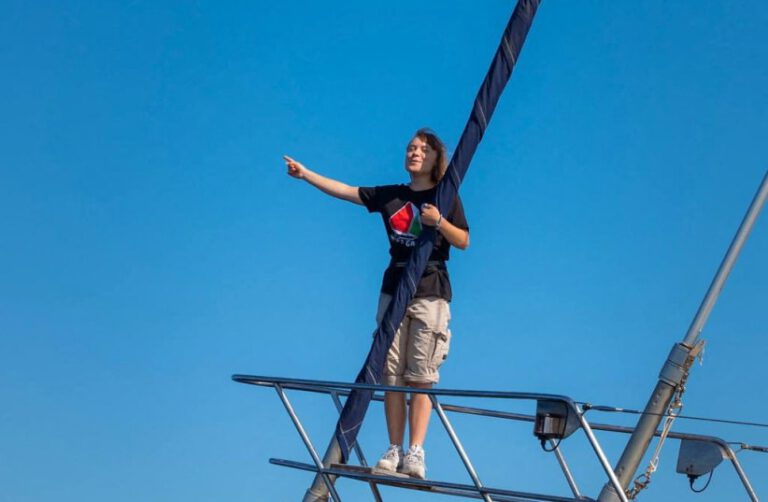
On June 1, 2025, the Madleen, a ship organized by the Freedom Flotilla Coalition to deliver humanitarian aid to the Gaza Strip, departed from Catania, Italy. It carries supplies such as water bottles, medical equipment, and other essential items. The goal of the mission is to break through Israel’s naval blockade and deliver aid to civilians in Gaza. The flotilla includes 12 participants from various countries. Some participants include members of the European Parliament, actors, and activists. The most high-profile figure on board may be Greta Thunberg.
Thunberg, a Swedish-born climate activist, describes the mission as aligning with her environmental and humanitarian values. She asserts that the mission reflects her beliefs that environmental justice must include all communities.
Thunberg has recently been an active participant in the youth-led, global “Free Palestine” movement. While the journey has drawn international media attention due to Thunberg’s highly controversial image, it also intersects with a long-standing, complex, and regional conflict—one where humanitarian concerns, national security, and environmental challenges collide.
Israel has enforced a naval blockade on the Gaza Strip since 2007 due to concerns related to Hamas. Hamas, a terrorist organization, attacked Israel on October 7, 2023, killing more than 1,200 innocent Israeli civilians and taking over 250 hostage. The blockade is supported by other nations in the region, such as Egypt. It is utilized to prevent weapons and materials that could be used for military purposes from entering the territory. Israel allows aid to enter Gaza through land crossings, which are coordinated and monitored by international agencies.
Those who are critical of the blockade, including Thunberg and her companions, argue that the embargo contributes to deteriorating living and environmental conditions in Gaza. Supporters of the blockade assert that it is essential for the security of Israel and the safety of its civilians. Additionally, they claim internal mismanagement and a lack of cooperation from Hamas limit the support that civilians receive. Gaza is facing significant environmental challenges. There are reports that 90% of the water is undrinkable. This is due to the ongoing war, governance challenges, and the over-extraction and contamination of aquifers.
Wastewater runs rampant due to untreated sewage being discharged directly into the Mediterranean Sea and other water sources. While the Israeli blockade is often cited as the most significant factor contributing to these challenges, many international commentators and agencies have also pointed to Hamas and its recent efforts to disrupt aid distribution as a substantial factor.
In the past, infrastructure projects, including water treatment facilities and solar energy systems, many of which came from Israel, have been disrupted by a lack of cooperation between the Palestinian Authority and Hamas.
Greta Thunberg’s decision to participate in the Madleen voyage highlights the issue of environmental justice in conflict zones. It also reflects the growing trend of climate activism, which involves engaging in politically sensitive regions.
Supporters wave Palestinian flags as the Freedom Flotilla, carrying activists including Greta Thunberg, sets sail toward Gaza
From Israel’s perspective, the debate is distinguishing between humanitarianism and efforts that legitimize terrorist organizations such as Hamas. Despite concerns, Israel has continued to permit and facilitate the transfer of aid, including food, fuel, water, and medical supplies, through its land crossings.
As the Madleen moves closer to Gaza’s waters, the following steps are uncertain. Previous flotillas have been intercepted and redirected to Ashdod Port, where the cargo is examined and transferred to Gaza via official land crossing channels. The IDF, Israel Defense Forces, recently issued a statement to the press. IDF Spokesperson Effie Defrin said, “The (Israeli military) is prepared to defend the citizens of the State of Israel on all fronts — in the north, the south, the center and also in the maritime arena.
“The navy operates day and night to protect Israel’s maritime space and borders at sea. For this case as well, we are prepared,” he said in response to a question about the Freedom Flotilla vessel, declining to go into detail.
“We have gained experience in recent years, and we will act accordingly.” Spokesperson Brigadier General Effie Defrin speaking to the media
What is clear is that Thunberg’s journey has drawn massive attention to Gaza’s humanitarian and environmental conditions. At the same time, it opens up a broader conversation on the role of ecological activism and justice in a time of war.
For Israel, the situation continues to be consistent with its responsibility to ensure humanitarian access to civilians in Gaza, while maintaining its security.
The Madleen—a diesel powered sail boat—is currently en route to Gaza as part of the Freedom Flotilla Coalition’s effort to deliver humanitarian aid and challenge the ongoing Israeli blockade. While the word “flotilla” typically refers to a group or fleet of ships operating together, this mission finds the Madleen sailing alone, with prominent climate activist Greta Thunberg onboard.
The boat is registered as Barcarole (MMSI: 232057367), a sailing vessel sailing under the flag of United Kingdom. Her length overall (LOA) is 18 meters and her width is 5 meters.
Gaza freedom flotilla? Virtue signaling or a real impactful protest? A hoopoe bird, the national bird of Israel is painted on the side of the boat. Are they coming in peace?
Though equipped with sails to reduce fuel use, the Madleen also depends on a diesel engine.
Still, the voyage raises questions for environmental advocates about issues like bilge discharge (are there composting toilets onboard?), fuel sourcing, and carbon offsetting—especially with a high-profile environmentalist onboard.
The current crew consists of 12 individuals from a range of countries and professional backgrounds. Notably: Greta Thunberg (Sweden) – Global climate activist, now expanding her focus to include humanitarian issues.
Liam Cunningham (Ireland) – Actor known for his role in Game of Thrones, and an advocate for refugee rights and humanitarian causes.
Rima Hassan (France) – Human rights lawyer and newly elected member of the European Parliament, known for her outspoken support for Palestinian rights. She has previously been denied entry to Israel over security concerns.
Other crew members include activists, journalists, and medical professionals from around the world—including one from Turkey, where press freedom remains a contentious issue. While the group is diverse, they are united in their mission to highlight what they describe as a worsening humanitarian crisis in Gaza.
The Madleen is reportedly carrying basic aid supplies, including baby formula, food staples, hygiene products, and medical equipment. Still, given the vessel’s limited cargo capacity, its humanitarian impact is likely to be symbolic rather than substantial. The mission is as much political as logistical, aimed at drawing attention to the blockade, which restricts the movement of goods and people in and out of Gaza.
Egypt, which also borders Gaza, reportedly charges refugees large sums—often around $5,000—for safe passage, limiting alternative escape routes for civilians.
Public reactions have been mixed. Some online voices have expressed harsh criticism and even hostility toward the voyage. Others see it as a legitimate and peaceful form of protest aimed at raising awareness.
The intersection of environmental and human rights activism is particularly visible in this mission. The coalition claims to minimize its environmental footprint using sails, yet questions remain about the broader sustainability and ethics of such journeys.
The use of flotillas to challenge the Gaza blockade has been done before, most notably the Mavi Marmara in 2010. That mission, organized by the Turkish NGO IHH, ended in violence when Israeli forces boarded the ship in international waters. Nine activists were killed, and a tenth died later from his injuries. Israel claimed self-defense, citing improvised weapons used by passengers that they found later. The IHH has faced allegations of ties to terrorist groups, which it denies. The event remains controversial and is cited by both sides of the debate as either a cautionary tale or a justification for resistance.
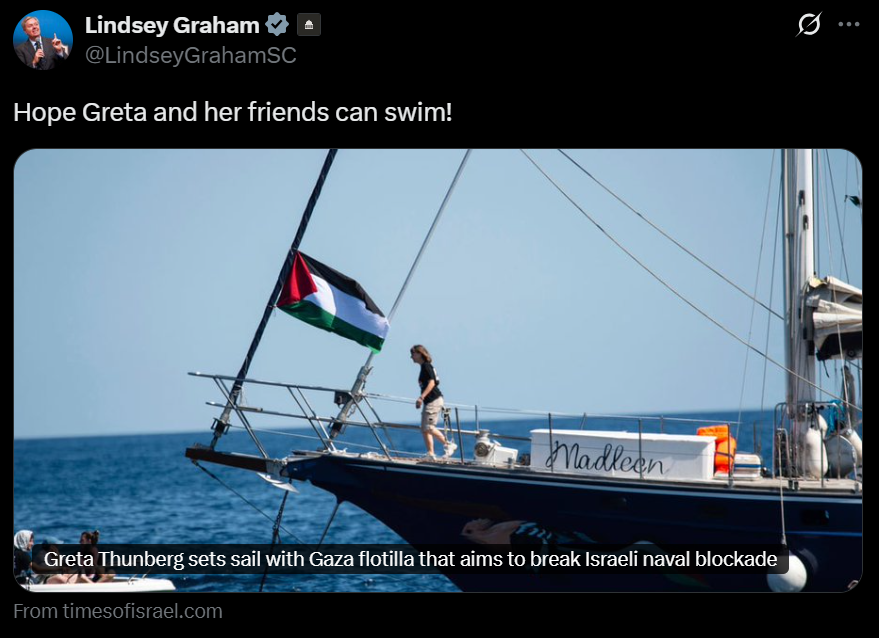
US Senator Lindsey Graham announced in a controversial post on X, “I hope Greta and her friends can swim.”
Lindsay Graham on X.
On X, the Maccabee Task Force wrote, “Greta Thunberg’s so-called “freedomflotilla” encapsulates the delusion and hypocrisy surrounding the Israel-Gaza war. This isn’t a humanitarian mission—it’s a Mediterranean leisure cruise.
“Participants are smiling, swimming, and filming TikTok videos. This is self-serving activism. And let’s be honest: she wouldn’t dare try this stunt anywhere near Hamas-controlled waters. She knows she’s safe because Israel has Hamas on the ropes. That’s what makes this spectacle possible. It’s not activism. Its performance. And it’s pathetic.”
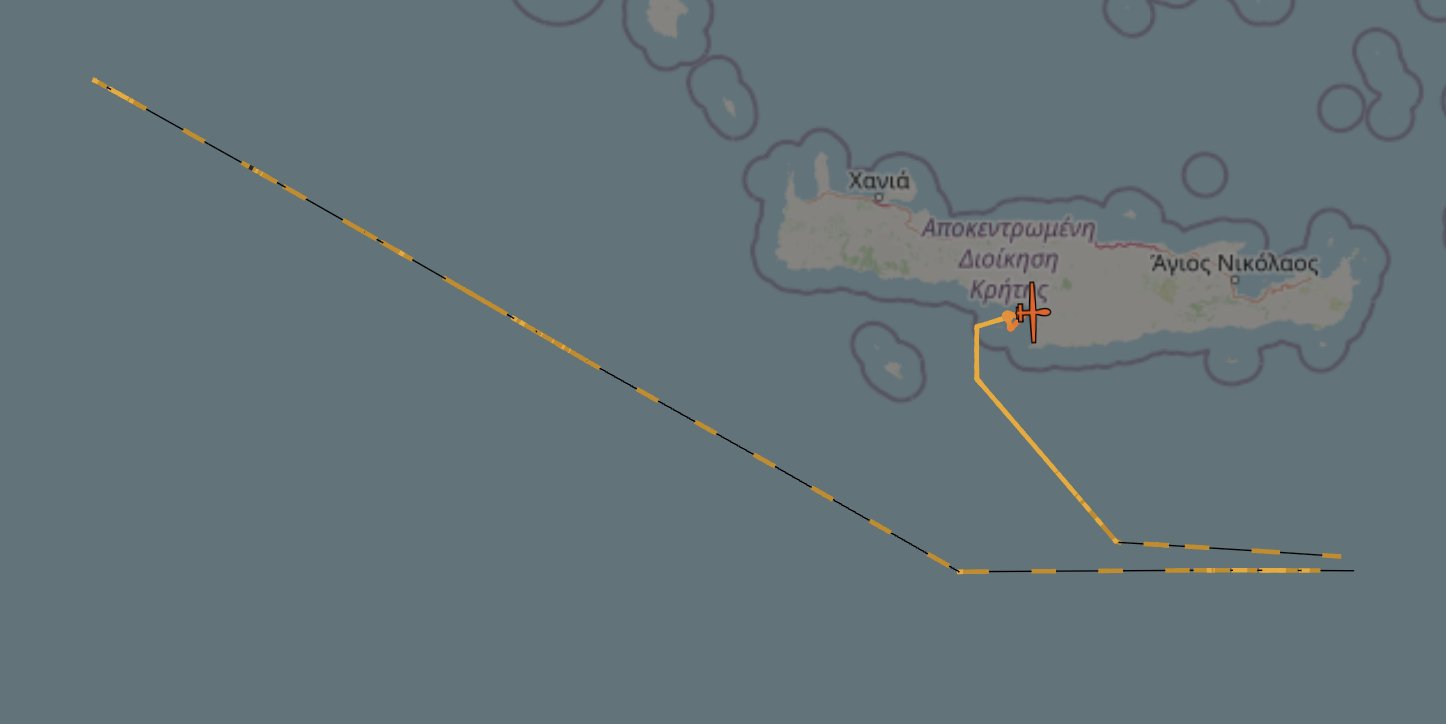
Participants on the boat posted on X about a worrying drone circling overhead yesterday, “From Forensic Architecture: Helenic Coast Guard Heron drone was seen active close to your location a couple of hours ago – ADSB hasn’t updated assets location since 20:30 pm. It did a similar trajectory the last couple of days.”
It turned out to be Greek coast guard patrol drone doing routine surveillance.
Drone deployed from Greece to survey Greta Thunberg
Among the crew is Brazilian Thiago Ávila who supports “the resistance”. He met Hezbollah’s former leader Hassan Nasrallah in 2006 and also attended Nasrallah’s funeral in Beirut in February 2025. Here he is singing a “resistance” song aboard the boat, in a video posted to X. Hezbollah is considered a terror organization by the US, Canada and Europe, the Arab League, Japan etc.
Whether the Madleen’s voyage ends peacefully or is met with confrontation remains to be seen. What is clear is that such missions continue to stir international debate—not only about the politics of Gaza but also about the evolving roles of civil disobedience, humanitarian action, and environmental responsibility in an increasingly complex world.
While violence uprisings happen in the Middle East, there is little acceptance of peaceful protest, especially in Gaza. Before the October 7, 2023 attack on Israel, people in Gaza had tried to rise up against Hamas and were met with a fatal warning or their end.
Meanwhile the Freedom Flotilla has an excellent opportunity to shed a light on Libya’s human rights abuses as it sails by Libya, a country mired in instability and lawlessness over a decade after the fall of Muammar Gaddafi. Armed groups continue to operate with impunity, engaging in extrajudicial killings, kidnappings, and attacks on civilians.
Let us hope that this Gaza “flotilla of one” can offer more than just political controversy and instead deliver a message of unity, dignity, and peace for all people everywhere.
We are waiting for a response from Israel’s IDF on what Israel plans to do once Greta Thunberg enters its territory.
Zaha Hadid may have passed away in 2016 at 65, but her architectural spirit continues to shape the Middle East with grace, innovation, and a reverence for heritage. Her UK-based firm carries her legacy of bold Middle Eastern sensuality. She wasn’t shy to dominate an all-male world of starchitects becoming one herself. She even designed refugee shelter with her own brand of culture and grace.
The latest project carrying her name—the Asaan, Misk Heritage Museum in Diriyah, Saudi Arabia—is more than just a cultural institution. It is a homecoming for Muslim and Arabian influence on design and architecture.
Designed by Zaha Hadid Architects (ZHA) which continues her legacy, and supported by the Misk Foundation, the new museum blends low-carbon adobe construction, according to press materials with bold contemporary design, becoming ZHA’s first earthen building globally. Yet despite its forward-thinking form, the Asaan Museum is built literally and metaphorically from the soil of Saudi heritage.
“Asaan” means “inheritance passed down through generations,” and that inheritance is being reimagined in the heart of the Najdi world. The museum will rise in Diriyah’s historic At-Turaif district—a UNESCO World Heritage site where 600 years of mud-brick architecture tell the story of the first Saudi state.
This is not another glass monolith. The Asaan is made of locally produced clay mud-bricks, shaped into thick, cooling adobe walls that honor the vernacular of Najdi architecture and reduce energy consumption in the blistering desert heat. The structure is organized around three shaded courtyards, anchoring programs in education, the arts, and administration, just as the heart of old Najdi homes once revolved around their shaded interior courtyards.
Zaha Hadid, born in Baghdad, Iraq was always drawn to the cultural topography of the Middle East. Her projects across the region have been provocative, poetic, and deeply aware of place. From the Bee’ah Headquarters in Sharjah—a Green Prophet favorite for its net-zero ambitions—to the King Abdullah Petroleum Studies and Research Center (KAPSARC) in Riyadh, her buildings dance between the sensuousness in math and the mystical.
But, as our resident ports architect wrote, Zaha was in no way an environmentalist, even though we wanted her to be one: “in her penchant for novel building materials, and the result was difficult-to-construct projects that often dramatically blew budgets. She showed a chronic aversion to local context, and no moral conscience when it came to environmental issues, or the health and safety protection for people who brought her designs to reality. Apparently her clients did not find this problematic.”
The Asaan Museum takes that ethos even deeper—into the very earth of Diriyah. The Asaan Museum is part of the ambitious Diriyah Gate masterplan, which aims to transform the ancient city into a 100% walkable, climate-resilient cultural capital. Public plazas, rooftop promenades, conservation labs, and interactive exhibits will bring Saudis and international visitors alike into intimate contact with the country’s layered history.
The museum is not merely a place to view the past—it is designed to engage, educate, and empower. In a region where cultural erasure often moves faster than preservation, the museum offers a new model: a living heritage center designed by a woman who understood the language of permanence and transformation.
In 2012, Green Prophet wrote about how Zaha Hadid’s work in the Middle East was “a contradiction—extravagant yet humble, futuristic but rooted.” Today, Asaan fulfills that paradox perfectly. It is at once timeless and timely, emerging from the earth to remind us that the future is not built only from new materials—but from memory, identity, and ancestral wisdom. Let’s hope they lose local builders, pay them a fair wage, and that materials are made from local, sustainable sources.
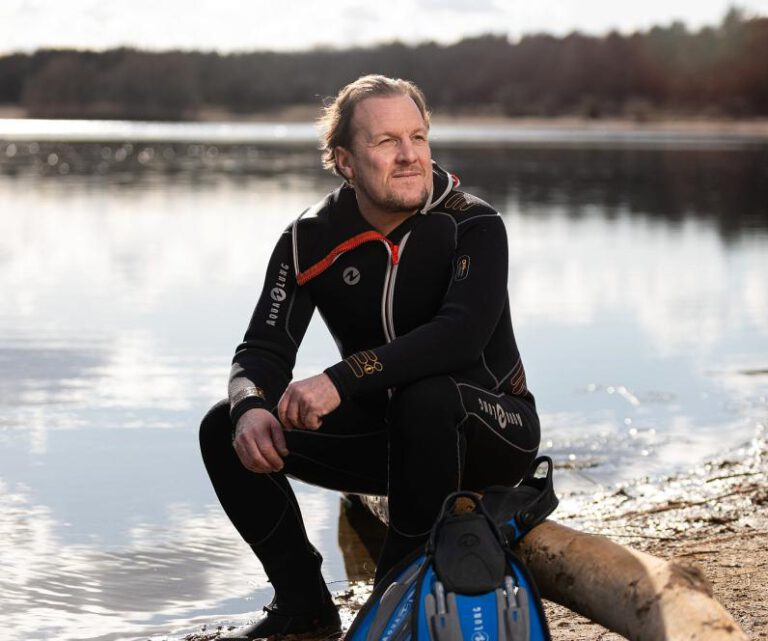
Meet Andreas Weil, founder of EcoOcean, Israel’s leading marine conservation organization which has reached hundreds of thousands and brought the concept of Blue Flag beaches to Israel.
Under the blue, sparkling surface of the Mediterranean Sea lies an aquatic world teeming with life, history, and untold stories. For Andreas Weil, founder of the marine protection NGO EcoOcean, this vast marine expanse is more than just a sea; it represents a lifelong passion and mission. Growing up in Sweden, Weil has always had a passion for the environment. Weil explained his reasons for coming to Israel as “I’m going to have fun and do good for the country.”
When Weil settled in Israel, he noticed a stark contrast between his homeland of Sweden and his new home of Israel. While Sweden was one of the first countries to expand, promote, and participate in green initiatives and recycling, Israel was lagging. There was no awareness, education, or environmental culture in the country. This troubled Weil. He saw that Israelis viewed the environment and climate change as a secondary issue. They disregarded the environment.
What troubled him also was the state of the Mediterranean Sea and the beautiful beaches of Israel being covered in trash. One point of emphasis Weil found was that Israelis did not take responsibility for the garbage that was in their seas. So, he decided to put down the facts. His initial research focussed on where the trash was coming from. He found that 80% of the garbage in the oceans was not from Gaza, Jordan, or any other country, as many had thought. It was from Israel. When framed this way, the Israelis realized that if they were to stop putting trash in the ocean, they would be 80% cleaner. Weil envisioned a new Israel, one where everyone was educated on the environment and the dangers of climate change.
Building EcoOcean
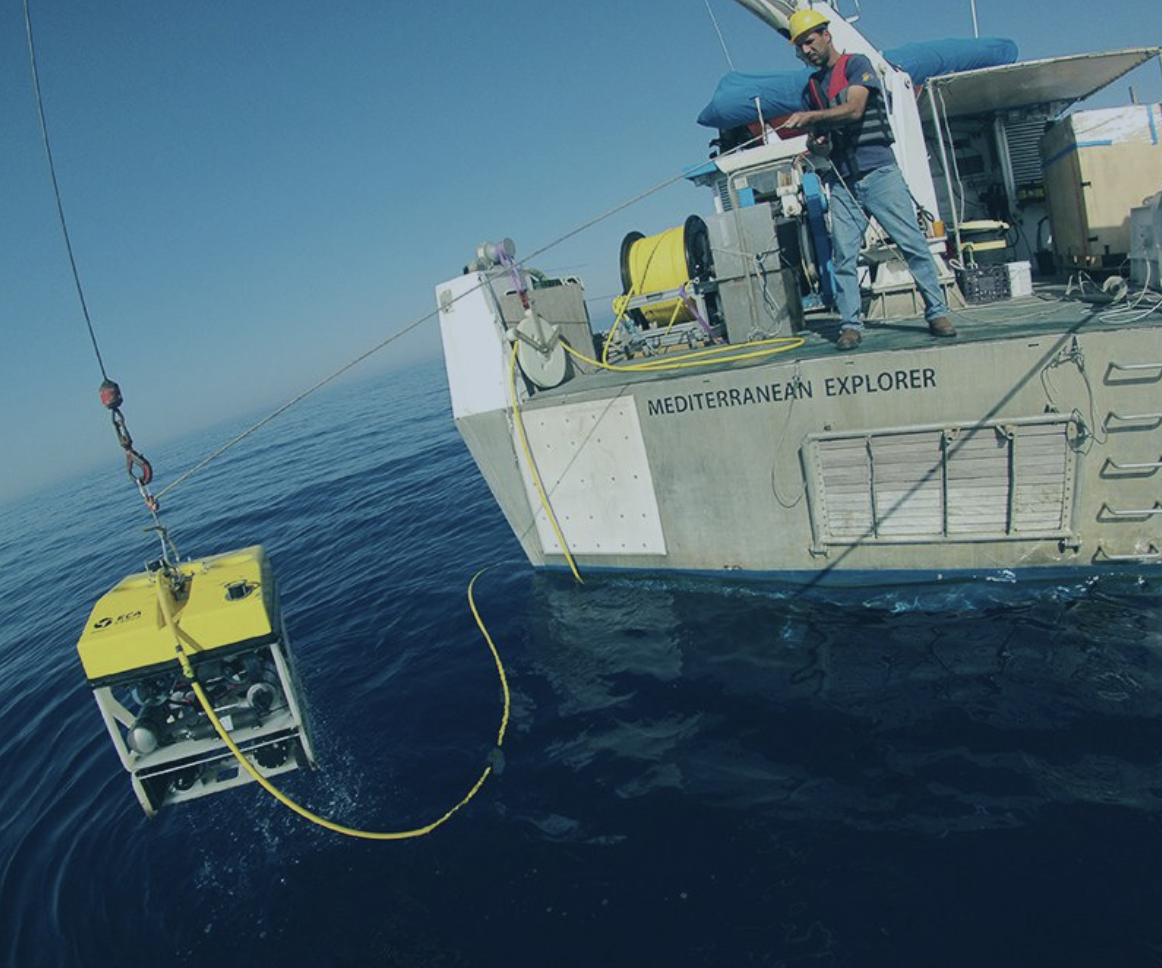
EcoOcean was born out of this vision to research, gather facts, and educate everyone. Central to EcoOcean’s success is the Mediterranean Explorer, the only privately operated marine research vessel in the region. Today, the level of research has increased, not without thanks to the Mediterranean Explorer and Weil himself. Armed with his ship and equipment, Weil set sail to find facts to bring back to Israel. The goal of the boat is to investigate water quality, marine life, trash, and other issues within the Mediterranean. With the information they collect, EcoOcean is not only well equipped to inform the public but also the government.
Discoveries are a commonality on board. While most are focused on climate research, they also have made discoveries outside the realm. One recent discovery made by the ship and its team is a sea sponge that possesses properties that could lead to a cure for Alzheimer’s.
Education is at the core of EcoOcean’s strategy. Starting with 10,000 students and evolving 20 years later to over 20,000, Weil and EcoOcean’s mission is to provide education to all on the topic of the environment and the looming climate threat. Weil has accomplished this with the help of others, starting with only two workers and evolving into a team of 18 full-time staff members and 25 freelance teachers.
EcoOcean’s Mediterranean Explorer in action
They have a learning center called Seakura, located in Mikhmoret. Their center is only the start of it. They send their team of teachers to schools across Israel to provide constant, sustained education to the youth. Teachings focus on sustainability, climate change, and environmental ethics. Additionally, EcoOcean and its educators offer hands-on experiences, such as beach cleanups, that forge a strong, authentic connection to the issue at hand. “You are responsible as a citizen not only to pay taxes,” Weil says. “You’re supposed to clean and take care of your gift.” Israel.
EcoOcean doesn’t stop at education. It also works closely with the Ministry of Environmental Protection, local municipalities, and other NGOs to influence Israel’s environmental policies. One notable example of cooperation between EcoOcean and the Ministry is their “Disposable Dishes-Not in my Sea!” campaign, which educated the public on using reusable utensils, cups, and other kitchenware on the beach. The result was a visible reduction in single-use plastics on Israel’s sparkling, sandy beaches. As mentioned earlier, the Mediterranean Explorer is used to collect research for submission to the Israeli government. The abundance of information provided allows Israeli officials to identify and address clear problems.
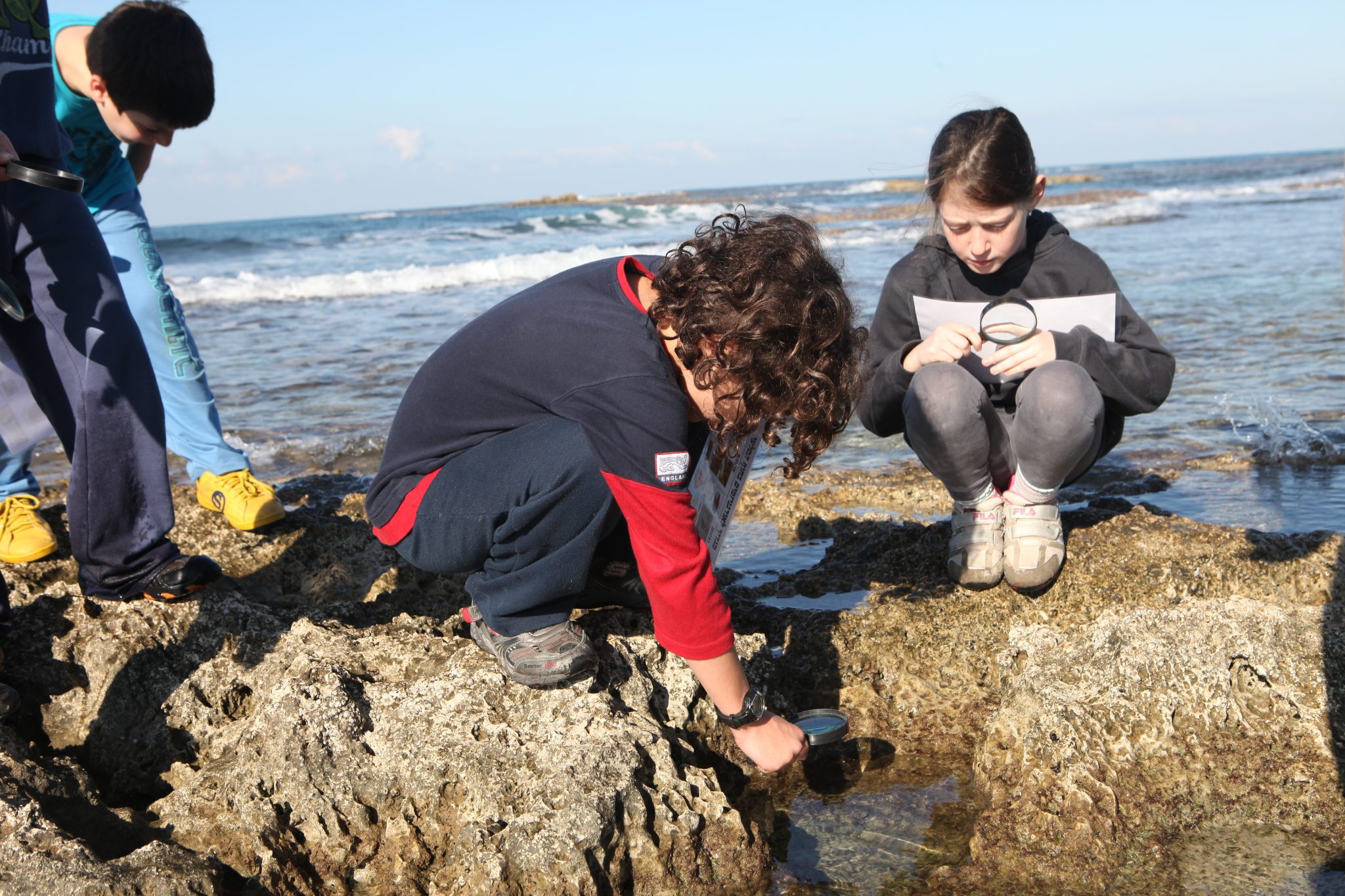
EcoOcean teaches the next generation about marine conservation
Despite regional war and political tension, Weil sees marine conservation as a unifying force. EcoOcean and Weil are committed to providing the same level of education for all Israeli citizens. He says that “The environment does not have boundaries” and that, to have widespread change, the country needs “An Israel where people feel as one.” Nothing changes without cooperation.
You need a resilient population. He strongly believes in Tikkun Olam, the concept of repairing the world. Repairs can be done through education and information.
Looking ahead, Weil and EcoOcean’s ambitions are as expansive as the sea itself. He wants EcoOcean to one day reach 100,000 young people annually. Additionally, he aims to expand volunteer programs and enhance scientific contributions through blue ocean-based, tech, and climate research. Most of all, he wants all Israeli children to have access to marine education.
“If they approach us, we never want to say no,” he says. “We just need funding to say yes to everyone.”Weil’s vision extends far beyond Israel’s shores. “The environment and the threat of climate change can be the catalyst for Middle East peace,” he believes. “We are all part of the problem. We are all part of the solution. We can all fix it if we work together.”
Andreas Weil’s legacy is not about a single shoreline, beach, or sea. It is about a shift in attitude and consciousness. EcoOcean is a national leader in driving change, and its next goal is expansion to a broader area. “I want to go on a trip one day and hear everyone say, ‘I’d never throw trash in the ocean.'” This is when he believes he will have achieved his goals.
Until then, EcoOcean will continue to sail-chart a course for cleaner seas, educating citizens and working towards a future where the Mediterranean is a shared, thriving, and clean sea for all.
Some products may bought over the counter, and some require a doctor’s prescription. But what we confidently regarded as safe allies in the fight against acne turn out not to be so safe after all. Benzoyl peroxide, an antibacterial agent found in some popular anti-acne products, may break down into carcinogenic benzine. Read Karin’s post on the FDA’s recall of anti-acne products.
Think of applying a lotion or cream containing benzoyl peroxide to your face every day. You can’t know if the gel you squeeze out of that tube is in the process of breaking down into benzine, but research suggests that it will.
So what we do to keep our skins free of acne?
Here we have to look at the origins of acne breakouts. Genetics, unfortunately, factor in. If your parents tend towards acne, it’s likely you will too. You’ll probably need to make some lifestyle changes.
Other factors causing acne may be hormonal flare-ups, stress, not enough sleep, not drinking enough plain water, and a diet rich in sugar and processed and fatty foods. Like French fries and industrially-produced hamburgers, and packaged snacks. Cigarette smoke, lots of coffee, and frequent alcoholic drinks also damage your skin.
To maintain healthy skin, we need not only to avoid junk food, but to consume foods and beverages rich in anti-oxidants. Find something that falls into the popular “super-food” category that’s appetizing, and consume it every day. Green tea, very anti-oxidant; drink it instead of Coke. Fresh produce, either cooked or raw, and preferably home-made…the list is familiar, but no less valid for that. Tons of any ideas for healthy snacks circulate around the Net. Find some that appeal to you. Then eat them, instead of junk food.
If stress is causing your skin to break out, practice yoga. Seriously. The gentle exercise increases blood circulation, bringing that all-important oxygen to every part of you, and in addition, relaxes and makes you feel more alive.
Drink a lot of plain H2O. Water scours your organs and helps eliminate toxins.
Keep your skin clean with herbal infusions that soothe inflammation and exert anti-microbial power over the grime you’re exposed to over the day.
Some suggested herbs to calm acne:
Chamomile
Lavender
Green tea
Echinacea
Rosemary
Sage
Marigold
How to use the anti-acne herbs: Pour 1/2 cup boiling water over 1 tablespoon of herb, cover, and wait 10 minutes. Strain. Splash your face with the infusion; it feels good when it’s warm, but can be used cold. Pat your face dry with a clean towel; do not rinse the tea away.
Optionally, add a drop of tea tree essential oil – one drop only – to the herbal infusion. If using the essential oil, avoid getting the infusion in your eyes.
Raw honey has antimicrobial and anti-inflammatory properties. Use clean q-tips to pat drops of honey on bad acne. Do not put the used q-tip back in the honey; get a fresh one if needed. Leave the honey on the skin for 10 minutes, the gently rinse it off.
Change your pillow case nightly, optimally after having cleaned your face.
Always remove makeup before sleeping.
Safe and natural exfoliating products
Sugar has its cosmetic uses. To exfoliate and cleanse the skin, wet your face with water or herbal infusion. Drop about a tablespoon of white or brown sugar into the palm of your wet hand and gently rub your face with it. Don’t scrub yourself to death. Rinse the sugar off and pat your face dry.
Some get acne on their backs. An effective remedy is a long, wet loofah sponge well saturated with soap, rubbed across the back in the shower. A long-handled brush with soft bristles will do the same.
Miracle meds containing benzoyl peroxide aren’t what you’re looking for anymore. Try a weekly facial mask made by combining an infusion of plantain leaf, chickweed, and marigold flowers with cosmetic-grade white or green clay. Plantain draws infected matter out of skin tissue and soothes inflamed skin. So does chickweed. Marigold flowers have strong anti-bacterial properties.
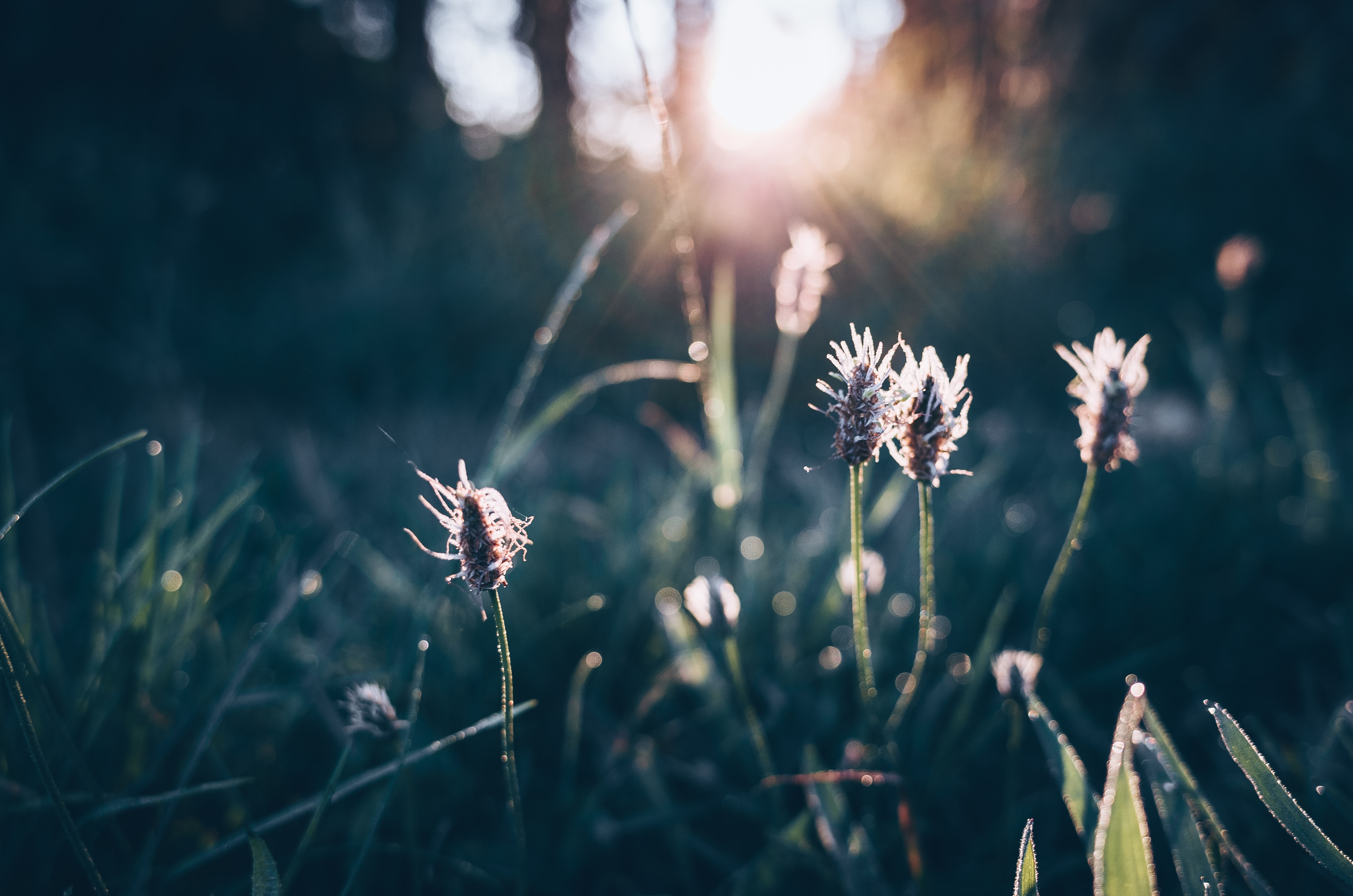
The common plantain can be found on the side of the walkway
How to make a herbal mask against acne
Have ready a teapot or clean glass jar. Put 1 tablespoon each plantain, chickweed, and marigold flowers in it and pour a cup of boiling water over the herbs. (If using a glass jar, set it on a kitchen towel to avoid thermal shock, which might crack it.) Stir. Cover the infusion and wait 15 minutes. Strain it.
Dissolve about 3 tablespoons of cosmetic-grade clay with the herbal infusion enough to make a thin paste. Apply the paste to clean, moist skin. Put music on – read a book – drink green tea – hang out for 10-15 minutes. The mask will start to dry; that’s fine. Rinse it off with warm water or herbal infusion. Pat your face dry.
Your own anti-acne face mask
If you can’t source fresh herbs, you can probably find them dried in health food stores. Or find them online. I suggest combining those plantain, chickweed and marigold, but any but any one of those noted above can be used to make a skin-healing infusion.
Chickweed is a weed, but it’s also a medicine and food and it helps fight acne
Note: Chickweed is useful in drawing out pus from inflamed pimples or boils. I have also applied chickweed to styes in the eyes and to clean up pinkeye. A poultice of fresh chickweed is best: crush a handful of clean herb in your clean hands and apply the messy green stuff to the infected area. It will start to feel warm; even hot. At that point, remove the poultice and wash your hands.
However, dried chickweed also works, if infused into boiling water as described above. In that case, use only 1/2 cup water per tablespoon of dried herb. Dip sterile cotton into the strained infusion and apply it to the infection. Discard the cotton after a few minutes and wash your hands.
A cucumber and yoghurt mask against acne
For a skin-soothing facial mask that uses ordinary kitchen ingredients, blend a washed but unpeeled organic cucumber with 1/8 cup yogurt and 1 tablespoon raw honey. Spread the mask on and rinse off after 15 minutes. It won’t be as medicinal as the herb/clay mask, but it will reduce painful redness and leave the skin softer.
Editor’s note: store bought masks are expensive and contain preservatives to stop it from decomposing and going rotten. Like good food, a healthy face mask should be made with the freshest, local and most organic ingredients. Time to start grow
I met this usual scientist from Russia who was sure that people can hear with their skin. Maybe he wasn’t so nuts after all? Scientists have no found a mechanism that help mice hear, and it’s in their whiskers. This might explain how blind voles can get around. And it may have applications in robotics.
“Whiskers are so delicate that no one had thought of checking whether they produce sounds that mice are able to hear,” says team leader Prof. Ilan Lamplof Weizmann’s Brain Sciences Department.
The study offers a unique glimpse into the complexity of natural perception, which commonly involves input from multiple senses, in this case touch and hearing. In fact humans too combine these two types of cues more often than one might think. Imagine, for example, your fingers delving into a crowded bag to search for a candy bar and the sudden, welcome rustle of the wrapper.
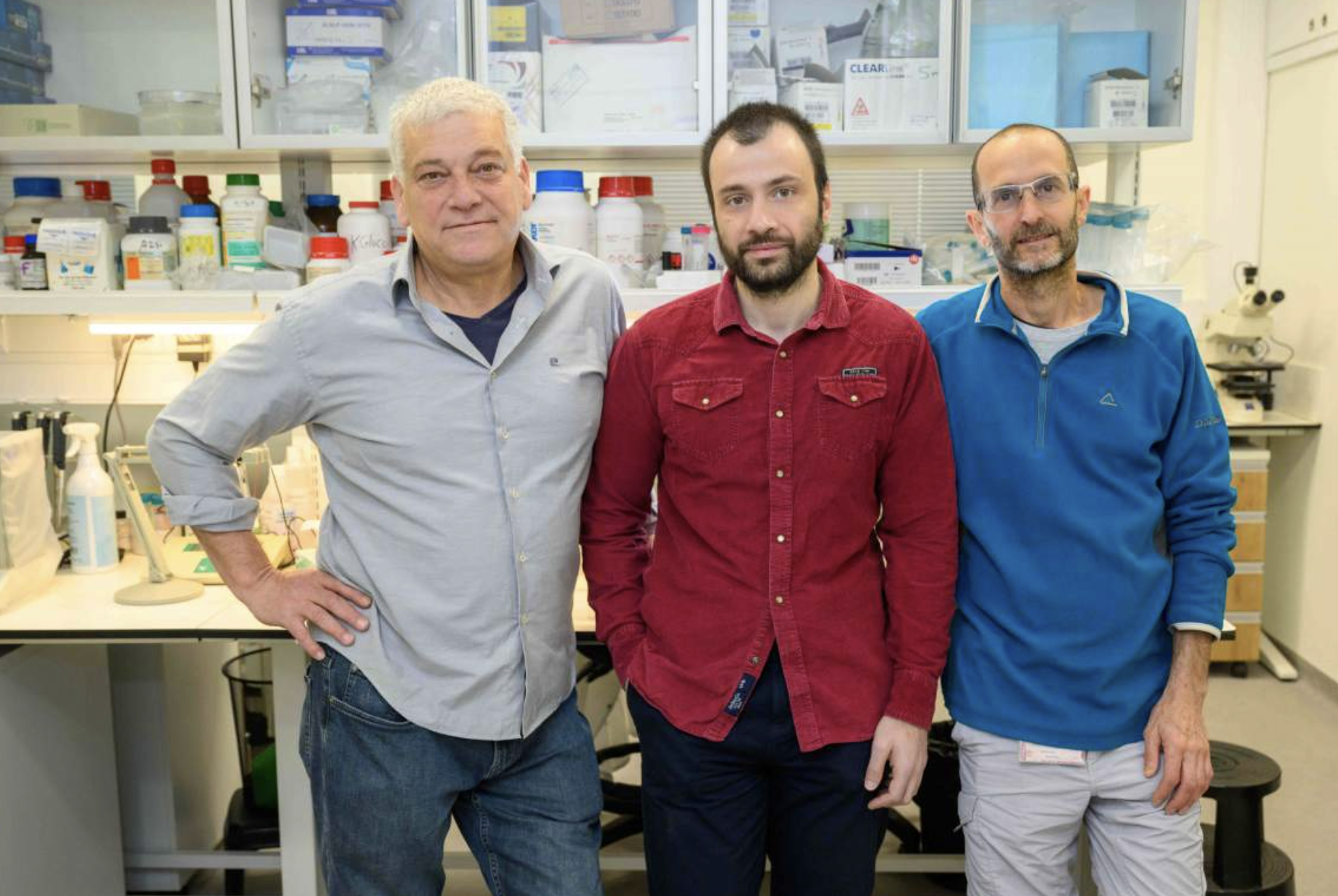
(l-r) Prof. Ilan Lampl, Dr. Athanasios Ntelezos and Dr. Yonatan Katz
In the new study, Lampl’s team – led by Dr. Ben Efron, then a PhD student, who worked with Drs. Athanasios Ntelezos and Yonatan Katz – started out by recording the sounds made by whiskers probing different surfaces, including dried Bougainvillea leaves and aluminum foil.
The researchers used sensitive microphones that can record ultrasonic frequencies, which are beyond the upper limit of the audible range for humans. The same kind of microphones that can hear when plants speak. They placed the microphones some 2 centimeters from the source of the sound, about the same distance as from the mouse’s ear to its whiskers.
Next, the scientists made entirely different recordings: They measured neural activity in the auditory cortex of mice that were brushing their whiskers against different objects. The recordings showed that the auditory networks of the mice responded to the whisker-generated sounds, no matter how subtle.
When the researchers interrupted the pathways that convey the sensation of touch from the whiskers to the brain, the auditory cortex still responded to these sounds, showing that mice could process them as a separate sensory input, independent of the sense of touch.
Yet the fact that the mouse auditory system responds to certain noises does not necessarily mean that mice use them for sensing and can recognize objects by means of these noises. To explore this issue, the researchers resorted to AI. They first trained a machine-learning model to identify objects based on neural activity recorded from the auditory cortex of mice.
The AI successfully identified the correct objects from neuronal activity alone, suggesting that the mice might be able to similarly interpret these cues. Next, the researchers trained another machine-learning model to identify objects on the basis of recorded sounds made by whiskers probing these objects.
The two models – the one trained on neural activity alone and the one trained on sound recordings – were equally successful, which suggests that the neural responses to the whisking were caused directly by the sounds rather than by other sensory information, such as that coming from smell or touch.
“Our results show that the brain’s whisking network, called the vibrissa system, operates in an integrative, multimodal manner when the animals actively explore their surroundings,” Lampl sums up. This multimodal function, he explains, might have developed in the course of evolution to help mice hunt for prey or avoid their own predators.
“Since whisking generates much weaker sounds than does walking, a mouse could rely on it when, for example, choosing whether to walk across a brittle, drier field of crops versus a fresher, quieter one, to avoid being detected by an owl. Whisking could also help a mouse figure out whether a stem is hollow or sufficiently juicy and worthy of a bite.”
By breaking down the boundaries between touch and hearing, the study doesn’t just reveal something new about mice, it opens up a plethora of research directions for future explorations of the brain’s sensory systems, particularly mechanisms by which the brain integrates different types of sensory input. The new findings might also lead to practical innovations in technology.
The possibilities are endless. If the brain can simultaneously process sensory information from different sources, the same principles might be used in prosthetics, sensory rehabilitation after brain trauma or perhaps even for enhancing perception in visually impaired individuals. For instance, learning exercises for the blind already exploit the distinct sounds produced by the white cane upon contact with a surface, and this approach could be developed further.
Another potential area for prospective innovation is robotics. Says Efron: “Integrating different types of sensory input is a major challenge in the design of robotic systems. The mouse brain’s whisking system might provide inspiration for technologies that would address this challenge by, for example, helping to create early-warning sensors to prevent collisions, particularly when visibility is limited because of smoke or other visual obstructions.”
A new advance for Tesla’s Optimus humanoid that is expected to come out this year?
In a strategic move set to reshape the plant-based protein landscape, Meala FoodTech has partnered with dsm-firmenich to launch Vertis PB Pea, a biotechnology-derived, multifunctional pea protein texturizer designed to streamline ingredient lists and elevate the sensory quality of meat alternatives. Now available across Europe via dsm-firmenich, the product marks a significant milestone for food tech investors eyeing scalable, clean-label innovation.
Vertis PB Pea arrives as consumer demand for clean-label, high-performance food products reaches critical mass. Traditionally, plant-based meat formulations rely on a cocktail of binders—hydrocolloids, starches, gums—to simulate the bite and juiciness of real meat. Meala’s patented technology eliminates that complexity, consolidating emulsification, binding, and gelation functions into a single, allergen-free component made entirely from pea protein.
For food manufacturers, that means cleaner ingredient lists, simpler procurement, and better-performing products. For consumers, it means recognizable ingredients and improved nutritional value. Vertis PB Pea not only enhances water retention and texture under extreme temperatures, but also boosts protein content—allowing brands to market “high-protein” plant-based meats without artificial binders or additives.
These meatballs are made with Vertis pea protein
According to data from the EIT Food Consumer Observatory, 67% of European consumers say they are wary of unfamiliar ingredients in their food, while 56% actively avoid ultra-processed products. This shift in perception is putting pressure on food developers to reformulate without compromising taste, convenience, or shelf stability. Vertis PB Pea is positioned as a turnkey solution for this next-gen reformulation push.
“This is exactly where our product comes in,” said Tali Feldman Sivan, CBO and co-founder of Meala FoodTech. “It addresses both functionality and clean-label demands, while replicating the sensory profile and experience of conventional meat products.”
The partnership with dsm-firmenich is not just about distribution—it’s a vote of confidence. As both strategic investor and commercial partner, dsm-firmenich brings regulatory expertise, R&D infrastructure, and global market access to the table. For Meala, that means immediate scalability and validation at the highest levels of the food industry.
“We’re impressed by their innovation-driven approach and deep understanding of the food industry,” said Meala CEO and co-founder Hadar Ekhoiz Razmovich. “From the beginning, they believed in us not only as investors, but as true partners.”
Beyond Meat is a popular pea-protein based meat alternative
With manufacturing already underway in Europe, the Vertis PB Pea launch signals Meala’s readiness to scale internationally. The company plans to expand into North America and Asia over the next 18 months, as plant-based brands increasingly prioritize formulation efficiency and transparency.
Vertis PB Pea is part of dsm-firmenich’s broader Vertis plant protein portfolio and marks a pivotal evolution in ingredient design: from piecemeal solutions to holistic platforms that meet rising consumer and regulatory standards.
These hotdogs are made with Vertis pea protein
Founded in 2021 by Hadar Ekhoiz Razmovich, Dr. Tali Feldman Sivan, and CTO Liran Gruda, Meala FoodTech is a next-generation ingredients startup focused on clean-label innovation. Its mission is to create smarter, functional ingredients that empower food producers to make better-for-you products without compromising performance. Backed by The Kitchen FoodTech Hub, dsm-firmenich Ventures, Lasenor Emul SPA, EIT Food, and Milk & Honey Ventures, Meala is part of a growing wave of science-forward food tech companies redefining what’s possible in the alternative protein space.
Plant-Based Meat Alternatives
These companies use pea protein to replicate the texture and nutrition of meat:
Beyond Meat – One of the earliest major adopters of pea protein; it’s the primary protein source in their Beyond Burger, sausages, and other products.
Impossible Foods – While it originally used soy protein, some product lines and R&D efforts involve pea protein as a cleaner-label or allergen-free alternative.
Nestlé (via Garden Gourmet and Sweet Earth) – Their plant-based lines include products that incorporate pea protein for improved texture and protein content.
Unilever (via The Vegetarian Butcher) – Offers plant-based meat options using pea protein as a key functional ingredient.
Maple Leaf Foods (via Lightlife and Field Roast) – Uses pea protein in several reformulated products in response to clean-label trends.
In a sweeping analysis of drylands across Central Asia, scientists have found that natural environmental forces—particularly declining snow levels and rising temperatures—are more responsible for desertification than human activity. The study, published in the journal Catena, was led by Professor Tao Hui of the Xinjiang Institute of Ecology and Geography at the Chinese Academy of Sciences.
Using nearly 40 years of satellite data, meteorological records, and socio-economic indicators, the research team mapped how desertification has unfolded between 1982 and 2020. They applied a nonlinear Granger causality model to disentangle the impacts of climate change and human activity.
The findings are stark: “Natural factors accounted for nearly 70% of all newly desertified areas,” said Prof. Tao Hui. “In many dryland systems, snow water equivalent—the amount of water stored in snow—was the dominant ecological driver.”
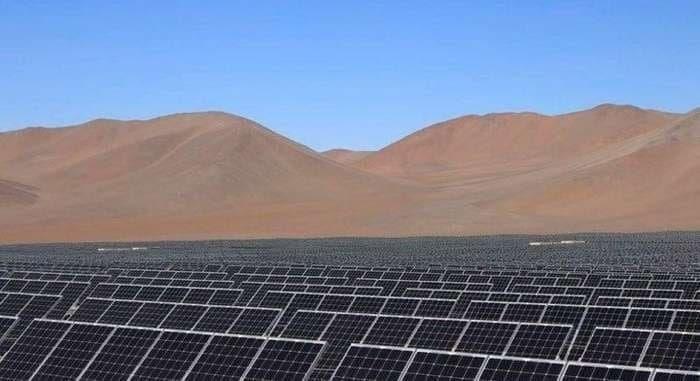
Uzbekistan to get Central Asia’s first renewable energy facility with utility-scale battery storage.
Overall, 14.81% of Central Asia’s drylands showed signs of desertification during the study period. While unsustainable agriculture and overgrazing continue to degrade grasslands and arable areas, it is the shifting climate—particularly warmer winters and reduced snowmelt—that is playing the lead role in this transformation. Forests, the study notes, were primarily affected by rising temperatures rather than human encroachment.
The study is misleading by “blaming” the effect on natural processes since climate change is largely assumed to be caused by human development.
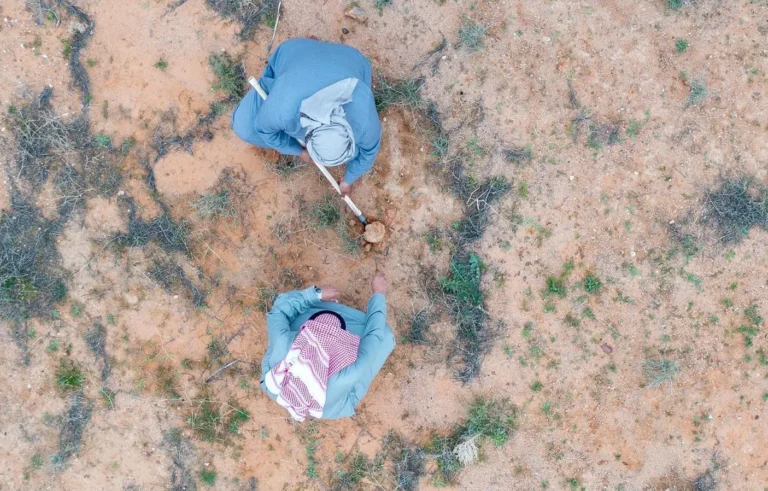
Truffle hunting in the deserts of Saudi Arabia
The revelation that climate is the leading culprit challenges the long-standing assumption that desertification is mainly a result of poor land use. It also complicates regional efforts to halt desert advance, which have typically focused on managing grazing and cultivation.
For countries in the Middle East, including Jordan—one of the most water-scarce nations in the world—the study serves as a climate cautionary tale. With less than 100 cubic meters of renewable water per person annually, Jordan is already facing extreme pressure on its agricultural systems. Sustainable innovations like volcanic soil enrichment may offer hope (as explored in recent efforts near Mafraq), but they must now be scaled in ways that anticipate a rapidly changing climate.
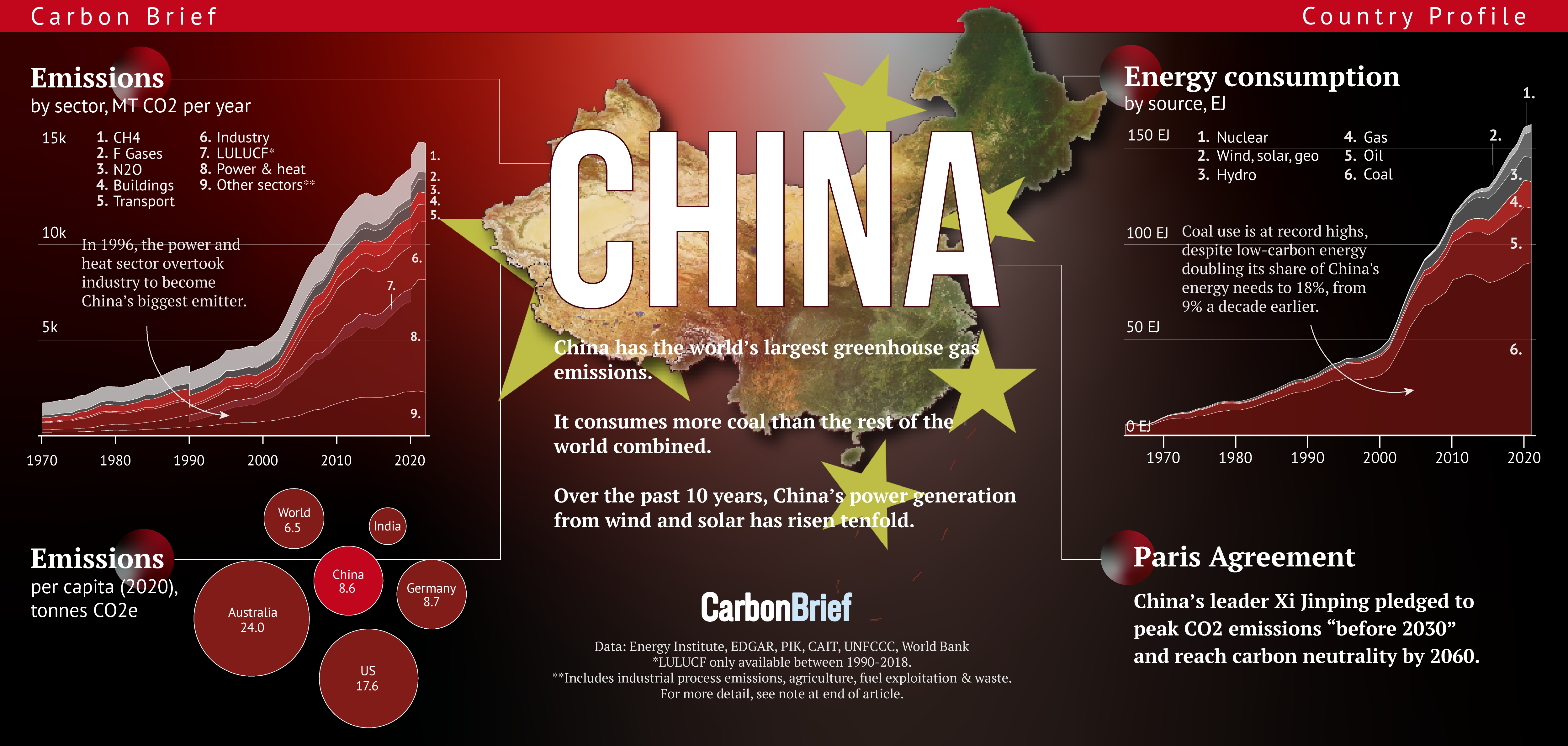
Breaking down China’s carbon emissions by Carbon Brief.
China, the factory of the world, is the world’s largest emitter of greenhouse gases, producing about 30% of global CO₂ emissions from fossil fuels and industry. By comparison, the United States emits roughly 13–14%, and the European Union around 8–9% of global emissions. Worth noting that the carbon emissions of China per capita is less than that of Americans and Europeans.
In the volcanic highlands of northern Jordan, north of Amman engineers are mining a natural resource not for energy, but for agriculture. The material: crushed volcanic rock, now also processed into a mineral-rich soil that may hold the key to reducing water and fertilizer demand in arid regions.
The project is led by Watad, a Jordanian company founded in 2019. The firm processes volcanic rocks such as zeolite, basalt, and pozzolana into what it calls “volcanic soil”—a porous, salt-resistant substrate that improves water retention and plant growth in dry climates.
“There’s zeolite, like the one we have in the mine here. There is zeolitic tuff in one of the other mines we have. There are basalt and pozzolana,” said Ibrahim al-Manaseer, a mine engineer at the site near Mafraq in an interview with Reuters. “All of them are volcanic rocks that formed thousands of years ago.”
Watad currently produces around one million tons of volcanic soil annually, and its CEO, Mohannad al-Manaseer, says the company could scale up rapidly. al-Manaseer said the goal is to replace conventional fertilizers and soil additives with a more durable and environmentally stable alternative.
Wated, volcanic soil
Early field reports suggest volcanic soil may reduce irrigation needs by up to 60% and cut fertilizer use by 80%. That could have significant implications for Jordan, which ranks as the second most water-scarce country in the world, with per capita water availability under 100 cubic meters per year, well below the UN’s threshold for extreme water stress.
When we visited Jordan we learned that hotels and homes get fresh water shipped to reservoirs weekly. Some people keep second hidden reservoirs to avoid running out.
While long-term studies are still needed to assess environmental and agronomic impacts across diverse ecosystems, the use of volcanic material in soil enhancement is not new. Zeolites, in particular, have been studied for decades due to their ion exchange and adsorption properties.
What’s novel is the scale—and the urgency. In a region where desertification, rising temperatures, and resource stress are converging, Jordan’s push to mine its volcanic past could represent a rare alignment of geology and necessity.
Jordan has been working with water cooperation with Israel and the Palestinian Authority over the last couple of decades through Friends of the Earth, Middle East – Ecopeace. They are working to broker small-scale local projects in education, but also are working on larger water for energy swaps. The October 7 terror attack changed the political outlook for Israel and Jordanian cooperation, two countries that have a signed peace treaty.
Time for water cooperation?
The Wadi Araba Treaty established cooperation between Jordan and Israel on various matters, including water sharing. In November 2022, both Jordan and Israel signed a declaration of intent at the UN climate conference to rehabilitate and protect the Jordan River, aiming to reduce pollution and restore water flow.
A 2013 agreement involved developing a desalination plant in Aqaba, with potable water shared between Israel and Jordan, and increased water releases from Lake Tiberias to Jordan. But in November 2023, Jordan announced it would not sign a proposed water-for-energy deal with Israel, citing Israel’s actions in Gaza as the reason.
Jordan is currently advancing its own water security through the Aqaba–Amman Water Desalination and Conveyance Project, aiming to produce about 300 million cubic meters of clean drinking water annually. Jordan is landlocked except for a small strip of the Red Sea, where it is bordered by Israel and Saudi Arabia.
The Abraham Accords which is creating a peace treaty and regional cooperation between countries such as Saudi Arabia, and the United Arab Emirates, will likely lead to water cooperation for a very dry Jordan.