Home Blog Page 27

You Won’t Believe Which Country Is Fueling Shark Product Trade in the Pacific

A bull shark jaw
A bull shark jaw by Josephine Lingard
When we think of the illegal wildlife trade, especially involving threatened marine species like sharks, most of us picture Southeast Asian markets in China where they eat shark fin soup, or global shipping ports. But new research suggests a surprising player in the trans-Pacific shark trade: Australia.
A study led by Josephine Lingard, a PhD candidate at the University of Adelaide’s School of Biological Sciences and Wildlife Crime Research Hub, reveals that both Australia and Aotearoa/New Zealand are not only destinations for shark products but also active nodes in the movement of shark-derived goods between regions. The research, published in Pacific Conservation Biology, used border seizure data from both countries to track the flow of shark fins, trophies, and meat — and Australia emerged as a significant point of origin.

Shark feeding time, Australia
“We did not expect Australia to be a dominant country of origin for seizures in Aotearoa/New Zealand,” said Lingard. “But the data showed otherwise.”
The shark products, often carried in personal luggage or by post, were likely intended for personal consumption, resale, or as trophies. While most fin products seized in Australia originated from Asia, preserved shark specimens were more commonly linked to the United States. In Aotearoa/New Zealand, however, Australia was the most common source of both passenger and mail seizures — an unexpected finding given that seizures in Australia had declined over time, while New Zealand’s numbers rose.
Several possible explanations emerge: New Zealand’s geographic proximity and flight connectivity to Australia may make it a natural transit route. Alternatively, shark products may be processed or purchased in Australia before being brought into New Zealand. It’s also possible that Australia is listed as the origin simply due to flight routing, not actual source of capture or processing.
The environmental stakes are high. Over one-third of all chondrichthyan species — a group that includes sharks and shark-like rays — are currently threatened with extinction. All of the threatened shark species are also considered overfished, adding further pressure to already strained ocean ecosystems. Many of these species are targeted for their fins, used in shark fin soup, a status-laden delicacy particularly popular in parts of Asia.
And while the global market for shark meat has steadily grown since the early 2000s, the legal trade in shark fins — when fins are landed attached to the body — has been declining. This suggests that illegal or unregulated trade may be filling the gap, often without proper species identification or monitoring.

Shark fin soup
Shark fin soup, highly controversial
Indeed, one of the study’s most troubling findings was the lack of transparency in the data. Fewer than 1% of the seizures contained species-specific information, making it almost impossible to assess the impact on endangered populations. Yet, of the species that were identified, 14 of 18 were listed under CITES, the global agreement regulating the international trade in endangered species.
“This lack of identification is consistent with wider problems in shark fisheries, where species are lumped together using generic trade codes,” Lingard explained. “It severely limits our ability to manage conservation efforts effectively.”
The researchers call for stronger enforcement, improved border monitoring, and especially better identification and recording of shark species in trade seizures. Without these steps, efforts to protect endangered sharks — and maintain marine ecosystem health — will remain compromised.


Scientists Crack the Code for Low-Cost, Low-Carbon Plastic Recycling

recycled materials, WE MAKE CARPETS, Taragalte Festival, Morocco, eco design, plastic carpet, bottle carpet
WE MAKE CARPETS, Taragalte Festival, Morocco

Recent studies in the US show that most plastics are never recycled. The numbers probably fare worse for other countries in the world. In a significant step forward for sustainable materials science, a new American study has unveiled a breakthrough in the enzymatic recycling of PET — the world’s most common plastic, used in everything from water bottles to food packaging and clothing fibers.

The process, developed by a coalition of U.S. and U.K. researchers, offers a cleaner, cheaper, and more circular approach to handling plastic waste, potentially tipping the balance in favor of large-scale, eco-friendly recycling. The work was led by scientists at the U.S. Department of Energy’s National Renewable Energy Laboratory (NREL), in collaboration with researchers from the University of Massachusetts Lowell and the University of Portsmouth in England.

The findings, published in Nature Chemical Engineering, focus on enzymatic depolymerization of PET — a technique that breaks plastic down into its building blocks, allowing it to be remade into new products. Historically, the process has been too expensive and chemically intensive to scale. But this new study that adds a new molecule as an enzyme to break down plastic offers a dramatic shift.

By switching out one key chemical — sodium hydroxide — for ammonium hydroxide, the researchers unlocked a self-regenerating loop that dramatically slashes both emissions and cost.

“Sometimes the answer is as simple as rethinking a single molecule,” said Professor Andrew Pickford, Director of the Centre for Enzyme Innovation at the University of Portsmouth. “With ammonium hydroxide, we created a process that nearly eliminates the need for fresh acid and base chemicals.”

The switch to ammonium hydroxide allowed for the formation of diammonium terephthalate, which can be broken down through thermolysis — a heat-based reaction — to regenerate ammonia and produce pure terephthalic acid, one of the core ingredients in PET. The base can then be reused, over and over again.

The impact of this adjustment is notable:

  • Chemical use drops by more than 99%
  • Operating costs fall by 74%
  • Energy use drops by 65%
  • Carbon emissions are cut nearly in half

Critically, the minimum selling price for recycled PET using this method is estimated at $1.51/kg — well below the $1.87/kg cost of virgin PET, making this one of the first economically viable enzymatic PET recycling systems to date.

The research also tackled pre-treatment steps to improve plastic breakdown. Techniques like extrusion and rapid quenching allowed for full depolymerization in 50 hours. Recovery of ethylene glycol, another PET building block, was improved through a process known as fed-batch concentration.

Dr. Gregg Beckham of NREL, co-lead of the study, said that these combined innovations mark a turning point.

“Enzymatic recycling has long shown promise for mixed and hard-to-recycle PET waste streams, but it hasn’t been practical — until now. By integrating innovations across chemistry, biology, and process engineering, we’ve demonstrated a scalable and cost-effective solution.”

The broader implications are significant. Unlike mechanical recycling, which is limited by contamination and material degradation, enzymatic recycling could handle a wide range of PET waste — including colored plastics, polyester fabrics, and thermoformed containers — that currently end up in landfill or incinerators.

Professor John McGeehan, another key contributor now based at NREL, said the focus is now on moving from lab-scale to real-world application: “It’s about closing the loop — not just in the chemical sense, but in the lifecycle of the material.”

PET (polyethylene terephthalate) is used in over 50 million tonnes of plastic products annually. Yet less than one-third is recycled. The vast majority is downcycled, burned, or buried — contributing to greenhouse gas emissions and global microplastic pollution. Changing that trajectory has become a priority for environmental scientists, regulators, and industry leaders alike.

This new process doesn’t solve plastic pollution on its own. But it does offer a crucial tool: a method of turning used plastic back into high-quality new material, without relying on fossil fuels.

While enzymatic recycling offers hope for managing existing plastic waste, scientists and environmental advocates agree it must be paired with the development of bio-based plastics—materials made from renewable biological sources like corn starch, sugarcane, or algae. Unlike conventional plastics derived from fossil fuels, bio-based alternatives can dramatically reduce carbon emissions at the production stage and are often compatible with closed-loop recycling.

TIPA and Wyld are teaming up to package legal edibles in home-compostable laminate and take steps to keep hard-to-recyclable, single-use flexible plastics out of the environment.
TIPA and Wyld are teaming up to package cannabis edibles in home-compostable laminate and take steps to keep hard-to-recyclable, single-use flexible plastics out of the environment. More should be done in this market.

Leaders in this bioplastics space include NatureWorks (known for its Ingeo PLA plastic made from corn), TotalEnergies Corbion (a joint venture producing bio-based PLA), Novamont (an Italian firm specializing in compostable bioplastics), Danimer Scientific (working on PHA-based plastics from canola oil), and BASF (which offers certified compostable bio-based polymers under the ecovio brand). Developing these alternatives alongside advanced recycling could create a more circular, low-impact future for plastic use.

Toxins in tiny bodies: American children are carrying invisible chemical burden

PLastics in kids
Toxins in toddler toys

A silent chemical assault is underway. A new nationwide study has revealed that children in the United States — especially toddlers aged two to four — are regularly exposed to dozens of industrial chemicals during their most vulnerable developmental years. Many of these chemicals are not even on the radar of public health monitoring systems.

The study, published in Environmental Science & Technology, tested urine samples from 201 young children as part of the NIH-supported Environmental influences on Child Health Outcomes (ECHO) program. Researchers screened for 111 chemicals commonly found in household items, plastics, food packaging, cosmetics, and furniture.

Related: why glass is emitting more microplastics than plastic bottles

What they found is deeply unsettling: 96 chemicals were detected in at least five children. 48 were found in more than half. 34 were found in over 90% of the children — including 9 not tracked in national health databases like NHANES.

“These are not rare or accidental exposures,” said Deborah H. Bennett, the study’s lead author and professor of public health at UC Davis. “This is a daily, invisible flood of chemicals entering the bodies of children at a stage when their brains and immune systems are still forming.”

The Toxic Alphabet of Modern Childhood

chewing gum pieces, microplastics in gum, synthetic gum, natural gum, saliva with microplastics, plastic particles in saliva, chewing gum research, microplastic contamination, UCLA research on gum, microplastics released from gum, gum base made from plastic, plastic in everyday products, environmental impact of gum, lab research on chewing gum, microplastics from synthetic products, plastic pollution and health risks, people chewing gum with plastic particles
Dollar Store toys emit dangerous toxins. So does gum.

Phthalates and phthalate alternatives – Found in toys, food wrap, vinyl flooring, and shampoo

Parabens – Used in creams, cosmetics, and even medications

Bisphenols (BPA, BPS) – Found in plastic containers, canned food linings, and receipts

Benzophenones – Common in sunscreens and cosmetics

Pesticide residues, flame retardants, and combustion byproducts – Lurking in food, furniture, and air

Children are especially vulnerable. Their smaller bodies mean higher exposures per kilogram, and behaviors like crawling, mouthing toys, and touching floors mean they are constantly in contact with contaminated surfaces. In some cases, the children’s chemical loads were higher than their mothers’ levels during pregnancy, pointing to postnatal environmental sources — the home, the daycare, the playground.

Plastics and toxins in toddlers

Related: the problems of Dollar Store plastic

The data also revealed disturbing patterns: Chemical exposures were highest among younger toddlers and racial/ethnic minorities, reflecting systemic environmental injustice. While some older chemicals like triclosan and certain phthalates are decreasing (likely due to public pressure and reformulations), new unregulated substitutes like DINCH and emerging pesticides are on the rise.

Swapping out banned chemicals for understudied alternatives is what scientists call “regrettable substitution.” It’s regulation on a delay — and children are paying the price.

What Can Parents Do to Reduce the Toxic Burden?

Anthroposophic, Waldorf School toys by Bella Luna are made from wood and natural paint

While we can’t control every exposure, there are concrete steps caregivers can take:

Avoid plastics labeled #3, #6, and #7, which may contain bisphenols and phthalates

Buy “paraben-free” and “fragrance-free” personal care products. Buy or make your own food wraps from fabric scraps and beeswax. Package lunches and food in steel, not plastic containers.

The Homesteading Family makes beeswax wraps for sandwiches at school and play

Ventilate homes, dust with a damp cloth, and consider buying air cleaners with HEPA filters

Wash hands before meals, especially after outdoor play or contact with plastic items

Limit pesticide exposure — wash produce well and consider organic options when possible

A Call for Chemical Accountability

Ultimately, this is not just a parenting issue. It’s a policy failure. Most of the 40,000+ chemicals used in consumer products in the U.S. are poorly regulated, with minimal long-term health data.

As Green Prophet has reported before, environmental chemicals are linked to declining fertility, disrupted hormones, obesity, and neurodevelopmental disorders — all of which are now rising in childhood populations.

“This study should sound the alarm,” said Jiwon Oh, postdoctoral scholar and co-author of the study. “We urgently need better biomonitoring, stronger chemical safety laws, and corporate transparency. Our children shouldn’t be the test subjects for industrial shortcuts.”

This is a pivotal moment. Conscious parents and policymakers alike have the opportunity — and the obligation — to push for a healthier future. Because these chemicals aren’t just in the air or water — they’re in our children. And that makes this not just a science story, but a moral one.

A blood test to diagnose leukemia

Amos Tanay and Liran Shlush
Amos Tanay (left) and Liran Shlush

Cancer is a complicated disease. It’s not one but many, and as such leaves various bio-evidence behind after it starts wreaking havoc on our body. Some cancers, but not all, can be detected by a blood test. My dad’s cancer, when it started as prostate, was detectable in a PSA test, but only when the cancer had progressed to stage 4. By the time he had developed another type of cancer, liver cancer, it was not detectable in the blood. Doctors gave him tests, said the pain isn’t cancer, and we waited for an MRI to find muscle or bone damage. The MRI found the cancer.

But scans, biopsies, waiting for biomarkers for specific tests have risks. Waiting “too long” makes dealing with cancer harder. So an easier blood test that can find cancers such as leukemia in the blood would be a godsend. New research published in the prestigious journal Nature, reports on it. The test is on aging and there are a range of applications making it possibly part of an arsenal by blood biohackers looking to live forever.

Related: Is our diet feeding a cancer causing bacteria?

What if a blood test could reveal the pace of our aging – and the diseases that may lie ahead? The labs of Profs. Liran Shlush and Amos Tanay at the Weizmann Institute of Science have been conducting in-depth studies into the biology of blood to better understand the aging process and why some people become more susceptible to disease over the years.
Their research teams, made up of physicians, biologists and data scientists, have been tracking changes in the blood-forming stem cells, including the emergence of genetic changes in these cells in about one-third of people over the age of 40. These changes not only increase the risk of blood cancers such as leukemia, but have also been linked to heart disease, diabetes and other age-related conditions.
In a new study published this month in Nature Medicine Shlush and Tanay present findings that may lead to an innovative blood test for detecting a person’s risk of developing leukemia. This test may potentially replace the invasive, painful and invasive test of bone marrow sampling.
The study focused on myelodysplastic syndrome (MDS), an age-related condition in which blood stem cells fail to properly mature into functional blood cells. Diagnosing MDS and assessing its severity is crucial, as it can lead to severe anemia and may progress to acute myeloid leukemia, one of the most common blood cancers in adults. Until now, diagnosis has relied on bone marrow sampling, a procedure that requires local anesthesia and can cause discomfort or pain.
The findings are already being tested in a large-scale clinical trial at several medical centers around the world
In the new study, a research team led by Dr. Nili Furer, Nimrod Rappoport and Oren Milman, in collaboration with physicians and researchers the scientists showed that rare blood stem cells – which occasionally exit the bone marrow and enter the bloodstream – carry diagnostic information about MDS.
The researchers demonstrated that with a simple blood test and advanced single-cell genetic sequencing, it is possible to identify early signs of the syndrome and even assess a person’s risk of developing blood cancer. Could this info spur a person to eat better, exercise more regularly and avoid cancer altogether?
The researchers also discovered that the migrating stem cells can serve as a clock for our chronological age, and that in males, their population changes earlier than in women in a way that increases the risk of cancer. This finding may explain the higher prevalence of blood cancers among men. The scientists believe that using the test to diagnose MDS and leukemia is only the beginning, and that in the future it could be applied to a range of other blood-related disorders. The current findings are already being tested in a large-scale clinical trial at several medical centers around the world.

Jeff Bezos’ climate change satellite goes dark, becomes space junk

0

Methane Stat becomes space junk

Tracking dangerous methane gas, the Methanestat satellite seems to have lost power after 1.5 years into 5-year mission

A satellite designed to track one of the planet’s most potent greenhouse gases – methane – has gone dark, ending a pioneering mission led not by governments or corporations, but by a nonprofit. MethaneSAT, developed by the Environmental Defense Fund (EDF) and launched in March 2024, lost contact with Earth on June 20, 2025. Engineers have confirmed that the satellite has lost power and is likely unrecoverable.

“The advanced spectrometers developed specifically for MethaneSAT met or exceeded all expectations throughout the mission. In combination with the mission algorithms and software, we showed that the highly sensitive instrument could see total methane emissions, even at low levels, over wide areas,  including both large sources (super emitters) and the smaller ones that account for a large share of total methane emissions, which were not visible from space until MethaneSAT,” the group said in a statement.

The mission was intended to last at least five years and represented a bold step in climate monitoring. Funded in part by the Bezos Earth Fund and operated in partnership with Google and the government of New Zealand, MethaneSAT was among the first environmental satellites operated by a civil society group rather than a national space agency. Its primary aim was to locate and quantify methane emissions—many of which originate from oil and gas infrastructure—using advanced sensors and cloud-based mapping tools powered by Google Earth Engine.

Methane is a powerful greenhouse gas, estimated to be more than 80 times more potent than carbon dioxide over a 20-year period. While methane emissions are responsible for roughly 30% of current global warming, many leaks remain undetected or underreported.

MethaneSAT was designed to fill this gap, offering near real-time, independent data on where emissions originate and how large they are. During its 15 months of operation, MethaneSAT successfully mapped emissions from major oil and gas basins, including the Permian Basin in the United States and areas in Central Asia.

Its data—collected at higher resolution and over larger areas than many existing satellites—was made available to governments, scientists, and the public.EDF stated that while the satellite has ceased functioning, the data already collected will continue to be analyzed and published. In a public update, EDF noted that the engineering team is still investigating the cause of the failure, but all efforts to reestablish communication have so far failed.

“We learned this morning that the satellite has lost power, and that it is likely not recoverable,” the organization said in a statement.Despite the setback, EDF emphasized that the project had already achieved many of its scientific goals and had demonstrated the feasibility of nonprofit-led space missions. MethaneSAT’s development marked a shift in how environmental data is collected and shared. Unlike many state-run satellites whose data is restricted or delayed, MethaneSAT was created to provide rapid, open-access emissions data to encourage faster policy responses and regulatory action.

EDF has not confirmed whether it will pursue a replacement mission, but it has signaled that the broader goals of MethaneSAT will continue. Additional monitoring via aircraft and other technologies is expected to supplement the loss.

While the satellite’s operational life was shorter than hoped, its influence on climate science and accountability has already been significant. But it does point out potential problems when non-commercial NGO projects come to light. The power of investment and accountability may be a stronger driver for success. What do you think?

::Methanestat

Make Verdurette, Natural Vegetable Bouillon

make a natural vegetable stock recipe

Once you’ve got a jar of verdurette in the fridge, you’ll never buy vegetable broth again .

Verdurette is a home-made seasoning mix originating in France: an umami-rich mix of vegetables and herbs  ground together and preserved in salt. The salt, which is 20% of the blend, is a preservative. A similar preserved food is our Middle-Eastern salt-preserved lemons.

A teaspoon or two of verdurette adds great flavor and character to soups, grains, sauces, even scrambled eggs. It’s always there in the fridge and lasts a year, unless you use it up sooner.

Leda Meredith leading a foraging tour
Learning to recognize wild edibles with Leda

The late Leda Meredith confessed that she’d become lazy about making vegetable stock, because it’s so easy to stir a couple of teaspoons of the mix into hot water, simmer it 10 minutes, and voilà, broth. Or at least, a flavor base to go on from.

I often think of Leda when I dip a spoon into the verdurette jar, remembering her soft New York-accented voice and the flair she brought to all things culinary. I’m grateful to her memory for many life-enhancing things, and among them, this verdurette.

It’s easy to make this natural broth base yourself. Most or all of the ingredients are probably already lurking in your fridge and pantry. A food processor is the kitchen tool I recommend for making it; otherwise, be prepared to do some very fine chopping. I myself just feed everything into the food processor and let it whizz.

Verdurette consists of 5 parts:

1 part finely chopped alliums: onions, leeks, chives, shallots, garlic
1 part finely chopped root vegetables: carrots, celery root (celeriac), sweet potatoes – but not white potatoes, which discolor and go unpleasantly mushy, or turnips.
1 part finely chopped leafy greens: kale, spinach, nettles, cress, celery, lettuce, beet greens, etc.
1 part finely chopped aromatic herbs: parsley, thyme, oregano, sage, basil, etc.
1 part kosher or sea salt (non iodized)

Caution: go easy with strongly flavored ingredients like garlic, sage, cilantro and rosemary. Too much of any one may dominate the whole mix. Mild aromatic herbs such as thyme, marjoram, parsley and chives can be used freely.

Nothing from the cabbage family, including broccoli and cauliflower, should go into verdurette.

You may combine several kinds of the vegetable or herb in each category. For example, in the alliums part, use several of the ingredients listed above, or use just one: for example, only onions. If you’re like me, you’ll use whatever’s at hand in the kitchen. I like a complex mix, myself.

As long as you stick to the ratio of 1 part salt to 4 parts finely chopped vegetables and herbs, the verdurette will be fine.

How to Make Verdurette

You can make as little as a half cup of verdurette, using tablespoons to measure, and up to a gallon if you need to. But to make a reasonable first-time amount for ordinary cooking, go for 1-1/4 cup of verdurette. A digital scale helps, but cup measurements work too. The main thing is to keep the balance of 80% vegetables to 20% salt.

Finely chop or process each part before measuring. This might mean there will be surplus veg to use up some other way.

Measure 1/4 cup (40 grams)  of each pre-processed or chopped vegetable part. Note: Leafy greens should be packed in well when using cups. Altogether, there will be 1 cup mixed vegetables and herbs.

Add 1/4 cup (40 grams) non-iodized salt. 

Stir everything up thoroughly. Pour the slightly fluid mass into a clean glass jar.

verdurette
The last of my current batch.

Cover the jar and store it in the fridge. Now you have vegetable bouillon at hand whenever you need it.

You can start using your fresh batch right away. But you’ll notice that verdurette’s flavor becomes more complex as it continues to mature in the fridge.

You may also preserve one ingredient only, if you wish. Leda Meredith used to preserve a favorite wild edible, daylily flowers, this way.

Leda Meredith, urban forager
Leda Meredith, urban forager pioneer

How To Use Verdurette

When cooking with verdurette, leave out any other salt called for in the recipe.

* Add 2 teaspoons verdurette to a quart of water for a simple vegetable broth.
* Mix a little verdurette into marinade ingredients, for extra umami. Omit other salt in the marinade.
* Sauté verdurette in a little oil before adding the main ingredients for rice, soup, sauce, a braise, or stew. It goes wonderfully in a tomato-based pasta sauce. And in mushroom soup.  You get the idea.
* It’s fine to add more during the cooking, but a little at a time – verdurette is salty! Keep tasting, and stop adding verdurette when the flavor is right.
* Verdurette may be cautiously added to salad dressings, but let the mixed dressing sit 10 minutes for the vegetables to release their flavors and soften.

Top photo of green verdurette via  the garturstichfarm blog


Head-to-toe sustainable beach style

Image by Raygar He via Unsplash

Summer in the northern hemisphere, and this thalassophile is here for it—quite literally, as my location is coastal.

Heading seaside during the off-season has its own kind of charm, but there’s nothing quite like a quintessential, sun-soaked summer beach day—the kind that leaves you exhausted from the heat and exasperated with the sand but rejuvenates your soul for the days ahead.

Salt and sand in your hair, but you don’t care? Aggravating for your scalp, but otherwise not a big deal. Don’t care about prepping your beachcapades with earth-approved products? Houston—or in this case, Miami, Nice, Seychelles, etc.—we have a problem.

To refresh my beach bag this year, I curated a shortlist of eco-conscious companies that don’t skimp on style. By implementing green practices, they inspire consumers—and each other—to do better for themselves and the planet.

Embrace a sustainable summer by putting these brands on your vacay radar:

Skincare:

Earth Harbor

Founded by a professional herbalist and toxicologist, Earth Harbor is committed to using bio-based ingredients boosted by minerals and other nutrients in their bath and body goods, and recyclable and biodegradable materials in their packaging. Ocean inspiration flows through product names: “mermaid milk” moisturizer, “mystic waters” mist, “nymph nectar” facial balm, “sea kiss” lip balm, and many more.

Through Thrive Market, I’ve tried and loved some of these products at a discounted price, and once scored the “beach waves” hair texturizer as a gift with purchase. Visit the website!

Urban Hydration

The clean skincare products by Urban Hydration are widely accessible in the U.S., stocking shelves at more than 30,000 retail locations across the country, from pharmacies such as CVS to beauty-focused outlets such as Ulta. Many of their cleansers, moisturizers, creams and oils incorporate fruit extracts and other plant-based, natural ingredients, giving skin a taste of the tropics.

Try the algae line to “sea the glow” and target blemishes, or the aloe vera collection to soothe the beatings of the sun. Visit the website!

Swimwear:

Vitamin A Swim

As the first swimwear company to use recycled fibers, Vitamin A holds sustainability at its core. Expanding from nylon and polyester, their newest all-recycled material combines 80% ghost fishing nets with 20% spandex. Besides swimsuits, the brand offers a wide variety of other beachwear, such as sarongs, caftans, and loose-fitting trousers.

Collections heavily utilize organic and recycled cotton, high-quality flax linen, and TENCEL™, made from sustainably sourced wood fibers processed in a nontoxic organic solvent. Visit the website!

Rhyle Swim

These bathing suits are responsibly made in Brazil and live up to sexy bikini expectations. Designs are boldly cheeky yet subtly unique, with small cutout features and a range of textures. The details are thoughtful but not over the top, fashioning a girl-next-door vibe. Pieces are luxuriously soft, with a growing focus on using recycled fibers and minimizing textile waste.

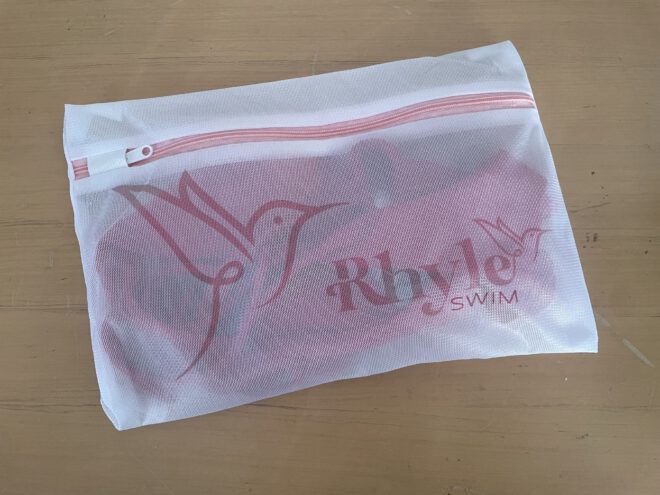
And they are delivered in a reusable laundry bag, extending their longevity. Visit the website!

Image by Kelly Milone, author

Footwear:

Teva

Going strong after more than 40 years in business, Teva has become a household name in functional footwear. Founded by a Grand Canyon river guide, the company pioneered the modern sport sandal. Specializing in strappy architecture constructed with 100% recycled polyester, “Teva’s,” as the kids call them, provide secure grip, in and out of the water. Water conservation drives minimal packaging goals. Visit the website!

Fleks Footwear

Founded in 2024, Fleks Footwear boldly burst onto the market with a future-focused agenda, offering a curated collection of popular styles in ultra-comfortable, ultra-sustainable form. Slides (platform optional), flip-flops, double-strap sandals, and clogs are proudly made with 85% high-performance foam waste.

The remainder of materials are either salvaged or recycled, and no solvents are necessary. I picked up the East Beach Slide in Coconut Milk and, because I couldn’t resist another pair, which I mainly wear as house slippers, the San Ysidro Slide in Morning Coffee, featuring a fluffy shearling strap. Visit the website!

And there you have it: A handful of brands to help you look and feel your best as you head out to shore.

Add a sunhat—preferably made from raffia, wheat straw, or seagrass—and a pair of upcycled shades, and you’re golden! Just like the sun intended.

A Quick Style Round-Up for Corporate Executives

0
man with umbrella in desert fog
Dressing for climate change!

When you meet someone, you are often judged and evaluated before you even strike a conversation, based on how you look and how you carry yourself. As much as we may hate it, your attire is an important part of your personality and does communicate a non-verbal vibe about you to the other person. That is exactly why dress codes exist for different occasions and are considered an important element of discipline. However, when you graduate out of your college, your dress codes are vaguely classified as formals and casuals. It often becomes difficult for fresh entrants in the industry to figure out the right way to dress.

Dressing right is very crucial when you are in a corporate role, especially if you aspire to assume a leadership position. Your attire should communicate that you are professional, focus and you mean serious business. This quick style guide will help you crack the ultimate style code.

Clothing

When you are working as a corporate executive, especially in a leadership role, your attire matters a lot. The way you carry yourself is considered to be an important part of your corporate identity. Your clothing is the most dominating element of your overall attire and therefore you need to pay attention to it regardless of your gender and position.

The best clothing option for any corporate executive is to go for a suit. A nicely stitched suit in hues of Black, Blue, and Greys paired with an appropriately contrasting shirt and a tie is a classic gentleman’s dress and you can never go wrong with that one. That being said, many people do not find it practical to wear a suit every day. Moreover, often weather conditions and work dynamics do not allow that kind of attire at many places. In that case, you can stick to a formal shirt and a dress pant. When choosing shirts and ties, pay attention to the kind of colors and prints that you choose.

Keep your hues and prints subtle and sophisticated. You wouldn’t want to walk into your office with a splash of colors. Some contemporary workplaces today encourage more easy-going environment and follow a smart-casual dress code instead of a formal one. In such circumstances, do not get carried away by going for something way too casual. Collared polo shirts paired with cotton pants or straight cut jeans are a great smart casual option.

For female executives, the basic guidelines remain the same. Ladies suits have been a huge hit in the fashion circuits in the recent past, so you can make the best use of the current trends by dressing up in a ladies suit. When going for a suit, make sure it is stitched according to your body requirements. For instance, the tailored suits from Ellaé Lisqué are well-fitted and perfect for female executives who want to stand out and show off. If suits are not your thing, you can put up a smart formal top paired with a skirt. Although females have a wider color palette to choose from but avoid picking up colors that are too bright or loud. You can go for darker tones of blues and red, however, stick to a single color or pair up with a neutral color instead of going all colorful. Even if you are personally okay with showing skin, avoid dresses that are too suggestive at your workplace. Wear something that is convenient, manageable and comfortable while at the same time professional.

Shoes

Your shoes are very much part of your overall professional attire. The classic hot always has been the closed toe high heeled shoe. Closed-toe shoes do not mean that you are allowed to walk into your workplace wearing sneakers or joggers. Invest in a good pair of formal leather shoes. Ideally, shades of black and browns are the best choices. The closed toe rule applies to women too, and ideally, women should stick to high heels too. However, if for some reason you are not able to wear heels, go for kitten heels or Wedges.

Remember that often your work will require you to move around and it is important that you wear something that would not give you sore feet. Therefore, even if you are used to heels, pick only heels that are high enough for you to carry all day. Wedges are a great alternative to closed toe heels as the offer relatively much more support and are relatively more comfortable. If you wish to stick to flats, go for pumps. For shoes, try to stick to neutral colors only and avoid hues that are too loud or bright.


Accessories

Accessories are an important part of fashion and style as they help to accentuate your entire look. Although you do not have to completely eliminate your jewelry and accessories from your corporate look, you still have to keep it very subtle. Even if you are a huge jewelry fan, leave your bracelets and necklaces at home when coming to work. The max you can wear is a small pair of studs in your ears, a finger ring or two and a watch. Keep other pieces light and let your watch be the most dominating element of your accessories. Watches have always been associated with class and luxury so invest more in this area. Tag Heuer Carrera has some super classy leather strap watches in its line that you can pick from. Whatever you choose, make sure that your accessories do not become a hindrance in your productivity and allow you to do your tasks effectively.


Hair and Makeup

Although there is not much to do with hair and makeup with men, still style it as professionally as possible. Ideally, avoid very long hair, but if you have longer lengths then avoid keeping them open. Make sure your hair is clean, shampooed and tied up neatly. Although females can leave their hair open, but make sure they are manageable and do not bother you amidst your work. You do not have to invest hours in the morning to style your hair. Tie them up in a neat bun or do a high ponytail or a braid. That would not only look neat and professional, but your hair will stay intact till the day end without bothering you. You can use a styling gel or a hair spray for extra support.

As for makeup, it is best to stay as natural as possible. Use the foundation that matches your skin tone. If your skin does not have too many imperfections, it is best to use conceal and correct and top it up with a good moisturizer and finishing powder only. Avoid heavy highlighters and bronzers and use a very subtle cheek tint. Keep your eyeshades neutral and add a liner and a mascara. If your clothes are dark toned, go with nude or earth-toned lips. If you have kept everything else very minimalistic, you may add a pop of red on your lips.


4 Ways to Address Your Mental Health Needs When Life Won’t Quit

0
Brazil rainforest and waterfalls
Breath in, breath out. When life is too challenging try to transport yourself back to a place in nature where you feel one with the world and yourself.

It’s all too easy for your mental health to take a backseat when life gets hectic. Juggling work, family, and social obligations can overwhelm and emotionally drain you. However, it is important to remember that caring for your mental health is just as essential as tending to your physical health. Here are some tips for getting your mental health back on track when you can’t slow life’s train. 

1. Take Advantage of Professional Help 

Professional help is crucial whenever life becomes too much to tackle in a healthy way. The first step is acknowledging that you need professional support. This realization will require you to listen to your thoughts and emotions. Feelings of anxiety or depression, mood swings, and stress that interfere with your daily life are indicators that it’s time to seek assistance. 

Depending on the situation, you may need to visit a psychiatrist, psychologist, or other mental health specialist. You should research their qualifications and expertise areas and read patient reviews. A primary care provider is an excellent place to start if you need a recommendation. Consider whether you want to take advantage of mainly in-person or virtual appointments. 

Your treatment options will vary based on your symptoms, medical history, and long-term goals. For example, you may just need a safe space to talk about your feelings and thus decide to attend therapy once a week. In some cases, you will need a psychiatrist to write a prescription for medication. More intensive treatment like rehab for depression can be handled on an outpatient basis so you can still tend to your day-to-day responsibilities. 

2. Be Firm With Your Boundaries 

Setting and maintaining boundaries is foundational for adequately navigating the complexities and demands of life. Boundaries are the limits you set to protect your time, energy, and emotional well-being. Maintaining a healthy balance between managing your needs and accommodating the needs of others takes practice. The benefits of protecting your peace include reduced stress, enhanced energy, improved relationships, enhanced self-respect, and burnout avoided. 

Start by reflecting on your needs, priorities, and values. Then use that self-awareness to understand what you will and will not accept in various situations. You’ll also need to learn how to recognize when you feel stressed, drained, and overwhelmed with life to know when a boundary is necessary. 

In addition, learning to clearly and assertively communicate your boundaries is essential to healthy relationships. When expressing yourself, be sure to use “I” statements so you don’t accidentally come across as blaming or accusatory. One of the hardest parts of setting boundaries is learning to say no, especially if you have a history of people-pleasing. Remember that declining requests and speaking up when something is out of alignment with your life is OK. 

Once you establish your boundaries, it is crucial to be consistent. This consistency gives you and others a better understanding of your limits. For instance, if your boundary is not staying out late on weeknights, your friends will keep that in mind when making plans with you. 

3. Incorporate Self-Care Into Your Routine 

Incorporating self-care into your daily routines is a proactive approach to reducing stress, improving your mood, and building healthy coping strategies. Self-care can be any activity or action that supports your emotional and physical well-being. Caring for yourself could involve engaging in hobbies you love, hanging with friends who fill you up, and slowing down when needed. Self-care could also mean not overextending yourself with too many commitments and, as noted above, setting boundaries when necessary. 

acid rain forests bounce back, sweet woman in the forest
Forest bathing is a kind of therapy called for in some cultures like Japan. It can help you communicate better with people.

Finding even the smallest ways to incorporate moments of self-care into your routine can make a big difference in your overall mental well-being. These tiny moments could include taking a short walk after dinner, cuddling with a pet, or reading a good book. Remember that prioritizing self-care is not selfish but essential for loving and caring for yourself. 

4. Take Care of Your Body 

One of the greatest things you can do for your mind is to properly care for your body. This care includes eating a proper diet, staying hydrated, exercising regularly, and getting enough sleep. When it comes to food, ensure you’re eating a variety of nutritious foods like organic fruits, veggies, whole grains, and lean proteins. These nutrients are foundational for brain health and mood management. 

woman running in black body suit on a track

Regular exercise is one of the best methods for boosting your mental health. Physical activity releases endorphins, which are natural mood lifters. Deep, quality sleep is fundamental to emotional well-being, so aim for the recommended amount each night and maintain a consistent sleep schedule. 

nature beauty

Limiting harmful substances is another way to honor your body and mind. Alcohol and drugs can exacerbate some mental health issues, which leaves you feeling worse and could create a cycle of dependency. Smoking can likewise worsen psychological and physical health, so seek support if you need to quit. 

Something else that’s harmful but we often don’t think about is EMF: the radiation that comes from our phones and other devices. New research suggests that EMF can cause headaches, fatigue, and even low mood. Investing in EMF-protection clothing can help reduce those symptoms. Brands like HAVN design fashionable and comfortable EMF protective clothing to help look after our bodies.

Getting Back on Track 

The chaos of life can be hard to tame, but that doesn’t mean you have to sacrifice your mental well-being. Incorporating these practices into your everyday life allows you to find the resilience and strength to keep moving forward. This personal growth can also allow you to become more productive and present in everyday life. Remember that caring for your mental health is a necessity, not a luxury. 

Embracing Slow and Sustainable Fashion through Your Eyewear Choices

0

rows of glasses and eyewear in a shop

In light of fashion being responsible for nearly 20% of total global waste, industry players have become increasingly conscious of their resource consumption and overall environmental impact. This has also led to the rise of slow fashion, providing consumers with a more sustainable option for their apparel, footwear, and accessories. Embracing slow fashion also leads to multiple benefits beyond the consumer staying stylish while also saving storage space. These include less waste in landfills, reduced carbon emissions, and cleaner water. As more shoppers look to buy sunglasses that align with these values, eyewear brands are responding by focusing on durability, ethical sourcing, and environmentally responsible production.

For stylish eyewear that fits this slower, more responsible approach, check out www.neveneyewear.com. Their men’s polarized sunglasses are durable and are designed with a focus on both comfort and sustainability.

Among the segments in the broader fashion industry currently experiencing significant transformations toward sustainability and environmental commitment is eyewear. While eyewear is typically associated with single-use plastic waste from acetate frames and packaging, partnering with a responsible optical supplier and following the tips below can guide you through making more responsible and environmentally conscious choices for eyeglasses and sunglasses.

Among the segments in the broader fashion industry currently experiencing significant transformations toward sustainability and environmental commitment is eyewear. While eyewear is typically associated with single-use plastic waste from acetate frames and packaging, the following tips can guide you through making more responsible and environmentally conscious choices for eyeglasses and sunglasses.

Shop local

One of the most straightforward ways to reduce your carbon footprint when shopping for eyewear is to support local brands. Not only do you get the opportunity to uplift local craftsmanship and independent fashion designers, but you also ensure your eyewear is made of locally and responsibly sourced materials. For example, the Ottawa-based brand SKRP (pronounced “scrap”) prides itself on Canadian-made products, including skateboard sunglasses made of Canadian maple wood and recycled materials. These sunglasses are available in various stylish options, such as round, aviator, and Wayfarer style.

Look for recycled materials

Upcycled glasses vintage worn by man with mustache
Find your grandfather’s glasses for the best recycled look of slow glasses

Another way eyewear brands are committing to sustainable practices is by transforming their production processes and prioritizing recycled materials over traditional plastics like acetate. To illustrate, eyewear brand Jimmy Fairly has partnered with Reformation for a sustainable sunglasses collection that uses bio-acetate, a type of acetate made with plant-derived renewable materials like wood pulp. This capsule collection features a wide range of frame styles to suit varying tastes and preferences, from classic cat-eye Joan to statement-making Josephine with its oversized frames and contrast lenses. Meanwhile, eco-friendly brands are tapping into renewable materials like vegetal or oil-based resin for equally durable and sustainable eyewear lenses.

Consider packaging and delivery

Eco packaging

Besides the frames themselves, packaging and distribution processes in the eyewear supply chain can also create a significant amount of carbon emissions. So, while e-commerce can help you gain access to more affordable and sustainable options you may not find in your local area, it’s important to research responsibly before you buy sunglasses online and ensure that packaging materials and delivery options minimize environmental impact. In this case, a viable option would be Eyebuydirect, among the leading retailers in Canada offering sustainable in-house collections of glasses online. Such eyewear collections are made of bio-nylon, bio-acetate, wood, and recycled plastic bottles, but you can further reduce your carbon footprint through its eco-friendly storage cases and packaging materials. Eyebuydirect also partners with logistics providers using sustainable solutions for green shipping.

Opt for timeless styles

Lastly, nothing says slow and sustainable like shopping for frames that you can use for many years since they will never go out of style. So, instead of basing your frame choice on every short trend cycle, prioritize brands like Dutil Eyewear, whose stylish frames have been seen on A-list celebrities like Meryl Streep. With its core brand values being cleanliness, timeliness, and simplicity, the Canadian company showcases a curated selection of classic frame styles, such as Big Ben Sun, which are oversized sunglasses with a tortoiseshell pattern that can match any type of wardrobe.

If you enjoyed reading this, check out the rest of the articles here at Green Prophet for more news and resources on sustainable living.


Iran is sinking in sinkholes from overwatering

sinkhole in tehran

What’s that sinking feeling?

In Iran, the very ground under your feet may drop away.

The issue here isn’t war. The issue is land subsidence, a human-caused phenomenon that’s been ignored and mismanaged In Iran for decades. Over-pumping of groundwater is causing Iranian land to subside; that is, to sink.

Land subsidence causes damage like water pipes bursting, roads collapsing, and sewer and gas lines breaking. Houses and buildings crack as their foundations weaken. Iran is one of the most earthquake-prone countries in the world. With this land deformation, even a minor quake could cause catastrophic disaster.

The GFZ German Research Center for Geosciences in Potsdam used satellite data to reveal the extent of the subsidence. A tool known as Interferometric Synthetic Aperture Radar, which spots even the most minute difference in ground deformation, revealed that land around Imam Khomeini International Airport (IKIA) was sinking at around 5 centimeters per year. This is considered a “moderate” rate of land subsidence. According to Iran’s National Cartographic Center, other areas are sinking at the rate of 31 cm per year.

Land sinks slowly, almost invisibly. But now the effects of land subsidence are plain to see; especially when a hole in the earth opens up and swallows a whole car under your eyes. At risk are cities, historical sites, and crucial structures like Iran’s airport. In Tehran, Isfahan and Rafsajan, land has dropped by over 12 inches (30 cm) per year. It can’t be ignored anymore.

90% of Iranian groundwater is used for farming. Much is wasted through inefficient management, such as unmonitored drilling of deep wells to make up for reduced rainfall. 14.5 cubic meters of groundwater are pumped every second, an unsustainable rate of use. One way to reduce waste and water theft is to implement water metering.

One might think that innovative farming methods such as Saudi Arabia’s proposed hydroponic greenhouses might penetrate Iranian thought.

As for the largest urban center, 70% of Tehran’s water needs are supplied by five nearby dams. Now, according to current state media reports, the reservoirs are only 13 percent full.

Better management of water resources is needed, such as projects to reduce waste and recycle water; but corruption and plain official indifference impede it.

drought in Iran

Discussing water scarcity and air pollution in Tehran, the best that President Masoud Pezeshkian had to offer was a proposal to move Iran’s governmental hubs away.

“We have no choice but to move the country’s political and economic center closer to the sea,” he said.

In other words, no plan to manage water where the majority of people live: just moving government structures on to a better place.

Climate change and air pollution have roles in this sorry story too. Droughts plague Iran. In 2024, precipitation was 60% below average. Ice formed on mountains, which as snowmelt helps fill wells and aquifers, could help, except that it’s contaminated with pollution that rises from urban air.

Human population growth also strains water resources and distribution: the population of Tehran, for example, has exploded from 2 million to over 15 million in the last five decades. With a population of 90+ million, ignoring land subsidence and the reasons it happens could eventually lead to widespread disaster.

Photos via Tehran Times


The Importance Of Eco-Friendly Compliance In Managing A Business Event

0
Event conference
Is your event sustainable?

The corporate events industry stands at a critical juncture where environmental responsibility has transitioned from an optional consideration to an essential business requirement. As organizations worldwide grapple with mounting pressure to reduce their carbon footprints and demonstrate genuine commitment to sustainability, the way business events are planned, executed, and evaluated has fundamentally changed. The integration of eco-friendly compliance into event management is no longer just about corporate social responsibility—it has become a strategic imperative that directly impacts brand reputation, operational costs, and long-term business viability.

The Environmental Reality of Corporate Events

Business events generate substantial environmental impact through various channels that often remain invisible to organizers and attendees alike. Events generate an average of 1 pound of waste per attendee per meal, with meals typically representing the biggest source of waste at corporate gatherings. This statistic becomes staggering when multiplied across the thousands of business events held globally each day, from small boardroom meetings to massive international conferences.

The environmental footprint extends far beyond visible waste. Energy consumption from venues, transportation emissions from attendee travel, water usage, and the production and disposal of promotional materials collectively create a substantial ecological impact. Corporate events often result in heaps of sandwich platters and buffet items getting tossed when attendee numbers are overestimated, representing not just wasted food but squandered water, energy, and resources that went into producing, transporting, and preparing those items.

Consumer Expectations and Market Pressures

EcoMondo
Visit EcoMondo in Italy to invest in cleantech

The business case for eco-friendly event compliance has strengthened significantly as consumer awareness and expectations evolve. 64% of people state plastic pollution as their number one environmental concern, while 84% believe a poor environmental track record would or might make them quit buying from brands. These statistics underscore how environmental performance directly influences purchasing decisions and brand loyalty.

Furthermore, 41% of consumers actively value eco-friendly and sustainable items, creating a market dynamic where sustainable practices become competitive advantages rather than mere compliance requirements. Organizations that fail to address environmental concerns in their event planning risk alienating nearly half their potential audience before the first speaker takes the stage.

Strategic Benefits of Sustainable Event Management

The adoption of eco-friendly practices in business event management yields measurable returns that extend well beyond environmental impact. 69% of organizations experience an increase in brand value due to sustainability initiatives, while an equal percentage report increased brand recommendations as a direct benefit of their environmental efforts. These improvements in brand perception translate into tangible business outcomes, including enhanced customer retention, improved employee satisfaction, and increased market differentiation.

The operational benefits of sustainable event management often surprise organizations new to eco-friendly compliance. Waste reduction strategies typically result in significant cost savings through reduced disposal fees, more efficient resource utilization, and streamlined logistics. Digital registration systems eliminate printing costs while providing better data analytics. Energy-efficient venues often offer competitive pricing to attract environmentally conscious clients, creating win-win scenarios for both organizers and venue operators.

Implementation Strategies for Eco-Friendly Compliance

Successful integration of environmental compliance into business event management requires systematic approaches that address each phase of the event lifecycle. Venue selection becomes the foundation of sustainable event management, with priority given to facilities that demonstrate measurable environmental commitments including renewable energy usage, waste reduction programs, and sustainable transportation accessibility.

Material selection and procurement represent another critical compliance area where organizations can achieve substantial environmental improvements. This includes choosing recyclable promotional materials, implementing digital alternatives to printed materials wherever possible, and selecting sustainable catering options that minimize food waste and packaging. For identification and access control needs, Tyvek wristbands are recyclable, offering an environmentally responsible alternative to traditional plastic wristbands while maintaining the durability and security features required for professional events.

Tyvek wristbands
Tyvek wristbands

Transportation coordination offers significant opportunities for environmental impact reduction through organized carpooling programs, public transportation incentives, and strategic venue selection that minimizes travel distances for the majority of attendees. Promoting eco-friendly transportation options and minimizing energy consumption at venues through mindful usage of lighting, water, and heating systems represents practical steps that yield immediate environmental benefits.

Technology Solutions and Digital Integration

The role of technology in advancing eco-friendly event compliance cannot be overstated. Digital registration platforms eliminate paper waste while providing superior data collection and analysis capabilities. Mobile applications reduce the need for printed programs, maps, and schedules while enhancing attendee engagement through interactive features and real-time updates.

Virtual and hybrid event formats have emerged as powerful tools for reducing environmental impact while maintaining professional networking and knowledge-sharing objectives. These formats eliminate transportation emissions for remote participants while reducing venue resource consumption and material requirements.

Measuring and Reporting Environmental Impact

Effective eco-friendly compliance requires robust measurement and reporting systems that track environmental performance across multiple metrics. Organizations must establish baseline measurements for waste generation, energy consumption, water usage, and transportation emissions to evaluate the effectiveness of their sustainability initiatives.

Proper waste management practices including recycling and composting can save significant carbon dioxide emissions, comparable to removing millions of cars from roads annually. This data demonstrates the substantial environmental impact that can be achieved through systematic waste reduction programs at business events.

Future Outlook and Continuous Improvement

The trajectory toward comprehensive eco-friendly compliance in business event management continues to accelerate as regulatory requirements tighten and stakeholder expectations evolve. Organizations that proactively integrate environmental considerations into their event planning processes position themselves advantageously for future compliance requirements while building sustainable competitive advantages in the present market.

The integration of artificial intelligence and data analytics into environmental monitoring systems promises to enhance the precision and effectiveness of sustainability initiatives. These technological advances will enable real-time optimization of resource consumption and waste generation, creating opportunities for continuous improvement in environmental performance.

The imperative for eco-friendly compliance in business event management reflects broader societal shifts toward environmental responsibility and sustainable business practices. Organizations that embrace this transition as an opportunity for innovation and improvement, rather than viewing it as a constraint, will discover that environmental stewardship and business success are not only compatible but mutually reinforcing objectives that drive long-term organizational resilience and market leadership.

Ecomondo 2025: Italy’s Green Expo Powers Global Circular Innovation

EcoMondo
Visit EcoMondo to invest in cleantech
Each November, a quiet city on Italy’s Adriatic coast becomes the epicenter of the world’s circular economy conversation. What began in 1997 as a local waste management trade show has grown into Ecomondo, a global forum for environmental innovation, resource regeneration, and ecological transition. Held at the Rimini Expo Centre, Ecomondo is no longer just an Italian event—it’s a Mediterranean-driven hub where policy, technology, and sustainability meet.
Italy has long been at the vanguard of eco-conscious thinking. It is the birthplace of the Slow Food movement, which began in the 1980s as a rebellion against fast food and industrial agriculture. That philosophy—of local, circular, low-impact systems—echoes through Ecomondo’s mission: to champion economic models that regenerate, rather than deplete, the Earth’s resources.
Rimini, with its proximity to agrarian and industrial regions, was the ideal starting point. Over the years, Ecomondo expanded from waste management to include water cycle innovation, bioenergy, soil restoration, blue economy initiatives, and entire sectors devoted to textiles, paper, and trenchless (no-dig) infrastructure.
Today, Ecomondo hosts over 1,500 exhibitors and tens of thousands of visitors from more than 90 countries. Its strength lies not only in showcasing technology, but in building partnerships. Italian companies collaborate with international delegations, forming real-time solutions for complex global challenges—from desertification in North Africa to methane recovery in the Balkans.
Ahead of its 2025 edition (4–7 November), Ecomondo is going on a three-stop international roadshow, hitting Cairo (July 8), Belgrade (Sept 9), and Warsaw (Sept 11). Each location reflects a different challenge—and opportunity—for circular growth.
In Egypt, with its goal of 42% renewable energy by 2035, water reuse, bioenergy in agriculture, and waste reform will dominate the conversation.
In Serbia, investments driven by EU pre-accession incentives are spurring projects in solar energy and resource efficiency.
In Poland, European funds are driving green infrastructure modernization—making the country a critical testbed for biogas, solar tech, and plastics recycling.
These meetings are not just diplomatic exchanges—they’re B2B matchmaking hubs, where Italian cleantech meets global demand. In 2024, over 400 meetings were brokered during similar events.
Israeli technology, especially in precision irrigation, desalination, wastewater reuse, and climate-smart agriculture, has made a strong showing in recent years. As countries across Europe and the Mediterranean face mounting water stress, Israel’s expertise in arid-zone farming and greywater recycling is increasingly sought after—especially in thematic areas like Blue Economy and Bioenergy & Agriculture.

What to Expect at Ecomondo 2025

The Rimini show will organize content into seven macro-areas, ranging from waste as a resource to regenerative bio-economy and environmental monitoring. A spotlight will shine on “Blue Economy” innovations that restore marine ecosystems, while special thematic districts will explore ethical textiles, circular cities, and trenchless infrastructure.
Startups and scale-ups will once again take the stage in the Innovation District, while the Lorenzo Cagnoni Award for Green Innovation will highlight breakthrough technologies. This year’s expanded Green Jobs & Skills hub also reflects a growing demand for talent in sustainability sectors.
On the academic and policy front, a robust conference program—curated by a Technical Scientific Committee—will analyze pressing themes like the Mattei Plan, green financing, and Africa’s ecological future.
In a time of global ecological stress—where waste piles up faster than we can recycle, and aquifers dry faster than we can recharge them—Ecomondo offers not just solutions, but systems. From Italy’s cultural legacy of resilience and regeneration to cutting-edge water tech and African decarbonization needs, Ecomondo bridges the worlds of policy, science, and entrepreneurship.

How to Travel Sustainably in Sensitive Ecosystems

0
Eco travel and forest bathing

That untouched rainforest or pristine reef you’ve been dreaming about? It’s on the brink—and your vacation could tip the balance.

Sensitive ecosystems aren’t just scenic backdrops. They’re living, breathing networks under constant threat from careless tourism, single-use waste, and shortcuts disguised as “authentic experiences.”

But travel doesn’t have to be destructive. With the right mindset, you can explore wild places without wrecking what makes them wild. Think smarter routes, vetted guides, low-impact gear, and habits that protect rather than consume. Let’s go through the rest of the info you need.

Know Where You’re Going and Why It’s Fragile

  • Rainforests
  • Wetlands
  • Coral reefs
  • Alpine meadows

May all look lush and resilient, but they are often held together by surprisingly fragile relationships between species, climate, and terrain. One broken link can trigger a chain reaction. Before you set foot in a place like this, learn what makes it vulnerable.

Understand if the area is home to endangered species or native-only plant life. Learn what human activities have already threatened it. Look into local environmental challenges, like illegal deforestation or unsustainable fishing. Showing up with knowledge means you’re already traveling more responsibly than most.

Choose Travel Partners with Conservation in Their DNA

rainforest cruises boat aria
Intimate and wild cruises on the Amazon

Not all travel operators are created equal. 

There are operators that focus specifically on eco-minded small-group adventures. For instance, travelers looking to experience the Amazon rainforest can join an Amazon luxury cruise that prioritizes environmental education and conservation funding as part of its core mission. These kinds of experiences offer immersion with integrity.

Always check if a company works with biologists, employs local guides, or contributes financially to regional conservation efforts. Bonus points for:

Pack Like You’re Staying Off the Grid

fishing man peru in amazon
Fishing in the Amazon

Even if you’re not camping deep in the jungle, your packing list should reflect the idea that you are entering a space with limited resources and a delicate balance. Bring what you need, avoid what you don’t, and plan as if there’s no waste disposal site at the end of the trail.

  • Some essentials for low-impact travel include:
  • Reusable water bottles and utensils
  • Reef-safe sunscreen
  • Biodegradable soap
  • A water filtration system
  • Durable clothing that reduces the need for fast-fashion replacements

Leave single-use anything at home. Choose rechargeable batteries over disposable ones. Keep your toiletries minimal and non-toxic.

The goal is to leave no trace, but also no microplastics, no extra weight on the local waste infrastructure, and no ecological confusion introduced by foreign materials.

Support Local, Leave Global Impact

When you buy your souvenirs, your food, and your excursions from local vendors or cooperatives, you are contributing directly to the community’s incentive to protect the land rather than exploit it. Supporting locally made products that use traditional, sustainable methods keeps the cultural ecosystem alive alongside the natural one.

Eat regional food made from native ingredients. Stay in locally owned eco-lodges rather than imported hotel chains. Work with guides who know the land because they’ve lived it for generations. Your money has weight, and in sensitive areas, that weight can tip the balance toward preservation or destruction.

Be the Traveler Who Doesn’t Just Visit, But Listens

Sustainable travel in sensitive ecosystems isn’t about perfection. It’s about awareness and a willingness to follow the lead of those who know the land best. That way, we allow these fragile environments to keep thriving.


“Not Locked In”: How Liberty HealthShare Emphasizes Flexibility as Healthcare Costs Rise

0
Doctors in operating room

Healthcare costs are projected to rise approximately 8% in 2025, creating financial pressure for families across the U.S.

Against this backdrop, Liberty HealthShare has set out to offer some flexibility for its members, emphasizing freedom to choose providers and the importance of preventative care while adjusting to these rising expenses.

“We’ve got a number of programs and somebody can select whatever works best for their family,” explains Chief Executive Officer Dorsey Morrow. 

Provider Choice Without Network Restrictions

Liberty HealthShare members maintain freedom to visit any healthcare provider without network restriction. Although the ministry encourages its members to utilize providers who participate in the PHCS network to help control costs, members remain free to select providers outside participating facilities.

Mark Matthias, an entrepreneur who splits time between Arizona and Minnesota, particularly appreciates provider flexibility. “We tell people about it all the time,” Matthias said. “I always tell them about Liberty HealthShare. It’s very reasonably priced.”

Liberty HealthShare works with multiple specialized vendors to negotiate fair pricing with medical providers regardless of network status. “We don’t use just one or two vendors to help us negotiate with medical providers on behalf of our members,” Morrow explains. “We’ve got three or four various vendors, and each of them have a very specific task and help us identify problem areas.”

Responsive Share Amount Adjustments

Insurance premiums are typically locked for 12-month periods, but Liberty HealthShare,as it is not insurance, regularly evaluates suggested monthly share amounts based on current expense patterns. Monthly analysis of sharing patterns helps forecast trends and maintain stable contribution amounts for members.

“We study not only our current sharing patterns every month, but we also look at the historical patterns,” Morrow explains. “And we’re always trying to forecast trends to understand where costs are going and how we can best keep our contribution amounts that our members submit level.”

Liberty HealthShare offers six different medical sharing programs tailored to various needs and budgets. Suggested monthly share amounts for individuals range from $89 to $369, with family options starting at $319. A supplemental dental sharing program begins at $35 monthly.

Feedback Integration

Liberty HealthShare’s 165 dedicated team members regularly collect member feedback through surveys. Member input directly shapes program development, with the company’s dental sharing program designed based on member requests.

“Your voice matters to us as we make decisions to shape the Liberty HealthShare experience,” says Morrow.

Members manage their sharing experience through ShareBox, Liberty HealthShare’s secure online portal, where they can track how their monthly contributions help others in the community, submit prayer requests, and handle administrative tasks.

Real Member Experiences

Shawn Carroll discovered Liberty HealthShare’s flexibility firsthand after joining in 2017. Following a serious automobile accident that exceeded her auto insurance limits, “Liberty HealthShare picked things right up after that and surpassed my expectations,” she said. 

Antonio and Willow Monterrosa maintained membership for approximately a decade after facing insurance costs of $3,600 monthly for their family. When Antonio received hospital and surgeon bills totaling $8,000, “it was all shared by our fellow Liberty HealthShare members,” he recalled 

“Liberty HealthShare representatives respond promptly, and they are incredibly kind and eager to help you right away,” Monterrosa continued. “It feels like dealing with a caring human being rather than someone reading robotically from a script.” 

Liberty HealthShare allows expense submissions up to six months after service dates, creating operational flexibility for members dealing with complicated healthcare billing systems. Extended timelines particularly benefit patients managing multiple treatments, those experiencing prolonged hospital stays, or individuals facing personal crises that delay administrative tasks.

Nurses on staff understand medical complexities and guide members through treatment decisions, providing expertise that helps members navigate both clinical and financial aspects of healthcare.

Faith-Based Support Network

Prayer support distinguishes Liberty HealthShare from secular healthcare financing models. Staff regularly pray with and for members facing medical challenges.

“We have a list that is distributed internally every Friday of prayer requests from our members,” Morrow shares. “Whether it’s with the member or for the member, we are about prayer. We strongly believe in that here.”

Liberty HealthShare’s commitment to operational transparency earned recognition from Charity Navigator with a three-star rating and maintains an 88%  rating. Open-book operations include publicly available guidelines, financial reports, and board information.

“Anything and everything you want to know about Liberty HealthShare, you can go to our website,” Morrow states. “You’ll see we are an open book. You can find our 990. You can find our guidelines. You can find our audit report. You know who our board of directors are.”

Liberty HealthShare operates with a fundamental philosophy of service over profit, says Morrow. “Our focus at Liberty HealthShare is on our members,” he says. “We are not driven by profit. It’s frankly our goal to go broke each month. The contributions coming in should be the contributions that go out.”

Community-Centered Approach

Liberty HealthShare’s flexibility extends beyond administrative policies into genuine community support during health challenges. Personal relationships with call center staff, combined with prayer support and transparent operations, create what members describe as a holistic care model.

“We honestly and sincerely want to cater to our members and help them navigate their healthcare journey,” Morrow concludes. “We want to hold your hand as you get oriented and you come into this world.”