
Home Blog Page 249

Electronic skin helps sensors heal themselves

2

electronic-skin-sensor

Scientists at the Technion in Israel have used a new kind of synthetic polymer to develop a self-healing, flexible sensor that mimics the self-healing properties of human skin.

Future applications could include the creation of self-healing ‘electronic skin’ and prosthetic limbs that allow wearers to ‘feel’ changes in their environments.

Flexible sensors have been developed for use in consumer electronics, robotics, health care, and space flight. Future possible applications could include the creation of ‘electronic skin’ and prosthetic limbs that allow wearers to ‘feel’ changes in their environments.

One problem with current flexible sensors, however, is that they can be easily scratched and otherwise damaged, potentially destroying their functionality. Researchers in the Department of Chemical Engineering at the Technion – Israel Institute of Technology in Haifa (Israel), who were inspired by the healing properties in human skin, have developed materials that can be integrated into flexible devices to “heal” incidental scratches or damaging cuts that might compromise device functionality.

The advancement, using a new kind of synthetic polymer (a polymer is a large molecule composed of many repeated smaller molecules) has self-healing properties that mimic human skin, which means that e-skin “wounds” can quickly “heal” themselves in remarkably short time – less than a day.

A paper outlining the characteristics and applications of the unique, self-healing sensor has been published in the current issue of Advanced Materials.

“The vulnerability of flexible sensors used in real-world applications calls for the development of self-healing properties similar to how human skins heals,” said self-healing sensor co-developer Prof. Hossam Haick. “Accordingly, we have developed a complete, self-healing device in the form of a bendable and stretchable chemiresistor where every part – no matter where the device is cut or scratched – is self-healing.”

The new sensor is comprised of a self-healing substrate, high conductivity electrodes, and molecularly modified gold nanoparticles. “The gold particles on top of the substrate and between the self-healing electrodes are able to “heal” cracks that could completely disconnect electrical connectivity,” said Prof. Haick.

Once healed, the polymer substrate of the self-healing sensor demonstrates sensitivity to volatile organic compounds (VOCs), with detection capability down to tens of parts per billion. It also demonstrates superior healability at the extreme temperatures of -20 degrees C to 40 degrees C. This property, said the researchers, can extend applications of the self-healing sensor to areas of the world with extreme climates.  From sub-freezing cold to equatorial heat, the self-healing sensor is environment-stable.

The healing polymer works quickest, said the researchers, when the temperature is between 0 degrees C and 10 degrees C, when moisture condenses and is then absorbed by the substrate. Condensation makes the substrate swell, allowing the polymer chains to begin to flow freely and, in effect, begin “healing.” Once healed, the nonbiological, chemiresistor still has high sensitivity to touch, pressure and strain, which the researchers tested in demanding stretching and bending tests.

Another unique feature is that the electrode resistance increases after healing and can survive 20 times or more cutting/healing cycles than prior to healing. Essentially, healing makes the self-healing sensor even stronger. The researchers noted in their paper that “the healing efficiency of this chemiresistor is so high that the sensor survived several cuttings at random positions.”

The researchers are currently experimenting with carbon-based self-healing composites and self-healing transistors.

“The self-healing sensor raises expectations that flexible devices might someday be self-administered, which increases their reliability,” explained co-developer Dr. Tan-Phat Huynh, also of the Technion, whose work focuses on the development of self-healing electronic skin. “One day, the self-healing sensor could serve as a platform for biosensors that monitor human health using electronic skin.”

Image of biosurface from Shutterstock
Brooklyn’s Gotham Greens builds world’s largest urban rooftop farm

4


gotham-greens-rooftop-chicago

Growing green roofs is now mandatory for new buildings being built in Canada and France. Middle Eastern countries facing dire food and water insecurity know that farming close to home can cut down greenhouse emissions and if farmed hydroponically can drastically cut the water bill –– in some cases by 90%! Puttings its money where American mouths are this super cool company from Brooklyn called Gotham Greens has just built the world’s largest rooftop farm -– in Chicago.

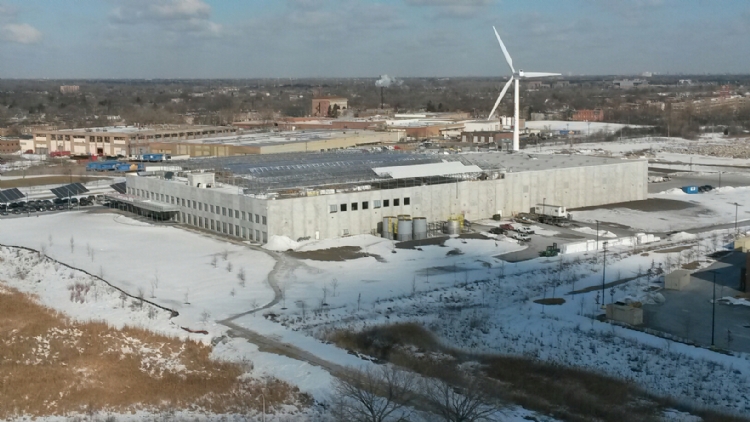
gotham-green-chicago-winter

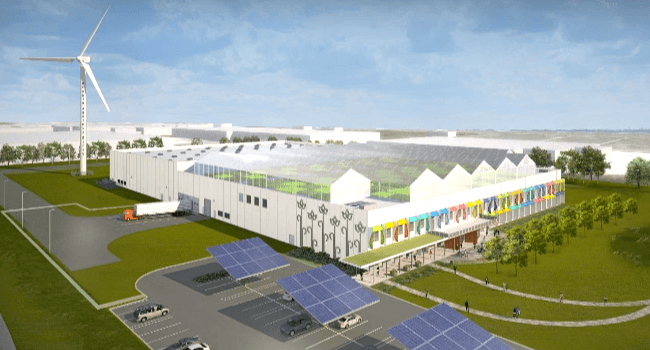
The pioneers behind America’s first commercial urban hydroponic greenhouses are now builders of the world’s largest. Today, Gotham Greens announced their biggest and most ambitious expansion to date with a brand new facility, located in the historic Pullman area on Chicago’s South Side.

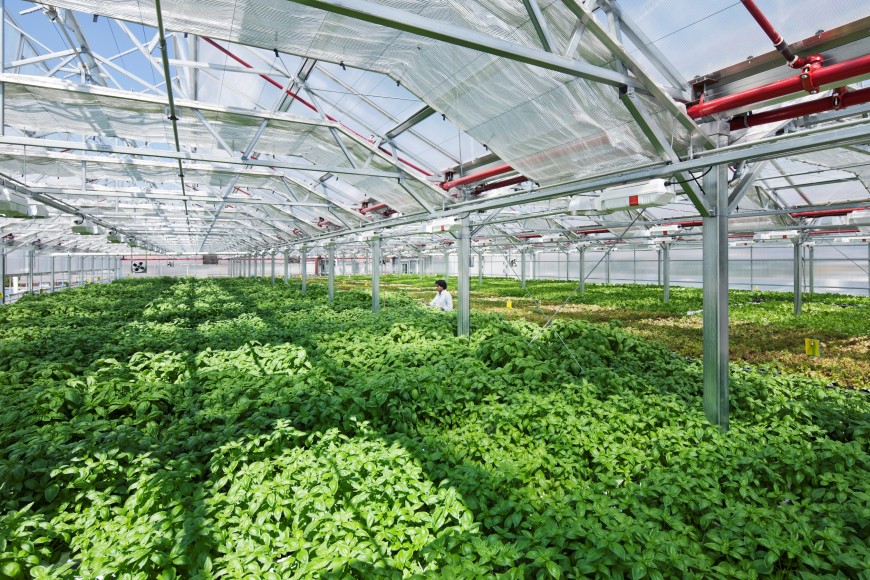
Gotham Greens’ fourth greenhouse facility represents a massive expansion for the company, and its first outside of New York. The state of the art, 75,000 sq ft Chicago greenhouse, located on the rooftop of Method Products manufacturing facility, is powered by 100% renewable energy, employs over 50 workers, many from the Pullman community, will produce nearly 10 million annual crops of local, premium-quality, pesticide-free, leafy greens and herbs.

gothamgreens-brooklyn

“With more than $1 billion in venture capital invested in the city in 2014, Chicago continues to emerge as the country’s newest hot spot for innovation and growing companies,” said Chicago Mayor Rahm Emanuel.

“Gotham Greens’ expansion means even more jobs and investment in the Pullman neighborhood; and through cutting-edge agricultural innovation they will provide fresh, healthy and locally-grown foods to residents across Chicago.”

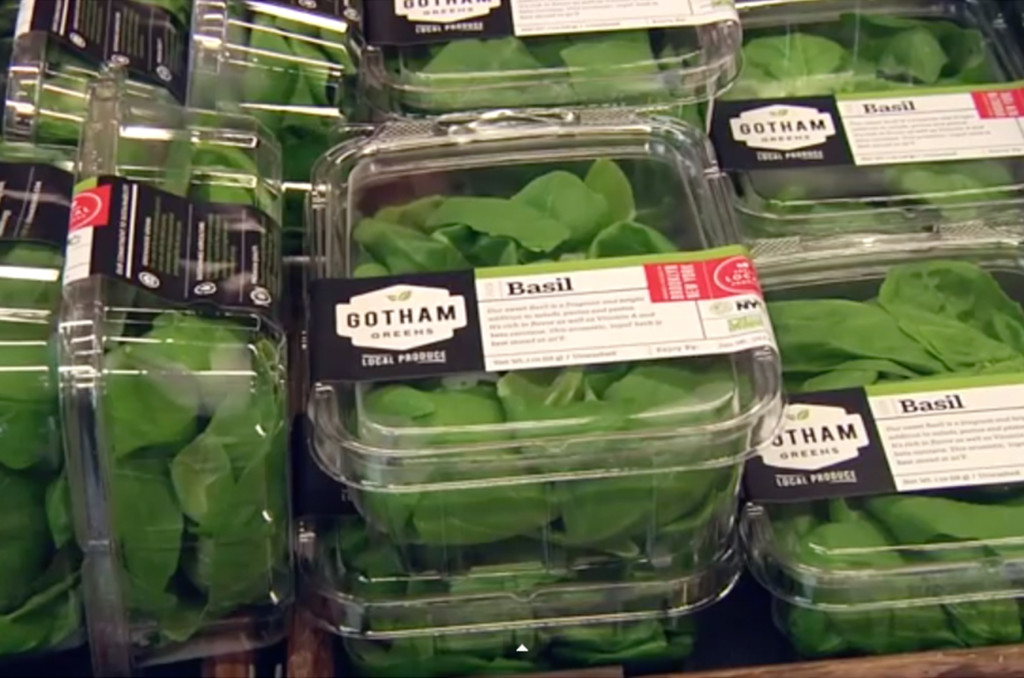
Gotham Greens’ local produce will be available in select national and local retailers across the Chicagoland area including Whole Foods Market, Peapod, Treasure Island, Sunset Foods, Plum Market, Target, and others.

In addition, the company has partnered on programs with various Chicago institutions including the Greater Chicago Food Depository, Greater Roseland West Pullman Food Network, Pilot Light, Chicago Botanical Garden’s Windy City Harvest and more.

gotham-green-brooklyn-whole-foods

“We’re proud to expand our footprint and bring Gotham Greens’ award-winning local produce into a new market, particularly Chicago, which is not only where I spent my early childhood, but also currently, perhaps, the most exciting city for culinary innovation, green development and urban farming,” said Gotham Greens co-founder and CEO Viraj Puri. “We’re especially proud to bring so many new jobs to the Pullman area, while also helping to make the local food system healthier and more ecologically sustainable.”

Through their unique brand of urban agriculture, now spanning two major cities, Gotham Greens’ expert growers are able to produce the highest quality vegetables all year round—including in the dead of winter. Sophisticated computer control systems continually adjust the greenhouse environment to ensure optimal growing conditions all year round. For Chicagoans, this means premium-quality, hyper-local produce that often hits store shelves and restaurant plates the very same day it’s harvested, 365 days a year.

RELATED: flux offers “Intel inside sensor brain for hydroponics 

“Above all else we are focused on growing the freshest, best tasting produce available,” said Gotham Greens’ Chief Agriculture Officer,Jennifer Nelkin Frymark. “Our commitment to quality and growing excellence is best illustrated by Gotham Greens’ new and long standing relationships with the nation’s best retailers and Michelin rated restaurants committed to providing their customers with the freshest and finest ingredients possible.”

Gotham Greens’ proprietary growing methods yield up to 30 times more crop per acre than field production, enabling the Pullman greenhouse to produce yields equivalent to over 50 acres of conventional field production.

gotham-greens-hydroponics-chicago


Because Gotham Greens recycles 100% of its irrigation water, it also uses 10 times less water than conventional agriculture (while also eliminating all agricultural runoff – one of the leading causes of global water pollution).By growingly locally, Gotham Greens eliminates the food waste and environmental footprint linked to shipping produce long distances.

Gotham Greens, based in Brooklyn, NY, has over 115 full-time team members and is growing rapidly, with projects under development in cities across the U.S. “We’ve raised over $30 million since launching in 2009,” said Gotham Greens co-founder and CFO, Eric Haley. “We now have four operational greenhouse facilities across two cities totaling 170,000 sq ft. This makes us the largest and most commercially successful urban agriculture company in the world.”

Protein powder? Plague of locusts could be breeding near you

0

locusts, agriculture, FAO, food, environment

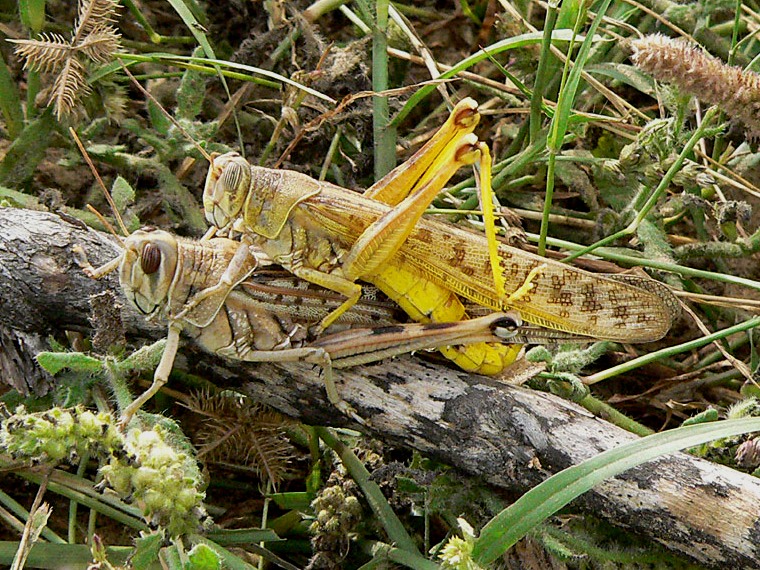
Watch out world, and those in North Africa and Middle East areas: A swarm of locusts of Biblical proportions could be heading near you. While bugs can form a significant amount of healthy human protein (that’s not kosher), locusts are particularly damaging as they ravage crops in their wake.

RELATED: Flying Spark food made in Israel

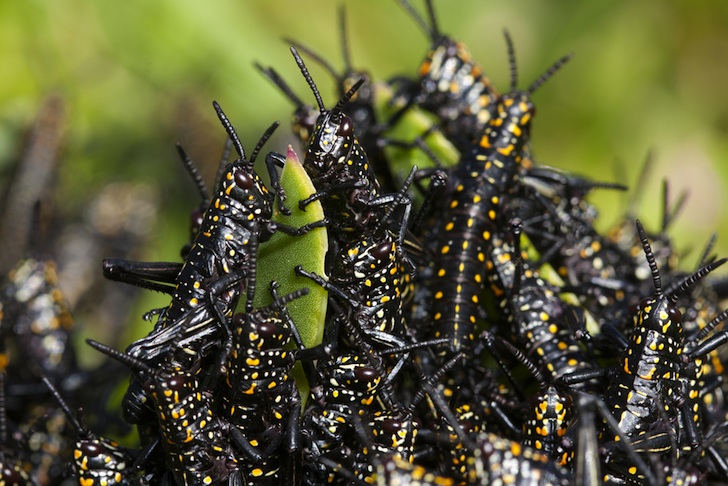
After becoming airborne, swarms of tens of millions of locusts can fly up to 100 miles a day with the wind. Female locusts can lay 300 eggs within their lifetime while a Desert Locust adult can consume roughly its own weight in fresh food per day — about two grams every day. A very small swarm eats the same amount of food in one day as about 35,000 people.

RELATED: Recipe for how to feast on locusts

nature, locusts, agriculture, Lebanon, farmers, copulating locusts

Unusually heavy and widespread rains that fell recently in northwest Africa, the Horn of Africa and Yemen could favour Desert Locust breeding, the leading agriculture organization, the Food and Agriculture Organization of the United Nations warned today. Governments be on high alert: close monitoring is needed over the next six months to prevent the insects from forming destructive swarms.

The locust situation in countries normally affected by Desert Locust remained mostly calm in October with only small-scale breeding activity detected, FAO experts said. They noted however, that this could change, in part due to the impact of El Nino in Africa and the tropical cyclones Chapala and Megh in the Arabian Peninsula and the Horn of Africa.

“Extreme weather events, including torrential downpours, have the potential to trigger a massive surge in locust numbers. Rain provides moist soil for the insects to lay their eggs, which in turn need to absorb water, while rains also allow vegetation to grow which locusts need for food and shelter,” said Keith Cressman, FAO Senior Locust Forecasting Officer.

“The effects of a locust plague can be devastating on crops and pastures and thus threaten food security and rural livelihoods,” he added.

The impact of El Nino and tropical cyclones Chapala and Megh

FAO has been monitoring the situation in northwest Africa where unusually heavy rains fell in late October over a widespread area of northern Mauritania, the adjacent areas of Western Sahara, southern Morocco and western Algeria and southwest Libya.

In the Horn of Africa, above-average rains associated with a very strong El Nino are predicted over northern Somalia during this winter and next spring. If so, ecological conditions will become favourable for breeding on the northwest coast and the Somali plateau.

Heavy rains associated with tropical cyclone Chapala fell in southern coastal and interior areas of Yemen in early November, followed one week later by tropical cyclone Megh that also affected northeastern Somalia. The torrential rains which far exceeded the annual average rainfall for the entire year caused flooding and damage.

In the winter breeding areas along both sides of the Red Sea, seasonal rains began in early October, which is slightly earlier than normal. If the rains continue, there would be sufficient time for two generations of breeding to occur this year in the coastal areas of Sudan, northern Eritrea, southeast Egypt, Saudi Arabia and Yemen

Climate change and locust prevention and control

Prevention, mainly through early warning and early reaction, is the key in reducing the extent to which Desert Locust can affect agricultural areas. After unusually heavy rainfall, it is imperative that countries mount the necessary field surveys and maintain them on a regular basis for routine monitoring of breeding conditions and locust infestations. The finding of significant infestations requires control operations to avoid a further escalation in locust numbers. It is critical that the results of survey and control operations are reported quickly and accurately so that swift decisions can be taken to prevent the spread of locusts to other countries.

While these measures are believed to have played an important role in the decline in the frequency and duration of plagues since the 1960s, today climate change is leading to more frequent, unpredictable and extreme weather and poses fresh challenges on how to monitor locust activity.

Whereas locust numbers decrease during droughts, locust outbreaks often follow floods and cyclones. If not controlled, these outbreaks can lead to plagues. Temperature on the other hand governs the speed of locust development and warmer conditions could possibly shorten the incubation and maturation periods and lead to a rise in the number of locust generations in a year.

Invest in ancient fig cultivars in Morocco, invest in the future

2

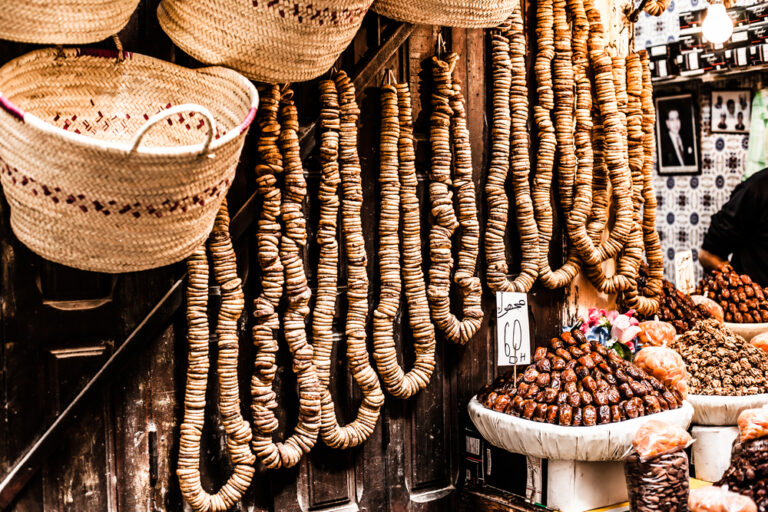
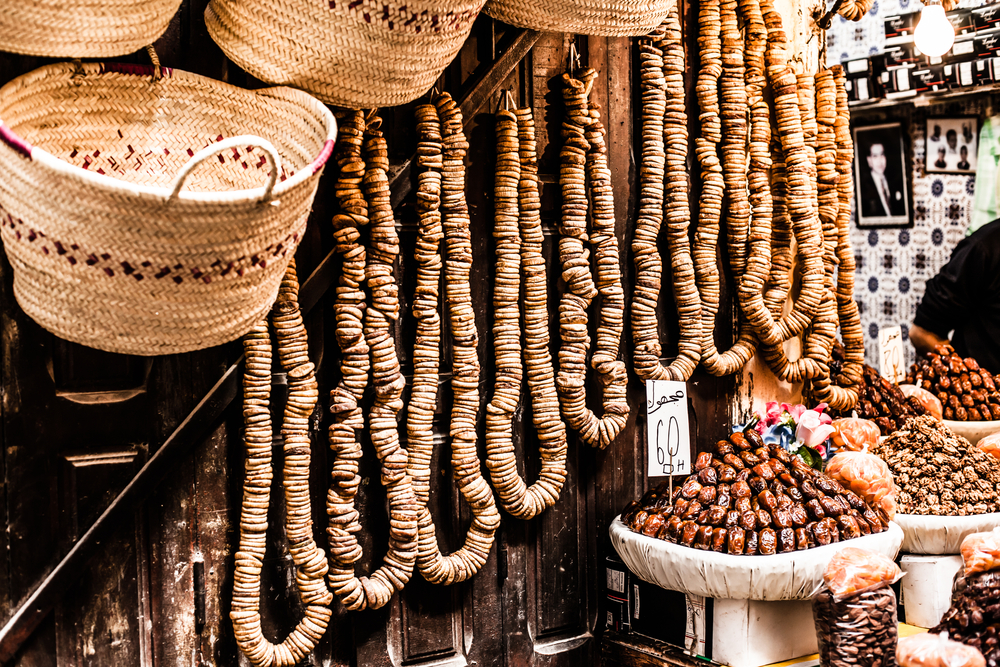
figs from Morocco

Moroccan fig trees are a part of Ahmed Hakam. Until he was nine years old, Ahmed never ventured outside of his birth village near the northern city of Ouezzane. He vividly remembers the local fig harvest, when, every year, he, his mother and scores of women and their children from nearby villages would gather to dry figs on palm shrub leaves. While women worked, children were socialized among fig plantations.

“As children, we spent a lot of time playing, eating, singing in fig trees,” said Ahmed.

This experience, he says, greatly affected his life path. As a Ministry of Agriculture and Maritime Fisheries official, he has spent the greater part of his 32 year-long career on rehabilitating and securing value-added processing for Moroccan crops.

He places special emphasis on figs due to their rich biological heritage: here, farmers have been cultivating figs by breeding wild and domestic species for thousands of years, a practice that has allowed myriad types to evolve and thrive throughout the country.

RELATED: A recipe for fresh, baked figs

According to Yossef Ben-Meir, president of the Moroccan-American nonprofit High Atlas Foundation, however, this biodiversity is threatened by a lack of investment in community-managed tree nurseries, inefficient water use, and little value-accessed processing and sale. The Moroccan government indicates that farmers, unable to utilize value-added opportunities for figs, are relegating them to mountain slopes and other areas difficult to reach for transportation.

More accessible land, meanwhile, is used for resource-intensive crops like wheat, apples and pears. In some areas of Morocco, over 50 percent of fig cultivars have therefore disappeared, and figs decay, unharvested, on the tree branch. Ancient fig cultivars are being destroyed.

This decline in production, however, has led to increased domestic demand: fresh fig prices, says Ahmed, are now higher than those per kilo for bananas and apples.

Related: We travel to the High Atlas Mountains

Demand is certainly high internationally (in 2014, global fig demand reached 448 million U.S. dollars and grew 8 percent from 2007 to 2014, according to marketing firm Index Box), representing significant opportunity for Moroccan farmers and investors.

To access this market, Yossef says that farmers must first access the financial and knowledge-based resources to increase production and ensure consistent quality.

RELATED: Meet Morocco’s plant super-hero

The Moroccan government has decided to invest in fig production in partnership with the High Atlas Foundation, which is already active in organic almond and walnut production. Together, these institutions plan to build a nursery near Ouezzane, due to the region’s tradition of fig production and the threats regional fig plantations face from the neglect that has already extinguished indigenous plum varieties.

The partnership will support 10 varieties of threatened local figs and distribute saplings for free to farmers. The involved institutions will train farmers in organic-certified production and value-added processing, and spark a farmer’s coop to share knowledge and explore additional value-added opportunities. The partnership will also create a scientific teaching garden featuring all regional varieties.

This pilot program aims to benefit 35,000 rural Moroccans by extending fig crops by 1,000 hectares. Through it, the Moroccan government and HAF will support the government’s goal of increasing national fig production by 126 percent within the next five years.

Knowledge is deeply needed at a fig plantation near Ouezzane, where farmers lose out on economic opportunities due to lack of infrastructure and knowledge. There, farmers dry only their second crop, making it more valuable, and must sell their first, early-summer crop fresh, as its high water content counters effective drying. Due to a lack of cold storage, to generate the most profit from this delicate crop, farmers must harvest early in the morning and arrange transportation for figs to local souks by the afternoon.

While dried figs sell for the equivalent $1.80 to $2 per kilogram locally, fresh figs, at $0.80 to $1, present a roughly 50% loss.

At the farmers’ plantation, Hakam points to a large tree surrounded by many offshoots. Farmers tell him that this tree produces 300 kilograms of fruit per year. With some pruning, he says, it could yield twice that amount.

When asked what the farming community would do with extra revenue from increased structural support and efficiency, farmer Fatima Khaima, who left school at age 15, emphasizes children’s education. There is a well-attended primary school a kilometer and a half away, she says. Past age 12, however, roughly 30 percent of children drop out because they do not have the money for $1.20 worth of travel and food at the secondary school, 9 kilometers away.

Another problem, says Fatima, is road quality. The fig plantation is surrounded by steep dirt roads that are washed away in the winter.

“[Increased revenue from figs] will help us for our future,” said Fatima.

One person already benefiting from fig crops is Jamal Belkadi, a farmer in the nearby village of Asjen. Jamal began his fig plantation in 2000 with two trees, and, through traditional grafting of tree branches, grew his crop to 170. Starting “without a single dirham a day,” he now makes a $4,000 profit every year to support his wife and two young daughters.

Jamal says these fig trees mean the world to him. They are also significant for his community, where he creates seasonal agricultural jobs and to which he has dedicated three trees’ worth of fruit annually.

“I feel happy,” said Jamal. “My love are these trees. I work with them. I sweat over them… People come and eat, and say, ‘God bless your parents.’ I’m better with God.”

By investing in fig farming communities, the Moroccan government and High Atlas Foundation can spread Jamal’s expertise and make dreams come true for Fatima’s and Ahmed’s communities.

Ida Sophie Winter is a student at the Missouri School of Journalism and project manager with the High Atlas Foundation. She spent 2014-2015 in Morocco as a Critical Languages and Boren scholar.

Image of figs in Fez, from Shutterstock

Agratech from Dubai will grow 5 acres of space lettuce in Portugal

0

hydroponics

Fresh greens and fresh anything are usually impossible to find in desert locations. But a new way of growing food on water, called hydroponics, is shaping up to be one of the latest exports from a Middle East country that has had to deal with lack of water. Hydroponics is working in Jordan thanks to the US Government and USAID.

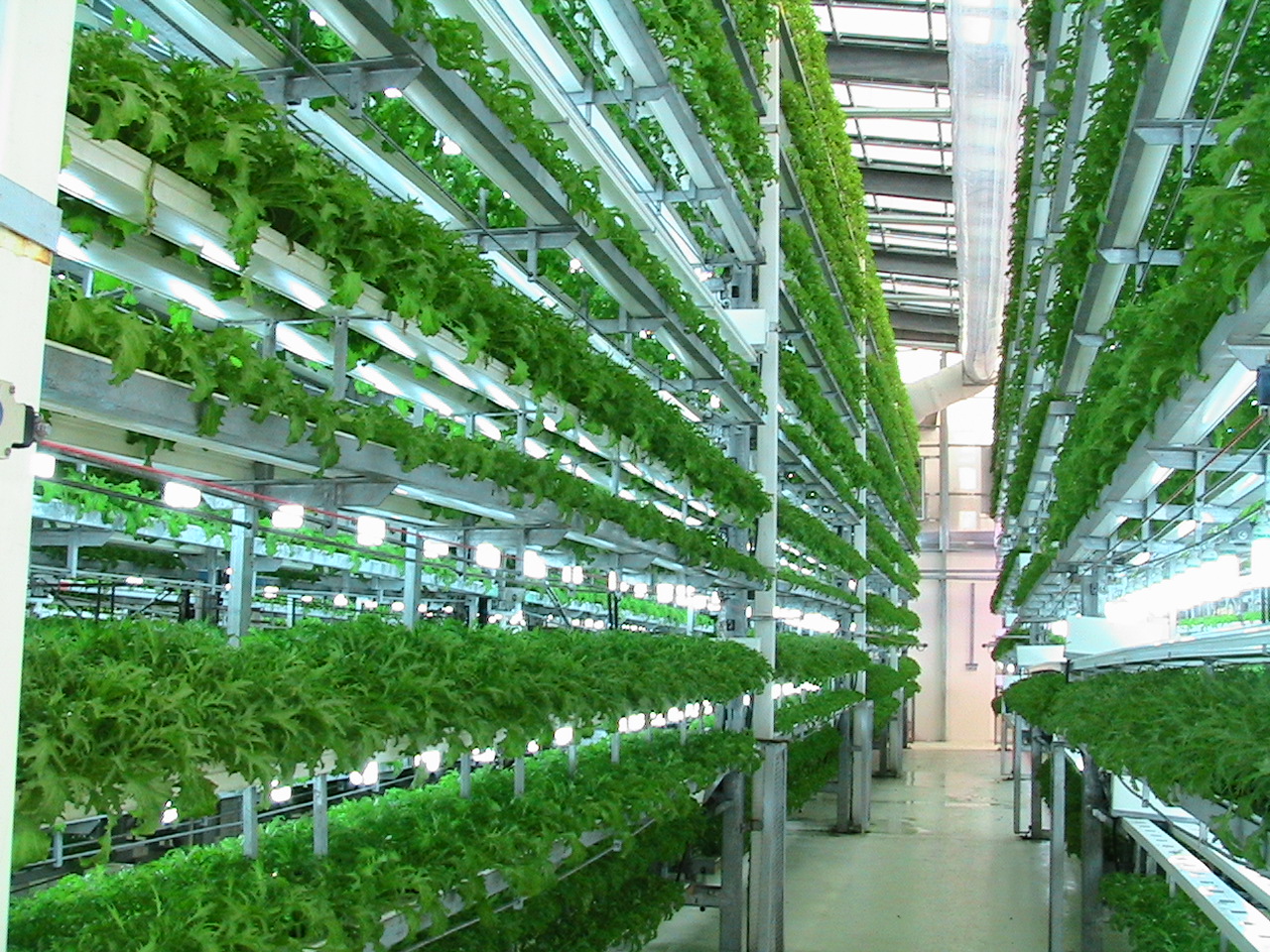
Hydroponics, despite using only water and no soil can actually be extremely water efficient and productive. So much so, that the Dubai-based company Agratech which builds such farms, is now importing its technology to Portugal where it will build a 5 acre covered greenhouse.

Known as distributed agriculture, or controlled environment agriculture, hydroponics may very well be the only way that we can ensure a steady supply of fresh food in the future. Soil-based farming is extremely resource intensive, with only a fraction of the fertilizers used actually making it to the roots of the plants.

Hydroponics, on the other hand, bathes the roots in needed minerals so the plant gets exactly what it wants without having to search for food. This way the plant spends more energy growing fruit and less on root.

Portugal, like all the Mediterranean countries and States like California, is seeing a dire shortage of water.

According to press annual Agratech aims to be one of the largest operators of hydroponic farming facilities in the Middle East and North Africa (MENA) and Europe from their strategic base in the United Arab Emirates.

Striving to improve the world’s food security imbalances with their technologically advanced farming techniques coupled with clean and ethical farming practices that produce fresh, healthy fruit and vegetables.

With the vision to educate, teach and develop the next generation throughout the globe with relevant farming and agricultural knowledge. They also continue their local-to-local philosophy to ensure job creation and economic safety throughout the region.

Dedicated to balance being a successful business as well as a socially responsible one, they aim to construct over 100 hectares of hydroponic farm land by 2020, but also to donate produce to the United Nations and World Health Organization.

Dubai’s Museum of the Future is short on sustainability

0

Dubai Museum of the future

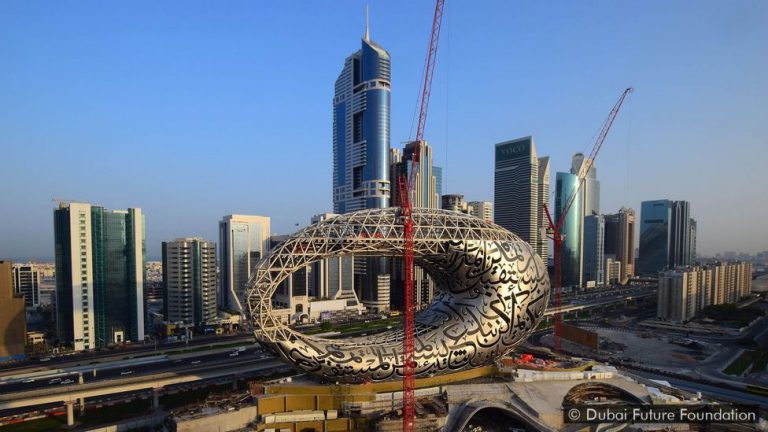
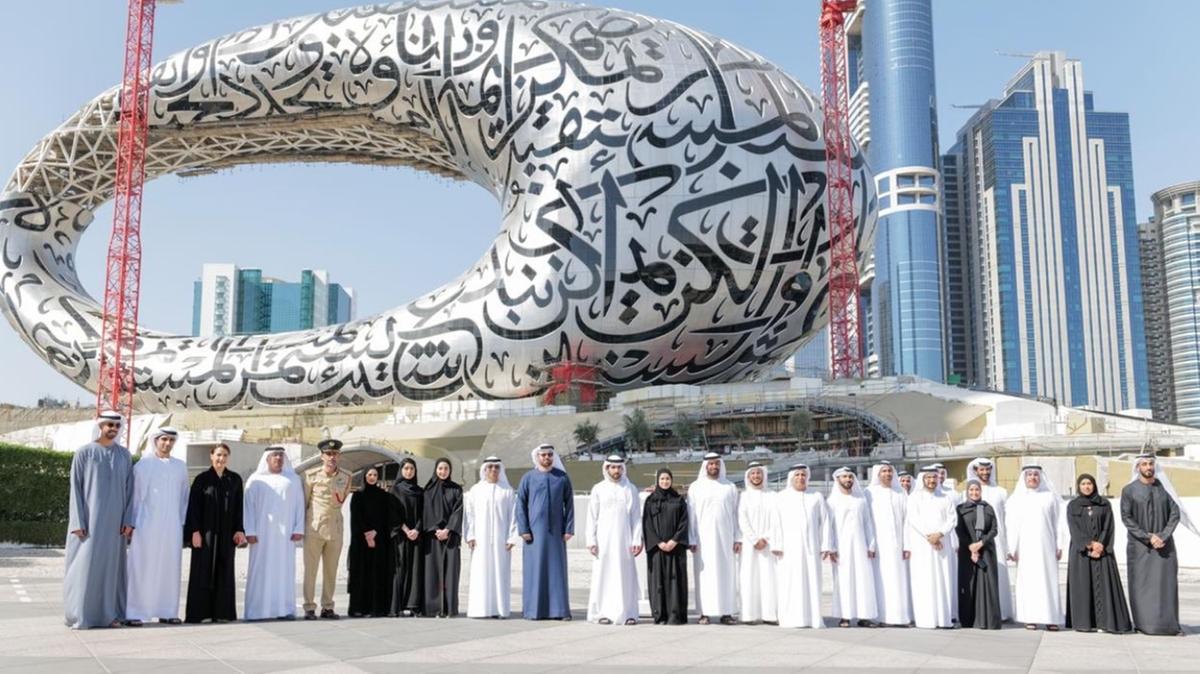
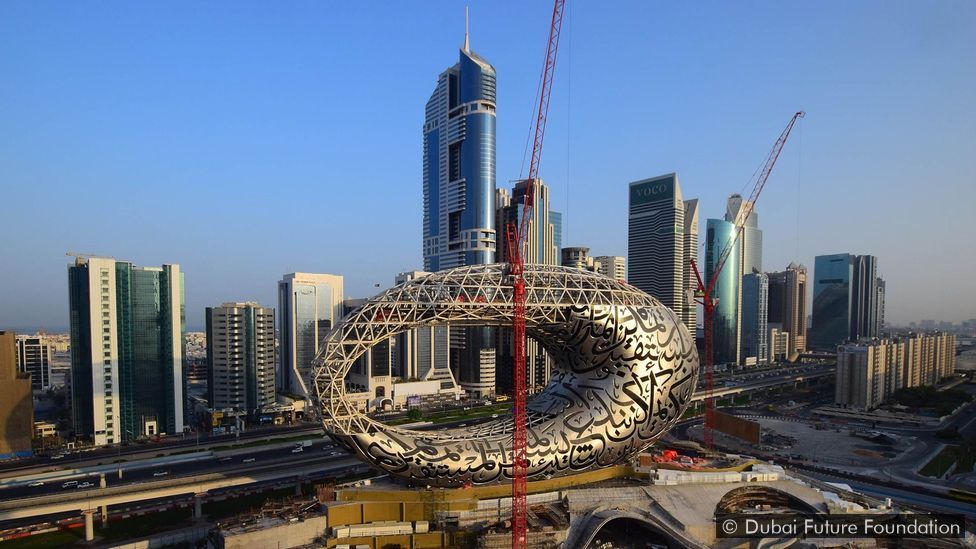
Construction has begun in Dubai on the $136-million Museum of the Future. Tucked between skyscrapers in Dubai’s financial district, just a seven-minute drive from the tallest building in the world, the Burj Khalifa, it will be more than an exhibition hall, cafe and gift shop.

Special “innovation labs” will be included where researchers and designers will work towards its official motto, “See the Future, Create the Future”. But will that future be sustainable?

UAE Prime Minister Sheikh Mohammed Bin Rashid Al Maktoum said the museum will be “a destination for the best and brightest inventors and entrepreneurs.”

His government has proclaimed 2015 the “Year of Innovation,” investing aggressively in technology, and the private sector is jumping aboard with UAE telecommunications company Du recently partnering with the Massachusetts Institute of Technology’s Senseable City Lab to explore how technology can enhance the cities of the future.

museum future dubai

The Sheikh explained, “The future belongs to those who can imagine it, design it, and execute it. Here in the UAE we think differently. While others try to predict the future, we create it.”

The Museum of the Future will open in 2017. Update 2020: Here is the website. Initial press releases were image-heavy, with glossy artist renderings of an elliptical doughnut, standing on edge. The structure’s center will hold a holographic billboard which will broadcast news on museum exhibits which will include robots,  holograms, and laser technology – at least according to those press photos.

Fully sheathed in silvery metal, lines of poetry penned by the Sheikh repeats in patterns across its exterior, according to a report from The Wall Street Journal.

Daylight enters the building through that punctured facade. And while increased interior daylighting in a cornerstone of sustainable design, seems you could fry falafel on those sun-heated steel surfaces. And how will the shiny exterior deflect sun rays? It could make London’s car-melting “Walkie Talkie” … Take this inside, how have the engineers handled the resulting heat load to museum interiors? A month after groundbreaking – there is no publicly available information on how the building will perform environmentally.

The history of Dubai

Dubai is a part of the seven Emirates that make up United Arab Emirates or (UAE). Dubai was built from a small fishing village on the Persian Gulf. The small Kingdom had discovered oil. Since then the village has became one of the most important cities in the Middle East and well known around the world.

The Royal family who rule over Dubai knew they had to act fast to find another way to make revenue for Dubai. The ruler of Dubai made the city a household name by making it into the city built on investments from all over the Middle East and around the world. These new investments in the city helped make Dubai what it is today, and what it will become in the future.

In just a short amount of time Dubai has grown rapidly and new buildings are being planned and built. When beachfront land was needed the investors came up with an idea to build islands to make more building space.

It can be said that Dubai is at a time in its life where it is having a very big building boom buildings are popping up all over the city. Some of the buildings have been designed in a more modern look and others have been designed in a traditional way. As Dubai continues its building boom it has begun to focus on constructing buildings that can be more sustainable.

As an example, sustainable construction saves more water in a place like Dubai where water is precious. Using the sun to help make energy for the buildings would ensure the city does not have to burn more fuel that causes air pollution but use clean way to provide energy.

The questions that may be asked is can a city like Dubai become more sustainable? The answer is yes it can. Dubai has goal of becoming one of the top ten sustainable cities in the world by 2020.

In 2010 the goal came alive and started with government buildings, all 40 of which were abiding by the new law by the time it was rolled out across the country at the start of 2014.

Having new rules and regulations in building standards help to make sure the city is built in a more sustainable way. These codes of building have been proven to help create a city that has less of an impact on the environment by causing less of a carbon footprint.

The motto for the building is “See the future, create the future.” It strives to unite inventors, designers, and researchers for collaboration on technologies, including automobiles, robotics, genetics, and more.

The Museum of the Future is the latest in a burst of superlative projects from the UAE capital, which range from plans to erect the world’s tallest twin towers to designs for an Aladdin-inspired city in the oldest section of Dubai to the world’s largest shopping mall slated to debut at Expo 2020. The museum will stand adjacent to the Emirates Towers on Sheikh Zayed Road. The architect has not yet been announced.

The WSJ notes that Dubai is funneling increasing amounts of money into technology innovation, including funding competitions such as “Drones for Good” — a $1 million prize to find humanitarian uses for drones that was won by a collision-proof search-and-rescue model from Switzerland.

a few of these drones bumping around the interior of the Museum of the Future wouldn’t go amiss, but Dubai will need to showcase more than just foreign technology to live up to its grand claims.

Experience the (new, artificial, and made-in-America) Middle East! Coming to Dubai in 2018

1

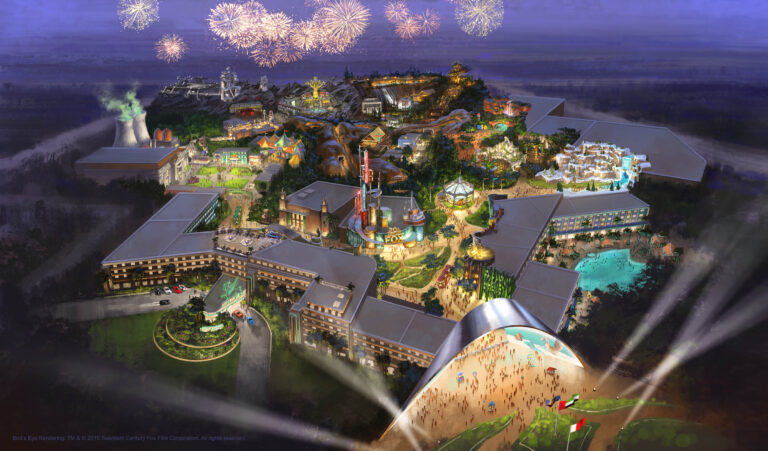
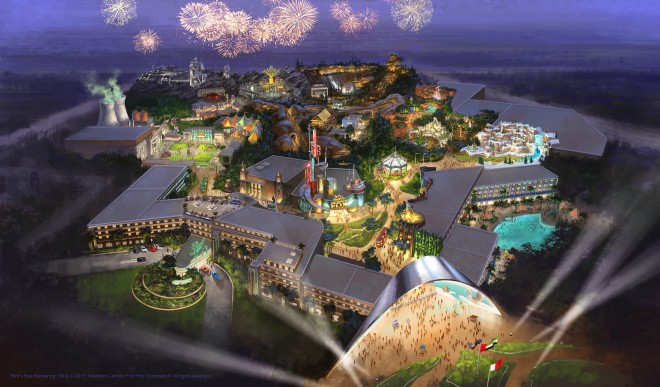
fox world dubaiAmerican media giant 20th Century Fox has teamed up with United Arab Emirates Al Ahli Holding Group to build a theme park in Dubai, set to open in 2018, that will feature attractions based on blockbuster movies such as “Aliens,” “Titanic,” “Ice Age” and “Planet of the Apes.”
So the UAE builds another resource-guzzling folly for audiences with high disposable income, hungry for US-themed fun. How long can this roller coaster ride last?

The Martian movie started as a book – here’s the review

0

MARS housing

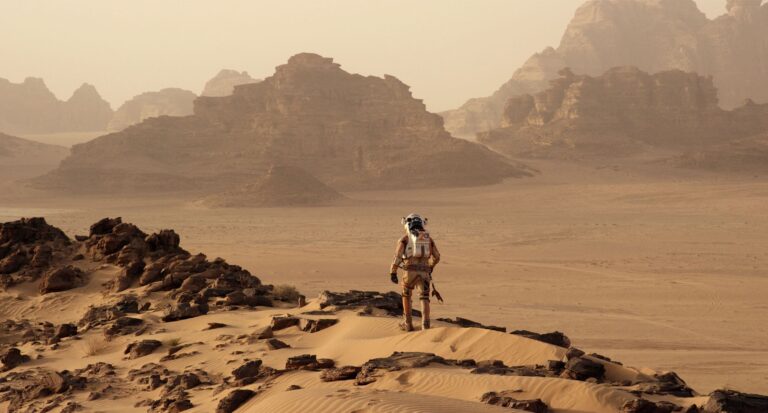
Imagine that you are a castaway on a dead planet. You only have provisions for a few days and you are absolutely alone. How would you survive? Andy Weir turned this question into his best-selling novel, The Martian. It is a tale of man versus Mars.

Can GM make electric cars the right way?

Chevy Bolt EV

Electric car fortunes have had their ups and downs; especially following the collapse of the Better Place electric car network that left hundreds of EV car purchasers with the possibility of being stranded without power over in ISrael. Although some electric car models like Nissan’s Leaf and Tesla sport EVs have made modest inroads, over all, electric cars have yet to capture a sizable share of the world car market.

America’s largest car maker,General Motors, introduced its Chevrolet Volt plug in hybrid model in 2010. GM now hopes to change the way people think about driving electric cars when it markets its new Bolt all electric car sometime in 2017.

In contrast to GM’s Chevy Volt, which has a hybrid engine (both an electric and gasoline engine) the Bolt is a total electric car that will have a driving range of “roughly” 200 miles (322 km). Resembling Chevy’s gasoline driven Sonic hatchback model in appearance and size, the 5 seater Bolt will cost around $30,000. This is after a $7,500 US government tax credit incentive to American EV car purchasers is applied. This will make it more affordable than other similar sized electric models.

A Bolt prototype model made a recent appearance at the popular Detroit Auto Show earlier this year. There, the Bolt appeared to be a better value than other featured EV cars, including Tesla’s new Model 3 and BMW’s i3. Without the government offered tax credit, the Bolt will cost around $38,000; still lower in price than other comparable models. GM does have a lower priced EV car on the market, the smaller Chevy Spark EV car that’s only available in two US states: California and Oregon.

Whether GM’s new EV models reach markets in the Middle East is still anybody’s guess. Israel’s EV car experience, where aging Better Place marketed Renault Fluence EVs are still seen on the roads, has shown that electric cars are not yet being accepted by the general public. The lower price of oil, makes gasoline and diesel cars more desirable, is also a factor, despite warnings by environmentalists linking fossil fuels to climate change and global warming.

For all EV models, including the new Chevy Bolt, the main issue will still be what fuels the power plants that supply electricity for electric cars.

Perhaps solar and other alternative energy’s time has come after all.

Read more on electric cars:

“Driverless” Tesla electric will test run on Israel’s Better Place grid
Happy 2013! A good year for electric cars
Middle East will remain “Leaf” – less as Nissan puts electric car efforts elsewhere

Photo of Chevrolet Bolt EV Car – autoblog/GM :

UBER Middle East delivers puppies on-demand in the most adorable fundraiser!

raining puppies in AmmanIt’s raining cats and dogs in Amman, Jordan now, closing roads (flooded underpasses), some schools, and many offices. It’s the usual drill for a city ill-equipped for atypical weather. Now online transportation giant Uber is helping to “rain down more dogs” for a limited time today in what could be the world’s most adorable fundraiser.
Crazy heat dome will mean no one can live in Arab Gulf by 2100

0

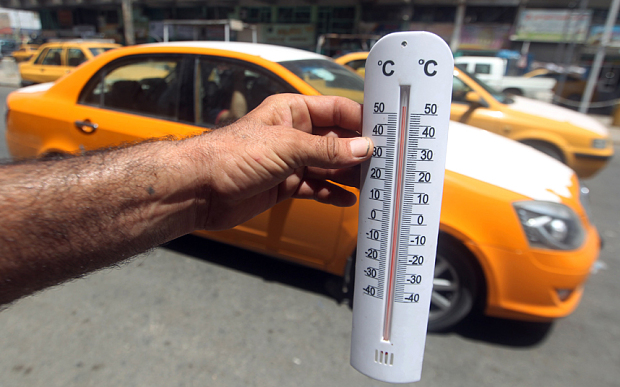
Iraqi-thermometer-_3394699b

Just when we got excited about Dubai’s solar trees, seems like innovations like this will not be enough to save the Middle East. In 85 years the region will not be fit for human habitation.

Extreme Middle East weather patterns as a result of global warming and climate change  have become commonplace for some time in many parts of the Middle East. These weather patterns have already wreaked havoc on fragile Arab Gulf natural ecosystems due to extensive human commercial and private real estate development.

Very high summer temperatures have always been a problem for human habitation in Gulf locations like Abu Dhabi, Bahrain, and Dubai, with summer temperatures often surpassing 45 degrees Celsius, combined with high amounts of humidity.

This intense combination of heat and humidity is now resulting in a phenomenon known as heat domes with some of the highest summer temperatures ever endured by mankind in locations like Baghdad, Iraq and Saudi Arabia.

These heat domes, which caused heat indexes last summer to go up to over 80 degrees Celsius (178 degrees Fahrenheit) in Saudi Arabia may result in many parts of the Arab Gulf becoming uninhabitable by humans by the year 2100.

According to CNN the deadly combination of heat and humidity, known by scientists as the “wet bulb temperature effect” becomes deadly when the human body can no longer cool itself by sweating. The wet bulb temperature effect takes place when prolonged summer heat of 31 to 35 degrees Celsius is combined with high rates of humidity.

This is caused by hot drier desert air meeting up with heavy, humid air along coastal areas. Drier areas experiencing much higher temperatures, like Kuwait City for example, would actually be more survivable due to the body still being able to sweat; which is a natural form of ventilation in humans.

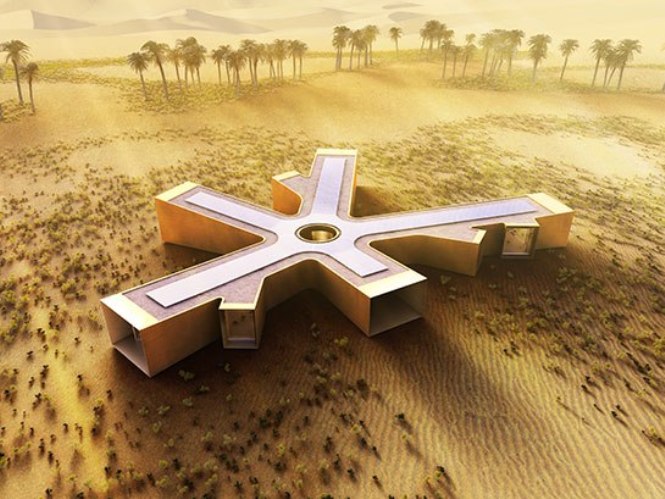
UAE builds solar powered retreat

More moderate climate areas of the Middle East, including Lebanon, Israel, Egypt and Jordan, also experienced summer heat domes lasting several days, combined with high humidity and dust.

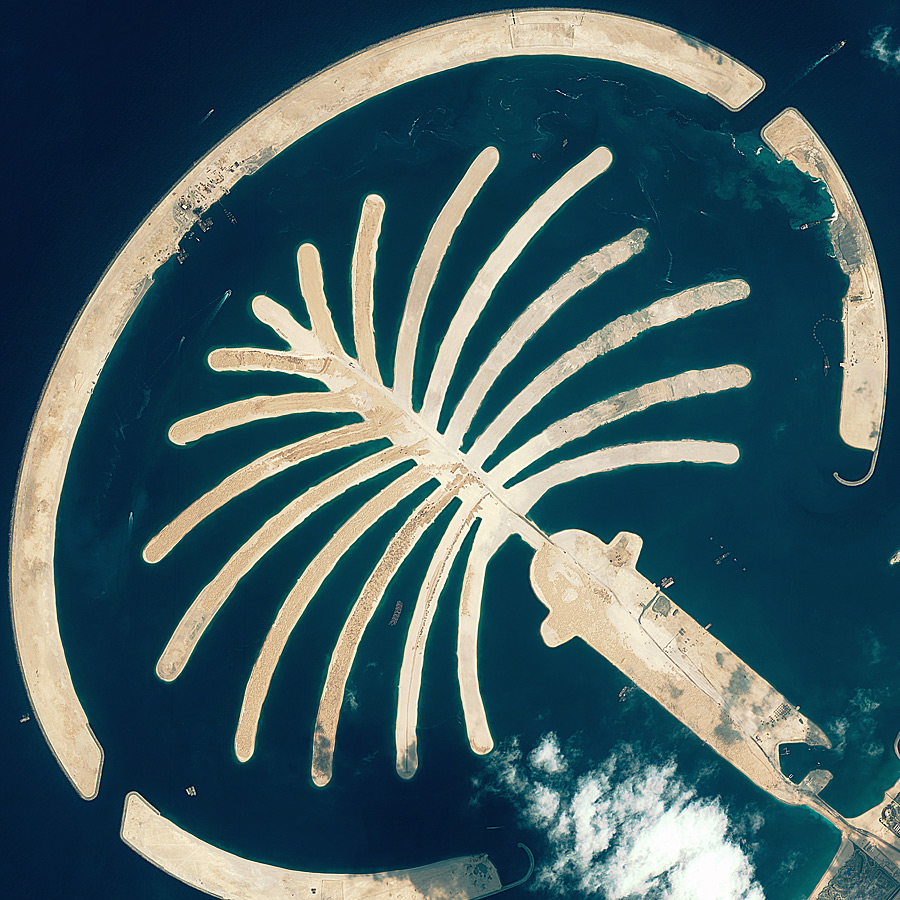
This forced most people to stay indoors, running energy consuming air conditioning systems that are now an everyday necessity during the summer. Massive air conditioning systems have long been the norm in Gulf locations like Abu Dhabi and Dubai, where conspicuous consumption by wealthy fossil fuel enriched inhabitants  has resulted in such wasteful projects as indoor snow ski centers, high high rise commercial and residential complexes and artificial islands.

dubai_palm_island

All of these projects are built by large numbers of imported guest workers who endure extremely crowded and unpleasant living conditions; often without air conditioning.

Qatar, COP18, migrant workers, climate change, World Cup 2022, human rights, Doha

While the super rich in Bahrain, Dubai and Abu Dhabi can insulate themselves from wet bulb temperature effects in their glass enclosed bubbles, while doing conspicuous shopping abroad, those serving them cannot for the most part. This factor in itself may result in a massive decline in human habitation in the Arab Gulf, long before the projected date of 2100.

Dig deeper into human caused climate change effects in the Middle East:

When will the Middle East wake up to green roofs?
Climate change “worst” is yet to come, UN report warns today
Climate Change contributing to Mali-Algeria conflict

Photo of Heat Dome Thermometer AFP/Daily Telegraph

Suntan around these badass solar palm trees in… Dubai!

1


3d-printed-solar-palm-dubai-6

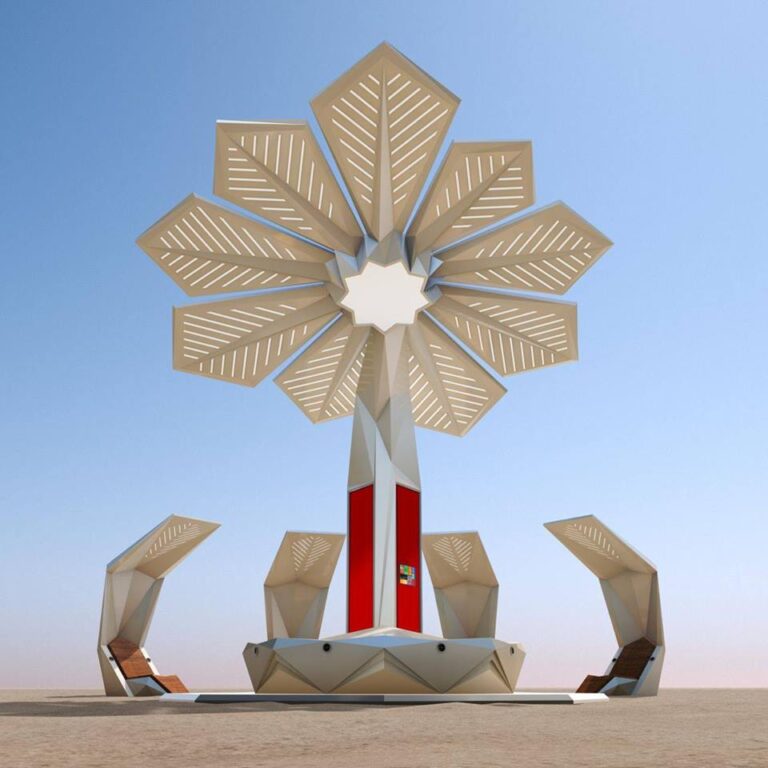
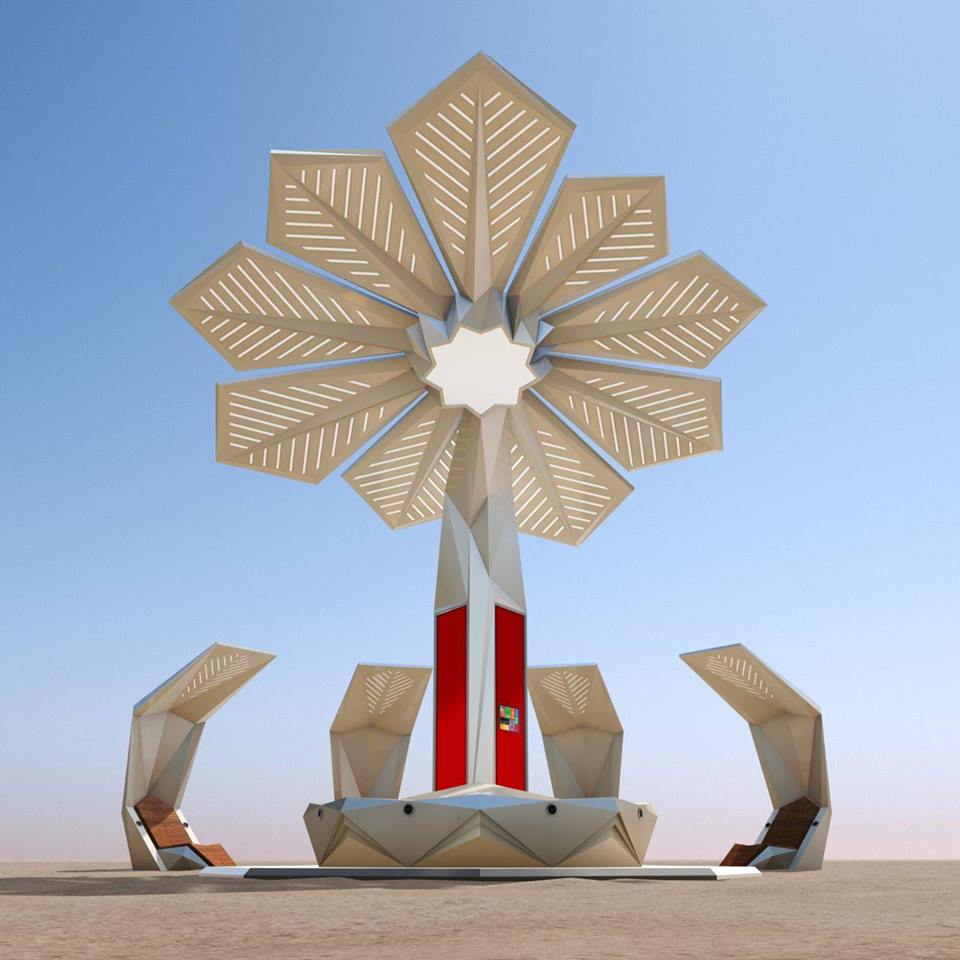
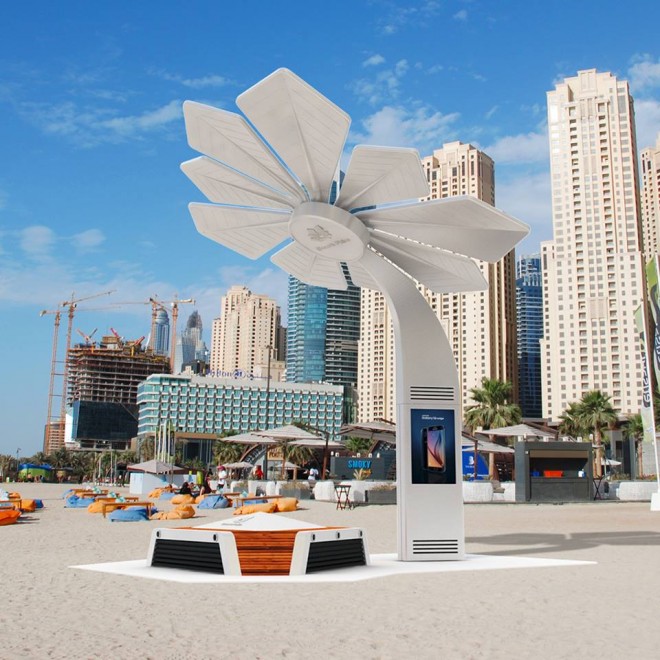
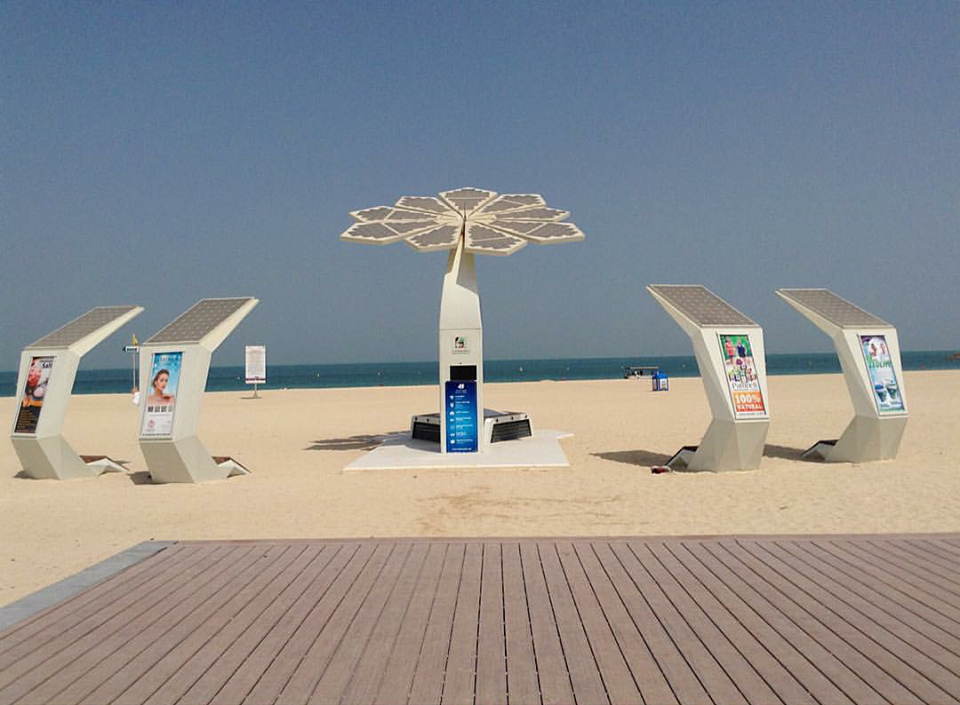
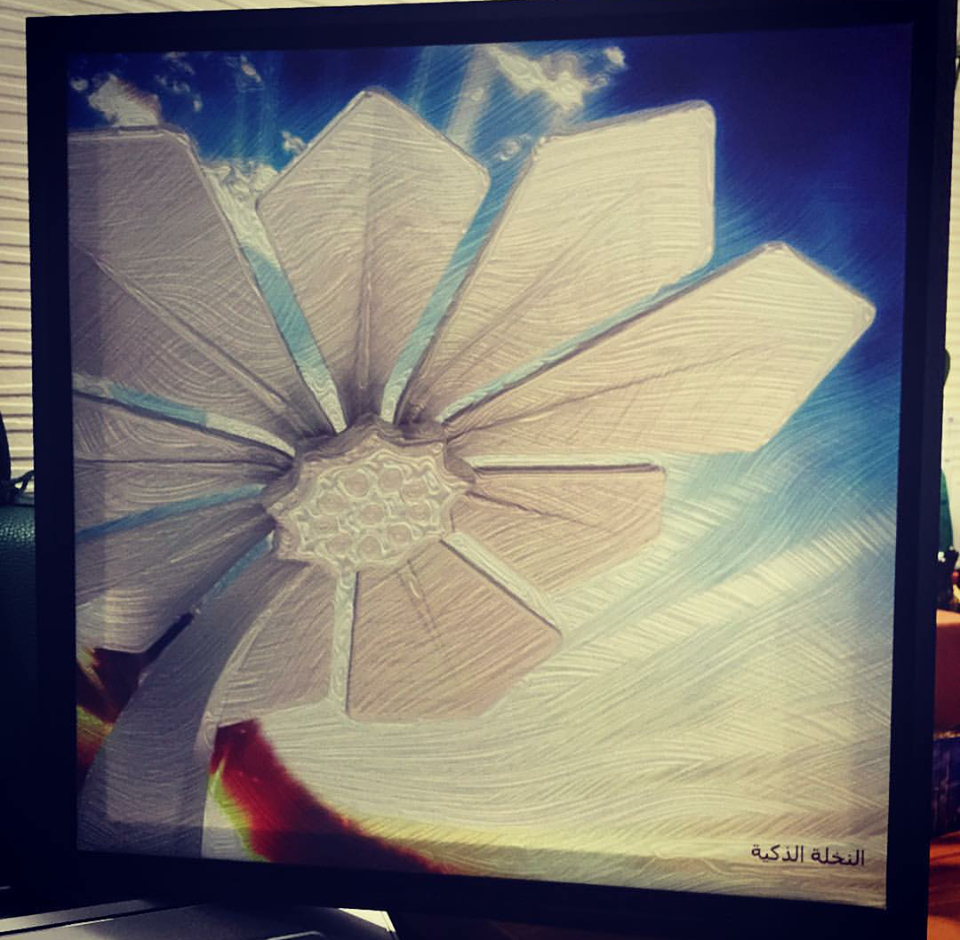
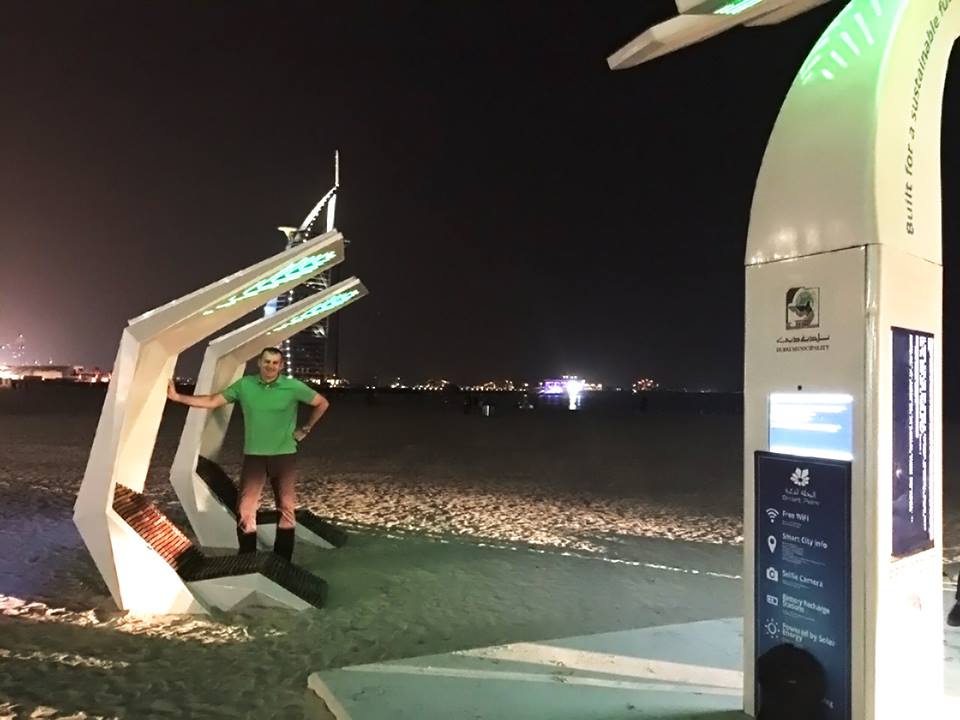
Following Israel’s smart solar trees, the Dubai Municipality is rolling out a series of “community tech hubs” based on 3D printed palm trees that collect solar power. The stations are also where users can recharge their phones, tablets and laptops, enjoy free WiFi, and check in on local weather and news.

The Smart Palm initiative aligns with a UAE Cabinet decision to make 2015 the “Year of Innovation” and with Dubai’s overarching ambition to become the regional leader in digital Smart City technologies.

The oil-rich state has resources to make innovation reality, but why aren’t simpler versions of this basic tech going up as standard civic amenities everywhere?

3d-printed-solar-palm-dubai-5

These six-meter-tall solar-powered towers shaped like palm trees are the latest  city-sponsored convenience for tourists and beachgoers. Dubai Municipality installed the first Smart Palm at Zabeel Park in April. The second, which added a feature to give weather updates, sprouted in May at Jumeirah Beach near the Burj Al Arab Hotel. The Dubai World Trade Center received the third unit in June, and a fourth goes up this month at an as-yet unspecified location.

3d-printed-solar-palm-dubai

Viktor Nelepa, founder of D Idea Media, the company that designs and builds the structures, told Khaleej Times, “The fourth unit will be another milestone as it will be a unique structure created using 3D printing technology and it will be the biggest such outdoor structure [in the world].”

The newest Palm is made of fiber-reinforced plastic (FRP) instead of steel, making it lighter and more durable than earlier prototypes. It has added ultraviolet and humidity protection to reduce maintenance. All Smart Palms run on its own mono crystal solar panels, which provide up to 21 per cent efficiency and generate enough power for daytime functionality and nighttime lighting. The city plans to add them to all public beaches in Al Mamzar, Jumeirah and Umm Suqeim.

Nelepa said that in the first four months of operation the Smart Palms generated a total of 2.5 MW of green electricity. More than 2,100 devices were charged and – on the silly side – about 2,000 selfies were taken using cameras attached to the towers. The project grew from collaboration between Dubai Municipality, Smart Palm creators D Idea Media, du, Sun Tab Solar Energy and Promo Tech Gulf Industry.

Alya Harmoudi, Director, Environment Department, Dubai Municipality, said each unit can support 50 simultaneous over a radius of 53 meters. She added that the stations can display updates on beach events and serve as a public announcement system. They also show beach rules, guidelines, tips, and sea conditions.

The project took just ten months from conception to delivering the finished product.

3d-printed-solar-palm-dubai-2 3d-printed-solar-palm-dubai-1 3d-printed-solar-palm-dubai-4

Smart Palm is designed in part to serve as functional public art that complements Dubai’s iconic architecture and scenic beaches.  As such, it would be a positive addition to all Middle East airports and touristic sites,  a necessary replacement for the ubiquitous telephone booths of the past.

If the makers would strip it down to its utilitarian components, production costs would reduce, enabling purchase by (or for) urban communities where people lack reliable internet connectivity or experience intermittent power.

3d-printed-solar-palm-dubai-7

Imagine modified Palms installed in refugee camps.  That would be very smart. And for refugee design ideas see this – 10 refugee shelters we hate to love.

EU schoolkids build food waste charter includes doggy bags and free food

0

rotten-tomato-food-waste

The European Charter against food waste was just presented at Milan Expo 2015, two weeks before the end of the six-month-long world’s fair which was focused on feeding the world.

Drafted by over 40 schools across seven European countries, and with advice from 50 municipal governments, it outlines concrete actions for cutting food waste from homes, supermarkets and restaurants. While Middle Eastern nations were not signatories, the guidance is applicable most everywhere.

Among the 80 suggestions to limit waste and promote sustainability are mandatory “doggy bags” at restaurants and public canteens and the use of glass water bottles, instead of plastic. Other recommendations include allowing supermarkets to redistribute food that is nearing expiration and turning schools into community food distribution centers.

The project is raising awareness to chronic food waste said Rita Biconne, the project manager of Felcos Umbria, one of the plan’s promoters.

Belgium, Cyprus, France, Italy, Portugal, Spain and the United Kingdom all participated, but the project also strives to impact in developing countries by encouraging local authorities in Europe to sponsor joint initiatives to improve food security around the world.

An estimated third of all food produced worldwide for human consumption is lost or wasted – about 1.3 billion tons a year, according to the Food and Agriculture Organization of the United Nations, with developed nations responsible for most of that figure. Rich countries waste nearly as much food (222 million tonnes) as the entire net food production of sub-Saharan Africa (230 million tonnes).

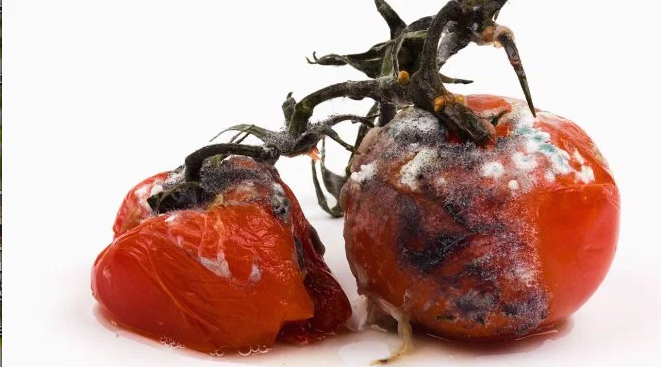
The impact of food waste goes beyond finances. Environmentally, food waste equates to wasted chemical fertilizers, pesticides and transport fuels. It depletes critical resources such as land, water, and human capital. Then consider that rotting food creates methane, a greenhouse gases that is 23 times more potent than carbon dioxide. (In the USA, organic waste is the second highest component of landfills, which are the largest source of methane emissions.)

The Universal Exposition in Milan opened on May 1 with the theme of “Feeding the Planet, Energy for Life”. Fifteen Middle East nations are among the 170 country and corporate participants who are exploring food safety and security, innovation in the food supply chain, and technologies to advance agriculture and biodiversity.

Green Prophet will report on how each nation is tackling world hunger, food waste, and agriculture in the face of climate change.

Image of rotten tomato by Joe Buglewicz/Fast Company Design 

– See more at: http://webcache.googleusercontent.com/search?q=cache:http://www.greenprophet.com/2015/10/newly-released-eu-charter-takes-aim-at-global-food-waste/#sthash.dcqhkxQ4.dpuf

Lend your nationality and swap passports to those in need

0

universal-conditional-vulpi
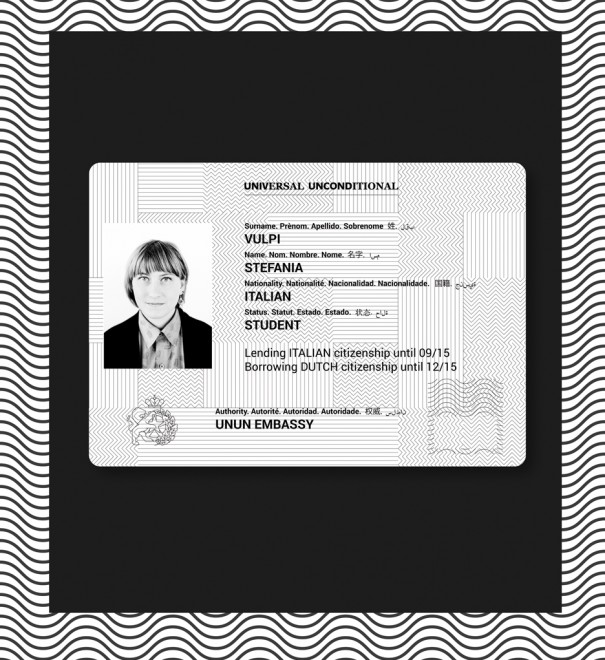
Dutch Design Week 2015 is a misnomer, the event actually runs over nine days across 100 locations displaying the experiments and ideas of 2400 designers, including works by students from the Design Academy Eindhoven. Participating designers often focus on environmental problems, but this year many tackled humanitarian problems such as the flow of refugees from the Middle East. As example, Eindhoven graduate Stefania Vulpi created a conceptual online system that allows a network of people to temporarily share nationalities.

Vulpi designed a website called Universal Unconditional that offers a hypothetical platform to allow people to swap citizenship. “It’s a crazy idea, but it’s also crazy wonderful to think about it,” Vulpi told Dezeen, “Of course I couldn’t make it real, but I wanted to see how it could work.”  Her design stemmed from her own frustration over the ongoing stream of refugees coming to Europe from the Middle East.

The website seeks to connect global participants willing to give up their national identities for a limited time to other people in need. Users could also ask to borrow specific citizen rights to healthcare, asylum, or employment, depending on their needs.

Universal-Unconditional-Stefania-Vulpi_Dezeen_936_15

Vulpi designed a suite of documents to go with the site, including official stationery and a passport that would clearly identify the holder as a member of the UNUN Embassy, with their lending and borrowing status noted.

“I think design has two ways of influencing or helping, and one is very practical – creating systems that can help or facilitate integration,” Vulpi said, “The other side is to create scenarios, question the rules, and question the system…shine a light on it.”

Vulpi’s design is provocative fantasy, but the practical aspects of her scheme are clear to anyone who has lived in a zip code populated by multinationals. I’ve witnessed the consequences of “wrong nationality” in business settings, where inability to get timely visas caused cancellations of conferences, training events, and trade shows. I’ve seen it affectrecreation, when couples or families with different nationalities fail to get visa approvals before their pre-paid flights leave. It prevents kids from competing in international school tournaments because they hold a passport with restrictive travel rights.

I can imagine the pandemonium swirling around embassies and airports if catastrophic weather events make large populations homeless, or disrupt power and water supplies – forcing immediate evacuation beyond national borders. And I haven’t even mentioned the millions fleeing war zones.

Her website site also offers services for people in need, bringing together professional citizens that can volunteer legal aid, translation or medical help.  This is a feature that has is being adopted by many NGOs including the United Nations High Commission for Refugees and International Rescue Committee which are adding platforms to their own sites to encourage personal involvement in their missions.

See this project displayed at the Design Academy Eindhoven graduate exhibition as part of Dutch Design Week 2015, which runs through 25 October

Curious about how your own passport stacks up? Check out these stats from Passport Index:

American and British passports are the jackpot of all travel documents, allowing visa-free entrance to 147 countries (out of a global country count of 196 nations – notional as there is debate as to whether statehood is officially recognized for all). Compare that to the limited travel for Iraqi nationals (38 visa-free travel destinations), Yemeni (41), Lebanese (44), Syrian (48) and Jordanian (49). People in Arab Gulf states fare better; Saudi and Bahraini (61), Qatari (66) and United Arab Emirati (104). (Did you know the UAE issues passports to its prize falcons?)

The worst passport privileges append to the Palestinian Territories (28), and the best in the region attach to Israel (127).

Images from Stefania Vulpi/Dezeen

Israeli Humus Bar promotes peace, one falafel at a time

0

promoting Middle East peace

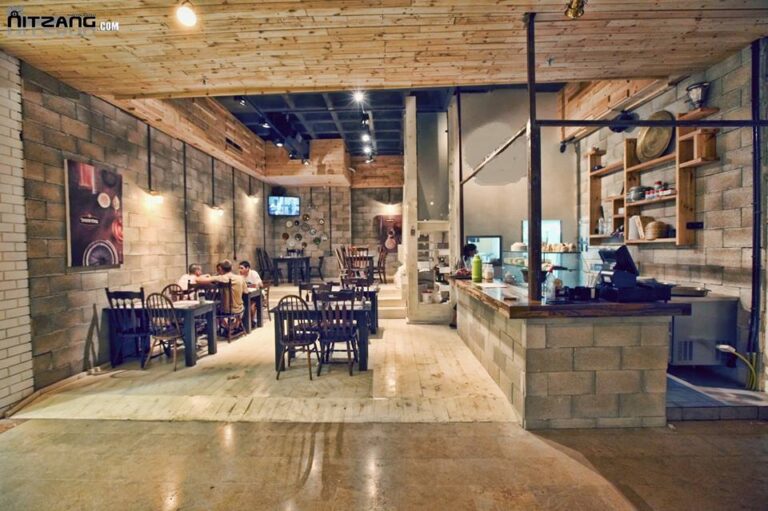
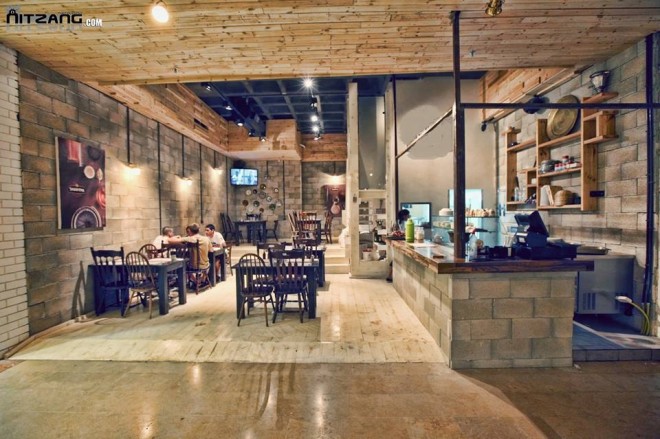
The rise of violence between Palestinians and Israelis has escalated this month straining a region where wider conflict is causing the largest human migration in history, and raising fears of a third intifada.  But headlines don’t ever tell a complete story. Check out how a tiny cafe is working to promote reconciliation by rewarding tables of mixed ethnicity diner with deeply discounted Middle Eastern meals.