
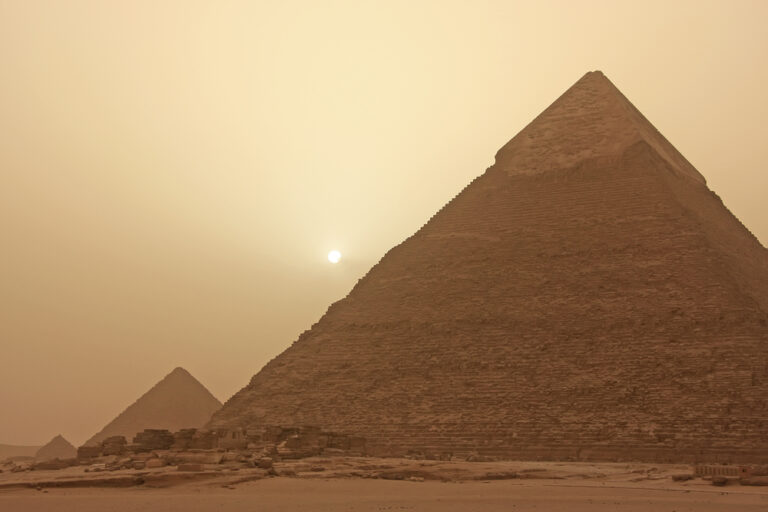
 Some of the mysteries surrounding Egypt’s great pyramids will be explored using space-age technology according to a statement released by the country’s Minister of Antiquities. The “Scan Pyramids” project will use cosmic rays to solve the enigma of the ancient pyramids at Dahshur and Giza, aiming to provide better understanding of their architecture and interior design.
Cosmic rays reveal the secrets of Egypt’s pyramids!
London calling: Gulf elite caught in conspicuous consumption

 Critically acclaimed Scottish photographer Dougie Wallace has stepped on some well-heeled toes with his latest documentary project where he turns his lens to the rising economic power of the “one per cent”. His current exhibition, entitled Harrodsburg, captures the ultra-affluent visitors that inhabit – albeit only seasonally – the super-rich residential and retail district of London’s Knightsbridge and Chelsea. Most of his subjects hail from the Gulf states of the Middle East, and gauging from their reaction – they are not quite ready for their close-up.
Syria’s seedbank seeds sent for safety to Morocco

Whenever I read the news about Syria’s refugee and environmental crisis I wonder how Syria’s dictator Bashar Al-Assad’s wife Asma al-Assad, once so vocal about the natural environment (even biking to the West Bank in the past), can let her husband keep this madness up.
A little sanity in the craziness that is and has been Syria:
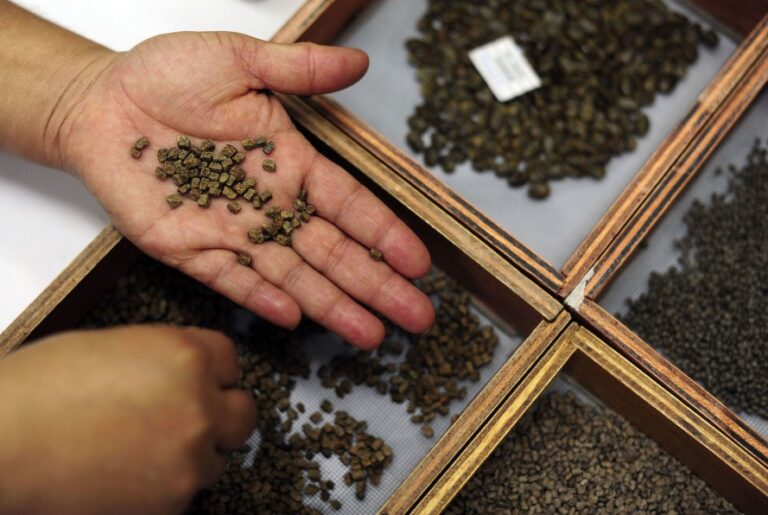
Precious seeds that had originally been sent by the International Centre for Agricultural Research in the Dry Areas (ICARDA) for safeguarding in the Svalbard Global Seed Vault in the Arctic Circle were safely delivered to Morocco and Lebanon today.
RELATED: Dressed to Kill Asmad Assad
The seeds originally stored at ICARDA’s genebank in Aleppo, Syria, had become increasingly difficult to access.
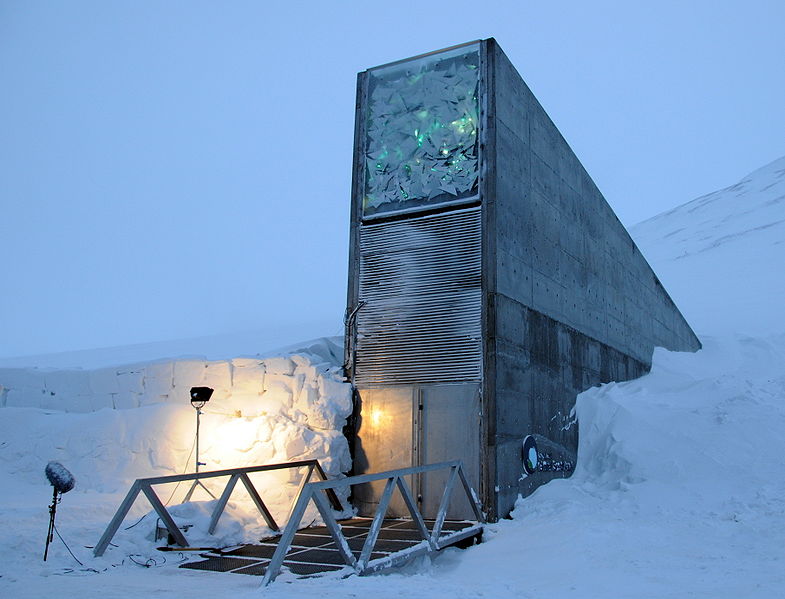
While the seed cold store is still operational in Syria, the seed retrieval from Svalbard (above) was initiated by ICARDA in partnership with Crop Trust to continue with the service of distributing seeds to users around the world – a vital aspect of ICARDA’s genebank function and role in world food security.
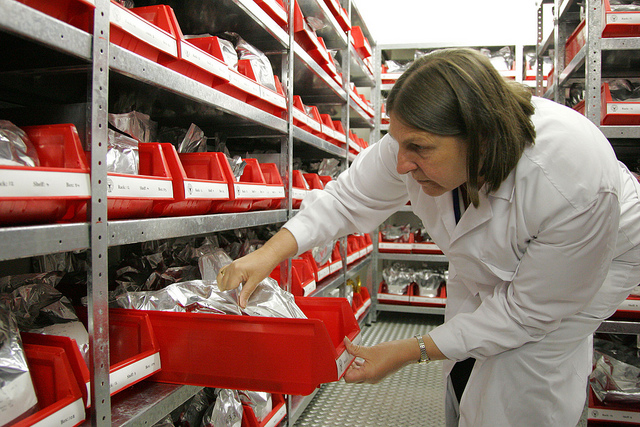
ICARDA routinely distributes around 25,000 samples every year to partners and outside agricultural organizations.
These seeds could hold the key to developing new crop varieties crucial to meeting world food demands with climate change.
RELATED: Syria’s seeds are in Norway
The seeds in ICARDA’s care are a globally important collection with 65 percent as unique landraces and wild relatives of cereals, legumes and forages. These ancient varieties have developed naturally robust genes from thousands of years of survival, adaptation and evolution – a valuable resource for building climate resilience in crops.
The shipment, landing in Rabat and Beirut this week, contained a total of 128 boxes with roughly 38,000 seed samples of forages such as faba beans, lathyrus, wild relatives of cereals and pulses, and cultivated wheat, barley, lentil and chickpea.
With Svalbard mission successfully completed, each sample will be planted and grown at ICARDA’s facilities to multiply seeds and replenish its active seed stock for distribution and also to return a portion back to the Seed Vault for safekeeping.
The Martian stars the Wadi Rum Desert and every Sci-Fi book we love
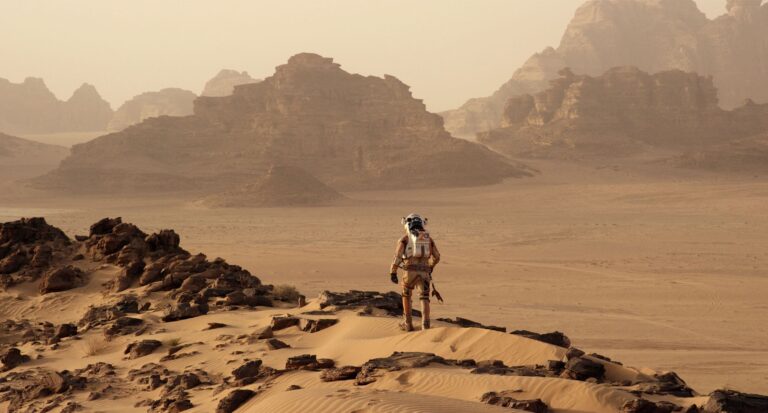
 Ridley Scott’s, The Martian is based on Andy Weir’s best-selling novel. It was filmed in Jordan’s beautiful Wadi-Rum desert.
Hollywood loves adventure stories, especially tales of humans struggling to survive in the wilderness. The Martian has  something in common with The Life of Pi, 127 Hours, Castaway, Into the Wild and All is Lost.
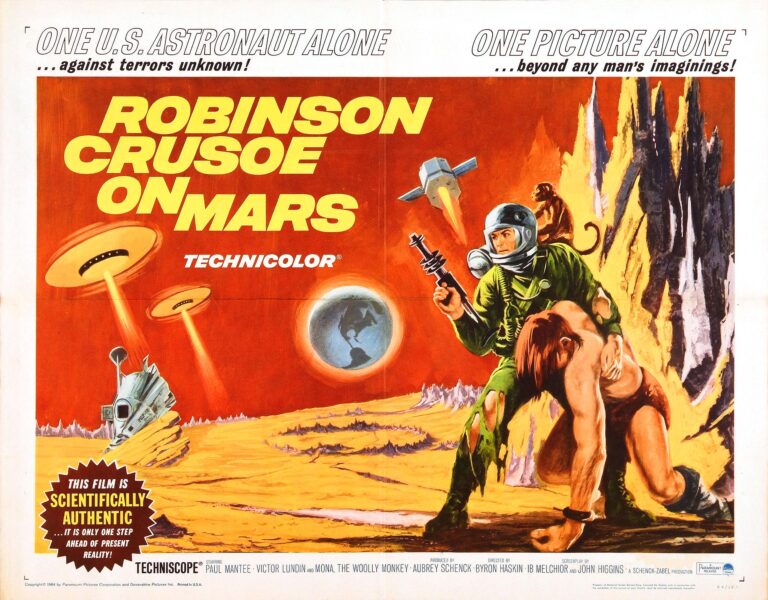
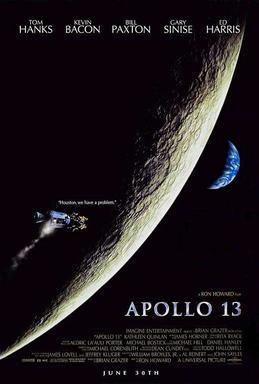
But a much more direct comparison can be made to two much older films, Apollo 13 (1995) and Robinson Crusoe on Mars (1964.)
 Matt Damon plays botanist, terraformer and extreme survivalist Mark Watney in The Martian, a film directed by Ridley Scott and based on the best-selling novel by Andy Weir.
When Drew Goddard wrote the screenplay for The Martian, he wisely chose to use the novel’s first-person journal format. This gives the reader a glimpse inside Mark Watney’s head, something we would miss if the film had used the third person point of view as in All is Lost. This also works well for the YouTube generation, already familiar with the wide-angle views of video blogging and what appears to be an authentic-looking GoPro camera strapped to Mark’s spacesuit.
Even with this adaptation, we know much less about the character’s backstory than we did in the novel. Matt Damon’s expressions and colorful language fill in some of the gaps.
Robinson Crusoe on Mars also uses this first-person narrative technique when Commander Kit Draper finds himself alone on Mars. He begins to record his experiences into an authentic-looking early 1960s tape recorder. Something about the film’s creepy etherphone music, the fire-colored sky and the sound of the clanging in the Martian wind gives this movie an atmosphere of loneliness beyond what we see in The Martian.
Kit explains, “All right, here’s another note for you boys in Survival…for you geniuses in Human Factors. A guy can lick the problems of heat, water, shelter, food. I know. I’ve done it. And here’s the hairiest problem of all – isolation, being alone. Boy, here’s where he’ll crack. Here’s where he’ll go under. I know, I know. I had great training, including two months in the isolation chamber. But when I was in that chamber, I knew I was coming out. I knew I’d be with people again. But up here on Mars…”
Is it OK for kids?
Except for an opening scene involving adult behavior at a party, Ron Howard’s Apollo 13 is good fun for kids of almost any age. There were no presidential visits to strip clubs that made The Right Stuff the wrong stuff for less LB-jaded eyes. The Martian also aims at a younger and broader audience than has been usual in recent years. Anyone sensitive to seeing people hurt, should probably go out for popcorn about ten minutes into the movie. But there is nothing that you wouldn’t see in an average TV medical show.
The movie withheld some of the book’s salty dialog. “Like”, “Dude” and “F***” may make up a growing proportion of the YouTube generation’s vocabulary, but their overuse can be distracting or offensive to some people. Jane Hawking was distracted by the profanity in The Theory of Everything even though their own children admitted to adding swear words to Stephen Hawking’s voice synthesizer. This movie could have easily aimed for a profitable 18+ rating, but that would have prevented it from inspiring a younger generation.
Is it as good as the book?
Matt Damon does a good job of translating some of the novels jokes and curses into something we can watch on the screen. He tones down the character’s abrasiveness enough to make him believable as a crew member on a long voyage. The movie does miss some of the novel’s humor and scientific detail, especially regarding biology, energy flow and maintaining a terraformed environment.
But it is fun and it adds some beautifully interesting visuals. It is amazing to see the color and landscape of Mars especially when we have photographic evidence that Mars actually does look like that. The movement of shadow and light in the scenes depicting the centrifugal artificial gravity of the Hermes ion drive spacecraft is a beautiful detail until someone starts trying to calculate if the spin rate and position of the sun are correct. The way weightlessness and artificial gravity are portrayed along with the physics of tethered bodies in microgravity is realistic enough to make us wonder whether this was filmed aboard the ISS or inside a CGI computer. The Martian was filmed in 3D but this wasn’t overused. In fact it was barely noticeable except for a few scenes inside the spacecraft.
Robinson Crusoe on Mars was filmed in technicolor at a time when electromechanical rocket fuel gauges, zippo lighter flames, models, strings and gelatin filters were pushing the bleeding edge of Hollywood special effects. The movie is apologetically campy with a supporting cast that includes monkey named Mona and Colonel Dan McReady, played by Adam West – aka Batman and a man named Friday.
The movie’s poster boldly claims, “This film is scientifically authentic… it is only one step ahead of present reality!” Well– maybe a couple of steps. But given that this was filmed before any probes had photographed Mars, the landscape and the color of the sky was realistic enough, Ignore the orbiting flameballs and flying saucers. Unlike sparkling Ceres and Technicolor Pluto, Mars isn’t so very different from what we imagined more than 50 years ago. Even the production of oxygen and water by heating rocks might be plausible now that we know a little more about the chemistry of Mars.
Is it believable?
As with the book, you’ll find endless online debates over the scientific accuracy of The Martian. The fact that people are complaining about the force of Martian winds and the color of Hydrogen flames gives a clue as to how little suspension of disbelief is required for those of us without PhDs in Astrophysics. Some have noted that it is probably safer to be a castaway on Mars than it is to be exposed to interstellar radiation while on board the spacecraft on its way home.
Apollo 13 was filmed in 1995 when CGI wasn’t nearly good enough to simulate weightlessness. So the more fun/nauseating comet comet option was necessary. The weightlessness was realistic because it was real. Director Ron Howard had the support of NASA engineers and astronauts and history to guide him in making a film about a story that didn’t need any Hollywood embellishment to be compelling. Other than the need to fit this storyinto a 2 hour and 20 minute, there was no reason to change anything and it probably the most accurate fictionalization of Apollo era spacecraft. But when Ron Howard talked to audience members after its first screening, many people told him that it was unrealistic. “There’s no way those guys would have survived.” Indeed, truth is much stranger than fiction.
The Martian faces the opposite problem. Many people left this movie assuming that it was non-fiction. That’s right, they believed that we already had a large ion-drive spaceship like Hermes and habitats on Mars. This film strays furthest from reality in its portrayal of our culture and politics. Humans first set foot on another world with Apollo 11. Only eight months later when Apollo 13 launched, the mission wasn’t even broadcast on the America’s TV networks until things started to go wrong. How will we maintain our cultural attention span when a single Mars mission could take as long as the entire Apollo space program?
NASA’s current budget is anemic, less than 1/50th the amount spent on the first bank bailout, less than what will be spent on mudslinging in America’s 2016 election campaign. The movie imagines a 1960s NASA transposed into the near future with no sign of the private space companies such as Elon Musk’s SpaceX. Hopefully we won’t have to repeat the failures portrayed in the movie in order to convince ourselves that global cooperation will be necessary to make this happen. Hopefully someone will be inspired by watching this movie. Maybe it will be you.
Photos are from the movie posters of Apollo 13, Robinson Crusoe on Mars and The Martian.
Israelis design 3D-printed home for NASA village on Mars!

Israeli design team Tridom won honorable mention in NASA’s 3D Printed Habitat Challenge for their ‘Bubble Base’ building, a prototype for future human habitation on Mars. The design competition invited solutions to the “need for safe, secure and sustainable housing on earth and beyond.” This goes beyond Hollywood set design for The Martian (shown above) or Interstellar. It’s also grounded in rapidly emerging technologies, with immediate application.
Eat New York City farm feast from city-grown fish and veggies
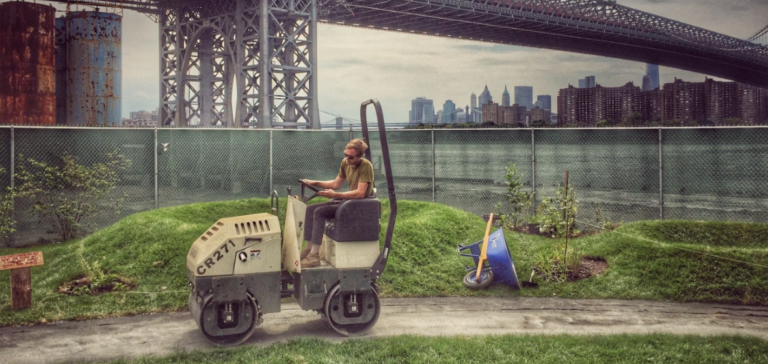
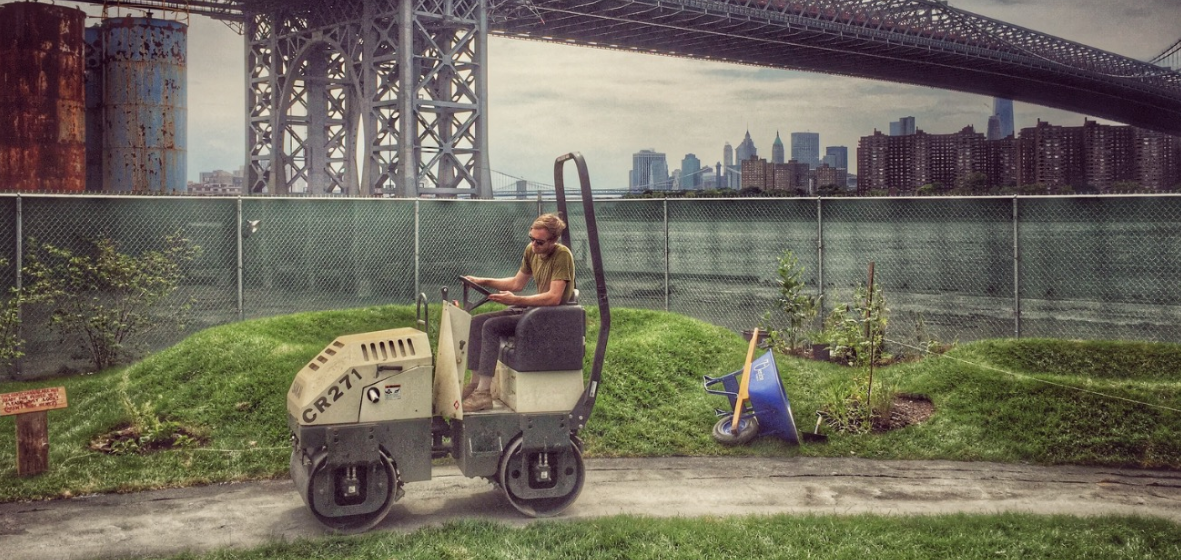
It’s the middle of NYC AgTech Week. It’s a time where futurists growing hyperlocal food and technologies
in New York City open their labs for urban food week. Tonight there will be a fish taco dinner prepared with fish raised on a roof in the city; the rest of the food was grown in urban farms in locations throughout the Big Apple. Dining starts tonight at Farm on Kent, pictured above, in Brooklyn if any Green Prophet’s are in the city.
A host of tours from 12 noon to 4 tomorrow Friday will show of off the city’s coolest urban farming technologies and I’ll be there giving a demo on how my hydroponics technology flux works.
Leading a global trend to grow hyper-local food close to home, New York entrepreneurs have innovated their food well beyond tomorrow using bold applications from the world of high-tech.
Tonight Manhattan Agriculture chefs will do the chopping and cooking and at the event meet 21 of New York’s leading urban agtech companies planting roots for a vision that New York will produce up to 40% of its food locally.
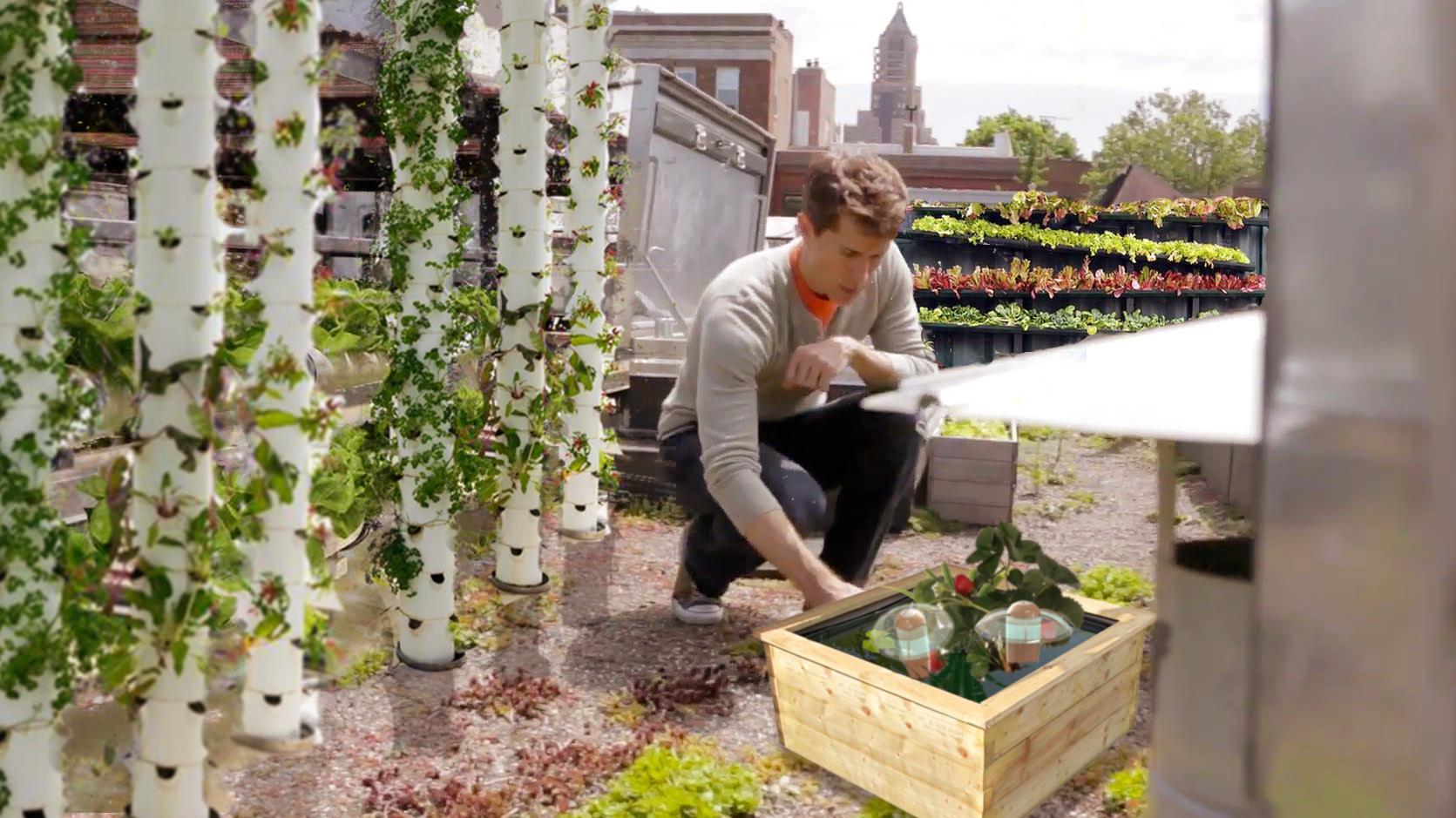
Sample pesticide-free food or see how food is grown on “water” or hydroponically –– one of the most sustainable ways to grow fresh, tasty food in cities.
The event is hosted by the New York City Agriculture Collective (www.farming.nyc), of which flux is founding member.
Henry Gordon-Smith, from Blue Planet Consulting, one of the city’s leading consultants on urban farm projects using technologies like hydroponics says: “I am getting calls on a daily basis from Real Estate developers wanting to know how they can make use of rooftops to grow both food and a new source of income.
“On the flipside I am seeing nothing short of a revolution driven by young entrepreneurs across the globe. Farming in the city has become the next big career: Post-degree, college students from various disciplines are asking me how they can switch careers and they are moving to NYC to make it happen. They want to quit everything and start growing food in their cities. This week will give answers to everyone who is curious about the industry,” he says.
The crunchiest carrots, the coolest connected cucumbers
And just like each New York neighborhood has its own flavor, the same is true for urban farms in the city. Urban farming can mean growing fish for families on a roof in Brooklyn, using hydroponic greenhouses in the Bronx to grow greens in the winter, or using connected sensors and software to optimize yield in the smallest of space –– even if you live in a small rental in Soho.
It’s no surprise that when a movement to “grow local” sweeps across the nation that New York City picks it up and takes a firm stance and a bold leaf, ahem, lead in urban farming.
Meet the breadth of New York City’s agriculture leaders in industry and products for the connected garden at New York’s first AgTech Week where investors will connect to educators, backyard farmers, large-scale commercial growers, community activists, and city officials.
The full program is found here. Or email [email protected] for more.
Martian technology on Earth in trillion-dollar opportunity
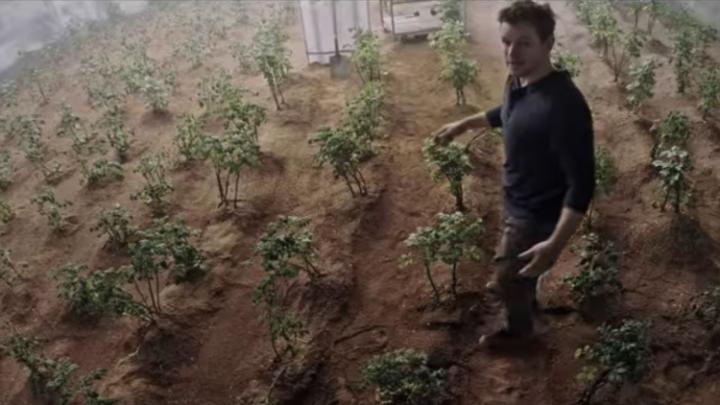
Look to Techcrunch any day of the week and see how investment opportunities abound in Agtech. Then go see Matt Damon in The Martian to get a sense for the future of your food.
Combine trillion dollar opportunities with a market sprouting in the United States. It’s called “distributed agriculture” on Wall Street, or Controlled Environment Agriculture (CEA) by many of those in the business.

In simple terms distributed agriculture or CEA is about taking away our reliance on the land or weather by growing food in indoor or controlled greenhouses that optimize productivity, and minimize precious resources like water.
Related: flux gadget blooms your hydroponic garden
In some cases distributed agriculture is 90% more water efficient than soil based farming –– currently an exploitive endeavor even given progress in areas like precision agriculture. And of course, because it’s indoors you can grow any time of the year in any climate –– even during an Alaskan winter.
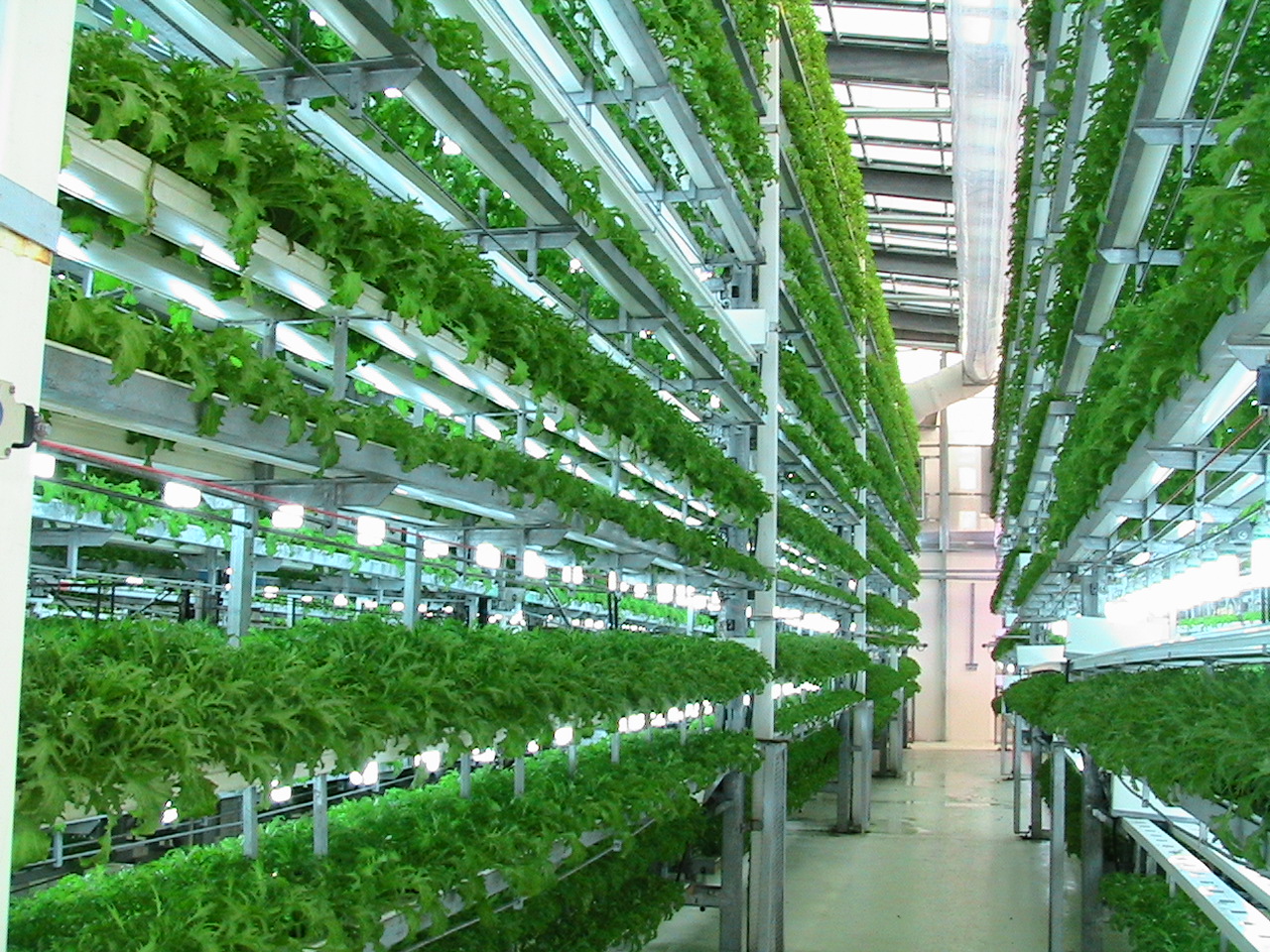
The practice of distributed agriculture, it is endeavored, could make the US food secure. The country is currently a net importer of its food and this worries some people in the US Department of Defense. Climate change, countries in conflict, and acts of terror could all upend the American way when food gets involved.
Distributed agriculture promises another way
Consider that growing food next to large urban centers where it’s eaten, using technologies like hydroponics, means more sustainable food, fresher food, and local jobs.
Growing America’s food locally using distributed agriculture is essentially a trillion-dollar opportunity, according to Nicholas Heymann of Wall Street’s William Blair & Company, a wealth management firm.
He says: “It will take a $1.75 trillion investment to enable the US to become largely self-sufficient for its fresh vegetable and fruit requirements, which would expand high-paying jobs and related support sectors throughout the country.”
 Growing food indoors does seem like the sort of stuff for science fiction and Martians but Sue Raftery, founder of AGROWN, a company setting the stage to grow the industry in both private and public sectors, sees huge opportunities in locally grown food.
Her company AGROWN, of which she is the CEO, is positioning itself to be the zip code where new hydroponics technologies and breakthroughs start. How? The company is currently building out the first North American indoor agriculture research park in the quaint town of Brattleboro, Vermont, and is negotiating contracts to build food parks all over the United States.
October 21 to 23 she’s opening up her Rolodex and is hosting an investor summit in Ohio so investors can learn more about these opportunities.
There are currently only 7 large-scale commercial scale indoor agriculture growers in the United States, she says, and they are using technologies that rely on hydroponics. This is technology that grows food fast and efficiently on water with added nutrients.
AGROWN’s Agtech Investing Conference (link here) will be held at the Ohio Agriculture Research and Development Center in Wooster and it is limited to 35 investors.
Among her partners are NASA: According to Raftery, AGROWN has created a knowledge-filled two-day that would otherwise “take weeks or even months to learn on your own.”
Presenters include Priva, BV’s CEO Meiny Prins, Director of CEA at University of Arizona Dr. Gene Giacomelli, NASA scientist Dr. Jay Famiglietti, and USMC Ret Col. Mark Mykleby, who co-authored the Grand Strategy for United States Sustainability for the Joint Chiefs of Staff, where it was recognized that food security is national security.

Why America, and why only now?
“The US is one of the largest markets where CEA has yet to be widespread. Having relied so long on bountiful land and water, we did not need to consider it,” says Raftery.
But times have changed.
US Food Security as National Security
According to the Department of Defense in a sustainability report from the Joint Chiefs of Staff in 2013 in speaking to creating sustainability in the US, “we needed to look closely to food security,” says Raftery, a PhD Agriculture Economics and Rural Sociology from The Ohio State University.
“This report stressed that to create national sustainability it is important to consider food security. The food system with long food chains, much of which enters the country without close inspection, leaves consumers vulnerable to food that could be tainted along the way,” she tells Green Prophet.
“Likewise the ability to disrupt our long fresh food supply chains is an easy target by outside interest groups (like terrorists) and extreme climate events such as hurricanes, tornados, etc., which could result in lack of availability of fresh fruit and vegetables which is already limited to a 3 to 5 days supply at best for most of the nation.
“Fuel scarcity, water scarcity (like the California drought) all show the vulnerabilities that could be off-set by creating a nationally distributed agricultural network with shorter supply chains, less waste, and more nutritious foods available for the consumer clamoring for more local/regionally grown food,” says Raftery.
“It should be noted that even during the recent 2008 economic downturn that CEA growers found consistent, stable consumer base who appreciated the high-quality CEA grown product.”
How many indoor greenhouses could feed America? William Blair & Co predicts 4,400 40-acre CEA greenhouses to provide food security.
Technologies critical for these businesses to succeed? Access to fiber optic networks, integrated systems control such as water, fertilizer, humidity, CO2, and “monitoring that emulates the Dutch way,” says Raftery: “They use only what has been proven successful to grow inside the greenhouses.”
In parallel, Raftery is rolling out the AGROWN tech transfer center, The CEA Research & Training Center in Brattleboro, Vermont to provide access for industry trials for new and innovative technologies for the North American market. A first for the US, the Vermont center will roughly house 10 acres of food under glass.
“This center will focus on industry based applied research and skills based training — both of which are needed if we are to support the predicted growth for the industry in the US, as well as tech transfer as appropriate for the global markets,” says Raftery.
There are approximately 75,000 acres of commercial scale CEA globally at this time.
Sound interesting? Costcos and Walmarts of the world should be in Wooster, Ohio next week. As well as private equity investors interested in agtech, clean tech and renewable energy.
Wean yourself off plastic with clever Trolley Bags

Jordan’s plastic bags enjoy more freedom than most of its people. Bags fly free. They don’t need visas to cross borders, and they sidestep beach fees to get into the sea. Shops here hand out an endless stream of non-biodegradable sacks and there’s no penalty for dropping used ones, anywhere. Until the government steps up to ban free issue of these environmental time-bombs, reusable market bags won’t see much play – unless ingenious alternatives like Trolley Bags catch on.
Quicargo puts empty trucks back in business

Quicargo, the latest in startups making old inefficient worlds more sustainable, targets inefficiency in the global transportation industry. The software company reduces empty trucking runs and maximizes trucks’ loading space.
As a result, carriers will increase their overall profits for truckers and their companies or contractors and shippers will reduce their shipment costs.
At any given moment millions of trucks are traveling around the world, more than 50% of them are running empty or with unused space. Frequently these trucks are returning hundreds of kilometers completely empty. It is a huge waste of fuel, manpower, air pollution and road congestion.
Quicargo, like what Greenroads did to fuel efficiency for truckers, brings the digital age to the freight industry by connecting shippers and local carriers through an advanced technological platform. The application, accessed via a smartphone or on the Web, connects businesses seeking immediate transportation of their goods with nearby truck drivers who have extra loading space.
Related: put your truck on a road train
In most cases, truck drivers with anticipated route and unused loading space can offer shippers attractive prices and cut their shipment costs, while exploiting their unused loading space and turning it into a profitable return.
With the help of apps like Quicargo, GreenRoad, and professional freight funding companies (for example, TBS Freight Factoring), truckers are able to increase cashflow while also decreasing their environmental impact.
Avishai Trabelsi, the CEO and Co-Founder of Quicargo, found himself exposed to this problem about ten years ago as a dispatcher in his family’s transportation company, RT-Fresh. As the former CEO of his family business, Avishai realized empty runs is a worldwide problem with no immediate solution; seeing an opportunity in the transport market, Avishai resigned as CEO of RT-Fresh to form Quicargo Technologies Ltd, targeting the gap in a highly renowned and lucrative market.
According to the World Economic Forum, the total cost burden of unutilized loading space in Europe alone is approximately €160 billion: “By increasing the productivity in the trucking industry and reducing empty runs we can contribute to the global economy. Moreover, we can be part of the ‘green’ evolution, by filling up empty trucks, reducing air pollution and carbon emissions” claims Trabelsi.
Quicargo’s application provides an online marketplace for shippers and carriers to benefit from unutilized loading spaces. Shippers are able to post a shipping request, and carriers can bid on shipments in real time. Consequently, shippers will choose the most relevant bid according to the carrier’s price, location and rating.
The bidding system ensures high quality and a true market value. Throughout the process the shipper can track the cargo on their smartphone and upon arrival both sides will receive automatic invoices. To uphold high quality services participating carriers have to be experienced, insured and qualified by Quicargo’s quality standards (QCV).
After concluding a successful pilot in Israel, Quicargo aims to expand into the European market. The company’s team will seek strategic partners and plan to promote Quicargo in the upcoming October 2015 “Wolves Summit” in Warsaw and at the November 2015 “Web Summit” in Dublin.
Lexus built a cardboard car that actually drives!

 In the early 1970s, architect Frank Gehry earned his first design awards for clever furniture made from corrugated cardboard, triggering an explosion of creative experimentation with this then-century-old material that had been mostly used for protective packaging. Now a five-person design team has created a full-size and fully functional car from recyclable cardboard. It’s electric motor will make sure that a problem with emissions is unlikely to arise.
Love Story: Jordanian newlyweds share their wedding with refugees

 Why blow your wedding bucks on one extravaganza when you can hold two for the same price? Jordanian newlyweds Mutaz Mango and Basma Omar opted to split their celebration, hosting a private party for family and friends and a second for Iraqi and Syrian refugee children living in the old Hashemi al Shemali neighborhood of East Amman. American evangelist David Wilkerson once said, “Love is not only something you feel, it is something you do.” Read how these two did it right.
UNHCR and Kickstarter could be the “A-Team” for refugee aid
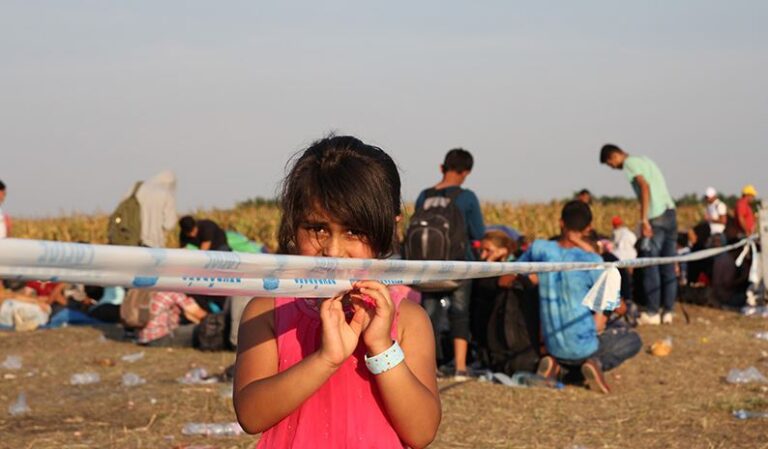
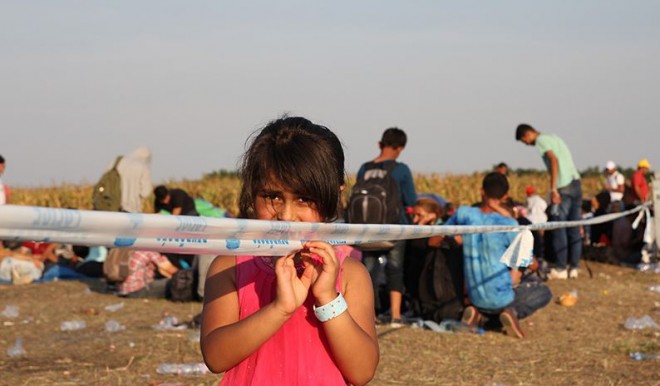
A special Kickstarter campaign invites you to aid the ballooning Middle Eastern refugee crisis, with all proceeds going directly to the United Nations High Commissioner for Refugees (UNHCR). The one-week fundraiser was launched on Tuesday in response to a question posed by President Barack Obama: could crowdfunding incite Americans to get more involved in refugee relief? White House staffers raised the concept to Kickstarter CEO, Yancey Strickler, who told the Guardian, “I immediately said yes.”
The beauty of ecotourism in Israel
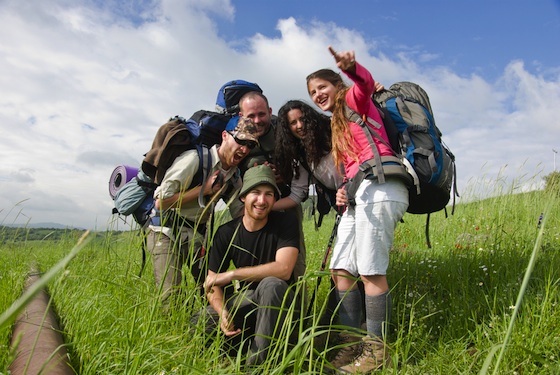
Most visitors to Israel concentrate on exploring the many biblical, cultural, and historical sites that abound Israel. And rightfully so! Israel has been the hub of Jewish, Christian, and Islamic history for centuries. These sites are fundamentally important as they inspire a connection with one’s faith as well as a deeper historical understanding.
But there is another aspect of Israel that is often overlooked by visitors. Israel’s natural beauty is a treasure in its own right and merits exploration.
In an effort to conserve Israel’s landscape while allowing visitors to enjoy it, ecotourism has developed throughout the country. Focusing on sustainable touring and conservation, this method of exploration has grown in popularity over recent years.
With a vast topographical variety encompassing everything from beaches and mountains to fertile fields and deserts, Israel is the ideal place to experience ecotourism. Ranging from walks and day hikes to week-long trips, there are options which allow almost anyone to enjoy the country’s unique flora and fauna.
From top to bottom, ecotourism is available throughout Israel. The most famous hiking trail in Israel (and by far the longest) is the Israel National Trail. At 600 miles, hiking the full trail takes between 30 and 60 days, so it is certainly not for the amateur hiker. The trail begins near the border of Lebanon in the North, makes its way to Lake Kineret in eastern Galilee and winds down toward Tel Aviv and Jerusalem before continuing through the Negev Desert and ending in Eilat. Camping grounds dot the trail so hikers can rest along the way.

The Galilee and Golan Heights regions in the north offer unparalleled bird watching opportunities during the migratory season. Bird watchers and nature enthusiasts “flock” to these areas to see the 500 million birds that travel to Israel for the winter. The rest of the year offers lush forests and rolling hills as well as rivers and springs. This is an ideal place to enjoy horseback riding or cycling, both environmentally friendly means of travel.
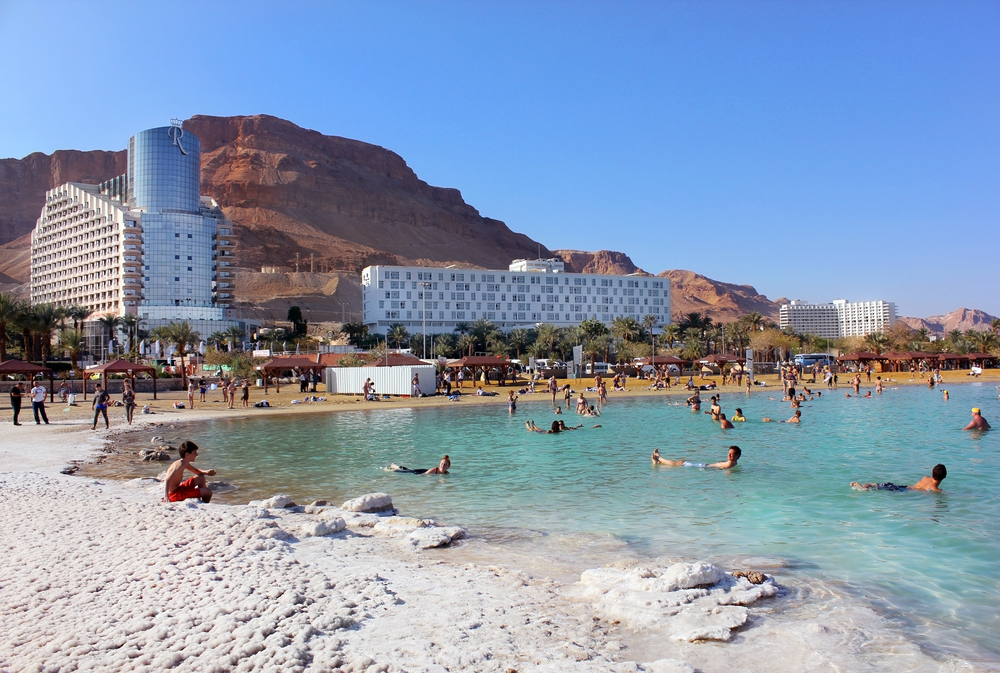
The Negev and Judean Deserts in the South of Israel, offer miles and miles of mostly unpopulated land that boasts stunning desert scenery and unique wildlife. Areas such as Masada, the Dead Sea and the Ramon Crater are a hiker’s paradise. It is best to avoid this stark and arid region during the oppressively hot summer months when heat exhaustion and dehydration are ever-present concerns.
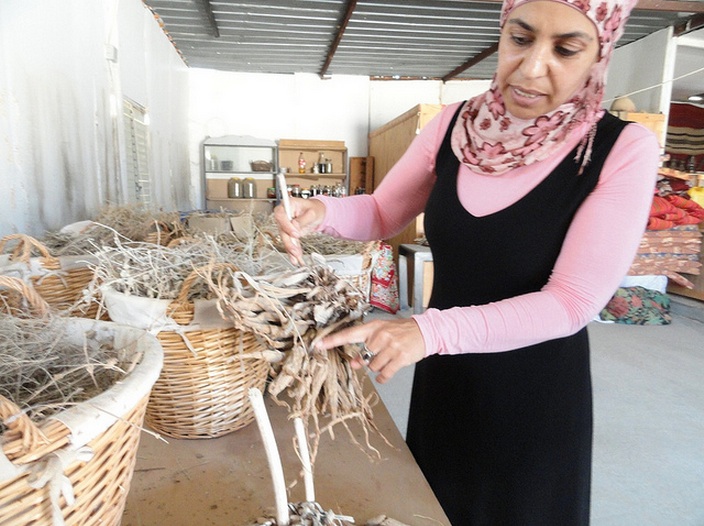
Every region of Israel hosts nature reserves that serve as excellent locations for ecotourism. The country has over 150 nature reserves, most of which are maintained by the National Nature and Parks Authority. These reserves are the ideal place to observe the indigenous flora and fauna of Israel.

Of course the primary focus when visiting Israel will always be to visit the important biblical and historical sites, but it would be a shame to ignore the country’s natural beauty. So why not plan a few extra days to experience Israel’s ecotourism on your next trip?
By Noam Matas. Noam is the General Manager of America Israel Tours. America Israel Tours offers customized and all-inclusive tour packages to Israel. Noam enjoys writing about Israel based on his personal experience and his knowledge of the tourism industry.
The war that forces a doomsday seed vault withdrawal
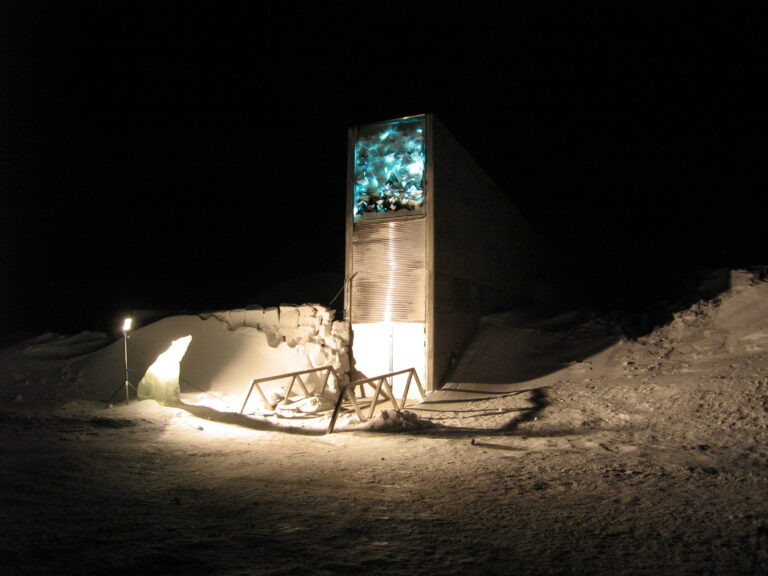
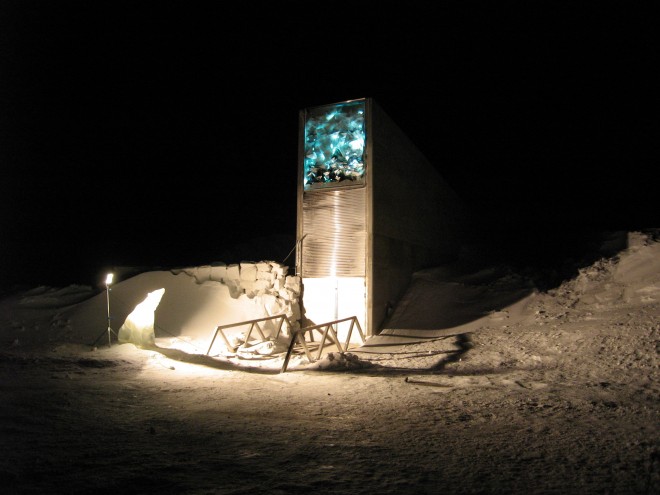
The Svalbard Global seed bank was established in February 2008. It was designed to store seeds for hundreds or even thousands of years in the event of a global disaster. But now, only seven years later, the Syrian civil war made it necessary to withdraw seeds from this doomsday vault.
Svalbard Norway: It would have been easy to imagine the end of the world here surrounded by glaciers, polar bears and the long dark winters of the high arctic. But like Noah’s ark, the global seed bank was designed to preserve life.
Related: The Noah’s Ark Seed Bank for Coral Reefs
Specifically it was designed to preserve the seeds necessary for our food crops and our survival. The doomsday vault is located deep within an ice-covered mountain on Spitzbergen Island, far above the expected sea level rise in centuries of climate change and only 800 miles from the North Pole.
Even if the vault’s electrical power supply is interrupted,the vault won’t thaw for hundreds of years. The vault is designed to survive a missile attack or even a nuclear war. The preserved seeds will also protect us against the possibility that GMO crops damage the gene pool of the global food supply, or create an unsustainable plant monoculture.
The doomsday vault designers thought of nearly everything, With each year the seed bank grew more and more deposits from around the world until it reached nearly 865,000 varieties of seeds. Some of these seeds were from the International Center for Agricultural research in the Dry Areas (ICARDA) which was located in Aleppo, Syria.
The Syrian war forced ICARDA to move to Beirut, Lebanon. Some of the seeds were lost or destroyed before or during the move, so now, only seven years after the seeds were deposited, the first withdrawal is being made to replace the seeds destroyed in Syria’s civil war.
A spokesperson for the seedbank said that while withdrawing seeds from a doomsday vault appears to be very bad news, it actually shows that the vault works and is a valuable resource for our violent and troubled world.
WorldBeing wristband tracks personal carbon consumption

Wearable tech is hot, with new gizmos unveiled at every design expo and technology fair. Runway models are accessorized with functional fashion, even Victoria’s Secret has developed digital duds with their athletic bra that monitors heartbeat. Now London designer Benjamin Hubert and his studio Layer Design have teamed up with British environmental consultancy Carbon Trust to produce a wristband that tracks energy use. The tool – now in conceptual stage – can potentially to enable like-minded users to inspire a movement and transform the world.