Somehow vegetables with short seasons excite the imagination and appetite more sharply than produce that’s available all year around. Good Middle Eastern cooks have many recipes for delicate fava beans, and this turmeric-fragrant soup is one.
Somehow vegetables with short seasons excite the imagination and appetite more sharply than produce that’s available all year around. Good Middle Eastern cooks have many recipes for delicate fava beans, and this turmeric-fragrant soup is one.
Somehow vegetables with short seasons excite the imagination and appetite more sharply than produce that’s available all year around. Good Middle Eastern cooks have many recipes for delicate fava beans, and this turmeric-fragrant soup is one.
Somehow vegetables with short seasons excite the imagination and appetite more sharply than produce that’s available all year around. Good Middle Eastern cooks have many recipes for delicate fava beans, and this turmeric-fragrant soup is one.
Somehow vegetables with short seasons excite the imagination and appetite more sharply than produce that’s available all year around. Good Middle Eastern cooks have many recipes for delicate fava beans, and this turmeric-fragrant soup is one.
Somehow vegetables with short seasons excite the imagination and appetite more sharply than produce that’s available all year around. Good Middle Eastern cooks have many recipes for delicate fava beans, and this turmeric-fragrant soup is one.
Somehow vegetables with short seasons excite the imagination and appetite more sharply than produce that’s available all year around. Good Middle Eastern cooks have many recipes for delicate fava beans, and this turmeric-fragrant soup is one.
Somehow vegetables with short seasons excite the imagination and appetite more sharply than produce that’s available all year around. Good Middle Eastern cooks have many recipes for delicate fava beans, and this turmeric-fragrant soup is one.
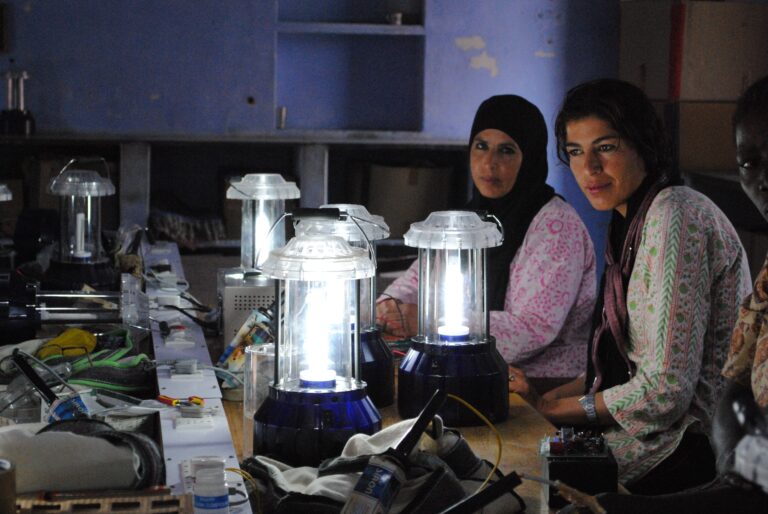
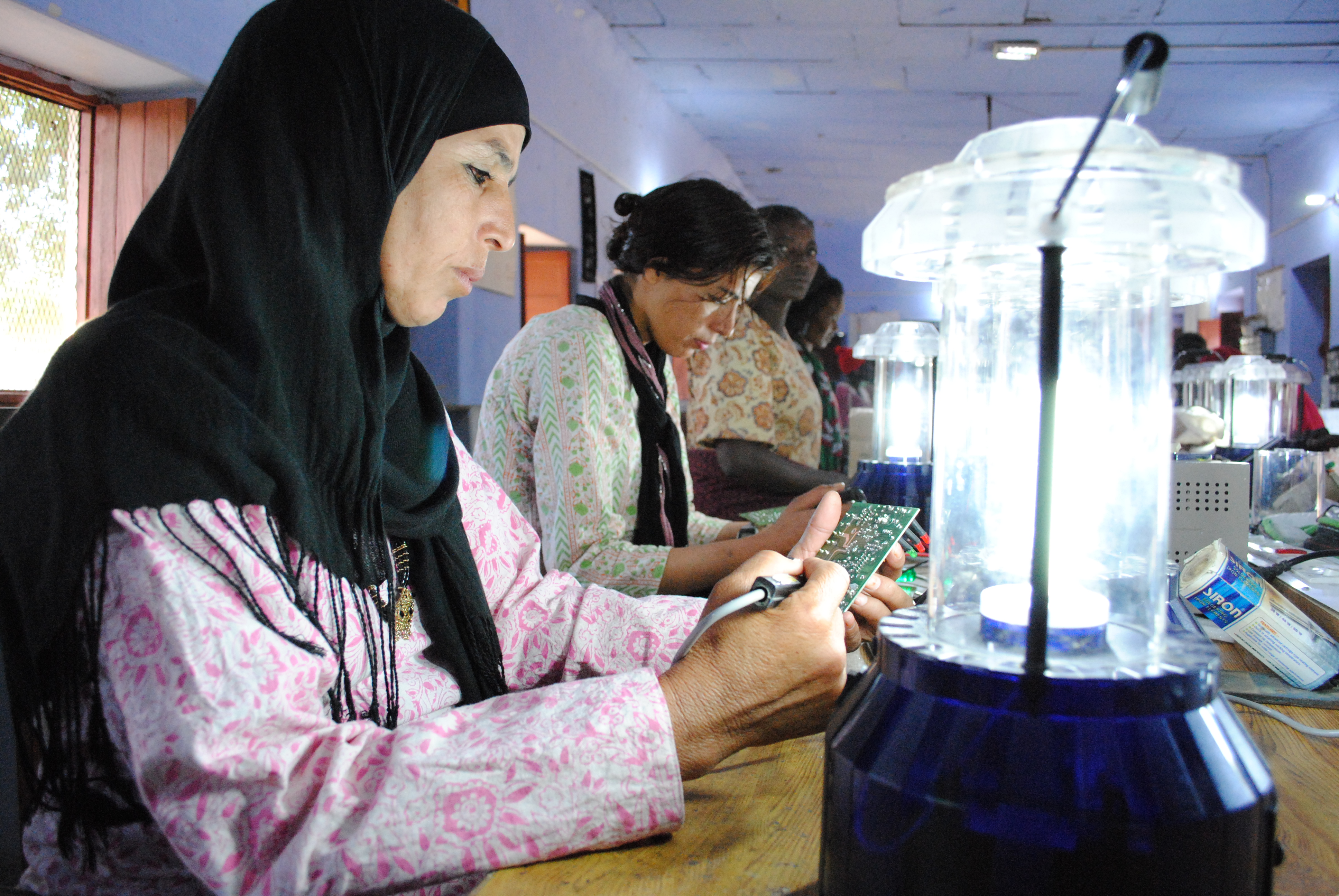
Barefoot College teaches rural Bedouin women in Jordan how to be electricians. The world needs skills, not just lawyers and doctors. Learn why more parents help their kids find technical careers.
Among the high demanding jobs now, and in the near future, electrical technicians are ranked near the top of the list. With a lot of intensive training for oftentimes complicated procedures, electricians are highly skilled workers whose jobs involve dangerous encounters that need better results. With every passing day, our reliance on technology, gadgets, and electricity is increasing more and more. Electric technicians are not only required for the repair of these, but also for regular checkups and constant maintenance.
Here are more reasons why electricians are about to be in high demand in the near future:
Alternate power generation
With ongoing progress, alternate power generation, such as solar and wind energy will massively replace the existing nonrenewable energy resources. There will exist a need for specialized and trained staff to manage, link, and install these resources to existing grids, and thus, the demand for electric technicians is increasing.
Old electrical infrastructure
With the electrical infrastructure developed in the olden days, the existing architecture is deteriorating day by day. Many electricians are already required to get hands on to upgrade the grids. When guided by the people atAspect, you quickly realize that a lot of technicians, and skilled ones at that, are required regularly as the infrastructure is becoming more critical day by day. Having the right people on hand can make all the difference.
Skilled labor shortage
Being qualified as an electrician requires going through an apprenticeship of at least 3 to 4 years, which is a long time. Also, the field involves a lot of everyday risks on the job. Many people drop out in the initial years, forcing the existing qualified linesmen to fill in for the required jobs. There has been a significant fall in the enrollment of new students to be qualified as electric technicians, hence the increasing demand for skilled labor.
The rise in new technology
With the increasing innovation of new technology, there has been a shortage of technicians who specialize in their installation and management. Special training and the imparting of knowledge about the new technologies is essential for the electricians to be able to work with it.
High cost leading to lower settlement
Many skilled electric technicians have taken the benefit of this shortage and demand a higher wage. People who cannot afford the higher prices, but want the job to be done desperately settle for the inexperienced, lower costing electricians. This increases the risk and danger involved with the job, threatening multiple lives. This is a key issue that must not be overlooked by those intrigued.
These are only a few aspects which illustrate the reasons why electricians are about to be in high demand soon. There will also be a need to attract potential future electric technicians, who are even slightly interested in this discipline to learn more about it through specialized courses and fixed apprenticeships. They also need to be paid higher wages and provided more comprehensive benefits due to the amount of risk involved. But now as awareness, increased with regard to the growth in demand for electricians, it has started gaining more traction, and enrollments are increasing with each passing year.
Matcha has been trending for a long time, and in case, if you are wondering, this trend is not going anywhere, It has become quite a famous drink over time and is now readily available in many coffee shops too. Unlike a lot of other beverages, matcha has earned a lot of wellness perks also. It has a lot of excellent advantages that are good for you and your health.
Matcha belongs to the green tea family and is unique from the actual type of tea that is derived from it. When the leaves are extracted from the stem of the plant, matcha is collected in powder form. This is why it contains a lot of nutrients in comparison to regular green tea. In this piece of article, we have put together some of the best health benefits of matcha tea that you probably didn’t know about.
Packed with antioxidants:
Green tea is popular due to antioxidants. These antioxidants are high in dosage in matcha powder which is why it is more powerful and useful. This helps in repairing the damaged cells and also prevents chronic illnesses. They flush out toxins and free radicals from the body, which can be highly dangerous for cellular growth.
Good for the Liver:
Matcha green tea is famous for shielding your liver. We all know that the liver is responsible for eliminating toxins from the human body and processes the nutrients as well. Thus, protecting your liver and maintaining its health is crucial. Studies show that matcha tea can help do so. Various researches suggest that matcha can protect the liver from damage and many states that it lowers the risk of liver disease. Matcha has proven to have positive effects on the human liver.
Boosts Brain Functionality:
Matcha consists of L-theanine, which is a useful compound for the brain. It makes the mind more alert and also prevents the energy levels from crashing down. Matcha tea and latte are a fantastic source to boost your brains function. Studies also suggest that matcha can be helpful in this regard. It is now easily accessible online, as well. You can have a cup of matcha green tea in the morning to boost your productivity throughout the day.
Helps in Weight Loss:
Matcha green tea is certainly not designed initially for losing weight, but it can contribute to your diet plan significantly. A lot of weight loss supplements consist of matcha as their ingredient. But why rely on a supplement when you can quickly get organic and 100% natural matcha at various places. Matcha enhances your weight loss efforts. You can sip on a cup every day or every second day to boost your metabolism. It also fastens the body’s ability to shed the bad fat.
CONCLUSION:
Matcha tea is gaining a lot of popularity over time and for all the right reasons. It is one of the best herbal teas. You can sip on it in the morning or evening too. It tastes almost close to green tea but has a slightly stronger taste due to the powder form.
The Road Train can help you get better fuel efficiency. Using your GPS can help as well.
It’s no secret: business fleets guzzle a lot of fuel and grind out nasty emissions – carbon dioxide (CO2), particulate matter (PM), nitrogen dioxide (NO2), and nitrogen oxides (NOx) being the key culprits. And given that, in 2018, a chunky 27% of the UK’s greenhouse gas emissions came from the transport sector (links to PDF) it can feel as though managing a fleet of vehicles and being environmentally friendly are mutually exclusive.
Actually, that’s not the case. While you may run a fleet of fossil fuel-eating, carbon-spewing petrol or diesel vehicles, it’s possible to drastically cut the amount of fuel they use, and the volume of emissions they, well, emit – by using a GPS vehicle tracking system.
Comprised of GPS tracking hardware that records vehicle data (such as location, speed, condition, and more) and software that collates and displays this data, these systems can give an insight into your fleet’s activity that you simply wouldn’t have otherwise.
So, how can this insight help you to boost your fleet’s environmental credentials? Well, there are five key ways…
1. Optimise your journeys
Whether you manage taxis that ferry customers about, HGVs that haul goods cross-country, vans that deliver online orders to doorsteps, or something else – these journeys are the lifeblood of your business. Doesn’t it make sense to maximise their potential?
This is where vehicle tracking systems come in – and with one feature in particular: advanced route planning. While there’s an enormous variety of excellent vehicle tracking companies out there – and they don’t all offer the same features – you’ll find that the majority offer some form of live route planning.
Using this powerful tool, you’ll be able to identify the most fuel-efficient route for a job, dispatch the closest available driver with the click of a button (meaning they won’t need to use lots of fuel to get to the job’s starting point), and avoid traffic and roadworks that would otherwise have them crawling along the road, churning out noxious emissions as they go. As a result, your business will be using fuel more efficiently – that is to say, completing more jobs despite spending less time out on the road. That’s a win-win all round!
2. Promote cleaner driving
Driver monitoring – as Big Brother-esque as it may sound – is another key vehicle tracking feature that can prove incredibly valuable. Many vehicle tracking devices are able to tell when a vehicle is accelerating too quickly, braking too harshly, speeding, or idling excessively – all wasteful practices that burn through fuel unnecessarily (links to PDF).
With this revealing information in hand, you’ll have the knowledge (and evidence!) you need to approach any troublesome drivers, and ask them to work at dropping the bad habits. If they need a helping hand, you’ll have the insight you need to book them onto a suitable training course.
Some vehicle tracking systems even introduce an element of competition, giving your drivers scores and ordering them on a leaderboard based on how safely and cleanly they drive. This, in particular, is great for encouraging greener driving behaviour – after all, who can resist a bit of competition?
3. Keep your vehicles in peak condition
Poorly maintained vehicles release more emissions and gobble more fuel than they would if they were in top working order. To ensure your vehicles are as environmentally clean as possible, you’ll need to keep on top of maintenance and have them serviced regularly. A little goes a long way – according to the RAC, you can improve fuel consumption by 2% simply by keeping your vehicles’ tyres pumped up to the right pressure.
If remembering when to service which, and how, sounds like too much hard work, you’re in luck. Lots of vehicle tracking systems feature preventative maintenance schedules, which keep a calendar of service dates and alert you when one is coming up. You’ll also be able to see a record of previous services and their costs so you’re 100% in the loop. Plus, if any mechanical problems rear their ugly heads in the meantime, you can use the system to make note of the issue and plan in a fix. Easy peasy!
4. Go paperless
The country may have eschewed plastic straws in favour of their paper counterparts, but that doesn’t mean we should be using paper excessively either. Historically, fleet businesses have been some of the worst offenders for paperwork mania – there were logbooks, vehicle inspection reports, proof of work forms, delivery documents… the list goes on.
Fortunately for the planet (and for your poor overworked printer), many vehicle tracking systems now record and store the breadth of documents needed for each job electronically, saving you (and your drivers) space and time, slashing the volume of paper you use, and – just as importantly – ensuring your records are accurate, and don’t get lost or damaged.
5. Adopt alternatively-fuelled vehicles
With the UK government currently deciding whether to bring its ban on new diesel and petrol vehicles forward to 2035, if you haven’t started to think about alternative vehicles yet… well, we’re sorry to say you’re a little behind the curve.
Thankfully, vehicle tracking providers have also sniffed change in the air. Innovative players such as Geotab, FleetCarma, and more have developed solutions that are geared towards helping cleaner, alternatively-fuelled fleets thrive on the road.
Electric vehicle (EV) management in particular is getting an overhaul. So-called ‘charge anxiety’ and ‘range anxiety’ (worries over how scarce charge points are and how far an EV can travel on a single charge) are being addressed, with new digital charge point maps and battery status reporting. Watch this space!
What else can vehicle tracking do?
Vehicle tracking isn’t just better for the environment – it’s also good for your customers, your wallet, and your productivity.
Crucially, with GPS tracking, you’ll be able to keep tabs on your vehicles at all times. This will enable you to quickly recover them from accidents, breakdowns, and even theft, reducing vehicle downtime. In addition, many systems will send geofence alerts: real-time notifications that ping when a vehicle crosses any boundaries you’ve set. So, you’ll know immediately if one of your prized assets is taken somewhere it shouldn’t go.
Similarly, vehicle tracking also empowers you to provide accurate ETAs to customers and clients, and send updates when something changes. Knowing exactly when to expect your driver can save your customers a real headache – and boost your business’ rep as a communicative, customer-focused service.
Finally, installing a vehicle tracking system can help you to secure cheaper insurance premiums. A handful of UK insurers will offer you a discount outright simply because you have a vehicle tracking system in place, while all will appreciate the fact that your vehicles are better protected against theft. You’ll come across as a more attractive customer, and so it’s more than likely you’ll be offered a good deal.
So what’s next?
As we’ve explored, vehicle tracking comes with more benefits than you can shake a stick at – with some major strides towards eco-friendliness among them. Paying for vehicle tracking certainly comes at a decent cost, but the return on your investment can be huge, for both you and our beleaguered planet. So why not investigate vehicle tracking options today? Good luck!
Author bios
Julia Watts
Julia is the Content Manager at Expert Market, a leading b2b publication that empowers businesses to grow and succeed. Having spent years immersed in the world of startup entrepreneurship, she now specialises in business energy, vehicle tracking, and fuel cards, helping businesses to optimise their operations.
We all know that cannabis products may be a greener way to mitigate pain and health problems. But what dosage when?
Everyone reaches the same point after first trying and enjoying CBD oil; you know you like it, you realize how useful it is, but you want to try more. However, trying to break into more CBD varieties can sometimes feel a bit daunting. To make it easier, the best thing to do is to try and only move a step at a time.
A significant first step is to switch from CBD oil toCBD capsules. But what exactly are CBD capsules? What is the difference between CBD capsules and CBD oil?
What Are CBD Capsules?
To be able to make a choice, it would undoubtedly be helpful to understand what CBD capsules are.
CBD capsules are a measure of CBD oil that has been encased in a readily soluble capsule container. These capsules are usually either made from pure sugar or are made from gelatin and are designed for you to chew them.
The critical thing about CBD capsules is that they are frequently made from CBD isolate, which means that they have a very neutral flavor profile. Not tasting of anything whatsoever makes it incredibly easy to take your CBD without having to worry about the complications of getting your CBD oil dropper out.
But which is the better option? Which is better between CBD capsules and CBD oil?
Main Benefits of CBD Capsules
#1 Convenience
CBD capsules are incredibly portable and easy to take. Due to the fact that they are incredibly small and simplistic, you can easily carry them inside your bag or pocket and take them when you like.
This is helpful for those that lead busy lives. Instead of having to take out a fiddly CBD oil dropper, you can take a pill out of its pot and plop it in your mouth.
Even better than convenience is discretion, however.
#2 Discretion
One of the most significant benefits of CBD capsules is the fact that you can take them privately. Being able to quickly and securely take your CBD capsules without anyone knowing what you are doing is perfect for those situations where people might judge you for your medication choice.
Instead of having to worry about prying eyes, you can easily take your CBD capsules without others knowing what you are doing.
#3 Simplicity
One of the main problems with trying to get into the CBD oil world is the apparent complexity of CBD itself. With a myriad of different flavors, types, and intensities, it can feel incredibly baffling to try and immerse yourself in this new community.
One significant benefit of CBD capsules is that they are incredibly simple. There are no flavors and types to choose from – you can just pick one brand and take your CBD capsules.
Main Benefits of CBD Oil
#1 Way More Flavors
Though some people don’t care about the tasting experience when imbibing CBD, CBD oil allows you to immerse yourself in a whole host of flavors.
Instead of the tastelessness of CBD capsules, you can enjoy all kinds of different flavored CBD oils. Some made from coconut oil, some from hemp seed oil; all of them have a flavor profile and distinct tasting experience.
#2 More Precise Dosages
Many people look for convenience and simplicity in their CBD, but others prefer a more precise medical experience.
With CBD oil, you have way more options with regard to CBD intensity. You can choose between smaller, more moderate dosages, or venture into the other end of the spectrum and get CBD oil with more than 1000mg of CBD per 5ml.
This amount of choice makes it perfect for those needing to medicate specific conditions, rather than generally treat themselves with CBD.
Final Thoughts on Differences Between CBD Capsules and CBD Oil
The ultimate difference between CBD pills and CBD oil is one of preference. While they each have their own individual benefits and drawbacks, the choice of which one to pick is going to be entirely up to you.
If you are the type of person that prefers simplicity and ease of use, then CBD capsules might be the best bet for you.
If, however, you prefer taking precisely the right amount of CBD you need each time, with careful control of frequency and amount, then CBD oil is likely the best candidate.
If you are struggling with the decision, why even choose at all? Nothing is stopping you from happily using both CBD oil and CBD capsules interchangeably, provided the dosage is similar. There is a whole host of different brands available that offer both, many of them showcased on websites likeMarijuanabreak.
Lots of people prefer to take CBD capsules while they are at work or out and about, leaving the CBD oil for when they are at home.
Just pick whatever works for you, and you will likely be just fine.
“It was the best butter, you know,” said the March Hare.
The current butter crisis in Israel evokes the Mad Hatter’s tea party in Lewis Carroll’s Alice in Wonderland. The same surreal logic reigns here.
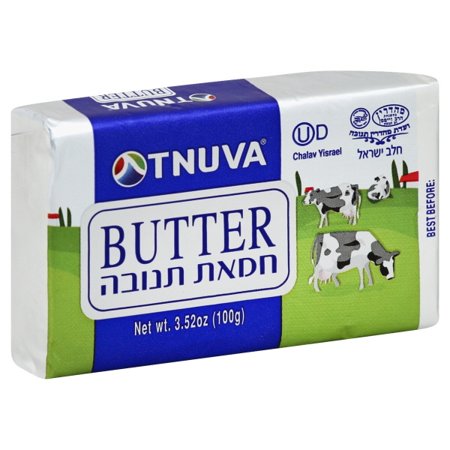
Once there were two dairies producing butter in Israel, Tara and Tnuva. Tara, citing profit loss for reasons explained below, stopped producing butter. And the Tnuva brand butter has been as scarce as hen’s teeth for over a year now. Shoppers drive from market to market in hopes of finding, and pouncing on, the familiar silver package with its logo of a little red cow shed. When a butter cache appears in a local store, people light signal fires to one another via the social media: “I found it here – hurry up and get some before it’s gone!”
Almost everyone is hoarding a cache of butter in their freezer. And the feeling is almost of buying on black market, with a lucky score something to brag about.
People are taking the butter drought in fairly good humor now, but the grumbles are gathering weight and starting to sound louder, as shown by this photo showing a package of increasingly rare Tnuva butter posed next to a silver necklace.
The public has been offered a variety of imported butters – from Holland, Belgium, Lithuania, France, and other countries. A strange product made of mixed butter and oil sits on the shelves, rightly viewed with disdain. These imported butters are far more expensive than the dear departed Israeli stuff. But where has the native butter gone?
Tnuva, Israel’s largest food company, began close to 80 years ago as a cooperative owned dairy farmers from kibbutzim and moshavim. By 2007, the British firm Apax owned 56.05% of Tnuva. The Israeli investment company Mivtach Shamir held, and still holds, 20.67% of Tnuva, and a minority of 23.3% is owned by kibbutz partners who refused to sell their shares. In 2014, Apax sold its shares to Bright Food, China’s second largest food conglomerate.
Bright Food has been acquiring more foreign food companies in the last few years. In 2018, they bought the US meat processing giant Smithfield Foods. Previously they acquired the UK cereal company Weetabix. Meat, dairy, and breakfast cereal. One gets the feeling that all this conforms to a 10-year plan.
The Chinese takeover of Tnuva wasn’t popular in Israel. Voices against the purchase were heard in the Knesset Economic Affairs Committee at the time. There was strong concern over the fact that a critically important food producer was going to be controlled by a foreign government. The Committee Chairman, MK Avishay Braverman asked the government to prevent the sale of Tnuva, to no avail.
Former Mossad director Efraim Halevy warned that the sale could jeopardize Israeli food security, and possibly go further.
“The fact that Israel’s largest food company is owned by the Chinese government will lead to a situation where the company implements policies that serve the interests of China [and not Israel],” he said in an interview with Ynet. “For China, Tnuva isn’t just a food company,” Halevi added. “China is doing everything it can to involve itself in Israeli research and development. The Chinese are very creative and flexible. If we do not wake up in time we will find that they will take over not only our food, but our academia. We must organize in order to defend Israeli assets, which are part of our national security conception.”
Dairy farmers protested in Jerusalem and Tel Aviv, worried that the Bright Food takeover would jeopardize previous supply contracts with Apax. The public expressed disgust but had no say in the matter.
The butter shortage has complex roots. This report from the Israeli newspaper and website Calcalist defines part of the economic problem:
“Regulated butter is sold in Israel for a maximum price of NIS 3.94 (approximately $1.1) per 100 grams. Many estimated that the 2018 shortage was the result of an intentional move by Tnuva, brought about by the finance ministry’s refusal to raise the regulated price of butter. Actuality, however, the company increased its production that year by nearly 20%, from 3,569 tonnes of butter produced in 2017 to 4,273 tonnes in 2018, according to a report published by Israel’s Ministry of Agriculture and Rural Development in May.”
Now in the latter half of 2019, we hear more recent news:
…”In the first half of 2019, both Tnuva and Tara cut back on butter production as it became less profitable, producing just 1,869 tonnes and 28 tonnes respectively, according to data from Israel-based sales data research company StoreNext Ltd.”
From Calcalist, some of whose sources insist on remaining anonymous:
“A Tnuva spokesperson said that the only cause for the butter shortage is a shortage in milk-derived fat, due to the limited milk production quota set by the government. Tnuva’s stock of milk fat, which it uses for butter and cream production, began running out in December last year, which could explain its decision to cut butter production in early 2019. In order to meet the demand for butter, Israel must increase milk quotas, several people familiar with the matter who spoke on condition of anonymity told Calcalist. The industry requested 60 million liters of milk a year be added to its quota to allow it to extract more fat to use for butter production, the people said.”
Israeli consumers turned to expensive imported butters. But there’s less of even imported butter now. Until recently, imported butter bore a heavy tax (from 126-140% for table butter and 144-160% for industrial butter), which importers were reluctant to pay because the government forbade selling it for more than the regulation price of NIS 3.94 per 100 grams. Many importers simply declined to bring butter in.
Attempting to save the situation, the Agriculture and Economy ministries recently decided to open a tender for importing up to 5,000 tonnes of customs-free butter, with no market price restrictions attached. But this was done too late to avert the crisis. In spite of Israeli’s reluctant acceptance of high-priced imported butter, less and less of it appears on the shelves.
In point of fact, there are currently hundreds of containers of imported foods, and butter among them, sitting in Haifa and Ashdod ports. Due to the High Holidays that occurred in September and October, the containers have not been inspected by the Ministry of Health, and so have not been released.
For the consumer, all this wrangling ultimately means less butter, and when it’s available, it’s expensive. People are currently complaining that there’s no butter at all on market shelves. This at a time when demand has only gone up, due to nutritional trends encouraging consumers to eat less GMO-based oils and trans fats.
The Economy and Industry ministries recommend getting rid of tariffs on imported butter and opening the Israeli market to competition. But under Israel’s current interim government, policy changes are unlikely to be made any time soon. In the meantime, the Agriculture and Economy ministries cite unequal distribution of import quotas and blame each other for it.
The mystery is, given the proved demand for more butter, why not allow Israeli farmers to increase milk production, thus allowing Tnuva to obtain the milk fat needed to make it? And where does Bright Food fit into this puzzle, if indeed it does?
A vegetarian take on this traditional Iranian dish.
Pungent saffron and turmeric give a deep yellow color to this vegetarian version of a traditional Iranian dish. As many traditional dishes do, this one requires several cooking phases. The easy part comes later, when all you have to do is pop it in the oven and let it finish cooking while you’re doing other things. This is an impressive, and delicious, party dish.
Vegetarian Tahcheen
Serves 6
Ingredients:
2 1/4 cups white basmati rice
1 1/4 tsp saffron strands
A pinch of sugar
3 tbsp freshly boiled water
3 medium eggplants (around 1 1/4 lb), cut lengthways into 1-inch slices
Sea salt and black pepper
Sunflower oil
3 tbsp butter
1 medium onion, finely chopped
3 garlic cloves, crushed
4 Portobello mushrooms, sliced into large chunks
1/2 tsp turmeric
1/2 tsp allspice
1/4 tsp cinnamon
1/4 tsp cayenne pepper
1/2 tsp cumin seeds
2 egg yolks
Scant cup Greek yogurt
For the topping:
1 tbsp butter
2 tbsp barberries or dried cranberries
1/4 cup + 1 tbsp pistachios, roughly chopped
1 tbsp sugar
You will need a large, flat platter to take the cooked dish when it’s cooked.
Pre-heat your grill to medium-high.
Rinse the rice in several changes of cold water until the water runs clear, then leave to soak in a large bowl of water for 15 minutes. Drain and set aside.
Bring a large pot of water to the boil and add 2 tablespoons of salt. (Don’t worry about the large amount of salt here, the rice has a very short time to absorb the water and the final result won’t be too salty.) Add the rice and cook for 4–5 minutes over a medium heat. Taste to test; the rice should be soft on the outside but still hard and firm in the middle. Drain, then rinse with tepid water to stop it cooking any further and set aside.
Make a saffron liquid by using a pestle and mortar to grind the saffron strands with a pinch of sugar and then add the boiled water. Leave to steep.
Drizzle the eggplant slices with some sunflower oil and season generously with salt. Grill for 10–15 minutes, turning occasionally, until the eggplants are cooked through.
Meanwhile, make the rest of your filling. Heat 2 tablespoons of sunflower oil with 1 tablespoon of the butter in a large saucepan and fry the onion for about 10 minutes, until soft. Add the garlic and fry for a further 2 minutes. Add the mushrooms to the pan along with the turmeric, allspice, cinnamon, cayenne pepper, 1 teaspoon of salt and 1/4 teaspoon of pepper.
Lightly toast the cumin seeds in a small pan for a minute and then crush them with a pestle and mortar or a spice grinder, and add them too. (Green Prophet note: you can pour the seeds into a wooden bowl and crush them with the bottom of a jar or bottle, too.) Cook until the mushrooms are soft and then take off the heat.
Pre-heat the oven to 375°F. In a large bowl, beat the egg yolks with the yogurt, saffron liquid, 1 1/2 teaspoons of salt, and 1 teaspoon of pepper. Fold the rice in until it is evenly coated with the yogurt and saffron.
Rub 1 tablespoon butter over the base and sides of a 10-cup ovenproof glass dish. (GP note: you can also use a 10-cup capacity casserole dish.) Spoon half of the rice into the dish and press it down evenly. Add a layer of eggplants and mushrooms and finish with a final layer of rice.
Dot with the remaining butter, cover the dish tightly with foil, and bake for 1 1/2–2 hours or until the base of the tahcheen is crisp and golden brown.
When the tahcheen is ready, remove from the oven and leave to cool slightly while you make your topping. Melt the butter in a small frying pan and fry the barberries, pistachios, and sugar for 2 minutes until the sugar has melted and the dried fruit has plumped up.
To serve, run a butter knife around the sides of the tahcheen to separate it from the dish. Place a large board (or platter) over the top and quickly invert the whole thing. Garnish with a sprinkling of the barberry and pistachio topping.
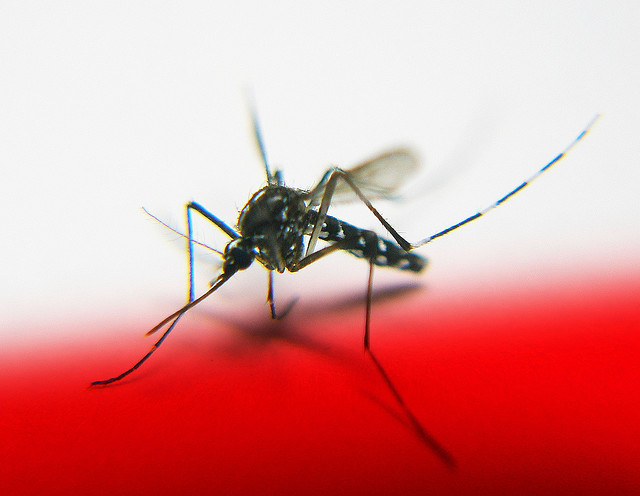
Mosquitoes. Those pesky creatures that suck your blood and if you are lucky, just make you scratch. They do have one major negative role, however, – as airborne carriers of serious diseases from malaria to Zika. They congregate around water, from little puddles to large lakes.
Since covering our water sources in pesticides is not possible anymore (we know about the health effects) eradication is difficult. Scientists from Israel’s Ben-Gurion University who call themselves FlyGEM, has come up with a genetically engineered solution – have the males transfer a bacteria to the females which produces a poison that kills mosquito larvae shortly after birth. The team and their advisors have filed a patent on the idea after competing for a solution to presentat the the iGEM Competition – an international team competition to promote synthetic biology held annually in Boston.
The meeting is a good motivator for getting a group of undergraduate students to brainstorm and then experiment with unique out-of-the-box ideas on a tight one-year deadline. Past teams have focused on the plastic problem, on ALS and other diverse topics.
FlyGEM decided to tackle the problem of mosquitoes. During their literature review, the young scientists found that there is a bacteria in the mosquito’s gut called BTI, which, when activated, produces a poison that only kills mosquito larvae. The problem was how to get it to the larvae. Infecting female mosquitoes was out of the question – it’s illegal to release female mosquitos into the wild in Israel, as it is in most countries, because they’re airborne disease vectors.
So, the team was faced with how to get the poison to the larvae through the males. They tweaked the male mosquito’s gut microbiome to express BTI and then sent it on its way to find and mate with the females. The females then put the bacteria on the eggs, and when the larvae are born, most of them die. What’s more, the other larvae eat the dead ones, the team discovered, and then die themselves.
Since the poison comes from the mosquito’s own gut and is only lethal to other mosquitos, the students feel they have discovered a delivery mechanism that far surpasses current human-orchestrated ones based on pesticides.
The team is advised by Prof. Lital Alfonta and Dr. Ramon Birnbaum of the Department of Life Sciences. The students also consulted Prof. Uri Abdu and Prof. (Emer.) Arieh Zaritsky of the Department of Life Sciences and Dr. Ido Tzurim and Prof. Eitan Ben-Dov of Achva College.
Team leader Mey Tal Banar, “After an incredible year, I am a great believer in the project and the product that we will present: a targeted, innovative method that could replace the current methods of global mosquito control. I want to thank the project’s executive team, our advisors and the teaching assistants. Without their guidance and support, we would not have gotten this far. And our thanks to the department and to the University for the opportunity to participate in this challenging international competition.”
Prof. Lital Alfonta, one of the project’s advisors, “The students’ progress over a single year has been impressive and unusual. After a further pilot project in urban areas to test out our method, there is a good chance that this will become humanity’s next biological pest control method. For now, we have focused on a single type of mosquito, Aedes aegypti, [that can spread dengue fever, chikungunya, Zika fever, Mayaro and yellow fever], but we have the ability to target other disease-carrying mosquitoes.”
Your loved one has passed and you are looking to remove contents and sell the things that were loved in an eco way.
Usually, estate cleanouts are not a happy time for the responsible person. The cause of estate selling may lot including the passing of a beloved person, financial burden, or a big life event. Also, it could be a possible eviction.
It doesn’t what the reasons are; it’s a very stressful time for you if you’re affected. So, you must be looking for the simplest way to get done your estate cleanout.
As a result, you might be looking for some “trash removal services near me” on the internet. Before you do it, just complete reading to know more about the issue.
Things To Consider While Performing An Estate Cleanout
For the best result and to make your task easier, you have to consider some things during an estate cleanout.
Be Thorough
While reviewing your estate, you must be thorough and need to ask essential questions. Ensure there are no garages or extra storage units by inspecting all things that should cleanout. Also, check your backyard if there is overlooked storage space or shed.
Besides, make sure checking the conspiracy nut under the old mattress if your relive had the issue. Because they don’t trust banks to keep their money, they might have stored some cash under a mattress.
Financial Documents
Most obviously your estate may face the issue of probate if the estate involves the death of one or multiple family members. In such a situation, you have to keep your financial document in a secure place.
These may include your life insurance records, estate deeds, stock certificates, and bank statements. They’ll need to file something for income taxes for the next year and also for some other reasons.
Everyone Is Not Your Enemy
When you’re in some issues, these times you’ll find the faces of some ugly people. But, don’t think everyone in the same way and you always should be friendly with your family members and friends during the time of cleanout.
Also, don’t forget one more thing that everyone will not support your strategies and it often happens. It’s because everybody is emotional in the situation. If you notice the disagreements are getting bigger then consider hiring someone else to help you. The relationship is always worth to keep continuing.
Analyze Estate Cleanout Cost
Adding up quickly that days are passing with unsold or rent-less of your estate. It could be more than your pocket expense that was never expected like taxes, repair costs, and mortgage amounting.
As a result, you should make an action plan as quickly as possible to get rid of these issues. What you can do it that reviews the extra expenses that you don’t know or think about. So, you need to perform a methodical cost analysis.
Final Thought
Apart from the above-said things, you should know about some more. These include boxes to ship and their fees and think about having insurance. Also, you have to think about the time that you spend cleaning your estate while reviewing the additional costs.
Calculating the impact of surgery on the environment.
In traditional circles there’s often talk about how automobile exhaust and agricultural practices contribute to greenhouse gas emissions. However, as experienced anesthesiologist Dr. Subrata Chakravarty focuses on the best applications to help patients through the use of anesthetic agents, he is also acutely aware of global warming trends and the possible impact of them.
The reality is that popular anesthetic agents including nitrous oxide (also known a laughing gas, which is often still used for sedation in the dentist’s chair) as well as isoflurane (used in procedures requiring general anesthesia) both have a potential impact on the environment. In fact, stats show the health sector in the U.S. is responsible for about 10 percent of the overall greenhouse gases produced by the country (although medical gas providers peg the impact at lower than one percent of emissions from burning fossil fuels.)
While isoflurane is a chlorofluorocarbon (CFC) that has been shown to deplete the ozone layer, CFCs were phased out as part of an international treaty. The result is that while the hole in the ozone is repairing itself, it has also made more room for other agents used by an anesthesiologist such as sevoflorine and desflurane, both of which are hydrofluorocarbons (HFCs). This may sound positive on the surface, but while these latter agents do not harm the ozone, they are potent greenhouse gases that can contribute to the climate crisis.
There is no shortage of these agents being used – in fact, there’s an expected increase of more than 300 percent by 2030 compared to 2005 levels. Dr. Subrata Chakravarty shares that this projected increase is partially a result of developing countries having more access to healthcare.
Why Inhalation Agents are Potentially Harmful to The Environment
When discussing global warming, the finger is most often pointed at carbon dioxide. However, the potential of these analgesic gases used by an anesthesiologist to provide comfort to patients actually has significantly higher potential than CO2 for heating up the globe – perhaps surprisingly, as many as hundreds or even thousands of times more.
But why? There are essentially three criteria when it comes to judging the greenhouse effect potential of a gas. One is how long it can exist in the atmosphere (also known as atmospheric lifetime). For some context, nitrous oxide, which is still used for some applications (and recreationally) has an atmospheric lifetime of around 150 years.
Next there’s its potential during its atmospheric lifetime for absorbing infrared radiation that’s normally destined for space. The last consideration is whether there are other atmospheric elements such as moisture that absorb infrared rays on the same wavelength. If not, the potential for the greenhouse gas effect skyrockets. In the case of both CFCs and HFCs, all three boxes are ticked.
How much greenhouse gas does a procedure using desflurane produce? To put it in perspective, Subrata Chakravarty shares one estimate pegs the amount of gas flow during a seven-hour operation as the same as a 200-hour drive in a car. Other data suggests that just one hospital might have equivalent emissions of more than 1,000 cars.
Meanwhile, data suggests CFC and HFC anesthesia gas emissions are equivalent to 3 million tons of CO2, roughly the same amount produced from the annual energy consumption of 359,000 homes’.
How An Anesthesiologist Can Reduce The Impact?
Here’s what typically happens in an operating room. A patient breathes in sevoflurane or another anesthetic gas to completely knock them out during a procedure. However, Dr. Subrata Chakravarty states only a small portion of the gas is actually used by the patient, and the rest typically gets sucked out of the operating room via ventilation.
This is especially harmful if the anesthesiologist is using desflurane, as it is significantly more potent as a greenhouse gas than its counterpart sevoflurane. What’s more is that desflurane has an atmospheric lifetime of about 14 years, while the other has a lifespan of about a year. From a financial perspective, sevoflurane is considerably cheaper meaning it can save hospitals several thousands of dollars over the course of a year.
Knowing which gases have less potential for contributing to global warming is one approach being used by Dr. Subrata Chakravarty. He further explains that it’s not just the type of gas that’s important – it’s limiting the amount released into the atmosphere.
A Gradual Shift in Thinking
An anesthesiologist like Dr. Subrata is most likely focused on the health of the patient during a procedure – not the health of the planet. However, that’s not to say that some anesthesiologists aren’t making the switch when they learn the data behind potential environmental impacts.
However, there could be some sticking points. One of them is that desflurane actually allows faster recovery for the patient compared to sevoflurane. So, from a medical perspective, desflurane may still have advantages despite being a bigger problem environmentally. To be clear, sevoflurane is still regarded as a safe anesthetic in terms of patient impact. In fact, both nitrous oxide and isoflurane are considered essential medicines, according to the World Health Organization.
Another possible sticking point is that anesthetic gases weren’t included in the Paris Climate Accord, so more attention might be going to other known environment offenders.
Currently there are government guidelines in place to help reduce gas exposure inside a hospital setting, but so far there aren’t any rules about how much a hospital can emit. While a possible mitigation approach would be setting an emissions limit for anesthetic gases, it may also come down to adopting anesthetic gases that have no harmful properties to the earth – xenon is one gas that has been discussed for this reason as an alternative to nitrous oxide. Unfortunately, xenon is quite rare and therefore not too widespread aside from its use primarily in Europe.
Subrata Chakravarty’s Final Thoughts
In the meantime, Dr. Subrata Chakravarty and his anesthesiologist colleagues are focused on awareness of the issue to try to influence a change in behavior. The best hope in the short-term is that more medical professionals will choose anesthetics with the least impact, until newer and more sustainable gases are found for patient care.
Beautiful nature may not be something that pops into your mind when you think of Dubai. Mostly everyone knows the skyscrapers and glitzy side of it. Nature and Dubai might seem a bit inconceivable together. But surprisingly, there is a side of Dubai that is entwined with nature.
Here are three things to do in Dubai if you want to explore its terrain and wildlife:
A safari trip to the desert
There are places even in Dubai filled with lush greenery. But they are all backdropped with the burnt orange color of the sand. So the predominant character of Dubai’s nature is this — desert sand spotted with patches of green vegetation. That doesn’t mean there is no life in it. In the desert, life thrives inside the desert dunes. Some animals and birds live burrowed under the sand. Beneath it, some seeds have been lying dormant for thousands of years.
A safari tour will let you experience the intricacies of the desert. You can easily find great desert safari deals here. The safari trip starts from the red dunes of Lahbab. Lahbab desert is a 45 minutes’ drive from Dubai city. The place where you arrive in the desert itself is scenic. You can click pictures as you wait for other desert safari cars to arrive.
After the safari cars have come and form a convoy, it’s time for dune bashing. You might have gone to amusement parks and experienced roller coaster rides that give butterflies in your stomach. Dune bashing is a lot like that, but instead, it is on the sand. The loose and mushy sands provide a perfect terrain for this thrill.
The dune bashing lasts for 30 minutes, taking breaks in between for snapping pictures of the sunset. After that, we go to the desert camp. It is the camp where all the rest of the fun happen. You can ride on camels, take the quad bikes out for a spin, and capture pictures with the national bird of the UAE.
Explore the Arabic heritage and Bedouin life in the desert camp. There you can try the traditional dress and henna painting. It’s also about the food. After the sunset, the floor is open for dinner and entertainment performances. When it gets dark, gaze upon the sky with innumerable stars. Nowhere else you can get an unobstructed and exquisite view of the sky.
A relaxing dinner cruise
A dinner cruise is a great way to explore the waterways of Dubai. There are natural and artificial waterways in the city. The naturally occurring creek aided the development of Dubai from its beginning. The other one is the Dubai Marina, which was once the largest marina in the world. It still is the poshest area in Dubai, and dhow cruises operate in both of these places.
Dhow Dubai cruises in Marina and Creek are in stark contrast to each other. A dinner cruise through Creek lets you witness the history and heritage of Dubai. There you can see the old buildings before the boom in the 60s and 70s. These areas are now preserved as a part of the Al Fahidi historical district. Just adjacent to that, there is an open-air shopping mall with buildings that resemble the old settlements. On the other side is Deira, which is more of a market area than Bur Dubai. It is where Dubai’s famous souks are — the Spice Souk and Gold Souk. These are the traditional versions of the modern shopping malls where you can buy things at affordable prices.
The marina dinner cruise is very different in this regard. There are gravity-defying buildings all over the place and top-notch restaurants showing off the luxury and upbeat. When you are on the dhow, you can see luxury yachts docked in the wharves, upscale dining areas, five-star hotels, and western tourists who are there to have a good time.
Dhow cruise combines excellent dining with a great sightseeing experience, which makes it one of the must-try things in Dubai. You should experience a dinner cruise in both Marina and Creek if your budget and time allow for that.
Exploring the sea
The sea has been the lifeline of Dubai for hundreds of years. Though the Arabs don’t hunt pearls anymore, it still plays a major role in the economy of Dubai.
A yacht trip takes you to the sea and around the famous landmarks of Dubai. It is also interesting that there are so many attractions in Dubai that are located near the beaches, not to mention a slew of artificial islands.
A yacht charter also gives you privacy and an escape from the busy and noisy cities. Sail into the tranquility of the sea and enjoy the view. You can catch fish and cook them onboard or simply tell us if you want your dinner arranged on the boat. One of the exquisite venues to host parties in Dubai is the yacht. It ensures that your guests enjoy every moment of the party.
When you have walked around the dazzling cityscape and wish to try something new, try the activities that are close to nature.
Do you shampoo or do no poo? Some countries have soft water, others hard. How can you keep your eco “poo” regimen while you travel?
With a daily routine set in stone for us to achieve healthy hair, travelling can throw a spanner in the works. However, travel-sized products, as well as forward planning, can help to ensure as little disruption as possible. Though it can be difficult to combat hair loss for those that have been experiencing it for a long time there are a number of FUE hair transplant UK clinics that can provide outstanding results to restore the hairline and aid in building confidence. Whether you are considering a hair transplant to help with the hair loss already experienced or you are looking to prevent it before it gets too bad, it is important to have a plan in place, even when travelling to ensure healthy hair at all times.
UV Protection From The Sun
When travelling it can be difficult to determine what the weather will be like beforehand, and although the weather may be slightly cooler depending on where you are travelling to, the hair can still be affected by the sun. Therefore, opting for UV protection serums or a spray can protect the hair from becoming damaged as well as ensuring that the scalp does not become burnt throughout the course of your trip.
Hats And Scarves In Cold Weather
If the weather is significantly cooler where you are travelling it may be beneficial to use a hat and a scarf to prevent damage. Whether this is the prevention of split ends or the reduction in the amount of wind-damaged caused to the hair as it is pulled in all directions. This will not only help to reduce the damage caused but it will help to keep you significantly warmer throughout the course of the trip. It is also important to brush the hair when returning home at the end of every day as cool weather can cause the hair to tangle.
Conditioner To Help Prevent Dryness
Conditioner is your best friend when travelling as it can help to protect the hair against breakage whilst allowing you to fully untangle the hair without causing breakage. Whether this is a deep conditioning mask or a 3-minute conditioner treatment, these travel-sized products can help to rejuvenate the hair without taking up to much space in your suitcase. This conditioner should be applied to the lengths of the hair to prevent them from breaking without weighing your hair down a significant amount as this can lead to your washing your hair significantly more.
Avoid Using Hotel Hair Products.
Though it may seem tempting to use the products in the hotel, it is important to avoid using the hair products as the harsh formula can strip the hair of natural oils. Though this is not the case with every hotel, the majority of establishments provide strong shampoo that deep cleans the hair however this can leave it feeling dry. By bringing your own travel-sized shampoo and conditioner, you are able to maintain healthy hair regardless of the humidity and the water type. With a wide range of shampoo and conditioners in a travel size, you can bring all your favourite products away without exceeding any limits.
Whether you are looking to travel in the near future, or you are planning a big trip for 2020, you can be sure that your hair remains healthy and happy by following these few simple rules. Which will you be choosing first?
The young generation is always the one to make the most changes, as history’s already shown us, and the problem of keeping a more eco-friendly world is not an exception to that. We’ve seen it recently from the example of Greta Thunberg who’s dedicated her time to knock on the world’s most powerful politicians to actually start to do something about the climate change before it’s too late. However, each and every school or college student can contribute a great deal, and there is a number of ways to be more green and become an example for someone. Let’s explore the X green habits we can develop to become our second nature.
Consume Less
Recycling is great, reusing is awesome, but consuming less beats it all. No, we aren’t talking about eating less, taking less medication or living an ascetic life. We’re talking about thinking twice before paying for a t-shirt that will end up in the landfill after 2-3 wearings. We’re talking about using papers when you can be perfectly fine with using the applications to note things down. Surely, they are just a few small things, but any research will show you how huge the difference they can make.
Convert to reusables
The market is full of items that can be used over and over again until they are broken and yet, everyone will pay for another coffee cup when ordering a takeaway beverage. The question is “Why?” Why do that when you can buy a travel mug, a tumbler, a thermos, a bottle — anything to carry your favorite drink around? Why throwing money on single-use plastic forks, spoons, and straws if you can be perfectly fine with the ones made of stainless steel or other long-lasting material? Finally, do you really need that plastic bag from the supermarket if you have a shopper in the trunk?
Educate Other Folks in Your Writing
The more you research the issue, the more interesting findings you can share with others in your essay, blog article, research paper, or op-ed. Doing that for free or small pay will bring more common good for those who cared enough to read that. And yes, those who google ‘pay someone to do my research paper’ are, probably, less informed about the issue, but it’s up to you to put them in the know in your next APA paper.
Support the Green Initiatives of Your Community
It’s hard to imagine even a small town that doesn’t want to make their area cleaner and greener. Many authorities are launching the eco-initiatives supported by the local businesses, and it will be dumb not to make an effort where you can. You can donate your unwanted clothes for those in need, you can start a bookcrossing thing at the library, or conduct a lecture for the community members how they can spend less for what eventually become garbage. Haven’t you found the initiative that is something like you’d support? Write to the corresponding person your vision of what should be implemented. After all, isn’t youth the main force of changes?
Find an eco-friendly way to commute
As a student, you probably can’t afford an electric car just yet but is you wonder how you can change the way you get around, here is what we suggest. Riding a bike might be a great option if you need just to move from A to B on a short to medium distance. Same with a birdie. Have you got a car? Ask the neighbors if you can arrange the carpool with them, so you use the car less. It will be cheaper for both of you and beneficial for the environment. The bottom line: don’t use the gas-fueled vehicles until you absolutely have to.
Recycle Properly
Not all the garbage goes into one bin, and you should know that by far. All the glass items (even the broken ones) can be reused again after the term processing. So why support new manufacturing that will need more water, more electricity, and human resources if you can contribute to recycling. Many hipster locations are looking for old chairs or beds of other items. Why not donate them for a good cause? And yes, people who throw all the garbage into one container while there are few for different things, will automatically go to the worst hell.
Save water and energy
We can’t do without these two these days, but what we can is to consume them responsibly. If you can buy an energy-efficient fridge, by all means, do that. If you can install the solar panels for your home, that will be the best for your budget and nature as well. If you need to wash the fruits, please, use that water for your plants rather than watering them with fresh. And please, for the planet’s sake, use shower, not the bath.
Lead by an Example
We all have the friends/relatives who all think that the eco-friendly initiatives are nothing but greenwashing by the big corporations. Although you want to yell at them as loud as you can, start with a dialogue and ask them what made them think so. Try to understand their point of view to come with examples and proofs of why they are wrong. The conflicts are the least needed thing here, but the examples of not using a bag or gifting them with a cool shopper can be the gamechanger we all need.
There are so many ways to live an eco-friendly life and still enjoy every moment without missing a thing. What it needs is a bit of education, developing a habit, and showing the example for the others to follow. The latter can take a bit more time, but in the end, we might have a chance to turn into a responsible generation that takes care of the only home we all have – the Earth.
Michelle Obama helps start backyard gardens, one school at a time.
We’ve heard the word “Green” thrown around for years. Sometimes it means recycling our newspapers and sometimes it means massive federal legislation to change our car exhaust. Or maybe it means, as Alexandria Ocasio-Cortez (known in the media as AOC), the U.S. Representative for New York’s 14th congressional district believes, that this can only be accomplished through massive lifestyle changes for every American? Or are real changes accomplished in your own backyard?
And most importantly, is AOC’s Green deal truly about being green?
100% percent of the power demands of the United States through clean, renewable, and zero emission energy. Green, but anytime “100%” is used, it is unrealistic.
Upgrading all existing US buildings to be energy efficient. Green, but again “all” means unrealistic.
Working with farmers to eliminate all pollution and greenhouse gas emissions – no animal waste, no machinery in farming. Are farmers really the largest polluters in the US?
Overhaul the whole US transportation system including expanding electric car manufacturing, installing building “charging stations everywhere” and expanding the high speed rail system to a scale where air travel stops to become unnecessary. Not realistic.
A guaranteed job with a family sustaining wage, adequate family and medical leave, paid vacations and retirement security for every American. Nothing to do with being “Green”.
High quality health care for all Americans. Again, nothing “Green” here.
Of the top 100 polluters, they fall into the following major categories: power plants, oil refineries, natural gas systems, chemical companies, metal and mineral processing plants, paper processing plants, waste management systems, and that is it. Old McDonald’s farm is not on the list.
Where did AOC’s New Green Deal come from?
AOC’s New Green Deal, which originated from a 2009 UN Report. The three objectives of the UN’s Global Green New Deal (2009) are the following:
Revive the world economy, create employment opportunities and protect vulnerable groups.
Reduce carbon dependency, ecosystem degradation, and water scarcity.
Further the millennium development goal of ending extreme world poverty by 2015.
Two out of the three goals of the UN’s Global Green New Deal (2009) have nothing to with “being Green”. They have to do with economics. More specifically, worldwide economics and worldwide redistribution of wealth.
So why is it under the umbrella of “Green”? The answer is to make people feel guilty for not accepting worldwide wealth redistribution with unelected people living halfway across the world making the rules.
AOC’s chief of staff, Saikat Chakrabarti, has admitted the plan’s true objective is to radically transform America’s free enterprise economy into a socialist system. Chakrabarti said this in a meeting with Sam Ricketts, climate director for Democratic presidential candidate wannabe, Gov. Jay Inslee.
“Do you guys think of it as a climate thing?” Chakrabarti continued. “Because we really think of it a how-do-you-change-the-entire-economy thing.”
AOC’s New Green Deal and the UN’s Global Green New Deal are doing the same thing. they are hijacking the real green movement to hide their true intention of worldwide economic change.
If you truly want to “be green”, the solution is not in AOC’s New Green Deal or the UN’s Global Green New Deal. The solution is actually in your own backyard, micro gardening.
What is micro gardening?
Do you really want to see real change to our environment, to the economy, to help the poor, to eliminate poverty? The solutions start in your own family, in your own neighborhood, your own backyard, even your own windowsill.
Some people mistakenly believe that doing change means that it has to be grand, huge, and on a worldwide scale. The truth is that the most powerful changes happen on the micro level.
Have you ever heard of micro container gardening? Indoor or urban micro container gardening is the practice of cultivating vegetables, herbs, roots, and tubers in small spaces. These gardening spaces might be balconies, small yards, patios, or rooftops, which make use of containers. Containers can be traditional plant pots, inspirational, repurposed old tires, plastic buckets, trash cans, or wooden pallets.
These gardens can either be traditional soil-based gardens, hydroponic gardens, or a combination of the two, soil on the top with a way to store water below the soil while still providing a way for the roots to get water.
Water for these gardens can be obtained from tap water, filtered handwashing or bath water, or collected rainwater.
The point is that a bunch of micros become a macro garden.
What this means is that even a person living in an apartment living in a city can still have a positive impact on the environment through their own direct actions.
What to have even more impact?
Try this. When you are going to or from school or your job, take a small grocery bag with you. Make the commitment to pick up 10 pieces of trash on your journey. How much of an impact will that have over a week, a month, a year, or even 5 to 10 years? But what about the ripple effect. Many people are hesitant to be the first to do something, but when somebody else does something, other people follow their lead. How much impact will that have in your local environment to not only yourself but other people and animals in your community?
Being in a healthy and clean environment not only affects the physical environment around us, but it also affects the emotional environment around us as well. We look around us and we smile. When we smile, others smile.
Smile and be friendly, and the other person will respond with smiling and being friendly as well.
Air conditioners pull water from the air, literally. It’s distilled so not great to drink, but useful in other ways.
Whether you live in a place with extreme heat like Miami, Florida, or in the cold reaches of Alberta, Canada, researchingenergy plans in your area is a good idea. Finding the right plan can help you save on energy costs. https://homevew.com/easy-power-plan-review/ has some great tips to guide you on how you can reduce your energy bills.
Naturally, utility companies charge higher rates when you use electricity while the power grid is under heavy demand. For example, more people run their dishwashers when they get home from work or right after lunch.
If you want to save money, use large appliances, such as dishwashers and washing machines, after 7 p.m. Avoid running them at around noon, which is when the power grid is under the heaviest demand.
Likewise, you can save even more money if you unplug energy-sucking devices during peak hours. Modems, laptops and coffee makers continue to consume power even when they aren’t in use. Try unplugging these devices when you leave for work or aren’t at home to save even more money.
Choose Gas Appliances Over Electric
Switching electric appliances, such as the kitchen range and clothes dryer, to gas can reduce your overall energy consumption. One reason is that natural gas is almost always cheaper than electricity, according to Consumer Affairs. In fact, it found that switching to gas appliances decreases utility bills by nearly 30%.
Another reason why natural gas saves on energy costs is that it heats faster. Electric ranges, for instance, have to gradually heat up. With gas ranges, the heat is instant when you turn it on. This means that you’ll run a gas stove and oven less to cook the same food.
In most cases, gas appliances cost about the same as their electric counterparts. In addition, they’re easier to maintain and have lower maintenance costs. Thus, you’ll save money on keeping your appliances up and running as well.
Switch to LED Bulbs
Most homes use a lot of energy on lighting. However, you can reduce the amount of energy that you use when you switch all of your bulbs to LED lights. However, why do LED bulbs save so much money? After all, the upfront cost is much higher than traditional bulbs.
One reason is that LED bulbs last around 20 times longer than incandescent bulbs. While the initial cost is higher, they save you money in the long run because you don’t have to buy bulbs as often.
Also, LED bulbs use a lot less electricity than incandescent bulbs. As a result, you won’t just save money on buying fewer bulbs. You’ll save money on your energy bill right away since they use far less electricity.
Invest in a Smart Thermostat
Are you looking for an investment that can easily pay for itself? If so, invest in a smart thermostat. Once again, the upfront cost of installing one is a bit pricey. However, the amount that you save with a smart thermostat pays for itself.
With a smart thermostat, you can easily control your home’s HVAC system even when you’re away. During the summer, for example, you don’t have to keep your home cool when you aren’t there to enjoy it. You can turn the temperature up while you’re gone and lower it when you’re on your way home. Then, you still enjoy a nice cool house when you get home without paying for all-day cooling.
Of course, this method also works for heating your house. There’s no reason to heat it while you aren’t there. Using a smart thermostat, you can control the temperature with your smartphone or tablet no matter where your are.
Start making smarter energy-saving decisions today by using these tips. Making the right choices when it comes to energy usage not only saves you money but also lowers your carbon footprint.
Simplifying everything, even the food you eat will make you healthier. This is Sandor Katz. He pickles everything.
Obesity is a serious health concern in United States, as it can and often does give way to a whole range of medical problems including but not limited to hypertension, arterial blockage, heart disease, diabetes, osteoarthritis, asthma and certain types of cancers. This is not exactly news to doctors and nurses of course, but it is so difficult to stay motivated and find the energy to exercise daily, after long, tiring workdays.
Why Staying Fit Goes Beyond Personal Health Goals for Medical Professionals
Healthcare professionals are not just aware of what obesity or being overweight can do to a person’s health, they also deal with the consequences of their patients’ poor lifestyles on a daily basis.
It is for that reason that physicians, nurses and others involved in direct patient care should make it a goal to remain as fit and healthy as possible. In addition to the personal health and productivity benefits, this is also effective in inspiring patients towards leading better, fitter lifestyles.
Athletic, Healthy and Ambitious: Is It Even Possible for a Medical Professional?
If you are a fulltime nurse, who is also ambitious enough to continue her education and get to a better place in her career, there’s no denying the fact that exercising daily and maintaining a decent enough diet is going to be hard. Nonetheless, thanks to online education, it’s still possible.
You can complete your CCNE accredited online Masters in Nursing with programs specifically designed to fit around the schedule of a busy, working nurse.
These Online Masters in Nursing programs are flexible, can be completed from virtually any location in the world and most importantly, they allow busy nurses at least a bit of time for themselves. It’s much easier to get your meals in order, when you can prepare them in your own kitchen and do not have to waste hours daily on commuting to and from nursing school, the hospital and your home.
Fitness Doesn’t Always Have to Involve a Gym
We just discussed how nurses can complete their higher studies from home, thanks to online education, and the same is also applicable when it comes to staying fit and healthy. Being a medical care worker, you likely have a decent idea regarding diet already, and as far as the exercise is concerned, there are so many online resources to explore for that as well.
Does going to a gym help you get more from your workout sessions? Most certainly, but if your goal is to stay healthy and fit, you do not necessarily have to get an expensive gym membership for that.
For most of us, all we need to do is powerwalk for 20-30 minutes every day at the local park, or even on a treadmill for that matter! You can make your workout routine more beneficial by mixing things up and throwing in three days of bodyweight training and a few sets of HIIT to alternate with three-days of powerwalking. At most, you will be spending half an hour every day on your fitness goals, and that’s about all you need to do.
Keeping your conditions under control while staying active is one of the best ways to maintain long-term health. Don’t shy away from effective medicines for diabetes that support your lifestyle and allow you to stay consistent with your exercise routine. When paired with daily movement, the right medication can stabilise blood sugar and boost overall energy levels. This balance helps you feel better day to day and makes it easier to stick with your wellness goals.
Getting the Basics Right While at Work
It is quite likely that if you are a medical worker, most of what we are going to discuss next are things that you know too well yourself, and maybe you provide more detailed advice regarding similar things to your patients on a daily basis!
Nonetheless, due to the very nature of the medical profession itself, it is easy to forget that what you are advising applies to you as well. Therefore, even if to only remind yourself about them, go through the following basics of maintaining a healthy lifestyle at work.
Hydration
Dehydration can sneak up on you, irrespective of how well aware you may be of its effects. To avoid forgetting to drink at least 3 liters of water on a daily basis, try the following method:
Fill up three one-liter bottles of water at the beginning of your shift
Label them as 1, 2 and 3
Place them at a location where you spend the most time
Be sure to drink all three bottles of water by the end of your shift
If your shifts are not particularly long, just 2 bottles will be sufficient; drink the other liter at home
Some of us find drinking 3-liters of water daily a tough ask, so try flavored water instead (no sugar), if that’s a problem.
Eating Small Meals at Work
Instead of eating large meals, break down your meals into multiple, bite-sized ones. It is a scientific fact that having multiple tiny meals throughout the day is better than having three big ones.
Whether they can actually contribute to weight loss or not is a debatable topic, but smaller meals are easier to digest, the constant supply of food keeps the body energized throughout the day, and most importantly for a busy medical worker, you don’t have to spend more than a few minutes to eat any of the meals.
There is one very important factor to consider here though; you cannot eat six junk meals a day and expect it to help your health, irrespective of how portion controlled they might be!
Admittedly, at times, it might be impossible to eat healthy at work, but we should try to do so as much as we can anyway. Besides, working in a hospital means that the cafeteria almost certainly has multiple healthy food options for the employees to choose from; a luxury that most professionals do not have and one that you should definitely take advantage of.
Staying fit and healthy doesn’t just mean sweating it out and keeping your meals in check, but it involves mental fitness as well. Given that doctors, nurses and other medical workers work constantly with life and death, there is serious potential of psychological issues developing, if the accumulating stress is left unaddressed.
Find an activity which helps you to destress and use it to its full effect. Sometimes, a major episode at work might also require therapy to get over, and being a medical professional, you should know when it’s time to talk to someone.