
Home Blog Page 182

Bhutan – a popular destination for 2020

0
bhutan temple in the mountains
At setting a high fee to enter (about $250 a day), Bhutan is able to protect its culture and wildlife. Also a trip to Bhutan might get you kick-started on a spiritual quest – the journey Green Prophets love best.

Bhutan is a small but beautiful country in Asia. It is called the last Shangri-La, and according to Lonely Planet, it is considered the last great Himalayan kingdom. If you have the chance to travel there, you will see why. However, before you do so, there are a few things you should know.

As the title suggests, Bhutan is a trendy vacation destination for 2020. There are several lists online that suggest that, and the reason why has to do with the environment. People all around the world decided to visit countries that strive for environmental perfection. If you think about it, that is excellent news. We should help all small nations that want to be carbon neutral. But why is Bhutan so unique? Because the country is not carbon neutral. It is more than that. Apparently, it absorbs more carbon than it releases.

According to Bhutanese laws, the government has to ensure that more than 60% of the country’s surface is covered by forests. The law is supposed to protect future generations by providing the same clean air as now. Of course, Bhutan is now 70% covered by forests, and we do not see that amount decreasing anytime soon. As a tourist, you will have the opportunity to test the air and see what it is like to take a hike in such a pure environment.

Tourism in Bhutan is limited

Another reason why Bhutan manages to maintain its serene environment is that tourism is not as free as in any other country. In fact, there are rules in place that do not allow too many tourists to enter the country. Officially, there is no maximum number of tourists that can visit Bhutan in a year, but the Bhutanese government came up with a ‘High Value, Low Impact’ policy that is supposed to attract only discerning tourists. Basically, they introduced significant fees for the preservation of the country. During the high season, it costs $250 per day to stay in Bhutan, while during the low season, it costs $200. As a result, Bhutan has 250 thousand tourists per year at most. It is their way of making sure that there is never a crowd anywhere in the country.

To put it simply, the Bhutanese government took a few measures that made a vacation in Bhutan quite expensive. But the initiative is brilliant if you think about it. All the money is invested in this unique society for the bettering of their environment and communities. Yes, they have fewer tourists each year, but the ones that reach Bhutan pay a lot of money, and it is the same as having a lot of tourists that pay less. However, you get to experience Bhutan as a local. There is never a crowded tourist attraction, and that is the beauty of it.

You will need a tour operator

A trip to Bhutan does not mean you can hop on the plane, land, and then go wherever you want on your own. It is government policy that you must use an authorized Bhutanese tour operator or an international partner to book your trip to Bhutan.

You will most likely need a visa

Only the citizens of India, Bangladesh, and the Maldives can get a visa on arrival once they reach Bhutan. If you are not among them, you have to apply for a visa in advance. The tour operator you are using for your trip can make the arrangements regarding the visa as well. Just make sure that you have a valid passport. The tour operator will ask for other documents as well.

Bhutan is indeed committed to the environment, and I guess that that is what makes people want to go there. There is an entire debate on whether Bhutan offers a feasible environmental model for all the countries to follow. While that may be possible for some, we have to be honest about it and admit that not all countries can offer what Bhutan does. Even so, it stands as the perfect example of what a government should do for the environment. High Value, Low Impact.

The Golden Globes Go Vegan!

0
Joaquin Phoenix Golden Globes
Natalie Portman was the first A level Hollywood celebrity to make us know that the rich and famous cared about being vegan. She also bought green diamonds. The Israeli-American actress inspired others. Now JOaquin Phoenix has pushed the Golden Globes to serve all vegan meals. Meat is no longer a must.

For the first time in its 77-year history, guests at the prestigious entertainment awards The Golden Globes awards show are being served up a completely plant-based meal. According to a statement from the Hollywood Foreign Press Association (HFPA), the menu change – which occurred a mere two weeks before tonight’s party, is an effort to raise awareness about climate change.

The decision aligns with the vegan-burger craze sweeping the United States, and heightened public awareness of the negative environmental impacts of the beef industry.  Agriculture and ranching industries are the biggest greenhouse gas emitters after fossil fuel energy production. Farming accounts for more global emissions than transportation.

Natalie Portman’s Vegan Feet

“If there’s a way we can save the planet, maybe we can get the Golden Globes to send a signal and draw attention to the issue about climate change,” HFPA president Lorenzo Soria told The Associated Press, adding, “The food we eat, the way we grow the food we eat, the way we dispose of the food is one of the large contributors to the climate crisis.”

The Golden Globe Awards are accolades bestowed by the 93 members of the Hollywood Foreign Press Association beginning in January 1944, recognizing excellence in film, both American and International, and the American television.

Hollywood heavyweights and climate change activists Leonardo DiCaprio and Mark Ruffalo took to Twitter to cheer what some consider a bold food choice. “Our industry leads by example. Vegetarian food is delicious and healthy and reduces greenhouse gasses about as much as driving electric cars. The HFPA should be commended for this and all the other awards shows should follow suit,” tweeted Ruffalo.

Beverly Hilton
This is what was on the menu, thanks to the Beverly Hilton. Wild foraged mushroom risotto.

The awards show has proven itself adaptable to Hollywood diet trends: the menu long featured fish as an alternative entrée to beef, and went gluten-free in 2015. Steak hasn’t been an option since 2017.

Matthew Morgan, executive chef at the Beverly Hilton where the dinner is held said he understood the revised menu would broadcast a positive message internationally, “It was a little shocking when first announced, because of being very close to the actual Globes ceremony and having already decided on a menu,” he said, “But once we thought about it and the message that it sent, we were really excited about it. That’s something I stand behind myself.”

So what is the chef cooking up for Meryl Streep, Jennifer Lopez, Brad Pitt, and Eddie Murphy? Celebs will tuck into a starter of chilled golden beet soup, followed by king oyster mushroom “scallops” and wild mushroom risotto, along with roasted baby purple and green Brussels sprouts and carrots. For dessert, there’s a vegan “chocolate opera dome” with praline crumble and caramelized hazelnuts. Natural spring water will be served in glass bottles; plastic water bottles are not welcome on the red carpet and ballroom.

“While the intent is good, the impact is likely to be minimal,” the National Cattlemen’s Beef Association said in a statement. “If all livestock in the U.S. were eliminated and every American followed a vegan diet,” greenhouse-gas emissions would only drop by 2.6%, the group said, citing a study from the National Academy of Sciences.

Veganism has evolved from a niche diet, and the award show’s culinary choice is another example of how mainstream it’s become. Fast food chains now offer vegan options, consider Burger King’s whopper featuring  an Impossible Burger patty, and KFC is experimenting with BeyondMeat fried “chicken.” Disney World is adding 400 plant-based dishes to its theme park menus. Reducing or eliminating animal products from our diets doesn’t seem like much of a challenge anymore. 

According to The Economist, there is empirical data to show an American lifestyle change is afoot: a quarter of 25 to 34-year-old Americans (a/k/a millenials) claim they are vegan or vegetarian. 

The Golden Globe Awards recognize excellence in American and international film and television, based on voting by the 93 members of the Hollywood Foreign Press Association.  The event is a major part of the film industry’s awards season, which culminates each year in the Academy Awards.

Qatari Daybreak Unveils An Otherwordly Sky

0

elias chasiotis

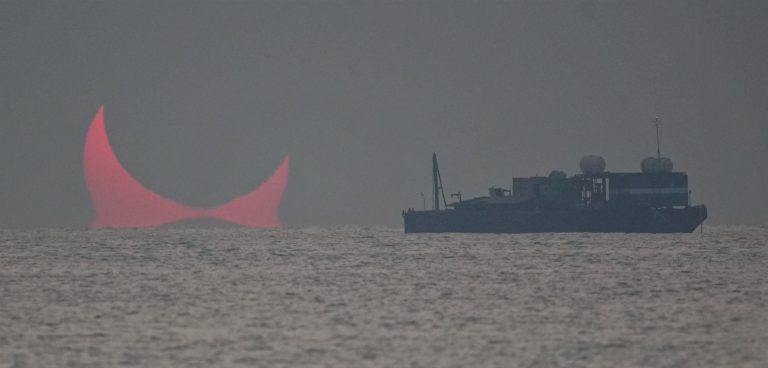
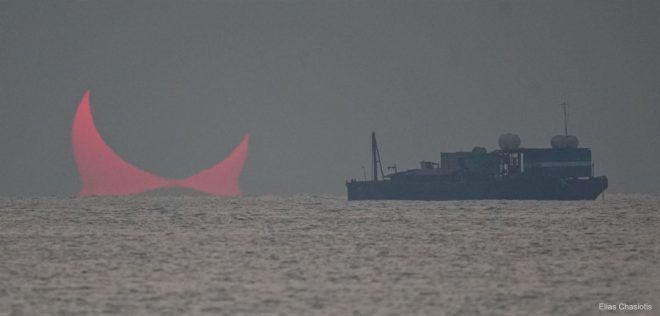
Have you ever seen a sunrise like this? A self-identified astrophotographer captured images of an annular eclipse on the morning of December 26, 2019.  The dramatic picture have since gone viral, earning a nod from NASA as the Astronomy Image of The Day.

Athens-based photographer Elias Chasiotis was visiting Al Wakrah, Qatar last month to record the eclipse, which was only visible to observers along a narrow band of Earth.  During a full annular solar eclipse the Moon appears completely surrounded by a ring of fire caused by the background Sun.

Chasiotis snapped the sunrise in a series of images that seem to track the Sun rising in two distinct pieces. The NASA website explained, “The dark circle near the top of the atmospherically-reddened Sun is the Moon — but so is the dark peak just below it. This is because along the way, the Earth’s atmosphere had an inversion layer of unusually warm air which acted like a gigantic lens and created a second image.”

This rare phenomenon of atmospheric optics is known as the Etruscan vase effect, referring to an optical illusion where a symmetrical vase is alternatively viewed as a pair of identical faces. The photograph shows the sun as a pair of curved horns emerging from the horizon, which the amateur photographer described on his Facebook page as the most stunning sunrise of his life.

An annular eclipse happens when the moon is farthest from Earth, when it seems smaller and does not block the entire view of the sun. 

Elias Chasiotis

Chasiotis continued to photograph the eclipse as the sun rose, posting the pictures on Facebook where they swiftly went viral. He credits friend and professional photographer Iakovos Strikis with image processing.  Three years ago, the American postal service created bespoke stamps to honor a solar eclipse, perhaps Qatar will snap up Chasiotis’s copyrighted images to do the same.

Elias Chasiotis

The next solar eclipse, also an annular eclipse, will occur in 2020 June. 

All images by Elias Chasiotis

A Sustainable Towel That Cleans You AND The World!

0

ocean clean-upCan a website dedicated to crowdfunding new green businesses make a measurable impact on our planet? Park your cynicism and take another look at Kickstarter where simple environmental innovations seek investors  for affordable green products that help us make easy positive change. Meet the Pangea bamboo towel.
Is Pangea the “ultimate adventure towel”? My biggest adventures these days is the schlep up 5 flights to my office, but I digress. The towel is absorbent enough to dry your entire body yet small enough to fit in your pocket. 

Made from bamboo and naturally antibacterial, the towels are super lightweight and biodegradable. And affordable – backing this eco-product starts with a $9 USD commitment. 

The company was founded by four outdoor adventure buddies fed up with finding trash in every exotic zip code they visited. First-name-only Marcos, Wiliam, Juan, and Dean (an American, Aussie, Columbian, and Argentine) met one another just last year and – sharing a passion for the unbeaten path – they teamed-up to explore the world. 

Polution and waste they found in every new destination incited them to start a self-billed “new ecological movement”. They formed a community of volunteers from the travelers they encountered, people who also care deeply about the environment, to clean up sites and responsibly recycle the garbage. (While resident in Jordan, I had a large plastic bag entangle my foot while floating in the Dead Sea, collected a backpack-full of beer cans while hiking sand dunes in Wadi Rum, and scraped up handfuls of cigarette butts from the ancient mosaic floors spattered throughout Um Qais – but I never had the smarts to start a business to continue cleanup.)

This year the superfit foursome seek to expand that movement globally, organizing worldwide cleanups. To fund the effort, they are hawking environmentally-friendly towels for wallet-friendly prices. The products are useful, and the money raised supports continued clean up operations.

For every $10 USD they raise, they will fund collection and proper disposal of 1 pound of trash.  Consider that every year 14 billions pounds of trash is dumped directly into our oceans.  That’s one overloaded dump truck of garbage every second of every day offloading into the sea. 

Buying a couple cool towel products won’t stop expanding global production of plastics or epidemic illegal dumping, nor will it strengthen worldwide environmental legislation and enforcement of violations. But what’s not to love about replacing a few old cotton or microfiber towels while putting some money into localized cleanup events?

This project is affiliated with the Seattle-base nonprofit Pangea Giving, founded in 2002 following the terror attacks of September 11, 2001.

From its founding, Pangea has been a community of philanthropic individuals whose members pool their resources to support people struggling to improve their lives in other parts of the world. Originally called World Venture Partners, the name changed in 2005 to Pangea Giving, consisting of 78 individuals and 24 Circle of Friends. Since 2003, it has partnered with 45 grassroots organizations in 13 developing countries and awarded grants of over 1.5 million.

Whether you’re looking for a novel gift or harboring ambitions of being an angel investor (writ small) – do check out Kickstarter. Enter a search on that site for “environmental” and you’ll get an array of interesting intiatives that may attract your support.

Green Prophet has featured several such projects in the past.  See links below, and tell us in comments about others you may have unearthed.


Bedouin folk medicine

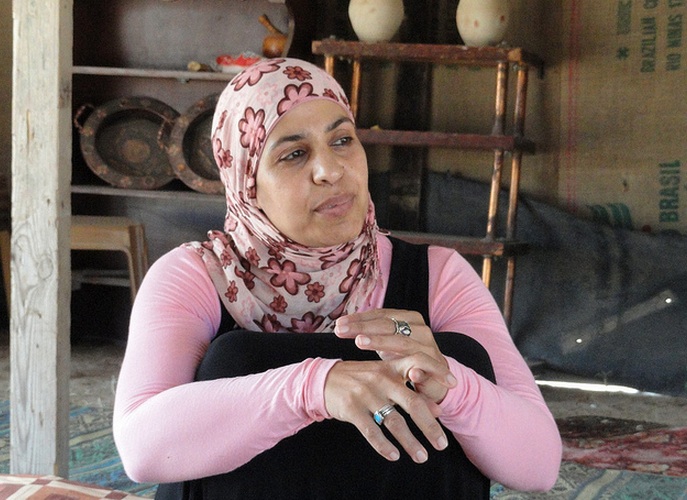
Miriam Aborkeek is a Bedouin woman who did not want her family's natural wisdom to be lost. She makes beauty products the old Bedouin way.
Miriam Aborkeek is a Bedouin woman who did not want her family’s natural wisdom to be lost. She makes beauty products the old Bedouin way.

The harsh desert climate created all kinds of models for the survival of humans and their livestock – just look to the Nabateans and how they dealt with very low rainfall in the Levant. In the summer when a temperature reaches 122 degrees (50 degree C) finding water resources and preserving food is of particular importance for Bedouins. Searching for grazing and water, Bedouins – nomadic people – move from one place to another with their sheep and goats far from major towns and roads. Dealing with scorching heat, desert nomads applied inherited skills and innovated the new ones.

Making whole animal cheese

Milk and dairy products are essential part of the Bedouin diet, and to prepare cheese Bedouins put milk into messah, a part of the stomach of a young lamb that has to be dried with salt. The cheese is called laban or labne and it’s still eaten widely today in the area. Messah is like rennet for the Bedouin.

“After it gets completely dried up a small part of it is taken and wrapped in clean sheep wool or a piece of textile. It is then put into a bowl of milk using the fingers for a few minutes, and then the milk will begin to coagulated,” said Professor Fawzi Abudanah to Green Prophet.

Prof. Fawzi Abudanah

Abudanah is a professor of Archaeology at Al Hussein Bin Talal University in Maan (in southern Jordan) and as a child he experienced firsthand some of the Bedouin lifestyle. His family still kept and fed animals in the traditional way.

Keeping meat with cheese

The large textile bag in which jameed (hardened laban or labneh cheese) was kept is used for preservation of meat when cooked pieces are placed inside the bag. Due to a high concentration of salt in jameed (a hard dried laban made of ewe’s or goat’s milk) the meat can be protected from rotting for a few days.

Traditional water cooler using an animal hyde

For water cooling, Bedouins use either goat or sheep skin called qirbah, which is first cleaned and then tanned.

“Leather tanning is common among the Bedouins in southern Jordan,” the professor continued, adding that they get the necessary material for this process from the oak trees at Al Hisheh forest, northeast of Petra.

Hygiene is a serious problem for anyone who spent even two days camping, not to mention people who are outdoors for years. Running water, boilers, different kinds of soaps, refrigerators and freezers, skin creams and perfumes of well – known brands don’t exist in the wilderness.

Natural SunIn and hair rinse for weary nomads and travellers

Anabasis Syriaca for bedouin hygeine

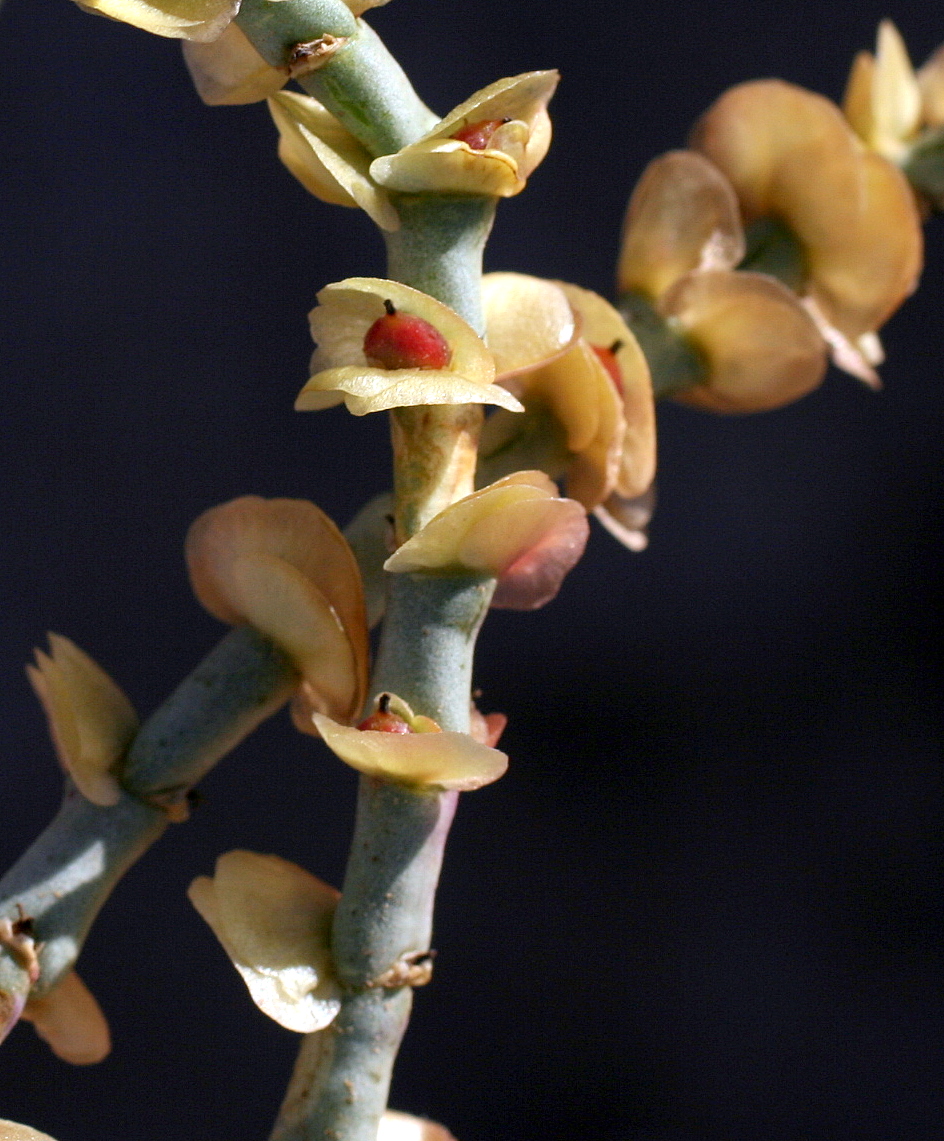
To wash hair, Bedouins make use of a shrub called adhuo or the shnan in Arabic – latin name Anabasis Syriaca as an ash-based soap and the hair goes blond if the washing continues.

However, the shrub should be prepared first: “Shnan should be burned and its ash is then collected and soaked in a pail of water. The liquid is then used for hair washing,” Abudanah underlined, noting that to purify drinking water nomads use flour or alum.

When Bedouins collect water from depressions, ponds and springs a small amount of flour or alum are added to the water in a large basin, after a while the sand and impurities will sink on the bottom.

Bedouin folk medicine by Miriam Aborkeek

Barnooq is another shrub used as a color fixative when wool of sheep has to be dyed for the production of a rug by weaving.

Scorpion immunity for babies! Ancient vaccines in action

In order to boost the immunity of a new born babies, the father collects scorpions, burns and crushes them, and then mixes their charred remains with olive oil. After that the mixture of the olive oil and crushed scorpions are applied on the baby’s body, as Bedouins traditionally believe that it would protect a child against scorpion venom.

The practice is known in other cultures and among indigenous communities where tribesmen give small dose of poison to children in order to improve their immunity and the poison may develop antibodies against stings.

Closing herd wounds with stinging ants

When their animals, sheep, camels and goats have to be operated, a Bedouin treats possible cuts and wounds with desert ants (fire ants?) that are placed on the wound where the stitches would go. Ants stick to the skin and the herder removes their heads, while their body remains closing the wound until they dissolve naturally.

Slow cooking in the ground

Regarding specialty food dishes, they are prepared in so-called Zarb, and that underground cooking isn’t typical for Bedouins from the Wadi Rumm, for instance, but it has been practiced in places as far as New Zealand and the Balkans. It is an old method when food is put on coal and covered for two-three hours. Usually, chicken, goat or sheep meat are cut into equal pieces, marinated, and prepared with vegetables.

For Professor Abudanah, these hacks are part of his heritage and culture, however, some of these old school tricks are not anymore in use due to modernization, tools and new materials.

Read more on the pursuits and woes of Levantine region Bedouin:
Egyptian Bedouin Maimed by Landmines
A Peek Inside the Bedouin Tent
Israel’s Bedouin Go for Solar Energy Power
Barefoot College for Solar Energy in Jordan
See How the Ladies of Lakia Weave Together Tales and Tradition

What are the Health Costs of Israeli Energy Security?

0

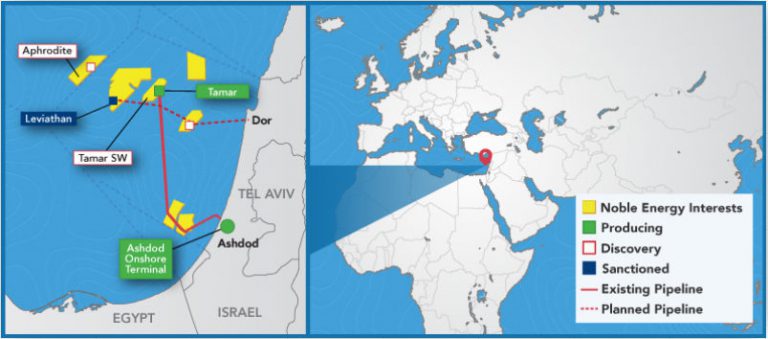
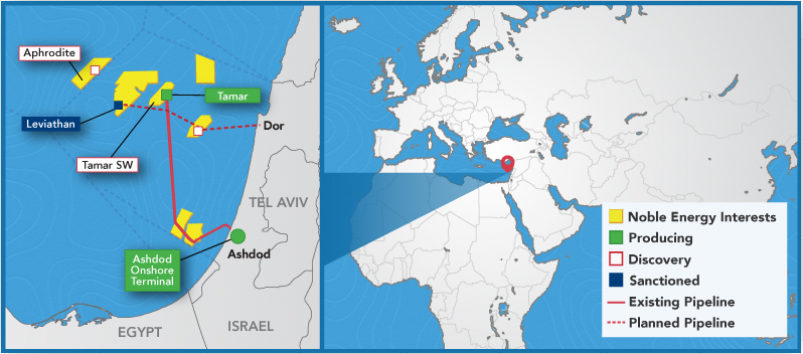
Israeli naturl gasLast Tuesday, the consortium behind the Leviathan gas production facility declared “an historic turning point in the history of the Israeli economy” when – a decade after its discovery – the enormous offshore natural gas field started production.  A joint press release from operating partners Noble Energy, Ratio, and Delek Drilling said that production is expected to lead to an immediate reduction in domestic electricity prices and the start of exports, “For the first time in its history, Israel is poised to become a significant natural gas exporter”.  But rather than applauding potential low energy costs and increased national energy security, residents living near the gas platform abandoned their homes for a day of peaceful protest in Tel Aviv.

“We don’t want to play Russian roulette with our children’s health,” said Shlomit Valensi, a Homeland Guards member who lives in Dor, a beachfront community adjoining a nature reserve about 15 miles (24 kilometers) south of Haifa. More than 250 cars headed to Tel Aviv for a demonstration outside a government compound, according to the grassroots Israeli Homeland Guards who organized the protest. Greenpeace Israel and at least three other Israeli environmentalist groups supported the event. An estimated 1,000 demonstrators wore masks, others carried signs linking gas production to cancer, demanding that the facility close.

The Mediterranean oil field was discovered 130 kilometers (81 miles) west of the port city Haifa in 2010. It is estimated to hold 535 billion cubic meters (18.9 trillion cubic feet) of natural gas, along with 34.1 million barrels of condensate. Its production facility was constructed 6 miles (9.6 kilometers) offshore. We are afraid to breathe the air,” said Rachel Toaff-Rosenstein, a veterinarian from Zichron Yaakov. “This is something that’s going to change the rest of our lives.”

Opponents assert that the production process will release pollutants as toxic as those released by coal, particularly in the current start-up stage. This was verified by Leviathan documents submitted to the Environment Ministry which indicate pollution may be in higher concentration during the initial phase when flaring can’t be used. The worst-case scenario is that during the two separate days of starting up four wells, the emission level will be similar to that expected in an entire year of normal operations.

Despite protester concerns, the ministry said in a statement released Tuesday, “The effect on the air quality in the coastal area will be negligible,” adding, “According to experts, there is no danger to the public”.

The Leviathan partnership asserts there will be only a few hours of methane emissions, at levels well below limits set by Israel’s Clean Air Act. Methane is a primary contributor to global warming.

“The only environmental impact this platform will have on the shore is a positive one when the natural gas we supply displaces coal in Hadera and Ashkelon and Israel’s citizens benefit from improved air quality and better health,” said Bini Zomer, Noble Energy’s vice president for regional affairs.

Despite government statements that production was safe, Environment Minister Zeev Elkin delayed the start of operations by a week, saying strict pollution-monitoring conditions hadn’t been met. Monitoring equipment was installed on the platform to alert any risk of high pollution, but the Homeland Guards say they need to see how scrupulously it will be used before halting opposition.

Israel seeks energy independence and cleaner domestic sources, twin aspirations that support environmental and economic benefits. The nation also aims to achieve a broader regional influence, transitioning from an energy importer to a net exporter, with recently announced contracts with neighboring Jordan and Egypt. It is anticipated that the European market may also be a viable partner. Is commerce subjugating exploration of renewable energy alternatives and protection of environmental rights?

The Israeli Homeland Guards back development of the country’s gas industry but want to ensure public health isn’t compromised. They cite world-renowned experts whose models show the platform’s proximity to shore is valid reason for concern.

Fossil fuel companies have long clashed with regulators over pollution. In 2015, Noble (a member of the Leviathan consortium) settled with the U.S. Environment Protection Agency, the Department of Justice and the state of Colorado over violations relating to emissions from its operations.

The former head of Israel’s National Cancer Registry said in an opinion commissioned by the movement that the start-up stage may expose the public to a dangerous amount of carcinogens, including benzene, a byproduct of gas production. 

Israel’s environment minister has promised to monitor air quality closely, promising to shut down the platform if there is “an increase in air pollution that is endangering the population.”

While natural gas is set to replace coal as the main fuel for power generation in Israel, it is still far from being a clean source of energy despite being less polluting than coal.

Cast your vote in our comment section: go gas – or – go green?


The Mediterranean Sea natural gas purge starts amid protests in Israel

0
Leviathan natural gas rig off the coast of Haifa, Israel
Updated in 2019, a picture of the Levithan rig

Israel’s largest energy project, headed by Noble Energy, started production on Tuesday. It is a natural gas well only 10 kilometers or 7 miles from shore, near the coast of Haifa. This is the first step in a multi-billion dollar natural gas export deal with countries like Egypt and Jordan that will start in the next weeks. 

Families with young children and pregnant women were looking for shelter in Tel Aviv for fear that exposure to the natural gas pollution might cause long term damage to their fetuses and children. Risks from release at sea are highlighted in this PDF developed by the EU

But due to Israel’s unusual security constraints –- or threats by Al Qaeda and the Hezbollah –– it had to build its gas rig much closer to shore than deemed environmentally safe by some country’s standards. The recommended distance is about 40 km or 30 miles. 

When the issue of safety was taken to court no one could refute in professional terms why it is unsafe so the judge let it go ahead despite coastal mayors concerns about cancer risks. This article links to a court ruling in Colorado where Noble Energy had to pay fines for polluting emissions. 

Texas-based Noble Energy and Israel’s Delek Drilling and Ratio Oil announced that operations had commenced this morning, and a significant amount of natural gas will be released to the sea. People in the city of Haifa are concerned and some have evacuated for fears over the damage from exposure. 

Polluting the Mediterranean?

Natural gas is a cleaner fuel but it is by no means renewable or environmentally sound. It burns cleaner but it produces greenhouses gases and pollution.

The gas off the Israeli coast began flowing from the offshore rig called Leviathan (means giant sea creature or whale in Hebrew) early this morning. The timing of when to start has been delayed time and time again but the operators needed to start the rig to meet their 2019 timeline. This is now the last day of the year.

natural gas rig leviathan

This new operation now doubles the amount of Israeli-produced natural gas, according to Reuters.  Some $3.6 billion USD went into developing the Leviathan natural gas rig and operations and gas exports are soon to commence. 

“Israel is now an energy powerhouse, able to supply all its energy needs and gaining energy independence,” said Delek Drilling Chief Executive Officer Yossi Abu.

Guide to Israeli Solar Energy Companies

A subsea pipeline will transport the natural gas to Israel and to the consumers, also looking forward to paying less for electricity, currently generated by a mix of fossil fuels, coal and a small percentage of solar energy, about 2%. But paying less might just be a carrot dangling in the sky. Since Israel became more water independent with the installation of desalination plants the consumers in effect ended up paying more for water. 

5 Eco-Friendly Initiatives Businesses Can Launch in 2020

0
daniel esty yale lecturer on greening your business
Daniel Esty, a Yale lecturer talks about how to green your business

Is there a better time to turn over a new leaf and start new business ventures than the new year? We don’t think so! Indeed, the start of a new year affords ambitious entrepreneurs the opportunity to try out new things both inside and outside of the office. As such, if you care about the environment, but haven’t found the right time to roll out changes in your business model, then take this opportunity to launch some eco-friendly initiatives now. Here are five ideas to help you get started:

Digitize

One of the simplest ways that businesses can reduce their carbon footprint is by reducing their paper usage. After all, it’s never been easier to use digital alternatives to physical paper. Rather than reviewing and saving files with paper copies, consider using online systems to store and review important documents. Not only is this better for the environment, but it’s safe and convenient as well! (Banking online will also cut down on the amount of paper in your office.)

Encourage Remote Employment

The average American commute is about 27 minutes. This means that millions of workers have to rely on cars or public transport to reach their office on a daily basis. And, as one one might imagine, this contributes to a lot of pollution. Companies that allow and encourage team members to work from home regularly, though, can eliminate at least some of the pollution that traffic causes.

Make Sustainable Purchases

Paper plates, straws, and other disposable items represent a threat to the environment. Thankfully, eco-friendly businesses can do their bit by replacing these purchases with more sustainable alternatives. What’s more, this principle applies to all sorts of different products. Rather than buying cheap barricades that aren’t recyclable and that will need replacing in a few months, businesses can choose instead to invest in durable concert barricades, for instance, that will stand the test of time.

Go Meatless

Meat production contributes to global warming in a significant way. Fortunately, there are tasty and responsible alternatives to meat that companies can offer their team members at lunch. In addition to classic vegetarian options, some food companies are also now developing imitation meat in the form of cheeseburgers and fried chicken.

Partner with a Movement

It’s important for businesses to take steps to minimize their impact on the planet. However, it’s just as crucial for them to use their resources to spread a powerful message about the environment. By teaming up with an environmental charity or eco-friendly organization, businesses can boost their reputation, consumer reach, and environmental awareness all in one fell swoop. Don’t wait another moment –– get on the phone with a charity ASAP. 

Can you power wood stoves with olive wood pellets?

5

pellets olive chips biofuel photopellets olive chips biofuel photo
(Example of a pellet stove from Canada, and the chips and pellets they burn).

Pellet stoves take condensed biological matter –– wood or biomass pellets –– to create a source of heat for residential and industrial spaces. They burn slower, for more time and can lower the heating bills. Environmentalists see pellet stoves as a “green” solution.

A group of disadvantaged youths in Israel are taking this concept but are applying it to ordinary wood stoves. They are creating compressed logs of olive tree waste to supply biofuel from olive waste. They are not the first group of Israelis to recycle olive waste, but the social aspect of the project makes it much more than the usual environmental solution.

Here’s Olivebar’s story:

A group of youngsters — many of whom were homeless until they were gathered together by a man named Yossi Sadeh, first in Beit Shemesh, then at the Sde Bar farm, a kibbutz-like framework that’s turned their lives around — are changing the face of energy production.

Their work is to help create Olivebar’s rolls to heat homes in wood-burning stoves which general manager Eli Karniel describes as “ecologically perfect.”

The rolls are made from the waste produced after olives are pressed at Israeli olive presses, known in Hebrew as gefet. The material is rich in oil and superb for heating, but if left behind at the presses to seep into the soil, will destroy ground water and render the soil infertile.

The simple act of collecting it is the product’s first ecological benefit.

But the huge piles of gefet trucked to the factory aren’t enough. While two Tel Aviv entrepreneurs patented the idea of using the material for the stoves, it was entrepreneur Avi Lerber who recognized the potential, bought the patent, and after experimenting with more than 100 substances, found the right one to allow the material to solidify.

From there, he developed a method to make the resulting product into convenient rolls, which have many advantages over wood for heating purposes.

2.5 Times the Energy of Wood

Chief among them is the energy component, with a cube of the Olivebar rolls producing almost 2.5 times energy as a cube of wood. No mice or worms come with the rolls, which are aesthetically wrapped in paper that is recyclable and can be used to light the oven. The smoke released has no negative impact on neighbors or the environment, and the ash left in the stove can be used for fertilizing gardens and plants.

Using the rolls will also fit into recent moves both here and abroad to avoid cutting down trees for energy use. “It’s a totally green product, all natural, without any glues or chemicals,” Karniel says.

“Whereas once it was more economical to buy heating oil, today people are looking for all kinds of alternatives,” Karniel explains. “People went over to wood, but now governments don’t want people to cut down forests, so they’re turning to natural alternatives like ours.”

Once the material is mixed, it’s pressed into rolls at the factory, then taken out to the warm climate of the area around Herodion, southeast of Jerusalem, where it’s easily dried before being packed for shipping.

Karniel is particularly proud of the project’s Biblical roots, with the idea of heating with olive waste mentioned in the Talmud. “We’re going forward to our sources, instead of backwards,” he notes. “It’s a great feeling; you can really feel these ancient writings come alive.”

Arabs and Bedouin were also known to make use of the olive waste for heating.

Heat for the whole family

The product is also most effective in one or two-story homes that can best make use of wood-burning stoves

The piles of drying rolls look a bit odd on the semi-desert landscape, but the boys of Sde Bar love working there, aware that the stuff is at the cutting edge of an energy revolution, Karniel explains. “They’re proud to work in the factory because it helps support their activities, and they definitely compete for the chance to work there,” says Karniel

“It’s also important to note that the olive tree, which is one of the seven species of the Land of Israel, is what’s leading this progress, even in the field of ecology,” he says. “It definitely spurs us on, and we see a great deal of importance in the fact that, thanks to us, we are contributing to our environment both here and around the world.”

A TB vaccine may innoculate you against Alzheimer’s

0
vaccine for TB
It was a finding revealed sometime back and then analyzed recently. An old vaccine shows new tricks.

Holidays are a time for family.  Festive gatherings with parents, grandparents, aunts and uncles create memories that last a lifetime.  But when a loved one has Alzheimer’s disease (AD), holidays often become painful reminders of loss and deterioration.  Currently, Alzheimer’s affects one-in-ten adults over the age of 65—a number that is expected to triple by 2030.  The need to find a cure is great.  

Now there may be a glimmer of hope.  A research team headed by Hervé Bercovier, Charles Greenblatt and Benjamin Klein at the Hebrew University of Jerusalem (HU)’s Department of Microbiology and Molecular Genetics has discovered that the Bacillus Calmette-Guérin (BCG) vaccine, originally developed for tuberculosis and commonly used to treat bladder cancer, may also be an effective treatment to prevent Alzheimer’s.  They published their findings in PLOS ONE

“There’s data reaching back to the 1960’s that shows that countries treating bladder cancer patients with the BCG vaccine had a lower prevalence of Alzheimer’s disease but it hadn’t been properly analyzed,” shared lead author Bercovier.

How pesticides kill your brain

Until now.  Bercovier and his team followed 1,371 bladder cancer patients receiving treatment at HU’s Hadassah Medical Center.  The average patient age was 68.  During follow-up visits, 65 cancer patients had developed Alzheimer’s.  Those who had not received BCG as part of their treatment had a significantly higher risk of developing Alzheimer’s than did BCG-treated patients:  8.9% (44 patients) as opposed to 2.4% (21).  Further, when compared with the general (healthy) population, people who had never been treated with BCG had a 4-fold higher risk for developing Alzheimer’s than did those who were treated with BCG. 

Aging in the brain is revealed by new MRI technique

It’s important to note that the researchers have not developed a vaccine that prevents Alzheimer’s.  However, shared Bercovier “our study is an important step towards understanding the ways in which our immune system is a major player in the pathogenesis of Alzheimer’s and how the BCG vaccine, which modulates the immune system, may serve as an effective preventative treatment to this crippling condition.”

And that would be the best holiday gift of all.

As Tel Aviv struggles with dockless scooters, helmets and license plates become mandatory

electric dockless scooters tel aviv jaffa
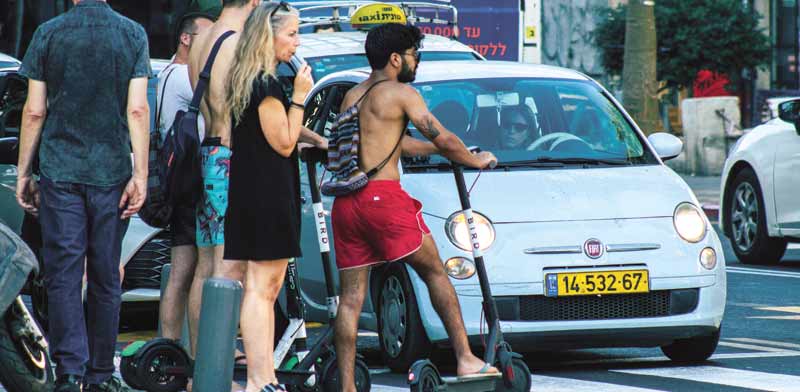
One of Israel’s most well known publicists was killed while riding an ebike (Motti Morel) in Tel Aviv. The city puts stricter regulations on licensing, helmets, recycling and speed. But who will really enforce this? Grandmothers are walking around dazed with blood streaming down their faces. Kids afraid of walking on the sidewalk. Another joke TA?

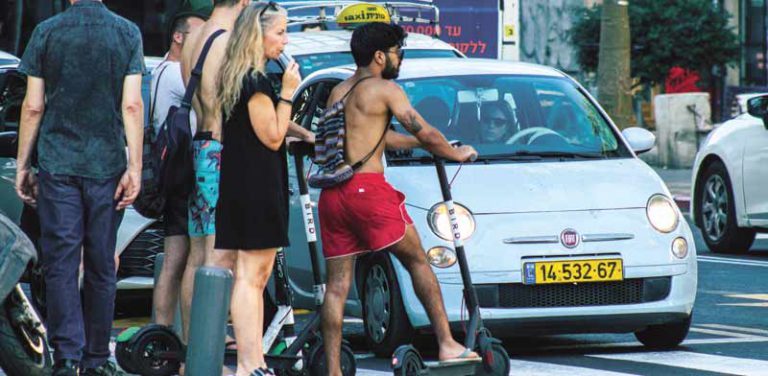
Just today I saw a french tourist couple doubling on a Wind scooter, in shorts screaming through a busy intersection. Money flew out of her pocket and she went running into a busy street on Hayarkon, stopping traffic as she dove for her wind-strewn money. Tel Aviv and Jaffa is a living hell for pedestrians and pedal-bike riders who use bike lanes. Ask anyone here. And so many of the users are not from here, but are tourists or long-term travellers. As an effort to prevent hit and runs and death by scooter Tel Aviv becomes the first city in the world to require all shared electric scooters to be licensed and helmetted.

bird scooters in Tel aviv
It looks like a dream to coast along the sea, wind in your hair. You know how many people ruin their holidays riding these things?
Doubling on scooters. More common than you’d believe.

The Tel Aviv-Yafo Municipality has issued new regulations for shared electric scooter companies in order to keep pedestrians and riders safe. The new regulations include equipping electric scooters with helmets, installing license plates, recycling used batteries, lowering the speed of the scooters in certain areas, and preventing the usage of scooters in restricted areas.

The regulations enforced by the Tel Aviv-Yafo Municipality are unprecedented and are meant to set an example for other municipalities around the world who are dealing with similar circumstances.

In August 2019, the municipality embarked on a pilot to regulate companies that were renting out electric scooters in the city. These companies had been subjected to a number of conditions and restrictions in order to obtain a permit to operate in the city, which included ensuring availability throughout the city, limiting the maximum number of scooters per company to 2,500 units, allowing parking only in designated areas which have to be marked in the companies’ apps, preventing usage by minors, implementing and activating a service call center, and banning the scooters’ alarms during the nighttime.

How green are escooters? Sifted has found some surprising results

Looking ahead to 2020, the municipality has decided to continue with this pilot, adding additional terms and restrictions with the purpose of increasing road safety and maintaining public order in the future.

Meital Lehavi, Deputy Mayor of Tel Aviv-Yafo for Transportation: “Our main goal is to keep sidewalks as a safe space for walking, as the city’s sidewalks are designed primarily for pedestrians. Tel Aviv is a very walkable city and we encourage people to take advantage of the city’s small size, flat topography and over 300 days of sunshine a year.”

Amazing Advancements In Technology That Promotes A Greener Way Of Life

0
sand babel 3d-printed
3D printed tower made from sand

Climate change is not new, however, recently it has been getting even more intense. The abrupt changes in the weather, melting of the poles, the forests that are set on fire, and so many things are an indicator that our planet will die if we do not strive to save it. This is why there have been a lot of inventions that have been presented to the public that can reduce climate change and gradually fix it. 

Digital Reading

Now that we are living in the digital age, it is time that we stop cutting down trees to make paper out of them. There are many schools and offices now that have stopped printing paper, all their work is through electronic devices now. There are even many inventions like eBooks, where readers can curl up and read their favorite book from a device rather than a book filled with paper that came from a dead tree.

kindle e reader amazon

Smart Houses

The three-dimensional printing technology has transformed our knowledge about construction. A lot of people haven’t heard of 3d printing homes machinery and that these machines form and print actual houses, as long as it has the correct design and structure. This means that we will no longer need or use wood, bricks, and sand, and that we will get rid of air and noise pollution. It doesn’t take a lot of time to print these houses, it uses less material, and the material it uses is very durable.

3d strategy
A 3D printed villa rendering in Dubai

Solar Roof Tiles

Remember when you saw blue screens on a building and wondered what they were? These are known as solar roof tiles; they generate electricity, which means you won’t be relying only on power consumption. This is a good thing for our planet because it means we won’t be relying on the burning of coal and fossil fuels to create this kind of electricity, especially that they produce a ridiculous amount of CO2 into the atmosphere that contributes to the deterioration of the environment. 

Living Wall

Solar tiles have been around for some time now, but now people have been considering the living wall. This wall, also known as the roof garden, is filled with different kinds of plants that produce O2 into the atmosphere. It is also responsible for absorbing CO2, heat, and rainwater while providing insulation and preserving electricity. It might not be popular now, but we might spot roof gardens in the near future. 

In the past, people have had many concerns about the advancements of technologies, since they believed that technology will end the human race at some point. This is ironic since, in this day and age, technology is one of the main tools that can help us save our planet from our own destruction. Now, there are many inventions like solar roof tiles, printed houses, living walls, and devices that we can read from instead of killing trees. If you would like to participate in saving our planet, you can consider any of these options and adopt it into your personal life. 

Israel’s Northern Coast Under Threat of Massive Air Pollution

1
Leviathan natural gas rig off the coast of Haifa, Israel
More than 2 years worth of pollution is expected to be released in 8 hours

Last week I visited friends in the sleepy northern coastal town of Atlit. People are friendly. Peaceful roads wind around leafy streets. Trains run close to the beach, and you hear the warning clang and the rumble as you go about your daily business. The beach is clean and quiet at this time of year. You can see a shadowy silhouette in the watery distance though; the Leviathan gas rig. You don’t pay it too much mind, it seems far enough away. The whole place has the charm of a small town in the 1960s. And the air – the air is fresh and sweet. 

But we don’t know how the fresh the air is going to be in Atlit, or indeed in any of the northern coastal towns, once the Leviathan gas platform starts production tomorrow, Monday the 22nd. The rig lies only 10 kilometers – some six miles – offshore. The original plan was to situate it 125 km. offshore, but the government cites concerns over security with the rig at that distance from land.

Leviathan Gas Discovery Could be The Mother of All Resource Curses

Environmentalists have been warning that the rig’s proximity to the coast might subject whole communities, not to say marine and animal life, to irreparable damage from waves of toxic pollution when operations start. 

Little has been reported about the possibility, but what little information is out there, is dire enough. From Haifa to Hertzliya, residents are talking about evacuating their homes in the event that the anticipated air pollution drifts through their home towns.

Eco-organizations such as Home Guardians and Zalul cite other concerns. It’s expected that during the initial stages of gas production, huge quantities of toxic emissions will be pumped directly into the atmosphere in not one, but two 8-hour waves over Israel’s northern coast. The estimated volume of airborne substances emitted over those hours could equal a more “acceptable” rate of pollution spread over 60 months.  

polluted river kishon river haifa

“If it really does happen, I’ll pack the kids up and take a train to my parent’s house near Tel Aviv,” my friend told me confidently.   She couldn’t imagine the panic and hysteria at the train station as hundreds of families try to escape at the same time, in the event of a catastrophe.

The Leviathan gas field is the largest discovered worldwide to date. It’s estimated to contain up to 605 billion cu.m. of gas, enough to supply homes for 65 years. Exports of gas from the Leviathan and Tamar gas reservoirs  will begin in January 2020 to Egypt and Jordan. The deal is valued at $15 billion.  

“A short time ago, I signed an approval for the export of natural gas from Israel to Egypt,” said Energy Minister Yuval Steinitz. “In doing so, Israel becomes – for the first time in its history – an energy exporter and an important partner in the regional energy market.

“The export of gas to Egypt, from the Leviathan and Tamar reservoirs, is the most significant economic cooperation between Israel and Egypt since the peace agreement was signed between the countries. This is a historic milestone for the State of Israel. The natural gas revolution makes us an energy superpower and will enable not only huge revenues for the country, but also a dramatic reduction in air pollution.” 

Steinitz was referring to becoming independent of energy from coal, itself a heavily polluting industry. 

The Environmental Protection Ministry has said that the company can emit up to 49 metric tonnes (54 US tons) of volatile organic compounds, excluding methane but including toxins such as nitrogen oxides and sulfur dioxide during the commissioning period, including 153 kilograms (337 pounds) of carcinogenic benzene.

What is holding back the flow of this information to the public? Newspapers have reported on the the Leviathan gas field, its potential for good and for harm too, but the public has received no warning about the potential deadly waves of toxins. Only residents, messaging each other on WhatsApp groups, gather up scraps of information and pass them around.

“Supposedly releasing a massive ton of Benzene from 6 a.m. tomorrow,” posts a man in a WhatsApp message. “Region highly at risk between Haifa and Hertzliya. I live in Haifa and my wife is pregnant. Taking no risks and coming to Tel Aviv tonight for the next few days.”

Is the lack of warning a government move to prevent panic? Or is the consideration not to delay the start of operations because of the big money involved? And what security concerns can top the potential dangers of exposing large populations to toxic gases over 16 hours? The scenario is as dire and dystopian as any science fiction movie. And it might happen this week.

Green Prophet will continue to report as events unfold. Let’s hope for the best.


Photo credit: Marc Israel Sellem/Pool/AFP

Feral Boars Taking Over Haifa

0
boars-in-haifa
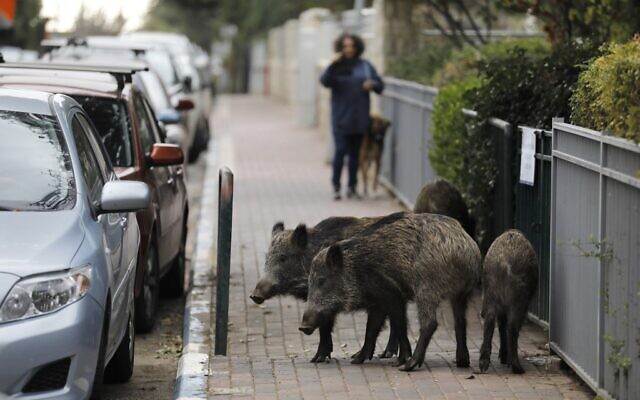
Wild boars strolling down the street in Haifa as woman looks on with her (scared) dog

There’s always something going on in Haifa.  Environmental awareness is encouraged with projects like the plastic bottle Christmas tree,  yet the city’s air is considered the most polluted in the country. Haifa is famous for its lovely views of the bay, yet the peace of some neighborhoods is now disrupted by… wild pigs. 

Boars, like foxes, jackals, deer, and other animals come under legal protection in Israel, although boars roaming the adjacent Carmel mountain forest have been legally culled for decades.  Recently Haifa’s mayor, Einat Kalisch-Rotem, banned shooting them out of humanitarian concerns.  

“They’re part of nature,” she says in defense of the ban. But the tusked creatures, who once were seen in the city only after nightfall, invade Haifa’s streets and gardens in broad daylight now.

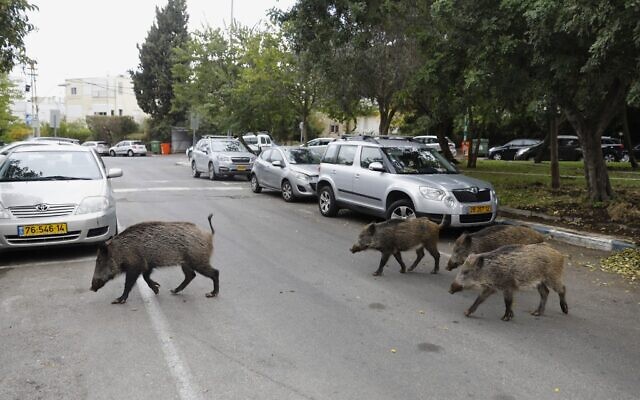
Residents are worried that aggressive protective mother boars might turn on children who come close to boar piglets. The animals nonchalantly roam the roads in groups, block traffic, dig up public gardens and overturn waste bins in search of food. People walking dogs worry that dog/boar fights might ensue. “It feels like we’re living in the jungle,” one woman laments.

The presence of humans bothers the wild ones not at all. The French news agency AFP followed a herd around Haifa with never even a grunt from the boars in their direction. 

boars-mating-in-Haifa
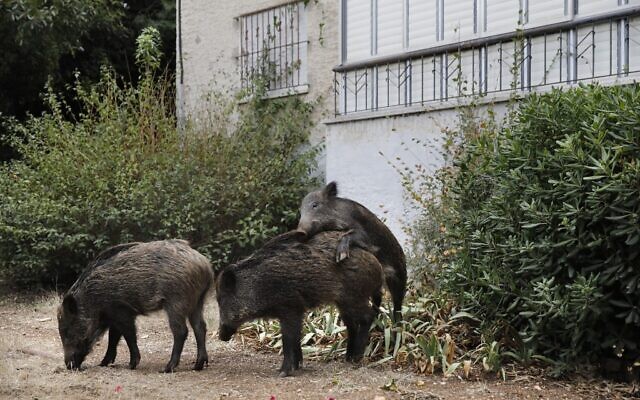
Wild boars horsing around in Haifa.

Harried Haifa residents and animal rights activists are in fierce debate, as some favor killing the beasts and others propose tactics like laying food in the Carmel mountain to tempt them back to their forest home. Some activists say that city construction has destroyed the boars’ natural habitat and that’s the reason for the uninvited animal guests. In that case, why isn’t Haifa overrun with jackals and foxes? Not that I’m wishing that on the city.

In any case, residents say that the city has done nothing to control the boar invasion. I myself, coming across  boars in the street or hearing one snuffle behind me as I sat resting on a sidewalk bench, would scream and jump six feet in the air. 

wild-boars-israel
Boars running wild and free

Photos by Menahem Kahana / AFP

New Gourna and Egyptian Architect for Social Justice: Hassan Fathi

0
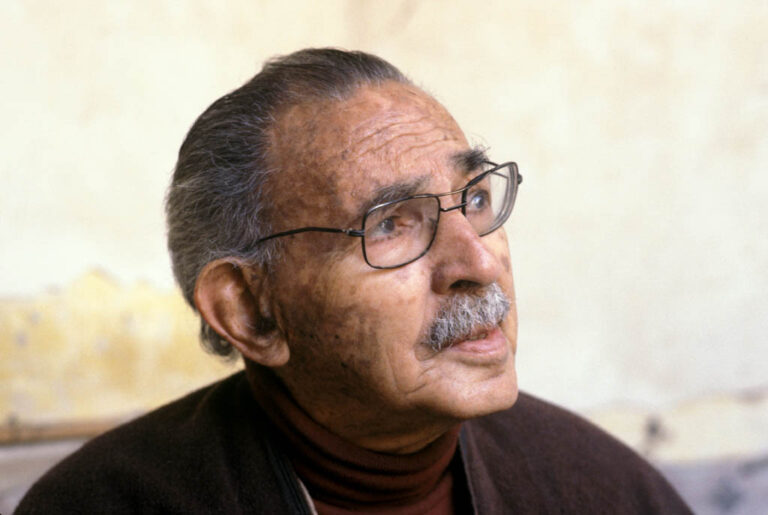
hassan, hasan fathy, Egypt, green sustainable architect
Hassan Fathy

Hassan Fathy, 1900 to 1989, was an Egyptian architect and a pioneer of sustainable architecture. His philosophy emphasized building with local materials and traditional techniques. He revived the lost skill of building homes and streets out of clay bricks, and out of that native material, built houses, mosques, and even an entire village. 

green building, hassan fathy, nader khalili, earth architecture, green building, eco-building, sustainable building, eco design, akil sami house, egypt, earth architecture, sustainable architecture
Hassan Fathy’s off-grid living and architecture inspired generations of architects in the Middle East and beyond.

Fathy had unconventional, almost romantic, views on the power of architecture to improve even the most humble home. His Westernized contemporaries dismissed his ideas as irrelevant – throwbacks to the past in a world eager to pursue modernity. Almost unknown in Western culture, his vision, so ahead of its time, is beginning to intrigue architects again.

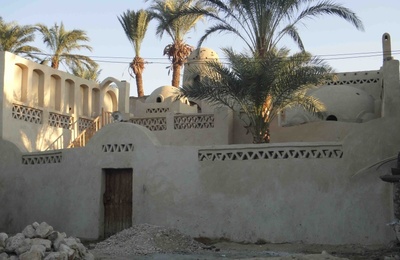
hassan-fathy-village

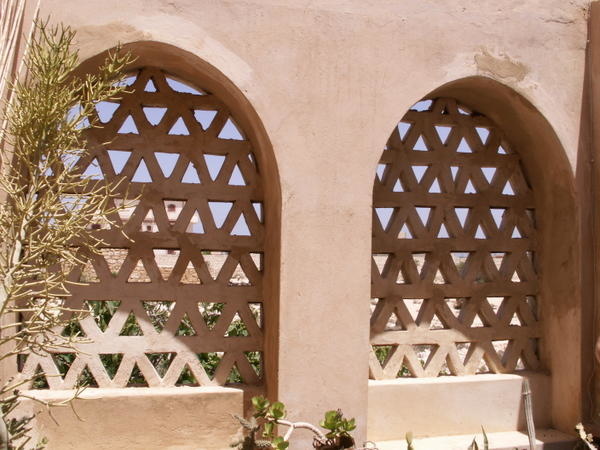
Before beginning to design a blueprint, Fathy studied the ecological conditions of the proposed locale, especially considering which direction winds blow there during the 24 hours. He designed windows and walls pierced in lattice designs to create shade and allow cooling ventilation to run through the rooms.  His wrote about his experiences with sustainable design in a seminal work, “Natural Energy and Vernacular Architecture, Principles and Examples With Reference To Hot Arid Climates.”

ventilated-walls-hassan-fathy

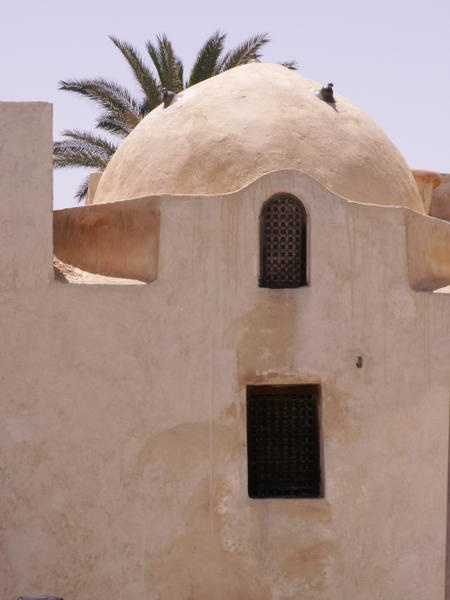
He had a passion for the simple beauty of curved lines, holding that rooms with walls and roofs designed around curves, rather than geometrical lines, have the power to heal.

example-hassan-fathy-architecture

Most of all, he believed that the poor deserve not only comfortable homes but also beautiful surroundings that reflect timeless Egyptian designs and Islamic themes. 

kharga market hassan fathy.

Fathy’s students revered him as a sort of guru, but the Egyptian government, perhaps suspicious of his unconventional approach, failed to fund his projects to completion. Yet his projects survive, some physically on the ground and some in his collection of original blueprints, drawings, and published articles housed in the archives of the Aga Khan Trust for Culture in Geneva, Switzerland, and at the American University of Cairo. 

Fathy’s most impressive project was the construction of New Gourna Village between 1946 and 1952 at Luxor, Egypt. (It’s in shambles) The residents of the original Gourna lived over the Thebes cemetery. They made their living robbing the Pharaonic tombs and selling the antiquities on.  When the government woke up to the fact that priceless artifacts had been flowing out of Gourna for decades, they decided that the only way to stop the traffic was by relocating the residents. Although public officials had never been friendly toward Fathy, they granted him the construction of New Gourna in 1946.

new gourna

Fathy proposed using clay bricks rather than cement to build New Gourna, although the skill had long since been forgotten in that part of Egypt. Having already successfully created clay buildings in Saudi Arabia, India and Greece, he brought skilled Nubian builders to teach the Gourna villagers. His reasoning was partly to use sustainable basic material and partly to provide the Gournians with a new, lucrative skill. Rather than robbing tombs, they would turn to agriculture, crafts, and brick-making. 

Remembering Hassan Fathy – Egypt’s Green Architect Of the People

He  invited the Gournians to participate in planning the new village, using their input in planning its buildings and layout. Important spaces like the mosque, the boy’s school, the khan and market naturally took prominence, but he was careful to oversee the smallest details in every home; for example, long benches built inside houses and courtyards, which, covered with cushions, served as  seating and even as beds for sleeping on during the hottest summer nights.

interior-fathy-house

One anomaly was an outdoor theater, which still stands although it has never hosted a performance.

New Gourna village is now part of the World Heritage Centre property in Egypt.  Its homes and khan are seriously deteriorating today under factors like climate change, overcrowding, and underground water seepage. The village’s population has grown through multiple families under the same roofs, as men acquire second or third wives. The foundations, based on clay and salt, are collapsing.

There is still no modern sewage system. Sewage cisterns originally regularly emptied by trucks going around the streets, are leaking into the ground.  Residents, rightly concerned about the roofs over their heads, are clearing Fathy buildings away and building with concrete and red bricks. The Egyptian government neglects the situation. 

An article published in the Cairo Observer in 2013 argues that Fathy’s beliefs idealized the concepts of sustainable construction to the detriment of the people living in his buildings.

It’s acknowledged that New Gourna and other projects of Fathy’s were not built to withstand future changes. But Gournians, vehemently attached to their village, welcome reconstruction via UNESCO’s  World Heritage Centre, at the urging of the international association Save the Heritage Of Hassan Fathy. 

“We want to rebuild Gourna in Hassan Fathy’s spirit, although not with his materials,” they say. 

For Fathy’s spirit lives on. His “Architecture for the Poor: An Experiment in Rural Egypt” published in 1973, continues to inspire a new generation of architects around the world.

For more on Hassan Fathy and Gourna see:
Remembering Hassan Fathy – Egypt’s Green Architect Of the People
Hassan Fathy is the Middle East’s Father of Sustainable Architecture
13 Principles of Sustainable Architecture