Climate change is not new, however, recently it has been getting even more intense. The abrupt changes in the weather, melting of the poles, the forests that are set on fire, and so many things are an indicator that our planet will die if we do not strive to save it. This is why there have been a lot of inventions that have been presented to the public that can reduce climate change and gradually fix it.
Digital Reading
Now that we are living in the digital age, it is time that we stop cutting down trees to make paper out of them. There are many schools and offices now that have stopped printing paper, all their work is through electronic devices now. There are even many inventions like eBooks, where readers can curl up and read their favorite book from a device rather than a book filled with paper that came from a dead tree.
Smart Houses
The three-dimensional printing technology has transformed our knowledge about construction. A lot of people haven’t heard of 3d printing homes machinery and that these machines form and print actual houses, as long as it has the correct design and structure. This means that we will no longer need or use wood, bricks, and sand, and that we will get rid of air and noise pollution. It doesn’t take a lot of time to print these houses, it uses less material, and the material it uses is very durable.
A 3D printed villa rendering in Dubai
Solar Roof Tiles
Remember when you saw blue screens on a building and wondered what they were? These are known as solar roof tiles; they generate electricity, which means you won’t be relying only on power consumption. This is a good thing for our planet because it means we won’t be relying on the burning of coal and fossil fuels to create this kind of electricity, especially that they produce a ridiculous amount of CO2 into the atmosphere that contributes to the deterioration of the environment.
Living Wall
Solar tiles have been around for some time now, but now people have been considering the living wall. This wall, also known as the roof garden, is filled with different kinds of plants that produce O2 into the atmosphere. It is also responsible for absorbing CO2, heat, and rainwater while providing insulation and preserving electricity. It might not be popular now, but we might spot roof gardens in the near future.
In the past, people have had many concerns about the advancements of technologies, since they believed that technology will end the human race at some point. This is ironic since, in this day and age, technology is one of the main tools that can help us save our planet from our own destruction. Now, there are many inventions like solar roof tiles, printed houses, living walls, and devices that we can read from instead of killing trees. If you would like to participate in saving our planet, you can consider any of these options and adopt it into your personal life.
More than 2 years worth of pollution is expected to be released in 8 hours
Last week I visited friends in the sleepy northern coastal town of Atlit. People are friendly. Peaceful roads wind around leafy streets. Trains run close to the beach, and you hear the warning clang and the rumble as you go about your daily business. The beach is clean and quiet at this time of year. You can see a shadowy silhouette in the watery distance though; the Leviathan gas rig. You don’t pay it too much mind, it seems far enough away. The whole place has the charm of a small town in the 1960s. And the air – the air is fresh and sweet.
But we don’t know how the fresh the air is going to be in Atlit, or indeed in any of the northern coastal towns, once the Leviathan gas platform starts production tomorrow, Monday the 22nd. The rig lies only 10 kilometers – some six miles – offshore. The original plan was to situate it 125 km. offshore, but the government cites concerns over security with the rig at that distance from land.
Environmentalists have been warning that the rig’s proximity to the coast might subject whole communities, not to say marine and animal life, to irreparable damage from waves of toxic pollution when operations start.
Little has been reported about the possibility, but what little information is out there, is dire enough. From Haifa to Hertzliya, residents are talking about evacuating their homes in the event that the anticipated air pollution drifts through their home towns.
Eco-organizations such as Home Guardians and Zalul cite other concerns. It’s expected that during the initial stages of gas production, huge quantities of toxic emissions will be pumped directly into the atmosphere in not one, but two 8-hour waves over Israel’s northern coast. The estimated volume of airborne substances emitted over those hours could equal a more “acceptable” rate of pollution spread over 60 months.
“If it really does happen, I’ll pack the kids up and take a train to my parent’s house near Tel Aviv,” my friend told me confidently. She couldn’t imagine the panic and hysteria at the train station as hundreds of families try to escape at the same time, in the event of a catastrophe.
The Leviathan gas field is the largest discovered worldwide to date. It’s estimated to contain up to 605 billion cu.m. of gas, enough to supply homes for 65 years. Exports of gas from the Leviathan and Tamar gas reservoirs will begin in January 2020 to Egypt and Jordan. The deal is valued at $15 billion.
“A short time ago, I signed an approval for the export of natural gas from Israel to Egypt,” said Energy Minister Yuval Steinitz. “In doing so, Israel becomes – for the first time in its history – an energy exporter and an important partner in the regional energy market.
“The export of gas to Egypt, from the Leviathan and Tamar reservoirs, is the most significant economic cooperation between Israel and Egypt since the peace agreement was signed between the countries. This is a historic milestone for the State of Israel. The natural gas revolution makes us an energy superpower and will enable not only huge revenues for the country, but also a dramatic reduction in air pollution.”
Steinitz was referring to becoming independent of energy from coal, itself a heavily polluting industry.
The Environmental Protection Ministry has said that the company can emit up to 49 metric tonnes (54 US tons) of volatile organic compounds, excluding methane but including toxins such as nitrogen oxides and sulfur dioxide during the commissioning period, including 153 kilograms (337 pounds) of carcinogenic benzene.
What is holding back the flow of this information to the public? Newspapers have reported on the the Leviathan gas field, its potential for good and for harm too, but the public has received no warning about the potential deadly waves of toxins. Only residents, messaging each other on WhatsApp groups, gather up scraps of information and pass them around.
“Supposedly releasing a massive ton of Benzene from 6 a.m. tomorrow,” posts a man in a WhatsApp message. “Region highly at risk between Haifa and Hertzliya. I live in Haifa and my wife is pregnant. Taking no risks and coming to Tel Aviv tonight for the next few days.”
Is the lack of warning a government move to prevent panic? Or is the consideration not to delay the start of operations because of the big money involved? And what security concerns can top the potential dangers of exposing large populations to toxic gases over 16 hours? The scenario is as dire and dystopian as any science fiction movie. And it might happen this week.
Green Prophet will continue to report as events unfold. Let’s hope for the best.
Wild boars strolling down the street in Haifa as woman looks on with her (scared) dog
There’s always something going on in Haifa. Environmental awareness is encouraged with projects like the plastic bottle Christmas tree, yet the city’s air is considered the most polluted in the country. Haifa is famous for its lovely views of the bay, yet the peace of some neighborhoods is now disrupted by… wild pigs.
Boars, like foxes, jackals, deer, and other animals come under legal protection in Israel, although boars roaming the adjacent Carmel mountain forest have been legally culled for decades. Recently Haifa’s mayor, Einat Kalisch-Rotem, banned shooting them out of humanitarian concerns.
“They’re part of nature,” she says in defense of the ban. But the tusked creatures, who once were seen in the city only after nightfall, invade Haifa’s streets and gardens in broad daylight now.
Residents are worried that aggressive protective mother boars might turn on children who come close to boar piglets. The animals nonchalantly roam the roads in groups, block traffic, dig up public gardens and overturn waste bins in search of food. People walking dogs worry that dog/boar fights might ensue. “It feels like we’re living in the jungle,” one woman laments.
The presence of humans bothers the wild ones not at all. The French news agency AFP followed a herd around Haifa with never even a grunt from the boars in their direction.
Wild boars horsing around in Haifa.
Harried Haifa residents and animal rights activists are in fierce debate, as some favor killing the beasts and others propose tactics like laying food in the Carmel mountain to tempt them back to their forest home. Some activists say that city construction has destroyed the boars’ natural habitat and that’s the reason for the uninvited animal guests. In that case, why isn’t Haifa overrun with jackals and foxes? Not that I’m wishing that on the city.
In any case, residents say that the city has done nothing to control the boar invasion. I myself, coming across boars in the street or hearing one snuffle behind me as I sat resting on a sidewalk bench, would scream and jump six feet in the air.
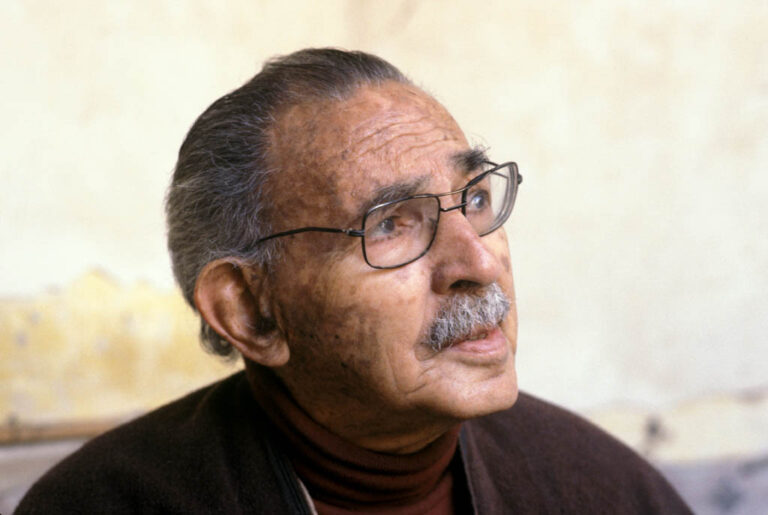
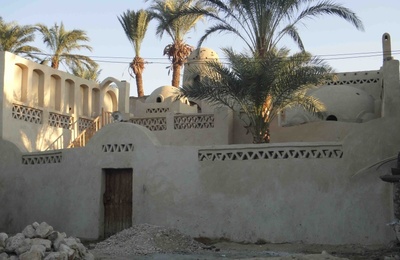
Hassan Fathy, 1900 to 1989, was an Egyptian architect and a pioneer of sustainable architecture. His philosophy emphasized building with local materials and traditional techniques. He revived the lost skill of building homes and streets out of clay bricks, and out of that native material, built houses, mosques, and even an entire village.
Hassan Fathy’s off-grid living and architecture inspired generations of architects in the Middle East and beyond.
Fathy had unconventional, almost romantic, views on the power of architecture to improve even the most humble home. His Westernized contemporaries dismissed his ideas as irrelevant – throwbacks to the past in a world eager to pursue modernity. Almost unknown in Western culture, his vision, so ahead of its time, is beginning to intrigue architects again.
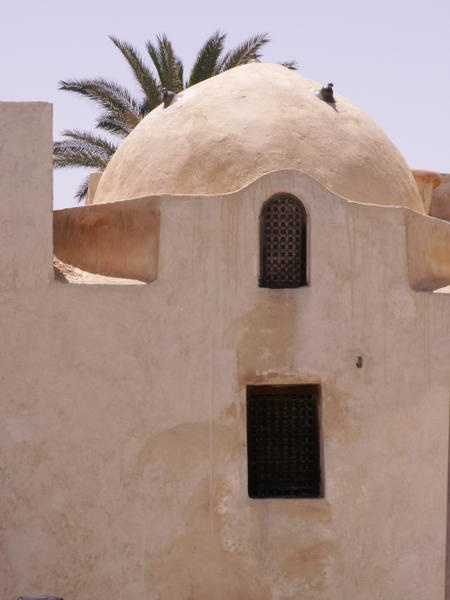
Before beginning to design a blueprint, Fathy studied the ecological conditions of the proposed locale, especially considering which direction winds blow there during the 24 hours. He designed windows and walls pierced in lattice designs to create shade and allow cooling ventilation to run through the rooms. His wrote about his experiences with sustainable design in a seminal work, “Natural Energy and Vernacular Architecture, Principles and Examples With Reference To Hot Arid Climates.”
He had a passion for the simple beauty of curved lines, holding that rooms with walls and roofs designed around curves, rather than geometrical lines, have the power to heal.
Most of all, he believed that the poor deserve not only comfortable homes but also beautiful surroundings that reflect timeless Egyptian designs and Islamic themes.
Fathy’s students revered him as a sort of guru, but the Egyptian government, perhaps suspicious of his unconventional approach, failed to fund his projects to completion. Yet his projects survive, some physically on the ground and some in his collection of original blueprints, drawings, and published articles housed in the archives of the Aga Khan Trust for Culture in Geneva, Switzerland, and at the American University of Cairo.
Fathy’s most impressive project was the construction of New Gourna Village between 1946 and 1952 at Luxor, Egypt. (It’s in shambles) The residents of the original Gourna lived over the Thebes cemetery. They made their living robbing the Pharaonic tombs and selling the antiquities on. When the government woke up to the fact that priceless artifacts had been flowing out of Gourna for decades, they decided that the only way to stop the traffic was by relocating the residents. Although public officials had never been friendly toward Fathy, they granted him the construction of New Gourna in 1946.
Fathy proposed using clay bricks rather than cement to build New Gourna, although the skill had long since been forgotten in that part of Egypt. Having already successfully created clay buildings in Saudi Arabia, India and Greece, he brought skilled Nubian builders to teach the Gourna villagers. His reasoning was partly to use sustainable basic material and partly to provide the Gournians with a new, lucrative skill. Rather than robbing tombs, they would turn to agriculture, crafts, and brick-making.
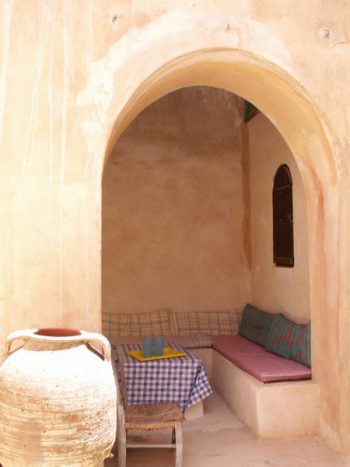
He invited the Gournians to participate in planning the new village, using their input in planning its buildings and layout. Important spaces like the mosque, the boy’s school, the khan and market naturally took prominence, but he was careful to oversee the smallest details in every home; for example, long benches built inside houses and courtyards, which, covered with cushions, served as seating and even as beds for sleeping on during the hottest summer nights.
One anomaly was an outdoor theater, which still stands although it has never hosted a performance.
New Gourna village is now part of the World Heritage Centre property in Egypt. Its homes and khan are seriously deteriorating today under factors like climate change, overcrowding, and underground water seepage. The village’s population has grown through multiple families under the same roofs, as men acquire second or third wives. The foundations, based on clay and salt, are collapsing.
There is still no modern sewage system. Sewage cisterns originally regularly emptied by trucks going around the streets, are leaking into the ground. Residents, rightly concerned about the roofs over their heads, are clearing Fathy buildings away and building with concrete and red bricks. The Egyptian government neglects the situation.
It’s acknowledged that New Gourna and other projects of Fathy’s were not built to withstand future changes. But Gournians, vehemently attached to their village, welcome reconstruction via UNESCO’s World Heritage Centre, at the urging of the international association Save the Heritage Of Hassan Fathy.
“We want to rebuild Gourna in Hassan Fathy’s spirit, although not with his materials,” they say.
For Fathy’s spirit lives on. His “Architecture for the Poor: An Experiment in Rural Egypt” published in 1973, continues to inspire a new generation of architects around the world.
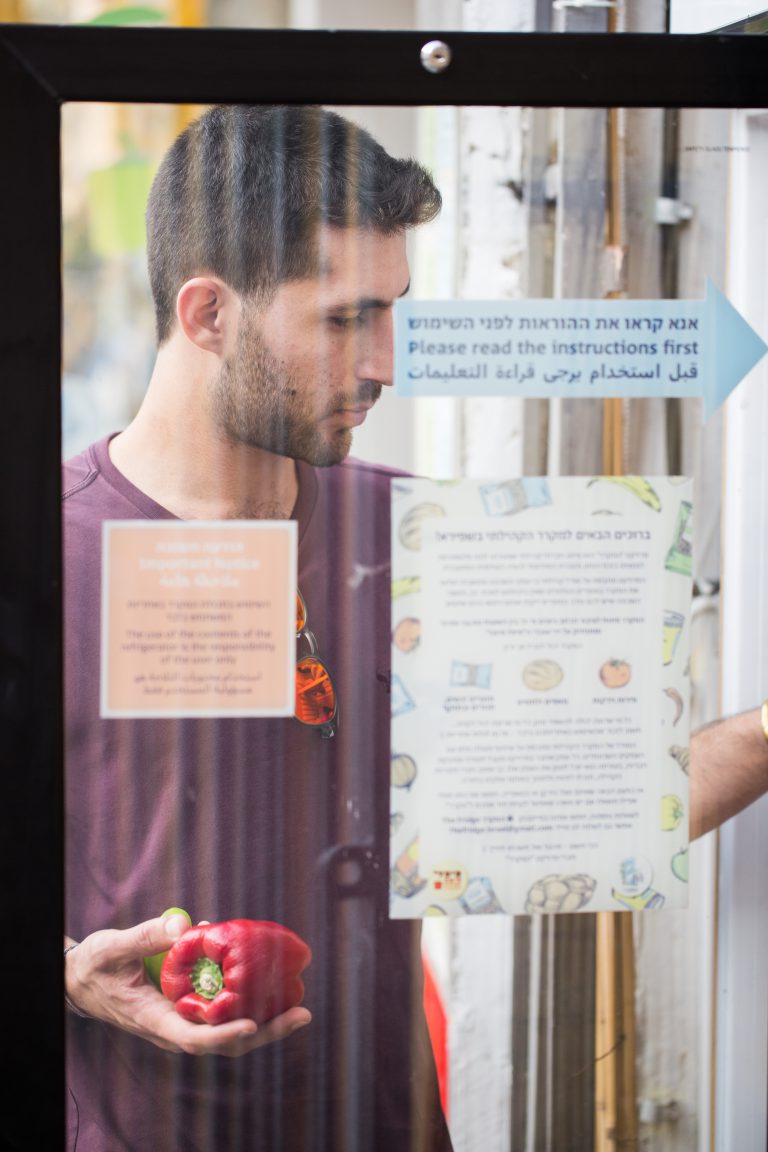
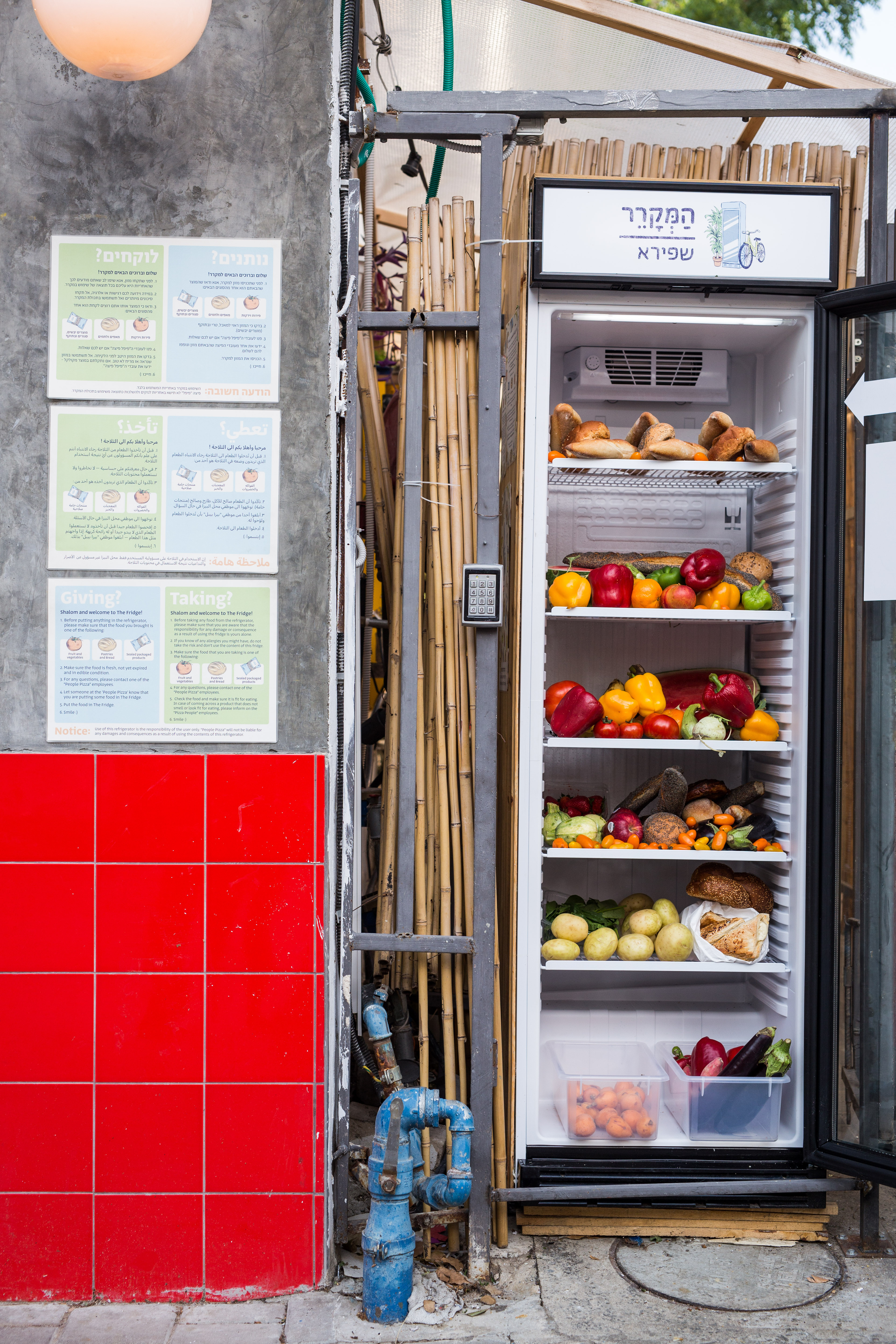
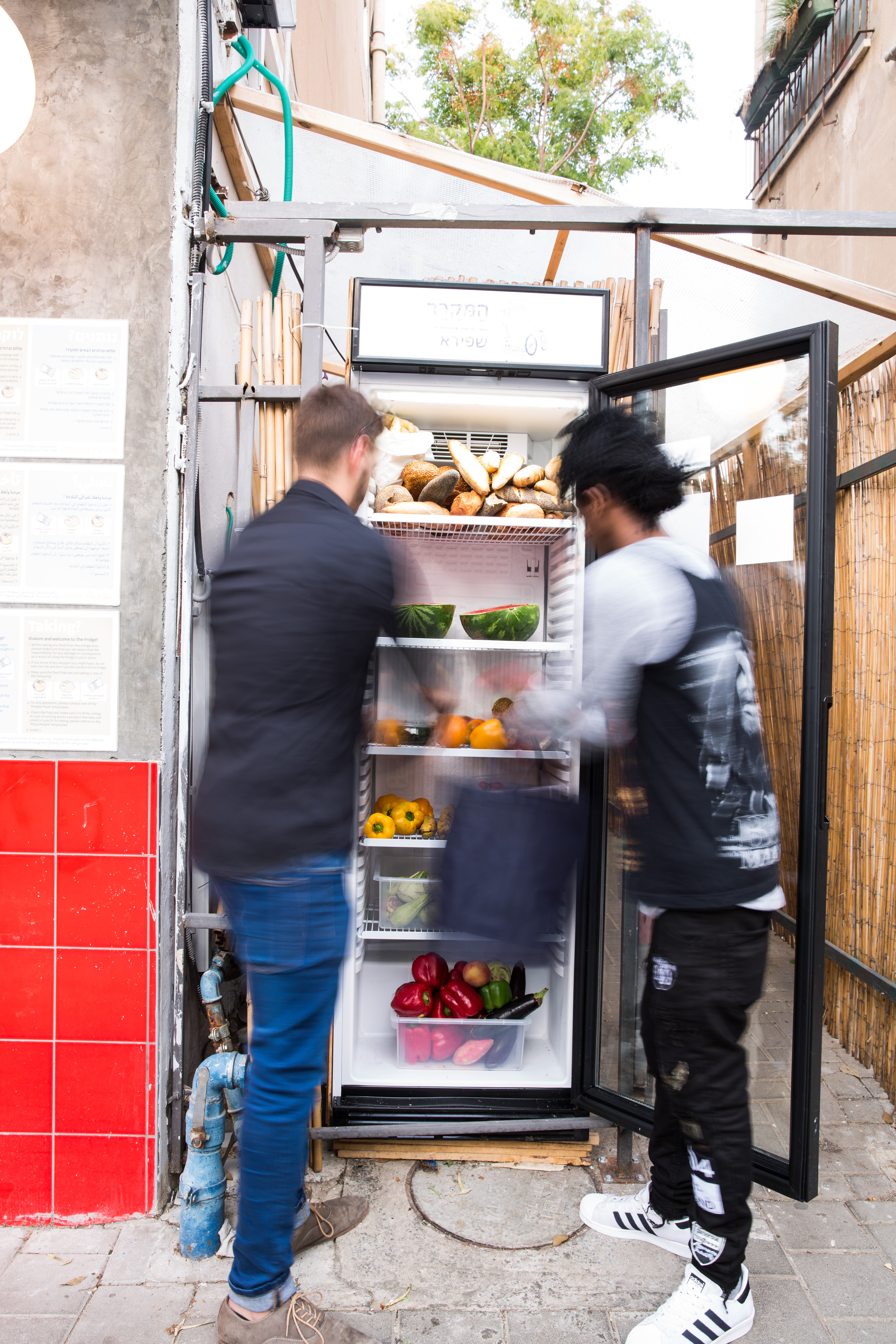
There’s a refrigerator standing on a Tel Aviv sidewalk. It’s not an empty fridge waiting to be hauled away to a dump; it’s full of food. There might be a box full of tomatoes, eggplants and bell peppers starting to go soft. You could cook a good pasta primavera from that.
But you need the pasta. The grocery store behind the Fridge will have it . Take what you need from the Fridge, for free, and go inside the shop to buy your pasta. There. You’ve saved money, saved food from going to waste, and supported a neighborhood business, all in five minutes.
David Roubach, founder of the Fridge.
The Fridge is the brain child of two young businessmen whose goal is to raise awareness of food waste in Israel. Individuals like this anonymous Saudi Arabian have set up charity refrigerators, but The Fridge is a project that’s operating across a whole country.
On vacation from business school in 2017, David Roubach sat in a London cafe and observed people putting food into a sidewalk refrigerator, then others taking the food away. He discovered that there were at least 50 such charity refrigerators operating in England. Taking the idea back to Israel, he convinced his fellow student and good friend Omer Ronen to start a similar project. Together, they developed a larger concept: educating the public about food waste through community refrigerators.
In household terms, that’s leftovers, or fruit past its best, or that package of quinoa drying up in the pantry. Leftovers can be reheated; soft apples can be baked in a pie, and that quinoa could make an excellent tabbouleh salad. Dumped into a landfill, the food will only make more methane greenhouse gas.
We may not feel it happening, but food waste also nibbles away at our personal income. Leket Israel, the National Food Bank, estimates that Israelis throw out 35% of the food they buy, mostly fruits and vegetables. Their 2018 report, focused on household consumption, states:
“…The volume of food loss in this sector amounted to 1,940 million pounds and a value of $2.2 billion. An average family in Israel throws away $890 a year, equivalent to a month and a half of food consumption, mainly due to the wasting of fruits and vegetables.”
The worst is that about half of food wasted was edible when it was dumped in the garbage. Maybe less than beautiful, maybe a bit bruised, but still edible.
With those facts, and fired by idealism, Roubach and Ronen created the Fridge project to reduce food waste. First, they haunted the open-air Carmel market in Tel Aviv to observe how surplus produce is wasted, especially on Friday afternoons , when vendors close up for the weekend.
“The vendors dump all the produce they couldn’t sell on the ground. City workers come and and clean it up and put it in garbage bins,” said Ronen.
“We talked to the Tel Aviv municipality, about setting up a refrigerator for charity in the market, but they raised all kinds of objections: who would be responsible for it, what about security, how would insuring it work?”
The partners realized that they had to modify the plan and create an independent model based on neighborhood participation. The plan is relatively simple. If you have surplus food, donate it to The Fridge. If you’re short on cash or need to reduce the cost of your food shopping, take food from The Fridge. But it took two years to get the project running.
They researched solutions for anything that could go wrong. A microbiologist at Hadassah hospital set down strict rules about which foods may be donated and, and about hygiene in the Fridge. (Fresh produce, dry goods in closed packages and canned goods within the expiry date are allowed, as are commercial baked goods. Nothing home-made and no meat, fish, or dairy.) A top lawyer helped them blueprint the community-based model. They created a brand and a logo. They raised funds to support the Facebook page and to pay for printed materials.
Ronen explains, “It was a new idea, involving the community with the Fridge. We approached food-based businesses in the Shapiro neighborhood in Tel Aviv, and explained about food waste, how they can give away their surplus instead of throwing it away. We gave them a social sticker to put on their front window that reads, ‘This business supports the Fridge’. People take what they need from the Fridge. If it doesn’t have everything they need, they buy it from one of these businesses bearing the social sticker. This way, a cycle is created. Businesses contribute to the community, and the community contributes to them.”
A shop owner signs a contract agreeing to insure the Fridge as part of their business, to abide by the rules set down, and make sure it’s cleaned every day. This is “hosting” a Fridge. The Fridge itself bears printed instructions in Hebrew, Arabic and English taped to its door.
Today there are six Fridges in Israel, from the south in Beersheva to Kiryat Shmonah in the north, with new Fridges in the works in other locations. All Fridges are open 24/7.
The first Fridge was hosted by an eatery in the Shapiro neighborhood called Pizza People.
“We asked all our friends to bring something from their own homes to get it started,” recalls Ronen, “Any soft tomatoes,a bag of flour, stuff like that. About three months later we saw that neighborhood people were donating food, not only the shop owner or our friends. And people were taking food regularly.”
“We have two goals,” says Ronen. “One, to physically help prevent food waste, and even more importantly, to raise awareness of the issue. We’ve had a lot of media exposure through radio interviews, a TV program, podcasts and YouTube. The biggest draw is through our Facebook page. People get inspired and email us to ask how they can establish a Fridge in their own community.”
Most of those inquiries don’t result in a Fridge. A return email from the partners carries a 30-page attachment explaining how the project works. It might take as long as three months to start seeing results in a neighborhood. Although although Ronen and Roubach provide stickers, printed matter, and guidance, people hoping to set up a Fridge must talk to local businesses until they find one to host it, and deal with the legalities and paperwork on their own. It can be daunting, unless you’re fired up with idealistic enthusiasm.
“There are always obstacles, something that’s going to stop you,” says Ronen. “Just put the fridge on the sidewalk. Afterward you can deal with the lawyers and insurance; it’s going to be OK. You need meaning, and a purpose to help others, to help the world. That’s what keeps you going when times are rough.”
Each Fridge is supervised by a local volunteer and develops its own character, says Ronen.“In Tel Aviv, Pizza People mostly stocks the Fridge. In Beersheva, university students ensure that the Fridge is full. They take 20-minute shifts to go around the neighborhood, collecting food. We have a Fridge in a primary school in Misgav, a northern community. The second-graders saw the TV interview about the project and decided to set one up in their school, which they did, and it’s working. Even hi-tech businesses have approached us for help putting a Fridge in their offices. We think that’s great – even a mini-Fridge in an office helps raise awareness about food waste.”
Ironically, after the second Fridge was launched in Jerusalem’s Mahane Yehuda market, the Tel Aviv municipality approached the partners and asked to work together. Ronen didn’t comment on the results of that conversation, but told Green Prophet how a large organization proposed to expand the project’s reach.
“Six months after the launch, a gentleman, head of a big non-profit charity dealing with distributing surplus commercially cooked food, asked to meet with us. He told us, ‘Quit your jobs (because we were both working to support our studies), and let me help you. I’ll give you money to start a non-profit, and give you a salary. I’ll pay for the Fridges, the marketing, everything. All you have to do is make 200 such fridges in Israel. We have the money – just go and do it.’
“We were really in a dilemma. That would have helped us realize our goal. But something else would have happened: we would have lost the authenticity of each and every Fridge. The Fridges of Jerusalem, Tel Aviv, Misgav – each is owned by the community; no money is involved. That’s what makes the awareness so strong.
“So yes, other organizations are interested, but it’s best kept the way it is, because that way, the project comes from the inside of a community.” Ronen adds that another benefit is that the project strengthens social ties.
“I’m hoping that two years from now, I’ll take my girlfriend to Pizza People and we’ll have a beer and eat pizza, and we’ll watch people putting food in the fridge and taking food out. And I’ll tell her, we have 100 more like this with the same logo… that’s something we did. I’m looking forward to the time when I can chill and watch this whole amazing thing work completely alone.”
Interested in starting a Fridge in your neighborhood? Go to The Fridge on Facebook and ask.
CBD a non hallucinogenic molecule in medical cannabis helps with sleep. Research shows it.
Cannabidiol (CBD) is sweeping the nation as a cannabis product that’s non-psychoactive and supremely helpful for treating multiple physical and mental health problems. It’s a hemp-derived product that, when sold legally, contains less than 0.3 percent THC. You can purchase it online throughout the United States or in dispensaries in states where cannabis products are legal.
CBD is commonly used to treat ailments like anxiety, pain, skin problems, and more. It’s also a commonly used sleep aid. Many who use CBD pills regularly to aid sleep claim that it’s better than using a sleeping pill. But does it really work to make you fall asleep faster?
How CBD Works
If you’re familiar with cannabis products, it might be confusing why CBD works so well when it has no psychoactive properties. It can’t give you an “out-of-body” experience to combat the pain and discomfort of your situation, so how is it effective at treating so many health problems?
CBD is made up of terpenes, cannabinoids, vitamins, and other nutrients. It works because your body is already full of cannabinoids that send messages to your endocannabinoid system. Like taking any supplement, taking CBD capsules increases levels in your body to help that system reach homeostasis.
The endocannabinoid system is responsible for hormone regulation. Oftentimes, a hormonal imbalance is the reason for sleep problems. A surge of anxiety, depression, fear, or adrenaline can all combat your body’s desire to rest, and CBD can help to correct that.
It’s all about changing brain chemistry. In her book CBD Oil: Everyday Secrets: A Lifestyle Guide to Hemp-Derived Health and Wellness, Gretchen Lidicker writes: “Studies mainly point to CBD’s ability to interact with … serotonin receptors and GABA receptors in the brain. Serotonin plays an important role in mood and anxiety, and GABA is known as the main ‘inhibitory’ neurotransmitter, meaning it calms excess activity in the brain and promotes relaxation. GABA receptors are the target of benzodiazepines, which are a class of anti-anxiety drugs.”
She also notes that CBD is linked with anti-anxiety properties, helping to promote relaxation and raising the body’s naturally occurring levels of melatonin. Taking CBD in combination with the correct dosage of melatonin supplement can make it even easier to fall asleep at night.
Studies on Sleep and CBD
The research on CBD and the human body is limited simply because of time. Since CBD was exposed as a product much different than THC, marijuana, and other cannabis products, there has not been a lot of time to develop comprehensive studies. It’s also relatively limited because it’s still considered a Schedule 1 drug in most states.
Yet, there have been a few recent studies to show how CBD works for promoting sleep: Here are a few of the most notable cases:
2019 Permanente Journal Study: Researchers here looked whether CBD could reduce anxiety and improve sleep as well as how the two work well together. There were 72 subjects, more than half of which experienced anxiety and a third of which had sleep problems. Each subject was given a 25mg CBD pill each day, and the first month showed that nearly 80 percent of participants had lower anxiety levels and more than two thirds had better sleep. The treatment of anxiety is more than likely an active reason for this study’s success.
2018 Frontiers in Pharmacology: Study authors examined the way that pain affects quality of life, including sleep. They used CBD to treat pain and found the following: “The study also showed improvements in the quality of life, sleep, and increased patient satisfaction.”
2014 PubMed Central: One of the most interesting finding about CBD for the treatment of sleep is that it doesn’t make you groggy. A 2014 review showed that patients who used CBD as a sleep aid did not wake up feeling groggy. In fact, many used it to treat grogginess after a poor night’s sleep. Researchers are uncertain why CBD works to both wake you up and put you to sleep, but it certainly helps erase one of the most unpleasant side effects of traditional sleep aids.
Side Effects of CBD for Sleep
Most CBD users like using the product because it has fewer side effects while helping them reach a peaceful slumber. That being said, there are still some side effects common for CBD users. Some of these side effects are part of sleep problems in general and some are from the increased number of cannabinoids in the body. Usually, side effects can be treated by adjusting the dosage.
Those using CBD to treat sleep report feeling irritable after taking a dose of CBD. This could be explained by the imbalance your body is already feeling for sleep problems, but it is present nonetheless. Nausea, vomiting, or diarrhea may occur with the wrong dosage as well.
Doctors strongly encourage CBD users to check with their primary care physician before taking CBD for sleep to make sure it won’t interact with a sleep aid. In some cases, sedatives mixed with CBD can cause a negative reaction you want to avoid.
In general, side effects for CBD use are much less invasive than side effects for sleep aids, particularly the prescription kind.
How to Use CBD Pills Effectively as a Sleep Aid
Countless individuals report achieving their sleep goals without harsh side effects, so how do they do that? It’s usually about getting the right dosage. According to Lidicker, the wrong dose of CBD “could keep [you] up all night…the way you react to cannabis is highly individualized.” Researching proper dosage for your weight and needs is important to getting the right dosage.
Additionally, CBD should be taken regularly to establish the substance in your system. With the right dosage and time, your endocannabinoid system will regulate, and you shouldn’t feel the side effects described above.
Everyone is different and some may feel side effects despite their best efforts to establish proper dosage in their everyday schedules. It’s always wise to seek the advice of a physician who’s familiar with CBD treatments to ensure you’re making the right choices for your needs and lifestyle.
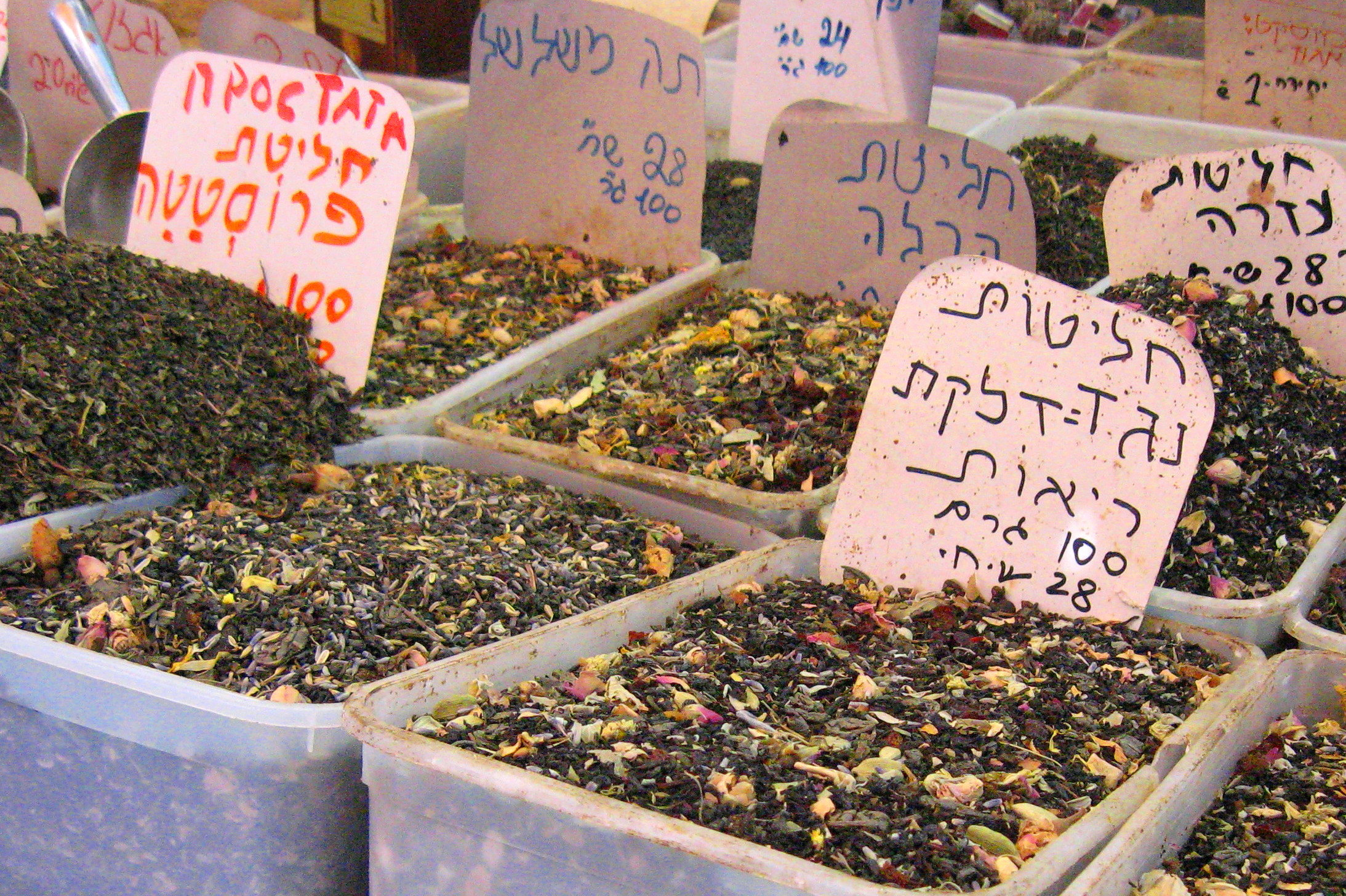
Dried tea mixes in Machane Yehuda, Jerusalem’s food market.
The UN has decided we need more days to celebrate food and agriculture and has decided that 2021 is the International Year of Fruits and Vegetables, 21 May as International Tea Day and 29 September as International Day of Awareness of Food Loss and Waste.
“Without healthy diets, we cannot hope to end malnutrition – and we will not eradicate hunger unless we curb food losses,” said FAO Deputy Director-General for Climate and Natural Resources Maria Helena Semedo. “By highlighting the value of fruits and vegetables, and the damage caused by loss and waste, the UN has taken a decisive step to promote fairer, greener, more efficient food systems. Honouring tea is a fitting tribute to the legions of smallholder farmers who help produce what is the world’s favourite drink, after water itself.”
Other resolutions, adopted by the UN General Assembly focused on progress and challenges related to agriculture, food security and nutrition; sustainable mountain development; the role of agricultural technology; the importance of natural plant fibres for livelihoods and the environment, and the need to eradicate rural poverty.
Fruit and vegetables
Chile has been a champion of devoting a year to promote fruit and vegetables, which have well-known nutritional qualities and also contribute to the prevention of non-communicable diseases (NCDs).
FAO and the World Health Organization recommend that each adult consumes at least 400 grams of fruit and vegetables on a daily basis to prevent chronic NCDs, including heart diseases, cancer, diabetes and obesity, as well as to counter micronutrient deficiencies.
Advocacy for fresh produce also fits well with the aim of strengthening the role of smallholder and family farmers, and fosters broader market options for millions of rural families. Gender equity opportunities are also noteworthy, as women often play leading roles for their households in both the production and consumption of fruit and vegetables.
Tea
International Tea Day has been celebrated by some countries – notably in South Asia and Tanzania – where tea has been a major commodity and important beverage for some time.
India proposed that FAO endorsed a greater recognition. The UNGA resolution was presented by Group of 77 and China.
The observance is meant to acknowledge and promote the herb’s contribution to human health, socialization, rural development and sustainable livelihoods. Tea is a major cash crop for millions of families in developing countries and as a labor-intensive sector, including processing, the industry provides jobs in remote and economically disadvantaged areas.
Food loss and waste
Women in Africa with the back breaking work of watering their farm
Andorra and San Marino played a key role in proposing the International Day of Awareness of Food Loss and Waste (FLW). The day offers an opportunity to sharpen focus on the need to reduce FLW and how doing so can contribute to sustainable development.
As explored in depth in FAO’s 2019 State of Food and Agriculture, food loss and waste entails significant emissions that exacerbate the challenge of climate change as well as impact on food security. An estimated 14 percent of the world’s food is lost along the chain from the point of harvest to the retail level, and likely even more is wasted later.
The festive season of Christmas and Thanksgiving is a time to give gratitude, share the happy times, and give back to the community in any way possible. As the year comes to an end, you also need to reward yourself for working hard all year to earn yourself and your family a great close to yet another one. Indeed so many people wanted to get to where they are, but unfortunately, they didn’t. And for that reason, here are some of the ways you can give back without a sweat. Fortunately, today, you do not have to physically be there to help because apps and websites like the portable North Pole make it easy for you to give back from wherever you are.
Volunteer to serve your community
When you have free time this festive season, you should consider lending a helping hand by volunteering in a project within your community. These activities may include taking your time to serve the homeless at the shelters, build the schools shed, provide refreshments for the community sports team, so on, and so forth. The things you can do are so many, and we are sure your help will be highly appreciated. What is even better is the feeling you get after that, it is such a fantastic feeling to give back.
Feed and clothe the unfortunate
If perhaps you have less time in your hands and you cannot get a free day to volunteer at a shelter, you may feed someone on the streets on your way to work. As small as this deed is, you may have made an enormous impact to make someone else’s day. Consider picking those pieces of clothes you rarely wear and on your way to work, drop them off a homeless lad. At no cost, you will have made a considerable impact on someone’s life.
Donate your used toys and clothes to goodwill
Kids on the street may not have the privilege to get new toys every year like your kids. And your children might have more than they need. To teach them the virtue of giving, you may encourage them to donate the old ones that they have and give them to goodwill. This way, you spread the cheer, and you teach your young ones the good that comes from giving.
Gift a friend
Whether it is a colleague or a friend you haven’t seen in a while, you can choose to be their secret Santa this festive season and send them a gift or a card to wherever they are. Gifting someone and putting a smile on their face is a fantastic way to give this festive season, and you could never go wrong with this.
Conclusion
Well, besides the bright decorations and the happy festive melodies, gift-giving will never run out of fashion. And it does feel good to give to our loved ones, and it feels even better if it is to someone who needs it more. Let the North Pole this year be wherever you are. Spread the cheer, spread the love.
Not just for Israel and the tropics. Tangy star fruits or carambola can be great ground cover in orchards as an alternate crop or just a way to keep the soil healthy and vital in citrus orchards.
It’s not just oranges that grow in Florida. Carambola, or star fruit as most in the United States call it, is gaining popularity. One researcher from Florida International University is researching how cover crops can help the sustainability of star fruit farms.
“Tropical fruit production has become a prominent practice in Miami-Dade County,” says Ariel Freidenreich, a Research Assistant under the FIU Agroecology Program. “For this reason, it is vital that sustainable farming practices are applied to these systems to ensure healthy soils and economically viable fruit production.
“Star fruit are a great snack while working in the sun because they are juicy and sweet,” she says.
The Arkin variety is the most popular and widely planted in south Florida. Some growers are now expanding to sweeter and juicier varieties from Hawaii and other areas. They go great with salads and are used for juicing. There is even a winery that makes a delicious star fruit wine (tangy and not too sweet). While these fruits are not very popular in American culture, they are popular in Asian and Hispanic cultures, which are very prominent in south Florida.
Besides being tasty, there’s another reason for finding a variety of crops that grow well in Florida.
Increasing the diversity of crops that are grown in various areas is important for several reasons, says Freidenreich. “First, crops like oranges are under pressure from a disease called citrus greening. It’s a blight disease that causes trees go into decline and die within three years. The disease destroys the production, appearance, and economic value of citrus trees and their fruit, and there is no cure. Similarly, laurel wilt has been greatly impacting the avocado industry in south Florida. Different crops are being planted to replace avocado groves.”
Establishing crops like star fruit will help diversify the biological system of a farm. It also diversifies the income stream for growers. Just like a well-balanced retirement portfolio, balancing the mix of crops on a farm can reduce overall risk. This is good for the environment and the sustainability of our food sources.
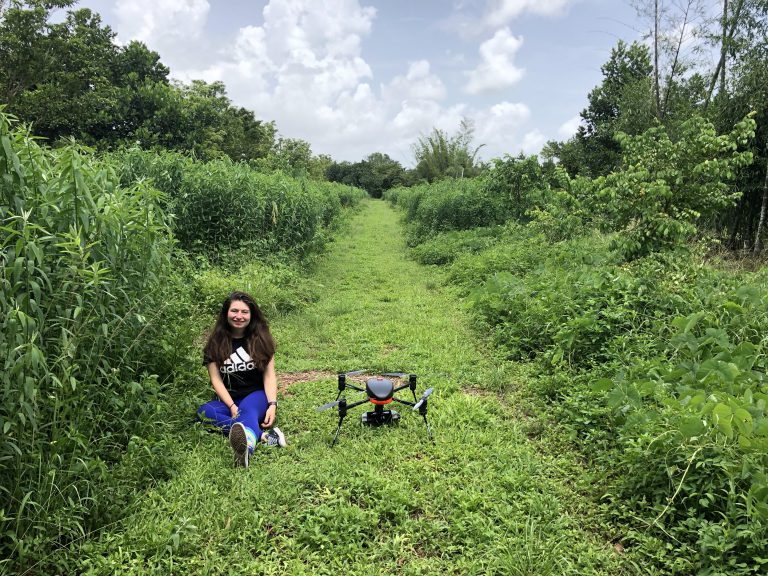
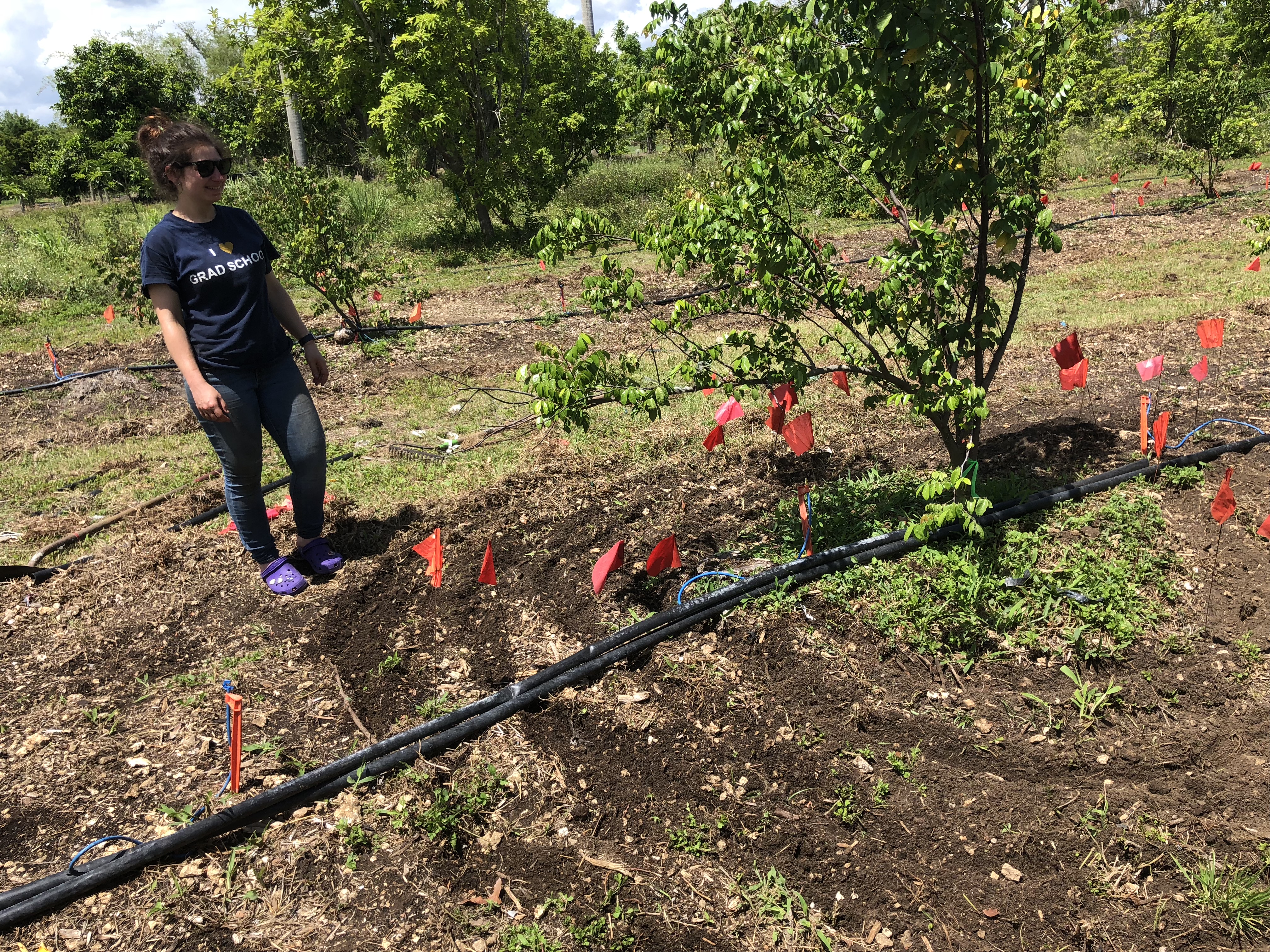
Freidenreich’s research with carambola includes cover crops. Cover crops are grown, not to be harvested, but to assist with soil health. Two cover crops the team studied are sunn hemp and velvet bean. Both are in the legume family and can take nitrogen from the air and metabolize it into a plant nutrient.
“We established cover crops within this young carambola stand to enhance overall soil quality,” says Freidenreich. “We grew sunn hemp and velvet bean between trees. We cut them and incorporated them into the soil as green manure for two summer growing seasons. This helps ensure healthy tree development without the addition of synthetic inputs.”
The research is taking place on a certified organic farm, and these practices are being developed to help farmers transitioning to organic production or those interested in sustainable practices.
Cover cropping should improve the soil organic matter. “The soil [at the research site] is rock-plowed limestone with little natural organic matter content,” says Freidenreich. “These soils have a basic pH, so improving organic matter content is necessary to help lower pH. This, in turn, should inspire healthy crop growth.”
Improving soil organic matter “should have positive effects on soil nutrient availability,” says Freidenreich. “It should also improve soil structure and microbial interaction. We expect fruit yield improvement over time. South Florida has a subtropical climate, so hot and humid weather inspires quick turn over for organic matter degradation. Continually adding these treatments should have positive benefits season to season. The cover crops can be great for weed suppression in the growing season and after termination.”
Future research means Freidenreich might get to snack on more star fruit while in the field. “Star fruit are very wind sensitive. They can defoliate with strong gusts. Sunn hemp has the potential to act as a windbreak for starfruit trees. Additionally, star fruit is truly tropical and can be sensitive to cool temperatures in the winter months in subtropical south Florida. Cover crop mulches might insulate the roots of carambola trees.”
Freidenreich recently presented her research at the 2019 International Annual Meeting of the American Society of Agronomy, Crop Science Society of America and Soil Science Society of America.
Alcoholism is not the biggest problem in the Middle East, where the majority of the culture there (Islam) prohibits consuming alcohol. Likely this prohibition came about from the dangers of drinking too much. If you are already out of control, consider drinking less or quitting – for your health
Motivation is something that encourages you to act or behave in a particular way. Often, the motivation to go off alcohol comes from the outside. Your doctor, spouse, partner, parent or child may urge you to quit drinking. Maybe your friends or business colleagues have approached you. Or maybe you have legal obligations related to problem drinking that require you to stop. However, without being personally motivated, the likelihood of getting and staying sober is low.
Where to look for something that can increase your desire to live an alcohol-free life? Here’re 5 practical tools for getting and staying motivated in alcohol recovery.
Set a Goal.
Of course, giving up alcohol must be your #1 priority. A partial commitment won’t work. To focus on sobriety, you may need to get enrolled in some alcohol rehab for men – AddictionResource.comprovides information. It may be the best solution for those who already had several unsuccessful attempts.
Problematic drinking occurs while or instead of doing things a person wants. Setting a goal that excites you can increase your motivation to give up your bad habit. Think of something you really want to do, something that can brighten your life and bring new emotions.
For some, visiting another city, state or country may be a great experience. For others, extreme activities like a jump with a parachute may boost their motivation. Determine one or several short-term goals that will drive you forward.
Also, it’s beneficial to have a couple of long-term goals in different aspects of your life. One study identified the priorities of people who are in recovery from substance use disorder. They are finding a job (up to 34%), fixing family and social relationships (up to 24%), getting education and training (up to 23%), focusing on emotional health and self-work (up to 21%), and improving physical health (up to 20%).
Tune into the Positive Vibes.
The thoughts like “I can’t do this” or “It’s too difficult” are discouraging. Instead of making excuses, give it a try. After all, you should spend your time and energy in some useful way.
Every goal has its obstacles. And success is reached by those who push themselves forward and stay motivated to keep trying and working.
Remember, there’s always a way to cope with the obstacle. Overcoming them is a boost to motivation. If there were no obstacles in alcohol recovery and quitting were super easy, who would feel proud of battling his awful habit? No men-only rehab would exist.
So, always stick to a more positive side. Don’t get me wrong, we should evaluate our strengths and talents realistically. But it’s not OK to have a negative look at everything.
Find Three Things to Boost Your Mood Fast.
What are your favorite healthy ways to relax and cope with stress? Determine three of them to use any time you feel below par or negative thoughts start to overwhelm you.
It can be simple activities like going for a walk, talking to a supportive friend, or coloring pages for adults. How can this help?
Getting out for a walk gives a chance to stop actively thinking about the problem. And since walking doesn’t require much concentration, you may find the solutions to important issues that you wouldn’t have otherwise while staying in one place.
It’s important to have sober friends who will support you in challenging situations. A supportive friend is someone who understands who you are and what you need. He/she can stop you from relapse by the right words or actions. Their attitude is not judgmental. And they don’t have an ulterior motive in taking care of you.
Coloring books for adults are the latest anti-stress trend. This type of art therapy helps to combat stress, anxiety, and even depression.
Determine Your Unique Reasons for Quitting Alcohol.
Take an honest look at your life. What are the areas that are suffering because of your addiction? Is it your health? Is it a financial side? Maybe your reason has to do with your family. Male addiction can push a couple on the verge of a divorce. Maybe your kids are embarrassed to see you drunk and they’ve lost their respect.
Make a list of the areas of your life affected by alcohol abuse. Then, pick one area or problem that needs to be solved in the first place. Think well what to do about it. Use it as your inspiration: it’s the major reason you want to quit or cut back on drinking alcohol.
When you feel a craving, read this list and look at the unfortunate consequences of your drinking. Imagine what these consequences would be in 5 years if you don’t give up this habit. Also, think about the benefits your decision to start a sober life has brought you. It’s a great exercise to increase your motivation.
Focus on the Benefits.
Amazing benefits of leaving alcohol include the absence of hang-overs, better sleep, improved financial situation, lower risk of cancer and other diseases, higher productivity, and many others. Focus on the advantages. If you’re prone to negativity, you’re potentially setting yourself up for further misery in the future.
The goal of behavioral therapy used in men-only rehab programs is to teach patients to think positively. That’s important for avoiding relapse. There’s strong evidence showing that negative thought patterns push alcohol users in the state of helplessness and depression, and to cope with it, they drink. Therapists in any men-only rehabilitation center know that positive thinking can improve their patients’ mental and physical well-being.
These 5 tools are quite universal. You can use them to reach any goal, whether it’s quitting drinking or smoking, getting an education, or building a business.
Take Care and keep the alcohol out of your mouth. Good luck!
When two (or three bodies of different sizes and distances) orbit a center point, it’s easy to calculate their movements using Newton’s laws of motion. However, if all three objects are of a comparable size and distance from the center point, a power struggle develops and the whole system is thrown into chaos. When chaos happens, it becomes impossible to track the bodies’ movements using regular math. Enter the three-body problem. Now, an international team has taken a big step forward in solving this conundrum. Their findings were published in the latest edition of Nature.
It’s been nearly 350 years since Sir Isaac Newton outlined the laws of motion, claiming “For every action, there is an equal and opposite reaction.” These laws laid the foundation to understand our solar system and, more broadly, to understand the relationship between a body of mass and the forces that act upon it. However, Newton’s groundbreaking work also created a pickle that has baffled scientists for centuries: The Three-Body Problem.
After using the laws of motion to describe how planet Earth orbits the sun, Newton assumed that these laws would help us calculate what would happen if a third celestial body, such as the moon, were added to the mix. However, in reality, three-body equations became much more difficult to solve.
When two (or three bodies of different sizes and distances) orbit a center point, it’s easy to calculate their movements using Newton’s laws of motion. However, if all three objects are of a comparable size and distance from the center point, a power struggle develops and the whole system is thrown into chaos. When chaos happens, it becomes impossible to track the bodies’ movements using regular math. Enter the three-body problem.
Now, an international team, led by astrophysicist Dr. Nicholas Stone at the Hebrew University of Jerusalem’s Racah Institute of Physics, has taken a big step forward in solving this conundrum. Their findings were published in the latest edition of Nature.
Stone and Professor Nathan Leigh at Chile’s La Universidad de Concepción relied on discoveries from the past two centuries, namely that unstable three-body systems will eventually expel one of the trio, and form a stable binary relationship between the two remaining bodies. This relationship was the focus of their study.
Instead of accepting the systems’ chaotic behavior as an obstacle, the researchers used traditional mathematics to predict the planets’ movements. “When we compared our predictions to computer-generated models of their actual movements, we found a high degree of accuracy,” shared Stone.
While the researchers stress that their findings do not represent an exact solution to the three-body problem, statistical solutions are still extremely helpful in that they allow physicists to visualize complicated processes.
“Take three black holes that are orbiting one another. Their orbits will necessarily become unstable and even after one of them gets kicked out, we’re still very interested in the relationship between the surviving black holes,” explained Stone. This ability to predict new orbits is critical to our understanding of how these—and any three-body problem survivors—will behave in a newly-stable situation.
On-site renewable energy solutions can cost-effectively supply refugee communities with low-cost, reliable electricity, according to the findings of a new report by the International Renewable Energy Agency (IRENA) in cooperation with UNHCR, the UN Refugee Agency. There are currently almost 26 million refugees in the world today. Unreliable energy exposes them to additional and associated risks which renewables can serve to overcome.
Renewables for refugee settlements: Sustainable energy access in humanitarian situations, released at the Global Refugee Forum currently taking place in Geneva, examines the energy needs at refugee camps and identifies renewables-based solutions for four sites in Iraq and Ethiopia. Solar mini-grids in particular, are highlighted as being able to boost the efficiency of humanitarian operations, avoid costly diesel consumption, and support recently arrived refugees with immediate, reliable electricity access.
Iraqias as refugees, Iraqis as victims of ISIS, Iraqis as victims of climate change. Some help on the way to get a leg up on the problem in agriculture.
The report was launched as both organisations agreed in a new Memorandum of Understanding (MoU) to enhance their existing cooperation on promoting renewable energy solutions for the improvement of the humanitarian situation for millions of people displaced from their homes today.
“In line with our Global Strategy for Sustainable Energy, we aim to ensure that refugees can meet their basic energy needs in exile while also minimizing environmental degradation. Sustainable energy access will bridge this gap, enabling refugees to pursue education, supporting businesses and social enterprises, spurring innovation and exponentially enhancing the safety and well-being of people and communities, until such time that they can return home,” said UN High Commissioner for Refugees, Filippo Grandi.
“This report and this new partnership between IRENA and UNHCR, is the beginning of an important alliance to mainstream access to energy for refugees and displaced people as well as their local communities, ensuring that they are not left behind.”
“Renewables can quickly and effectively change the lives of refugees for the better,” added IRENA’s Director-General Francesco La Camera. “Off-grid and grid connected small and medium sized solar installations are available, affordable and can bring reliable power to millions of displaced people around the world. We are looking forward to closely work and support UNHCR in its effort to protect life in humanitarian situations. Renewable solutions could become essential to the humanitarian toolkit.”
Findings and recommendations of the new report are based on data collected from field missions to the Darashakran and Domiz camps in Iraq and Tsore and Sherkole in Ethiopia.
It concludes that in Iraq, blackouts and brownouts remain frequent even at grid-connected settlements, leaving refugees and the humanitarian community dependent on expensive, polluting diesel generators. In Ethiopia, most refugees lack any reliable access to electric lighting. Stand-alone solar systems with battery banks could cushion the impact of voltage fluctuations on the grid.
Larger solar parks could provide electricity in and around settlements, as well as creating an enduring asset for host communities.
The United Nations FAO finds that people in central Asia may not be starving but they are in severe need of good nutritious food. When people are food insecure they become obese or unwell.
Hunger in Europe and Central Asia is low, but a high number of people are affected by moderate food insecurity, such as limited food and access to nutritious food, as well as overweight and obesity, revealed a new UN report sent to Green Prophet.
The Regional Overview of Food Security and Nutrition in Europe and Central Asia 2019, launched today in Moscow, provides specific recommendations for policymakers for targeted interventions on nutrition, inequalities and rural development, and achieving the global goals of the 2030 Agenda for Sustainable Development.
In Europe and Central Asia, food security has improved substantially over the past two decades and the vast majority of the 50 or so countries monitored managed to keep the prevalence of undernourishment below 5 percent – less than half of the world average (10.8 percent).
New estimates for 2018 suggest that a severe level of food deprivation is no longer a concern (1.8 percent of the total population, compared with 9.2 percent globally). However, sizeable portions of the population have difficulty in regularly accessing nutritious and sufficient food. According to estimates, over 100 million people (11 percent of the population) in the region are exposed to moderate or severe food insecurity – an indicator, developed by FAO on the basis of the Food Insecurity Experience Scale, to track progress towards reaching Zero Hunger.
“A considerable number of adults and children still suffer from various forms of malnutrition, including stunting, wasting, overweight, obesity, anaemia; in fact, some of them co-exist in many countries,” said Cheng Fang, FAO economist.
“Especially, overweight and obesity imply significant health concerns,” Fang added, referring to a report finding that adult obesity in almost all countries of the region has in 2016 outnumbered the world average of 13.2 percent, and in 13 countries it was twice as high as the world average. Adult obesity has been rising in all countries in the region.
Sex-disaggregated data show that women are more likely to experience moderate or severe food insecurity than men (10.7 percent to 9.8 percent) in Europe and Central Asia. On a positive note, the prevalence of low birth weight is below the global average of 14.6 percent; however, there is a recent increasing trend in most countries.
Drivers and determinants
As the FAO report points out, socio-economic inequalities slow down or even hinder progress on the reduction of poverty, food insecurity, and malnutrition, risking the 2030 Agenda principle of leaving no one behind.
Malnutrition among children is strongly influenced by maternal education, wealth, and geographical location. This suggests that targeted interventions on maternal education and income generation can improve nutrition situation of children younger than five years old.
Obesity is a faster growing phenomenon in households with lower socio-economic profiles based on living and working conditions, income, and education.
“Policies and other interventions should target disadvantaged and vulnerable groups to address socio-economic inequalities,” said Vladimir Rakhmanin, FAO Assistant Director-General and Regional Representative, at the launch event of the report.
“We have seen how structural changes in many lower-income countries of the region with accelerated economic growth have elevated the most vulnerable populations out of poverty and significantly reduced hunger,” added Rakhmanin.
To this end, the report calls on countries to channel more public investments into agriculture and rural areas and improve the quality of spending, as the expenditures in these areas are low compared to the sector’s importance in the economy. This situation can hamper the realization of food security, nutrition, and environmental goals.
Structural transformations
The report has a new section focused on the structural transformations taking place in Europe and Central Asia – in the economy, agricultural and food production, food consumption patterns and diets, and trade and its policies. It provides guidance on what action would be needed to meet global sustainability goals.
The analysis showed that while agriculture is an important source of income for many, the sector’s productivity is lagging behind other sectors. This leads to higher poverty, food insecurity, and malnutrition rates in rural areas, and, once again, calls for increased support for agriculture and rural development to boost productivity and income diversification.
In all countries of the region, there is much larger diversity in the available food due to production and agrifood trade; however, the quality of current diets compared to healthy diets has been questioned. This is due not only to constraints within the food production system, but also the importing of processed food, which are heavy in fat, sugar, and salt and have a negative impact on nutrition and health. As evidenced by country case studies, anticipated trade expansion in the region is often hampered by non-tariff measures that exist in multiple forms in many countries.
Animal-sourced proteins have gained importance in most countries, contributing to dietary change and food security. Still, regional differences in food diversity exist. Turkey and Western Balkan countries have greater availability of fruits, vegetables, and pulses, while former Soviet Union member countries have more meat and fish.
“These trends point to the need for nutrition-sensitive policies in both production and trade areas that raise the availability of several food items,” said Fang.
To reset production, diets, and related policies for better and more sustainable food production and nutrition, the report elaborates on two increasingly popular framework concepts – the food system approach and agroecology. There are trade-offs among all objectives of food systems and agroecology and public policy has the critical role of providing incentives and creating a good environment for the participation of all smallholders. Policy reorientation should also stress the need to ensure focus on the most poor and vulnerable.
Any business idea, especially eco ones need solid business plans. These kinds of businesses set examples but to branch out well, and grow, you need a sales plan.
Empower your sales team and directors with analytical tools that can boost their performance. Artificial intelligence is leading the sales industry as well as how people receive and deliver products. The world of finance is transforming as a result. How sales are generated and how they’re improved are what we focus on. Being competitive in sales management is now a matter of the technology you use.
Major Trends for Business and AI Technology
The major trends of the digital transformation bring artificial intelligence into focus. The benefits of AI are based on its ability to use an automated algorithm for tracking finance. This type of performance analysis reduces cost while increasing your effectiveness. Sales reps and business owners need to track performance in order to be competitive. Effective sales analytics will align your processes directly to your revenue.
The core trends of AI and business technology are designed to increase our analytical capacities. Artificial intelligence collects data faster. It can then look at that information to produce statistical figures with probable outcomes. Artificial intelligence plays a major role because it can produce answers. Every bit of insight it gives gets you closer to your sales goals and deeper into your consumer’s mind.
The Core Functions and Features
Artificial intelligence, as it applies to business analysis and sales, uses a set group of algorithms to automate its results. A snippet of code tells AI to process its analysis based on the criteria you set. As a result, you can rely on a newrevenue intelligence platform to achieve the following milestones in sales analytics:
*Data Modeling
The ability to visually see the data of your sales campaign will scale your influence. Some concepts are just too difficult to understand in their raw forms. The advances of artificial intelligence give us a way of isolating the exact information we need. The visual models that are then created to make it easier for you to find trends, to isolate failing processes and to confirm what your strengths are.
*Hypothesis Analysis and Economic Evaluations
This analytical process is optimal for your software because will collect a data set, which is two data points instead of one. Before any data set is compared, your AI software first devises a hypothesis and then tests it with the data you received. A comparison is made in order to establish ideal conditions and deliverables. Data that doesn’t live up to that set standard is presented to you with clarity.
*Automation
Automation resembles artificial intelligence, for it enables you to set and then forget your outcomes. You need automation as a strategic tool in data collection. An online prospect who engages with your brand, for example, will cause your sales campaign to send them content, enter them into your list or redirect them to a site. Getting your most useful analytics requires automation to define the stages of your work.
*Pipeline Integration and Mobile Adaptability
There are endless-market options for CRMs, automation packages and analytics, which means that you have different ways to integrate and connect with other technology. Artificial intelligence may not be the core function of the systems you use, but it can be added to your technology via integrations. Your pipeline dictates how you use your software and the adaptability that you need for the best results.
*Conversion Tracking
Conversions measure the responsiveness of your leads and how well your sales goals are being met. The tracking of conversions can be done with artificial intelligence. It’s faster and more accurate. The level of analysis that AI achieves is powered at a rate that outperforms the human being. Within seconds, AI can handle thousands of information feeds without losing its composure.
Building a Successful Business with the Help of AI
It’s wise to consider what sales analytics can do through the help of artificial intelligence. A revenue intelligence platform is the tool you need. Monitoring the many stages of consumer activity, as it applies to web sales, is difficult if you can’t scale your work. As soon as you power on your software to align your sales goals, you’ll get the following:
– Control, Transparency and Centralization
– Consumer Demographics, Behaviors and Activities
In the end, you decide on the key points of data that your business needs. Sales analytics is customizable and presents data based on your settings and preferences.
Chickpeas to feed the world! This protein offers an alternative to soy and highly allergenic nut milks.
So, you have also heard about one of the most happening diet plans that have made celebrities, as well as common people, go gaga over it. You might have known it through a magazine that says Kourtney Kardashian is an avid keto follower, or maybe your friend raves about its benefits all the time. Whatever is the case, now you want to try it to see if it is really worth the buzz.
Different studies show that the ketogenic diet is not only the best in weight loss; it may also show benefits against some diseases, like cancer, epilepsy, Alzheimer’s and diabetes.
However, switching to a keto diet is not all about waking up one morning and making an announcement: From today, I am a keto person. I wish it was that easy, but it isn’t. You need to know about a few things before adopting a ketogenic diet.
Here is a guide for you to ensure your smooth transition to keto diet:
How the Keto Diet Works?
Before telling what is a keto diet and how it works, here is a warning alert for pizza and pasta lovers: this road is going to be tough for you. It is because the ketogenic diet is all about cutting on your carb intake and plugging in high-fat food items.
What happens is that your body initiates the ketosis process when you rely only on fats and limit carb intake. Ketosis starts when your body burns fat instead of carbohydrates to produce energy. It takes almost 7 days for your body to go into ketosis phase after cutting on carbs.
There are also keto supplementsfor those who want to trigger ketosis process in their body without ditching their love of life pasta.
Know the Keto Ratio:
Another important thing you need to know before jumping onto a ketogenic diet is that you should only take 5-10 percent of carbs, while 75-80 percent goes to fats. The remaining percentage is for proteins.
Here, 5 to 10 percent means that your carb intake shouldn’t increase over 30 grams per day. It means that even two bananas can harm your whole diet plan. You must keep your diet low carb because only the absence of carbohydrates can force your body to persist in the state of ketosis where the body burns fats for energy. If the set percentage of carbs will increase in the body, it will again switch back to the starch burning state instead of burning fats. So, knowing and sticking to the nutrition ratio is very significant in the ketogenic diet.
Food to Add into Your Chart:
Preparing a keto diet chart isn’t rocket science. You should remember only one formula while setting your diet chart: no starchy food. That’s it. Full stop. Other than that, you can eat anything and everything.
Unlike other kinds of diet plans, high-fat foods are welcomed here because higher the fat faster will be the ketosis process. So, eat cheese, dairy products, seafood, veggies (except sugary and starchy vegetables, like beets, yams, potatoes), avocado, eggs, etc.
There is also no rule that you should reduce the amount of your food. In fact, if it is high-fat food, eat as much as you want.