Kombucha is tea fermented over a floppy, gelatinous pad, the mother culture that provides friendly bacteria and yeasts. It’s said that kombucha originated in China centuries ago, traveling along with precious tea leaves over the Silk Road, eventually reaching Europe. The fermented tea is rich in probiotics, vitamins C, B6 and B12, and acetic and lactic acids. It has 0.5% alcohol or less. The mother culture is referred to as the SCOBY – a symbiotic colony of bacteria and yeasts.
Kombucha has long been home-brewed in China, Japan, Korea, and Eastern Europe. Its popularity in the United States and Western Europe rises and falls, as in the AIDS epidemic of the late 1980s and early ’90s, when people drank it devotedly and to excess, hoping to raise immunities and create a healthier gut microbiodome immediately. Read our review on Sandor Katz who recommended fermentation and kombucha against immune suppressing diseases like HIV-AIDS.
Sandor Katz
But while kombucha’s properties make it a valuable part of a healthy lifestyle, it isn’t a miracle cure. One, or at the most two cups a day will supply all the probiotics, vitamins, minerals and acids that an adult can safely absorb at once. More than that would be like eating a gallon of sauerkraut or kimchi in hopes of getting all that good stuff in one go. Imagine what that would do to your digestion.
I brewed kombucha tea myself for years, and kept it in a big mason jar, with its culture, in a cupboard. It was tasty, with a little fresh lemon juice and honey added. My children thought the dark liquid with its placenta-like floating culture looked like an otherwordly life form. They called it “the alien in the cupboard.” When I moved house, I gave my SCOBY away, but now I miss it and am looking for a new one.
By adding more sugar and yeast, and fermenting the tea twice or even three times, it’s possible to obtain kombucha with 4.5 alcohol by volume, and even as much as 7%. Following the wave of interest in healthy alternative cocktails, some manufacturers are now producing hard kombucha, also known as “boozy booch” in a variety of flavors.
The American Tax and Trade Bureau requires some companies to label hard kombucha as beer. But beer, it’s not. Beer is made from grains, and kombucha is made from tea.
Is hard kombucha good for you alcohol?
Does high-alcohol kombucha confer the same health benefits as the traditional, almost alcohol-free brew?
No, no really. It’s proved to have fewer calories and less sugar than grain-based beers, but makers of hard kombucha don’t claim their products have probiotic properties. The amount of alcohol in the drink simply kills probiotics off.
Hard kombucha’s appeal is to those seeking a healthier and gluten-free alternative to conventional beer and wine.
Hard kombucha is part of the “good for you alcohol” meta trend. Other examples of this meta trend include non-alcoholic gin, hard cold brew, White Claw and Vizzy.
As the alcohol content varies from brand to brand, it’s a good idea to examine the labels and choose the hard kombucha that suits your style.
Hard kombucha is slightly sour, fizzy, and comes flavored with all kinds of fruit, flowers, and herbs. Ginger-tangerine or berry-hibiscus kombucha, anyone? Sounds good to me.
Hard kombucha brands in the United States
Flying Embers, one of the more intriguing better-for-you alcohol brands out there, is opening up Flying Embers Brewery & Social Club in a reconstructed 100 year old warehouse building in downtown Los Angeles’ historic arts district.
Flying Embers manufacturer Fermented Sciences raised $35M in a Series B round, led by PowerPlant Ventures and Ecosystem Integrity Fund. Other hard kombucha brands to follow?
GT’s Kombrewcha Boochcraft KYLA (Full Sail Brewing) Wild Tonic New Holland Brewing Unity Vibration JuneShine
One student goes to the heart of the Macedonian fake news industry. She is asked to pay for her research interview in sex or money.
If the average monthly salary in your city was $400 but you could make $1200 from a page of fake news what would you choose? The city of Veles in the center of North Macedonia has recently gained fame as a key base for the fake news industry. An American student studying at Haifa University in Israel travelled to Macedonia to understand how the propaganda machine is built.
Veles is home to dozens of website operators that create and market fake news for ad dollars. Since 2015, many people in Veles saw that Americans were hungry for news about the presidential race between Hillary Clinton and Donald Trump, and saw this as a great opportunity to advance their business plans.
They created a productive and convincing system for creating and spreading fake news. At first the webpage operators disseminated fake news against both candidates, but they soon realized that the pages attacking Trump received relatively few likes and shares, whereas those supporting Trump and attacking Clinton proved to be a gold mine.
Researchers from Haifa University in Israel studied how the fake news machine became so powerful and influential:
As part of the study, led by Dr. Israel Waismel-Manor from the School of Political Science at the University of Haifa, research student Heather Hughes traveled to Veles to interview those involved in disseminating fake news.
She even joined a course where people learned how to make money through viral internet actions. “During classes, the students do not learn how to disseminate political fake news. The course provides them with tools that enable each of them to become a propaganda machine for any course, from promoting wonder cures to gossip websites and on to websites supporting or opposing any particular political candidate,” Dr. Waismel-Manor explained.
During the study, the Hughes held several interviews with local residents who had worked in the fake news industry, and with young local people who were familiar with the website businesses. Most of the interviewees refused to allow their comments to be recorded, and accordingly the study is based on the notes taken by the researcher during the interviews.
“After someone asked me during one interview to pay 5000 Euros or to have sex in return for continuing the interviews, I decided to leave the city immediately and ended by fieldwork earlier than planned,” reveals Hughes featured in the video below.
The interviews with the fake news disseminators show that they have no ethical problem with the way they behave and no regrets on the issue: “We can’t afford anything, and if the Americans can’t tell the different between real news and fake news, that’s their problem,” some of them said.
“It’s the Americans’ fault that they don’t understand anything. What does it matter if we make money because they can’t tell the difference?”
Hughes asked the fake news disseminators what they think about the fact that they are committing illegal acts? They all replied that their actions were legal, but some of them laughed nervously and were clearly uncomfortable with the question.
Many of the workers in the fake news industry are single young men. They did not become millionaires, but they earned around $1000 a month – three or more times the average wage in Veles. “People need money in order to make money. It’s a circle everyone wants to be part of, but they can’t begin without 500 Euros,” said one female interviewee who is saving money to sign up for a Facebook page building course.
One of the interviewees in the study was Mirko Ceselkoski, who ran the course in Veles on opening and publicizing Facebook pages. Ceselkoski has become a local sensation. He stands at the center of the fake news industry in town and over the years he has taught over one hundred local residents how to make money by promoting Facebook pages and tweets. As mentioned above, the researcher participated in the course and interviewed Ceselkoski:
“Fake news creates a bigger buzz on the various social networks than in the mainstream news. The key to success is building trust with the site’s visitors. You have to maintain the page over a long period with credible information, and after the trust has been built you can start to disseminate fake news. The proportion is 80% accurate content and 20% falsehoods. When the fake news is wrapped up among true stories, it enhances the credibility of the source publishing the story and makes the reader read something that they would otherwise categorize as untrue.”
“The page promoters in Veles and Ceselkoski’s students understood the mechanism that is needed in order to reach a very large number of people. They look for information or sensational details that have some grounding in reality, and then add details that are sometimes true and sometimes not. For example, as part of her election campaign, the American pubic was aware that Hillary Trump supports abortions while Donald Trump opposes them. The fake news disseminators created sensational headlines claiming that the Pope – who, of course, opposes abortions – was supporting Donald Trump’s candidacy for president of the United States. As a result, Trump supporters shared information that, as we explained, was untrue,” Dr. Waismel-Manor commented.
Dr. Waismel-Manor added that “the 2016 elections in the United States aroused a high level of interest and powerful emotions. People were thirsty to read anything, any post or tweet about the campaign. In addition, the young operators quickly learned that this thirst comes mainly from the right-hand side of the political spectrum, so they adjusted their false messages accordingly. It is difficult to gauge what impact this content had, but even if it only influenced a few tens of thousands of Americans, this could have tipped the scales in key states.”
When Ceselkoski was asked whether Russian operators planted information with his students, he replied that all the publications were produced locally in North Macedonia. According to the researchers, Ceselkoski did not want to be seen as a Russian pawn. But the fact that there is no proof of any involvement by the Russian Internet Research Agency (IRA) does not rule out the possibility that they were involved behind the scenes, without the knowledge of the young North Macedonians.
“Most of the local operators emphasized that they had only a single goal: to make money, and lots of it. Since we are drawing close to another election in the United States, we need to remember that while the North Macedonians are the winners in this story, democracy pays the price,” the researchers concluded.
Ask Pablo?
Environmental artist and designer Pablo Solomon
My penpal Pablo Solomon, environment designer and artist over in Texas, writes to me on fake news:
“I have written extensively on fake news, how to detect it, etc. Marvin Gay in his song “I Heard it Through the Grapevine” warns to “believe half of what you see and none of what you hear”. Fake news gets the most press because it is convenient for one side or the other to accuse their rivals of creating or disseminating fake news.
“However our world has become so polarized that fake news is just the tip of the iceberg. You name the topic or the issue or the political view or the moral debate or whatever–and you are bombarded with a constant stream of propaganda disguised as news, entertainment, science, Biblical Truth, sports, statistics, etc.
“However, if you really want to get a relatively clear understanding of any topic you can. You must have some basic understanding of whatever subject is being discussed, some basic knowledge of statistics and how it can be manipulated to prove/disprove anything, and just have a somewhat skeptical attitude.
“Fake news, bias, BS, exaggeration, lies, down playing, white washing, weaponized humor, the rants of sports figures and entertainers, far Left or far Right commentators, etc. really do not concern me. The real evil is in censorship, doxing, threats, Cancel Culture and violent reprisals.
“It was once only tyrannical governments that controlled what ideas we could exchange. Now it is Big Tech, Big Media and even our Universities that are preventing the open exchange of ideas. Give me Fake News over Censorship and Cancel Culture any day of the week.
“There is no issue so evil that it overrides our Freedom of Expression. Free People do not censor the rants or lies of others, instead they shine the Light of Truth. You may cheer the censorship of and attacks on someone or some idea you consider evil today. But once you accept the general idea of shutting up people with whom you disagree, you are creating more Darkness.”
When you are a working individual who hardly finds time to make your place look more decorative, the only way to go through the house is to decorate your home space room by room.
Instilling canvas prints in your home decor is a great way to add some splash of color in any room. You can display family photos, pet pictures, or even create a stunning wall art out of it.
We have listed five ways to use custom canvas prints in your next home decoration project that you pick when you get time.
Great Way to Display Family Images
Family portraits are back in trend with their display on canvas prints. Rather than picking frames these days, more and more people are leaning towards trying a vibrant look for their pictures on canvas via custom print shops. You can blow up your family images to any custom size and create a masterpiece exhibiting a happy family. The beauty of canvas is that it can be rolled and shipped to your next apartment or easily sent to a loved one.
Landscape Images are Beautiful Wall Art
If you love scenic images from your holidays and trips away, printing them on custom canvas can really help you transform a small room into a big one. When blown up in size, landscape images make the room look more prominent as they act like windows of the room.
Add a Splash of Color
Custom canvas prints are a great way to bring the vibrancy of color in the room you decorate. All you need to consider is the room’s overall color, then select an image that will complement the existing colors in your furniture and floor.
If the picture you select suits the room, you can make the size bigger to create a room’s focal point. Photos on canvas go well, even in the kids’ bedrooms. You can put up a canvas wall displays with their cute pictures and create a gallery out of it.
Canvas Gallery Wall
If you have a master bedroom with ample space on its walls or a hallway with bare walls, then a great way to transform these spaces is by creating a stunning gallery of pictures on custom canvas.
You can put up a family or kids’ timeline, holiday shots from each year, or even the images from trips you took.
Internet is a Surprising Place
If you can’t find what image to look for, then whisper your problem to Google. The internet is where you can find any photo that matches your needs exactly the way you want when decorating your home.
You can find abstract art, famous paintings to replicate for your home, or even landscape images that are royalty-free to go with your home decor.
Canvas Printing Service Provider from the Internet
You might think getting a photo done from a nearby photo lab would be cheaper and give more control over how your design might turn out on a canvas. But that’s not true. Getting an online photo printing company would rather be a much better option than your nearby print shop.
You can find tons of online websites where you can access cheap canvas prints and not even have to compromise with the quality.
CanvasChamp is one such place where you can not only find tons of options for customization, but they also deliver right at your doorstep in a ready-to-hang condition.
From removing red eyespots to putting up filters on your photos to getting any major changes done, you can create beautiful masterpieces on canvas prints in minutes with CanvasChamp. Visit the website for more such exciting photo products to help you with your next home decoration project.
Designing your bedroom can be an exciting task if done right. You don’t have to let it sit cold and dark, but you can do something unique with the space to ensure it becomes your comfort zone. And, to make it easier for you, we bring you some easy-peasy tips to transform your room into something you love. What are they? Keep reading to know more.
A Comfy Mattress And Bed
The type of bed you need depends on whom the room is for. You can either opt for a king-size bed or go for a twin or twin xl. If you are wondering what’s the difference between the two, take a look at the twin mattress vs. twin xl comparison. Twin bed is approximately 75 inches, while Twin XL is about 80 inches in length.
The cheapest and easiest way to decorate your space is to bring home plants. In fact, they can not only spruce up your space, but they also bring in a positive energy that brightens up the area,
Statement Vases And Artificial Flowers
If you aren’t ready to adopt plant kids, then you can bring home statement vases and artificial flowers and place them in one corner of the room. Choose bright color flowers to make your space look inviting.
Big Bold Photographs
You can decorate the walls of your room with giant photographs of anything and everything. If you want a more personalized feel, you can opt for the photos of near and dear ones. Or you can just opt for black and white pictures of random objects. It adds a feel of modern art feeling!
Lights To Brighten The Area
If you are going for a king-size bed, you can opt for lamps on either side of the bed or place one in the middle of two twin beds. If night lamps are not your thing, then you can opt for fairy lights and place them strategically in your room to make sure they elevate the space.
Curtains To Elevate The Space
Curtains play a significant role in uplifting a room’s design. Choose something subtle with quirky prints. If your walls are of a dark shade, you can also choose white curtains to make it look well put-together.
Carpets For Your Floor
Make sure you just stick to one or two carpets and nothing more. You can go for dark-colored carpets as you don’t have to worry about any stains. Today, writing from traditional prints to furry ones, there are many options available in the market.
Tapestry As Headboard
A bright and lovely tapestry can replace your headboard if you are looking for something funky and out-of-the-box. It is visually a stunner and helps make your space look cool.
So, these were some of our tips on how you can design your master bedroom.
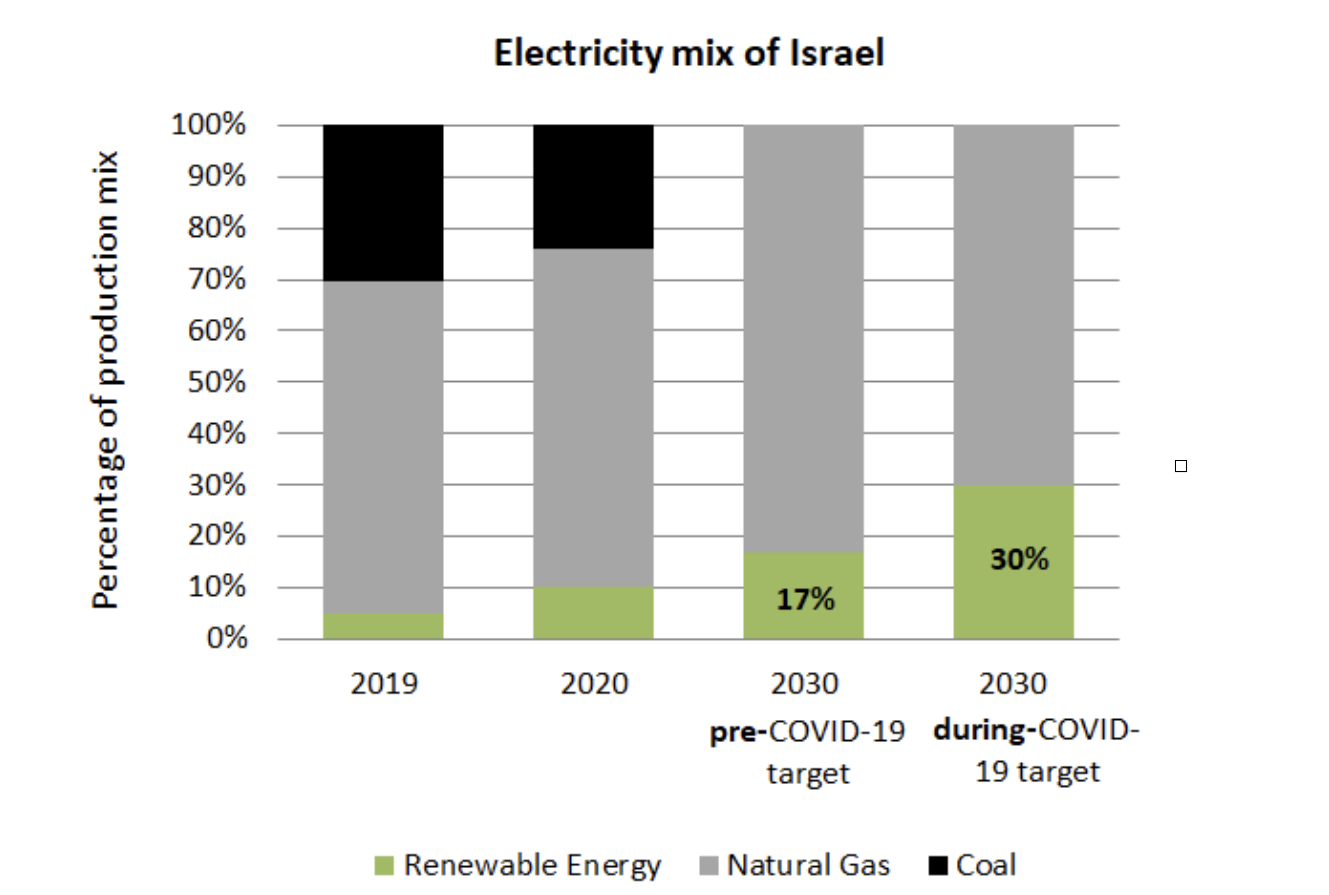
The Israeli cabinet has approved the proposal to increase Israel’s 2030 renewable energy target from 17% to 30%. Currently, Israel is steering towards ten percent renewable energy of its total energy consumption, to be achieved by continuously increasing small roof installations and new installations through tenders.
A plan by Ministry of Energy, presented in July, foresees as an increase of the cumulative solar PV capacity of Israel from currently around 2 GW to 15.77 GW until 2030 − an increase by more than seven times the capacity of today. Solar PV is expected to account for the significant share of the renewable energy, and would replace the remaining coal in the electricity mix (see Figure 1). Israel’s energy minister Yuval Steinitz defined in a statement the new target of 30% renewables by 2030 as ‘a real revolution’. But is the new 2030 target really a revolution or just a low bar?
Increased climate and energy ambitions in COVID-19 times
The COVID-19 pandemic has significant impacts for global economies, energy use and CO2emissions. According to the International Energy Agency (IEA), coal demand was hit the hardest, falling by almost 8%, alongside sharp reductions for oil and gas. In consequence, we saw that the pandemic accelerated existing coal-phase out plans: for example, Austria and Sweden both closed their last coal-fired power stations. In contrast, renewable energy posted growth in demand, driven by larger installed capacity and priority dispatch.
At the beginning of October, the European Parliament voted to adopt a more ambitious climate target to reduce EU emissions by 60% in 2030 compared to 1990, up from 40% currently. This target is subject to final approval by the EU’s 27 member states; it is expected that the decision will be made by the end of the year. If the EU raises its climate ambition, it will allow it to move closer to its aim to become the first climate-neutral continent in the world, by 2050. To reach the new goal of 60% renewables, the EU will have to increase its current 2030 targets of at least 32% share for renewable energy and at least 32.5% improvement in energy efficiency.
Beyond Europe, also other countries announced ambitious targets during COVID-19: Australia is on its way to reach nearly 50% renewables by 2030, India plans for 60% renewable energy by 2030, and Vietnam aims to double the use of renewables by 2030.
Time for the solar revolution
Israel’s 30% renewables by 2030 target is not a revolution. Considering Israel’s enormous solar potential, it is instead a low bar. However, it makes sense for Israel to put more efforts into cutting energy-related carbon dioxide emissions and scaling up renewables: Recently the IEA announced that electricity from solar PV is now the cheapest form of energy in history, and thus, also cheaper than gas in most major countries. Also, we see already positive benefits of the Israeli coal phase-out in form of significant reductions of CO2, NOx and SO2.
Although the rise of the renewables target is to welcome, it is likely not sufficient to bring Israel to net-zero emissions, as current pledges have proven insufficient to meet climate goals. Israel faces an increasing electricity demand not only in the power sector but also from highly energy-demanding desalinisation plants and the increasingly electrified transport sector. Both transport and water sector will play a central role in setting Israel on a pathway towards climate neutrality. However, Israel set the plan to meet its energy demand mainly by natural gas (Figure 1), which reinforces its lock-in in the polluting fossil fuel.
The enormous natural gas reserves have been framed as an economic, political and environmental blessing, promising benefits to the people. A recent development might change this perspective: Chevron, the American oil giant, acquires Noble Energy, a large natural gas business. Chevron buys in Noble very cheaply − paying about $4 billion − as Noble’s shares had been dropped by the pandemic and related reduction of demand.
Leading green NGOs have largely criticised the approval, because Chevron does not take responsibility for the environmental impacts its business causes. The massive potential, seen in Israel to become a significant natural gas exporter by the end of the decade, casts shadows over the power of the sun.
Green energy innovation could power the economic recovery
The COVID-19 pandemic offers a window of opportunity to use investments that must be done anyway to drive a sustainable transformation of our energy systems. Leading economists found that a green – not a grey – economic recovery strategy can drive an even better economic recovery. Israel has the vast opportunity to use its large capital of the start-up nation to go beyond carbon and decarbonise its economy. Policy strategies and instruments are, however, crucial to leverage innovations for climate action and sustainable development.
Dr. Diana Süsser is an energy transition researcher at the Institute for Advanced Sustainability Studies (IASS), Germany. Previously, Diana was a visiting fellow at the Israel Public Policy Institute, where she investigated effective policy designs for accelerating cleantech commercialisation in Israel.
Jozsef Kadar is a researcher at the Center for Renewable Energy and Energy Conservation, Arava Institute for Environmental Studies. His is pursuing his PhD at the Haifa Center for German and European Studies, the University of Haifa, Israel. His PhD research focuses on energy transition.
Going green doesn’t have to stop at your home. You can also do it at your workplace. We spend many hours at the office so why not make some eco-friendly changes here too? If you’re hesitating to take the leap, here are some ways that a green space can impact your work positively.
Increases Mindfulness
Let’s face it. Work is not the most fun thing to do. A lot of people who don’t like their jobs are just on autopilot trying to get through the day so they can get paid. However, when you’re trying to go green, you’re more conscious of your actions. You have to ensure that what your choices are good for the environment whether it’s the coffee you buy every morning or the amount of paper you use at the photocopier. Because of this, you might be more present in your daily activities. Work can be dreadful some days but having a principle to live by everyday can make the blah days at work more tolerable.
Reduces Sick Days
It’s natural to want to be healthy when you shift towards a green lifestyle. You may choose to eat less meat and make your own lunch instead. When making these meals, you may opt to use the produce you bought at the local farmer’s market instead of the grocery store. As a result of these choices, you develop a stronger immune system from your diet, making you less likely to get sick. Less sick days means you’re able to go to work and be at your best
Creates Accountability
Working in a green space means everyone is accountable for their actions. Let’s say that head office decides to do an interior overhaul and throw out all the existing furniture, employees can chime in and prevent such waste from happening.
Creates a Sense of Pride
Whether you work in the mailroom or in the corner office, being green will create a sense of pride in you because you know you’ve made a difference in this world in your own small way. Making a green and cosy garden space can give you a space to breath and take off the steam in the middle of your workday. Now isn’t that enough motivation to go to work everyday?
Enhanced Consumer Perception
More consumers are supporting green businesses. When you’re employed by a company that has sustainable initiatives, it’s not hard to feel proud of your workplace. Customers have a positive view of your workplace. And when you have happy customers, it’s easier to deal with their concerns.
Better Coworkers and New Talents
A company that goes green is able to attract and retain the best talents. Studies have shown that professionals prefer to work for companies that practice social responsibility. This means that you get to work with the best individuals in your field and you have more opportunities to learn from those who know more than you.
Ways to Go Green In the Office
Now that you know about the benefits of going green in the office, here are some ways you can implement such a lifestyle.
Switch off the lights and devices when not in use
Install a recycling bin
Only boil as much hot water as you need for coffee
Go paperless with work documents
Encourage the use of mugs, glasses, and dishes instead of disposables
Bring in indoor plants to help improve air quality and ambiance in the office
Use green cleaning products instead of those containing synthetic chemicals
Recycle used office supplies like computer equipment, paper, clips, etc.
Install a hand dryer instead of paper towels in the restroom
In what ways are you trying to be green in your workplace? Share your thoughts in the comments below.
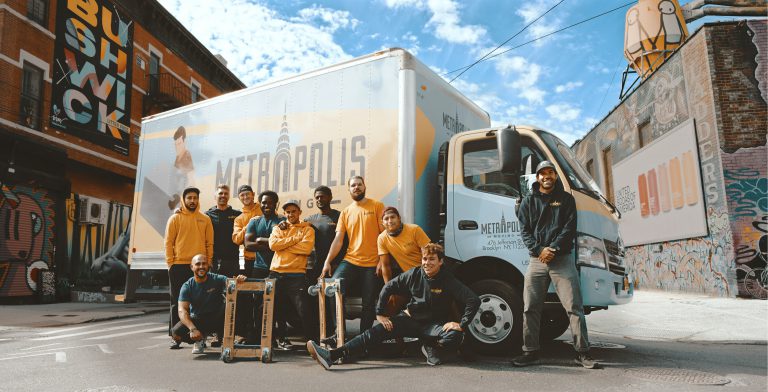
Working with local movers in small vans powered by biodiesel or electric can make your move green.
It seems like the most trendy business models these days have something to do with eco-friendliness or sustainability. It entirely makes sense because the people are more aware of the problems with the environment, and they want to do everything that they can to be more eco-friendly.
Therefore, starting an eco-friendly moving company is a great idea. Most businesses need to have a unique selling point to make a name for themselves, but the eco-friendly thing can help. So, the rest of the things might include getting a Texas DOT number, trucks, equipment, and finding office space, among other things.
So, let’s get right into the details.
Create a Business Plan
Before you start doing anything, draft a business plan for your moving company. A clear plan can help you outline the goals and set a foundation that you can use later to properly allocate your resources and budget.
A plan should also include development, strategies, and solutions in case of problems. You should even think about eco-friendly practices that your company can adopt.
Look For an Office Space
While starting a company doesn’t necessarily mean that you need to have an office nowadays, having a professional space can be incredibly useful.
Some people prefer to talk to the company in person before they hire them. Having a company location also shows people that you are not running a scam. With an office, your customers can also look over the packaging and products you offer.
If you do decide to look around for an office space, you should make sure the location is easily accessible. Also, adopt as many eco-friendly office practices as you can. These could be going paper-free, finding ways to reduce electricity use, using organic cleaning products, and many more things.
Purchase a Truck and Equipment
The main parts of a moving company are the vehicles and the equipment that they have. These items need to be purchased initially and then charged to each job as overheads correctly to avoid losing money in the future.
Firstly, you should look into box trucks for your company. According to your budget and business, you can purchase new or used trucks. But make sure that the size of the truck will match the type of jobs you will be taking on.
Secondly, you need to look into equipment. You may require many pieces of equipment for every job, but not everything will be used everywhere. That is why you should go over the equipment moving companies purchase and find out what you need.
Offer a Range of Services
While providing moving services is your business’s heart and soul, it shouldn’t be the only thing. Moving companies make money by offering a lot more services.
If any of your customers wants to move to a different home, but they want to store their belongings for a few days before getting it to the final destination, you should provide storage space.
Similarly, suppose your clients are looking for packaging material and boxes. In that case, your company should be able to provide eco-friendly options that makes their move easier.
You can also provide your clients with a list of things that can make their move more eco-friendly to further show how seriously your brand takes the green initiative.
Look over the services moving companies generally provide, find out what your competitors offer, and also see if you can find the solutions to any other problems. You can then create a service list within your budget and get more business.
Get Insurance
Getting insurance for your cargo is necessary because your customers will hold you liable for any damages or losses to their personal belongings.
When talking to a customer, you should try to tell them that they need to pack everything properly before the move or allow your team to do it if you offer the services. You can also clarify to them that they should pay additional to get coverage for their items if they think anything can break during the move.
Other than that, you should get insurance for your trucks, office, drivers, and other things that the law requires you to get.
Feel you are reaching out to a forest of abyss? Work seems endless? Keeping track of others worse.
Not too long ago, time tracking was time consuming.
While tracking time has been widely accepted as a viable way to improve productivity, filling out lengthy Excel sheets has commonly been viewed as an additional task.
As a result, the practice of time tracking has been known to face a lot of resistance in corporate scenarios.
However, things have changed. Today, there are specialised time tracking software that automate the part of time tracking that feels like a “task”.
This means, the cumbersome perception of time tracking is actually a misconception, and that’s just one of many.
Time tracking has immense potential to improve the output of any process, team, or employee.
In this article, we will talk about the various misconceptions and myths that surround employee time tracking so they don’t stop you from enjoying the benefits of this superb productivity hack.
Time Tracking Leads To Micromanagement
Many employees dread the idea of time tracking because they believe that it will lead to micromanagement. Now, there is no denying that there are many examples of micromanagers in almost all organisations. Be that as it may, if a manager isn’t someone who likes to micromanage their team, a time tracking software is not going to change that.
In fact, after the initial adoption period, employees can use their own historical time tracking data to justify a realistic workload and make realistic commitments to their managers.
With that said, there may be a little friction during the initial adoption period. This may be because the best time tracking software offer a wealth of data that the managers may find intriguing.
To smoothen the path of adoption, it is recommended that the upper management of your company should clearly and effectively communicate that the real purpose of time tracking is NOT micromanagement.
Time Tracking Leads To Employee Burnout
Another misconception that surrounds time tracking is that it constantly reminds employees of the endless cycle of repetitive tasks that they do on a daily basis. It is commonly thought that over time, this can cause apathy and stress, leading to a complete mental burnout.
This point is especially worrying to many nowadays when remote working is becoming popular. With blurring boundaries between homes and offices, the rigid office timings are also blurring and many professionals are reporting working well beyond their ‘normal’ working hours.
Contrary to popular belief, time tracking can help organisations and individuals solve this problem. With time tracking, employees can stay productive during the actual office hours and set boundaries that allow them to have personal time. At the same time, organisations will be able to ensure that their employees are giving their best during their official working hours.
Employees Will “Forget” Tracking Time
This one is similar to the misconception mentioned in the introduction of this article.
Traditionally, when time tracking was done on time tracking sheets, many employees would often forget to fill out their time sheets. While it is debatable if such instances were intentional or just simple human mistakes.
However, nowadays, time tracking is automated to a large extent. Therefore, there’s not much left to ‘forget’.
Moreover, it is important for employers to communicate the individual benefits of time tracking to their employees. This way, they will be more motivated to keep track of their own time and the ‘forgetting’ incidents will be limited to a minimum.
Conclusion
The fact that there are so many misconceptions surrounding time tracking has been a significant deterrent in the adoption of this awesome productivity technique. However, we hope that this article will help you see the benefits of time tracking and implement it in your organisation.
Now, more than ever, companies need to carefully consider their relationship with the environment. Modern consumers are judicious with where they shop and will go the extra mile for businesses that share their values. An eco-conscious approach to operations has several other benefits, including:
Access to tax schemes and incentives
Adaptability to evolving regulations
Protection against rising energy prices
Favourable relationships with stakeholders
Green credentials represent the efforts made by an organisation to reduce its impact. Brands that display strong green credentials have better reputations, thus attracting more customers, employees and partners. Let’s take a look at how UK businesses are investing in environmental change.
Making it Clear
While taking measures to improve sustainability is useful on its own, companies must preach what they practise to ensure that their contributions don’t go unnoticed. Here are four ways that businesses are getting the word out:
Training staff to effectively communicate green credentials when asked
Writing press releases on trending matters
Joining discussions and supporting eco-friendly initiatives
Aside from uploading content to their site, companies also share relevant posts on social media and promote events such as beach cleanups. Another common strategy is to engage customers by suggesting how they can help. For instance, supermarkets may put up notices asking shoppers to bring reusable bags.
Taking Small Steps
Having recently weathered the coronavirus storm, many businesses lack the resources for fully-fledged environmental campaigns. Fortunately, there are still countless ways to make a difference.
This includes upgrading old lighting, printing on both sides, using green cleaning products, partnering with recycling companies and discouraging plastic bottle use in the office. Another popular measure is to compare business energy suppliers online to cut down utility bills and support sustainable providers.
Getting Employees Involved
An organisation’s efforts to improve their green credentials will be to no avail if staff aren’t onboard with the initiative. Brands that are successful in this regard have made eco-conscious thinking part of their company culture. They create efficiency goals and use rewards to keep employees motivated. Business leaders may also:
Whether it’s a restaurant that takes delivery of fresh stock every morning or a hair salon that orders its products from overseas, companies rely on certain resources to stay operational. Acquiring them typically involves some degree of environmental impact, be it carbon emissions from transport or waste created by packaging material.
While the vendors themselves are responsible for carrying out their services efficiently, their clients can always choose more sustainable partners. That’s why businesses with strong green credentials will take the time to determine whether an eco-conscious alternative is available to meet their needs. Want to do know for your business? Learn…How to write an environmental policy.
Conclusion
Perhaps you’re looking to give your own business a greener image. Maybe you want to provide suggestions to the company you work for. Either way, the afore-mentioned strategies can help you build a solid foundation.
Purdue researchers Xiulin Ruan (left) and Joseph Peoples use an infrared camera to compare the cooling performance of white paint samples on a rooftop.
People in the Middle East or Texas who don’t want to enter an inferno 6 months of the year buy white cars. And if you have a black roof home or even a panel of glass windows that face the sun, expect to have your air conditioner bill go through the roof for 6 months of the year.
Some more research from Purdue and a “new” white paint, which is the whitest of the white paint, explores just how much you can save by painting your roof white. This is a great idea for energy savings on large industrial buildings, schools, hospitals, factories and government buildings looking to lower energy costs. They say that their experimental paint is so effective you might never need to turn your air con on. And after the new white roof? Maybe a rooftop garden? Solar energy panels?
Back over to the study: Purdue University engineers have created white paint that can keep surfaces up to 18 degrees Fahrenheit cooler than their ambient surroundings – almost like a refrigerator does, but without consuming any energy. We call this passive cooling.
According to the researchers, the paint would replace the need for air conditioning by absorbing nearly no solar energy and sending heat away from the building. Without the building heating up, air conditioning wouldn’t have to kick on.
“It’s very counterintuitive for a surface in direct sunlight to be cooler than the temperature your local weather station reports for that area, but we’ve shown this to be possible,” said Xiulin Ruan, a Purdue professor of mechanical engineering.
The paint not only sends heat away from a surface, but also away from Earth into deep space where heat travels indefinitely at the speed of light. This way, heat doesn’t get trapped within the atmosphere and contribute to global warming.
Sci Fi White Paint Video:
“We’re not moving heat from the surface to the atmosphere. We’re just dumping it all out into the universe, which is an infinite heat sink,” said Xiangyu Li, a postdoctoral researcher at the Massachusetts Institute of Technology who worked on this project as a Ph.D. student in Ruan’s lab.
Earth’s surface would actually get cooler with this technology if the paint were applied to a variety of surfaces including roads, rooftops and cars all over the world, the researchers said.
An infrared camera image shows that white radiative cooling paint developed by Purdue University researchers (left, purple) can stay cooler in direct sunlight compared with commercial white paint.
In a paper published Wednesday (Oct. 21) in the journal Cell Reports Physical Science, the researchers show that compared with commercial white paint, the paint that they developed can maintain a lower temperature under direct sunlight and reflect more ultraviolet rays.
Their proof is infrared camera images taken of the two paints in rooftop experiments.
“An infrared camera gives you a temperature reading just like a thermometer would to judge if someone has a fever. These readings confirmed that our paint has a lower temperature than both its surroundings and the commercial counterpart,” Ruan said.
Reflects most of the sun’s heat
Commercial “heat rejecting paints” currently on the market reflect only 80% to 90% of sunlight and cannot achieve temperatures below their surroundings. The white paint that Purdue researchers created reflects 95.5% sunlight and efficiently radiates infrared heat.
Developing this paint formulation wasn’t easy. The six-year study builds on attempts going back to the 1970s to develop radiative cooling paint as a feasible alternative to traditional air conditioners.
Making the whitest of the white from seashells
The researchers considered over 100 different material combinations, narrowed them down to 10 and tested about 50 different formulations for each material. They landed on a formulation made of calcium carbonate, an earth-abundant compound commonly found in rocks and seashells.
This compound, used as the paint’s filler, allowed the formulation to behave essentially the same as commercial white paint but with greatly enhanced cooling properties. These calcium carbonate fillers absorb almost no ultraviolet rays due to a so-called large “band gap,” a result of their atomic structure. They also have a high concentration of particles that are different sizes, allowing the paint to scatter a wider range of wavelengths.
According to the researchers’ cost estimates, this paint would be both cheaper to produce than its commercial alternative and could save about a dollar per day that would have been spent on air conditioning for a one-story house of approximately 1,076 square feet.
“Your air conditioning kicks on mainly due to sunlight heating up the roof and walls and making the inside of your house feel warmer. This paint is basically creating free air conditioning by reflecting that sunlight and offsetting those heat gains from inside your house,” said Joseph Peoples, a Purdue Ph.D. student in mechanical engineering and a co-author of the work.
Cutting down on air conditioning also means using less energy produced by coal, which could lead to reduced carbon dioxide emissions, Peoples said. The researchers have further studies underway to evaluate these benefits.
Environmental artist and designer Pablo Solomon lives in the hot and arid American state of Texas. He doesn’t believe that white paint could put air conditioners out of commission in Houston:
“While painting surfaces white does reflect sunlight, it will not replace AC in Houston, Texas. Having lived much of my early life there, the heat is made more miserable by the high humidity. Also, although Houston is 50 miles inland from the Gulf of Mexico, it is usually the first or second port by tonnage in the US due to it being accessible by the Houston Ship Channel being dredged from Buffalo Bayou and the San Jacinto River,” he tells Green Prophet.
He notes: “Houston’s weather is totally dominated and kept at subtropical warmth by the Gulf of Mexico. Normal humidity hovers around 80 plus percent. Downtown Houston is barely 50 feet above sea level and many of the suburbs toward the coast are less than that. Add all of the steel and concrete of America’s 4th largest city and AC is not a luxury, but a requirement.
“Thank heavens that new high efficiency AC units, double/triple paned windows and improved insulation cut energy use a lot. Also to put things in perspective, if you spin your home globe, you will see that Houston is the same latitude as Cairo and Saigon.”
___
Have a passive energy solution to report? Email me [email protected]
Clunkers from America, Europe and Japan clog the air in Africa. Can’t we send them electric cars already? Image via Reuters
My dad’s friend Kofi used to come over every few months to see how many old and used bicycles my dad had found while curbside shopping. Dad loved to collect old and used stuff from the garbage and made a living out of it – finding homes for old computers back in the day, recycling metal, or selling his items at a vintage shop.
Kofi could buy 100 bikes at a time, some for $5, some up to $20. The idea was to ship them in shipping containers to his homeland in Ghana, western Africa. There Kofi’s family fixed them up and resold them for a handsome profit, even though to us all those old bikes were thought of as junk, not even worth their weight in scrap metal.
Re-using and finding new homes for second hand bikes is one thing, but when it comes to old cars, it’s another. America, Japan and Europe are shipping non-road worthy cars to Africa where they are creating an enormous amount of air pollution, greenhouse gases and dangers for those driving them. But companies around the world, especially in the United States are looking for old cars for parts and to rehabilitate. Before you send it to the wrecker you might be surprised what a local internet search will find you.
Millions of used cars, vans and minibuses exported from Europe, the United States and Japan to the developing world are of poor quality, contributing significantly to air pollution and hindering efforts to mitigate the effects of climate change, according to a new report by the UN Environment Programme, also called UNEP.
The report shows that between 2015 and 2018, 14 million used light-duty vehicles were exported worldwide. Some 80 per cent went to low- and middle-income countries, with more than half going to Africa.
The first-ever report of its kind calls for action to fill the current policy vacuum with the adoption of harmonized minimum quality standards that will ensure used vehicles contribute to cleaner, safer fleets in importing countries.
The fast-growing global vehicle fleet is a major contributor to air pollution and climate change; globally, the transport sector is responsible for nearly a quarter of energy-related global greenhouse gas emissions, UNEP reports. Specifically, vehicle emissions are a significant source of the fine particulate matter (PM2.5) and nitrogen oxides (NOx) that are major causes of urban air pollution.
“Cleaning up the global vehicle fleet is a priority to meet global and local air quality and climate targets,” said Inger Andersen, Executive Director of UNEP. This is a United Nations environmental group. “Over the years, developed countries have increasingly exported their used vehicles to developing countries; because this largely happens unregulated, this has become the export of polluting vehicles.”
“The lack of effective standards and regulation is resulting in the dumping of old, polluting and unsafe vehicles,” she added. “Developed countries must stop exporting vehicles that fail environment and safety inspections and are no longer considered roadworthy in their own countries, while importing countries should introduce stronger quality standards”
The report, based on an in-depth analysis of 146 countries, found that some two-thirds of them have ‘weak’ or ‘very weak’ policies to regulate the import of used vehicles. However, it also shows that where countries have implemented measures to govern the import of used vehicles – notably age and emissions standards – these give them to access high-quality used vehicles, including hybrid and electric cars, at affordable prices.
Morocco understands the problem of old clunkers
For example, Morocco only permits the import of vehicles less than five years old and those meeting the EURO4 European vehicles emission standard; as a result, it receives only relatively advanced and clean used vehicles from Europe.
The report found that African countries imported the largest number of used vehicles (40 per cent) in the period studied, followed by countries in Eastern Europe (24 per cent), Asia-Pacific (15 per cent), the Middle East (12 per cent) and Latin America (nine per cent).
Through its ports, the Netherlands is one of the exporters of used vehicles from Europe. A recent review conducted by The Netherlands of its exports found that most of these vehicles did not have a valid roadworthiness certificate at the time of export.
Most vehicles were between 16 and 20 years old, and most fell below EURO4 European Union vehicles emission standards. For example, the average age of used vehicles exported to the Gambia was close to 19 years old, while a quarter of used vehicles exported to Nigeria were almost 20 years old.
“These results show that urgent action needs to be taken to improve the quality of used vehicles exported from Europe. The Netherlands cannot address this issue alone. Therefore, I will call for a coordinated European approach, and a close cooperation between European and African governments, to ensure that the EU only exports vehicles that are fit for purpose, and compliant with standards set by importing countries,” Stientje Van Veldhoven, The Netherlands Minister for the Environment, said.
Older cars, more accidents
Poor quality used vehicles also lead to more road accidents. According to the report, many of the countries with “very weak” or “weak” used vehicles regulations, including Malawi, Nigeria, Zimbabwe, and Burundi, also have very high road traffic death rates. Countries that have introduced used vehicles regulations also see safer fleets and fewer accidents.
UNEP, with the support of the UN Road Safety Trust Fund and others, is part of a new initiative supporting the introduction of minimum used vehicles standards. The initiative’s first focus will be countries on the African continent; a number of African countries have already put in place minimum quality standards – including Morocco, Algeria, Côte d’Ivoire, Ghana and Mauritius – with many more showing interest in joining the initiative.
“The impact of old polluting vehicles is clear. Air quality data in Accra confirms that transport is the main source of air pollution in our cities. This is why Ghana is prioritizing cleaner fuels and vehicle standards, as well as electric bus opportunities.
Ghana was the first country in the West Africa region to shift to low sulphur fuels and this month has imposed a 10-year age limit for used vehicle imports,” said Prof. Kwabena Frimpong-Boateng, Ghana’s Minister for Environment, Science, Technology & Innovation.
Hybrid or full electric? Elon Musk sells a nice idea, but it might be more eco of you just to stick with your old car
If you’ve been looking for the perfect electric car for your summer vacation or a long weekend getaway, why not take your time and consider the benefits of keeping your old totaled car in your garage instead? You may be surprised by the benefits that a properly maintained older car can offer.
There is no denying that owning an electric car is an exciting proposition. As the price for these vehicles drops, many people are taking advantage of them and driving them. While most electric cars are relatively inexpensive, some of them can become quite expensive if you want one that is right for you.
If you don’t know what it will cost to own an electric car, start by estimating the amount of money you can expect to save when you use one instead of your gasoline powered car. Factor in oil, oil changes and other routine maintenance as well. This number will help you determine if it’s worth the expense to buy a brand new one or if you should simply stick with your old car. Keep in mind that many of the features of an electric vehicle are more costly than the gas powered counterparts. Compare costs carefully: It possibly means that keeping your existing car can make your monthly expenses go down while providing you with an attractive option when compared to an electric powered model.
Another reason to keep your car around is because an electric car can keep you from having to plan road trips around vehicle recharging stations. Of course, you’ll need to make stops at gas stations during a long drive, but these are much easier to find than electric car charging stations. This can be a great benefit because it means that you’ll be able to get to where you need to go having to stop constantly and recharge. When on a trip, time is valuable.
An old car is a much better option if you have children that you plan on taking on trips with. Kids need to get up and move around every once in a while, so any stops at gas stations or tourist traps can help them cope with being in a vehicle for long periods of time.
A lot of people think that keeping your car is better than buying a new electric car because they don’t want to give up any convenience that they might have gotten used to owning their own car. For people who have been able to drive and work in a regular car, this may not be such a big deal. However, electric cars are more expensive to purchase. and maintain, and in the long run, you are paying more for the same convenience.
With so many benefits to owning an older car, most people would prefer to keep their old car rather than buy a new car. If you think that the gas prices will stay low, then buying a new electric car isn’t worth it because you won’t save very much money in the long run. Plus, many people have found that keeping their existing cars is easy if the extra money goes towards keeping their vehicles in good condition.
When you compare keeping your existing car with buying a new electric car, the biggest benefit you have is the fact that you are not obligated to pay a huge sum of money for your new car. Keep in mind just how much a new vehicle is going to lose value the moment that you drive it from the lot. You will be saving hundreds of dollars a month in car payments. Instead of a new Tesla, consider how nice it would be to have a lot of extra money to play around with.
When thinking about getting an extended warranty on a used car, you might have different options – depending on the state that you live in. In any case, this is an option that you’ll want to check out. Extended warranties are actually either Mechanical Breakdown Insurance (in California) or a Vehicle Service contract (in the rest of the USA).
While the benefits of buying an older electric car are many, the advantages of keeping your existing car in your garage do still make it the better option. Even used electric vehicles come with large price tags.
There are so many reasons to consider keeping your car in your garage instead of going to a new electric car. No matter what reason you have for keeping your car in your garage, there are plenty of advantages to owning an older model.
Eco-friendly materials are one of the biggest and fastest-growing trends within interior design. If you choose to opt for a ‘greener’ choice when it comes to your home’s flooring, you’ll be helping to ensure the future of our planet as these types of materials is more sustainable compared with man-made textiles. Ceramic floor tiles are just one of the many green alternatives out there.
For thousands of years, builders and decorators have chosen ceramic tiles for their construction and DIY projects due to the many benefits they offer. You may also be surprised to hear that they are also one of the most environmentally-friendly products you can opt for when redecorating your flooring.
Type, colour and space
Tiles have been commonplace for homes across the world for centuries, but nowadays, more and more people are using them to decorate and add a splash of colour to a room. Instead of being used for just your home’s bathroom floor, trends in interior design have seen people using floor tiles to other rooms such as kitchens, living rooms and bedrooms.
Aside from being used as flooring, tiles are now being incorporated onto walls such as hallways and even as splashbacks. There are a variety of options for your floor tile of choice. Tiles come in all sorts of different types and colours, and you also need to consider how they will fit into the room you want them placed in.
The type, colour and design of the floor tile you pick will likely depend on the room you are choosing to decorate. There are all sorts of different finishes you can apply, such as marble, wood and stone effects. Whatever look you want in your room, you can bet that there will be a type of tile to suit.
Durability
If you’re after a tile that is durable, keeps its pattern, but also has a funky finish, then it’s important to pick your choice of tile wisely, rather than throwing on any old random material on your floor.
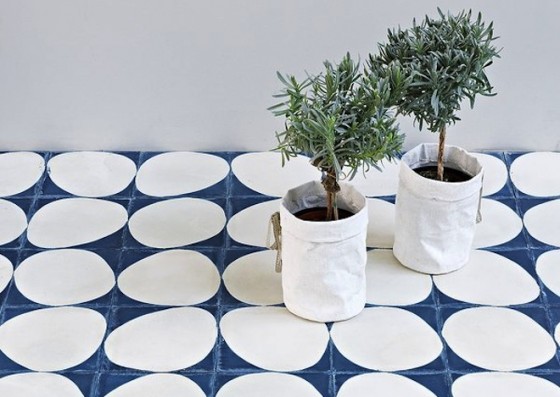
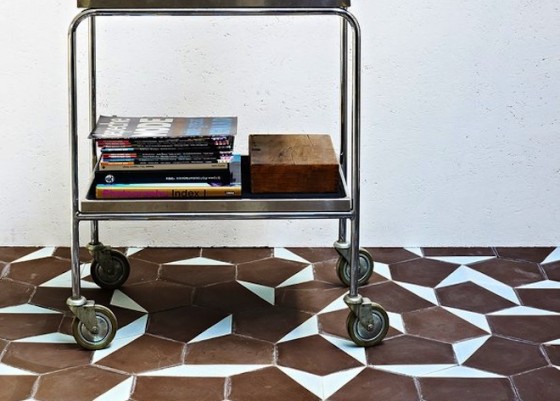
For example, perhaps you want a geometrical type of finish on the flooring of your hallway, but one that will keep the pattern intact over the years of use. Encaustic tiles aren’t patterned in the glaze but instead in different colours of clay, meaning that the design remains, even as the tile wears down. Tiles are great for durability, but also longevity. Unlike carpet or vinyl, it’ll be a while before you have to replace properly installed tiles. They can last a lifetime when looked after!
Think outside the box with colours and patterns.
Tiles allow you to get creative with your flooring space! For example, creating a ‘rug’ using ceramic tiles can be a great way to create spaces in your home that will add colour and interest. Alternatively, floor tiles can also be a great way to create a waterproof area on a wooden floor, such as for a standalone bath in a bedroom.
With tiles, the design possibilities really are endless!
Why opt for a more eco-friendly floor tile for your home?
You might be wondering why you should consider picking an eco-friendly ceramic tile for your chosen room’s flooring, over a carpet or laminate option? Take a look at just some of the benefits they can bring to your home and the environment.
Life cycle
As mentioned above, ceramic tiles are one of the more durable and long-lasting tile options you can choose for your floor.
Because you are not replacing them as frequently as you would with a carpet, this longevity reduces time, money and resources spent on extracting raw material, manufacturing, transportation, installation, demolition and disposal requirements. All of these contribute to the effect we are having on our climate and natural landscape.
Air quality
Ceramic tile doesn’t absorb volatile organic compounds (VOCs) or other contaminants. VOCs contribute to a wide variety of health problems and are a significant cause of ‘sick building syndrome.’ Because ceramic tiles are fired in kilns to very high temperatures, there are no volatile organics that can be released into the air we breathe.
Likewise, the lack of VOCs in ceramic tiles means that they inhibit the growth of mould, mildew and fungus! That’s why you’ll often find ceramic tiles in bathrooms where bacteria and fungus are natural habitats.
Maintenance
With ceramic tiles, there’s no need to use chemicals, waxes, strippers, solvents or shampoo that add to the level of toxic cleaning products being flushed down the drain and into the Earth’s ecosystem. They can be cleaned using nothing but warm water and pH-neutral cleaners.
Where can you buy eco-friendly ceramic tiles?
There are plenty of online stockists out there that are supplying eco-friendly tiles. One company that offers eco-friendly ceramics is Porcelanosa, who have created a ceramic parquet that is made from 95% recycled materials. Their tile is designed to reflect the textures and grains of natural wood with the technical properties of ceramic!
Lots of manufacturers are building better tiles today with processes that are greener and better raw materials. If you’re looking to make an impact on your carbon footprint reduction, then opt for a ceramic tile for your interior design!
Glow bacteria activated to sniff out nitrogen oxide, a gas emitted from old landmines
Buried landmines left and forgotten from wars and conflict of the past maim women, children and men alike. All sorts of technological solutions have been proposed to clear landmines from the Middle East, and years ago we reported on how Egyptian scientists proposed bacteria to do do just that.
A solution is badly needed as 20% of the world’s land mines are planted in Egypt, where they have killed or maimed a total of more than 7,000 people in the last 30 years. They are scattered in the western desert and Sinai and pose an enormous impediment to development as well as considerable risks to animal and human safety. In Cambodia they employ an award-winning rat to sniff out landmines:
Magawa is a Tanzanian-born African giant pouched rat who has been trained by the nonprofit APOPO to sniff out explosives. With careful training, he and his rat colleagues learn to identify land mines and alert their human handlers, so the mines can be safely removed.
A standout landmine sniffer
Even among his skilled cohorts working in Cambodia, Magawa is a standout sniffer: In four years he has helped to clear more than 1.5 million square feet of land – an area about the size of 20 soccer fields. In the process, he has found 39 land mines and 28 items of unexploded ordnance.
Globally about half a million people around the world are suffering from mine-inflicted injuries, and each year an additional 15 to 20,000 more are injured or killed by these devices. More than 100 million such devices are still buried in over 70 countries.
The major technical challenge in clearing minefields is detecting the mines. Where are those menacing objects just under the sand? Maybe trees have grown around them? The technologies used today are not much different from those used in World War II as shown the classic film The English Patient, requiring detection teams to risk life and limb by physically entering the minefields. There is a critical need for an efficient solution for the remote detection of buried landmines and unexploded ordnance.
Researchers from the Hebrew University of Jerusalem have updated existing research in researching engineered glow bacteria from E.coli to help armies and humanitarians with the task and report their findings in New Biotechnology. A couple of years ago they published similar research in Nature Biotechnology. There they offer a system combining lasers and bacteria to remotely map the location of buried landmines and unexploded ordnances.
Biosensors activated: Smells like grenade
The system is based on the observation that all landmines leak minute quantities of explosive chemical gas, which accumulate in the soil above them and serve as markers for their presence. The researchers molecularly engineered live bacteria that emit a fluorescent signal when they come into contact with these specific type of gas. This signal can be recorded and quantified from a remote location.
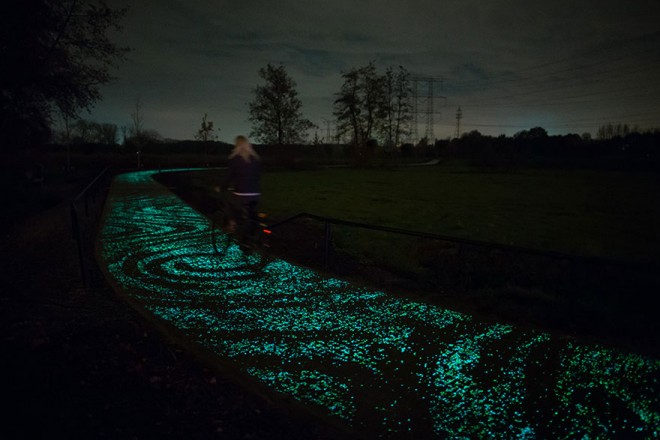
This bike path in Holland uses glow in the dark bacteria to light the way
How do they do it? The bacteria are covered in small beads, which are scattered across the surface of a test field in which real antipersonnel landmines were buried. Using a laser-based scanning system, the test field was remotely scanned and the location of the buried landmines was determined. This appear to be the first demonstration of a functional standoff landmine detection system.
“Our field data show that engineered biosensors may be useful in a landmine detection system. For this to be possible, several challenges need to be overcome, such as enhancing the sensitivity and stability of the sensor bacteria, improving scanning speeds to cover large areas, and making the scanning apparatus more compact so it can be used on board a light unmanned aircraft or drone,” said Prof. Shimshon Belkin, from the Hebrew University, who was responsible for genetically engineering the bacterial sensors.
Egyptians diffuse bombs with bacteria
Over in Egypt, the researchers also proposed a biological system for removing landmines by degrading them. By activating the bacteria that will attack the gas emitted from landmines.
Their biological solution involves three stages: detecting the mines, corroding its iron case, and then neutralizing its explosive power.
Aresa Biodetection, a company from from Norway, designed the first phase of the study in March, 2004 by creating a strain of mustard plant called Arabidopsis thaliana that turns red in the presence of nitrogen oxide that leaks from land mines.
Researchers hoped to spray seeds from an airplane with help from the air force.
The next phase of the then proposed idea involved spreading bacteria that will eat away at the iron casings so that the trinitrotoluene (TNT) gas will be released, but Laurel Anne Hill, moderator of the Minds Clearing Landmines, questioned whether Egypt’s land mines have iron casings.
The final stage would entails planting plants such as tobacco or sugar beet that absorbs nitrogen, which the Egyptians claim will finally deactivate the mines.
Landmine detection for the birds?
But Richard Butler, program Managing of Halo Trust which specializes in disarming hazardous war debris told the paper back in 2012 that birds will eat the seeds. Researchers countered by claiming that the area of northern Egypt where they plan to test the technology does not have a lot of birds.
Looking further into the Egyptian idea, it’s not clear whether the solution came to light. But there are loads of others for inspiration, like the mine detection boot. And of course Afghani dreamers like came up with this idea: artistic mine sweepers.
This Bedouin man in Egypt was maimed by a landmine
Have a creative landmine detection idea like the one below? Or a company that wants to work with creative teams to deploy your solution in a pilot. Reach out and hopefully we can help you connect to the right folks.
The FSO Safer is a sinking oil tanker off the coast of Yemen. Rebels won’t let international bodies in to contain the oil. The movement of oil is dangerous in the Middle East. Can Israel and the UAE do it better?
The United Arab Emirates (UAE, or the Emirates) and Israel signed an historic peace deal last month. For decades Muslim nations have boycotted and snubbed Israel in trade and tourism. It was so bad in the 70s with an oil embargo that Israel had only a handful of allies to help them buy energy. The strain caused Israel to develop in new ways, in solar energy and natural gas exploration.
A new deal in the wake of a blooming love story between Israel and the Emirates has led to a landmark oil deal between Israel and the Emriates. In the deal, Emirate crude oil will be transported through the Indian Ocean and Red Sea by tanker, then shipped by pipeline through existing pipelines in Israel.
From there the oil will be shipped to Europe and other nearby locations, hopefully avoiding the Taliban and the Houthis in Yemen along the way, because piracy is still an issue. Read about the sinking oil tanker off the coast of Yemen which could cause an oil spill 5 times the size of the Exxon Valdez.
The new deal will be managed through a company called the Red-Med Land Bridge based in the Emirates and it is actually a joint venture between several companies: Petromal, the oil and gas arm of Abu Dhabi’s National Holding and AF Entrepreneurship, an Israeli company.
The Red Med Land Bridge will work with Israel’s Europe-Asia Pipeline Co. (EAPC) to transport Emirati oil through Israel starting at its Red Sea port up to Haifa, which is an important energy transport hub to Israel and the rest of Europe.
In the deal, the Red Med Land Bridge will transport oil from the Gulf state and Eastern markets to the West via pipelines linking the Mediterranean to the Red Sea, as part of new commercial agreements between the two countries.
The agreement “offers oil producers and refiners the shortest most efficient and cost-effective route to transport oil and oil products from the Arabian Gulf to the consumption centers in the West, and provides access for consumers in the Far East to oil produced in the Mediterranean and Black Sea regions,” EAPC offered in a statement.
Storing and processing crude oil in Israel?
The Emirates is one of OPEC‘s third-largest oil producers and they struck a peace deal with Israel in Washington on Sept. 15, 2020. The prime minister of the Emirates arrived in Israel on Oct. 20 to consolidate trade deals and tourism, which will include visa-free entry to both countries.
A high level Emirati delegation arrived in Israel on Oct. 20 to sign commercial agreements in agriculture, tourism energy projects that hopefully also include renewable energy. Critics say that at 30% renewables Israel has set a low bar.
The world is still addicted to oil, well we depend on it, but we can bank on the progressive Emirates to lead the way in renewable energy, with Israel as an innovation partner. Israel still only produces a small amount of its energy needs using solar energy, about 5% of its energy needs, but its intentions are there to increase this number.
Some challenges in Israel: Just recently a large wind farm project slated to be built on a UNESCO bioreserve was axed. They said the noise pollution and damage to birds would be too great. Nature lovers and activists are well educated in Israel and it will be interesting to see how they react to an oil pipeline deal, given oil spills do happen in Israel. There was one at the end of October out of Ashkelon, some 2 miles out at sea. Beachgoers in Tel Aviv got their feet covered in sticky tar.
The environment minister Dov Henan had said about the oil spill in Eilat: “During the deliberations of the subcommittee on oil dangers in the Gulf of Eilat, we discovered an alarming picture of neglect and an inability to cope. Unless the laws are changed to better regulate the petroleum industry an oil disaster in Israel is only a matter of time.”
The oil pipeline plan and potential for Israel
The Israeli pipeline company EAPC already has about 200 miles of bi-directional oil pipelines installed with a capacity to carry 30 million mt of crude/year from Eilat to Ashkelon.
Israel consumes 10.5 million mt/year of oil, according to its energy ministry. Meanwhile the Emirates with a production capacity of 4 million b/d, sells most of its oil to Asia, according to S&P. The country sells mainly refined oil products over to Europe, and these are transported via tankers that travel up the Red Sea through to the Suez Canal and then onto Europe through the Mediterranean.
Reviving a lost oil dream with Iran
The Israeli pipeline was built in a joint venture with Iran in 1968, but after the Islamic Revolution in 1979 Israel lost its energy partner. The company changed its name from the Eilat-Ashkelon Pipeline Co. to EAPC last year in 2019.
The EAPC will help Gulf oil companies bypass the Suez Canal, the manmade canal built by Egypt in the 1960s to link the Red Sea to the Mediterranean Sea, expanding trade from the east to the west. This canal also allowed damaging invasive species like these jellyfish to proliferate.
We can assume that since Israel has struck a deal with Chevron in natural gas that the EAPC may be able to provide infrastructure services in those areas to Europe.
The EAPC route through Israel is a good alternative to the Suez Canal in that the Suez it is limited by tanker size, and the pipeline that exists in Egypt, the SUMED, only carries oil products in one direction from the Red Sea to Sidi Kerir on the Mediterranean Coast. Sending a tanker to ship oil around the Cape of Good Hope is more expensive and slower.
Israel is also proposing an oil pipeline deal with Saudi Arabia. Every OPEC nation is looking to shorten its distance to market and Israel is a good shortcut to take. Especially given its experience in security.
Want to take action in cleaning up the sea? The UN has a new investment guide for bankers. We learned that banks are supporting the burning of the Amazon, whether or not investors at the bank are aware. Be one step ahead and invest in the sea, with this handy toolkit and guide you can download here.















 Jozsef Kadar is a researcher at the Center for Renewable Energy and