CBD is a non-psychoactive form of cannabis that is used widely for relation, calming anxiety, chronic pain and for supporting love.
After seeing the Great Pacific Garbage patch spanning 600,000 square miles and learning that up to 200 million people could be displaced by climate change by 2050, you might be eager to start doing your part for the environment and your own health. Small changes can make a difference, and you might feel better knowing you’re positively contributing to the environment. If you’re dedicated to going green, here are a few small changes to start you on your journey.
Choose Natural Food and Healthcare Products
Paying more attention to the food, healthcare, and beauty products you buy might be an excellent way to start your ‘green’ journey. For example, when you buy Delta-9 gummies to potentially assist with sleep, pain, or other ailments, you’re giving your money to natural product producers rather than pharmaceutical companies.
According to the World Economic Forum, the pharmaceutical industry is responsible for 4.4% of global emissions. If the sector doesn’t change its ways, its CO2 footprint is expected totriple by 2050. You might also decide to choose organic food products since organic farmers produce food in an ecologically balanced way.
Walk and Bike
The average passenger vehicle emits approximately4.6 metric tons of carbon dioxide annually, contributing to planet warming. Human activities, such as driving, have raised the carbon dioxide content in the atmosphere by 50% in less than two centuries. If you are fortunate enough to live close to all life’s necessities, consider swapping car rides for walks and bike rides. Not only can you treat your body to the exercise it needs, but you’re reducing your environmental footprint in the process.
Avoid Single-Use Plastic
The majority of materials within theGreat Pacific Garbage Patch spanning from California to Japan is plastic. Every time we purchase a plastic product that has the potential to end up in the ocean, we’re contributing to the problem.
Where possible, purchase goods made from sustainable, biodegradable products. For example, if you’re purchasing plates for a picnic, consider reusable plates or those made from sustainable materials like plant fibers. Swap plastic straws for paper, stainless steel, or glass, and use refillable metal drink bottles rather than disposable plastic ones.
Recycle
The average American throws away 1,800 pounds of waste annually, equating to around4.9 pounds daily. Most of this waste is dumped into landfills or burned in incinerators. We can reduce our environmental impact by actively recycling. Many businesses throughout the United States offer a wide range of recycling options for products and materials like:
Paper and cardboard
Plastic
Glass
Aluminum
Metal
Batteries
Electronics
Used oil
Tires
Use Energy-Efficient Appliances
We use a significant volume of fossil fuels and nuclear energy for energy generation in the United States, both of which are harmful to the environment. Alongside switching to renewable energy sources like solar and wind, we can also actively reduce power consumption by switching to energy-efficient products and appliances. The average energy-efficient appliance can contribute tolower greenhouse gas emissions, decreased water usage, and lower electricity demand.
Going green doesn’t have to be a challenging or time-consuming process. Look after your health with natural products, recycle more, and try cleaner transportation methods, and you might be well on your way to living a greener and more sustainable lifestyle to benefit the planet.
Omar is a Swahili man from Lamu, a special island off the coast of Kenya. Image by Tafline Laylin for Green Prophet. Genomes uncovered from centuries-old East African towns revise conclusions of colonial science.
Genome research now looks to the diverse origins of Swahili culture, with Swahili people carrying a mixture of local African, Middle Eastern and South Asian ancestry. The Swahili culture (where Muslim imams worry about Chinese ports) was often thought of being an Arab colony, but new investigation into the DNA shows this is untrue.
Researchers led by Harvard’s Esther Brielle at the Department of Human Evolutionary Biology, analysed the genomes of 54 individuals buried in Kenya and Tanzania between the years 1250 and 1800 and found that they were descended from people who began mixing around the year 1000.
Nearly all of their East African ancestry seemed to come from women, whereas most of the Asian ancestry was contributed by men from Persia.
Persians are not Arabs. The new DNA results do support the oral traditions of the Swahili people in Kenya and dispel colonial myths and old writings of Europeans who came to Africa and found that Swahili civilization is “essentially an Arab civilization”, notes anthropological archaeologist Chapurukha Kusimba, who co-led the study in Nature.
Industrial wastewater can be a major challenge, particularly for businesses and facilities with high production or manufacturing volumes. It can pose many environmental threats without proper disposal practices, from water pollution and soil contamination to even hazardous health effects. However, companies and industrial plants can take action to minimize the risks associated with managing these types of waste materials. Here are five tips:
Monitor Your Wastewater Regularly
Industrial facilities producing wastewater should monitor and test this waste regularly. This allows them to identify any potential pollutants or contaminants in the wastewater before it can cause wider environmental or health issues. To facilitate regular testing, facilities should have an up-to-date wastewater treatment plant and a reliable monitoring system. Once any contaminants are detected, steps must be taken to rectify the problem quickly and effectively. Keep records of all tests to address and rectify any issues quickly.
Work With a Professional Team
Professionals have up-to-date knowledge of local laws and regulations and the best practices for proper wastewater treatment, disposal, and recycling. They also have access to cutting-edge technology, which ensures that wastewater is managed economically while maintaining its quality standards. With their experience and skill, they can provide invaluable advice on the most effective methods to achieve successful wastewater management.
Utilize Vacuum Evaporators Treatment
Industrials can benefit from using vacuum evaporator for wastewater treatment due to the process’s efficiency, cost-effectiveness, and simplicity. The process uses less energy than traditional methods, which benefits a company wanting to minimize its carbon footprint. Additionally, wastewater treated with a vacuum evaporator can be reused in many applications to utilize resources more efficiently. They are also low maintenance and require fewer consumables than other systems. This makes them an attractive option for those looking to accommodate their budgetary needs while providing effective wastewater treatment.
Educate Employees On Proper Procedures
Employees need to be trained on the local environmental regulations and proper safety measures, hazardous materials, and waste management practices. Knowing these will equip workers with the knowledge to properly manage and dispose of wastewater without damaging natural resources or causing an accident or spill. By having an educated workforce, facilities can rest assured that these crucial procedures are followed to ensure a safe, clean environment.
Adopt Sustainable Practices
Adopting sustainable practices includes implementing energy efficiency measures, using recycled materials, and promoting green initiatives throughout your organization. All these actions will help reduce pollution levels and lessen its overall impact on the environment while helping your company save money over time through reduced operating costs and improved productivity levels due to increased efficiency measures utilized within your business operations.
Managing your industrial wastewater is critical to running any business efficiently and responsibly while protecting public health and safety from potential hazards associated with improper disposal methods, such as dumping untreated waste into waterways or landfills without proper containment measures. By following these five essential tips for managing your industrial wastewater, you can help ensure that your business remains compliant with local regulations while keeping your employees safe from potential hazards due to contact with these hazardous materials.
The term inflation often makes people break out into a cold sweat every time it’s mentioned and for good reason. Inflation rates affect the prices of basic goods and services which in turn increase the cost of living. We are seeing this in play right now not only in the USA but across the board. What drives inflation is complex and varies from country to country. The below seven factors are common contributors that we see across the globe:
Increase in demand
One of the biggest drivers of rising inflation rates is an unexpected increase in consumer demand for specific goods and services. Think about what panic buying at the start of the pandemic did to the price of toilet paper, N95 masks and hand sanitizer. Suppliers struggled to meet the demands of consumers and so what little stock they were able to produce could fetch much higher prices.
Increased production costs
When it costs a manufacturer or farmer more to produce their product, naturally the retail price is going to be inflated as a result. So, let’s look at a real-world scenario where the price of electricity, gas and fuel have sharply risen. This makes it more expensive for a factory to run their machinery and transport goods to consumers. Their suppliers will be under similar pressure which pushes the prices of raw materials up too. In order to maintain profit margins, manufacturers are left with no choice but to increase their prices, which filters down to the end-consumer.
Supply chain shortages
World events such as the pandemic and Ukraine-Russia conflict or a natural disaster like a drought can cause supply chain disruptions. This means there will be reduced production capacity for suppliers or they will need to seek out more costly alternatives to meet demand. Either way, the cost of the end-product is going to increase significantly. An example of this was back in 2010, where a heatwave in Russia affected Egypt’s wheat supplies due to a temporary ban on grain exports in Russia.
This one may surprise you but when there is more money circulating in the economy, the cost of goods and services will generally rise. That sounds a bit counterintuitive though, right? How can more money lead to higher prices, shouldn’t it drive prices down? Sadly not, especially when economic growth is not in line with the money supply. More money in circulation than domestic output will mean the currency weakens and GDP growth slows, both precursors to rising inflation.
Expectations of inflation
We like to think of this one as similar to the law of attraction… when businesses and banks are expecting to see inflation increase, an actual increase tends to follow not long after. This is because businesses will make decisions such as shutting down a production plant or retrenching staff to brace themselves for any downturn in sales. As a result of reduced supply or less competition, inflation goes up.
Exchange rate fluctuations
The exchange rate of a country also has a direct impact on inflation rates. If a currency weakens, investors tend to pull out or pull back on their investments, which puts financial strain on businesses. As a result, the cost of commodities and production increases, directly driving consumer prices higher.
Monetary policy
The monetary policies of a country, such as government spending, tax rates and interest rates, can drive inflation up or down. When the government spends more on public services and goods, it can stimulate economic growth which will in fact drive inflation rates upwards due to increased demand. For example, the Covid-19 stimulus packages have contributed to the current unusually high inflation rates because they provided households with additional spending money, driving up demand and thus inflation.
When governments increase taxes, the disposable income consumers have for purchases is reduced which tends to lower both demand and supply and thus inflation rates.
If a government is in debt and needs to borrow money to fund its spending, this will increase the money supply and as we covered already, more money in circulation than economic growth leads to higher inflation rates.
Final takeaway
Electric cars will saving thousands on fuel
As we can gather from the above, there are many factors that influence the inflation rates of a country. While some are obvious, others are quite surprising. When examining how these factors interact with each other, it becomes evident they are all closely linked. A change in one could have a resulting effect on another and drive inflation up or down. By understanding exactly what drives inflation, you can be better prepared to deal with the financial consequences on a business or personal level.
Thailand is one of those nature-by-design locations that is easy to get around in, sustainably
Travel and sustainability by default don’t go hand in hand. If you have to fly somewhere or drive long distances you are contributing to greenhouse gas emissions and climate change. That’s why staycations have been a priority for ecologically-minded people. Traveling local reduces your carbon footprint and lets you support the people and businesses close to your home.
But travel is an industry that holds together the economies of some countries like Thailand and Egypt. Two of our favorite places. Plus, it’s fun. And what if you are a writer who makes a living writing about travel? Get out there, but do it sustainably.
Tips for working as a writer in sustainable travel
Finding jobs
If you are looking for work as a writer –– don’t worry –– ChatGTP still hasn’t taken over the world –– or your job. Creative, knowledgeable people in multiple languages are sought after across a wide range of outlets in the writing and journalism fields. Sites like Topcontent hire writers in the travel space and this site focuses on niche areas and non-English content as well. If you aren’t strong in English, but write well and have a passion for writing and travel, this site is for you.
If you dream about being a digital nomad, it doesn’t mean you have to work as a travel writer, but it sure can be fun. There are plenty of Facebook groups that offer writing gigs for travel writers. Digital Nomads on Facebook is a place where we found writers for Green Prophet and even if you aren’t in the position to travel, you will learn that you can write about your hometown or favorite city like no one else on the planet. Take your school assignments from college or university and do it in the place in situ if you are learning over Zoom working with a tutor to do my physics homework.
Finding the muse
Another tip for you is to hone in on your passions. Here are some tips and ideas for you to explore: If you like food, start writing about the best restaurants for locals. Think about ones that use local, seasonal ingredients and which tell the story of the place. This kind of content helps travelers be easier on the planet by eating healthier. Tourists often get stuck hungry at landmark sites and after reading bogus Yelp reviews end up eating low-quality junk food served on plastic that many locals would never touch.
A good way to start writing is to approach the topic like you are speaking to your best friend when you were 12-years-old. This way you explain the idea in a way that is easy-going and colloquial, you will say things honestly and you will write in a way that a 12-year-old can understand. No one needs complicated words to make a point.
Getting of the house is never a bad idea. Even travel writers love to lie in bed and wait for the world to come to them. Just because you crave exotic locations and food, getting out of bed when you have arrived to your destination is the next step. Dust off your barefoot shoes, turn over new stones, and go to the opposite path of the travellers and tourists before you.
Deciding what is eco – you can be the judge
Most travel resorts and guest houses around the world aren’t calculating their carbon footprints. If you stay at a family-run guest house in Calcutta and ask them how eco-friendly their rating is, they might have no idea what you are talking about. But it’s eco to support family-run guest houses, just like it’s eco to travel to Chiang Rai and stay with the Hill Tribe people.
Visiting Hill Tribe children in Thailand
On the other hand there are large “eco” resorts on Phuket, Thailand like the Keemala, where we stayed last year (and it’s one of the best places we have ever visited), and they can send you a sustainability rating and eco-process they created and designed to help the jungle and the local population. Use common sense: it goes without eco-credentials, that small family businesses are more sustainable than large resorts.
Keemala in Thailand. We stayed there and didn’t want to leave. Built by experts who know the jungle.
Lastly, if you travel to a place boasting about it’s eco credentials, ask them about power use, water reuse and plastics. Ask them about employee salaries, benefits and time off. You can decide if the credentials are real or just a marketing tactic.
Cybe is pushing the boundaries and collaborating with Lab040 in Eindhoven to create the first-ever, 3D printed, four-story apartment.
In recent years, the construction industry has transformed as new technologies have emerged to address various challenges. The relationship between software, hardware, and education is driving innovation in construction and changing the way buildings are designed and constructed. In this article, we will explore some of the most significant advancements in this field, including the rise of 3D construction companies and the development of 3D concrete printers.
3D construction
Cybe is an example of a 3D construction company is which has revolutionised the construction process by leveraging cutting-edge technology. By using 3D concrete printers, which can be many meters in height, they have managed to create complex structures with greater efficiency, reducing both construction time and material waste. Some printers print within a three-dimensional zone, like an ordinary domestic printer, whilst other options include a robotic crawler and track that can extend far away from its body.
This innovative approach not only benefits the environment via less wasted resources and leaner production, but also translates into cost savings for clients.
As we delve deeper into the role of technology in construction, it becomes clear that software plays a crucial part in this transformation. Building Information Modeling (BIM) has become a standard in the industry, allowing architects, engineers, and construction professionals to collaborate on a single digital model of a building – a bit like CAD. This level of integration enables seamless communication, better decision-making, and enhanced overall project management.
However, the success of these technological innovations would not be possible without a skilled workforce. And, despite how the news may sometimes portray it, the goal of 3D construction isn’t to replace all labourers. Education plays a pivotal role in fostering talent, ensuring that construction professionals are equipped with the knowledge and skills required to effectively utilise these advanced tools. The roles of the construction workers shift with 3D printing, and everyone becomes more productive.
Some key advancements in the interplay between software, hardware, and education include:
Advanced simulation and analysis software, which helps identify potential structural issues early in the design process, preventing costly mistakes down the line.
The use of drones for site inspections and progress monitoring, enabling construction managers to oversee projects more efficiently and safely.
The incorporation of virtual reality (VR) and augmented reality (AR) technologies in construction education, providing immersive, hands-on training experiences for students.
The development of smart, connected construction sites, where real-time data collection and analysis lead to better decision-making and increased productivity. 5G is important here for lower latency.
The rise of modular construction, where building components are manufactured off-site and assembled on-site, reducing waste and speeding up the construction process.
Easier collaboration in the design process through BIM, allowing architects and professionals from various industries to share knowledge and work on a single digital model.
Sheikh Mohammed bin Rashid Al Maktoum, Vice-President and Prime Minister of the UAE and Ruler of Dubai, stands in front of the the first world functional 3D printed offices during the official opening in Dubai May 23, 2016. REUTERS/Ahmed Jadallah
Final Word
As the construction industry continues to evolve, the relationship between software, hardware, and education will be the driving force behind sustainable, efficient, and innovative building practices. The adoption of 3D concrete printers and the emergence of 3D construction companies are just a few examples of how technology is revolutionising the way we build. 3D construction isn’t out to replace workers, but to make them more skilled and productive by harnessing new technology.
To ensure safe and secure transportation, it is necessary to have the best practices in place. That’s why, in this article, we’ll be exploring the best practices for safety and security in the transportation sector. This includes monitoring and tracking movements and cargo, legal requirements for drivers and carriers, tips on how to handle emergencies, and more.
Steps to Enhancing Safety Practices in the Transportation Industry
Monitor and Track Movements and Cargo– A major part of ensuring safety in the transportation sector is being able to monitor and track movements and cargo. Doing so can help to reduce the risk of theft or any other form of harm that could befall a shipment. Technology such as GPS tracking devices, cameras, sensors, and RFID tags can be used to increase visibility in the transportation sector.
Establish Legal Requirements– Everyone involved in the transportation process must be aware of necessary legal requirements, such as driver licensing and carrier registration. This helps to ensure that all drivers and carriers are properly trained, qualified, and experienced enough to handle the job. Furthermore, it is important to make sure that all the necessary insurances are in place to minimize liability and risk.
Handle Emergencies– Every transportation provider should have a plan in place for how to handle any emergency that may occur. This could include having safety personnel on hand, providing first aid kits and other emergency items, and establishing communication protocols between dispatchers and drivers.
Follow Safety Tips– Finally, it is important to provide safety tips to everyone involved in the transportation process. These could include things such as wearing a seat belt at all times, avoiding distractions while driving, and making sure to take frequent breaks throughout long trips.
Overall, safety is of utmost importance in the transportation sector. Taking steps to ensure safe and secure transportation will go a long way toward keeping everyone involved in the process safe.
How Automation is Revolutionizing Transport Safety Protocols
The transportation industry is rapidly evolving due to the introduction of automation. Automation has been credited with making transport systems much safer, faster, and more efficient. This includes the implementation of autonomous vehicles which reduce the need for human drivers in certain situations.
Additionally, many companies are using automated systems such as artificial intelligence (AI) and machine learning (ML) to help monitor and evaluate safety protocols. This technology can track speed, detect accidents in advance, and predict possible problems before they happen.
Automation is also making it easier for transportation providers to manage their fleets and optimize route planning, resulting in shorter commute times and increased safety.
After working with plants and AI for years I’ve known it to be true. Dozens of cannabis growers I’ve interviewed knew it was true too. And now science proves it: plants emit sound, which means they can talk. Not like us: they talk more in clicks and ticks and using the help of artificial intelligence scientists have transformed plant talk into audible sounds we can hear.
The click-like sounds, similar to the popping of popcorn, are emitted at a volume similar to human speech, but at high frequencies, beyond the hearing range of the human ear.
“We found that plants usually emit sounds when they are under stress, and that each plant and each type of stress is associated with a specific identifiable sound. While imperceptible to the human ear, the sounds emitted by plants can probably be heard by various animals, such as bats, mice, and insects,” the scientists announced. The paper was published in the prestigious scientific journal Cell.
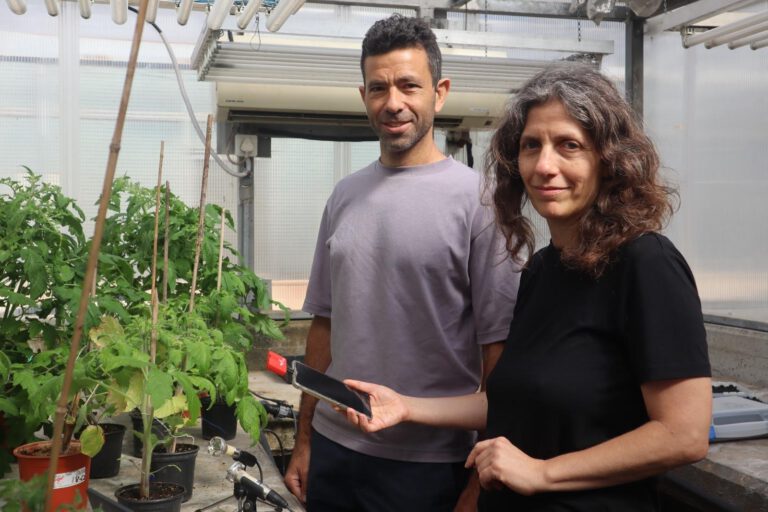
The study was led by Prof. Lilach Hadany (left) together with Prof. Yossi Yovel at Tel Aviv University, .
“From previous studies we know that vibrometers attached to plants record vibrations. But do these vibrations also become airborne soundwaves – namely sounds that can be recorded from a distance? Our study addressed this question, which researchers have been debating for many years,” says Hadani.
How to record the sounds made by plants
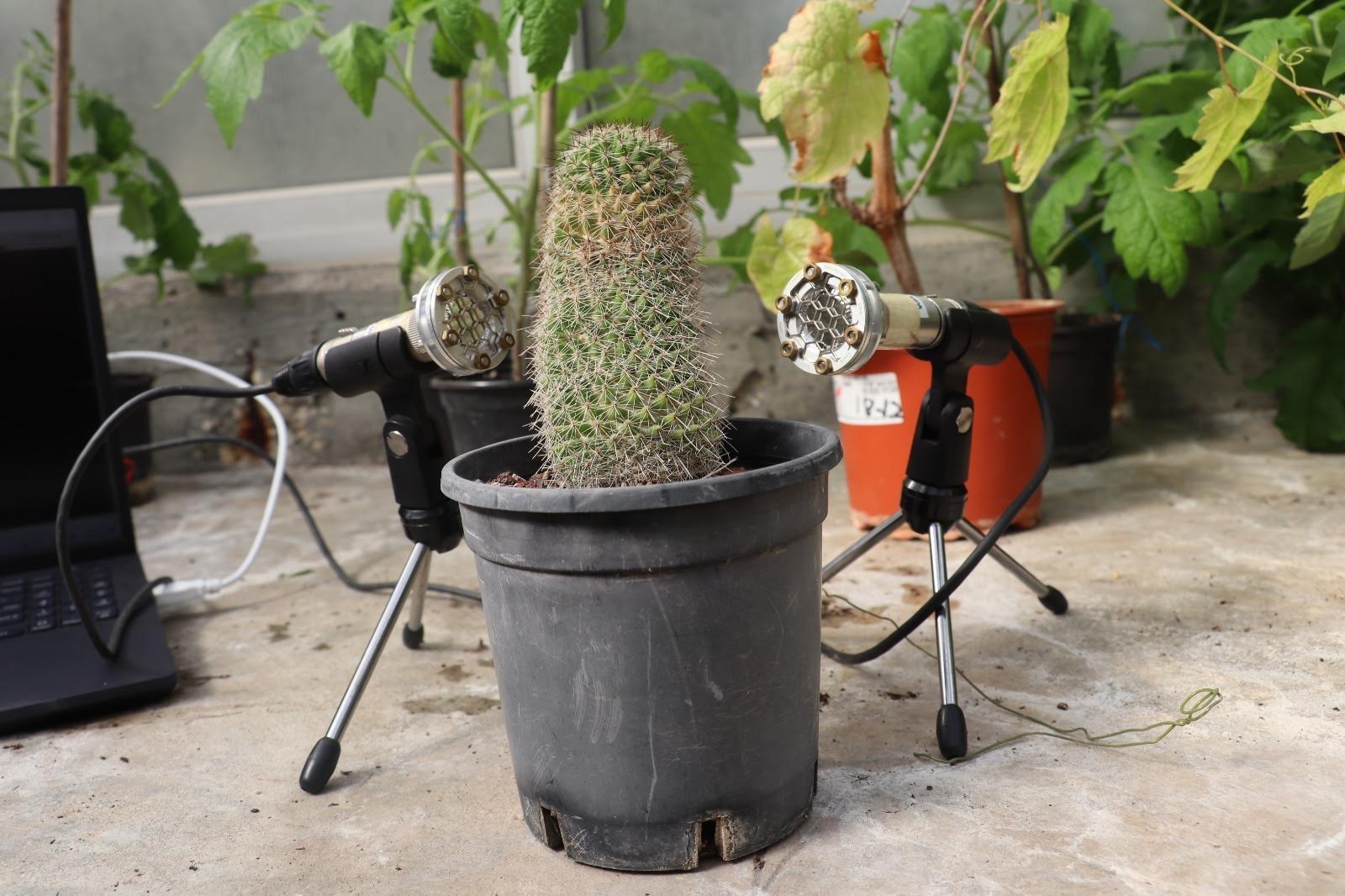
Recording sounds made by a cactus
At the first stage of the study the researchers placed plants in an acoustic box in a quiet, isolated basement with no background noise. Ultrasonic microphones recording sounds at frequencies of 20-250 kilohertz (the maximum frequency detected by a human adult is about 16 kilohertz) were set up at a distance of about 10cm from each plant.
The study focused mainly on tomato and tobacco plants, but wheat, corn, cactus and henbit were also recorded.
Prof. Hadany explains: Before placing the plants in the acoustic box we subjected them to various treatments: some plants had not been watered for five days, in some the stem had been cut, and some were untouched.
Recording the sounds made by plants
“Our intention was to test whether the plants emit sounds, and whether these sounds are affected in any way by the plant’s condition. Our recordings indicated that the plants in our experiment emitted sounds at frequencies of 40-80 kilohertz. Unstressed plants emitted less than one sound per hour, on average, while the stressed plants – both dehydrated and injured – emitted dozens of sounds every hour.”
The recordings collected in this way were analyzed by specially developed machine learning (AI) algorithms. The algorithms learned how to distinguish between different plants and different types of sounds, and were ultimately able to identify the plant and determine the type and level of stress from the recordings.
Moreover, the algorithms identified and classified plant sounds even when the plants were placed in a greenhouse with a great deal of background noise. In the greenhouse the researchers monitored plants subjected to a process of dehydration over time and found that the quantity of sounds they emitted increased up to a certain peak, and then diminished.
“In this study we resolved a very old scientific controversy,” says Prof. Hadani. “We proved that plants do emit sounds. Our findings suggest that the world around us is full of plant sounds, and that these sounds contain information – for example about water scarcity or injury. We assume that in nature the sounds emitted by plants are detected by creatures nearby, such as bats, rodents, various insects, and possibly also other plants – that can hear the high frequencies and derive relevant information.
We believe that humans can also utilize this information, given the right tools – such as sensors that tell growers when plants need watering. Apparently, an idyllic field of flowers can be a rather noisy place. It’s just that we can’t hear the sounds.”
In future studies the researchers will continue to explore a range of intriguing questions: What is the mechanism behind plant sounds? How do moths detect and react to sounds emitted by plants? Do other plants also hear these sounds?
The new sci-fi series Extrapolations takes a look at the world in 2038 depicting how humanity adapts and survives climate change. The show features “urban mining” as a main industry in a world over-consumed and warmed to the limits of its survival. What can we extract from our past once all the resources are used up?
Rare earth metals, the vitamins to modern industry, power the kind of future we want to support: wind turbines, electric cars and rechargeable batteries. But these materials are limited in supply and the mining industry that pulls rare metals from the ground is fraught with regulatory hurdles and environmental woes. Most people don’t want a lithium mine in their backyard no matter how lucrative it might be for the nation.
Regenx from Canada has evolved the concept of mining: they are urban mining in the classic sense and pointing the way to cleaner and more sustainable ways of recovering minerals from industry. Traded on the TSXV: (RGX) and OTCQB: (RGXTF), Regenx has developed a smelter-free alternative to recovering the valuable rare metals palladium and platinum.
The company’s founders came from the mining industry and saw the writing on the wall: “The mining business is changing with legislative requirements, environmental issues. Mining had to change,” says Greg Pendura, the CEO of Regenx. “We wanted to develop technologies that brought eco-friendly technologies to mining.
Jump ahead and watch our interview with Regenx CEO Greg Pedura:
He tells Green Prophet: “Mining is a tough industry: you are out in the elements but we can mine 365 days a year, indoors. It is kind of a cliche, this “urban farming” but we really can do it in an eco-friendly manner.”
Typically today when a car dies or its catalytic converter replaced, it gets smeltered or goes to landfill. While not present in electric vehicles, a catalytic converter is an essential part of our still thriving petroleum-based economy serving diesel cars and trucks. It controls emissions by breaking down toxic gasses turning them into water and carbon dioxide. Palladium and platinum is needed for building new catalytic converters and these metals will play a critical role in the cleantech industry.
Peak palladium and platinum?
“What it takes to find platinum and palladium and then to mine it, is a huge footprint,” Pendura explains. Naturally extracting it from the trash is both common sense and a good business opportunity.
Each catalytic converter is valuable at the end of its life cycle because each contains between 3 to 7 grams of platinum and palladium. But getting those materials out can be toxic and bad for the environment. With 84% of the world’s annual supply of palladium used in catalytic converters it is easy to see how a limit on this resource can yet affect the price of next year’s car purchase or rental which have already gone sky high.
In November, 2022 a catalytic converter theft ring in the US was busted for stealing catalytic converters from cars and trucks transforming them into half a billion dollars worth of rare metals.
Consider:
2,110,000 oz. of palladium was used in the production of catalytic converters in North America in 2021
27 million auto catalytic converters become available for scrap each year but only 30% of the palladium is recovered
Diesel catalytic converters are expected to grow from USD 24.7 billion in 2017 to USD 39.3 billion in 2025
Hydrogen fuel cells, medical devices, electronic glass, hard disc drives (cloud data storage), fertilizer, physical investment (coins), safety products, jewelry, dentistry, all of these rely on palladium and platinum
Why Regenx competes with smelting
Faced with operational inefficiencies and operating past capacity, it is likely that no new smelters will be built in North America so the industry is being pushed towards a better solution for recovering rare metals. Regenx is filling that gap –– offering an attractive investment opportunity that has positive environmental impacts.
Some $20B USD worth of these rare metals are dumped in the landfill, never to be recycled or seen again. Regenx puts itself as the first-to-market non-smelter company to extract precious metals from diesel catalytic converters. The company can recover 90% of the precious metals from old diesel catalytic converters with no toxic byproducts.
They are the first to market this novel solution and showcase their abilities through a joint venture with a Tennessee-based company, Davis Recycling.
Recyclers like Davis Recycling are also urban miners, a term coined in the 1980s by Professor Hideo Nanjyo at Tohoku University. An urban mine is a stockpile of rare metals in electronic waste and industrial equipment. Urban mining is the process of mechanical or chemical means for recovering the metals.
A statement for impact investors and the hydrogen economy
Scrapped cars at the junk yard add up. Most parts can be recycled into a zero waste economy
The Regenx process emits less carbon dioxide compared to traditional mining and smelters. Its costs are stable and predictable, and the company will generate additional future revenue through carbon credits, an attractive sell to ESG funds and impact investors.
The market can’t wait: supply chain issues from Russia and South Africa are crippling the availability of rare metals, and with Regenx, American and Canadian recycling companies can produce close to home.
As of today, Regenx is the only commercially viable solution for the recovery of precious metals from catalytic converters besides smelters. The company plans on recovering 70,000 oz of platinum and palladium per 10 tonne/day/facility with anticipated annual revenues in excess of $100M USD. Future plant expansions are planned.
“It is a key point in the automotive industry, the chemical industry. They have shareholders they want to appease as well and are becoming more vocal about sustainability and the environment, so the whole concept of cradle to grave or the circular economy is attractive,” says Pendura. “Our ability to do [urban mining] in an eco-friendly manner is getting attention. There is no doubt about it.”
Future-proofing the jobs of students today? “Hydrogen fuel cells use a tremendous amount of platinum,” notes Pendura: “I think it will be one of the major markets in the future. Anyone in precious metal recovery, you are putting yourself in a very attractive position if you are a student or an engineer.”
The use of cloud computing provides a variety of benefits for businesses and other organizations, including the convenience of large-scale data storage, preservation, and analysis. Cloud-based services are another alternative for companies aiming to lower the total cost of ownership (TCO) while increasing company agility. Yet, when organizations examine the advantages of cloud-based solutions, one factor that they may overlook is the beneficial influence that cloud computing has on the environment.
Cloud computing could cut down on energy use, waste, and greenhouse gas (GHG) emissions by a lot. According to JFrog, this article goes into further depth on how cloud computing benefits the environment in a number of ways.
Utilize Virtualization to Boost Sustainability
The main reasons for virtualization are to save money and make operations more efficient. However, virtualization has benefits that go far beyond these two areas. Virtualization, with the use of a hypervisor, allows the organization to produce several virtual machines (VMs) and run several applications on a single physical server. As a result, carbon-intensive equipment in the physical world is being phased out in favor of digital equivalents.
For example, if a company wants to broadcast movies, it might use a single virtual machine (VM) instead of a server that takes up a lot of space and uses a lot of resources. This can help the organization reduce its overall carbon impact as well as its power use. Moving your on-premises IT infrastructure to the cloud reduces the number of servers required to operate your organization.
Since cloud computing cuts down on the need for physical hardware, it also cuts down on the amount of e-waste that is made when old IT equipment is thrown away. Cloud computing also allows organizations to reduce their dependence on paper. You no longer need to print a document to sign it since cloud-based services like DocuSign enable you to do it electronically. This job can be completed with a few mouse clicks.
Energy Management
One of the most important aspects of environmentally friendly cloud computing is the use of renewable energy to power data centers all over the globe. Therefore, powering the whole data center with renewable energy is not currently feasible; nonetheless, in the majority of situations, at least half of the energy source comes from the sun or the wind.
Apart from that, energy is saved inside the battery banks to be used on days when there is insufficient energy produced in real-time. The increased use of renewable energy in the operation and maintenance of massive data center leads to a significant decrease in carbon footprint.
Enhanced Infrastructure
It is usual for public cloud data centers to be located near the facilities that generate their energy to minimize the amount of power wasted when it is transmitted across long distances. When it comes to location, conventional data centers seldom have a choice unless the firm building them has a large amount of cash, such as Facebook or Yahoo. Because of the enhanced hardware design of cloud computing data centers, less wattage is needed to provide backup power and cooling to the data centers themselves. These data centers are designed to operate at scale and are built with energy efficiency in mind, to reach maximum capacity while maintaining an optimal temperature.
Increased Utilization
Traditionally, firms would use their private data centers, which means that these organizations will have poor utilization rates since equipment must be ordered and built ahead of expected increases in server demand. Cloud computing enables consolidation of machine utilization and high utilization of server operations, resulting in greater efficiency. When hardware is left underutilized, as is often the case in private data centers, it leads to inefficient operations and harms the environment. The commonly utilized design of public cloud servers, on the other hand, makes them two to four times more efficient than traditional data centers.
Reduced Emissions of Greenhouse Gases
The use of cloud computing leads to a decrease in the number of greenhouse gases (GHG) released by data centers. According to recent Accenture research, switching to cloud computing may cut a company’s carbon footprint per user by anywhere from 30 to 90 percent. According to the research, cloud computing has a major influence on greenhouse gas emissions. Every organization will discover that measuring and cutting their carbon emissions is a difficult task, but moving to a cloud-based computing environment is a smart place to start.
Conclusion
Shifting to the cloud is a step in the right direction for IT and business leaders looking to improve their organizations’ sustainability.
When your company considers the potential of moving to the cloud, it is making a deliberate decision to reduce its environmental impact and conserve our natural resources.
Make sure that your final choice of cloud service provider exerts these efforts to cut costs into account. Cloud service companies are increasingly making pledges to reduce the amount of power and water used by their data centers.
The British design studio of Thomas Heatherwick‘s is designing the new Jeddah Central Museum in Jeddah, Saudi Arabia, to be located in a former desalination plant by the Red Sea. Hard to believe that we’ve come so far in desalination technologies that old plants are being retired. The decision is so steampunk of Saudi Arabia, which has also slated that an old unused oil platform be upcycled into a theme park, The Rig.
Luckily sustainable travellers or business people coming to the Kingdom won’t have to be stuck in the The Mukaab or The Line. The Jeddah Central Museum will form a new waterfront district with a focus on art and craftsmanship. The main turbine hall will be converted into an exhibition space where guests can experience crafts and art of the Saudi past, and hopefully these crafts will remain into the present and future.
A design rendering of the Jeddah Museum on the Red Sea
What are the main crafts and arts in the Saudi culture?
Al Khaws involves crafting products from palm trees – an important symbol of Saudi Arabia.
Tanak and copper crafts
Garageer and making fishing nets
Crafting incense burners
Textiles
Jewelry
Shipbuilding
Coffee pots
Wandering around AlBalad- the historical part of Jeddah, Saudi Arabia.
Renders of the museum show the long building covered in silver cladding along covered market resembling an Arab souq. The silver wrapping is made to be part of the low-carbon retrofit strategy and it will reflect the sun. Passive and active low carbon strategies are built into the new design.
A white mosque at the seaside, Jeddah
The massive 2,771,706 square foot project will rejuvenate the industrial area of Jeddah and will provide production spaces such as ateliers and studios for would-be crafts people and artists. Exhibition spaces will be a draw for international artists.
The Rig, a Saudi Arabian converted oil rig turned into a theme park, hotels, restaurants
Inside, the buildings will be keep an industrial feel.
According to local media the Jeddah museum will open in 2028 and will be part of a $20 billion USD rejuvenation plan for the city of Jeddah, on the Red Sea.
The company Al-Saleem is overseeing the development of of the port city, which will include an opera house, the Jeddah museum, a sports stadium and coral reef farms. A marina, restaurants, beach resorts, 2,700 hotel rooms, and 17,000 homes will also be built in Saudi Arabia’s second-largest city, which currently has a population of 4 million.
the last two chimneys of the desalination plant were shut down in 2020 for environmental reasons. The stacks emitted high levels of air pollution and it goes without saying that desalination plants should always be a last resort for water, as they are energy intensive and emit high levels of saline effluent which damages the coastal areas.
The Saline Water Conversion Corp. of Saudi Arabia says it currently uses more sustainable energy in creating water from the sea.
The most sustainable yard is one that leaves a big patch for a vegetable garden.
Caring for your yard is essential in maintaining a healthy and beautiful outdoor space. However, some yard care measures, though good at enhancing the appearance of your yard, can be harmful to the environment. That’s why sustainable yard maintenance has become a crucial consideration for homeowners and landscapers. Below are sustainable yard care tips to help maintain a beautiful and healthy yard while conserving the environment.
Engage In Proper Disposal Of Yard Waste
Proper disposal of yard waste is crucial in maintaining a beautiful and sustainable yard. Yard waste includes organic debris, such as weeds, grass clippings, branches, and leaves, collected when maintaining your property.
You can also use the waste to make compost instead of disposing of it. However, if you have yard waste to get rid of, an organic recycling company like Missouri Organic can take it off your hands. Alternatively, you can rent a roll-off dumpster or hire a junk removal company to remove the waste.
Reduce Water Consumption
Watering your yard is essential. However, you should practice sustainable watering methods to reduce water wastage. Consider the following tips to ensure your sustainable watering practice:
First, invest in rain barrels. Rain barrels catch rainwater from the roof and hold it for later use. Rain barrels help conserve water for irrigation, reduce water runoff, and lower energy bills. Rain barrels are crucial, especially in areas that experience water shortages or drought.
Secondly, you can save water by practicing drip irrigation. Surprisingly, water from your sprinkler or hose pipe is often lost through evaporation and runoff. However, a drip irrigation system consists of connected lines slowly delivering water to each plant’s root zone. The soil absorbs the water slowly, resulting in less water usage and loss.
Finally, reduce water consumption by planting drought-resistant plants. These plants can survive with little or no water. Some of these plants include beardtongue, aster, black-eyed Susan, and blanket flower, among others.
Choose The Right Care Tools
Gas-powered yard care tools, such as trimmers and mowers, are a great source of air pollution. However, there are low-energy and high-quality alternatives. For instance, electric and battery-powered yard care tools can reduce environmental impact while maintaining a healthy and beautiful yard. These tools are quieter, emit significantly fewer pollutants, and are more energy efficient than gasoline-powered tools.
Switching to modern cordless gear can also make yard work simpler and cleaner. A lot of homeowners now rely on precision grass trimming tools to keep edges neat without the noise and fumes of gas equipment. When you store batteries properly and charge them only when needed, the tools last longer and create less waste.
Go Organic
Going organic is a practical choice for sustainable garden care. Chemical fertilizers harm the environment, especially when swept off nearby rivers and streams. However, organic fertilizers are made from natural materials, such as compost and manure, that give plants nutrients without harming the environment. Generally, going organic is eco-friendlier and more cost-effective.
If you must use fertilizers, do so with the environment in mind. For instance, fertilize at the right time of the year to reduce the fertilizer swept away in runoff. Moreover, fertilize your yard once a year, and use the right amount based on your soil testing results.
Eliminate Pesticide Use
Like chemical fertilizers, pesticides are swept in rainwater runoff and pollute aquatic ecosystems. Therefore, eliminate or limit the use of pesticides. Implement integrated pest management (IPM) to control pests in your yard. This is a long-term and eco-friendly approach that prevents pollution through various measures. These measures include:
Cultural Measures: These measures involve using practices that prevent the survival and reproduction of pests. Examples include weed management, cleaning yard tools, soil management, and media sterilization.
Biological Measures: Biological measures entail using natural predators and beneficial organisms to eliminate pests. Examples are predators such as lady beetles, predatory mites, tachinid flies, and beneficial soil fungi and bacteria.
Union Station in Denver is a hotel that keeps bees on the roof
Mechanical And Physical Measures: These measures entail using physical barriers and mechanisms to deal with pests. Examples include hanging traps, greenhouses, and using pest-resistant plants.
Choose Native Plants
Growing native plants is an excellent choice for sustainable yard care because they require less maintenance and watering. These plants survive without fertilizers and pesticides, making them eco-friendly options. They also require less watering than non-native plants, thus helping conserve irrigation water. Additionally, native plants provide natural habitats for local wildlife, such as bees, birds, and butterflies. These creatures help reduce pests, thus eliminating the need for pesticides.
Plant Trees
Planting trees is a sustainable yard care tip with many benefits to your property and the environment. For instance, trees absorb carbon dioxide and release oxygen, thus helping provide fresh air and help fight against climate change. Moreover, trees provide shade, reducing the need for air conditioning and saving energy.
Takeaway
Maintaining a healthy and beautiful yard doesn’t have to be at the expense of the environment. With this article’s sustainable yard care tips, you can achieve a magnificent outdoor space and conserve the environment. If you still need more insights on sustainable yard care tips, contact a yard care professional for help.
When people think of electric vehicle (EV) companies, most don’t think of countries where electric vehicle research and development takes place, so most don’t think of Lebanon.
In an interview with European Business Magazine, Mohammad said, “I am honoured and humbled to receive this prestigious award from European Business Magazine. This recognition is a testament to the hard work and dedication of our talented team at EV Electra, who are the driving force behind our success. I share this award with each and every one of them.”
The company’s stated mission is: “Produce electric vehicles, compete at a global scale, and take part in the World’s transition towards sustainable energy. Being the first EV automotive company in the Middle East and the Arab world, we decided to be the front runners and transit our area from a consumer market to an industrial one.”
The company has already begun production of the Quds RISE, named after the Arabic word for Jerusalem. Like its city namesake this car is beautiful!
The Quds RISE by EV Electra
To say it resembles a Maserati or Porsche 911 doesn’t say enough about this sports car’s unique lines. The technical specifications are also impressive. The 50 kWh Lithium ION battery gives it a range of up to 450km. It can go from 0 to 100km/h in less than 5 seconds with a top speed of 250km/h. It also boasts regenerative braking, butterfly doors, a 360 degree camera system and a UV disinfection system.
It comes in an assortment of colours. This one is called Plum crazy and Metallic White:
A bamboo and basket serving tray looks nice, feels nice, and goes easy on our planet.
You already know how important it is to limit your ecological footprint, right? So, why not take that same mindset into your kitchen? Going green doesn’t have to be complicated or expensive; in fact, you can start right now with one of the most accessible and affordable products on the market… Serving trays.
Eco-friendly serving trays come in various styles and materials, from bamboo to fiberboard or natural wood. Not only are they good for the environment, but they add a touch of elegance and sophistication to your breakfast nook or dinner table if chosen correctly. In this article, we’ll discuss some of the benefits of using eco-friendly tray options and some tips on selecting a suitable tray for your kitchen.
Introduction to Eco-Friendly Kitchen Accessories
First things first—eco-friendly options are made from sustainable materials like bamboo, making them a more sustainable alternative than other kitchen accessories. Bamboo is known for its strength and durability, making it ideal for use in the kitchen. Plus, it’s biodegradable and can be composted after use, meaning it won’t end up in landfill.
They come in various colors and sizes, making it easy enough to find one that fits your requirements, no matter what style of décor you have. Additionally, bamboo is naturally heat-resistant, meaning this tray type can handle hot dishes without damage or warping.
Finally, greener are affordable and usually easier to maintain—making them a great choice if you’re looking to make your kitchen more environmentally friendly without breaking the bank!
Compostable, Recyclable, and Sustainable Trays
Going green in your kitchen can be a breeze with the right product, and serving trays are the perfect answer for anyone looking to reduce waste and make their kitchen more sustainable.
Wooden trays come in various materials, each offering its own benefits. For instance, composable trays can break down easily in compost piles, while recyclable trays can be broken down and renewed.
If you’re looking for something a little more ornate, there are plenty of sustainable trays crafted from different wood types like Acacia, Beech, Maple, or bamboo.
All of these eco-friendly options offer long-term durability without harming the environment. No matter which type you choose, just know, investing in a wood tray is an easy way to incorporate sustainable practices —and get one step closer to achieving your green goals!
Different Types of Materials
Don’t think that eco-friendly means boring either. There are a lot of different materials you can choose from; we’ve mentioned a handful in this blog to get you started. Each material has its advantages and features that make it a potential option for your kitchen. Let’s take a closer look at some of the materials:
Bamboo
Bamboo is one of the most common materials for eco-friendly trays because it’s lightweight, and its unique look adds an extra touch of nature to any kitchen. It’s also a naturally renewable resource grown in sustainable forests, which means it doesn’t contribute to deforestation or other environmental problems.
Recycled Plastic
Recycled plastic is another great option for eco-friendly trays. It’s durable and long-lasting, plus it helps reduce our reliance on single-use plastics; They’re often sturdy and solid, so no need to worry about won’t them bending or breaking.
Biodegradable Cardboard
Remember the cardboard bike?
If you’re looking for something disposable and compostable, biodegradable cardboard is your best bet. It’s an affordable option too —and they’re not a one-use item either; you can always clean them up and use them again later!
Where to Find Eco-Friendly Kitchen Accessories?
Are you looking for an easy way to go green and reduce your environmental impact? Eco-friendly serving trays are the perfect solution!
Sustainable Materials
When it comes to eco-friendly accessories, the materials used are essential. Look for sustainable trays like recyclable glass, plastic, or even compostable materials. These materials not only help reduce waste in our environment, but they’re also safer for your family as they’re free of toxic chemicals and other pollutants.
Durable & Reusable
Another benefit of eco-friendly options is that they can be reused over and over, which reduces waste from single-use items like paper plates or plastic packaging; it also helps reduce production and transportation emissions thanks to less frequent restocking of new products. Plus, many eco-friendly trays are designed to be highly durable, so you know your investment will last longer than something made with lesser-quality material.
Where to Shop
The best place to shop for eco-friendly kitchen accessories is online. With just a few clicks of a button, you can find an eco-friendly serving tray that fits your needs and budget! Most stores offer a wide selection of sustainable products that can quickly be shipped to your door. Additionally, many online retailers have detailed product descriptions, so you know exactly what materials are used before making a purchase decision.
Conclusion
Being eco-friendly doesn’t have to be a major lifestyle overhaul. With the right pieces of kitchenware, like eco-friendly serving trays, you can make a small but significant difference to your household’s environmental impact.
Serving trays made from sustainable materials, like bamboo, cork, and glass, are stylish and will last longer than traditional materials like plastics and particular wood types. They’re also easier to clean and can be composted or recycled, so feel good about your kitchen decisions. With a wide variety of styles, colors, and materials, there’s something for everyone, so you can stay on trend and make a positive environmental impact without sacrificing convenience.
Welcome to the future of medicine, where predictive analytics is changing how we care for patients. With the help of new technology and machine learning algorithms, doctors can now use data-driven insights to predict and prevent diseases, find high-risk patients, and ensure each person gets the appropriate treatment.
The impact of predictive analytics in healthcare cannot be overstated. Research estimates that by 2021, the healthcare predictive analytics market will be worth $9.3 billion, expanding at a CAGR of 24.5%. Rapid expansion like this demonstrates predictive analytics’s rising significance in the healthcare industry.
In this article, we’ll explore predictive analytics in healthcare and see how it impacts the industry.
What exactly is Predictive Analytics?
Simply put, predictive analytics is a type of data analysis that uses statistical algorithms and machine learning to figure out the possibility that future events are going to happen based on what has happened in the past.
In healthcare, this means using and analyzing patient data gathered from sources like electronic health records, medical imaging, and wearable devices to identify patterns and risk factors that can be used to forecast outcomes like the occurrence of diseases, complications, the onset of a condition, and adverse events.
How is Predictive Analytics Being Used in Healthcare?
Humans can take months going through scans. Computers can do it much faster
Below, we will discuss how predictive analytics is used in healthcare.
Early Detection and Prevention
Predictive analytics significantly impacts healthcare by facilitating early detection and prevention of diseases, thereby playing a crucial role in population health management and preventive care. By analyzing patient data, medical professionals can identify individuals at high risk of developing chronic conditions such as diabetes, heart disease, cancer, or Alzheimer’s, and subsequently devise targeted intervention strategies to mitigate or manage these conditions.
Through the implementation of predictive models and machine learning algorithms, healthcare professionals can uncover correlations between seemingly unrelated factors, contributing to a more comprehensive risk assessment. This empowers practitioners to make informed decisions and deliver personalized, proactive care to at-risk individuals, ultimately leading to improved health outcomes and reduced disease prevalence.
Understanding the senior heart age and how it can impact overall health is crucial for preventing heart-related issues later in life. By factoring in elements such as lifestyle choices and genetic predispositions, healthcare providers can offer targeted advice and interventions to improve heart health and extend longevity.
Undergoing treatment before something happens may be the best approach to protecting your heart and maintaining independence as you age. People who are prone to getting a stroke are ordering Eliquis online which helps them regulate blood clotting and reduce the risk of severe complications. Taking these preventative steps can give individuals more control over their health. It also allows them to stay active and engaged in their daily routines with greater confidence.
Personalized Treatment Plans
The effects of Chinese medicine, herbal and acupuncture can be quantified and integrated with predictive medicine
Leveraging patient data and identifying patterns and risk factors enable healthcare professionals to design customized treatment plans that address each patient’s unique needs. This results in more effective therapies and reduced adverse effects, ultimately improving patient outcomes.
Personalized medicine, a burgeoning field in healthcare, harnesses the power of advanced analytics and genomics to create individualized treatment regimens, taking into account factors such as genetic makeup, lifestyle, and environmental influences. Tailoring the process enhances the efficacy of medical interventions, reduces the likelihood of adverse drug reactions, and shortens recovery times, leading to an overall improvement in the quality of patient care.
Resource Allocation and Optimization
Predictive analytics allows healthcare providers to anticipate the demand for specific services, facilitating optimal resource allocation.
For instance, detecting an increase in the prevalence of a particular condition enables practitioners to reallocate beds, surgical instruments, and medical equipment to ensure patients receive timely and appropriate care. Predictive analytics can inform staff scheduling, ensuring adequate personnel are available to address fluctuations in patient volume.
Through resource optimization and allocation alongside streamlining operations, healthcare facilities can enhance efficiency, reduce waste, and minimize patient wait times, ultimately improving the overall patient experience and contributing to better health outcomes.
Minimizing Hospital Return Rates
Utilizing predictive analytics, medical providers can identify patients at higher risk of hospital readmission and implement preventive measures, such as personalized treatment plans or post-discharge support.
This approach not only reduces readmission rates but also alleviates overall healthcare costs. Analyzing factors such as patients’ medical histories, social determinants of health, and follow-up care compliance, healthcare providers can develop targeted interventions to support patients during their recovery and minimize the likelihood of readmission.
These strategies may include comprehensive discharge planning, home care services, or telemedicine consultations, ensuring patients receive adequate support and resources to manage their conditions effectively.
Fostering Patient-Centered Care
Lastly, predictive analytics enhances patient experiences by enabling healthcare providers to better comprehend patient needs and preferences. If areas for improvement, such as reduced wait times or more accessible communication channels are identified, providers can create a more patient-centric healthcare environment. Advanced analytics can also inform the development of tailored patient education materials, ensuring patients receive relevant and easily digestible information about their health conditions and treatment options. By fostering a culture of patient-centered care, healthcare providers can empower patients to take an active role in managing their health, leading to increased satisfaction and improved long-term health outcomes.
Healthcare Predictive Analytics Examples
There are numerous examples of healthcare predictive analytics. Some of them include the following:
Improving Medication Adherence
With predictive analytics for healthcare, providers can find patients who are likely to stop taking their medications and create targeted interventions to help them do so. Some of these interventions are reminders, education, and other ways to help people take their medicine as prescribed.
Optimizing Hospital Operations
Another use is that it improves how a hospital runs, like managing beds, staffing, and inventory. Healthcare providers can estimate the number of patients and the number of staff members they will need. With this, hospitals ensure they have enough staff and the tools to give high-quality care.
Population health management
Professionals can identify trends and patterns that may impact health outcomes, e.g., disease prevalence, risk factors, and social determinants of health. They can use this information to develop targeted interventions and care plans to improve health outcomes and reduce healthcare costs.
Fraud detection
Stakeholders can use predictive analytics to look at healthcare claims data and find patterns that may point to fraud, waste, or abuse, like billing for services or treatments that were not needed. Providers can use this information to look into and stop fraud, lower costs, and improve healthcare quality.
Drug development
The process of making a drug is complicated and expensive. It involves finding possible drug targets, testing the drug’s effectiveness and safety, and getting regulatory approval. At different points in the drug development process, predictive analytics is used to improve target identification, predict how well a drug will work, and improve the design of clinical trials.
Conclusion
Predictive analytics is transforming the healthcare industry in unprecedented ways. While its use in healthcare is still in its early stages, it holds immense promise for the future of medicine. As technology improves, we expect to see more examples of healthcare predictive analytics that will improve results and change the medical field.
But as we embrace the potential of predictive analytics, it is important to remember that we must also prioritize patient privacy and data security. We must ensure that providers remain committed to patient-centered care.