Bootstrapping in business, whether you run a startup or a brewery, means doing everything you can with your own hands and skills before you pay someone else to do it.
Starting a business and making sure it survives the initial stages is never easy–for anyone. However, it’s become easier. As time goes on, technology and the resources at our fingertips enable all kinds of creative thinkers to come up with an innovative and successful business. Depending on what you want to do in your business, there are a lot of options for getting the business off the ground. When you don’t have much to start with, it can feel difficult. That’s not a good reason to abandon your dreams. Below are a few of the tips for starting a small business with few resources.
Come Up with an Original Idea
Let’s say you have a startup that aims to change the world for growing more food, saving water, solving health problems. Start with an original idea and grow with resources at hand.
The most important thing you can do when you are starting a business with few resources is to make sure that your idea is original. When you have an original idea, you will be able to find the funding and resources to get it started. What kind of business are you starting? What will you focus on? Is there a specific service or product you are trying to push?
When it comes to starting a business these days, you need to make sure it’s original. Not only should you know who a similar business has done before, you should know exactly why your business is better and what you offer that they don’t. If there are no competitors, that’s even better.
Keep Your Overhead Low
With few resources, you can’t waste anything. We all know someone who started a business and expanded too quickly. When you have little to start with, you need to maximize profits in any way. You need to keep the overhead low to keep as much money as possible coming in. Then, once you have some profits you can add to the number of resources you have. What are you working with? What can you do with these things? The number of employees, space, and equipment you are paying for quickly adds up when you don’t start with much.
Use What You Have
In the spirit of keeping your overhead low, you also don’t want anything to sit there unused. You need to utilize what you do have. Think about what you have personally and what you can borrow. What space can you use? Who can help you for cheap or free? A company isn’t defined by its beginnings. It’s defined by its success. When you make the effort to use everything that you have at your disposal, you will be able to feel better about what you are doing. A huge part of this is thinking outside of the box.
Use Google Workspace Products
When you’re on a budget, the costs add up: registering a website domain, setting up a website, setting up email, picking word processing and spreadsheet software, paying for file storage, and so on. That’s why many businesses turn to Google Workspace. It’s like all of the free Google products that many people use–but you pay a small fee to get a professional version.
Google Workspace includes cloud storage, shared calendars, meeting tools, word processing with Docs, spreadsheets with Sheets, presentations with Slides, and even the capability to set up Gmail with a custom domain. In other words–so many of your technical needs can be met at relatively low cost. It’s worth investigating before you shell out money for each of these services from other providers.
Grow Slowly
Finally, few people who start a business want to hear this but it’s true—you need to grow slowly. There are only a couple of types of businesses that can grow very fast sustainably. You should be aiming for long-term wealth, not short-term. Whatever field you are in, you should make sure to grow slowly so that you don’t burn out like a flame. When you grow steadily, it’s a lot safer. When you don’t have much to start a business, you need to consistently add to what you have.
When you are trying to start a business and don’t have much to get it going, you are in a unique position. However, with this position you can utilize what you have, think outside the box, and grow slowly. You should keep your overhead low. As you work towards growth and prosperity, you will be able to overcome challenges and work towards doing something great. When you are trying to be successful, you need to be patient. If your idea is original, you can create something special.
In the vibrant landscape of the 21st-century marketplace, every company is racing to secure its position in the eco-conscious consumers heart. But are they as green as they claim, or is it all just a marketing mirage? This question underlines the importance of discerning between marketing and calculated deception.
As individuals, we often look towards the horizon of a better future, an Earth that isn’t choking on the aftermath of rampant consumerism. Each of us hopes to play a pivotal role in this transformation, frequently through the conduit of our purchasing power. We want to align our spending with our values, and sustainability is key among these values for an ever-growing number of us.
The lure of sustainability is so potent that big and small companies are now integrating it into their core marketing strategies. They know that the modern consumer is discerning, educated, and willing to pay a premium for products that can help them tread lightly on the Earth. However, we must look beyond the surface to ensure that our purchases contribute to sustainability. The rise of reliable marketing, in which companies transparently communicate their sustainability efforts, is a breath of fresh air in the otherwise opaque market dynamics. It promotes trust and loyalty and gives us a sense of personal fulfillment. We, as consumers, can be confident that we’re contributing to a more sustainable future.
Yet, this is only part of the story. Unfortunately, not all that glitter is green. Behind some of these eco-friendly claims lurk deceptively complex marketing tactics. Companies may employ a facade of sustainability while their business practices tell a different story. A veneer of green can easily mislead consumers, making it essential for us to delve deeper into the veracity of these claims.
A study by the Global Ecolabelling Network highlighted the importance of rigorous research before making purchase decisions. The study found that consumers who conducted their research investigating a company’s sustainability practices were less likely to fall prey to deceptive marketing. This underlines the importance of being an informed consumer in the face of potential deception. As we traverse this intricate landscape, it’s critical to understand how companies employ deceptive marketing tactics to sell more products. By doing so, we can make informed decisions that align with our values and truly contribute to a more sustainable future.
The Art of Deceptive Marketing
Although universally frowned upon, Deceptive marketing has found its way into the mainstream of our fiercely competitive market. It is a tactic that, unfortunately, many companies resort to, leveraging their marketing prowess to manipulate consumer perception and behavior subtly and often undetectably. These strategies are not straightforward; they are intricately crafted and cleverly disguised to appear legitimate. The foremost objective is to control the narrative surrounding a product or a brand. Companies may exaggerate their products’ benefits, presenting them in an incredibly favorable light that outshines the competition. Glossy advertising, persuasive language, and compelling visuals often aid in creating this illusion of superiority.
Simultaneously, they conveniently mask the shortcomings, the less appealing aspects of their products, or their business practices. These could include harmful environmental impacts, unfair labor practices, or low-quality materials. The art of deception lies in the deft concealment of these negatives, ensuring that they remain unseen, unspoken, and irrelevant in the consumer’s decision-making process.
Furthermore, companies might make bold, unfounded claims that sound impressive but lack substance or factual backing. These could be vague assertions of sustainability, ethical sourcing, or exceptional quality. The intention is to create a perception of value and responsibility, appealing to the modern consumer’s desire for superior, sustainable products.
It’s a complex web of half-truths and embellishments designed to lure, convince, and convert potential buyers. The ultimate goal is to sell more, even if it means blurring the lines between ethical marketing and deception. The responsibility thus falls on us, the consumers, to unravel this web and see the truth behind the veil of claims and assurances. Our ability to do so directly influences our potential to contribute to genuine sustainability.
A Silent Predator – Greenwashing
A term that cleverly combines ‘green’ and ‘whitewashing’ is an insidious predator in sustainability. This marketing tactic paints a facade of environmental responsibility, often obscuring the less flattering reality of a company’s practices. Greenwashing involves companies investing more resources into marketing themselves as environmentally friendly rather than implementing business practices that mitigate environmental harm.
It’s a deception designed to tap into the consumer’s growing preference for green products without the commitment to true sustainability.
By presenting an eco-conscious image, these companies capitalize on consumers’ good intentions. The green label, whether in earthy packaging, eco-friendly buzzwords, or sustainability pledges, is often enough to sway purchasing decisions. Yet, beneath this veneer of environmental responsibility, their practices may be anything but sustainable.
The extensive use of natural imagery, the deliberate choice of ‘green’ language, and the vague and often misleading use of terms like ‘eco-friendly,’ ‘natural,’ and ‘organic’ all contribute to this illusion. Furthermore, companies may exaggerate the significance of one small, genuinely green aspect of their product while ignoring the larger harmful impacts of their overall operations. This is a classic case of the ‘forest for the trees’ deception, where the focus is intentionally shifted to obscure the bigger picture. Greenwashing is not just a marketing strategy; it’s a predatory tactic that exploits consumer trust and hampers genuine progress toward a sustainable market. As consumers, we must learn to distinguish between genuine sustainability and greenwashed deception.
Strategies to Counter Deceptive Tactics
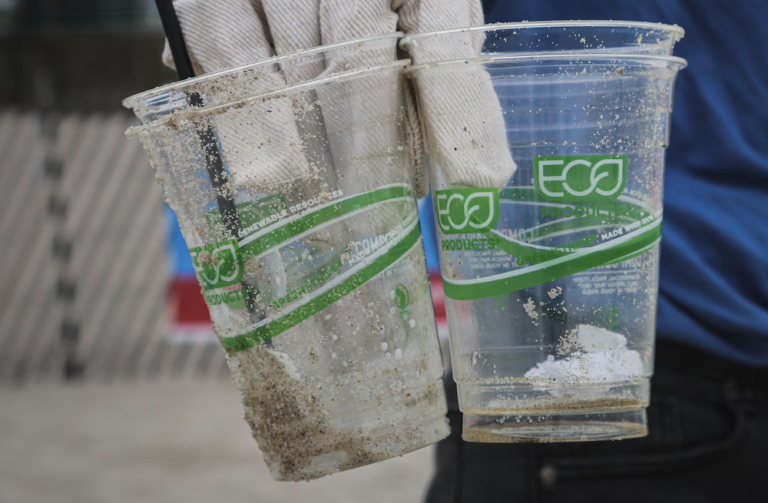
Be aware that “compostable cups” is often misleading as they cups can only be chemically recycled at an industrial facility, not in your backyard
We can handle deceptive marketing tactics with the right knowledge and tools. We become empowered consumers, capable of dissecting the complex narratives spun around products. We can discern reality and the mirage, genuine commitment to sustainability, and green veneers. Our power goes beyond just protecting our interests. We push companies to be more accountable whenever we question, probe, and demand transparency. We encourage them to shift from empty claims to tangible actions. Our choices can drive the market towards genuine sustainability.
Moreover, our informed decisions can create a ripple effect, inspiring others in our circles to become conscious consumers. This collective action can create a significant impact, pushing the market dynamics from profit-centered to planet-centered. Thus, by countering deceptive marketing, we are safeguarding our interests and contributing to a larger movement toward true sustainability.
The task of preserving our planet is immense, yet it begins with small, individual actions. By committing to being informed and discerning consumers, we can steer markets toward genuine sustainability and inspire a future that respects and nurtures our planet.
The Jewish faith points to a number of sources that lead us to understand how to marvel in creation starting at Genesis with the Creation story. But it is also a living religion full of day-to-day practical tips for helping us save resources, protect public space, and letting nature rest. But how these “ideas” go into practice among secular and religious Jews in modern times leaves a lot of room for debate and guidance.
Rabbis function in Israel as spiritual guides but they mainly deal with the very practical application of the Jewish mitzvas more than anything. How do you celebrate holidays or simchas “happy events”; how do you cook in a kosher way, or how should the relationship look between husband and wife, friends and your community.
It’s not usual for any rabbi to have a specific skillset on environment issues, however. Same is true in Islam and Christianity although the times are changing. We know of one eco-rabbi in Jerusalem (Yonatan Neril – who wrote the Eco Bible) and no doubt there are many we haven’t met, but I was excited to hear that eco-activist David Pearlman Paran had taken the path, and we speak with him in the interview below about that path and what it means for Israel.
I’d met David about 20 years ago when he was working for the Heschel Center, an environmental advocacy group in Tel Aviv that teachers influencers from all walks of life how to walk the green walk at work. I was impressed not only by David’s passion and knowledge but enjoyed the philosophical questions has asked us as we toured a “sustainable Tel Aviv.”
He pointed out public and private spaces and made us listen and look to our city, wondering if it’s reasonable that the city allows us to be bombarded with advertisements and noise. He didn’t offer answers to the questions he asked, and that may be how the best teachers operate, asking you to search inside for the answer.
A little background: David immigrated to Israel in 1994 from Sydney, Australia and early on was a leader and educator at the Heschel Center for Environmental Learning and Leadership. He uses his theatre background when teaching environmental awareness to his students. Today he is also very involved in Israel’s Green Party and has served in various positions and is one of the leaders of Pardes Hanna’s Masorti Congregation: Darchei Noam. His wife is Yael Cohen Paran, a former Member of the Knesset from the Zionist Union party. She was a Knesset member from 2015-2019.
David was ordained an eco-rabbi by the Schechter Rabbinical Seminary in the Masorti/Conservative movement in Judaism, in December, 2022 in Jerusalem. Overseeing the seminary and education is Rabbi Avi Novis-Deutsch who explains to Green Prophet about our responsibility to protect the environment.
Rabbi Avi Novis-Deutsch
“It is a religious obligation to protect the environment and the world’s creations,” he says. “One reason is the basic obligation put on Adam, the first person, to ‘work and protect’ the world. Another reason is our responsibility to other human beings living today and in future generations.
“This responsibility is repeated in various commandments and in the Biblical emphasis to maintain every human being.”
“Thus, every single negative thing that we do in the world God created for us certainly has a negative impact on other people and is inappropriate and against what the Torah commands us,” adds Novis-Deutsch.
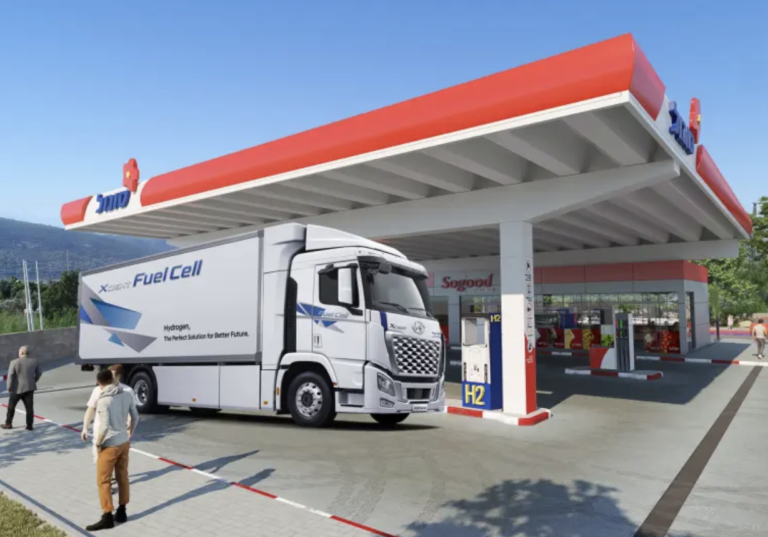
Sonol is Israel’s third largest gas station chain. Israel’s Ministry of Energy identified a fuel port near Haifa as one of its economic development projects in response to the Covid-19 pandemic. Sonol won this tender and worked with Germany’s H2 Mobility on this project. Sonol has also collaborated with Bazam petrochemical refining and the vehicle dealer Colmobile to bring hydrogen powered trucks to this port city.
The Hydrogen station is built close to northern Israel’s Kibbutz Yagur, six miles from the Bazan oil refineries at Haifa Bay. The same Sonol station offers regular fuel pumps and recharging stations for electric cars. It will soon start producing solar energy on the roof to be self-sufficient for its maintenance needs.
The estimated $3.3 million hydrogen project is a partnership between Sonol, Bazan, a hydrogen manufacturer and and car importer Colmobil, which has supplied the first three hydrogen trucks.
As transport fuel, hydrogen has several advantages compared to traditional fossil fuels and electric batteries. Its mass energy density is extremely high which is why it is used to power fuel cells in spacecraft. When it is burned, it produces only water vapor with virtually no harmful air pollution and no carbon dioxide. It can be produced from water using green energy sources or found in natural geological deposits. This makes it an excellent fuel to combat climate change.
Filling is faster than charging: The time required to fill fuel tanks for Hydrogen fuel cells is much shorter than the time required to charge batteries
Hydrogen’s volume density is relatively low which means it needs a large fuel tank compared to gasoline or diesel fuel. This is why some of the earliest adoption of hydrogen as a transport fuel will be in large commercial vehicles such as the Hyundai Xcient trucks which will be fuelled at the Haifa port. This Hydrogen station will help Israel keep up with other nations in the adoption of this promising new fuel.
Hyundai enters the hydrogen market in the Middle East
Hyundai is bringing its hydrogen fuel cell truck Xcient to Israel, its first market in the Middle East. The aim is to form a hydrogen value chain in Israel. Hyundai’s plan align with Israel’s target to slash national greenhouse gas emissions by 27 per cent by 2030 and by 85 per cent by 2050, relative to 2015 emission levels.
“We are thrilled to support the Israel government’s strong commitment to building a sustainable future,” said Mark Freymueller, a VP at Hyundai. “Establishing the first hydrogen infrastructure in Israel in close collaboration with the country’s key players marks a significant milestone in our efforts to build a sustainable hydrogen value chain around the world.”
Haifa Bay is notoriously polluted. Israel energy and chemical infrastructure for industry operates in this area side-by-side with a growing residential city. We met recently with Ecoocean’s Andreas Weil, who founded Israel’s most influential marine protection NGO. He wonders why in most developed nations such ports are kept far from cities but in Israel they sit side-by-side. Development in more ecological areas is good but maybe it’s time to start moving fuel operations further away from city centers.
Ancient marble treasure found under the sea closes questions about how Roman structures were built in the Near East. They are being studied by marine archeologists.
Thousands of years ago there was an active route of ships sailing between Europe and the Holy Land on the Mediterranean Sea. Here are there sea storms wiped out ships along with their contents before they reached shore. Treasure seekers still find surprising troves of ancient goods deep down under the sea.
In Beit Yanai, a small coastal village north of Netanya, a swimmer uncovered an enormous and rare cargo that sank in the sea. The 1800-year old marble columns were transported on a merchant ship from the Roman era and didn’t make.
This is the first cargo shipment of its kind known in the Eastern Mediterranean and included 44 tons of Corinthian capitals adorned with plant motifs; partially carved capitals, and marble columns up to 6 meters long never made to Israel’s shores. These valuable architectural pieces were meant for a temple or a theatre but a storm stopped the shipment.
The treasure was only about 200 meters from the seashore and was found by a man named Gideon Harris, while swimming out in the sea.
The Israel Antiquity Authorities announced that they’d known about the cargo for some time but had lost track of its exact location. Then they sent marine archeologists: “The recent storms must have exposed the cargo, and thanks to Gideon’s important report, we have been able to register its location, and carry out preliminary archaeological investigations, which will lead to a more in-depth research project,” says Koby Sharvit, Director of the underwater archaeology unit at the Israel Antiquities Authority.
From the position the site formation and angle of the cargo on the seabed, it is evident that the ship bearing the cargo was wrecked after the ship’s crew encountered a storm in the shallow waters, and dropped anchor in a desperate effort to prevent the ship from grounding: “Such storms often blow up suddenly along the country’s coast,” says Sharvit, “and due to the ships’ limited manoeuvring potential, they are often dragged into the shallow waters and shipwrecked.”
“From the size of the architectural elements, we can calculate the dimensions of the ship; we are talking about a merchant ship that could bear a cargo of at least 200 tons,” he adds. “These fine pieces are characteristic of large-scale, majestic public buildings. Even in Roman Caesarea, such architectural elements were made of local stone covered with white plaster to appear like marble.
“Here we are talking about genuine marble.”
The marble marble cargo likely came from the Aegean or Black Sea region, in Turkey or Greece, and since it was discovered south of the port of Caesarea, it seems that it was destined for one of the ports along the southern Levantine coast, Ashkelon or Gaza, or possibly even Alexandria in Egypt, the Authority body reports.
The finding resolves some old questions: Land and Sea archaeologists have long argued whether the Roman period imported architectural elements were completely worked in their lands of origin, or whether they were transported in a partially carved form, and were carved and fashioned at their site of destination.
The find of this cargo resolves the issue, as it is evident that the architectural elements left the quarry as basic raw material or partially worked artifacts and that they were fashioned and finished on the construction site, either by local artists and artisans or by artists who were brought to the site from other countries, similarly to specialist mosaic artists who traveled from site to site following commissioned projects.
Choking on plastic bags. Turns out 100 companies are leading greenwashing recycling in the plastics industry. Their so-called “sustainable” approach to reusing plastics is much much worse than you can imagine.
Company A produces millions of plastic cola bottles a day. Water bottles too, and plastic wrap to hold a six-pack of these cola and water bottles together. Company A is told by consumer watchdogs and eco-organizations that enough is enough – the planet can’t hold cheap plastic waste any longer. Landfills can’t carry plastic; plastics are degrading our health and ecosystems badly, and what is consumed in a few minutes lasts hundreds and thousands of years in landfill, or at the bottom of the sea. See flip-flops in the Seychelles.
Company A decides to find a way a great solution and a way to rebrand its bad reputation and goes to companies like McKinsey to help them persuade governments and consumers that plastics aren’t so bad because they are being “recycled, you, know… chemically.” While it sounds good on paper, chemical recycling in plastics, says environmental watchdog group Gaia a terrible idea: “Our position isn’t that one is worse than the other, they’re both equally bad!”
GAIA (or the Global Alliance for Incinerator Alternatives), based in Berkeley says “the Emperor has no clothes: chemical recycling has long been touted by industry as a miracle solution, but when one looks closely these claims simply do not hold up,” says Neil Tangri, Science and Policy Director at GAIA.
“Thanks to the rigorous efforts of the scientific community and thorough investigations by media and environmental groups, the tide is turning.”
Why is chemical recycling so bad?
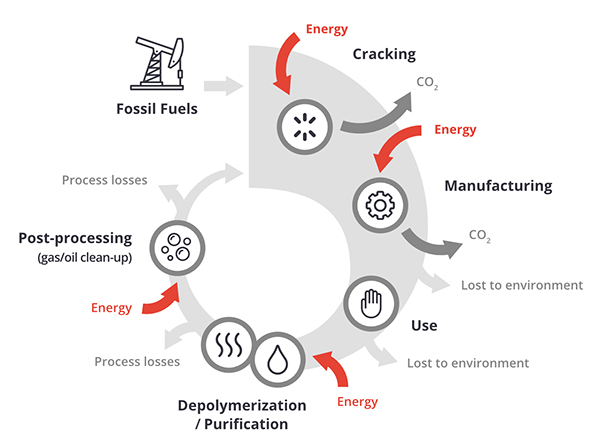
Why is chemical recycling in plastics so bad? Break Free from Plastics provides an overview.
We reached out to GAIA to understand the problem with plastics recycling today in the United States, and the world. Consider that 2 from the 5 worst companies are ExxonMobil and Dow, American companies. And Claire Arkin from GAIA clarifies, “What industry calls ‘chemical recycling’ is largely incineration of plastics, the “recycling” word is misleading,” she says.
Arkin explains to Green Prophet: “The force at play here that is most dangerous is the fact that the plastics industry is ramping up plastic production exponentially in the coming years, which our planet simply cannot support without spiralling into climate catastrophe and exceeding planetary boundaries for toxic chemicals.
“Chemical recycling not only enables further plastic production, but it causes significant climate and toxic emissions.”
Is chemical recycling in plastics worse than producing new plastics? “We are definitely not saying that it’s worse than producing virgin plastic, but that one begets the other– industry is claiming that chemical “recycling” is a silver bullet solution to plastic waste, which enables them to continue with business-as-usual of ramping up plastic production,” Arkin tells Green Prophet.
“For example, the American Chemistry Council says it will invest over $4 billion in “advanced recycling.” Meanwhile, the ACC is also investing over 35 times that–$164 billion– in new infrastructure to make more plastic. It’s a bit of a bait and switch. What the world really needs is a significant decrease in virgin plastic production, not the promotion of these false technologies under the guise of “recycling.”
Why chemical recycling in plastics is so bad
Recent independent investigations have found:
Processing 1kg of plastic using chemical “recycling” requires nearly 7x the amount of fossil fuels needed to make a kg of virgin plastic. Read about Exxon’s chemical recycling initiatives here.
If a refinery turned waste into a fuel (what most “chemical recycling” facilities actually do) the air emissions would be so toxic that 1 out of 4 people exposed to it over a lifetime could get cancer. And what’s considered “bio” in biofuels is simply not true. It’s plastic.
The top 5 plastics producing companies in the world
Rank
Polymer Producer
No. of assets
Production of in-scope polymers
Flexible format contribution to SUP waste
Rigid format contribution to SUP waste
Location
1
ExxonMobil
55
11.2
4.7
1.2
Texas, United States
2
Sinopec
81
11.5
4.3
1.3
Nanjing, China
3
Dow
54
9.3
4.7
0.9
Michigan, United States
4
Indorama Ventures
26
5.1
0.2
4.5
Bangkok, Thailand
5
Saudi Aramco
56
9.5
3.2
1.1
Dhahran, Saudi Arabia
According to the NGO, No Plastic Waste, there are 100 companies producing 90 per cent of all single-use plastic waste generated globally. You can get the whole list here. But who tops the list? America’s ExonMobil, Dow, and China’s Sinopec, Thailand’s Indorama Ventures, and Saudi Arabia’s Saudi Aramco. If your parents or grandparents work for these companies, it’s time to start a conversation.
Of approximately 300 polymer producers operating globally, this small fraction hold the fate of the world’s plastic crisis in their hands. Among these companies located in the region we report on in the Middle East is Saudi Arabia’s Saudi Aramco, one of the world’s richest companies now building NEOM with billions of oil and plastics dollars.
Saudi Aramco is building a mile-long “sustainable” city built from billions of plastics and oil money. Isn’t the irony clear?
What’s happening globally to stop chemical recycling?
On May 12 an international meeting took place to handle guidelines for plastic waste. The Parties to the Basel Convention adopted most of the text of updated technical guidelines for environmentally-sound plastic waste management. Despite intensive lobbying from the petrochemicals industry in the four years of negotiations to recognize what they call “chemical” or “advanced” “recycling,” as a solution to the plastics crisis, all that was obtained in the guidelines was mostly lip service, reports GAIA.
Advanced chemical recycling, GAIA reiterates, create more hazardous waste and pollution, massive carbon emissions, and enable further exponential plastic production, breaching our planetary boundaries. The petrochemicals industry needs to be told this is nowhere near a silver bullet solution. Business models based on cheap plastics need to adapt. The Basel Convention on the Control of Transboundary Movements of Hazardous Wastes and their Disposal was created to protect against abusive trade and mismanagement of hazardous waste.
Its technical guidelines are intended to assist Parties manage wastes in an environmentally-sound manner, taking all practical steps to protect human health and the environment. Virtually all of the guidelines text on chemical recycling was moved to an appendix after countries failed to find evidence that chemical recycling is environmentally sound.
The updated guidelines also include a new section on prevention, in a much-needed shift from the previous outdated version. “Four years of petrochemical industry lobbying and all they could get was half-baked, flimsy, bracketed, appended and fundamentally non-approved text on so-called ‘chemical recycling’. I say ‘so-called’ because it is really a mismatched bundle of dubious and dirty technologies marketed as a solution to justify continued overproduction of plastics,” says Sirine Rached, GAIA plastics policy coordinator.
“But governments are finally awakening to the reality that these technologies are neither innovative nor safe, and that more toxic and carbon emissions are the last thing we need when it comes to dealing with plastic waste,” she added.
Some governments around the world have even called for an outright ban on “chemical recycling” in the future plastics treaty, as referenced in an official document outlining options for future treaty obligations and control measures, prepared by the United Nations Environment Programme (UNEP) Secretariat ahead of the Paris negotiations.
Gaia notes that “private consulting firms like McKinsey have continued to tout chemical “recycling” in reports [even highlighting opportunities!] provided to Member States to influence their decision-making, and there is reason to believe that such efforts will intensify in upcoming plastics treaty negotiations,” they write.“We’re not out of the woods yet,” said Tangri, “but the fact that chemical ‘recycling’ was relegated to an insignificant bracket in Geneva is a promising start.”
More about GAIA
GAIA is a worldwide alliance of more than 1,000 grassroots groups, non-governmental organizations, and individuals in over 90 countries aiming to catalyze a global shift towards environmental justice by strengthening grassroots social movements that advance solutions to waste and pollution.
They envision a just, zero waste world built on respect for ecological limits and community rights, where people are free from the burden of toxic pollution, and resources are sustainably conserved, not burned or dumped. Consider jumping on board with them if you want to take action locally.
How you can act locally
Endorse and visit Zero Waste shops that promote the circular economy.
A CropX irrigation hardware controller in the field
Reinke Irrigation, a US irrigation company that manufactures pivoting irrigation systems for conventional farming, participates in a $30 million Series C financing round for CropX Technologies. The CropX system is a farm management tool that helps growers monitor when and how much water to apply before crops show signs of stress, as well as continuously monitor salinity and nitrogen leaching to maximize nitrogen use.
The CropX system, developed in Israel, also allows growers to turn animal waste into an asset for growing their pasture and crops, while minimizing runoff and drainage. The grower knows exactly what the crops need and when.
CropX dashboard to examine stress in the fields
Israeli entrepreneurs invented, developed and advanced drip irrigation decades ago and turned this into a company called Netafim. The company turned it into a science and new companies on the block like CropX pick up the spaces that Netafim cannot fill.
The Reinke-CropX operations are controlled from the powerful yet simple CropX app, which is now accessible via Reinke’s ReinCloud app. The investment will be used to continue developing the innovative capabilities of the CropX agronomic farm management system.
Reinke is based in Nebraska, farmland central in the United States. Chris Roth, Reinke President stated, “Reinke is expanding the offerings to meet the increased demand of the customers. Using Reinke precision irrigation and the CropX agronomic farm management system, operations can be streamlined and monitored from anywhere.”
It is important to Reinke and CropX, to globally find ways for efficient water usage. Reinke dealers, like Israel’s leading irrigation company Netafim, are located around the world.
Today, about 70% of freshwater is used for food production. Reinke and CropX are committed to increasing agriculture production, while saving costs for the grower.
How CropX works:
CropX early revision in the field
The CropX platform synthesizes data from the earth and sky to offer advanced soil and crop intelligence and a suite of digital decision and planning tools, all on an easy-to-use app capable of tracking multiple farms and fields.
CropX is backed by the world’s leading agribusinesses and VCs, who recognize that CropX’s precision-agriculture technologies set new standards of best practices for environmental sustainability and greater farm productivity.
In the other direction, many large farms are losing ground and people are turning their backs on industrial operations opting for more manageable regenerative farm businesses.
The Nest, a smart thermostat acquired by Google for billions is a great case study on how to develop a product and fit it to the market. Plus this one’s sustainable! It saves energy.
Getting your product – whatever it is – from its initial prototype to store shelves is a very involved process. If you look around online you can find plenty of articles on the cycle of product development, so right now we’re going to skip the first few steps and assume you’ve already passed through Idea generation, product scope, and prototyping.
After Prototyping – Initial Design
So, you’ve made a prototype of your product. Right now it’s just a mockup, something to show people the idea you’ve got and demonstrate its function, but it’s not quite complete yet. Now you’ve got to get it into that more complete format. Now you need to make it look like something that could be on a product shelf. So, the first thing you need to do is get everything you need to make your product, and actually make it!
Depending on how developed your prototype is this may take more or less effort, but in many ways, this is the first real stress test of your product. You’ll probably find yourself making changes to the product itself – maybe using cheaper materials, or altering the order in which things are put together – and this is where you’ll have to actually start paying people for their time. Artists, designers, materials, all of these things cost money and if you’ve got stakeholders this is the time you’ll need to convince them that your product is worth investing in.
Throughout this process, you should keep up constant contact with your shareholders and the people who have an investment in your product. Not only do you need to keep them invested, but if you need people to test or experience your product these are probably going to be the first people to do it – and soliciting their feedback is going to be important for maintaining their interest in the long term.
Prototype from Mays Motors, the first electric car of the Middle East Starts production in 2023. It looks wow!
Depending on your product and industry, your priorities and decisions in this stage may vary, but the most important step is maintaining investor interest. Without those investors, you will get nowhere – especially if the only investor is yourself – and having someone to report progress to is a great stimulus for actually making progress. Finally, if you don’t have any investors, this is definitely the time to start getting some because you’re going to want them for the next phase…
Product Testing
This is possibly the most important phase in the process of getting a product to the shelf. With enough money, connections and support, any product can get on the shelf, but quality can only be obtained through repeated and rigorous testing. Let’s face it, if your product relies in any way on consumer opinion, maintaining an acceptable level of quality is going to be critical.
By now you should already have gotten some initial feedback on your product – even if it’s just from the concept or initial design stages. Review this feedback and make sure that what you’ve made is meeting or addressing those queries and concerns. Then, find someone within your group to try the product out. Be open about it, tell them what it’s supposed to do and supposed to achieve and let them tell you if it does that. If those initial tests are successful, then you’re ready to start releasing it to wider audiences.
Design a store that carries products that support the circular economy. Test them out in pop up shops for consumer feedback.
The field of Quality Assurance Testing is a field in its own right, but in short, you need to give as little input as possible, find people who are as close to your target audience as possible, but also give them clear guidelines on what sort of tests you want them to do and what sort of feedback you are looking for. Tests like this need to be done in every function of the product, possibly including the supply line and even should be a part of market research. How many tests you’ll have to do will vary based on the product, but the most important thing is to get enough tests for consistent feedback, which usually requires at least twenty or so tests for numbers to start getting meaningful.
Now we hit the final stage.
Commercialisation
This is it. The final step is before your product gets on the shelf. You’ve got the product, you’ve tested it, and now you’ve got to make it accessible.
At this stage, you should be working on producing the product and making deals to get it on shelves. If your business is entirely online, this is when you should start marketing your product, releasing websites and preparing everything for the actual launch. If you haven’t already done so, this is where you’ll need to be in touch with fast-moving consumer goods industry (FMCG) branding agencies or similar to get your product from the supply line and into the hands of consumers. Think you don’t need them? Well maybe not, but there’s a lot to cover in the commercialisation phase. Not only do you need to have pleased your investors, but this is the stage where you need to have found your target audience, completed your market research, gotten clear benchmarks for the cost of production, set up the supply lines, set up advertising, set up any and all automation, contact all the companies you may need to work with and strike deals with all of them. And all of this may be happening while you may still be working on product testing. This is potentially the most intensive part of the process, negotiating between a range of staff and companies, and every part of it needs to be done right. You only get one launch day and that launch needs to make an impact.
Once this step is finished, you should be days away from your launch date. Congratulate yourself on making it this far. You’ve successfully launched your prototype.
Hang out in a hip neighbourhood of Montreal and zero-waste shops are as common as a fruit stand. But zero-waste shops that expect customers to refill and reuse packaging to remove plastic from landfill, aren’t easy to come by in the Middle East. Stuff a single apple or cola can in a bag, please. Plastic is too cheap and it’s too easy a habit to break. But entrepreneurs in Istanbul are showing how it can be done in culturally relevant ways.
The Dukkan Waste Free Shop initiated by the Kadıköy Municipality of Istanbul on World Environment Day a few years ago, is commended for being one of the best projects according to the ICLEI Europe, the European Council of International Local Environmental Initiatives.
Turkey is eager to join the European Union but still hasn’t made the grade according to European directives. But to ICLEI Europe, of which Kadıköy Municipality is a member, this may be one in a string of projects that can show the EU how local government practice can help the public kick the plastic addiction.
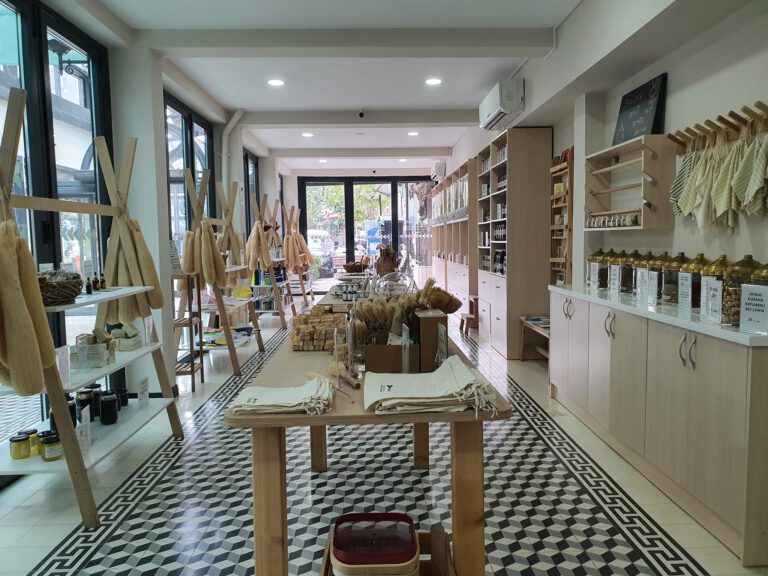
The Kadıköy Dukkan shop offers unpackaged, bulk, and ecological products instead of disposable products, with all this supporting the circular economy. The concept shop also brings together the consumer with local products and producers allowing for a larger number of cottage businesses to thrive. Packaging costs are also absorb by the producers so finding new ways to bring products into people’s homes is desirable.
Kadıköy waste free shop called Dukkan
Cleaning, living, food, kitchenware and personal care are the range of items sold in the shop and I love seeing the Middle East’s favorite nature scrub, the luffa, appear in such prominence. You can find luffas at street corner shops because some people just can’t live without them.
Customers are also invited to bring their own reusables to the shop, and women entrepreneurs are given a special boost when it comes to featuring their products. Shop second in Istanbul for some great clothing finds.
But when a local named A (who doesn’t want her name published) went to visit the shop she found their sustainability policies a little out of sync with reality. She tells Green Prophet: “You can buy a local version of liquid Castile soap there but the thing that annoyed me is that they forced me to buy a plastic bottle to fill; I couldn’t use my own container. So I actually increased plastic use by going there.”
This is the first such initiative in Turkey, making the Waste-Free Shop a good practice example for others seeking to provide access to durable, sustainable and ecological products, which support a circular economy as an alternative to single-use plastics.
Due to increasing environmental pollution and resulting health problems, consumers have been in search for and demanding more natural, chemical-free and non-toxic products. On the other hand, small scale local producers in Kadikoy providing ecological and natural products need markets for their goods, and have been so far trying to reach consumers through women’s or farmers’ cooperatives. The Waste-Free Shop fills this gap, bridging these two parties without intermediaries.
Other nearby countries like Israel are slow to catch on, but that said there is still a thriving market culture in Israel and other Middle East countries like Turkey, Egypt, Jordan and Syria. People love shopping for spices from bulk and fresh vegetables and fruit harvested that morning. The success of the Middle East diet is that the food is fresh, and buying it at a local market means you can’t get fresher than that. If you are looking to shop local and fresh, get our In Season Guides for each month of the year. Vegetables and fruits bought and eaten in season, locally, are the best for you and the planet.
Among the examples of good practice by ICLEI Europe; In the Dukkan shop where local producers, women’s and farmer cooperatives meet with consumers without intermediaries, there are healthy foods produced from local seeds and available in season, as well as long-lasting and ecological products such as daily life, cleaning, personal care and kitchenware. Products sold unpackaged or in recyclable packaging are offered to the consumer in glass jars, cloth bags or containers to be brought from home.
The climate in Turkey regarding social media posts is fraught with risk (you can be detained for things posted online) so people we spoke with in this article do not want to be named.
A rare Mediterranean Monk Seal resting on a beach in central Israel, May 13, 2023. He was protected by a boy named Mohammad. (Guy Levian/Nature and Parks Authority)
There she was sunning herself on the beach, my favorite part of the beach too, at Jaffa’s Slope Park. A rare monk seal appeared on Friday and she has remained there for a few days, the waves lapping her back flippers, apparently healthy and unharmed, according to Israel’s Nature Parks Authority.
A local boy Mohammad named her Julia, and he was granted the naming rights after he stopped a group of curious boys from throwing stones on her. The locals agree that Julia is his seal.
All of Jaffa has come out over the last few days, in Hebrew and Arabic, looking for a sign that she’s well. They are delighting in every burp, flipper swipe, and dream movements that Julia is making. She is unfazed by all the commotion around her.
The Mediterranean Monk Seal, an earless seal is an endangered animal and generally lives more northerly near Greece or Turkey. It is believed that there are about 500 seals in the wild. There have been sightings of monks seals in Israel in the past.
Overfishing, pollution, human-built habitat and marine traffic are blamed for the monk seal decline. But fishermen in Turkey are working to protect monk seals, as we have reported here.
But Julia grabbed the attention of locals as Jaffa’s Slope Park has been transformed over the last 15 years from a construction waste spit to an active park where locals come to barbecue, jog, bike, swim and hang out with the family.
In order to protect her from dogs and curious kids, a 24-hour watch has been set up and caution lines put around her to safeguard her until she decides to return to the water. She is estimated to be about 5 years old.
Guy Levian, from the Nature and Parks Authority, said it was the first time a monk seal had been observed resting on the shore in Israel. In 2010, a seal was observed for the first time riding waves close to the beach in Herzliya, but it did not land on shore.
“We are guarding the seal so nobody approaches and disturbs her until she returns to the sea. This is a protected marine mammal that must not be harmed,” he said.
It’s not uncommon for monk seals to rest days at a time, or even more in the molting period. Local marine animal experts say Julia looks fine and that she is indeed molting, losing her winter coat and saving her energy as the process is completed on the delightful little beach on the coast of Jaffa.
Olive oil can polish your shoes up nice. Plus it won’t damage them or the environment.
When you think of Texas olive oil, you might immediately think of using it for cooking and eating. But did you know that you can use it for so much more? With its natural cleaning properties, nourishing and protective qualities for the skin and hair, and effectiveness in gardening and pet care, it is a versatile and valuable addition to any household beyond the kitchen.
In this article, we’ll explore the different ways that you can use EVOO from Texas Hill Country Olive Co. for non-cooking purposes and how it has been used throughout history as more than just a kitchen staple.
The History of Texas Olive Oil and Alternative Uses
EVOO has long been valued for its delicious flavor and health benefits when used for cooking and eating. But did you know that it has been used for other purposes throughout history? In fact, EVOO has been used for centuries as a natural and effective solution for household cleaning, personal care, beauty, and even gardening and pet care.
In the past, people used EVOO to polish and maintain furniture, wooden utensils, and floors. Its natural cleaning properties make it an excellent choice for removing stubborn stains, grease, and grime from a variety of surfaces, including stainless steel appliances and kitchen counters.
The Benefits of Texas Olive Oil
EVOO has also been used as a moisturizer for the skin and hair and as a natural remedy for a range of skin conditions, such as eczema, psoriasis, and acne. Its antioxidant properties help to protect and nourish the skin, while its anti-inflammatory properties help to soothe and calm irritated skin.
Moreover, it can be used to nourish and protect plants, making it an excellent natural alternative to chemical fertilizers and pesticides. When mixed with water and sprayed onto plant leaves, EVOO can help to keep them healthy and free of pests and diseases.
As you can see, this versatile oil has a rich history of use beyond the kitchen, and Texas olive oil is no exception. So, the next time you reach for a bottle of EVOO, remember you can use it for much more than just cooking and eating.
Everyday Texas Olive Oil Hacks
There are many reasons you might be interested in using Texas olive oil beyond the general uses. For one, using it in unconventional ways can be a cost-effective and environmentally-friendly solution to everyday household problems.
Additionally, these hacks that utilize EVOO can help you save time and be more efficient in your daily tasks. By exploring the various ways you can use it, you may discover new and innovative ways to incorporate this versatile ingredient into your daily life beyond the kitchen.
Household Cleaning and Maintenance Hacks
These hacks involve using EVOO to clean and maintain various household items, such as furniture, shoes, and cutting boards. It can help protect and restore these items, keeping them in excellent condition for years to come.
Furniture Polish: Use this fat to polish and protect wooden furniture.
Leather Conditioner: Apply a small amount of EVOO to shine and condition leather sofas or chairs.
Shoe Polish: Use a small amount to shine leather shoes or boots.
Rust Prevention: Apply a small amount of oil to metal surfaces to prevent rust and corrosion.
Cutting Board Conditioner: Use EVOO to condition and protect wooden cutting boards.
Wood Polish: EVOO is also an excellent polish to protect other wooden utensils in the kitchen.
Personal Care and Beauty Hacks
Olive oil hacks for your skin. Make it from Texas!
These hacks involve using EVOO as a natural ingredient in personal care and beauty products, such as hair conditioner and lip balm. It can help nourish and moisturize the skin, hair, and lips.
Makeup Remover: Use it to remove makeup and gently cleanse the skin.
DIY Lip Balm: Combine EVOO with beeswax and essential oils to create a natural and nourishing lip balm.
Skin Moisturizer: Use neat as a natural moisturizer for dry skin.
Gardening and Pet Care Hacks
These hacks involve using EVOO to care for pets and maintain a healthy garden. It can help deter pests, improve digestion, and lubricate tools and instruments.
Garden Tool Lubricant: Use EVOO to lubricate and protect garden tools, such as shears, pruners, and shovels.
Musical Instrument Lubricant: Use it to lubricate the valves and slides on brass instruments, such as trumpets and trombones.
Pet Hairball Remedy: Add a small amount to your pet’s food to prevent hairballs and improve digestion.
Gardening: Use EVOO to deter pests from your garden. Mix some with water and a few drops of dish soap, then spray the mixture onto plants to repel insects.
Practical and Sustainable
Using EVOO in various household applications can be more eco-friendly and sustainable than conventional cleaning, personal care, or gardening products. This is because EVOO is a natural and biodegradable substance that doesn’t contain harmful chemicals that can damage the environment.
Additionally, using EVOO in non-conventional ways can reduce your dependence on single-use, disposable, or non-renewable products, which can help reduce waste and save resources. Finally, using EVOO sustainably supports local producers, such as the Texas Hill Country Olive Co., and reduces the carbon footprint associated with importing products from distant regions.
Whether you’re looking to maintain your household items, improve your personal care routine, or look after your pets and garden, Texas olive oil has many uses beyond cooking and eating. Its natural properties make it an excellent choice for household cleaning, while its antioxidant and anti-inflammatory properties make it an effective ingredient in personal care and beauty products. EVOO can also be used to nourish and protect plants, making it a natural alternative to chemical fertilizers and pesticides. Its versatility makes it a valuable addition to any household beyond just the kitchen.
The Tesla Model Y is a luxurious choice, and its advanced features and safety functions also make it a smart investment. Whether you’re looking for an environmentally friendly vehicle or something sporty and luxurious — the Tesla Model Y could be your perfect match.
Choose the Tesla Model Y for your next car and upgrade your driving experience. Enjoy Tesla’s superior performance, fast acceleration, and cutting-edge technology. The interior is spacious and comfortable, while its aerodynamic styling will turn heads on the road.
Although not all the specs for the 2024 Tesla Model Y are publicly available, the following guide will give you a good idea of some of the advanced features to expect from the 2024 Tesla Model Y.
Types of Tesla Charging Stations Available
Tesla’s extensive network of Tesla charging stations is a compelling reason to buy one of its EVs
Tesla offers two types of charging stations: Superchargers and Destination Chargers.
The Supercharger network is a global, fast-charging network with over 45,000 charging stations located on major highways and in cities worldwide. You can find Destination Chargers at popular hotels, restaurants, and resorts.
You can use Tesla’s interactive map to locate charging stations, service centers, galleries, and stores.
Features of the Tesla Model Y
Tesla Y, 2024 makes a decent, sustainable EV crossover car
The 2024 Tesla Model Y is a compact crossover that’s battery-powered and has new features. The Model Y+ is expected to be introduced in 2024 and could have a range of close to 400 miles with the 4680 battery. The Model Y is expected to have a facelift with exterior changes and new features, codenamed ‘Project Juniper,’ and due in production in October 2024.
The Model Y is expected to have a refresh with updated features and begin production in 2024. The Model Y Long Range and Model Y Performance have the same 82.0-kWh battery and dual-motor AWD, with the Long Range variant capable of 330 miles on a single charge.
Advantages of Owning a Tesla Model Y
The Model Y is packed with futuristic technology. It is also sporty and has a range fit for road trips.
This is the newest Tesla model and the first to feature Tesla’s heat pump instead of electric resistance for interior cabin heat. It has a high-tech design, remarkably fast acceleration, and regenerative braking.
The Model Y retains its value well and maintains its power output for a long time, giving peace of mind about replacing expensive parts down the line. Tesla has refined their workmanship by improving technology, safety standards, and luxury features.
How the Tesla Model Y Compares to Other Electric SUVs
The Model Y also has cutting-edge tech, minimalist design, and speedy acceleration.
Electric cars are better for the environment. They don’t cause pollution and are quieter than regular cars. They also cost less to fix.
Compared to other electric SUVs, the Tesla Model Y has several advantages. The Model Y has a range fit for road trips and is one of the range leaders in the US. It is also more spacious and provides more range for an effectively lower price than the Mercedes EQB.
The Model Y Long Range is comparable in size and features to the Toyota RAV4 Prime, a hybrid SUV. The Model Y is known for its quick acceleration, roomy cabin, and tech features, making it a great choice for certain buyers.
Why the Tesla Model Y Is a Smart Choice
The Tesla Model Y is an impressive electric SUV with advanced features and a range fit for road trips. It has cutting-edge technology like its Autopilot driver assistance feature and heat pump for interior cabin heat. Furthermore, it offers more range than the Mercedes EQB at a lower cost.
#Vanlife is a great way to live and work remotely for a year or two
Remote work has become increasingly popular in recent years, especially as more companies recognize the benefits. While many employees initially struggled with the sudden shift to remote work, a growing body of research suggests that remote work can actually have a positive impact on employee productivity overall. In this article, we will explore how remote work can boost employee productivity and why employers should consider adopting this model.
Flexibility Leads to Better Work-Life Balance
One of the most appealing benefits of remote work is that it provides a lot of flexibility for employees. Without the need to commute to a physical office, employees can structure their workday around their personal lives. This means they can attend to personal responsibilities, such as childcare or running errands, without sacrificing work hours. As a result, remote employees often experience less stress, leading to better overall mental health and work-life balance.
Fewer Distractions Lead to Greater Focus
You can work at a sustainable business and live the lifestyle true to the company mission.
A common misconception about remote work is that employees will be more distracted when working from home. However, research suggests that the opposite is true. In fact, one found that remote employees worked more days each month than their office-based counterparts. The study also found that remote employees reported fewer distractions and interruptions, leading to greater focus and productivity.
Increased Autonomy Leads to Improved Job Satisfaction
Remote work often comes with increased autonomy, as employees are trusted to manage their own schedules and work independently. This level of trust can lead to improved job satisfaction, as employees feel valued and empowered to make decisions about their work. In turn, this can lead to greater motivation, higher productivity, and better overall performance.
Access to a Wider Talent Pool Leads to Greater Expertise
One of the biggest advantages of remote work is that it allows employers to tap into a wider talent pool. Rather than limiting recruitment to a specific geographic area, remote work opens up the possibility of hiring employees from around the world. This can lead to greater expertise, as employers are able to bring in talent with diverse skill sets and experiences. Plus, more and more companies are offering employer of record services so that these businesses can find quality staff from almost anywhere.
Reduced Commuting Leads to Greater Energy
Working from home means lots of quiet and lots of time for meaningful, quiet thinking.
Commuting can be a significant source of stress and fatigue for many employees. Long commutes can lead to less energy and decreased productivity, as employees arrive at work already exhausted. Remote work eliminates this issue, allowing employees to start their day feeling refreshed and energized. This increased energy can cause them to get more done and to stay focused throughout the day.
Reduced Absenteeism Leads to Greater Continuity
Remote work can also reduce absenteeism, as employees are less likely to take sick days or time off due to transportation issues. This leads to greater continuity in work, as projects can continue uninterrupted even if one employee is unable to work. This can also lead to improved team morale, as employees are less likely to feel overburdened when a colleague is absent. Plus, some employees may be able to leave for just an hour or two for a nearby appointment instead of needing to take a full day off of work.
Access to Flexible Workspaces Leads to Greater Creativity
Finally, remote work allows employees to choose their own workspace. While some employees may prefer a quiet home office, others may choose to work in a coffee shop or park. This flexibility can lead to greater creativity, as employees are able to find environments that inspire them. Additionally, remote work can also provide employees with opportunities to work in different locations, which can help stimulate new ideas and perspectives.
Conclusion
It’s evident that remote work has a significant impact on employee productivity. From improved work-life balance to greater autonomy and access to a wider talent pool, remote work offers many benefits that can help increase work output and overall performance. As more and more employers embrace remote work, it’s important to recognize the potential benefits and work to ensure that employees have the tools and support they need to succeed. Some employers are offering benefits such as reimbursements for home office equipment and more to encourage more remote work.
Dream of an affordable apartment? Or want to keep your carbon footprint small in the face of climate change? Follow our buyer’s guide.
Purchasing a home has always been a milestone for people since the 1950s in America. It represents the accomplishments of a good life. It may not be representative of what it used to be, but people are still holding onto the idea that they need to buy a house to fulfill their lives with their family. It’s natural. You want to own your own space. You want to create your personal sanctuary. But, more significantly, real estate is a great place to invest your money. So, when you are trying to purchase a home here is your guide to all the costs.
Overall Financial Situation
It’s crucial to mind your overall finances before you buy a home. If you have debts of any kind, you should be sure to pay them off before you get started in the house buying process. Before you try to take out a mortgage or a loan, you should see to it that your credit score is as high as it can be. You should have money in the bank and a good credit standing to start with. When you have a high score, you’ll be able to begin the process of buying property. Preparation is so important. Pay off everything you can before buying a home.
Pay in Cash
Most people can afford paying $20,000 for a home they can own, like a tiny home. Upgrades can happen later.
It should go without saying that the best way to buy a home is to pay for it in cash. You will incur less fees and taxes. For most people, however, this is a distant dream. Few people make enough money to buy any property in cash, let alone the house of your dreams. Most home buyers can’t buy a home in cash. Instead, they choose to take out a mortgage or a loan and make a down payment.
The Down Payment
To have your finances in place, you should try to save as much as you can for a down payment. The down payment will determine a lot. It will impact your mortgage rate and monthly payment. The larger your down payment, the better your mortgage terms will be. Don’t try to get by on a small down payment. If you can’t afford the house, you probably won’t have a good down payment. However, when the down payment is within your control, so will the payments. Your mortgage will be cheaper than a lot of other people’s rents.
Monthly Mortgage Payment
One way to cover the mortgage is to build a sustainable home that screams AirBNB. Rent on peak holidays and crash at your parents.
Monthly Mortgage Payment
Making a down payment is just the beginning. In fact, if you don’t make the payments on time, you could find yourself in a lot of trouble. Mortgages are secured loans, meaning that the lender uses the house itself as collateral. This is the reason that it is pivotal to make the payments every month on time.
Not only will you be able to avoid your house being repossessed by the lender, but it will also create the opportunity to get ahead and pay off your house sooner than later. The monthly mortgage payment is where a lot of new homeowners find themselves in a bind. If you find yourself having trouble paying each month, you can use the equity you have to refinance.Here’s a tip: Keep in mind that mortgage rates vary by state due to factors like local economic conditions, lender competition, and state regulations.
For these reasons, mortgage rates in Oklahoma may differ from those in other states. Additionally, rates can vary between lenders based on their individual policies and risk assessments. When estimating your monthly mortgage payment, researching both state-specific and lender-specific rates can help you secure the best terms and plan your budget effectively.
The right mortgage provider can make all the difference when you’re trying to compare offers and understand how each option affects long-term affordability. Homebuyers around Queensland often consult an award winning mortgage broker in Brisbane before committing to any loan structure, giving them clearer insight into rates, fees, and repayment flexibility. This kind of guidance helps them feel more confident as they evaluate lenders with varying requirements. With a clearer picture of what fits their financial goals, they can move forward with far fewer uncertainties.
Refinance
When you’ve been paying your mortgage for a while, you have equity in your home. That means that you can use this equity as leverage to refinance the home. This might make the mortgage longer, but it also decreases the monthly costs of the mortgage payment. When you refinance, you can keep more money in your pocket every month for other things, like remodeling renovations and home insurance.
Home Insurance
Climate change means cities like NY will be more vulnerable. Will your insurance cover road washouts or flooding? (Little Island, Manhattan)
Finally, you will want to insure your home in case something goes wrong. Whether it’s a break in or a natural disaster, home insurance can really come in clutch when you need it the most. Whether you are wondering does home insurance cover flooding? Or if you are in a place where there are earthquakes like in California or tornados in the middle region of the country, home insurance is pivotal.
There are a lot of moving parts to buying a home, and the costs vary quite a bit. You should know exactly what you are getting into. When you make a good down payment, you will be able to afford your mortgage and home insurance without struggling.
Your house is your private heaven. Upgrade it ecologically and it will be worth much more.
You may want to make your home more energy-efficient for various reasons. One important reason may be that you want to sell your house as fast as possible. An energy-efficient home is vital to lure a vast pool of potential buyers. Another reason may be because you simply want to save. Homes that are much more energy efficient will help you save substantially on energy costs. If you want to increase the value of real estate property or your home, here are some energy-efficient home improvements you should consider in 2023.
Improve Insulation
One great way to improve your home’s energy efficiency is to start with insulation. Although Phoenix remains mild most of the year, the summers can be scorching. You may think that insulation is only a practical solution in colder climates. However, it is also helpful in hot climates. This is because insulation keeps heat out in summer and in during winter. So if your exterior walls don’t have much insulation or the unfinished areas of your home don’t have any insulation, consider getting it with an insulation contract like iFOAM. This is one of the best ways to prevent energy loss which drives up utility costs.
Upgrade Windows and Doors
Windows and doors are a significant loss of energy in a home. According to the U.S. Department of Energy, heat loss or gain through windows is responsible for 25 to 30 percent of residential energy use. So, if you want to decrease the energy you lose each month, invest in high-quality windows and doors.
Some windows are built to be energy efficient. For instance, picture windows are energy-efficient because they have fewer moving parts. So they don’t allow as much energy loss as other windows. But if you want windows guaranteed to improve energy efficiency, it is a good idea to purchase windows with the energy star logo.
Likewise, doors also may be a significant loss of energy for a home. Cracks may allow drafts to enter the house, forcing the HVAC system to work overtime. A door that isn’t well-insulated may also be allowing energy to escape. Upgrading to an energy star door will also improve indoor temperatures and decrease energy bills.
Drink living water
If you are in the market for a new home access to clean and reliable drinking water is a must. Most people don’t think about this aspect enough. And even if you don’t have the best well, you can always call in a water witch or a dowser to help you find natural water lines to tap. If you live in the city you can buy a Mayu or you can look for access to natural springs in your neighborhood.
Get a New HVAC System
How old is your HVAC system? You may want to consider getting a new one if it’s over ten years old. While some HVAC systems can last upwards of 20 years if well-maintained, older models may be why you may be experiencing energy loss. Upgrading to an energy star HVAC system can save upwards of 20 percent on heating and air.
Install Smart Thermostats
In addition to getting a higher-quality HVAC system, consider investing in a smart thermostat. If you spend most of the day away from your home, you probably set the thermostat controls before you leave and allow the system to adjust automatically throughout the day. Instead of wasting precious energy by heating or cooling a home that isn’t occupied, with smart thermostats, you can have greater control over your energy while you are away. In addition, you can change the thermostat to a much more comfortable level from your smartphone close to the time you know you will occupy the home so that you won’t have to shell out so much money on energy bills each month.
Buy Energy Efficient Toilets
Did you know gallons of water go out of the home yearly from flushing the toilets? This could be why your water bill is steadily increasing. If you want to decrease costs in this area, buying and installing energy-efficient toilets is ideal. These toilets don’t require as much water to flush and can help save on water costs yearly.
Get Energy Star Products
As mentioned before, energy star windows, doors, and HVAC systems can save a tremendous amount of money using these products. But these aren’t the only energy star products on the market.
One of the most significant ways to save is using energy star light bulbs. Not only do such bulbs use less energy, but they also produce 70 to 90 percent less heat. So not only do they consume less energy while in use, and they also give off less heat keeping you from using more air to cool the home.
Another significant way to save with an energy star product is by switching water heaters. An energy star water heater works just like a regular water heater but uses less energy to warm water which saves upwards of $3500 over the life of these water heaters.
Other essential energy star products to include in your home include dishwashers, refrigerators, stoves, and washing machines. Like other energy star appliances, these appliances will use less energy.
Switch to Solar Energy
If you really want to go all out and produce one of the most energy-efficient homes in your neighborhood, you may want to consider switching to solar energy. See our DIY solar energy guide. Not only will your home be energy efficient, but you will have some degree of independence and control over your energy bill. Instead of being at the mercy of fluctuations in pricing on non-renewable energy sources, you can save and provide energy back to the grid through a process called net metering. Through this process, your local electric company rewards you with energy bill credits, allowing you to save substantially more than your neighbors.
Although you may want to make the switch, the upfront costs of solar energy may deter you from making the commitment. For example, solar panel installation could run, on average, between $3,500 to $35,000. And if you decide to get solar shingles, you could pay between $63,000 to $75,000, according to Modernize.
Luckily, the federal government is offering tax incentives of 30 percent to help you reduce solar installation costs. The state of Arizona is also offering a residential solar tax to help with savings on solar installation. In addition, they also offer equipment sales tax and property tax exemptions. So if you’re concerned about initial costs, help is available.
Conclusion
As energy bills continue to increase across the nation, it is a good idea to improve your home’s energy efficiency so that you can help cut these costs significantly. Spending less money on bills can allow you to free up money that can go to better use in investments or buying real estate property. So start today by incorporating these energy-efficient improvements and more so that you can begin building wealth.