
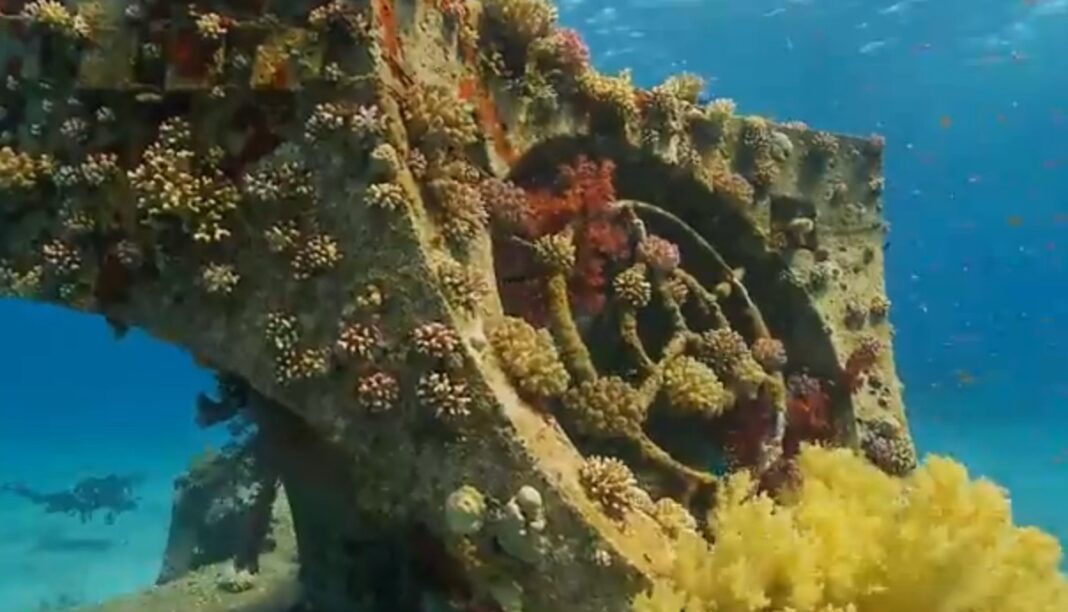

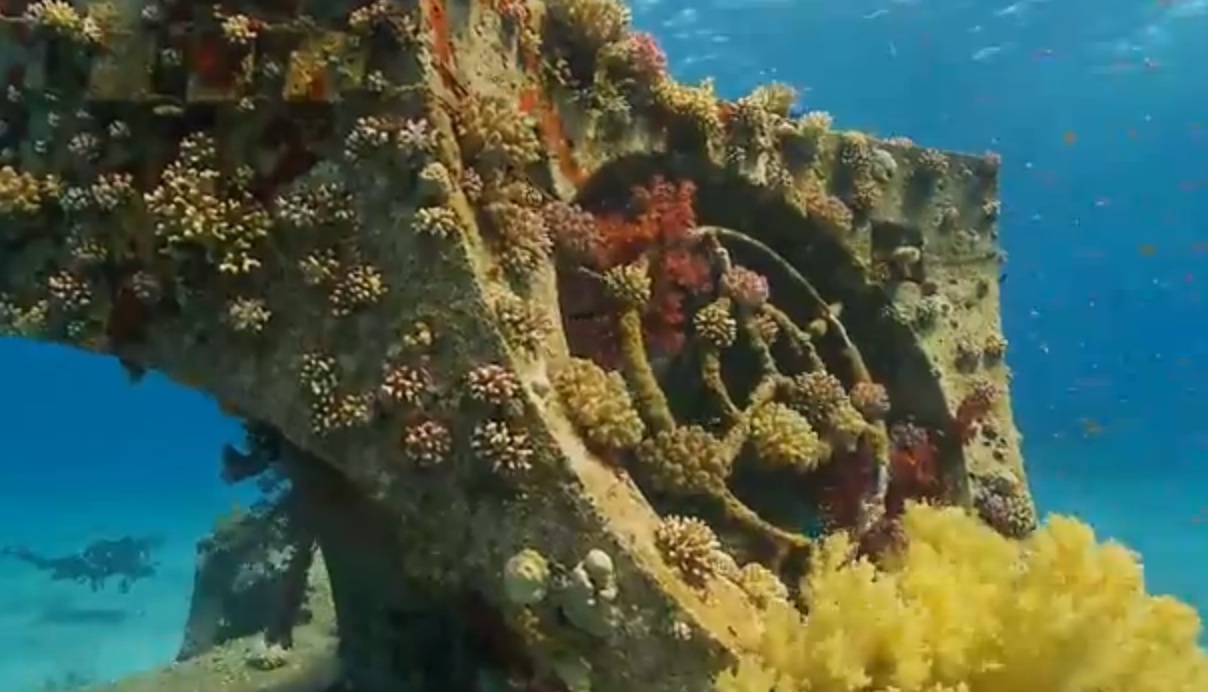
With news that Red Sea coral reefs on the coast of Israel may be resistant against the changes of climate change, some more positive “reef” news swings our way out of Israel: a new study at the artificial “Tamar Reef” in the Red Sea (shown above) shows that divers –– and not just scientists –– assign economic importance to aspects of reef biodiversity. These findings achieved with the help of Jordanian and Israeli participants, could help underwater conservation efforts, the researchers report.
According to the study published in the ICES Journal of Marine Science, divers were willing to pay to improve the reef’s attributes and were able to differentiate and rank their preferences of biodiversity, numbers of fish and corals, coral species richness, fish species richness, coral size, coral abundance, and fish abundance.
Respondents ranked biodiversity as the most desirable value, while fish abundance was the least important.
“This result was exciting to us, since it shows that the general public as well as scientists place a high value on biodiversity and that visitors understand the fundamentals that constitute a coral reef community,” says Nadav Shashar.
“This may help direct conservation efforts undertaken in designing future marine reserves and pre-planned artificial reefs.”
Shashar and his team surveyed 295 divers to evaluate their willingness to pay for improving various elements of a coral reef. They were shown a series of photographs of the Tamar Reef with varied densities and compositions of fish and coral species.
The researchers focused on the overall aesthetic value of each component, but also how divers’ aesthetic preferences compare with scientific biodiversity attributes that might be of interest for conservation purposes.
The artificial reef project is a collaboration between Israelis and Jordanians to restore the local Gulf reef culture. The Tamar Reef was the first of four reefs installed in the Red Sea. Students and faculty from both countries work together in studying the artificial reef and how it affects the marine ecology in the area.
Special coral nurseries were developed to augment coral diversity. Small fragments developed into large corals and were planted on the artificial reefs.
“One of the nurseries developed into an entirely new ecosystem of a floating coral reef with all types of fish; we even filmed a turtle stopping by to feed,” Shashar explains.
“We are not just studying biodiversity but helping to reestablish fish and marine life that has been depleted in the Gulf.”



[…] and accessories with the highest waterproof rating”, said Odenbach. Maybe so, but the divers had to pop their Xperia Z3 or Xperia Z3 Compact phones into special waterproof cases since those […]
[…] are increasingly establishing marine reserves. Some carefully managed marine parks have reported saltwater corals noticeable recovery. Offer of Land Spurned Damage is evident near Hikkaduwa, one of Sri […]
The destruction of biodiversity is caused by a growing human population and its growing mass of pollution most of which it dumps legally in growing land-fills and ILLEGALLY in the global ocean. The only effective way to stop it is to safely recycle 100% of all human-generated waste materials and peacefully reduce the human population with family planning programs in every nation.
[…] pagoda coral information […]
[…] Divers Will Pay to Protect Coral Reef Biodiversity, New StudyGreen ProphetWith news that Red Sea coral reefs on the coast of Israel may be resistant against the changes of climate change, some more positive “reef” news swings our way out of Israel: a new study at the artificial “Tamar Reef” in the Red Sea (shown above) shows … […]