
Egypt and Morocco’s Equator Prize Winners Preserve Environment through Tradition

traditional biodiversity preservation, Equator Prize Winners, Medicinal Plants Association St Catherine, Amsing

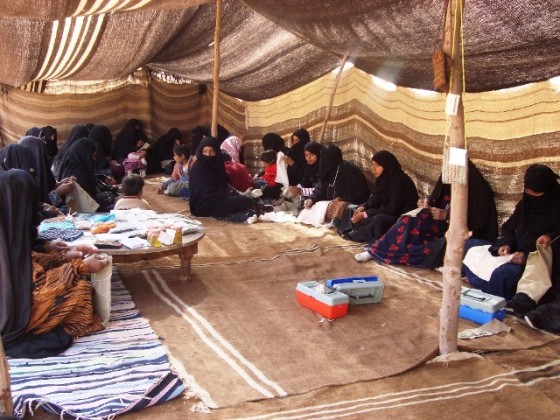
The Medicinal Plants Association in Egypt helps preserve biodiversity and is one of the 25 winners of the Equator Prize 2012.

Policy making within the realm of “development” is often burdened by an excessively westernized design resulting in unintended consequences on the welfare of local populations. For example, a previous Green Prophet article “Morocco’s Berbers Had Water Management Sorted“, reveals how water management interventions led by the Word Bank replaced traditional water systems and eventually resulted in even poorer social and environmental outcomes.

Fortunately it is becoming increasingly popular for multilateral development initiatives to provide incentives for traditional practices in environmental preservation and economic development rather than replacing, renewing or reforming existing practices which have been built on years of knowledge and perfected after generations of creative design. The Equator Initiative: A partnership for Resilient Communities, is an example of this movement in the “development” world which honors practices that aim to create societies and socio-economic landscapes that are resilient to environmental destruction and cultural erosion.

Through the biannual Equator Prize, the Equator Initiative recognizes 25 outstanding local projectsthat work to advance sustainable development solutions for people, nature and resilient communities. To date 152 community organizations have been awarded the Equator Prize and in June 2012, representatives of winning communities participated in the UN Conference on Sustainable Development (Rio+20), which was held in Brazil. This year the Middle East North Africa region was well represented by two Equator prize winners: the Medicinal Plants Association St. Catherine from Egypt and Amsing Association from Morocco.
crop display in morocco women berber

In Egypt the Medicinal Plants Association St. Catherine supports the development of livelihood alternatives for the Bedouin populations of Sinai’s St. Catherine Reserve, through the protection of its genetic medicinal plant heritage and cultivation of endemic species. The reserve is home to roughly half of the country’s botany, four hundred and seventy two different species of plants of which more than one hundred are used for medicinal reasons and many are unique and endangered species which have been threatened by overharvesting and overgrazing. The Medicinal Plants association promotes home gardens, provides alternative energy solutions, gives hands-on training on sustainable harvesting techniques, and creates market supply chains for locally produced medicinal herbs, handicrafts and honey. For example part of the livelihood program focuses on supporting female Bedouin farmers from planting through to the marketing phase of the products, the revenues from the activities are then invested in a rotating fund which allows the community to access small loans. So far, the project has created over two hundred jobs, and has improved the living conditions of over one thousand people.
arab women water morocco

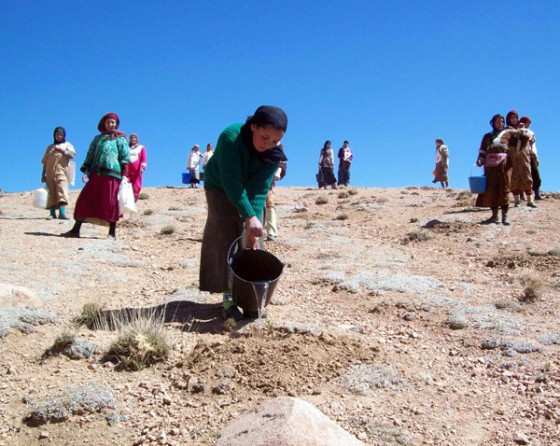
In Morocco Amsing Association was created by the villagers of Elmoudaa, an Amazirght (Berber) community located in the High Atlas Mountains, to address economic isolation, a lack of social services, and harsh climatic conditions. The association has successfully regenerated degraded lands surrounding their village through a traditional land management practice called ‘azzayn’ which bans herders from grazing in protected lands.

The reintroduction of this regulatory system has allowed native grasses and shrubs to thrive, reduced soil erosion, and prevented flooding. The association has also undertaken a number of infrastructure projects to promote community-based adaptation to climate change and resilience in the face of climate variability.

A ‘water chateau’ stores fresh water for use in times of drought or when floods wash away irrigation ditches, while a water tower provides local residents with access to clean drinking water.

It is encouraging to see these projects flourish and it would be nice to see more winners from the MENA region in the next cycle of prizes in 2014. If Green Prophet readers know of projects that would fall in line with the Equator Initiative’s objectives then invite them to apply for the Equator Prize in 2014! Here is the list of eligible countrieseligibility requirements and selection criteria from the Equator Prize 2012.

Images of Medicinal Plants Association and Amsing via The Equator Initiative and Egypt Independent

Linda Pappagallo
Linda Pappagallohttps://www.greenprophet.com/
Linda's love for nature started when at the age of eight she discovered, with her dog, a magical river in the valley of a mountainous region in Lebanon. For four years Linda and her dog explored along the river, until one day she saw construction scrapers pushing rock boulders down the valley to make way for new construction sites. The rubble came crashing into the river destroying her little paradise, and her pathetic reaction was to shout at the mechanic monsters. Of course that was not enough to stop the destructive processes. As she continued to observe severe environmental degradation across the different places she lived in the Middle East and Africa, these terrible images remained impressed in her mind. However, environmental issues where not her first love. Her initial academic and career choices veered towards sustainable economic development, with particular interest in savings led microfinance schemes. Nevertheless, through experience, she soon realized a seemingly obvious but undervalued concept. While humans can somewhat defend themselves from the greed of other humans, nature cannot. Also nature, the environment, is the main “system” that humans depend on, not economics. These conclusions changed her path and she is now studying a Masters in International Affairs with a concentration in Energy and the Environment in New York. Her interests lie on ecosystems management: that is how to preserve the integrity of an Ecosystem while allowing for sustainable economic development, in particular in the Middle East and Africa.

TRENDING

Essaouira Offshore Wind and what it means for surfers, music festivals and the wild

Morocco’s proposed 1,000 MW offshore wind project near Essaouira promises climate leadership and renewable energy for this Magreb country, but along this stretch of Atlantic coast, wind is more than energy. The coastline is culture, economy, and identity.

Haman’s Fingers, A Moroccan Purim Specialty

There’s feasting at home on the night and the next day, and to make sure everyone gets good things to eat, families send out packages of treats to friends and neighbors. Traditional goodies are hamentaschen, and other treats like our chocolate nut clusters .

Ethiopians are Looking to Somaliland for Red Sea Access as Global Powers Move In

Somaliland, for its part, has operated as a de facto independent state since 1991. It has its own government, elections, currency, and security forces. It’s often described as one of the more stable and democratic political systems in the region, despite never being formally recognized internationally. 

Egypt building nuclear power

Egypt is building a nuclear energy plant, expected to go online in 2026 when countries like Germany have shut down all its domestic nuclear power. The El Dabaa Nuclear Power Plant is the first nuclear power plant planned for Egypt and will be located at El Dabaa, Matrouh Governorate, Egypt, about 320 kilometers northwest of Cairo. 

More investments of 1.2 GW in Benban solar, Egypt

Egypt’s Ministry of Electricity and Renewable Energy, the Egyptian Electricity Transmission Company, and a consortium comprising Infinity Power and Hassan Allam Utilities Energy Platform signed an agreement to jointly develop solar power projects at Benban Solar, one of the world's largest solar energy parks in Egypt.

Should You Invest in the Private Market?

startustartup Unlike public stock exchanges, which offer daily trading, strict...

How to build a 100-year-company

Kongō Gumi is a Japanese construction company, purportedly founded in 578 A.D., making it the world's oldest documented company. What can we learn about building sustainable businesses from them?

From Pilot Plant to Global Stage: How Aduro Clean Technologies’ 2026 Expansion Signals a Turning Point for Chemical Recycling Investors Like Yazan Al Homsi

The company's Next Generation Process (NGP) Pilot Plant in London, Ontario, has officially moved into initial operating campaigns, generating the kind of structured, repeatable data that separates laboratory promise from commercial viability.

How AI Helps SaaS Companies Reduce Repetitive Customer Support Work

SaaS products are designed for large numbers of users with different levels of experience, and also in renewable energy.

Pulling Water from the Air

Faced with water shortage in Amman, Laurie digs up...

Turning Your Energy Consultancy into an LLC: 4 Legal Steps for Founders in Texas

If you are starting a renewable energy business in Texas, learn how to start an LLC by the books.

Tracking the Impacts of a Hydroelectric Dam Along the Tigris River

For the next two months, I'll be taking a break from my usual Green Prophet posts to report on a transnational environmental issue: the Ilısu Dam currently under construction in Turkey, and the ways it will transform life along the Tigris River.

6 Payment Processors With the Fastest Onboarding for SMBs

Get your SMB up and running fast with these 6 payment processors. Compare the quickest onboarding options to start accepting customer payments without delay.

Related Articles

Popular Categories