Saudi Peak Oil Could Affect World in 2012

Saudi-peak-oil-internal-demand

While most experts say it is hard to know what is really going on with Saudi oil supplies, “What we do know is that, for whatever reason, Saudi Arabia produced 600,000 fewer barrels each day in 2010 than it did in 2005, and with growing Saudi consumption of their own oil, the drop in exports from Saudi Arabia has been even more dramatic.”

That is the opinion of UC San Diego economist James Hamilton who brings a fresh perspective to peak oil.

We who write about clean tech see it in the inexplicable Saudi moves towards solar power – Saudi Arabia to Replace Oil with Sun Power for Desalination Plants, It Must be Peak Oil Driving Saudis to Solar, Could Saudi Arabia Become the Saudi Arabia of Solar? – and The Oil Drum has written frequently about the evidence for peak oil.

But Hamilton considers peak oil from an economic perspective in his paper Oil Prices, Exhaustible Resources, and Economic Growth. His findings suggest that the peak in oil production may be much closer than we think.

Until recently, he says, Saudi Arabia has often made a deliberate decision  to alter its own production in an effort to mitigate price increases and decreases. That that behavior has now slowed is a sign that it is no longer able to increase production enough to export and supply its own rapidly rising demand internally. For example, the kingdom cut production to try to hold up prices during the weak oil market 1981-85 and recession of 2001, and boosted production during the two Persian Gulf wars, to make up for output lost from other producing countries.

Its huge Ghawar field has produced prodigious amounts of oil since 1951, and in recent years had accounted for perhaps 6% of total world production all by itself. Athough this is difficult to confirm, many experts believe that Ghawar has peaked and is declining already.

Total production from OPEC has essentially been flat since 2005, mostly due to the decline in Saudi production. Although China, Brazil, Africa and Canada have increased production (and Canada’s is coming from oil sands; the dregs) it is difficult to see these ever accounting for a major fraction of total world oil production.

The bottom line is that even with more production from other parts of the world to make up the Saudi losses, global production of oil from all sources was essentially flat from 2005 to 2010.

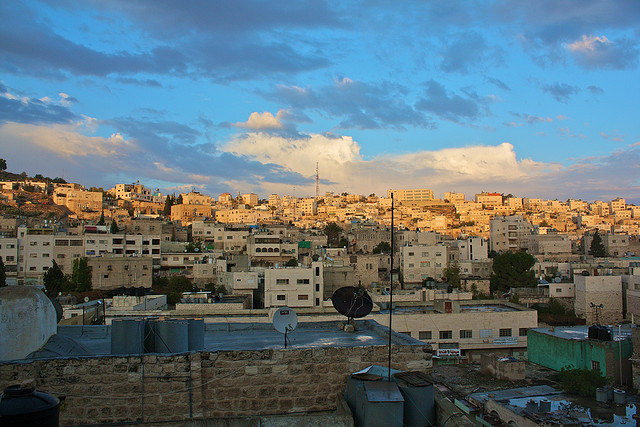
Image: MSFS in Arabia

Related stories:

Saudi Arabia to Replace Oil with Sun Power for Desalination Plants
It Must be Peak Oil Driving Saudis to Solar
Could Saudi Arabia Become the Saudi Arabia of Solar?

TRENDING

Italy’s energy company Eni adds Italian flair for design in industrial fusion reactor

“We have the chance to explore new forms of storytelling about energy,” adds Italo Rota, co-designer of the installation. “We believe that design is a powerful tool to turn a narration into an experience, allowing visitors to sense the energy while being surrounded by a unique atmosphere.”

Don’t Regret Your Host: Alternatives to SiteGround That Impress

Discover top alternatives to SiteGround that offer impressive features and performance. Make an informed choice for your hosting needs today!

Asia Powers Ahead in Global Renewable Boom, But Africa Risks Being Left Behind

Asia continues to dominate global renewable energy growth, accounting for 71% of new capacity added in 2024, while Africa and other developing regions remain far behind despite their potential. Solar and wind lead the charge, comprising 97.5% of additions, with solar alone adding 453 GW. Although global renewables capacity hit a record 582 GW, the world is still off track to meet the COP28 goal of tripling capacity by 2030. Without faster growth and more equitable investment, the energy transition risks deepening the global divide.

Yosef Abramowitz: The Israeli Bringing the Sun to the World’s Darkest Places

Abramowitz employs what he calls the Quadruple Bottom Line Impact Platform when bringing solar energy to countries with limited resources and infrastructure. While not the primary driver, each project must provide returns for investors. While these returns may not turn a massive profit, projects must ensure financial viability. Second, every project contributes to climate mitigation.

Iraq’s Ancient Water Wisdom Faces a Modern Reckoning

The land between the Tigris and Euphrates was once a wellspring of invention. Thousands of years before modern irrigation, the Sumerians, Akkadians, Babylonians, and Assyrians carved canals, engineered flood basins, and developed qanat systems—ingenious underground channels that carried water from mountain springs to distant farms.

Should You Invest in the Private Market?

startustartup Unlike public stock exchanges, which offer daily trading, strict...

How to build a 100-year-company

Kongō Gumi is a Japanese construction company, purportedly founded in 578 A.D., making it the world's oldest documented company. What can we learn about building sustainable businesses from them?

From Pilot Plant to Global Stage: How Aduro Clean Technologies’ 2026 Expansion Signals a Turning Point for Chemical Recycling Investors Like Yazan Al Homsi

The company's Next Generation Process (NGP) Pilot Plant in London, Ontario, has officially moved into initial operating campaigns, generating the kind of structured, repeatable data that separates laboratory promise from commercial viability.

How AI Helps SaaS Companies Reduce Repetitive Customer Support Work

SaaS products are designed for large numbers of users with different levels of experience, and also in renewable energy.

Pulling Water from the Air

Faced with water shortage in Amman, Laurie digs up...

Turning Your Energy Consultancy into an LLC: 4 Legal Steps for Founders in Texas

If you are starting a renewable energy business in Texas, learn how to start an LLC by the books.

Tracking the Impacts of a Hydroelectric Dam Along the Tigris River

For the next two months, I'll be taking a break from my usual Green Prophet posts to report on a transnational environmental issue: the Ilısu Dam currently under construction in Turkey, and the ways it will transform life along the Tigris River.

6 Payment Processors With the Fastest Onboarding for SMBs

Get your SMB up and running fast with these 6 payment processors. Compare the quickest onboarding options to start accepting customer payments without delay.

Related Articles

Popular Categories