Radioactive Church in Tokyo Dangerous as Chernobyl Dead Zone

japan churchPraying in a Tokyo church could expose you to radiation levels higher than Chernobyl dead zones.

In the same manner that Japanese authorities failed to prevent the Japanese nuclear disaster earlier this year, the authorities are dealing with radiation fallout –– in Tokyo. They are not telling the whole story. Locals armed with their own dosimeters are clocking levels higher than at the exclusion zone of Chernobyl. What one resident found at his 11-year-old kid’s baseball field is radiation levels that can make you sick. Another test found the highest radiation dose, in an undisclosed area of a church. Some 20 hotspots have since been identified.

Church officials, reports the New York Times, do not want to announce the name of the church or the location of the radiation hotspot to avoid widespread panic.

In the locally-created Radiation Defense survey, the group says that the church is in the Sugamo district and it measured 2 million becquerels of cesium 137 in a square meter, well above the 1.5 in Chernobyl that forced residents to locate.

One physicist Edwin Lyman from Washington said the difference in Japan is that in Tokyo the radiation is occurring in hotspots. It is not widely dispersed. Given that, it is still advised to do a clean up because over time communities of people may be exposed to well over the recommended yearly dose of radiation.

Meanwhile watch out for nuclear wasabi from Japan. It could be contaminated as local farmers around the radiation hotspots near Tokyo had no idea that their land was contaminated.

Just after the disaster Tafline interviewed nuclear activist and scientist Dr. Helen Caldicott on the Japanese nuclear crisis, which affects not only the Japanese but the health of our planet.

Despite the writing on the wall, countries with unstable political futures like Saudi Arabia and Jordan are dead set on going nuclear. We feel ashamed that humanity doesn’t stop this destructive form of energy immediately.

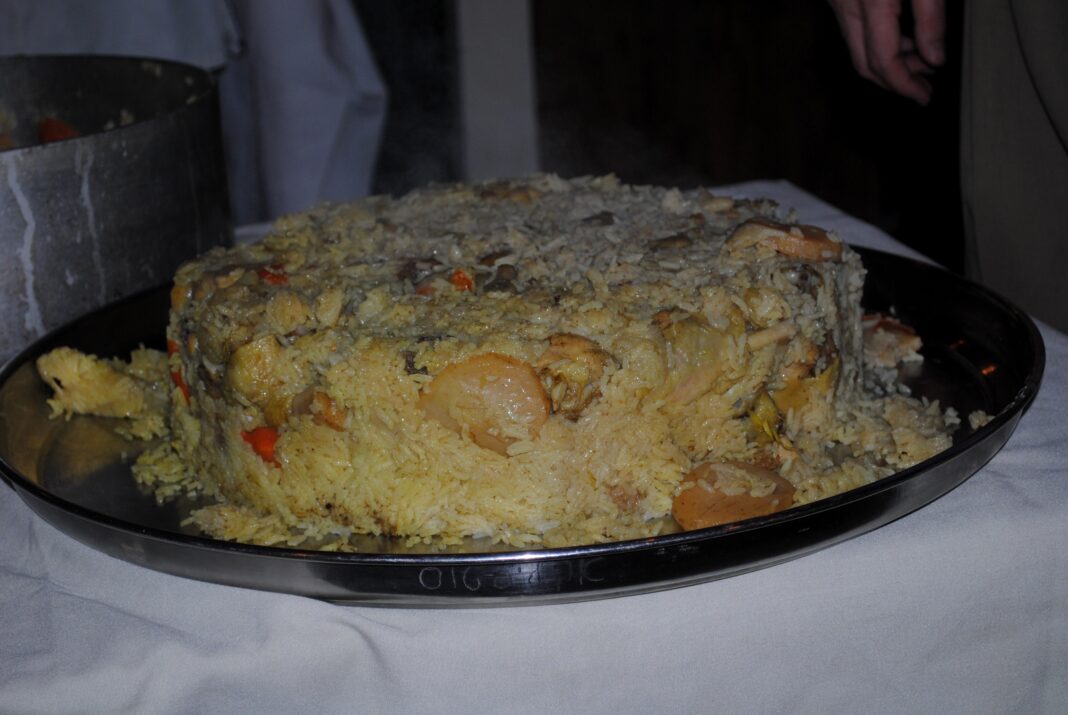
Update: Monday, Oct. 17 – the image above is not the church mentioned in the story, as a reader points out. It is for illustration purposes only.

::New York Times

Image of Japanese church via mujitra
Karin Kloosterman
Karin Kloostermanhttp://www.greenprophet.com
Karin Kloosterman is an award-winning journalist, innovation strategist, and founder of Green Prophet, one of the Middle East’s pioneering sustainability platforms. She has ranked in the Top 10 of Verizon innovation competitions, participated in NASA-linked challenges, and spoken worldwide on climate, food security, and future resilience. With an IoT technology patent, features in Canada’s National Post, and leadership inside teams building next-generation agricultural and planetary systems — including Mars-farming concepts — Karin operates at the intersection of storytelling, science, and systems change. She doesn’t report on the future – she helps design it. Reach out directly to [email protected]
7 COMMENTS
  1. “If you have a connection to the Pope, please drop him a line.”

    We are going out for a couple of beers next Friday. I’ll mention it to him.

  2. Thank you for adding that note about the church.

    And sorry for my nitpicking. I thought the article was excellent, by the way. It was news in the true sense of the word — important information that we’ve never seen elsewhere. Please keep up the good work.

    “Clearly now is the time for the Pope to step in and stop nuclear energy plants for this planet’s sake. Agreed?”

    Agreed.

    Thanks again.

  3. @Adding it up: I think the Japanese Government let a lot of accountability issues fall to the waste side. I think what the NY Times reports is in line with what we’ve been hearing from Japan.

    @Factcheck: the image was used for illustration purposes as it’s mentioned that the location of the church has not been disclosed. I updated the story at the bottom so that worshipers at this Sapporo church will not be afraid. Clearly now is the time for the Pope to step in and stop nuclear energy plants for this planet’s sake. Agreed?

    Do you live in Japan?

  4. The church pictured is 500 miles from Tokyo and 380 miles from Fukushima.

    And Adding-it-up has a good point too. Seems irresponsible.

    The Catholic Church in Japan seems to be firmly on the anti-nuke side (not sure if this is the policy of the Vatican or the preference of politically active local parishioners). I don’t think they would hide it.

  5. So this locally-created group discovered what they claim is a significant public health threat in a major city and announce that it exists, but will not release the details to the public because church officials don’t want them to? That doesn’t really add up.

  6. The church you show is located in Sapporo, hundreds of miles away from Tokyo and far removed from Fukushima as well. You should mention that it has absolutely nothing to do with the article.

Comments are closed.

TRENDING

What are AWG air-water generators, and why they aren’t a golden-bullet solution (yet)

Atmospheric water generators (AWGs) sound like magic: machines that can pull drinking water out of air. The idea is mentioned in the Bible, where the elders would pray for water collected as dew on plants and the catch on turning this into a machine is in the physics. To turn invisible vapor into liquid, you must remove heat, especially the latent heat of condensation.

Jordan’s $6 Billion Aqaba–Amman Desalination Project from the Red Sea Moves Forward

In 2025, the Jordanian government signed agreements with a consortium led by Meridiam and SUEZ, alongside VINCI Construction and Orascom Construction. Under a 30-year concession agreement, the consortium will design, build, finance, operate, and maintain the system before transferring it back to the Jordanian government. The total investment is estimated at approximately $6 billion USD.

Saudi Arabia cancels the Asian games at Neom’s Trojena

Neom, a bombastic collection of futuristic cities and resorts, has flopped as Saudi oil prices roll back reality. The Saudi plan of hosting the 2029 Asian games to be held at Trojena, a ski report in the desert, has been cancelled. 

Xcimer is the Denver-based startup that could put Saudi Arabia out of business

An American company can collapse OPEC if they can prove their approach to unlimited energy works.

The Saudi Startup Turning Desalination’s Toxic Waste Into Its Own Disinfectant

For millennia, the Middle East's water crisis seemed an immutable fact of geography — a region defined as much by what it lacked as by what lay beneath its sands. Today, a convergence of plummeting solar costs, advancing membrane technology, and hard-won engineering expertise is rewriting that story.

Should You Invest in the Private Market?

startustartup Unlike public stock exchanges, which offer daily trading, strict...

How to build a 100-year-company

Kongō Gumi is a Japanese construction company, purportedly founded in 578 A.D., making it the world's oldest documented company. What can we learn about building sustainable businesses from them?

From Pilot Plant to Global Stage: How Aduro Clean Technologies’ 2026 Expansion Signals a Turning Point for Chemical Recycling Investors Like Yazan Al Homsi

The company's Next Generation Process (NGP) Pilot Plant in London, Ontario, has officially moved into initial operating campaigns, generating the kind of structured, repeatable data that separates laboratory promise from commercial viability.

How AI Helps SaaS Companies Reduce Repetitive Customer Support Work

SaaS products are designed for large numbers of users with different levels of experience, and also in renewable energy.

Pulling Water from the Air

Faced with water shortage in Amman, Laurie digs up...

Turning Your Energy Consultancy into an LLC: 4 Legal Steps for Founders in Texas

If you are starting a renewable energy business in Texas, learn how to start an LLC by the books.

Tracking the Impacts of a Hydroelectric Dam Along the Tigris River

For the next two months, I'll be taking a break from my usual Green Prophet posts to report on a transnational environmental issue: the Ilısu Dam currently under construction in Turkey, and the ways it will transform life along the Tigris River.

6 Payment Processors With the Fastest Onboarding for SMBs

Get your SMB up and running fast with these 6 payment processors. Compare the quickest onboarding options to start accepting customer payments without delay.

Related Articles

Popular Categories