
Middle East Countries Prepare For Natural Disasters

From earthquakes to water scarcity, the Middle East faces its fair share of natural disasters but countries are only now starting to take disaster risk reduction seriously

Over the last 25 years, the Arab region has suffered 276 disasters in which 100,000 people died, 1.5 million were left homeless and 10 million affected – yet the region has systematically failed to prioritize disaster preparedness.

This all looks set to change, as for the first time ever the region has a strategy which outlines a commitment to reduce risk and vulnerability for Arab countries. And whilst experts state that the commitment is still low, they have welcomed the move as a step in the right direction.

“The region is affected by several hazards: earthquakes, floods, landslides and drought. However, disaster risk reduction has not been a priority for governments until recently,” Luna Abu-Swaireh, regional programme officer at the Cairo office of the UN International Strategy for Disaster Reduction (UNISDR), told IRIN.

As part of the commitment to reduce risk, several Middle Eastern countries including Syria, Jordan and Yemen have established a national database which should allow them to estimate the level of risk and improve their response when disaster strikes.

One of the risks the Middle East region faces is that of earthquakes in the Jordan rift valley which extends from the Red Sea, Palestine, the Dead Sea to Lebanon. This puts around two thirds of Jordan’s population, the entire population of Lebanon and the urban Syrian population that lives within 50km of the fault line at risk.

Flooding in places such as Saudi Arabia as well as increasing water scarcity and food security has also increased the vulnerability of Arab populations to disasters. For example, last year a drought in Syria meant that 500,000 people were forced to abandon their homes in east Syria in search of water and food.

Egypt and Morocco will also be developing national disaster loss databases to ramp up their ability to deal with disasters whilst reducing the vulnerability of their populations.

“The impact of disasters on the economics of the Arab countries coupled with the problems they are already facing in terms of poverty, etc., makes it a challenge to engage in disaster risk,” Abu-Swaireh explained. “You need to work today on disaster reduction, to make sure your system does not collapse in the face of a disaster.”

The UNISDR has plans to bring together the relevant governments, civil society organisations and businesses at the end of 2011 to help them translate policy into action and increase investment in risk reduction.

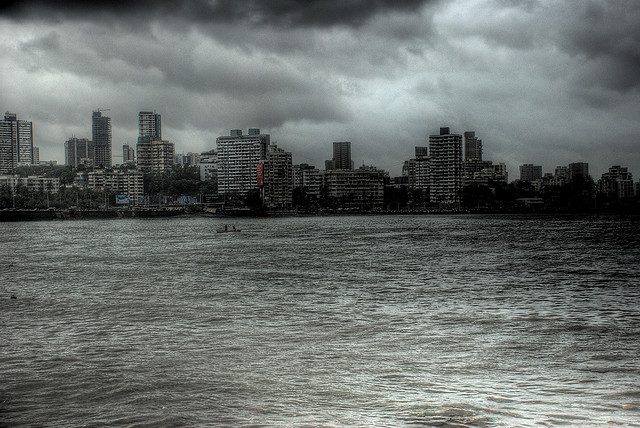
:: Image via nimboo/flickr.

:IRIN

For more on natural disasters in the Middle East see:

Arab Scientists Model Red Sea and Persian Gulf To Stop Flash Floods

Saudi Citizens Release Documentary Criticizing Lack of Flood Protection

500,000 Syrians Flee Drought-Stricken Zone
 

Arwa Aburawa
Arwa Aburawahttp://www.greenprophet.com
Arwa is a Muslim freelance writer who is interested in everything climate change related and how Islam can inspire more people to care for their planet and take active steps to save it while we can. She is endlessly suspicious of all politicians and their ceaseless meetings, especially as they make normal people believe that they are not part of the solution when they are the ONLY solution. Her Indian auntie is her model eco-warrier, and when Arwa is not busy helping out in the neighborhood alleyway garden, swap shopping or attempting fusion vegetarian dishes- with mixed success, she’d like to add- she can be found sipping on foraged nettle tea.

Read More

LEAVE A REPLY

Please enter your comment!
Please enter your name here

TRENDING

The strange pilgrimage site of penis headstones in Iran

In places where the discussion of sexuality is either taboo or severely restricted, eco-erotic art - whether man made and intended to arouse the senses or created by the forces of nature - offers a modern day outlet for viewers to explore their sexual natures in the safer context of admiring historical relics.

The Flash Flood Wave Redefining Policy in the MENA Region

If you’ve ever imagined the Middle East and North...

Islamic burial customs are already green

The world’s most wanted terrorist, Osama bin Laden, was given the ultimate green burial. Read more on how Muslims bury the deceased at land and sea.

Earthquake data can predict war

Seismic meters used to detect upcoming earthquakes may be used in the Art of War

Why Turkey earthquakes don’t hit Israel? It’s the Dead Sea Fault

The researchers add that the meeting area between the Dead Sea and East Anatolian Faults may be considered a natural laboratory for studying the processes in which tectonic junctions are formed between plate boundaries.

How to quiet noise from construction in your office

Streets need to be resurfaced in New York but the humming and grinding noise is unsettling. Noise is environmental pollution. 

EarthX and a blueprint for sustainable investing

Trammell S. Crow, a Dallas-based businessman and father of four, is focusing his efforts on impact investing, and media that focuses on saving the planet through EarthX.

Mining Afghanistan’s Mineral Discoveries Similar to Avatar

Now that American forces in Afghanistan are commemorating the longest period of any war that America has been involved in, including the 1965-73 Vietnam War, the recent discoveries of large and extremely valuable mineral and metal deposits may finally bring to light a reason to continue the presence of US fighting forces in this war torn and backward country.

From Pilot Plant to Global Stage: How Aduro Clean Technologies’ 2026 Expansion Signals a Turning Point for Chemical Recycling Investors Like Yazan Al Homsi

The company's Next Generation Process (NGP) Pilot Plant in London, Ontario, has officially moved into initial operating campaigns, generating the kind of structured, repeatable data that separates laboratory promise from commercial viability.

Nobul’s Regan McGee on Shareholder Value: “Complacency Is the Silent Killer” 

Why the governance framework designed to protect shareholders so...

Should You Invest in the Private Market?

startustartup Unlike public stock exchanges, which offer daily trading, strict...

How to build a 100-year-company

Kongō Gumi is a Japanese construction company, purportedly founded in 578 A.D., making it the world's oldest documented company. What can we learn about building sustainable businesses from them?

How AI Helps SaaS Companies Reduce Repetitive Customer Support Work

SaaS products are designed for large numbers of users with different levels of experience, and also in renewable energy.

Popular Categories