

While X is abuzz with news that Canada may be selling cloned meat, in truth cloned milk is not quite market ready. But what is ready for the marked is cloned milk. It’s a fermented, hormone-free, cruelty-free milk made in a lab, without cows and may be on the shelves sooner than you think.
Canada has just approved what could be the future of milk — without cows.
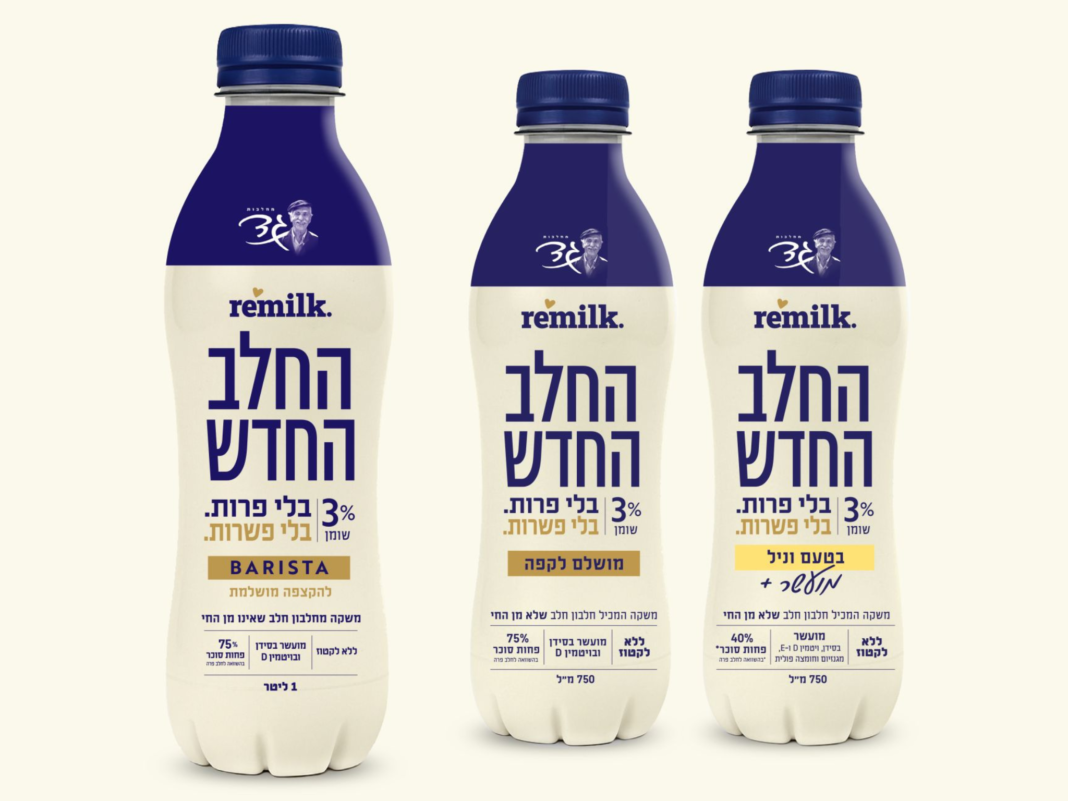
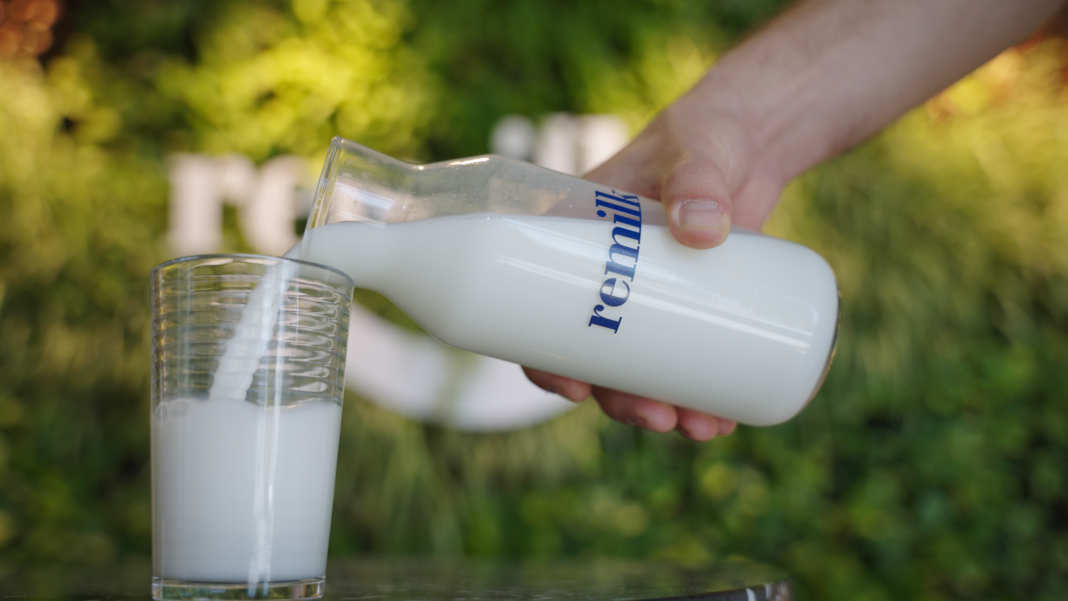
The foodtech company Remilk has received Health Canada’s coveted Letter of No Objection for its animal-free dairy protein, becoming the first producer of animal-identical milk protein to gain approval in the country. Canada joins the U.S., Singapore, and Israel in giving the regulatory nod to this new form of “cloned milk.”
Remilk uses a process known as precision fermentation: they take the genes that code for cow-milk proteins and insert them into microbes (e.g., yeast or other single-cell organisms). Those microbes then manufacture the identical protein.
This isn’t a plant-based milk like oat or soy milk that is full of sugar or estrogens and which can cause glucose spikes. It’s real milk protein — beta-lactoglobulin (BLG) — made through precision fermentation, a process that uses genetically engineered microorganisms instead of cows to produce identical dairy proteins.

For the first time, Canadians may soon find milk, yogurt, or ice cream made entirely without animals, yet indistinguishable in taste and nutrition from traditional dairy.
The approval marks a watershed moment for Canada’s nascent foodtech sector, signaling that its regulators are ready to engage with cellular agriculture and fermentation-based food production. Dana McCauley, CEO of the Canadian Food Innovation Network, called it “a transformative era in our food supply,” one that could help feed growing populations with fewer resources and less environmental harm.
A global first for safety validation

Remilk’s co-founders, Aviv Wolff and Dr. Ori Cohavi, say the approval followed an extensive review of the company’s data on safety and molecular equivalence. “Health Canada’s acceptance of our animal-free protein is additional validation of its safety and purity,” said Cohavi. “Each of the four regulatory agencies that have examined our protein has found it to be identical to traditional milk protein.”
Wolff adds, “Canada’s process was rigorous. We met with Health Canada’s team, provided the data they requested, and were thrilled to receive their Letter of No Objection. It’s an honor that opens the door for Canadian companies to develop animal-free dairy products.”
What it means for consumers and the planet
Remilk says its protein allows manufacturers to make familiar dairy products — milk, cream cheese, or yogurt — that are lactose-free, cholesterol-free, and hormone-free. For consumers, that means indulgence without digestive distress or ethical compromise.
The company uses a patented fermentation process to manufacture its BLG protein at commercial scale. Precision fermentation is resource-efficient compared to livestock farming, though it does require significant energy. Remilk recently completed a life-cycle analysis that reportedly shows “substantial reductions in land, water, and greenhouse-gas emissions” versus conventional dairy. The data will be peer-reviewed before publication.
While the environmental benefits still need independent confirmation, Canada’s approval signals a larger trend: the mainstreaming of fermentation-based proteins as credible climate solutions. The country’s openness could attract more innovators working on sustainable fats, egg proteins, and alternative meats — such as Israel’s Aleph Farms and other Israeli foodtech startups.
For now, the symbolic impact is huge. “Reinventing dairy by removing cows from the equation” was once a science-fiction idea. With Canada’s green light, it’s officially a market reality — and the race to define the future of milk has entered a new phase.
For more on sustainable and futuristic foods, see Green Prophet’s coverage of lab-grown honey and cultivated seafood innovation.