
The Satellite That Sees Earth Breathe: How NISAR Could Transform Sustainability From Space

NISAR satellite, NASA ISRO collaboration, climate satellite, synthetic aperture radar, Earth observation, environmental monitoring, startup climate tech, disaster resilience, sustainability from space, radar mapping Earth, glacier monitoring, deforestation tracking, smart agriculture satellite data, Middle East water crisis solutions
This satellite watches the earth breathe

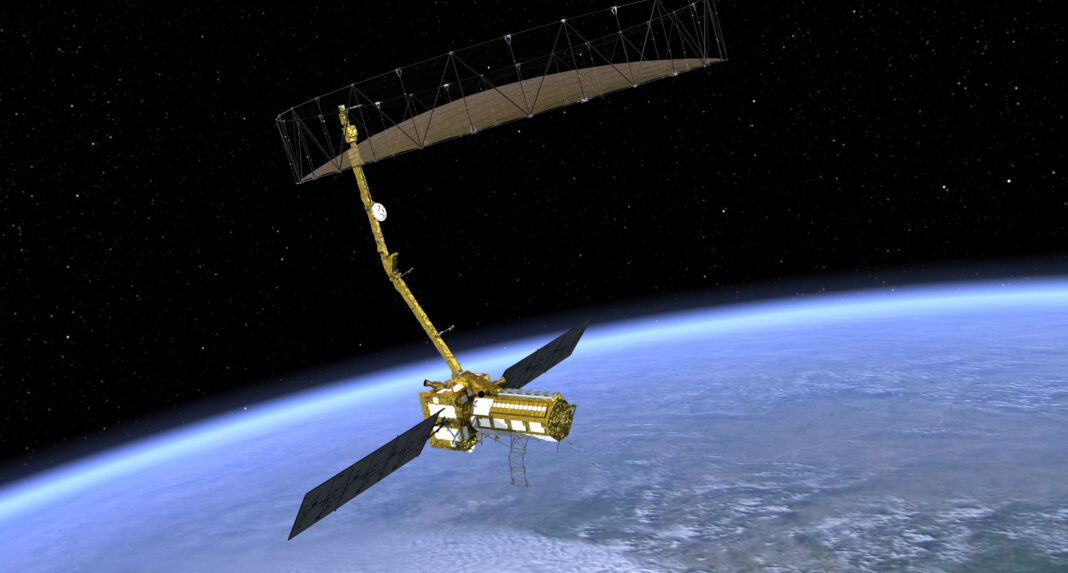
Last week, the most advanced Earth-mapping satellite ever built left Earth to watch over it. The joint NASA–ISRO Synthetic Aperture Radar (NISAR) satellite launched from India’s Satish Dhawan Space Centre into sun-synchronous orbit. This powerful radar sentinel will orbit the planet every 12 days, capturing changes on Earth’s surface in astonishing detail—down to a few centimeters—whether in daylight, darkness, or through thick clouds and vegetation.

Related: Make Sunsets geo-engineers climate with cooling credits

While the technology may sound like science fiction, NISAR’s mission is urgently practical: to track our changing planet and provide a planetary MRI scan every two weeks. The implications for climate, agriculture, disaster preparedness, and sustainable development are profound—and entrepreneurs are already eyeing the satellite’s open data streams as a platform for innovation.

Developed over a decade by NASA and the Indian Space Research Organisation (ISRO), NISAR is equipped with dual-frequency L- and S-band synthetic aperture radars, making it the first satellite of its kind. This unique combination allows it to detect subtle shifts in Earth’s crust, vegetation, ice sheets, and even groundwater levels.

Its potential applications are wide-ranging: In the Arctic, NISAR will track how fast Greenland and Antarctic ice sheets are melting.

In Indonesia or the Amazon, it will monitor deforestation, peatland collapse, and forest biomass.

In urban zones, NISAR can observe subsiding infrastructure, helping cities adapt to rising seas and overextraction of groundwater.

NASA’s Earth Science Division Director Karen St. Germain called it “the most advanced radar system for Earth observation we’ve ever put into orbit.”

For India, this is a leap into space-enabled environmental management. For a warming planet, data is power. By measuring the movement of glaciers, the expansion of wetlands, or the sinking of deltas, NISAR offers vital intelligence for managing climate adaptation and natural disasters.

Every region, from coastal cities to desert farms, is going to be impacted by changes NISAR can see coming,” says Karin Kloosterman, the editor of Green Prophet. This technology is like giving Earth a health checkup every two weeks. Existing startups in agtech, climate, solar, energy and mining will be improved with this robust new data. Thousands of exciting new opportunities in sustainable and clean tech await.”

Critically, NISAR’s data will be publicly available. That means not only scientists and governments, but also nonprofits, local planners, and startups can build tools and services using the data.

Entrepreneurs, take note. NISAR’s raw power is just the beginning—it’s what we do with it that matters. A few promising directions:

Disaster tech startups could build risk maps and alert systems for earthquakes, landslides, or floods based on ground deformation data.

Agri-tech companies can combine NISAR’s soil moisture and terrain maps with AI to help farmers in Africa or the Middle East optimize irrigation.

Climate risk insurers may use NISAR insights to assess premiums for homes near eroding coastlines or unstable hills.

Carbon credit marketplaces can verify reforestation or wetland projects through updated biomass assessments, ensuring transparency and accountability.

At a time when political uncertainty has cast doubt on future U.S. funding for Earth science missions, NISAR is a bright spot. But it could be among the last of NASA’s major Earth-monitoring projects for years if proposed budget cuts by U.S. lawmakers take effect.

Related: The history of drip irrigation

Still, the baton may be passing. By building collaborative platforms around satellites like NISAR, we can democratize access to Earth data and decentralize its benefits. In the face of floods, droughts, fires, and rising seas, it’s not just the scientists who will act—it’s technologists, policymakers, and concerned citizens who will rise to the challenge.

As climate change accelerates, our window to act narrows. With NISAR watching from above, we gain a clearer view of where the planet hurts—and where we still have time to heal.


 

Read More

LEAVE A REPLY

Please enter your comment!
Please enter your name here

TRENDING

5 projects to help kickstart your company’s sustainability journey 

True progress happens when environmental ambition meets action. Decarbonizing efficiently is possible for any business in any sector, but actually getting started can sometimes feel daunting.   The trick? It’s to start small and build momentum. Here are five potential projects to help you get started.  

24 7 renewable energy: how solar, wind, batteries and AI SaaS replace fossil fuels

A new report from the International Renewable Energy Agency based in Abu Dhabi makes something clear that many in the industry already suspected. When solar and wind are paired with battery storage, they can deliver reliable, round the clock electricity at costs that compete with, and often beat, fossil fuels.

Hormuz 2026 Conflict Poses an Energy and Food Security Dilemma in a Warming World

As tensions rise in one of the world’s most critical maritime chokepoints, the ripple effects go far beyond oil—touching food systems, climate pressures, and regional stability

Japan wants to build a solar panel ring around the moon

Unlike solar power on Earth, which is limited by night cycles, weather, and seasons, the Moon offers something close to uninterrupted exposure to the Sun. By placing solar infrastructure in orbit or along the lunar surface, engineers could generate continuous clean energy at a scale that may exceed global electricity demand,  the Japanese scientists say.

Climate change traced in sea turtle shells

It's sea turtles which may in the end save islands in the Seychelles. They may also better help us understand climate change. Like rings on a tree, scientists have found a way to read sea turtle shells and how they are impacted by climate change tells a story. 

How to quiet noise from construction in your office

Streets need to be resurfaced in New York but the humming and grinding noise is unsettling. Noise is environmental pollution. 

EarthX and a blueprint for sustainable investing

Trammell S. Crow, a Dallas-based businessman and father of four, is focusing his efforts on impact investing, and media that focuses on saving the planet through EarthX.

Mining Afghanistan’s Mineral Discoveries Similar to Avatar

Now that American forces in Afghanistan are commemorating the longest period of any war that America has been involved in, including the 1965-73 Vietnam War, the recent discoveries of large and extremely valuable mineral and metal deposits may finally bring to light a reason to continue the presence of US fighting forces in this war torn and backward country.

From Pilot Plant to Global Stage: How Aduro Clean Technologies’ 2026 Expansion Signals a Turning Point for Chemical Recycling Investors Like Yazan Al Homsi

The company's Next Generation Process (NGP) Pilot Plant in London, Ontario, has officially moved into initial operating campaigns, generating the kind of structured, repeatable data that separates laboratory promise from commercial viability.

Nobul’s Regan McGee on Shareholder Value: “Complacency Is the Silent Killer” 

Why the governance framework designed to protect shareholders so...

Should You Invest in the Private Market?

startustartup Unlike public stock exchanges, which offer daily trading, strict...

How to build a 100-year-company

Kongō Gumi is a Japanese construction company, purportedly founded in 578 A.D., making it the world's oldest documented company. What can we learn about building sustainable businesses from them?

How AI Helps SaaS Companies Reduce Repetitive Customer Support Work

SaaS products are designed for large numbers of users with different levels of experience, and also in renewable energy.

Popular Categories