Asia Powers Ahead in Global Renewable Boom, But Africa Risks Being Left Behind

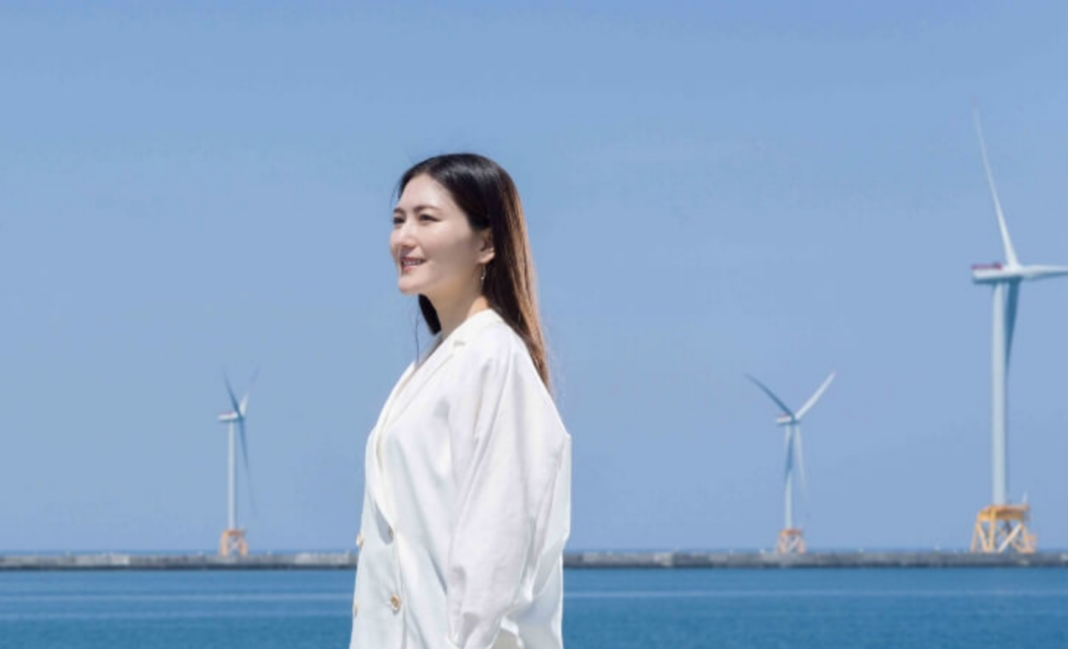
Japanese singer Ayako Tanaka visits Japan's Jera wind farm
Japanese singer Ayako Tanaka visits Japan’s Jera wind farm

The latest Renewable Energy Statistics 2025 report from the International Renewable Energy Agency (IRENA) based in the United Arab Emirates reveals a widening global divide in the renewable energy transition. While Asia added the lion’s share of new renewable energy capacity in 2024—an astounding 71%—regions such as Africa, Central America, and the Caribbean collectively contributed only 2.8% to global growth.

Africa, in particular, expanded its renewables capacity by just 7.2%, despite its vast untapped resources and pressing need for energy access.

This imbalance poses a serious challenge to the global goal of tripling renewable capacity by 2030, as agreed at COP28. If the current growth trajectory continues, the world will reach only 10.3 terawatts (TW) of installed renewables by 2030—falling 0.9 TW short of the 11.2 TW target. To stay on course, annual capacity must grow by at least 16.6% over the next five years.
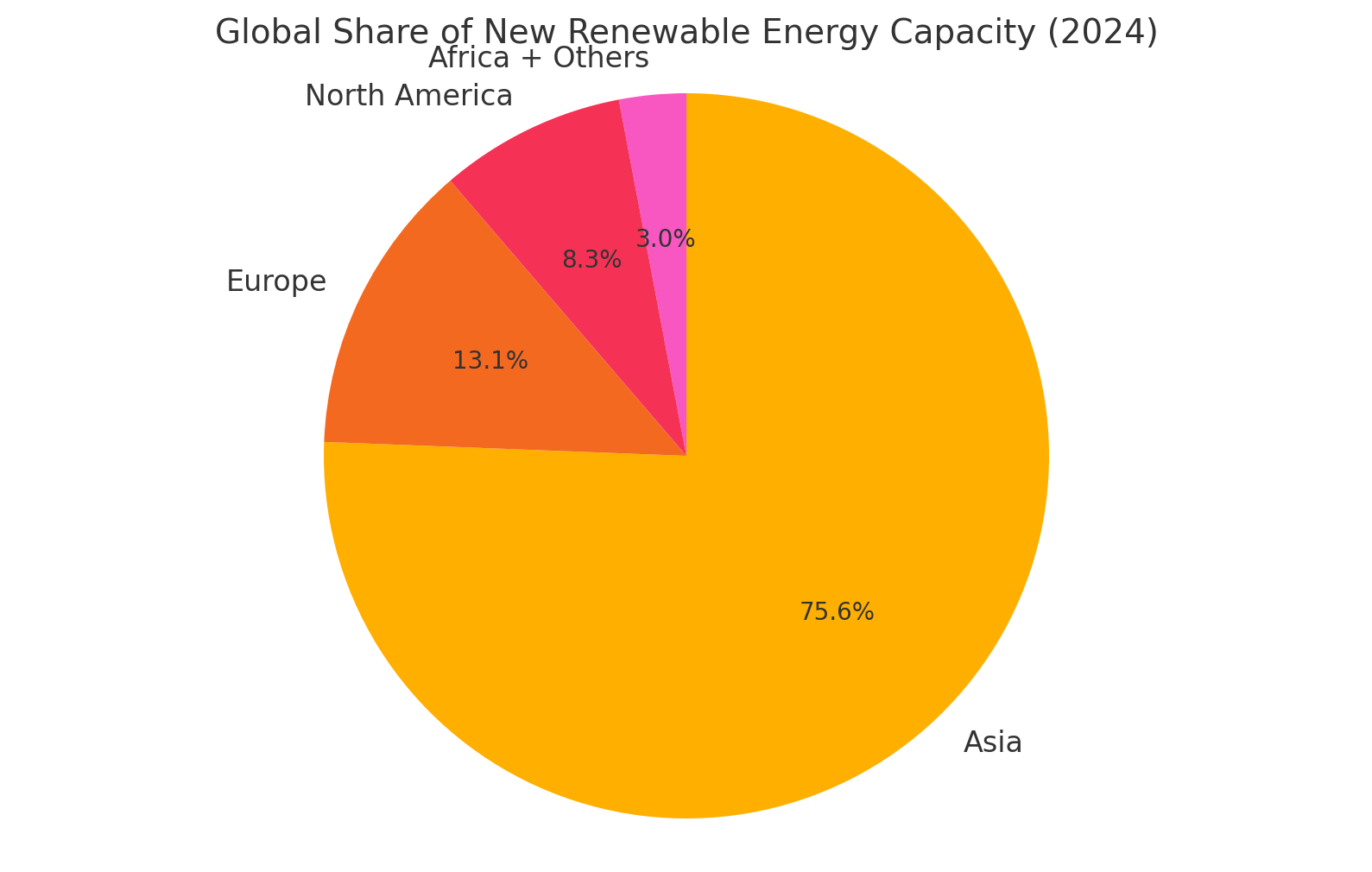
Here is a simple infographic showing the global divide in new renewable energy capacity additions for 2024. Asia dominates with 71%, while Africa and other developing regions together account for just 2.8%, highlighting the urgent need for more equitable investment. Would you like a version with additional data or annotations?

Francesco La Camera, Director-General of IRENA, underscores the urgency of closing this investment and infrastructure gap. “The renewable energy boom is transforming global energy markets, driving economies and creating vast investment opportunities,” La Camera said. “However, the growing regional divide highlights that not everyone is benefiting equally from this transition.”

Indeed, countries that have succeeded in attracting renewable investment—particularly in Asia and parts of Europe—are now reaping broader economic rewards, including increased energy security, job creation, and industrial growth.

The 2024 data also highlights the overwhelming dominance of solar and wind energy, which accounted for 97.5% of all net renewables additions. Solar energy alone contributed 453 GW, reinforcing its position as the most cost-competitive and rapidly scalable clean energy source on the planet. Wind followed with 114 GW.

With renewables now representing 46.2% of global installed power capacity—nearly equal to fossil fuels at 47.3%—the economic and environmental case for continued investment is stronger than ever. Renewable electricity generation grew by 5.6% in 2023 compared to 2022, reaching 8,928 terawatt-hours, while non-renewable generation grew by only 1.2%.

Still, the benefits of this energy revolution are not evenly shared. As La Camera notes, “Bridging the divide and closing the investment gap between countries and regions is critical. It requires targeted policies, international financing, and partnerships that unlock capital and technology where they are needed most.”

UN Climate Change Executive Secretary Simon Stiell echoed this call to action: “To deliver on the global agreement at COP28 to triple renewables by 2030, we need to move much further and faster, and make more progress on the key enablers for vulnerable developing countries. The investments required will pay huge dividends—cutting emissions, driving economic growth, creating jobs, and supporting affordable, secure energy for all.”

The message is clear: the green energy future is well underway, but unless more inclusive policies and financing mechanisms are put in place, the clean energy divide could become the defining inequity of the 21st century.


Read More

LEAVE A REPLY

Please enter your comment!
Please enter your name here

TRENDING

AI data centers are triggering panic, instead of cleantech opportunities

AI may unintentionally become the economic engine that finally modernizes America’s aging grid. California is experiencing a massive AI data center boom, ranking 3rd in the U.S. with 227 operating centers and 54 more in development as of April 2026, according to Stanford.

Korean researchers create battery from greenhouse gases

Professor Ji-Soo Jang, in collaboration with Professor Taekwang Yoon of Ajou University and Professor Hansel Kim of Chungbuk National University, has developed a novel energy device that generates electricity during the process of capturing greenhouse gases.

Eco-Friendly Flashlights for Off-Grid Travel and Home Preparedness

Reliable light matters in more places than ever. It matters on a back road after sunset, in a cabin with limited power, and at home during a storm outage. Research across sustainability guidance, preparedness resources, and off-grid living coverage points to one clear takeaway: people want lighting that works well, lasts longer, and creates less waste.

Renewables hit 5,149 GW in 2025 as the world edges away from oil shocks and fossil-fueled conflict

“In the midst of uncertain time, renewable energy remains consistent and steadfast in its expansion,” said Francesco La Camera, IRENA’s Director-General. “A more decentralised energy system, with a growing share of renewables and more market players, is structurally more resilient.”

Should You Invest in the Private Market?

startustartup Unlike public stock exchanges, which offer daily trading, strict...

How to quiet noise from construction in your office

Streets need to be resurfaced in New York but the humming and grinding noise is unsettling. Noise is environmental pollution. 

EarthX and a blueprint for sustainable investing

Trammell S. Crow, a Dallas-based businessman and father of four, is focusing his efforts on impact investing, and media that focuses on saving the planet through EarthX.

Mining Afghanistan’s Mineral Discoveries Similar to Avatar

Now that American forces in Afghanistan are commemorating the longest period of any war that America has been involved in, including the 1965-73 Vietnam War, the recent discoveries of large and extremely valuable mineral and metal deposits may finally bring to light a reason to continue the presence of US fighting forces in this war torn and backward country.

From Pilot Plant to Global Stage: How Aduro Clean Technologies’ 2026 Expansion Signals a Turning Point for Chemical Recycling Investors Like Yazan Al Homsi

The company's Next Generation Process (NGP) Pilot Plant in London, Ontario, has officially moved into initial operating campaigns, generating the kind of structured, repeatable data that separates laboratory promise from commercial viability.

Nobul’s Regan McGee on Shareholder Value: “Complacency Is the Silent Killer” 

Why the governance framework designed to protect shareholders so...

Should You Invest in the Private Market?

startustartup Unlike public stock exchanges, which offer daily trading, strict...

How to build a 100-year-company

Kongō Gumi is a Japanese construction company, purportedly founded in 578 A.D., making it the world's oldest documented company. What can we learn about building sustainable businesses from them?

How AI Helps SaaS Companies Reduce Repetitive Customer Support Work

SaaS products are designed for large numbers of users with different levels of experience, and also in renewable energy.

Popular Categories