Want to advertise a product or service on Green Prophet? Email [email protected]

Artists recreate memories from the dead Aral Sea (We Used to Be Seaweed)

Aral sea

We Used to Be Seaweed creates a dialogue between historical and contemporary perspectives of the Aral Sea. Once the world’s fourth-largest lake, the Aral Sea has been depleted to an eighth of its size due to large-scale irrigation projects.

Hosted at the Savitsky Museum, this exhibition recontextualizes the museum’s famous collection of Soviet avant-garde and Turkestan modernism to open new conversations about identity, environment, and transformation.

We covered the loss of the Aral Sea in this time lapse below in the past.

Aral sea dying

The exhibition brings together contemporary artists whose works address the ecological, cultural, and historical transformations of the Aral Sea region.

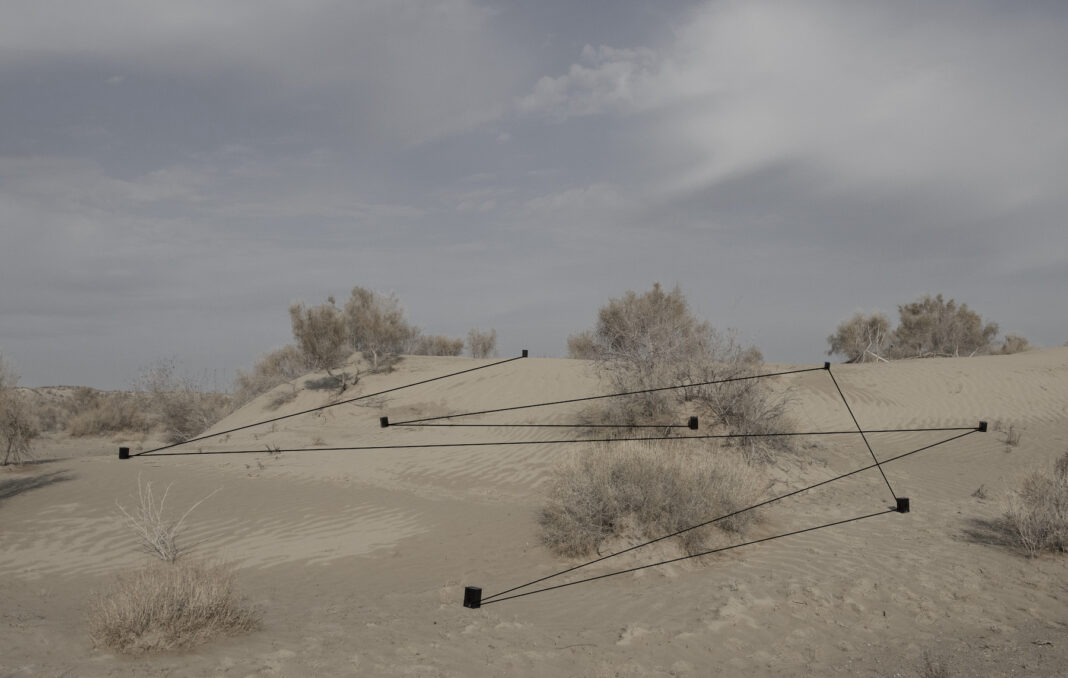
Alexander Ugay deconstructs the sea’s vanished horizon through his cameraless photographic work. Saodat Ismailova’s videos examine the extinction of the Turan tiger and the lives of three generations of Aral fishermen.

Saodat Ismailova

Saodat Ismailova

Saodat Ismailova

Saodat Ismailova. 18,000 Worlds, January 21 – June 4, 2023, Eye Filmmuseum, Amsterdam. Exhibition view of Zukhra, 2013. HD video installation, 30 min., colour, stereo. Image courtesy Eye Filmmuseum. Photograph by Studio Hans Wilschut.

The2vvo contributes a sound sculpture combining found sounds, underwater and field recordings, and testimonies, exploring the interconnectedness of human and non-human life in the area.

the2vvo

the2vvo

Lilia Bakanova presents a textile installation about imaginary life in the Aral Sea, created from raw silk and cotton—materials produced with water that was redirected away from the Aral Sea.

Lilia Bakanova

Lilia Bakanova

In conversation with selected works from the museum’s collection, these pieces reflect on the region’s histories, shared water resources, and the intertwined relationships between culture, nature, and memory.

What happened to the Aral Sea through an artist’s lens:

Imagine a journey that starts with a long train ride followed by an off-road drive through the desert, ending at what used to be the Aral Sea. Once the world’s fourth-largest lake, it has reduced to an eighth of its size since the 1950s due to water being diverted for cotton farming.

This made a drastic impact on the climate and life in Central Asia, mainly in Kazakhstan and Uzbekistan.

Against expectations, this landscape reveals striking beauty rather than depression: the desert blooms with a poignant tenderness; colors are muted by a superfine sandy powder, creating a velvety touch; unknown grass smells of chemically flavored lollipops.

Now imagine that in this remote town with no tourists where you hired the car, there is a world-class collection of Russian and Central Asian avant-garde. This is Savitsky museum, named after an artist who rescued paintings discarded by museums across the USSR in the 1960-70s. This town, Nukus, was so far from the Soviet government, that the collection survived. It not only educated and inspired local artists but also includes their works, many depicting the Aral Sea throughout the 20th century.

This exhibition will create a dialog between historical and contemporary perspectives of the Aral Sea and the life around it. The Museum provides a perfect backdrop for the exhibition, given its history of resilience and collection of paintings depicting the region’s transformations.

Featured contemporary works will include:
– A Kazakh-Korean artist explores the Aral area through imaginary history. Using AI, he reconstructs his family’s archive lost during deportation of Koreans from the Soviet Far East to Kazakhstan in 1937. The work will invite the viewers to consider a link between the erasure of culture and landscape, between identity and displacement.
– An Uzbek video artist connecting inadequate exploitation of shared water resources and female labour in Central Asia.
– An installation that will engage with the visitors through imaginary textures, sounds and smells, making the invisible resilience of Aral visible. This artist’s projects are focused on accessibility to diverse audience. To build on this inclusive effort, she will create t touchable versions of the paintings featured in our exhibition. This will complement the museum’s wheelchair access by introducing a wider range of sensory experiences.

– A photographic project by a Kazakh photographer will bridge the Kazakh and Uzbek regions of the Aral, fostering understanding and sensitivity between communities by offering glimpses into each other’s lives and shared water challenges.Beyond looking, touching, smelling and listening, the gallery is inviting people to get involved.

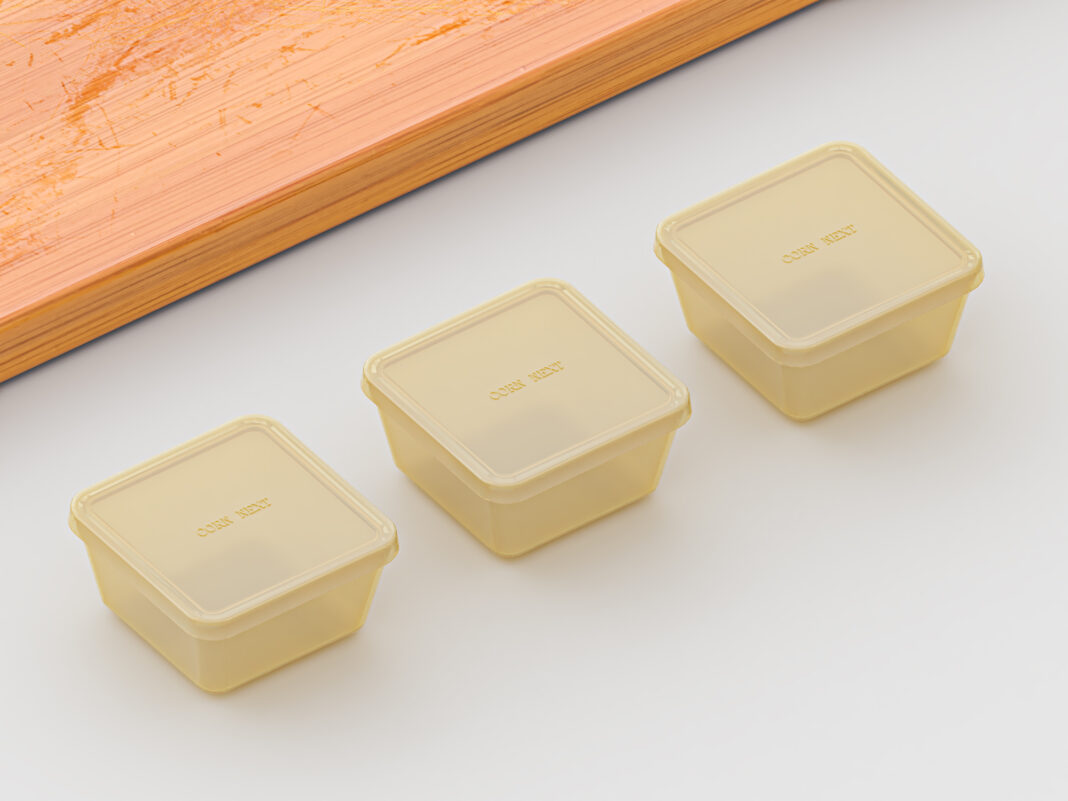
“Visitors can help plant seeds that they can take home and later return to the desert as seedlings for the local biostation. We’ll also teach them how to make biodegradable containers for holding water for these plants. This is about more than just raising awareness; it’s about small collective actions and new connections,” announce the artists.

February 13 to March 12; Savitsky Nukus Museum of Art Rsaev Str., Nukus 23100, 
Republic of Karakalpakstan, Uzbekistan

Artists:

Saodat Ismailova
Lena Pozdnyakova and Eldar Tagi
Alexander Ugay
Lilia Bakanova
Facebook Comments
Karin Kloosterman
Author: Karin Kloosterman

Karin Kloosterman is an award-winning journalist, innovation strategist, and founder of Green Prophet, one of the Middle East’s pioneering sustainability platforms. She has ranked in the Top 10 of Verizon innovation competitions, participated in NASA-linked challenges, and spoken worldwide on climate, food security, and future resilience. With an IoT technology patent, features in Canada’s National Post, and leadership inside teams building next-generation agricultural and planetary systems — including Mars-farming concepts — Karin operates at the intersection of storytelling, science, and systems change. She doesn’t report on the future – she helps design it. Reach out directly to [email protected]

Share

PinIt
submit to reddit

About Karin Kloosterman

Karin Kloosterman is an award-winning journalist, innovation strategist, and founder of Green Prophet, one of the Middle East’s pioneering sustainability platforms. She has ranked in the Top 10 of Verizon innovation competitions, participated in NASA-linked challenges, and spoken worldwide on climate, food security, and future resilience. With an IoT technology patent, features in Canada’s National Post, and leadership inside teams building next-generation agricultural and planetary systems — including Mars-farming concepts — Karin operates at the intersection of storytelling, science, and systems change. She doesn’t report on the future – she helps design it. Reach out directly to [email protected]

Get featured on Green Prophet [email protected]