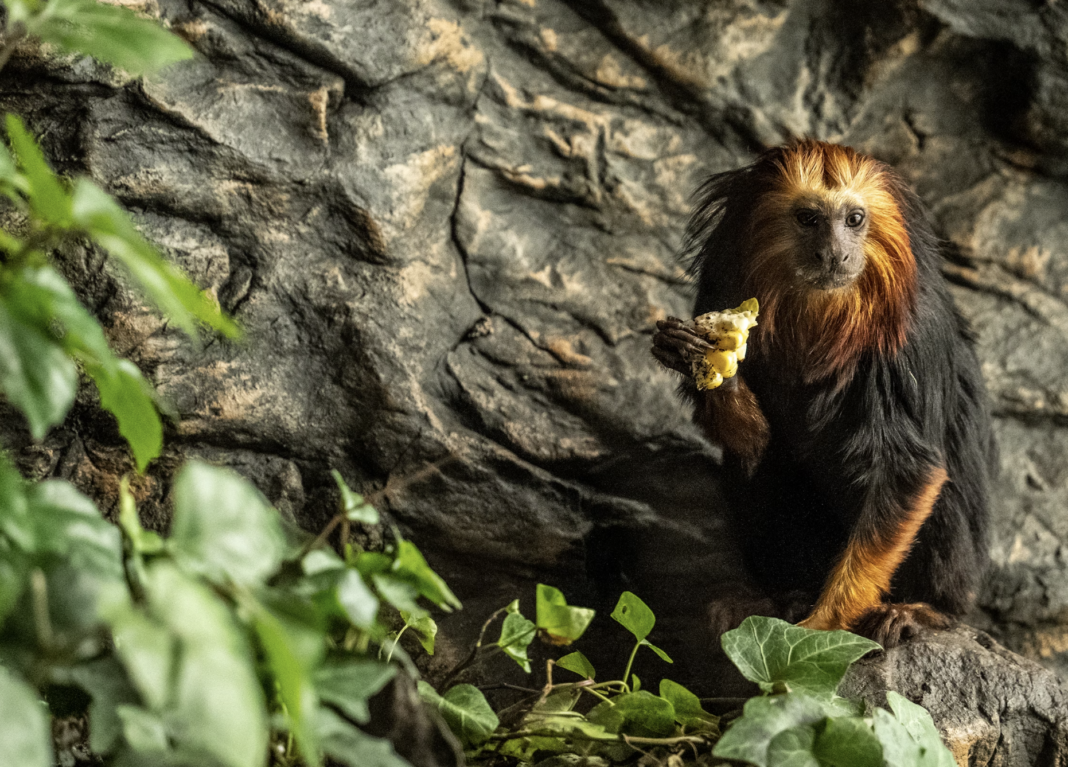


Marmosets use specific vocal labels to address other individual members of their species. When researchers separated pairs of marmosets with a barrier, they found that they used distinct ‘phee calls’ for the monkey on the other side.
Besides humans (who can also speak in an ancient bird language like this unusual village in Turkey), only dolphins and elephants have been recorded using similar labels for their fellow animals:
“We think that this behavior is important for [marmosets’] social cohesion and therefore it’s crucial for their survival,” says neuroscientist and co-author David Omer.
Omer published his research in Science, along with a team of researchers from the Hebrew University. The researchers, led by graduate student Guy Oren, recorded natural conversations between pairs of marmosets, as well as interactions between monkeys and a computer system. They found that these monkeys use their “phee-calls” to address specific individuals.

Even more interestingly, the marmosets could discern when a call was directed at them and responded more accurately when it was.
“This discovery highlight the complexity of social communication among marmosets,” explains Omer. “These calls are not just used for self-localization, as previously thought— marmosets use these specific calls to label and address specific individuals”.
The study revealed that family members within a marmoset group use similar vocal labels to address different individuals and employ similar sound features to code different names, resembling the use if names and dialects in humans.
This learning appears to occur even among adult marmosets who are not related by blood, suggesting that they learn both vocal labels and dialect from other members of their family group.
“Marmosets live in small monogamous family groups and take care of their young together, much like humans do,” says Omer. “These similarities suggest that they faced comparable evolutionary social challenges to our early pre-linguistic ancestors, which might have led them to develop similar communicating methods.”
This research provide new insights into how social communication and human language might have evolved. The ability of marmosets to label each other with specific calls suggests they have developed complex brain mechanisms, potentially analogous to those that eventually gave rise to language in humans.