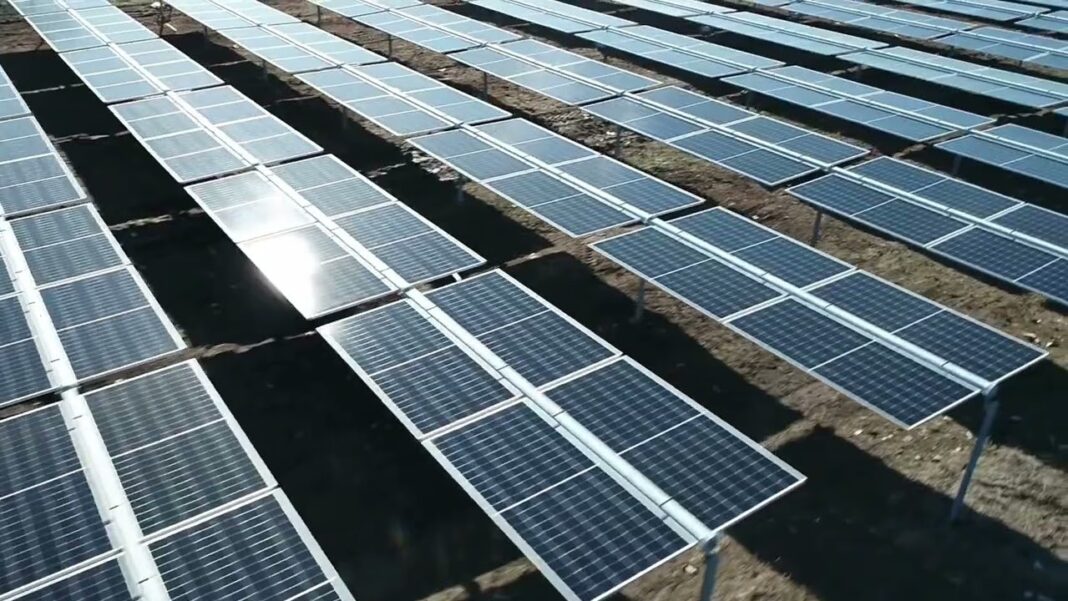


Solar energy is becoming increasingly popular, but there are challenges to overcome. Suitable lands for solar panels are becoming scarce and expensive, and rising interest rates make it harder for solar projects to succeed. Even in desert areas, like what Brightsource confronted in the California desert, all animals and plants need to be protected as well. To address these challenges, developers are exploring non-traditional methods for solar installations.
In traditional solar setups, panels remain stationary in large fields throughout the day. However, solar trackers are special devices that optimize energy production. Trackers, made of metal pipes and tubes, move the panels to face the sun as it moves from morning to evening.
SolarGik stands out in the solar energy industry with its innovative solar trackers. These trackers are more advanced than traditional ones, according to the company, and offer exceptional performance. Their versatility makes them even more remarkable—they can be installed not just on the ground but also on rooftops, parking lots, greenhouses, and even over crops.
The demand for renewable energy is high, but outdated infrastructure, complex regulations, and the difficulty of finding affordable land near existing infrastructure poses obstacles. SolarGik understands the importance of financial viability and optimizes costs for materials, shipping, and onsite work, ensuring a profitable investment.
SolarGik’s primary goal is to make solar energy accessible and affordable for everyone while improving the quality of electricity worldwide. They achieve this by using advanced trackers and technology to maximize the potential of solar energy. Instead of limiting solar panels to flat fields, SolarGik places them in unconventional locations, expanding the reach of solar power and benefiting more people at a reasonable cost. This is their niche.
By continuously tracking the sun’s movement, solar trackers can generate 15 to 30% more energy compared to fixed panels. This increase in energy production has led many solar fields to adopt trackers, capturing more sunlight and producing electricity more efficiently.
SolarGik is a game-changer in the solar energy industry. Unlike other trackers, SolarGik’s solution can be installed on challenging terrains with slopes of up to 30% and irregular land shapes, eliminating the need for costly civil work and long-distance power transfer. The trackers are also incredibly lightweight, thanks to their innovative motion unit. This results in a significant reduction in weight and cost compared to traditional options.
SolarGik’s trackers incorporate advanced software algorithms that enhance their performance. These algorithms enable the trackers to adapt to different angles, ensuring optimal energy production. Each panel’s angle can be adjusted individually, maximizing energy generation.
The trackers utilize satellite sensors and weather forecasting to respond to onsite changes, further optimizing energy output precisely. Their trackers effectively address issues such as shading and cooling, guaranteeing a higher overall energy yield. Additionally, these trackers feature shorter rows, providing flexibility in filling the landscape efficiently, resulting in less steel required and lighter trackers with thinner poles and a smaller, more affordable engine.
The motor used is a six-watt stepper motor, similar to those found in printers. In case of any issues, the motor can easily be replaced by unscrewing six screws. SolarGik’s innovative design ensures simplified maintenance and cost-effective operation.
SolarGik uses a supervisory control and data acquisition system (SCADA), a computer-based control system to monitor and control industrial processes and infrastructure. Energy, oil and gas, water and wastewater management, transportation, and manufacturing use SCADA systems. The SolarGik system, SOMA, connects and controls all essential components, thus, offering advanced monitoring, data collection, onsite optimization, and automated controls for efficient and profitable solar installations.
How does SolarGik compare to competitors?
Elisheva (de la Fuente) Sultan, the marketing manager at SolarGik, is in charge of branding and digital marketing at SolarGik. She explains this all to Green Prophet: “The cost of SolarGik’s trackers is 20 to 30% less than traditional options,” states Sultan. She continues to say there are no limitations to the types of solar panels that SoalrGik can use.
“On most solar fields, each piece of hardware usually has its own system to optimize that specific piece of hardware. Our SCADA system communicates with every hardware component, bringing all the information together into a centrally optimized decision-making system,” mentions Sultan.
They actively incorporate real-time weather and solar forecasting with grid data and crop data to support real-time decision-making and preempt and not just react to onsite conditions. “We’re incorporating multiple different hardware and software pieces, not just trackers,” says Sultan.
Other companies in this space from Israel include Doral and SolarEdge.
::Solargik