Ancient farm in Spain gets UN recognition

horta valencia spain
The UN recognizes the importance of ancient Spanish farming techniques. With climates similar to the Levant and influenced by North Africa, there is so much the Middle East can learn from Spain.

A 1,200-year-old farming and fishing site known as the “Horta” (garden) of Valencia has been recognized on the register of Globally Important Agricultural Heritage Systems (GIAHS), managed by the UN Food and Agriculture Organization (FAO).

Irrigated by the Turia river – thanks to a complex, gravity irrigation network designed in the 8th century and spreading over a dozen of municipalities around the city of Valencia – the site is home to Spain’s largest lake (Albufera).
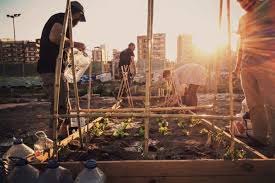
horta valencia UN farm in spain

“The Horta of Valencia is invaluable. Half of the crops grown here are at risk of disappearing in the region. It provides for both farmers and fishers. Its citrus fruits have a Geographical Indication (GI) label due to their high quality and variety. The site is also home to a wide range of birds, fish and plants, many classified as rare, endemic or endangered,” said FAO’s Yoshihide Endo who coordinates the GIAHS programme.

The abundance of the Horta

The Horta is made up of 6,000 small agricultural holdings (up to one hectare each), and thousands of farmland plots. About 80 percent of the area is used to grow fruits and some 50 vegetable crops.

Around 4,000 hectares are used to grow vegetables, especially onions, artichokes, pumpkins and lettuce. Oranges, mandarins and tiger nuts are significant in the northern part of the site whilst 2,000 hectares of centuries-old local rice varieties are cultivated in the southern area, which extends into the Albufera Natural Park.

California builds first farm-to-table new home community

The 2,800-hectare park is home to Spain’s largest lake and one of the most important wetland areas on the Iberian Peninsula. It brings food and other benefits to both fishers and rice farmers.

With ample access to water and fertile soils, farmers are able to harvest up to three times per year.

Crop diversification, with a number of local varieties and the division of the land into small plots have been key to making the site resilient.

Farmers use sustainable agricultural techniques that preserve water and soil resources. The irrigation systems built by the Islamic communities who set up the first Andalusian ditches and hydraulic spaces have been carefully conserved over centuries and are functional to this day.

The water management system is unique as farmers are part of Water Users’ Associations (WUA) and refer to their own rules and regulations to solve any issues. There is also a Water Court (Tribunal de las Aguas) – the oldest institution of justice in Spain to solve disputes over water use. 

With its dunes, beaches, forest, lake and rice fields, the site is home to birds, fish, and over 800 species of plants, many classified as rare, endemic or endangered both in Europe and Spain.

The other GIAHS sites in Spain are: the salt producing Valle Salado of Añana, olive groves in Sénia, Tarragona, and raisins production in Axarquía, Málaga.

Karin Kloosterman
Karin Kloostermanhttp://www.greenprophet.com
Karin Kloosterman is an award-winning journalist, innovation strategist, and founder of Green Prophet, one of the Middle East’s pioneering sustainability platforms. She has ranked in the Top 10 of Verizon innovation competitions, participated in NASA-linked challenges, and spoken worldwide on climate, food security, and future resilience. With an IoT technology patent, features in Canada’s National Post, and leadership inside teams building next-generation agricultural and planetary systems — including Mars-farming concepts — Karin operates at the intersection of storytelling, science, and systems change. She doesn’t report on the future – she helps design it. Reach out directly to [email protected]

TRENDING

Can biochar reduce ‘Forever Chemicals’ in food if it’s used in farms?

Biochar is produced by heating organic material in a low-oxygen environment so it does not burn. This process, known as pyrolysis, transforms plant matter into a stable, carbon-rich material.

Regenerative circling faming with man, AI, robots and solar power

In the next wave of regenerative agriculture, the farm is no longer a grid of efficiency but a living circle—with the human spirit at its core. Instead of replacing the farmer, AI and robotics now orbit like silent companions, extending our hands rather than erasing them. A rotating robotic arm moves through the plot not as a master, but as an assistant, guided by ecological intelligence and human intuition. This is not automation for profit—it’s a return to sacred design, where technology becomes humble, circular, and in service to the soil, the grower, and the wider web of life.

EU’s CAP reform continues trend of supporting small farmers in hour of need

Despite mounting political opposition, growing scientific criticism and even the retreat of many former industrial supporters like Nestlé and Danone, certain member-states and supermarket chains continue to prop up Nutri-Score. The Commission must therefore remain vigilant to ensure these attempts do not undermine farmers, distort fair competition or compromise the integrity of the single market – particularly as other pressing threats loom on the horizon.

Rewilding the Suburb: Lagoon Valley’s Profound Plan for Conservation Community in California–– An Interview with Developer Curt Johansen

Lagoon Valley developers have set aside a remarkable 85% of its total land for open space, trails, and protected habitats—a rare move in an era of unchecked development. This isn’t just a nod to green space; it’s a full embrace of a conservation community model, where nature isn’t a backdrop but a partner.

These glasses see microplastics on the farm

Conventional detection methods, such as sample taken and looking under a microscope to count the bits is time-consuming, labor-intensive, and often ineffective at identifying small particles, making them impractical for large-scale monitoring. 

Should You Invest in the Private Market?

startustartup Unlike public stock exchanges, which offer daily trading, strict...

How to build a 100-year-company

Kongō Gumi is a Japanese construction company, purportedly founded in 578 A.D., making it the world's oldest documented company. What can we learn about building sustainable businesses from them?

From Pilot Plant to Global Stage: How Aduro Clean Technologies’ 2026 Expansion Signals a Turning Point for Chemical Recycling Investors Like Yazan Al Homsi

The company's Next Generation Process (NGP) Pilot Plant in London, Ontario, has officially moved into initial operating campaigns, generating the kind of structured, repeatable data that separates laboratory promise from commercial viability.

How AI Helps SaaS Companies Reduce Repetitive Customer Support Work

SaaS products are designed for large numbers of users with different levels of experience, and also in renewable energy.

Pulling Water from the Air

Faced with water shortage in Amman, Laurie digs up...

Turning Your Energy Consultancy into an LLC: 4 Legal Steps for Founders in Texas

If you are starting a renewable energy business in Texas, learn how to start an LLC by the books.

Tracking the Impacts of a Hydroelectric Dam Along the Tigris River

For the next two months, I'll be taking a break from my usual Green Prophet posts to report on a transnational environmental issue: the Ilısu Dam currently under construction in Turkey, and the ways it will transform life along the Tigris River.

6 Payment Processors With the Fastest Onboarding for SMBs

Get your SMB up and running fast with these 6 payment processors. Compare the quickest onboarding options to start accepting customer payments without delay.

Related Articles

Popular Categories