
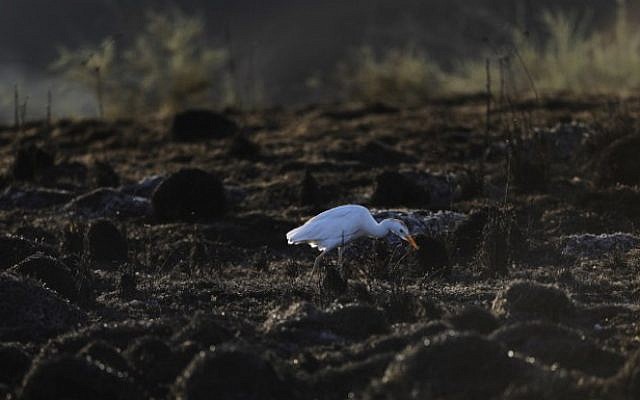
Our previous post about this under-reported eco-disaster made some ripples in the media, but it’s a mistake to assume that the flames have already died out. Three months of daily attacks have caused staggering environmental damage to Israel’s southern communities and nature reserves. Every day brings fresh news of fires and damage.
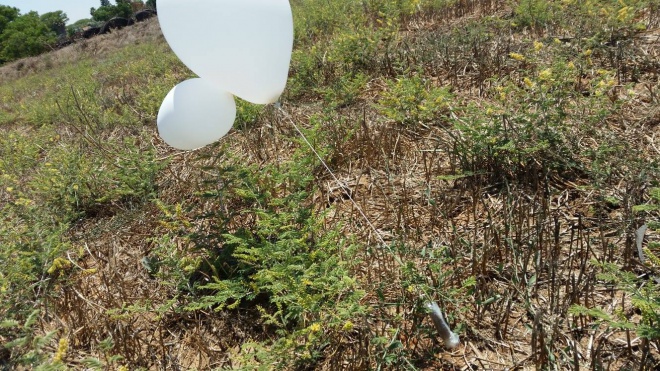
It started with a couple of teenagers who thought it would be fun to attach burning rags to kite tails and set some Israeli fields on fire. Hamas quickly realized that the cheaply-produced kites are an effective tactic for harassing people across the border fence and damaging Israeli fields. They took over, expanding operations to fire-bearing balloons and helium-filled condoms, some with Molotov cocktails tied to their strings.
Summer winds carry the fiery weapons over the fence. Some have landed in playgrounds and home gardens, where children already know not to touch stray kites and balloons. Here’s one balloon with an explosive that drifted as far as 20 kilometers into Israel.
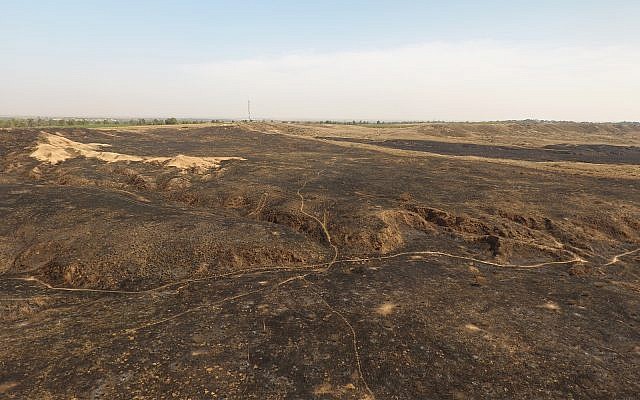
It’s estimated that incinerated farmland and nature reserves amount to about 17,500 dunams (4,300 acres, or 7 square miles). While the arson continues, those numbers will only go up. The Israel Nature and Parks Authority reports that some of the reserves have suffered irreparable damage.
What kind of damage are we talking about? Let’s start with the flora. According to the Jewish National Fund, in the reserves grew fig, pine, agave and carob groves. A rare wild garlic. Flowering quills that covered the lands with white every spring. Spur flax, brushwood, rockrose, pink sun-rose, thorny saltwort, and Egyptian sage. The Palestine iris, the anemone, the scarlet crowfoot and the Carmel bee orchid.
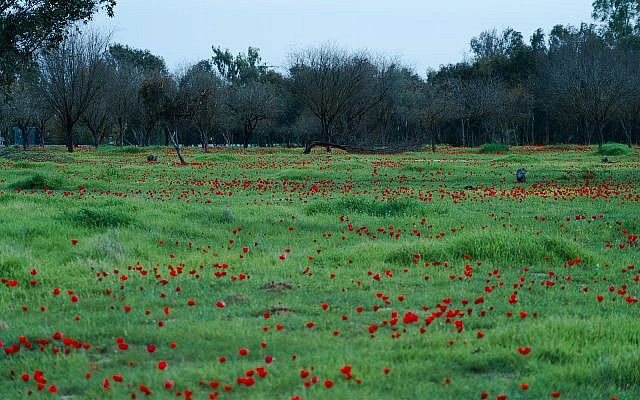
That’s just for starters. Hundreds of wild and man-sown species that supplied wildlife with food and shade – and delight in nature to people hiking through the reserve – are but black ashes now.
The Be’eri and Karmia reserves were host to gazelles, snakes, Indian porcupines, turtles and desert monitor lizards, which are so rare as to be monitored with hidden cameras; as well as hyenas, cranes and swamp cats, among others.
Koby Sofer, KKL ranger at Israel’s southern coastal plain, notes, “Swamp cats, cranes, hyenas and their cubs populate the reserve during this time of year. I assume the hyenas knew how to lead their cubs out of areas inflicted by the fire, although not always. Most of the damage done is to the reptile population and ground-incubating animals such as partridges and their chicks. There are birds that are still nesting.”
Nesting birds, which include the Eurasian hobby falcon, would have abandoned their nests and the eggs or fledglings to escape the flames.
Sofer, who holds a count of mammals crossing the Bee’ri reserve every spring, continues, “We’re talking about a bushy area that houses many animals who felt protected here. Our tortoises obviously didn’t have a chance to escape the fire, as well as the snakes that didn’t take cover. I assume that animals deep inside holes in the ground are protected,” he concluded.
Rafi Bavian, security officer of the Sdot Negev Regional Council, said in a interview with Ynet news, “We’re sure that time will do its part. When the rains return, plants will flower again. But to see the crater area burned like this, and to think of all the animals burned to death, is heartbreaking.”

We noted that people on both sides of the border are suffering from smoke and tear gas inhalation in our previous posts. While we can only report on health damage from the Israeli side, these are known facts: the rate of asthma attacks in children who live in the southern Negev is soaring.
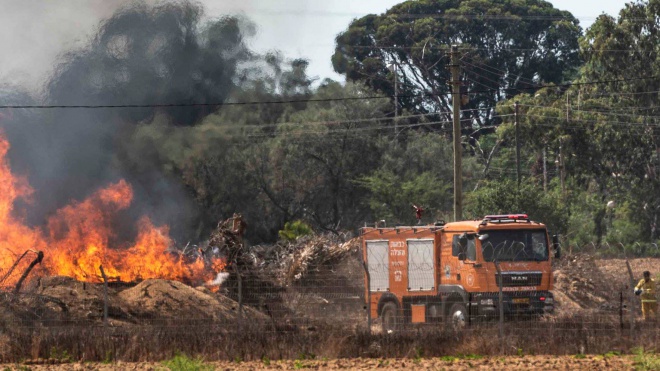
Sara Lischinsky of Moshav Sde Avraham observed a bulldozer tracing a swath around her home, cutting dry vegetation down – just in case fire approaches. Fire has already come close to several houses on her moshav.
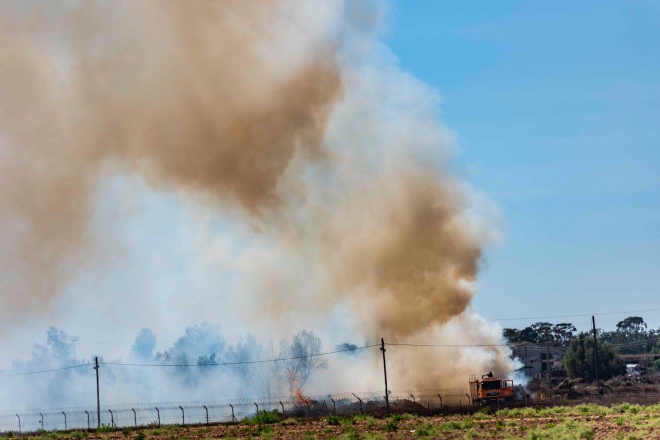
No wonder that stress is so prevalent that classes in mental resiliency have opened in the area. Those are only two long-lasting effects on the southern population of Israel. But then – those who care nothing about precious natural reserves don’t care about human lives, either.