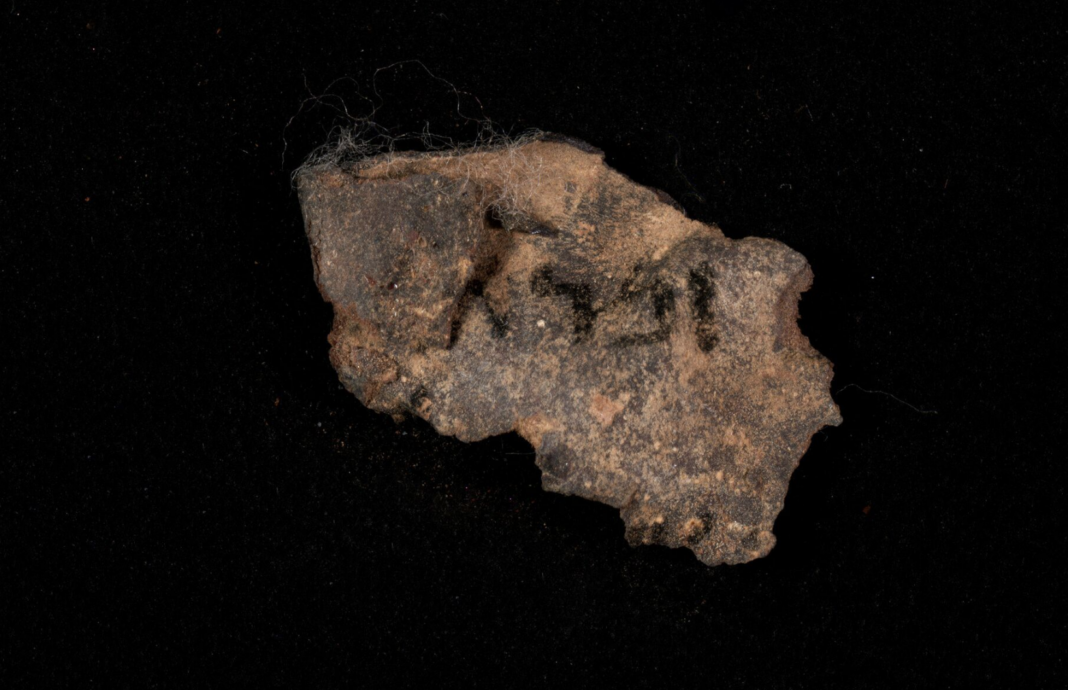

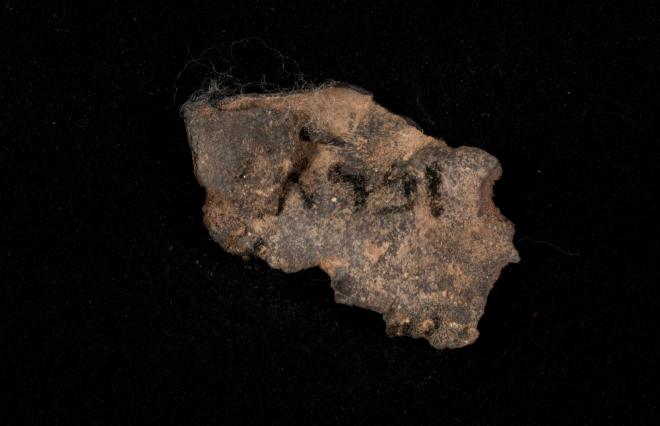
The Dead Sea Scrolls are ancient handwritten fragments from every book of the Old Testament except for the Book of Esther. They are about 2,000 years old and were found by a Bedouin herdsmen in caves near the Dead Sea in the 1950s. The Dead Sea Scrolls have been called the greatest archaeological find of the 20th century.
Now using advanced imaging equipment, the Israel Antiquities Authority has discovered letters and text on fragments of parchment paper that were previously invisible to the naked eye. The new discovery adds pieces to the mysteries, and open new ones too.

The never before revealed fragments were shown today as part of the international conference – The Dead Sea Scrolls at Seventy. New fragments were discovered and identified from the Books of Deuteronomy, Leviticus and Jubilees -– scrolls that researchers are already familiar with.
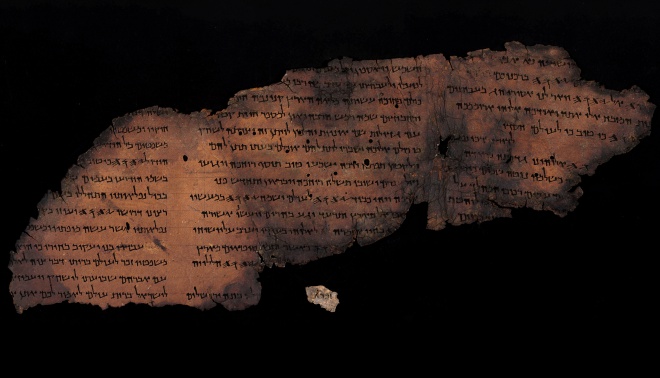
During the 1950s archaeologists and Bedouin discovered the scrolls in caves near Qumran at the Dead Sea. Among the cache were tens of thousands of parchment and papyrus fragments written 2,000 years ago and belonging to approximately 1,000 different manuscripts.
Due to their small size and precarious physical state, some of these fragments were placed in boxes without being sorted or deciphered. Now they have been taken out and scanned. Read below for some of the messages.
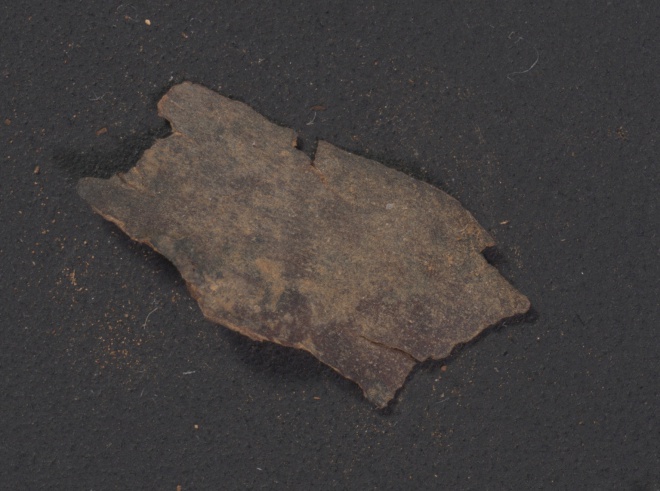
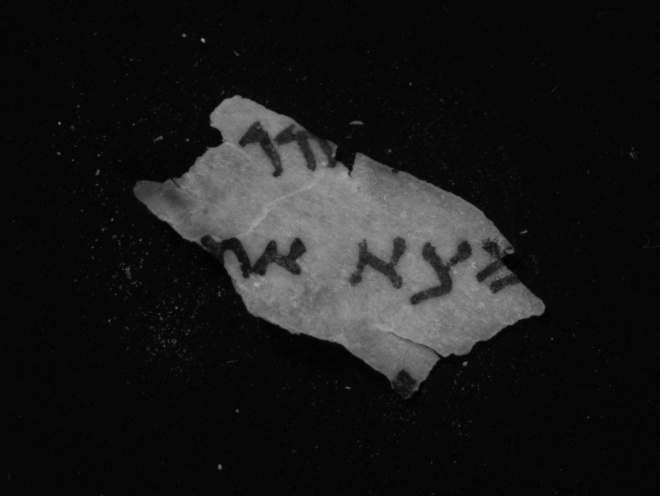
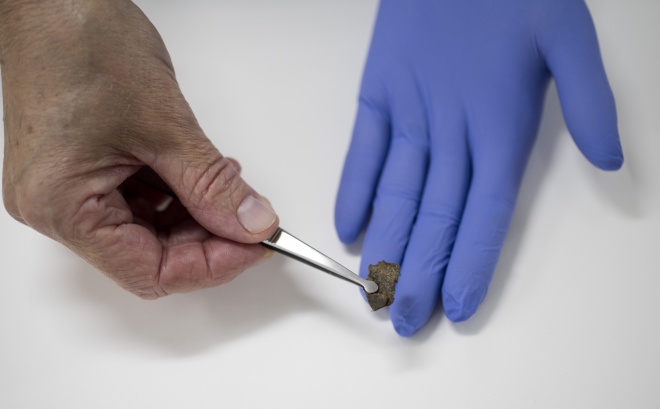

New imaging technology (originally developed for NASA) used in the digitization project can identify script on some fragments. The identification of new letters and words provides new data for the study of the scrolls. One of the fragments may even indicate the existence of a previously unknown manuscript.
The new script was discovered by Oren Ableman (below) – a scroll researcher at the Dead Sea Scrolls Unit of the Israel Antiquities Authority and a PhD student at the Hebrew University of Jerusalem. He examined a few dozen fragments that were discovered in “Cave 11” near Qumran and was excited to discover traces of ink on many fragments that appeared blank to the naked eye.

Although only a few letters survived in these small fragments, sometimes this was enough to reconstruct the text. Still, due to the fragmentary nature of the evidence these reconstructions are not certain, but are highly likely.
Fragments of particular interest that provide new insights for the research of the Dead Sea Scrolls include the following:
- A fragment belonging to the Temple Scroll, a text dealing with directions for conducting the services in the ideal Temple. In current scholarship there is a debate if there are two or three copies of the Temple Scroll found in Cave 11 near Qumran. The identification of the new fragment strengthens the theory that a manuscript given the number 11Q21 is indeed a third copy of this text from Cave 11.
- In addition, a fragment has been identified as belonging to the Great Psalms Scroll (11Q5). The new fragment preserves part of the beginning of Psalm 147:1. The end of the same verse is preserved in a large fragment that was purchased and originally published by Yigal Yadin. The new fragment indicates that the text of Psalm 147:1 in this manuscript was slightly shorter than the Hebrew text commonly used nowadays.
- Another fragment contains letters written in the ancient Hebrew script (paleo-Hebrew). This fragment could not be attributed to any one of the known manuscripts. This raises the possibility that it belonged to a still unknown manuscript.