Lions on the loose – the cost of humans on animal habitats

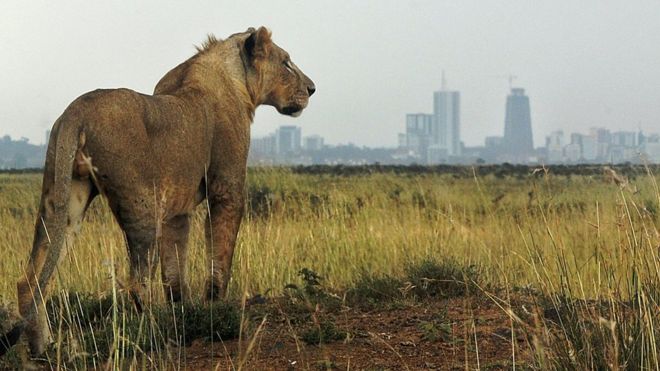
lion near nairobi

Human-caused damage to the earth’s natural environment has resulted in a number of serious ecological problems, including global warming and rising sea levels.  Human encroachment on natural habitats have been a serious factor in world habitat destruction, especially in the Middle East.

Africa’s natural habitats, particularly wildlife habitats, have been decimated in recent years by human encroachment, poaching, and other human caused activities which could eventually result in many animal species becoming extinct in the wild.

A prime example of human encroachment is occurring in Kenya, where human development activities are threatening natural habitats of many animal species, including lions. A recent  incident involving lions that escaped from the Kenya National Park near the capital Nairobi, resulted in an elderly man being attacked and the lion shot dead by police.

According to a story on the BBC and other news sources, lions have been leaving the national park and coming into populated areas near Nairobi to search for food. The main reason for this happening is being attributed to human infringement on the natural habitat of the lions, resulting in it being more difficult for the lions to find enough animals they depend on for food. Lions and other large African carnivores, like cheetahs and leopards, depend on plains animals like wildebeests, zebras and various species of antelopes as prey. When their natural habitat is made smaller by farming and construction projects, carnivores like lions have more problems in finding food.

This problem is known all too well in the Middle East, where natural animal habitats have been disappearing at an alarming rate. Species like lions disappeared in countries like Jordan, Iran and Israel well over 100 years ago. Other carnivores such as leopards are highly endangered and on the verge of extinction in Israel, Jordan, Oman and other Middle Eastern countries.

As for Africa, continuing human encroachment on natural animal habitats will result in more incidents of lions and other large carnivores paying “visits” to human populated areas.

Read more on human destruction of natural habitats:

It’s not the tide. It’s not the wind. It’s us
Despite ruinous bridge, Saudi and Egypt vow to Protect the sea
Amazing “Atlas” tracks Arab world habitat destruction over time (video)
Emirati Royalty Threaten 48,000 Maasai in Lucrative Hunting Deal

Photo of lion near Nairobi Kenya by the BBC/AFP

Maurice Picow
Maurice Picowhttps://www.greenprophet.com/
Maurice Picow grew up in Oklahoma City, U.S.A., where he received a B.S. Degree in Business Administration. Following graduation, Maurice embarked on a career as a real estate broker before making the decision to move to Israel. After arriving in Israel, he came involved in the insurance agency business and later in the moving and international relocation fields. Maurice became interested in writing news and commentary articles in the late 1990’s, and now writes feature articles for the The Jerusalem Post as well as being a regular contributor to Green Prophet. He has also written a non-fiction study on Islam, a two volume adventure novel, and is completing a romance novel about a forbidden love affair. Writing topics of particular interest for Green Prophet are those dealing with global warming and climate change, as well as clean technology - particularly electric cars.

TRENDING

Chinese investors to build a mini Dubai in Kenya

The Kenyan government is reportedly paving the way for...

Gaza’s First Lion Cubs Die Soon After Birth

Last week, the Gaza Strip and its zoo witnessed...

Elephant Ivory Racket Linked to Westgate Mall Terrorists

We interviewed Karl Amman about illegal wildlife trafficking at...

Ali Lamu Upcycles Weathered Dhow Sails into Inspiring Art

"This is not a romance story," Daniella told me...

Ali Barbour Cave Restaurant in Kenya Offers Flintstone Fine Dining

Eating at unique restaurants around the world is just...

Should You Invest in the Private Market?

startustartup Unlike public stock exchanges, which offer daily trading, strict...

How to build a 100-year-company

Kongō Gumi is a Japanese construction company, purportedly founded in 578 A.D., making it the world's oldest documented company. What can we learn about building sustainable businesses from them?

From Pilot Plant to Global Stage: How Aduro Clean Technologies’ 2026 Expansion Signals a Turning Point for Chemical Recycling Investors Like Yazan Al Homsi

The company's Next Generation Process (NGP) Pilot Plant in London, Ontario, has officially moved into initial operating campaigns, generating the kind of structured, repeatable data that separates laboratory promise from commercial viability.

How AI Helps SaaS Companies Reduce Repetitive Customer Support Work

SaaS products are designed for large numbers of users with different levels of experience, and also in renewable energy.

Pulling Water from the Air

Faced with water shortage in Amman, Laurie digs up...

Turning Your Energy Consultancy into an LLC: 4 Legal Steps for Founders in Texas

If you are starting a renewable energy business in Texas, learn how to start an LLC by the books.

Tracking the Impacts of a Hydroelectric Dam Along the Tigris River

For the next two months, I'll be taking a break from my usual Green Prophet posts to report on a transnational environmental issue: the Ilısu Dam currently under construction in Turkey, and the ways it will transform life along the Tigris River.

6 Payment Processors With the Fastest Onboarding for SMBs

Get your SMB up and running fast with these 6 payment processors. Compare the quickest onboarding options to start accepting customer payments without delay.

Related Articles

Popular Categories