Battling the Blaze: Israel’s Wildfire Response

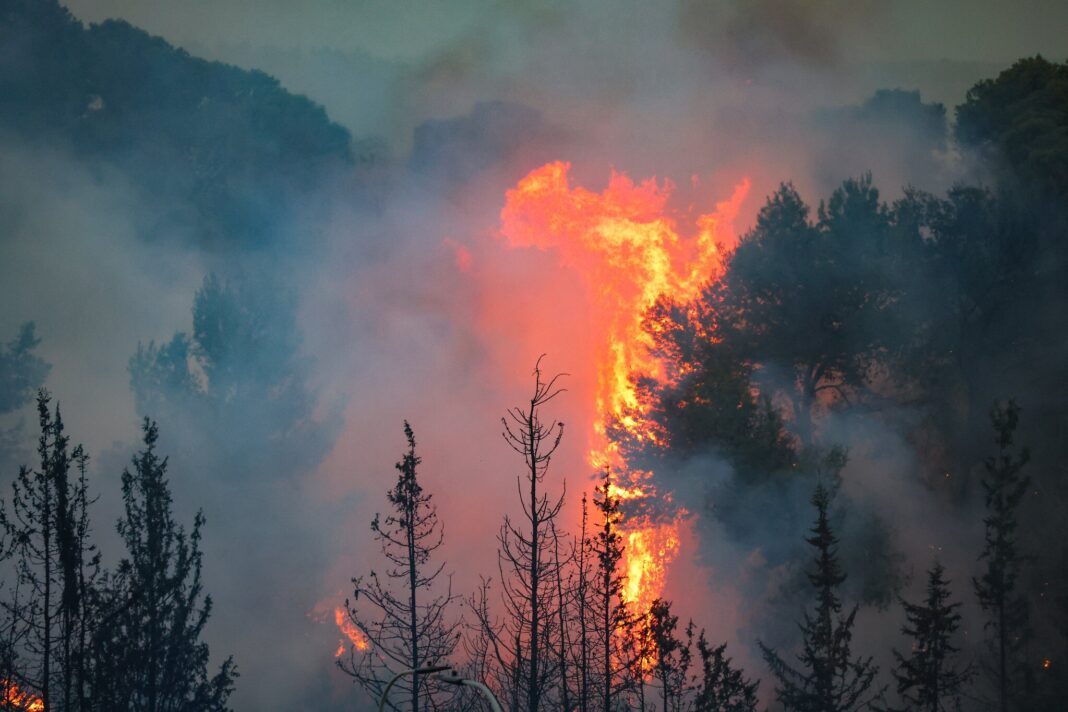
Jerusalem hills ablaze, April 2025

On a dry, windy afternoon in late April 2025, the hills west of Jerusalem ignited and burst into an inferno. Flames, fed by the hot desert winds, spread through the Israeli mountains, crossing into parts of the West Bank and forcing thousands to evacuate. Smoke billowed over the country’s capital, shrouding one of the world’s most important and historic cities in a haze.


The blaze was one of the largest in Israel’s recorded history. Over 6,000 acres of forest, open land, and human development were burned. Dozens of communities were threatened, and the event prompted a national emergency. But beyond the damage, the fire was part of a larger story: Israel is fighting a climate crisis, and the country’s ability to protect its people, land, and overall environment is being tested like never before.

See Related Article: California wildfires will hurt your lungs as toxic burnt building pollution drifts

The fires did not come out of nowhere. Initially, there were warnings and alerts about the heightened chance of a wildfire. These warnings occurred when a group of fires broke out on April 30th. Neve Shalom, Beit Shemesh, Eshtaol, and Latrun are some of the major hotspots for the origin and spread of the fires. 


In a country where every square meter of land is precious, the mobilization of resources had to be fast. Approximately 200 teams of firefighters, including aerial assistance, were deployed within minutes of the outbreak. Evacuation orders were efficient and precise to ensure no civilian lives were lost. The discipline and respect of the Israelis are the prominent reasons more lives were not lost. Additionally, international aid was provided, and the IDF provided a variety of support to help contain the fire.   
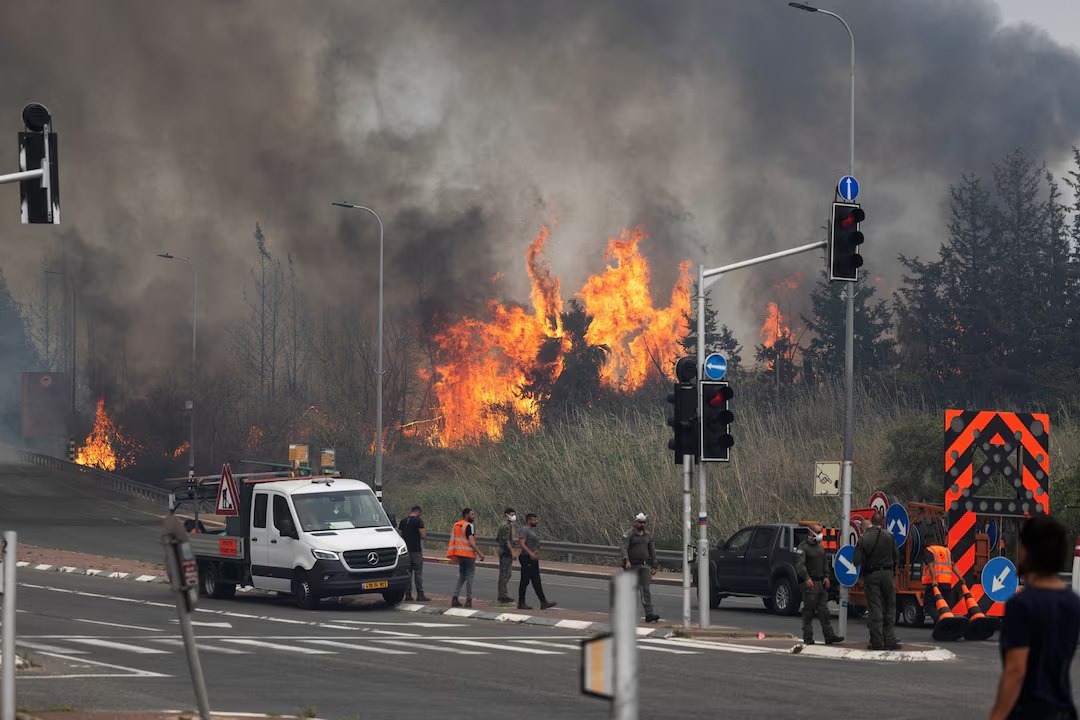
Assistance at the scene of a fire

The environmental fallout of the wildfires was severe. Parks, natural lands, and protected lands were wiped out. Habitats for birds, reptiles, mammals, and all natural life were destroyed in hours. 


The burning of the forest was a big blow to the country, not only because of aesthetic, economic, and environmental interests, but also for reasons of patriotism. A big part of modern Israel’s story is the revival of the forest and the battle against desertification. Since Israel was declared a state, trees were planted to help stabilize soil, provide carbon and oxygen, as well as to combat the aforementioned desertification. The loss of all of this wildlife will take years to heal. But, if the prior progress Israel has already made before the fires is taken into account, the public should be hopeful of a quick recovery. Lessons from past fires have been factored into the recovery.  

See Related Article: Greenpeace Responds to Israel Carmel Fire and States “Climate Changes are Already Here”

Wildfires are not a new issue for Israel. However, their size, intensity, and frequency are increasing. A critical cause of wildfires is the increased likelihood and frequency of heat waves. The increasing heat, along with the decreasing amount of water each year, creates a perfect storm for fires to burn.
Firefighters battling the flames

Like most political, environmental, or humanitarian issues for Israel, there is a trend of intersectionality. The West Bank is connected to Israel, and the fires affected them, too. In parts of the West Bank with limited Israeli authority, unmanaged forests and illegal activities amplify risk. Cross-border cooperation and participation in efforts are needed to help prevent fires.   


The fire exposed Israel’s firefighting resource gap. The Israel Fire and Rescue Authority is severely understaffed. When fires like April’s occur, firefighting resources are stretched thin. There have been announcements of efforts to divert more resources toward fire safety. Additionally, new updates to the forest-management guidelines have been made to help stop fires from becoming too large. 


One effect of the fires was the air quality. Jerusalem’s air quality was the worst in the world for a stretch of days. This caused large public safety concerns and prompted officials to urge residents to stay inside and limit strenuous activity outside. 


Reforestation will continue in the coming months. Volunteers, schools, outside governments, and many other helpful participants have provided support. New fire management and mitigation strategies are being employed. The strength of Israel’s emergency response was tested and will continue to be. Constantly updating guidelines and adding more resources will allow Israel to respond to disasters like this. 


Max Izaks
Max Izaks
Max Izaks is an environmental studies student at the University of Colorado Boulder. His academic work focuses on climate policy, environmental justice, and urban sustainability, with a particular interest in the intersection of environmental policy, justice, and law. Max has participated in educational and cultural programs abroad, including a specialized educational trip to Israel, where he broadened his professional experience. Max brings a global perspective and a commitment to finding and communicating environmental challenges and solutions. Reach out directly to [email protected]

LEAVE A REPLY

Please enter your comment!
Please enter your name here

TRENDING

Huge Fish Nursery Discovered Under Freezing Arctic Seas

In 2019, an underwater robot camera exploring the seabed...

Remilk makes cloned milk so cows don’t need to suffer and it’s hormone-free

This week, Israel’s precision-fermentation milk from Remilk is finally appearing on supermarket shelves. Staff members have been posting photos in Hebrew, smiling, tasting, and clearly enjoying the moment — not because it’s science fiction, but because it tastes like the real thing.

The US leaves 66 United Nations organizations to “put America first”

The world needs a reset and to restart well intentioned cooperation projects from start. Because right now the UN and EU projects look like software built on code from the 80s, rickety, patched, slow to adapt, and prone to crashing under the weight of outdated assumptions.

Turkey named as climate change COP31 home in 2026

Murat Kurum as President-Designate of COP31

Ancient air trapped in Canadian salt bubbles foretells climate future

Opening these samples is like cracking open air that existed long before dinosaurs, before forests, before animals of any kind. As lead researcher Justin Park put it: “It’s an incredible feeling to crack open a sample of air that’s a billion years older than the dinosaurs.”

Qatar’s climate hypocrisy rides the London Underground

Qatar remains a master of doublethink—burning gas by the megaton while selling “sustainability” to a world desperate for clean air. Wake up from your slumber people.

How Quality of Hire Shapes Modern Recruitment

A 2024 survey by Deloitte found that 76% of talent leaders now consider long-term retention and workforce contribution among their most important hiring success metrics—far surpassing time-to-fill or cost-per-hire. As the expectations for new hires deepen, companies must also confront the inherent challenges in redefining and accurately measuring hiring quality.

8 Team-Building Exercises to Start the Week Off 

Team building to change the world! The best renewable energy companies are ones that function.

Thank you, LinkedIn — and what your Jobs on the Rise report means for sustainable careers

While “green jobs” aren’t always labeled as such, many of the fastest-growing roles are directly enabling the energy transition, climate resilience, and lower-carbon systems: Number one on their list is Artificial Intelligence engineers. But what does that mean? Vibe coding Claude? 

Somali pirates steal oil tankers

The pirates often stage their heists out of Somalia, a lawless country, with a weak central government that is grappling with a violent Islamist insurgency. Using speedboats that swarm the targets, the machine-gun-toting pirates take control of merchant ships and then hold the vessels, crew and cargo for ransom.

Leopoldo Alejandro Betancourt López Turned Ocean Plastic Into Profitable Sunglasses

Few fashion accessories carry the environmental burden of sunglasses. Most frames are constructed from petroleum-based plastics and acrylic polymers that linger in landfills for centuries, shedding microplastics into soil and waterways long after they've been discarded. Leopoldo Alejandro Betancourt López, president of the Spanish eyewear brand Hawkers, saw this problem differently than most industry executives.

Why Dr. Tony Jacob Sees Texas Business Egos as Warning Signs

Everything's bigger in Texas. Except business egos.  Dr. Tony Jacob figured...

Israel and America Sign Renewable Energy Cooperation Deal

Other announcements made at the conference include the Timna Renewable Energy Park, which will be a center for R&D, and the AORA Solar Thermal Module at Kibbutz Samar, the world's first commercial hybrid solar gas-turbine power plant that is already nearing completion. Solel Solar Systems announced it was beginning construction of a 50 MW solar field in Lebrija, Spain, and Brightsource Energy made a pre-conference announcement that it had inked the world's largest solar deal to date with Southern California Edison (SCE).

Related Articles

Popular Categories