Palestinian beekeepers make Jerusalem sweeter

honey beekeepers palestinian
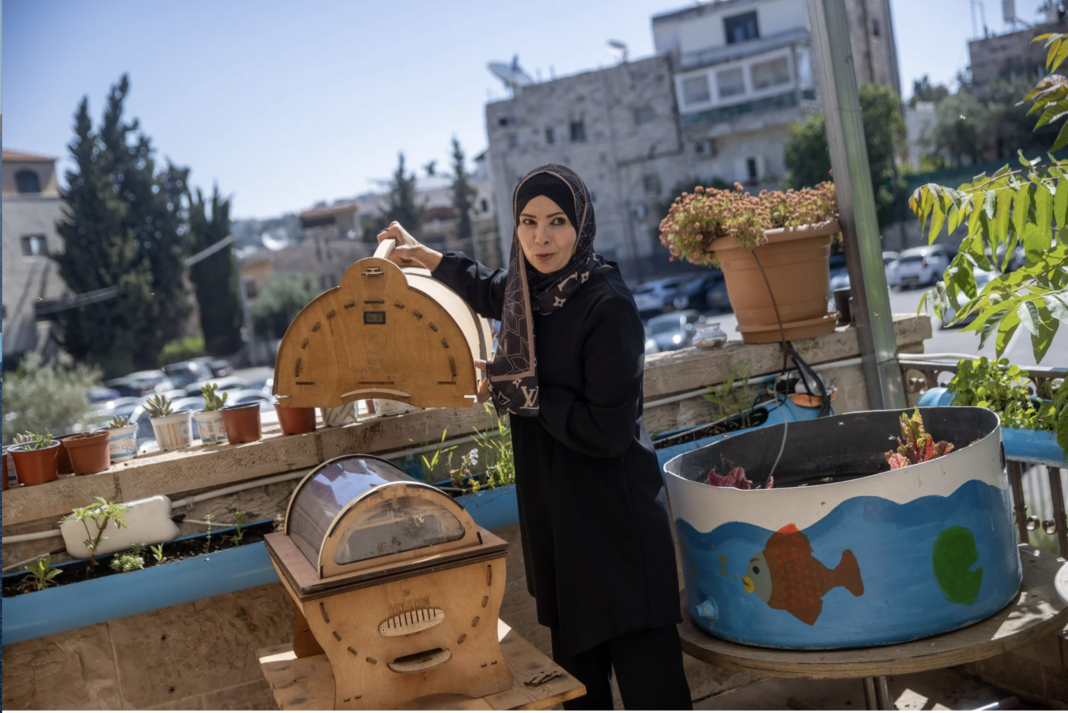
Dallal Nsardin Qassem beekeeping on her roof in East Jerusalem, Haaretz

Bees. We know we need them for pollinating the food we eat – like almonds from California. Their stings may have medicinal properties, and to check we’ve even sent one of writers on a beekeeping mission where she got swarmed.

Besides their delicious honey, bees in all forms are an essential part of the web of life. While vegans don’t eat honey, and some we know like PieBird in Canada are working to liberate bee hives from human needs –– we like to support small, local beekeepers that help honey businesses and honeybees thrive. 

In 2012, we uncovered the people at Balyolu, working to train women in Turkey the art and craft of beekeeping so they could make a sustainable living. Part of the model that the American founder of Balyolu created was an eco-tourism aspect.

Instead of selling tourists carpets which Turkish men will do shamelessly, Balyolu had a mission to help tourists explore the rugged, pure nature of Turkey on a honey tasting tour. Taste the land through the honey. What could be better than that?

Well in the Bronx, honeybee keepers have tasted notes of pollution. In Jerusalem will the sweet bees offer a taste of holiness?

A new project in East Jerusalem is taking up a form of the Balyolu dream, no longer operating, by training Palestinian women without professions and teaching them how to be professional beekeepers. Muslims support the idea. Remember in 2012 when we interview the men who are beekeeping at mosques in England?

Fast forward and meet Dallal Nsardin Qassem, 52, a mother of five and grandmother of seven who – reports a local newspaperlearned the art of beekeeping three years ago while taking a course at the Sinsila Center, located on the rooftop terraces of East Jerusalem’s Central Library.

The center is a project of the Muslala non-profit which runs social and art projects in Jerusalem.
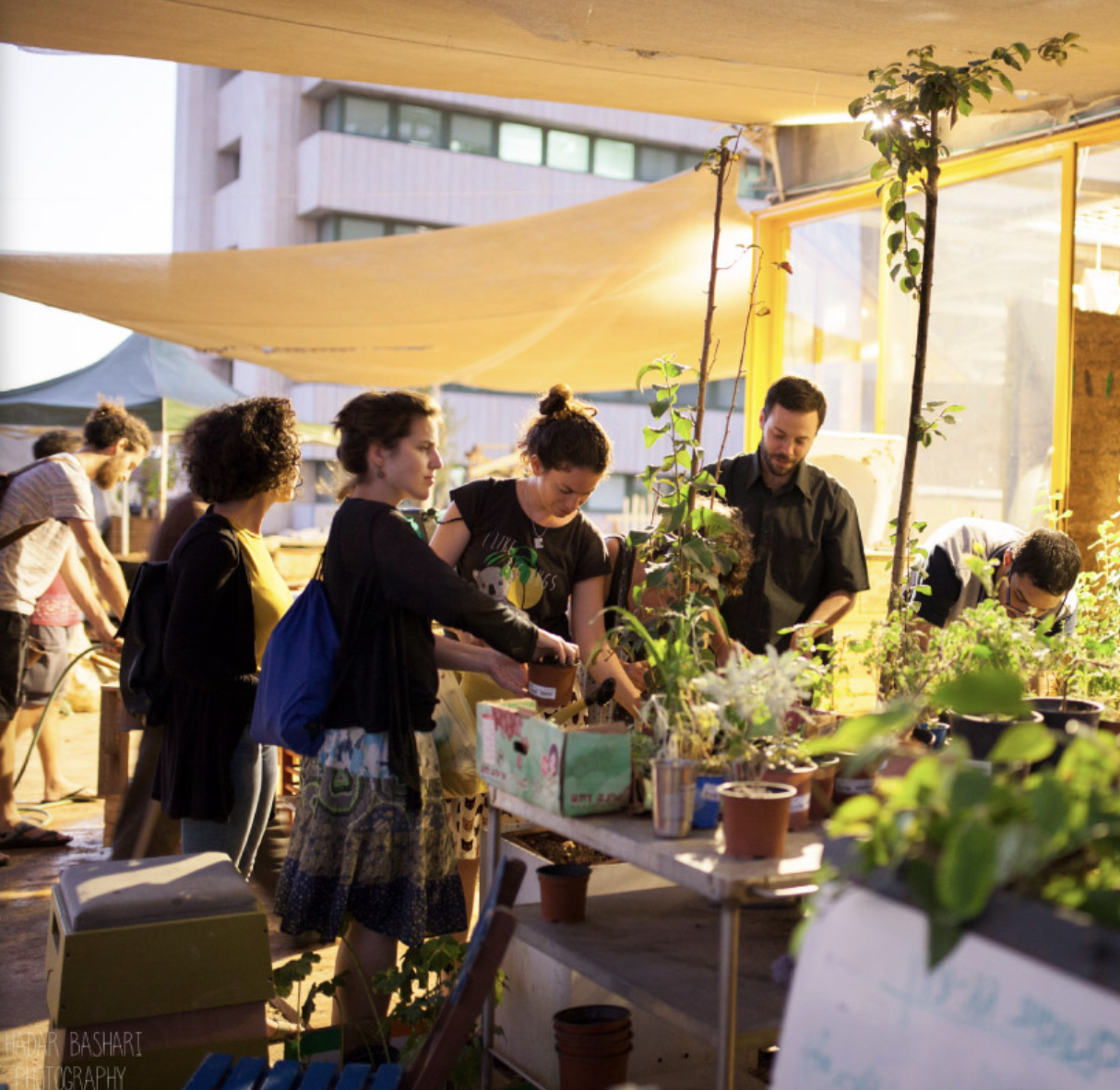
Sinsila workshop
A Sinsila rooftop workshop

Bees are blessed and there is a story about them in the Koran where it says: ‘The honeybee holds in its belly a liquid that is a medicine for mankind,’” she says. “I have learned to get close to the bees and to stop being afraid of them. I learned how bees work together, as a single entity, and we humans can learn a lot from them – how to conduct ourselves and behave in the best way.”

She noted that her husband was against the idea at first and her kids were afraid of the bees, but now everyone is onboard and she is teaching others how to tend to the hives, while earning an income. Her husband even collects honey from the hives.
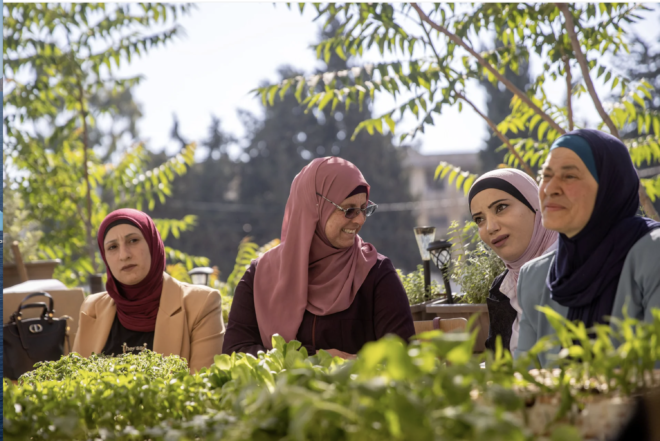
Palestinian beekeepers on a roof
Palestinian beekeepers on a roof, Haaretz

It is not common for traditional Muslim women to work outside the home. So a profession that can be built at home on a rooftop is ideal. 
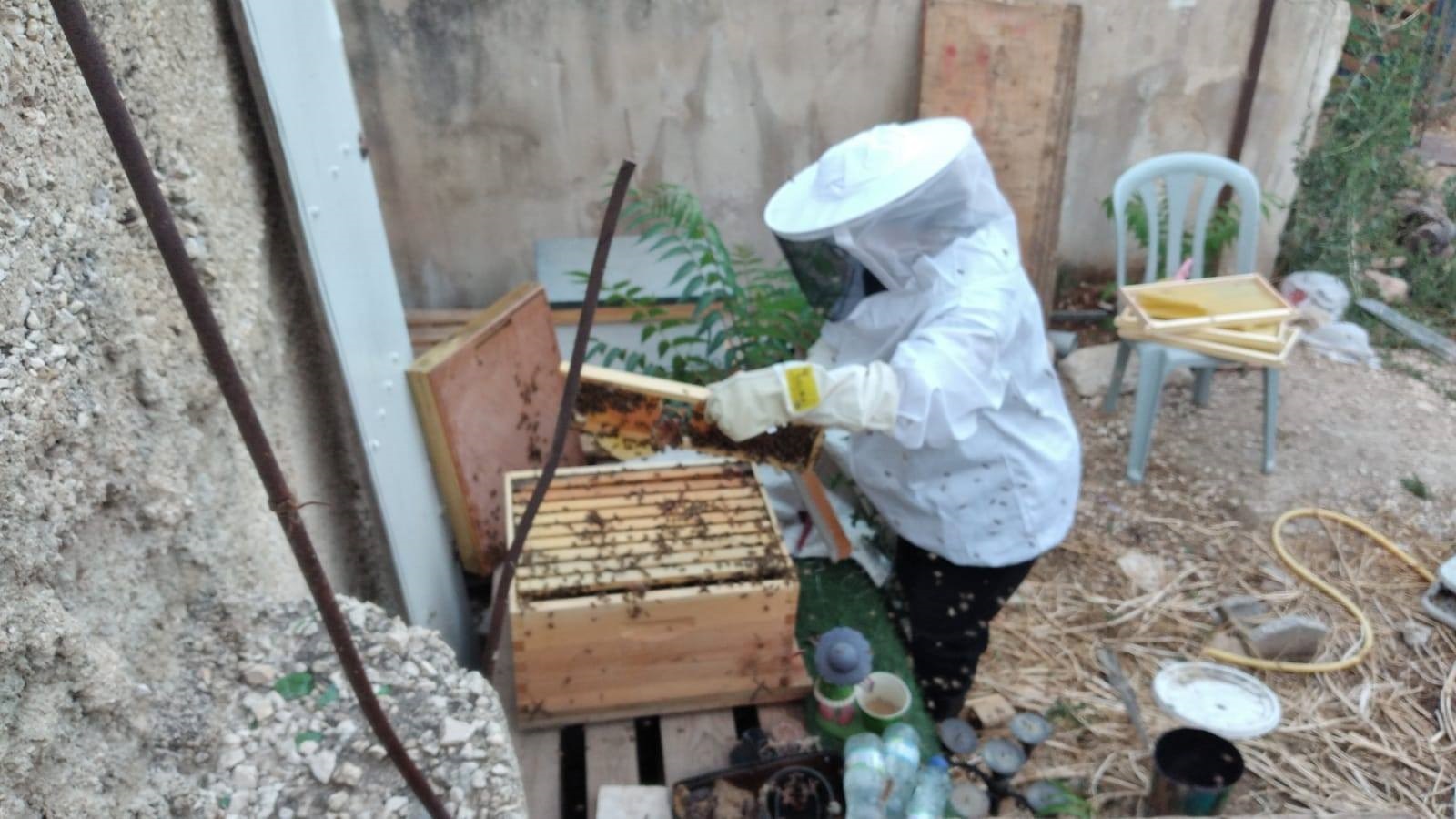
Sinsila beekeeper, East Jerusalem
East Jerusalem beekeeper, via Sinsila

Tareq Nasser started the idea of Sinsila when he saw the success of the green roof created by Muslala on the roof of the Clal Center in West Jerusalem. This center which even rents tents like an AirBNB, offers an urban green space in the middle of downtown. It’s blessed by activists, artists, environmentalists and educators. 
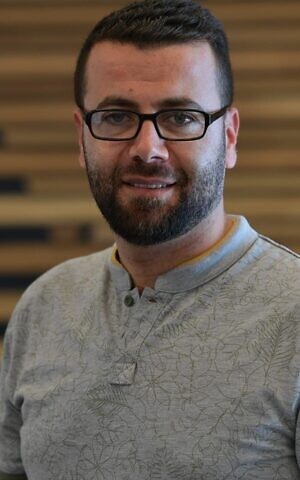
tarik nassar
Tarik Nassar

Nasser told Haaretz: “This project is really changing these women! And I’m not talking about the elites – most of the women here don’t speak Hebrew or English, most don’t have jobs.

“Now they have a profession, they have a green terrace of their own on their roof. Of the women who participated in the pilot, three have been accepted to teach sustainability at a local school. Can you imagine how that changes the life of a 55-year-old woman who never had a job or completed a degree?”

Bees work with the police in Italy

In Italy, bees are working with the police: City bees in Italy are helping the police fight pollution.

While Italy’s Carabinieri is famous for fighting the country’s toughest criminals, a special unit charged with protecting forests and the environment, is now taking on a totally different kind of organised group. Since 2018 the rooftop of the force’s headquarters in central Rome has been home to beehives. 

“One of the main duties of Italy’s Carabinieri police force is to monitor the environment but here we’re using bees in a new way, as biodiversity indicators. They monitor an area that’s 1.5 to 2 km in size. That helps us to gather useful information, which isn’t normally available, about the atmospheric pollutants that might be present in urban areas, such as dioxins and other substances,” explained Giancarlo Papitto, from the Carabinieri’s Forestry and Environment Unit Command.

Cities are rich in biodiversity. Especially Levantine and Mediterranean ones where planter boxes can sit outside year round. Of course you can take plants like olives and plant them in potters (read here on how to grow an olive tree in a container), but in the Med region it’s just natural to plant and pot everything without the worry of frost. And now with the planters and urban trees growing around us, it’s time to start collecting honey. 

In 2017, I visited the Crawford Hotel in downtown Denver where I learned about beekeeping. It makes sense that the urban trend found in United States, Canada and all over Europe has made it to the Middle East. And even if you don’t keep the bees yourselves – they can keep themselves in nature with a little help. Plant an urban garden to help them out

Karin Kloosterman
Karin Kloostermanhttp://www.greenprophet.com
Karin Kloosterman is an award-winning journalist, innovation strategist, and founder of Green Prophet, one of the Middle East’s pioneering sustainability platforms. She has ranked in the Top 10 of Verizon innovation competitions, participated in NASA-linked challenges, and spoken worldwide on climate, food security, and future resilience. With an IoT technology patent, features in Canada’s National Post, and leadership inside teams building next-generation agricultural and planetary systems — including Mars-farming concepts — Karin operates at the intersection of storytelling, science, and systems change. She doesn’t report on the future – she helps design it. Reach out directly to [email protected]

Hot this week

How Renewable Energy is Revolutionizing the Way We Power Our World

Solar has become the star of the transition thanks to modular hardware and straightforward installation. It fits dense cities and remote towns alike. Many companies are turning to rooftop arrays and carport systems - and exploring commercial solar installation as a practical way to lock in future savings.

How does one start prepping?

Faced with an extreme winter storm this year, Americans wonder how to be prepared for catastrophe. Miriam has lived through wars in the Middle East - so she's prepared on giving you a guide to prepping.

Fishermen sue tire manufacturers on behalf of the salmon

A federal trial in San Francisco has brought US tire manufacturers, fishing groups, and environmental scientists into court over a chemical most drivers have never heard of — but which scientists say may be silently reshaping aquatic ecosystems.

Listening to Water: Tarek Atoui’s Next Work for Tate Modern

Born in Beirut, Lebanon in 1980 and now living in Paris, Atoui has spent years building instruments that don’t sit comfortably in concert halls. Many of them involve water, glass, and ceramics — materials that react to sound instead of simply producing it.

Leading Through a Dual-Energy Transition: Balancing Decarbonisation with Energy Security

Experience in one area of the energy industry isn't enough to guarantee readiness across all the others. That's where a structured program like an MBA in energy can come in. Today's advanced curricula explore energy economics, finance, policy, and strategic management alongside the technical subjects. And when pursuing an energy MBA online, professionals can skill up and retrain without having to step out of the labor market -- an important perk at a time when skilled professionals are already in short supply.

Topics

How Renewable Energy is Revolutionizing the Way We Power Our World

Solar has become the star of the transition thanks to modular hardware and straightforward installation. It fits dense cities and remote towns alike. Many companies are turning to rooftop arrays and carport systems - and exploring commercial solar installation as a practical way to lock in future savings.

How does one start prepping?

Faced with an extreme winter storm this year, Americans wonder how to be prepared for catastrophe. Miriam has lived through wars in the Middle East - so she's prepared on giving you a guide to prepping.

Fishermen sue tire manufacturers on behalf of the salmon

A federal trial in San Francisco has brought US tire manufacturers, fishing groups, and environmental scientists into court over a chemical most drivers have never heard of — but which scientists say may be silently reshaping aquatic ecosystems.

Listening to Water: Tarek Atoui’s Next Work for Tate Modern

Born in Beirut, Lebanon in 1980 and now living in Paris, Atoui has spent years building instruments that don’t sit comfortably in concert halls. Many of them involve water, glass, and ceramics — materials that react to sound instead of simply producing it.

Leading Through a Dual-Energy Transition: Balancing Decarbonisation with Energy Security

Experience in one area of the energy industry isn't enough to guarantee readiness across all the others. That's where a structured program like an MBA in energy can come in. Today's advanced curricula explore energy economics, finance, policy, and strategic management alongside the technical subjects. And when pursuing an energy MBA online, professionals can skill up and retrain without having to step out of the labor market -- an important perk at a time when skilled professionals are already in short supply.

From Green Energy to Healthy Societies: Why old systems thinking is becoming relevant again

Across the Middle East and North Africa, large investments are being made in green hydrogen, renewable energy, water infrastructure and sustainability. Most of these efforts are discussed in the context of climate change, decarbonization and economic diversification. That framing is important, but it may not capture their full value.

We saw peace – an interreligious encounter deep in our eyes

They came from Israel, Palestine, Jordan, Iraq, Yemen, Morocco, Tunisia, Lebanon, Egypt… There are Sunni Muslims, Shiite Muslims, Jews (Orthodox and Reform), Orthodox Christians, Coptic Christians, Protestant Christians, Druze, Baha'is, a Scientologist.

Can biochar reduce ‘Forever Chemicals’ in food if it’s used in farms?

Biochar is produced by heating organic material in a low-oxygen environment so it does not burn. This process, known as pyrolysis, transforms plant matter into a stable, carbon-rich material.

Related Articles

Popular Categories