Monsanto to pay $289 MIL in damages to cancer victim

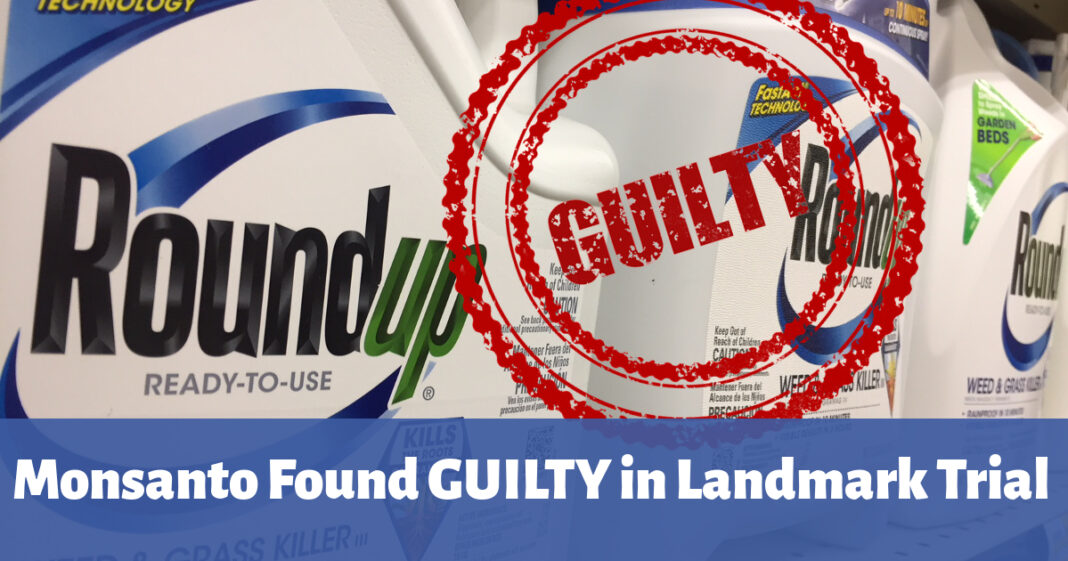
The first trial on whether the world’s most widely used herbicide causes cancer ended this past week with a California jury’s award of USD$289 million in damages to a former school groundskeeper diagnosed with a lethal cancer linked to a Monsanto-produced weed-killer.

The San Francisco jury found unanimously that Monsanto was responsible for Dewayne “Lee” Johnson’s non-Hodgkin’s lymphoma and should have known of the dangers posed by the herbicide glyphosate, which it markets under brand names Roundup and Ranger Pro. The jury also found that Monsanto had “acted with malice or oppression” when it supplied glyphosate to Johnson’s employer, the Benicia Unified School District, without disclosing its potentially life-threatening effects.

Johnson’s case, the first to go to trial, could be a forerunner for more than 4,000 lawsuits that have been filed across America by individuals claiming they were sickened by Monsanto products. Johnson was a groundskeeper and pest-control manager from 2012 until May 2016. His job included spraying glyphosate, in the high-concentration brand called Ranger Pro, from 50-gallon drums 20 to 30 times a year for two to three hours a day.

He was first diagnosed with non-Hodgkin’s lymphoma in 2014 and with a more aggressive form of the cancer a year later. One of his doctors testified that he is unlikely to survive to 2020. 

Jurors deliberated 2½ days following one month of testimony. The verdict required votes from only nine of the 12 jurors to be final, but they were unanimous except for on the amount of punitive damages, which drew a dissent from one juror. In polling after the verdict, she did not tell the judge whether she favored a greater or lesser amount.

The jury’s decision also amounted to a rebuke of the U.S. Environmental Protection Agency (EPA), which has long classified glyphosate as safe and has not restricted its use, despite other agencies’ findings that the herbicide probably causes cancer. The World Health Organisation reported that it is “probably carcinogenic to humans,” but despite that finding, the European Commission recently granted the substance another five-year licence.

“I’m glad to be here to be able to help, the cause is way bigger than me. Hopefully, this thing will get the attention it needs so folks can make a good choice,” said 46-year-old Johnson after the verdict.

Monsanto – which is reported to have $6.1 billion in holdings – was unyielding, stating its position is supported by the EPA, the National Institutes of Health and agencies around the world.

“We will appeal this decision and continue to vigorously defend this product, which has a 40-year history of safe use,” said Scott Partridge, a Monsanto vice president.

Glyphosate, the world’s leading herbicide, was classified as a probable human carcinogen in 2015 by the International Agency for Research on Cancer, an arm of the World Health Organization. In 2017, California’s Office of Environmental Health Hazard Assessment listed it as a chemical known to cause cancer. Monsanto held the initial patent and remains its leading distributor.

Despite the agencies’ health concerns, glyphosate remains legal in the U.S. and Europe.

.

Bhok Thompson
Bhok Thompsonhttp://www.greenprophet.com
Bhok Thompson is an “eco-tinkerer” who thrives at the intersection of sustainability, business, and cutting-edge technology. With a background in mechanical engineering and a deep fascination with renewable energy, Bhok has dedicated his career to developing innovative solutions that bridge environmental consciousness with profitability. A frequent contributor to Green Prophet, Bhok writes about futuristic green tech, urban sustainability, and the latest trends in eco-friendly startups. His passion for engineering meets his love for business as he mentors young entrepreneurs looking to create scalable, impact-driven companies. Beyond his work, Bhok is an avid collector of vintage mechanical watches, believing they represent an era of precision and craftsmanship that modern technology often overlooks. Reach out: [email protected]

Read More

TRENDING

Different Types of Hair Loss Treatments Explained

efore exploring treatments, it helps to understand why hair falls. Hair loss isn't one condition — it has different causes, and those causes affect which treatments actually work.

Dead Sea Scroll mystery may be solved by a calendar that lost touch with the seasons

The 364-day calendar did not disappear entirely. Instead, it may have survived as an ideal: a memory of perfect time at Creation and perhaps a calendar to be restored in the End of Days.

Mysterious metal space balls wash up on Australian shore

Mysterious metallic spheres dubbed "space balls" washed ashore on Forrest Beach in Queensland, Australia. The objects were identified by the Australian Space Agency as pressure vessels from a space launch vehicle that re-entered Earth's atmosphere, and crews successfully removed the safe debris.

Kansas City’s Second Attempt at a Conversion Therapy Ban: What the Proposed Ordinance Does and Why It’s Being Rewritten

Kansas City is attempting to revive protections against conversion therapy with a new ordinance carefully designed to withstand recent First Amendment challenges. Rather than banning conversion therapy by name, the proposal targets harmful therapeutic practices linked to increased risks of depression and self-harm, creating what supporters hope could become a legal model for other U.S. cities.

What to Look for in a Senior Living Community That Truly Delivers

Choosing a sustainable senior living community means looking beyond appearances to care quality, nutrition, safety, social connection, and long-term well-being.

The Essential Guide To Sustainability in Project Management

Sustainability is an approach where businesses and individuals balance the environmental, social, and economic aspects of a project such that current and future stakeholders are not overburdened with the impacts of the project in future.

Yerukim Forms a New Green Economy Where the Money is Really Green

The Yerukim members who pick up the recyclables get to keep the monetary reward, the public earns "green" bills that can be used in shops, and business owners get to be associated with environmentalism.

Choosing Riyadh over Dubai? What Investors Should Know

Saudi Arabia is deploying capital at unmatched scale to catalyze tourism and advanced industry while rewiring its power-and-water backbone. The investable frontier is widening—especially in renewables, grid storage, water efficiency/desal retrofits, and hospitality operating platforms. Prudent investors will insist on phased delivery, enforceable KPIs (energy, water, biodiversity), and RHQ/zone compliance—while pricing political-economy and reputational risks alongside growth upside.

Sell your cooking oil for biodiesel money

Want to make money on old french fry oil? Sell it.

Qatar Alternative Energy Summit Pairs Investors And Innovators

Alternative energy investors and innovators can meet n' greet in Doha, Qatar March 16 and 17.

Here’s How To Implement The Four Pillars Of Employee Engagement

If you throw a party for your work team and they are vegans, don't make it a barbecue. Know the sustainability values of your team to boost moral and retain good people.

Locals From Rishon Fight IKEA

Big Box stores are a pretty new concept in Israel, and thank God that not every Israeli city wants them in their backyard. A word from someone who has see the beautiful farmland around her hometown Newmarket, Ontario stripped and converted into vulgar strip malls of big box shops: they have no place in a healthy and sustainable town or city.

The Jewish National Fund Meets An Inconvenient Truth

According to the JNF, it has transformed thousands of acres of barren land into green forests in Israel. They state that each person emits about 23 tons of carbon per year, estimating that each tree planted can absorb one ton of carbon in its lifetime. That's a whole lot of trees you'd need to be planting. Could so many fit in Israel?

Popular Categories